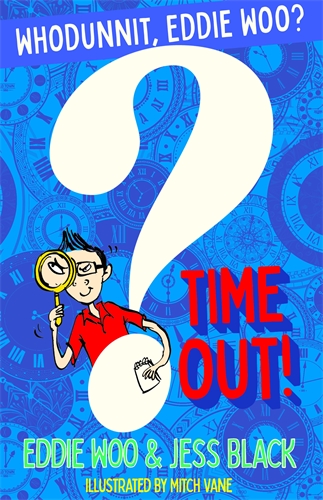
Searching for a new book to dive into over the holidays or when you are bored? Or figure you are a bit of a detective? Time Out! is a mystery novel by Eddie Woo & Jess Black. It is part of the Whodunnit? series currently containing two novels, the other one being Team Trouble. The main protagonist of the book is young Eddie Woo, a super sleuth and maths whizz. Together with his friends, Rusty and DT, they accidentally stumble across a treasure hunt created by Henry Cedric James in the 1880s. Even though their suburb of Red Hill is small there can still be an action-packed adventure.
Henry was the founder of Red Hill and hand-built many public buildings like the Council school, lighthouse, old cathedrals, parks and many homes. In some of these locations he left hints and ciphers to where the next clue might be. It is rumoured that Henry worked at the Ballarat Goldfields before founding the new suburb. When he passed away, he left most of his gold hidden, rumoured to be at the end of the treasure hunt. But every good story needs an antagonist so, someone is going to take drastic measures to ensure Eddie doesn’t reach the end!
This is an awesome book including maths and instrumental talents. I rate this book 5 stars out of 5 as it has a good climax, resolution and includes maths to explain things.
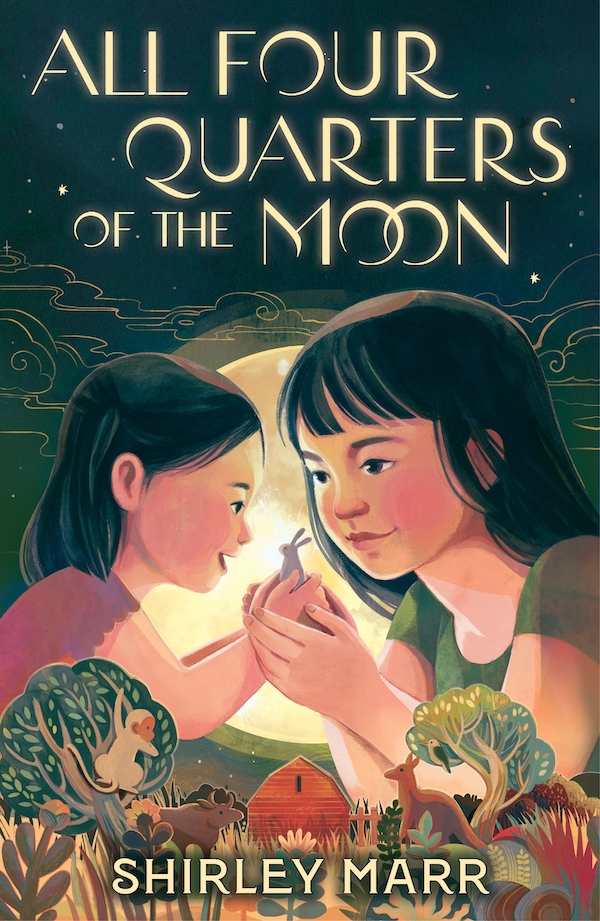
Peijing is not from this country. Australia is such a different place to Singapore. Accompanied by Ba Ba (her Dad), Ma Ma (her Mum), her sister Biju and Ah Ma, her grandmother, Peijing is unsure of the strange new cultures and the adaptations she will have to make to fit into Australia. To Peijing’s realisation, her family are all fighting their own uncertainties in their new life. Little Biju is only in kindergarten and is struggling as her English isn’t as fluent as everyone else’s. Ma Ma doesn’t do much as she is alone without all her friends around and she can’t speak English. The only thing she finds she can do is to clean the house incessantly. Ba Ba doesn’t talk to anyone now, though he used to talk to the other men in the family. The family first moved to Australia so he could get a promotion. Ah Ma, who sits at the TV all day has nothing to do, like Ma Ma, and she also keeps forgetting things like who Peijing is, to chew food, and she dangerously wanders away from the house.
With all these problems in her family’s lives, Peijing feels that she cannot express her own issues to them so she steps up to care for the family especially Biju, who is still young and believes everything her sister says.
Helpless, the only thing Peijing knows she can control is the little world – a precious paper world where the two sisters create stories with their paper animal and plant creations. The world is filled with different creatures, real and fantasy but there are no people. To Peijing, the little world is a sanctuary of peace, a place of safety and security where she forms new stories from the shapes of different creatures.
As Peijing starts to feel at home in Australia, she questions what she can do to help her family in this foriegn land. Follow Peijing in this heartwarming book and how she leads her family through the struggles of culture shock and change.
I particularly resonated with this book as I moved back to Australia after 11 years of living overseas and had to face changes in my lifestyle, different cultural expectations and ideals. I love the theme of identity that is interwoven throughout this book.
I would recommend this book for readers aged 9 and above. I’m sure you will enjoy this exceptional fiction novel. I rate this amazing book 5/5.
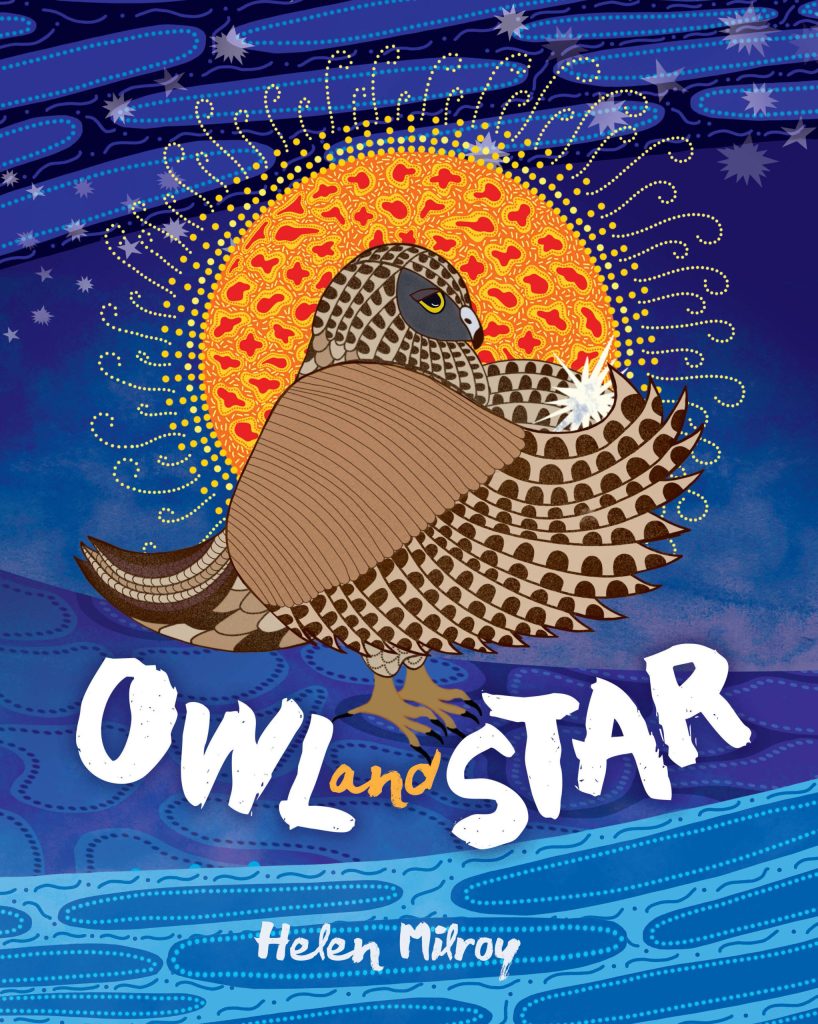
Dr Helen Milroy is a descendant of the Palyku people of the Pilbara region of Western Australia. She was born and educated in Perth and has always had a passionate interest in health and wellbeing, especially for children. Dr Milroy is the author and illustrator of nine children’s books, including Backyard Bugs, Backyard Birds, and Wombat, Mudlark and Other Stories. Today we’re chatting to her about her stunning picture book – Owl and Star.
From the publisher:
Owl loved the sparkle of the stars. He would sit out on his tree at dusk and wait for them to appear. One evening, Owl became worried. His favourite little star had not shown herself. Owl searched far and wide. Where could Little Star be?
When creating your picture books, what comes first for you – the illustrations or the story?
Either. Sometimes I see something and I get images for a story, other times that image or thoughts about something I have noticed sets me off on the storyline first. I even go to sleep thinking about the story. Then when I start illustrating, it is like the images just fall out onto the page.
Owl knows the night sky so well that he notices even a small change. Are you a stargazer yourself?
I do love looking at the stars and wondering what it is like up there. I loved looking at the sky day or night as a kid. Making animal shapes from the clouds during the day or waiting to see a shooting star at night. I always thought the moon was a magical being and used to say hello when it was full and bright.
Can you tell us about your illustration process for Owl and Star?
In this case I had written the story before the illustrations so I wanted the illustrations to also tell the story even if you couldn’t read the words. Like two stories together. I spent a long time thinking and researching about owls before drawing any. It took me a long time before owl appeared properly on the page but once he was there, the rest was easy.
Do you have a tip for children who’d like to create their own picture book?
Yes just get started! Draw, write and tell stories, the more you do the better they get especially when they come from your heart. If you love what you are doing, it will show in the stories and images.
Can you tell us a bit about what you’re working on next?
I am working on several projects at once. More birds, bugs and beasties from the bush, more tales from the bush mob and a new series about some neighbourhood pets that get together for some adventures!
Owl and Star is out now! Ask for it at your favourite bookshop or your local library.
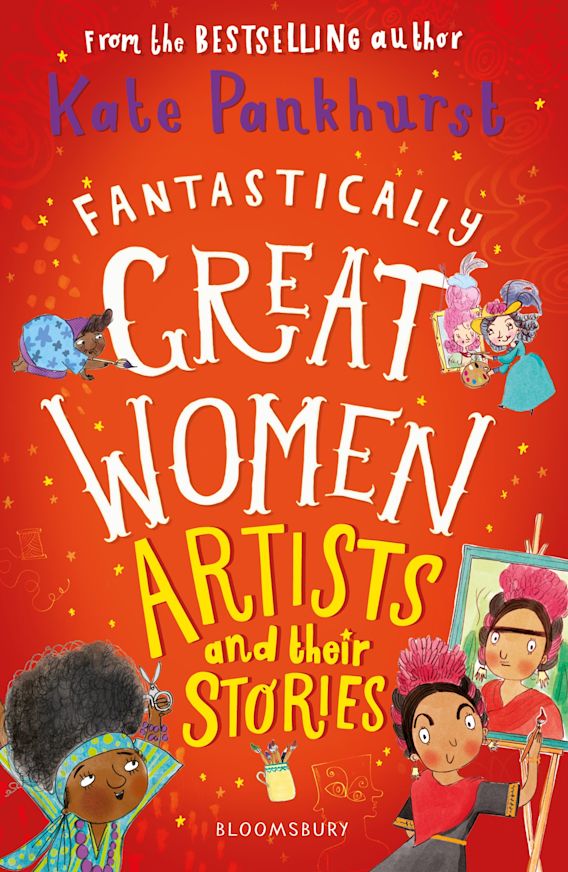
Fantastically Great Women Artists and their Stories by Kate Pankhurst, Bloomsbury, ISBN 9781526615343
The publisher provided a review copy of this book.
Fantastically Great Women Artists and their Stories is a non-fiction book. It is written by Kate Pankhurst and is about seven artists and one art collector. The artists in the book are Elisabeth Louise Vigee Le Brun, Frida Kahlo, Amrita Sher-Gill, Kathe Kollwitz, Dame Laura Knight, Emily Kame Kngwarreye and Faith Ringgold. The art collector is Peggy Guggenheim. She created one of the most important art collections in the world.
I learnt about the lives of these women. I knew a bit about Frida Kahlo already but I learnt more from this book. I found Kathe Kollwitz the most interesting of them all. At a time of war she showed parents and children grieving in her art works. The book made me feel sorrow and happiness. It made me feel inspired too.
The illustrations are detailed and show what the lives of the women were like. Although they have no colour they are spectacular.
I recommend this book for people who like doing art. It is good for people who are seven and over.
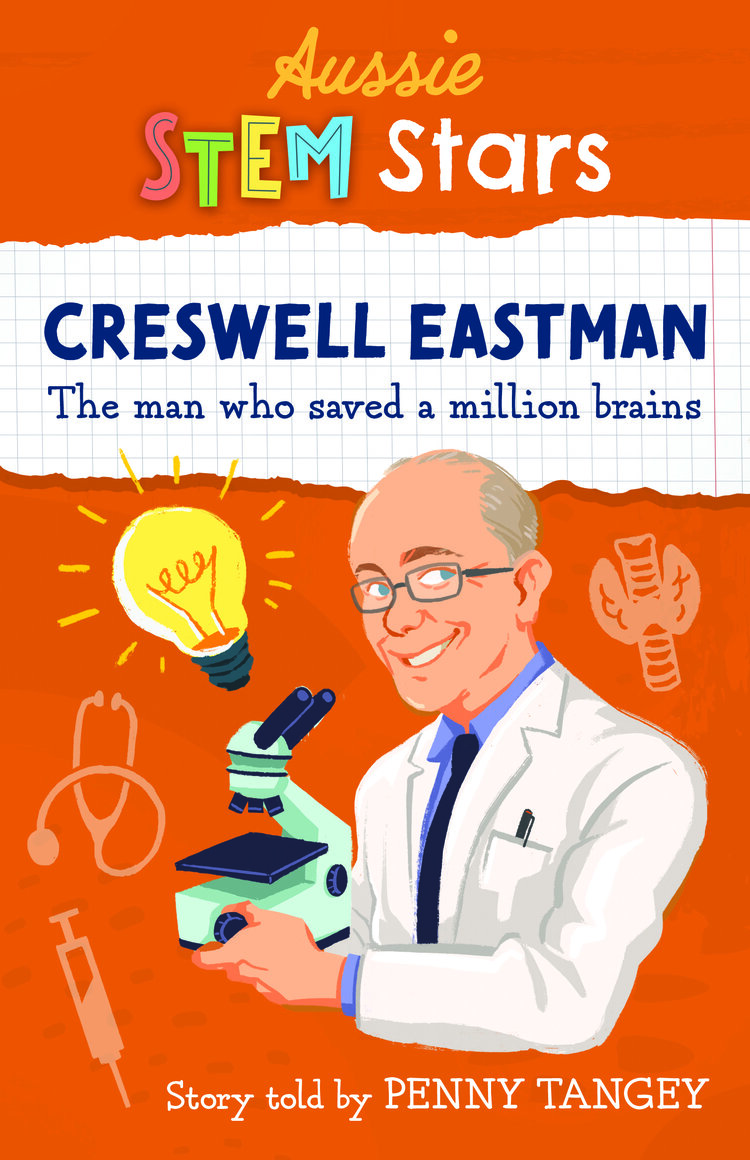
Creswell Eastman, the Man Who Saved a Million Brains by Penny Tangey, Wild Dingo Press, ISBN 9781925893526
The publisher provided a review copy of this book.
Creswell Eastman was the smartest child in the class. One day, Sister Francis asked Creswell to follow her in the hall. They walked through the senior school, into the classroom and he saw his older sister. He was tested to see if he was better at maths than anyone else. That afternoon a boy punched him for being better at maths. The next day at lunchtime his teacher, who was a nun, taught Creswell to defend himself. The following day the boy was waiting for Creswell. What would Cres do?
The thing I enjoyed the most about the book by Penny Tangey was learning how Creswell used medicine to help people. It is amazing that he saved so many people’s lives in Asia.
I recommend this book to 8 years old and up because it is wonderful and interesting. I rate this book 10 out of 10.
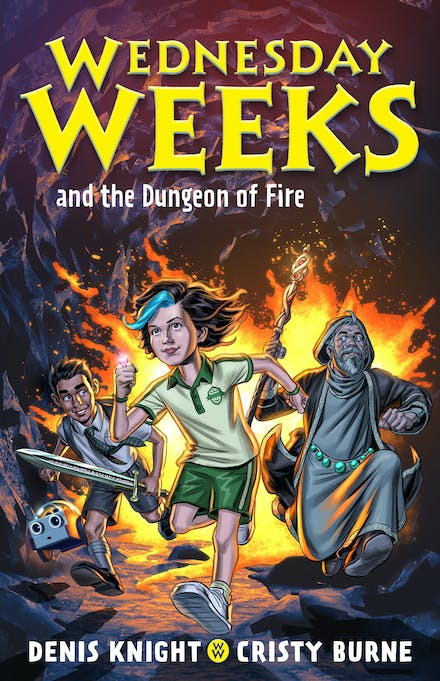
Wednesday Weeks and the Dungeon of Fire by Denis Knight and Cristy Burne, Lothian Children’s Books, ISBN 9780734420237
Emily received a review copy of this book.
Wednesday Weeks and the Dungeon of Fire is a thrilling science fiction book and the third book of the Wednesday Weeks series. In this adventure book Wednesday is given the chance to eliminate the tyrannical Goblin King, Gorgomoth, once and for all. But in order to do that she must beat the savage Gorgomoth to the powerful Stone of Power. To get to the Stone of Power Wednesday must face physical and mental challenges, all to save the world.
I loved this book because it’s a bit different from the other Wednesday Weeks books, seeing that the challenges that Wednesday and her friends have to confront are more exciting and harder. Another outstanding feature of this book is to explain about how meaningful having friends is.
I recommend this book to ages 7+ but it can be enjoyed by people of any age. Fans of Wednesday Weeks and the Tower of Shadows and Wednesday Weeks and the Crown of Destiny will also love this book.
Shirley Marr is an award winning author and a first generation Chinese-Australian living in sunny Perth. Shirley describes herself as having a Western Mind and an Eastern Heart and writes in the middle where both collide. Today we’re thrilled to be talking to Shirley about her latest middle grade novel, All Four Quarters of the Moon.
From the publisher:
Making mooncakes with Ah Ma for the Mid-Autumn Festival was the last day of Peijing’s old life. Now, adapting to their new life in Australia, Peijing thinks everything will turn out okay for her family as long as they have each other – but cracks are starting to appear. Her little sister, Biju, needs Peijing to be the dependable big sister. Ma Ma is no longer herself; Ah Ma keeps forgetting who she is; and Ba Ba, who used to work seven days a week, is adjusting to being a hands-on dad. How will Peijing cope with the uncertainties of her own little world while shouldering the burden of everyone else?
Peijing and her little sister, Biju, make a paper world of their own. Is this inspired by something you and your sister liked to do when you were growing up?
This is most definitely based on a true-life event! We would draw tiny animals, cut them out and then make homes for them. It was a true paper world of our imagination, which we kept inside a cardboard box. We were still learning to speak English back then, when I was seven and my sister was four, so sometimes we would act out what happened to us during the day – when I went to primary school and she went to kindy. As we had just migrated to Australia and learning to adapt was hard, it felt safer to talk about our experiences this way. Sometimes we wouldn’t talk at all, just work side by side and that was a beautiful bonding experience in itself.
Your earlier novel –A Glasshouse of Stars –was written in the second person, present tense, and All Four Quarters of the Moon is written in third person, past tense. When you start writing a new book, do you already know which point of view to adopt or does it change over subsequent drafts?
I believe that when you have a story inside of you, waiting to come out that the voice will find you. That when you start writing it, you will know if it sounds right or not. A Glasshouse of Stars needed to be second person, present tense. I wanted the reader to be able to walk in the shoes of Meixing, our young migrant protagonist, and see what the experience is like for her, as she experiences it. It took me a while to find this voice, and many abandoned drafts. All Four Quarters of the Moon on the other hand, as it contains a lot of Chinese myth, felt to me like an old-fashioned story that had already happened and which I was retelling in past tense. That one I nailed on the first go, so it’s case by case for me!
How do you choose the names for the characters in your books?
Sometimes I look at baby name lists and choose something that has meaning, like Meixing which means beautiful star in Chinese. Sometimes I name characters after whoever happens to be sitting closest to me, like the teacher Mr Brodie is actually named after a little dog who happened to be at my feet – so watch out! Then at other time I will name characters after real people – Ms Jardine in A Glasshouse of Stars is named after a beloved primary school teacher of mine. It’s only just recently that a keen-eyed reader asked if I had chosen the name because it means garden in French, as gardens play such a big part in the book. It’s a happy coincidence I swear!
Peijing loves the mooncakes Ah Ma makes with an egg yolk in the middle. Do you have a favourite mooncake filling?
This will be to little Biju’s disgust, but my favourite is lotus paste with double-preserved yolk!
Can you tell us something about what you’re working on next?
I have just submitted a brand-new middle grade manuscript to my agent! And she’s submitted it to my Australian publisher who I believe is looking at it as we speak – cross your fingers for me! If it’s good news, then it’s a completely different direction for me. Think contemporary sci-fi, time machines and ground control to Major Tom!
All Four Quarters of the Moon is out now! Ask for it at your favourite bookstore or local library.
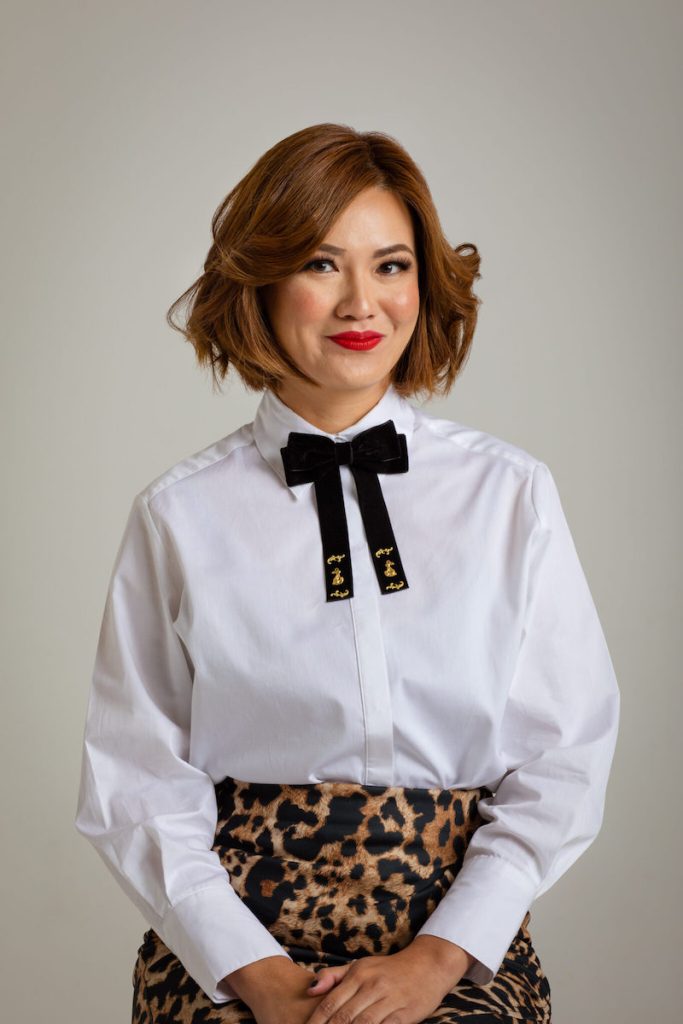
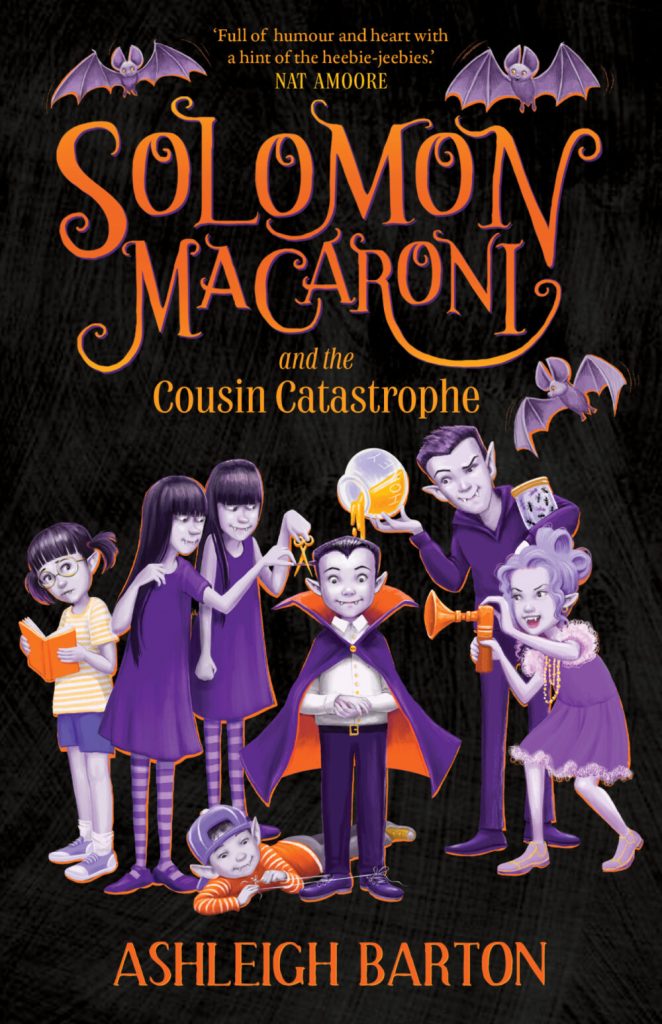
Ashleigh Barton lives in Sydney, Australia. She is the author of several picture books including What Do You call Your Grandpa?, What Do You Call Your Grandma? and What Do You Do to Celebrate? Today we’re pleased to have Ashleigh visiting Alphabet Soup to talk about her first children’s novel, Solomon Macaroni and the Cousin Catastrophe, illustrated by Sarah Davis.
From the publisher:
You’ve never met a vampire like Solomon Macaroni before – he’s friendly, polite and makes a mean tofu Bolognese. Understandably, when his parents go on a one-hundred-year cruise without him, Solomon is not impressed. Especially because it means having to stay in creepy Transylvania with his six cousins, who are the rudest and naughtiest vampires in existence. When his cousins venture into the spooky Wildwood on a dangerous mission, Solomon agrees to help rescue them. At least, that’s what he thinks he’s doing …
So … are Solomon’s cousins inspired by your own cousins?
Solomon’s cousins are probably inspired a little bit by my own family but not on purpose. I do have a lot of cousins (way more than Solomon does in fact – twenty-two first cousins in total!) and my siblings do love a good prank, but I didn’t intentionally base any of the characters on them. I’m sure some of their traits and our relationships growing up have probably showed up at least a little bit. Funnily enough, when one of my brothers first saw the cover, he thought the character illustrations were based on us. It was just a coincidence but I can see what he means – there is a bit of uncanny resemblance to our different personalities! (He thought Lucy, with her head in her book, was me.)
Did you suffer (or instigate) a memorable prank when you were growing up?
Looking back, pranking has definitely been a constant part of my life but fortunately nothing too traumatic. Everyone in my immediate family seems to love a good prank. My dad loved hiding our food if we left the room and once my brother stuck a fake spider high up on a wall to scare our dad when he got home from work. Poor Dad spent ages trying to get the spider down. A lot of my childhood friends and I loved pranking too. Some of the pranks we pulled were a bit naughty so I don’t want to share in case I give you ideas!
Which character in the book would you most like to spend an afternoon with?
Probably Uncle Dracula! He is a lot of fun and I’d be up for trying any of his whacky inventions, especially ones involving ice cream. It would also be amazing to listen to his stories and find out what life was like throughout the different centuries. Arrubakook – the wayfinding kookaburra – would also be a handy companion if I could hang out with her regularly because I can’t find my way anywhere.
Do you have a tip for children who’d like to try writing a novel?
One thing I’ve been having a lot of fun doing with kids in schools lately is coming up with a character to turn upside down the way I’ve done with vampires in Solomon Macaroni. The vampires in my story are completely different to traditional vampires – they don’t drink blood, they aren’t immortal (though they can live a really long time and age really slowly), they don’t have any powers or abilities and they can definitely eat garlic. This is because in Solomon’s world, magic has almost completely disappeared. The character of Dracula – a very well-known character from literature who is usually depicted as heartless and monstrous – is actually a very nice, caring and creative person. So, you could come up with your own character based on either a famous literary figure or a mythical creature and then completely rewrite them. Give them new characteristics and personality traits. You could even change their appearances, their family and friends, where they live and what they live for. It’s a great way to let your imagination run wild and then a story will often fall into place around this character you’re creating.
Can you tell us a bit about what you’re working on next?
I’m always working on a bunch of things and constantly have ideas whirling around my head, but the project that I am properly working on now (or should be working on now) is the second Solomon Macaroni book. In book two, Solomon, his cousins and Uncle Dracula head to Paris for a family holiday that goes very, very wrong.
Solomon Macaroni and the Cousin Catastrophe is out now! Ask for it at your favourite bookshop or local library.
Success, Sadness and School by Analia, 11, NY, USA
My pen, my sword
My peers, my soldiers
My teachers, my trainers
My school, my kingdom

The doors gossip as I walk through the hall
Desks and computers conspiring against me
My heart – a ticking time bomb
The pressure closes around me
Even though my school is my family

It’s my hidden treasure in an unknown cave
What I rely on every day
Fighting against the perfection part of me
Striving for my wishing star
What I see before me

Grades are the food that fuel me
The vividness of the green report card staring right at me
It giggles and laughs
Staring right at me
The pressure is still closing around me

This is all I have
Without it, I am nothing
What can I do?
Where can I go?

There are still so many years ahead of me
Yet I feel like I’ll never see school again
Every time I’m absent, I rip myself apart
A knife cutting through me, my heart is crushed

But, I must learn to control the perfection part of me
Or else it will forever control me
Even though I feel like a weathered book
My pages must turn
My story must continue


 alphabetsoup.net.au