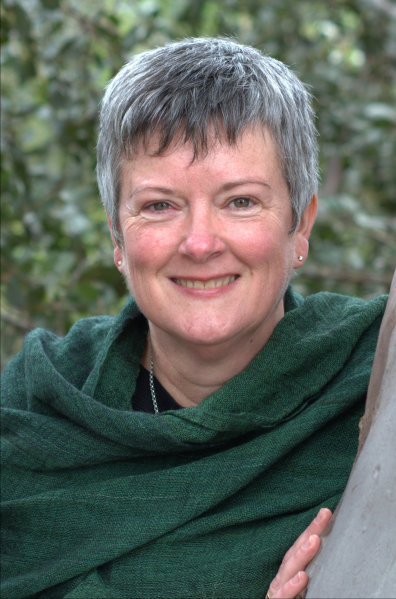

This post was added by Rebecca Newman. Rebecca is a children's writer and poet, and the editor of the Australian children's literary blog, Alphabet Soup.
For more about Rebecca visit: rebeccanewman.net.au.
Escape From Marigold Manor by Rachel Jackson, Riveted Press, ISBN 9781763526068
REVIEWED BY ELLA, 9, WA
The publisher provided a review copy of this title.
Escape from Marigold Manor is a detective book with lots of cases, which the reader sometimes has to help solve.
This is not the kind of book I would usually read, but I enjoyed the surprising endings and interesting challenges. I did find some of the challenges a little bit tricky!
I would recommend this book to anyone who likes mysteries and puzzles, and choose-your-own-adventure books!
Teams of kids on an alien planet competing to get into Starquest Academy, three clues and only three days to find their way to the finish line. Today we’re chatting with HM Waugh about her latest book: The Surface Trials. HM Waugh is a children’s author, educator and environmental scientist with a long-term love of wild places and outdoor adventures. She has handled dragons for a job, and dreams of one day blasting into space. Her books mix humour, danger and friendship with a dash of science and imagination.
From the publisher:
An epic page-turner full of twists you won’t see coming, set on an alien planet where, under the watch of a galaxy-wide TV audience, Ammy Antares and her fellow competitors must complete a challenging quest to gain entry into an elite interplanetary academy. Welcome to the Surface Trials.
In your novel, squads are groups of children competing and the groupings are assigned. If you were in The Surface Trials, what talent/knowledge/skills wouldyou bring to your squad?
I love the idea of a squad, because when I’m in an escape room there’s no way I’m getting out without other people’s ideas and points of view.
I think I’d offer my squad some halfway decent analysis of clues to try and break codes – I love pulling things apart searching for hints and patterns … Sometimes I’m even successful! I have a vast array of potentially unhelpful facts about science, gardening, and my favourite fantasy and sci-fi books. I can read maps and building plans like a pro, thanks to an early love of architecture and an ongoing commitment to epic fantasy novels. And I think I’d be pretty good at navigation and survival. I ought to be, since I teach that stuff as part of my job. Plus, every time I’ve become lost in the wilderness, I’ve made it out again!
I am also very good at eating chocolate …
The squads face some pretty hairy scenarios. How do you go about writing a scary scene for your characters? How do you let go of those ideas at night so you can sleep?
Hairy, huh? I think I know exactly what scene you’re referencing there! Scary scenes are so much fun to write! They’re important for making a story exciting, and they give my characters a chance to work out how awesome they are – which is kind of the purpose of a story, I think. For me, making words on a page capture a reader is the result of lots of little things added together.
First, I need scary subject matter. I like to get inspired by freaky science, weird facts, mind-blowing history and mouldering industrial ruins. I make sure the stakes are high – failure has to mean something bad, so the reader is on the edge of their seat. To have this work, I need to connect the reader to the characters before I launch into a big scary scene. I want the reader to see the characters as real people, people they care about. People they don’t want eaten alive by a newly-hatched alien.
Next I need rising tension – that ever-increasing sense of impending doom. This is what keeps a reader hooked to the page. I keep raising the tension throughout my books, but every big scene is a tension peak. Increasing tension in a scary scene is about shorter, sharper sentences. It’s about concentrating on what the characters would be noticing in that moment – they’re not going to be giving a monologue on the colour of the sunset if they’re being chased by a ravenous monster. They’ll be more concerned about where their friends are, where they can hide, and how hot the monster’s breath is on the backs of their legs. I also often add in little elements of humour, right smack bang in the middle of the scariness. Honestly, I don’t want my readers terrified! Plus, that dash of a laugh makes the rest of the scene seem even scarier.
Finally, to make it feel real I inject real emotions. I may not have been in any of the exact situations I put my characters in, but I think of the times I’ve been terrified and I try to write those emotions onto the page.
How do I sleep at night afterwards? Blissfully. Once a scene is written down, my mind knows it doesn’t have to keep thinking about it. It’s time to start dreaming about what my characters might face next! But if I’m partway through writing a scary scene? Yeah, that can sometimes mean a bit of a sleepless night, but that also gives me lots of great ideas about what could happen when I continue writing the next day.
The storytelling offers multiple points of view in this book; we hear from several of the squad members. Why did you decide to tell the story this way, rather than choosing to tell the story through the eyes of one character only?
Choosing points of view (POVs) is always difficult. Two of my main characters, Deneb and Ammy, are both drafted into the same squad but they’re very different people. So I felt we needed to hear from both of them. For instance, how Ammy sees herself is not always how others perceive her, and I wanted some of that vulnerability and self-doubt to show. Deneb’s POV provides this.
And, of course, I have a disguised character. Nobody in the Surface Trials knows which contestant is actually Rian Amalthea, the uber-famous and mega-rich heir to two massive space Dynasties. He could literally be anyone. I didn’t even know at first! Having Rian’s POV deepens that mystery. Where is he? Which squad is he in? Who could he be?
Do you have a tip for young writers who would like to write their own page-turner?
First off, rising tension is your friend. It works (like I’ve talked about already) with scary scenes. It also works across an entire story. Rising tension keeps the reader hooked. So … keep ratcheting it up. The stakes need to keep getting higher, the mystery more mysterious, the dangers more dangerous. But beware! Too much continuously rising tension weirdly means it stops being tense. The reader gets used to it, and it loses its impact. To avoid this, I drop the tension slightly after each peak scene so the reader can sigh in relief, before I crank it back up and they realise things are actually worse than ever! <evil laughter>
Secondly, experiment with ending your chapters on mini-cliffhangers. I like to picture all the kids out there (my own included) who have been told they can read to the end of the chapter and then it’s lights out. My aim is to have them still reading many chapters later because they just have to know what happens next. I hope they’re so deep in the book they don’t even realise they’ve read past the chapter end. If this is you, feel free to tell your responsible adult that it’s not your fault, the author (me!) did it on purpose 😊.
Can you tell us a bit about what you’re working on next?
I have three things I’m working on at the moment, and I’m in love with each of them for very different reasons. None are contracted to be published. Yet!
The Surface Trials is out now! Ask for it at your favourite bookshop or local library.
The publisher provided a review copy of this book.
Higher Ground is a picture book about a grandma, brother, sister and one rabbit who get stranded on a really tall apartment building in the rooftop garden, because of a huge flood and lots of rain. There’s nowhere to go unless they take a boat. The water is filled to the brim.
Their grandmother teaches them ways to survive with a scarce amount of food. She taught them how to tie knots and how to eat every part of a fish. She teaches them all of the knowledge she has so they can pass it on in the future.
My favourite page is where the illustrations show how they have all grown up over time. You can even see at this point, in their faces, that they have lost hope.
They end up never giving up and have enough hope that something great will happen. The moral of this book is to never give up and keep on pursuing what you believe in.
My favourite thing about this book is that there is always a cliffhanger to keep it interesting.
The book itself feels really high quality with an embossed cover and thick pages of illustrations.
I really enjoyed this book and people that like big cliffhangers and that are into adventure books and like learning new things would enjoy this book too.
A sudden rain deluge, a flooded gold mine, and a father trapped underground. Today we’re excited to be talking to Julia Lawrinson about her latest book: Trapped! The Entombed Miner of Bonnie Vale. Julia is an award-winning author of more than a dozen books for children and young adults. Her books are often about friendship, family … and the occasional Jack Russell. Trapped! is her first verse novel.
The publisher provided Alphabet Soup with a reading copy of Trapped!
From the publisher:
In 1907, the mining town of Bonnie Vale experiences a sudden deluge of rain that floods a gold mine while miners are still at work down the shaft.
Joe’s dad is one of them. And it soon becomes clear that he’s the only one who hasn’t made it back out yet. Where is he? Why didn’t he escape with the others? And more importantly, how will they rescue him?
You’ve written many novels for children and teenagers. Can you talk a bit about the experience of writing a verse novel for the first time?
I started off writing the story of Trapped! in regular prose. I went between the main character of Joe and the rescue of his father from the mine. As the story went on, I got bogged down in the details of the rescue – partly because it was all so interesting. So then I tried to work out what the main story was: what was essential, rather than just fascinating. Before I knew it, I had all these short sentences.
It was different to writing prose because I read a lot of it aloud as I wrote, to make sure it sounded like a song or a poem.
How did you first come to hear of the entombed miner?
I was in Coolgardie for Children’s Book Week, and I went into the Coolgardie Museum. It had a whole room dedicated to the story, written out on these long panels. Everyone who was there was captivated by the story, moving from panel to panel, learning about this Italian miner who was trapped underground for nine days.
Then I read on one panel that the miner had five children, and the oldest was 12. My imagination was sparked, and then I found out everything I could about the event, which made headlines around the world.
The tale is inspired by a true story from 1907. How/where did you find information for the story?
I used a combination of newspaper articles, a brilliant and very detailed book called The Entombed Miner by Tom Austen, and the State Library Western Australian collection, where I got accounts of what school life was like in 1907. I also bought The Temple Reader, which was a book used in schools with short stories, poems, and excerpts from ancient history texts and the Bible. I love doing research – it’s my favourite part of writing!
Modesto (also known as Charlie) is trapped underground for days on end, in the dark. If you were trapped underground, what do you think you would do to keep yourself calm and to pass the long hours on your own?
I would sing every song I could remember and talk to my imaginary friends.
Do you have a tip for young writers who would like to write stories based on true events?
First, find a strong story – there are so many out there! Then find a strong character and put them in the middle of the action. Once you have those two things, you’ll be able to work out what historical detail you need to flesh out your story.
Trapped! is out now. Ask for it at your favourite bookshop or local library.
This book centres around the main character, Lexie Moon, who builds a contraption that takes someone’s words and gives them to someone else but alas Lexi’s invention gets stolen by a technology-crazy burglar.
Lexi Moon and the Word Burgling Bungle is perfect for tween readers who want a fun and interesting book. I absolutely loved keeping up with Lexi’s antics and the plot kept me guessing till the very end. I cannot wait to join Lexie Moon on her next adventure!
Little Bones by Sandy Bigna, illustrations by Tamlyn Teow, UQP, ISBN 9780702268878
REVIEWED BY MARLEY, 9, WA
The publisher provided a review copy of this book.
Little Bones is about a girl called Bones and she loves collecting animal bones for her collection. She doesn’t have many friends at school and people think she’s a freak. She ends up finding a little skeleton of a bird at the wetlands, she brings it back to her house and wishes the bird would come alive again. And guess what? He came alive.
The book is very different to other books I’ve read. It’s way more heart-warming and has different formatting. And I love the front cover.
I liked how there was always a cliff hanger and you could never stop reading the book without finding out what happened next.
My favourite character was Tenny, because Tenny is really sweet and kind. They are the perfect match for Bones as they are kind of Bones’ happy shadow. I liked the inclusion of diverse characters.
I liked the setting because it has very big home cosy vibes and it makes it feel more realistic.
I found the story very interesting because there aren’t many stories about people dying in kids books, but i think more should because you can’t just hide away what’s sensitive from kids. I didn’t find myself being sad, but intrigued to see how Bones would overcome her own sadness and regret.
I think people that are not super sensitive would enjoy this book. Its a mix between fantasy and adventure and about overcoming your fears. Also people that don’t feel like they belong might be intrigued to find out what’s in this book.
Rachel Jackson draws on her extensive experience as an intelligence specialist to create twisty branching plotlines. She’s also a sucker for good puzzles and bad jokes – subject matter that she shares generously with her readers in the Solve It Your Way series published by Riveted Press. Today we’re chatting to Rachel about her latest book in the series: Escape from Marigold Manor.
The publisher provided a review copy of Escape From Marigold Manor.
From the publisher:
You are the greatest detective in the land and you’re facing your biggest mystery yet. It turns out there is more than one way to leave Marigold Manor … You’ll find thirty-two unique endings in Escape from Marigold Manor. Each mystery requires you to complete a series of interviews and brainteasers in order to identify the culprit. The challenges include puzzles that you must crack in order to unlock safes, read secret messages and locate hidden clues. The casefiles at the back of the book will help you keep track of which cases you’ve sold, and which cases still await you in the mansion. Can you solve them all?
Escape from Marigold Manor has 32 mysteries in one book, with the reader’s choices affecting the path each mystery takes. As the writer, is it tricky to keep track of all those story paths?
I always joke that my brain is all over the place, and the Solve It Your Way books are just a reflection of my brain! Truth is, when I’m writing an interactive fiction like this, I use a spreadsheet to create a visual chart of the book’s structure. If you’ve ever done mind-mapping – with the ideas in little bubbles and lines branching out from there to more idea bubbles – it’s a lot like that.
The tricky part can be finding the right puzzle for a specific part of the story. This is particularly true in the case of Escape from Marigold Manor – where there are puzzles inside of puzzles as you navigate crime scenes and suspects.
When you read interactive stories like these, are you the kind of reader who picks a path and forges on – or do you keep a finger bookmarking the various pathways so you can try a different path if you don’t like the outcome of your first choice?
Oh, finger bookmarking – definitely! And I would run out of fingers. In fact, this is the exact reason that Escape from Marigold Manor has a checklist at the back with page numbers so you can reinsert yourself into the story at key junctions, without having to start all over again. Now, fingers are free for tearing out hair, biting fingernails or otherwise immersing yourself in the dastardly world of Marigold Manor.
In real life you have experience solving mysteries, and in Escape from Marigold Manor, the reader is the detective. When there’s a mystery to be solved, what makes a great detective?
Firstly, kindness. Because the whole point of trying to solve the mystery is that you want to help someone – the victim, their family, the community and even the offender.
Once you’re knee deep in clues and suspects you need to have enough attention to detail to gather all the information surrounding the mystery, but then you need to be able to decide which information is actually useful. If you find yourself faced with a mystery (say, your pencil is gone), start by asking small questions that you can answer (such as – when did you see it last? Two days ago, on your bookshelf!). This will lead you to bigger questions that you can’t answer – yet! (Who had access to my bookshelf in the last two days?). That knowledge gap is where you need to focus your investigation. You might want to interview suspects (your little brother?) to identify motive (he was looking for a pencil last week!) and opportunity (but he was camping with Dad the whole time, so he couldn’t have taken the pencil). Keep asking questions and chasing up new leads. Even the ones that don’t seem important at first (mum did the shopping yesterday), might turn out to be the key to solving the mystery! (Mum borrowed your pencil to write the shopping list.)
Do you have a tip for young writers who want to write a mystery story of their own?
Do it! Honestly, it’s so much fun. The key to a good mystery, in my opinion, is that more than one character should have good reason to have committed the crime. So, make your characters really interesting, with shades of good and bad. That way, whoever your villain turns out to be, it will make sense to the reader!
Can you tell us a bit about what you’re working on next?
The most wonderful thing about the Solve It Your Way Series is that I get to build these puzzle-filled interactive storylines in a brand new setting each time. First was a swashbuckling pirate adventure in Escape from Cuttlefish Cove, then came the detective who-dunnit in Escape from Marigold Manor. Up next – dragons! Oodles of dragons for the reader to collect and interact with. Sleep with one eye open – Escape from Firestone Fortress is coming!
Escape from Marigold Manor is out now! Ask for it at your favourite bookshop or local library.
Ella and the Amazing Frog Orchestra by Cassy Polimeni, illustrated by Hykie Breeze, UWA Publishing, ISBN 9781760802899
REVIEWED BY ELLA, 9, WA
The publisher provided a review copy of this book.
Ella and the Amazing Frog Orchestra is a fiction book with lots of facts about frogs. The story is about Ella, who moves house and finds frogs near her new home.
I really liked the author’s descriptions of all the details in the book, and all the onomatopoeia, that made me feel like I was actually there. I thought Ella was a fun and likeable main character. The illustrations were really good, I just wish they had more colour in the book.
I think that anyone aged 5-9 would enjoy this book. Anyone who likes frogs or wants to learn about frogs, would love this book.
Funny, scary, a dash of magic – Rise of the Witch is the first book in the new Everglade series by Kitty Black, with illustrations by Rebecca Crane. Kitty is already the author of numerous picture books and today we’re chatting about the creation of her first novel.
The publisher provided Alphabet Soup with a reading copy of Rise of the Witch.
From the publisher:
Everglade loves to hate witches. And as the daughter of the last witch, Wren Westerly is the most hated person in town. She can only imagine what would happen if the townspeople found out she can actually see magic … even if she has no idea how to use it.
Rise of the Witch is funny, and a bit scary in parts, with a large dash of magic. Often authors say they set out to write the sort of book they always wanted to read when they were growing up, what were your go-to books as a young reader?
Ha! This was exactly my motivation! My favourite book as a young child was The Magic Faraway Tree by Enid Blyton, and once I was older, I was basically obsessed with all of Terry Pratchett’s books. I also remember being thrillingly frightened by Emily Rodda’s Rowan of Rin and learning sections off by heart. Fantasy/Adventure has always been my favourite genre, and if it’s funny or a little bit scary (or both!) then so much the better.
What makes the perfect villain?
I love a villain with a backstory. I think there has to be some scariness initially, but then as you get to know the character you learn more about their motivations. The perfect villain might be one where their behaviour becomes the tiniest bit understandable – but, of course, they take it to a terrifying extreme. I also love a hidden villain (spoilers!).
This is book one of a series. Did you plot out the entire series before you began writing book 1? Or will you tackle each book as you get to it?
I had no idea what I was doing when I started writing Book 1. I was 50,000 words into the first book when I realised that there was no way that everything I wanted to happen was going to happen in a single book. Thus, a series was born! I know the major plot points for each book, but I like to keep some room for creativity and surprises (for both myself, and the reader!).
Do you have a tip for young writers who would like to write stories set in a magical world?
Magical worlds are so much fun! I have two tips. The first is to chuck whatever you love into your magical world, and that way you’ll love your story. I have a soft spot for big, beautiful trees, and I’ve always wanted to be able to talk to animals, so both of those feature in Everglade. My second tip is to make sure that whatever magic you use in your world has a cost associated with it – whether that’s physical, emotional, or in unforeseen consequences.
Can you tell us a bit about what you’re working on next?
At the moment I’m deep into working on the second Everglade book, and I cannot wait for everyone to read it. I can’t say more, or I’ll give away all my secrets!
Rise of the Witch is out now! Ask for it at your favourite bookshop or local library.