If you are a teacher, librarian, teacher-librarian, or any grownup who loves children’s books (and who doesn’t?!) on 8 March you should head along to A Night With Our Stars at Westbooks in Victoria Park.
Twenty children’s (and YA) authors and illustrators will each have 3 mins to speed-talk about their books published last year. It’s an annual event run by the Children’s Book Council of Australia WA branch and it’s open to the public. Here’s a list of the fabulous speakers:
In every issue of Alphabet Soup magazine we print an interview with an author or illustrator. We can’t fit all their answers into an issue of the magazine, so we publish the full interviews on the blog—we wouldn’t want you to miss out!
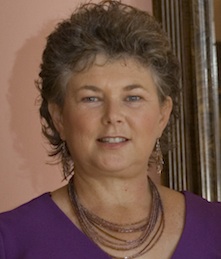
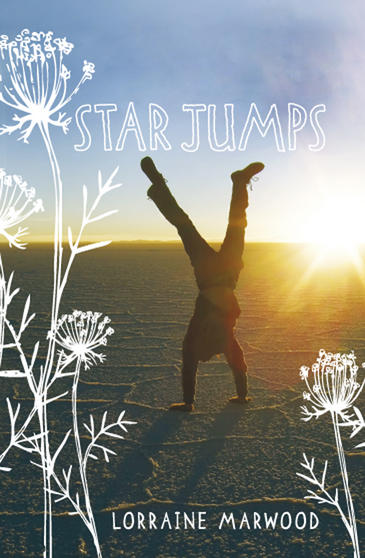
For issue 14 we talked to Lorraine Marwood. Lorraine is a poet, and the author of many books including Star Jumps, and Note on the Door, and A Ute Picnic.
What made you become a writer/poet?
I don’t think that anything ‘made’ me become a writer. It was a heartfelt feeling when I was about 8 years old—that was all I secretly ever wanted to do. And I never ever lost that longing. Or that passion for writing and reading.
Was it easy to get your first poem published? (Your first book/book of poems?)
No not at all. It wasn’t till I was about 16 years old that my first poem was published and that was after much writing and submitting—but what a thrill it was.
My first book of poems came after I’d had my children and was still farming. And it only came after I’d notched up publishing credits in literary magazines—a bit like an apprenticeship in poetry.
Where do you get your inspiration and ideas?
From everything happening around me—little incidents, nature, my family, newspapers, what I read and of course big doses of thinking and jotting down.
Did you read poetry when you were growing up?
My teacher read us classic poetry like Banjo Paterson, Wordsworth and we had a class reader for the year and we always read the poems in that (but as a teenager I discovered T.S. Eliot and a Russian poet called Yevtushenko). But we mainly read rhyming poetry which was also mainly English poets.
Did you have a favourite poet/poem/book of poetry when you were growing up?
T. S Eliot ‘The journey of the Magi,’ and also Australian Bruce Dawe.
Is your poetry influenced by particular poets/writers?
Yes, I think I’m influenced by those poets I really admire—like ee cummings, I love the freedom and rhythm of his work; Bruce Dawe’s Vietnam poem—‘They’re bringing them home’; T.S Eliot; Sue Cowling; ‘FiveBells’ by Australian poet Kenneth Slessor; Judith Wright; and now I read lots of children’s poets. I think I’m influenced by those poets who tell a story, a narrative, that surprise and use their poetic craft really well. What do you like to do when you are not writing?
I love to make things—sew, bead, garden, pot up cuttings, read, make cards, op shop—they are creative things to do (well, for me!) think, wonder, pray.
Do you mostly write on paper or on a computer?
Now that’s an interesting question because for poetry I like to write in one of my notebooks, but for stories I write on my laptop.
Is there a difference in the way you approach writing a poem and writing a verse novel?
Yes, a poem is a little unit on its own with beginning, middle and end. But a verse novel is many components that lead on and borrow from story telling—it’s a more ‘prosy’ way of writing, where a poem is tiny and delicious like a ripe strawberry.
Are you working on a collection of poems or a book at the moment?
I am working on another collection of poems—so for that, I need to aim for about 100 new poems. At the moment I’m thinking of section headings or groupings for the poems, a bit like chapters in a book. This collection will be entirely new. And as I write, I’ve already finished another verse novel—again entirely different from my other verse novels in content and for a slightly older age group—but awaiting the green light from my publisher. Do you have any advice for young poets?
Yes, write whenever you can. Start with lists of what is around you—lines of three or four words, get all the details down and use those wonderful senses too. Keep these jottings in a note book, put the date on them and keep them. Look back over them and see if any ideas for a fuller poem can be found.
No lines of writing are ever wasted, they lead you on a journey to becoming a writer/poet. It’s such a surprise to see what comes from your pen or keyboard. And a such a pleasure to read again after a few weeks or months have gone by …
—
Find out more about Lorraine Marwood and her books and poetry—visit her website, or check out a bookstore or library near you!
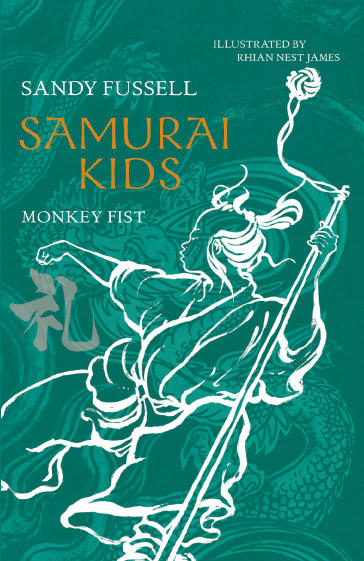
All through October, Alphabet Soup is celebrating turning three. We have heaps of writers and illustrators stopping by to answer THREE QUICK QUESTIONS and today’s visitor is Sandy Fussell, author of many books including the Samurai Kids series, Polar Boy and Jaguar Warrior.
1. Where do you like to write?
I write everywhere—even at the school bus stop. I like to sit in the sun and draft longhand but when it comes to the ‘spit and polish’ I work on a laptop in my office.
2. Can you name a book you’d recommend to our readers?
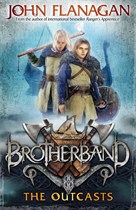
I am very fortunate as a reviewer to have an advance copy of The Outcasts, the first book in John Flanagan’s new Brotherband series. I think it’s even better than his Ranger’s Apprentice books and I loved those. The Outcasts is released 1 November.
Sandy Fussell recommends The Outcasts by John Flanagan
3. Can you offer a word or phrase that kids could use for inspiration if they have writer’s block?
I have two favourites. ‘snizzle’ which I used in Polar boy (a snizzle of snow’) and ‘screak’ (the screak of a bat) which I used in Samurai Kids 2: Owl Ninja. I collect unusual words and often use them as inspiration or to give a description more impact.
28/6/2011 notice: We have been advised that this event has been cancelled.
The Children’s Book Council of Australia (WA branch) runs an annual book-based quiz in the style of ABC TV show, Spicks ‘n’ Specks. It’s called BOOKWIZ! Bring your family and friends along for a fun afternoon and meet local authors and illustrators.
Sunday 3 July, 2-4 pm
MC:MEG MCKINLAY (author of Duck for a Day and The Truth About Penguins Where:Boulevard Centre, Floreat [beneath Cambridge Library], Western Australia Cost: $12 adults $6 school students [includes refreshments] Bookings: Chloe Mauger –cmauger@iinet.net.au– phone: 9295 1328
In every issue of Alphabet Soup magazine we interview an author or illustrator. The trouble is, we can only fit some of their answers in the magazine. So we print the full interviews on the blog—we wouldn’t want you to miss out!
In issue 11 we talked to Wendy Orr, author of many books, including Nim’s Island, The Princess and her Panther, and Raven’s Mountain.
1. Where do you live?
On a hill near the sea on the Mornington Peninsula, south of Melbourne.
2. What made you become a writer?
I love stories and books so much that I always knew I wanted to write them. My dad used to tell us crazy stories that he made up, and my mum read us wonderful books for bedtime stories, so wanting to write books never seemed like a strange thing to do.
3. What do you like to do when you are not writing?
Reading, going for walks (especially on the beach or in the bush, and especially with my dog), seeing my friends and family, doing tai chi, and travelling.
4. Was it easy to get your first book published?
I was quite lucky with my first book (Amanda’s Dinosaur) because it won a competition, and the prize was having it published. The next few were harder!
5. What was your favourite book as a child?
At different ages: Winnie the Pooh; My Son in Law the Hippopotamus; Anne of Green Gables; Swallows and Amazons; Little Women; The Eagle of the Ninth.
6. Where do you get your ideas?
I’m often not sure where an idea has come from until I’ve finished the first draft. Sometimes it’s from something that has happened in my life, and sometimes it’s a crazy sort of thought—which of course has still probably happened from something I’ve seen or heard or experienced in some way. Sometimes it might be by asking ‘What if?’ about something that’s happened. Of course you need a lot of ideas to make a whole book—one idea starts it, but then you need more for how a character looks or acts, or what happens in chapter 3, and what’s exciting in chapter 5, or how everything all comes together in the end … I sometimes think that there’s a little bit of magic in how all these different ideas come together.
7. Do you prefer to write with a pen in a notebook, or on the computer?
On the computer. I use a pen to make notes in a notebook with a pen; often one book will have its own notebook and I jot down my thoughts or try to work something out. But once I start writing the story, I always use the computer. (For one thing my handwriting is so messy that writing a whole story with a pen would be too tiring— and even worse, I often can’t read my writing!)
8. What do you love best about being a writer?
Living inside a story and playing with it till it comes out right.
9. Of your own books, do you have a favourite?
It’s very hard to choose a favourite, because they’re like friends or pets. I sometimes think Ark in the Park is my favourite, because when I read it there are still no words I want to change or lines I’d like to rewrite. But Nim has been my favourite character for a while—except that now Raven’s Mountain is out, in many ways that’s my favourite, because I always feel very protective about a new character about to face world. So that might be why Raven is my favourite character right now.
10. Are you working on a book at the moment? Can you tell us anything about it?
I’m always working on several books at a time. I’ve just finished Raven’s Mountain, which was out in February. The short blurb would be, ‘Three people go up a mountain; one comes down.’ It’s an adventure story about a girl named Raven who goes mountain climbing with her older sister and stepdad—but when there’s a rockfall and the others are trapped, Raven has to face the wilderness alone to try to save them, and herself.
I’m also working on a series of books set in The Rainbow Street Animal Shelter. I’m doing these with an American publisher; in Australia the stories will most likely be collected into one or two books. I’ve just finished editing the second book, MISSING: A Cat Called Buster, and now am waiting for my editor to work on the third book while I rewrite the fourth (FREE: A Lion Called Kiki).
There are also several other books at various stages on my computer and in my head!
11. You write picture books, books for primary school aged kids, and young adult books. Do you have a favourite age group to write for?
If I had to choose one age group, it would be primary school or middle grade readers. But I’m very glad that I can skip around and play with a picture book or plan an adult novel in between.
12. How do you know if an idea is best for a picture book, a middle grade book or a young adult book?
That’s part of the mystery of writing that I don’t understand. As an idea starts to grow into my mind, it shows me the shape the book will be, so that by the time I’m ready to write it, it’s obvious what sort of story it wants to be.
13. Do you have any advice for young writers?
Just keep on writing! Have fun with it; try writing different types of stories with different types of characters. Remember that the first person you’re writing for is yourself—you need to love what you’re doing. When you’ve finished, read it and see if there are any parts that are a bit boring, or don’t make sense—pretend you’re a teacher with a big red pen, be brave and mark everything that isn’t good. Ask yourself if that bit needs to be in the story. If it doesn’t—delete it. If it does—make it better. Does it make you laugh, or cry, or hold your breath? Keep on rereading and rewriting till you’re happy with everything in your story.
And don’t forget to read, and experiment with different types of books. Writers need to see how other writers work—but most of all, we need to love stories.
On Maddie’s first day at a new school, nobody notices her, even though she hangs around the edges of the other kids’ games and hopes to join in. On the second day, she becomes Monster Maddie, with ‘fangs and claws and wild, wild hair … “I’ll show them!” she said’. Of course her mean and hurtful behaviour doesn’t win her any friends and she realises nobody is going to invite her to play. She stomps away in tears—then, with the help of a curious kitten,she finally comes up with a better way to join in on the playground.
What sparked the idea for you to write Monster Maddie?
As a school teacher, I saw lots of kids like Maddie. They didn’t understand how to make friends, and acted out. They did mean hurtful things in a desperate effort to be noticed and they certainly didn’t realise their behaviour was driving other kids further away. Sometimes those kids grow up to be bullies; sometimes they’re lucky—they realise what’s happening, and make an effort to be friendly. I wanted to write a book for those kids.
When I was at University, studying German, we read a book called Metamorphosis by a writer called Kafka. In the beginning of that story, the main character wakes up as a giant bug. I guess the idea of Maddie actually looking monsterish came from the profound effect that book had on me. I’ve also written a short story where a guy wakes up as a rooster. So far, I have only woken up as a human, but that doesn’t stop me checking the mirror each morning!
Did you ever feel like Maddie when you were growing up?
I certainly felt awkward in new situations, but I don’t remember putting ooze in people’s shoes and dirt in their shirts! I was lucky in that when I switched schools I had lots of my friends with me. Being a new kid is difficult. Often it seems that people are ignoring you, when they just need you to find a way to include them in a game.
How long did it take to write Monster Maddie?
Months and months. The hardest part for me is always the rewriting of a book. I get feedback on it from my writing friends, think about it, put it away for a while and make changes to it when I can see it with fresh eyes.
You say you have to rewrite after you write the story down. Is Monster Maddie very different from the first version you wrote?
It was always a story about a little girl who got mad when the kids at her new school wouldn’t notice her, and turned into a monster. I think what changed was that it got fine-tuned. I deleted unnecessary words, made the structure of the story stronger, and worked hard to make sure the story sounded good to read aloud.
Have you met Monster Maddie‘s illustrator?
No, K.C.Snider lives in the USA and I live in Australia. But I talked to her via email.
Are you working on a new project at the moment?
At the moment, I’m working on two novels and a picture book. The picture book is about some sheep who want very much to go to the farmer’s wedding, only they aren’t invited. They try hard to get in, and end up succeeding in a most surprising way.
Monster Maddie includes 7 pages of activities, including a script for Monster Maddie to be performed. Do you think picture books make good theatre?
I think picture books are wonderful! They are perfect for kids to use to create their own reader’s theatre around, or just to act out the story for family and friends. I have a series of four articles at The Book Chook blog where I talk you through the process of using Reader’s Theatre.
You can find out more about Susan Stephenson and her books on her website. The Book Chook has writing tips for kids in every issue of Alphabet Soup magazine. You can find more about literacy for parents and teachers on The Book Chook’s blog).
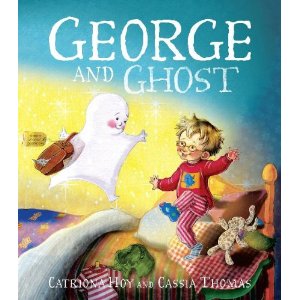
Today we are chatting with Catriona Hoy as part of her blog tour to celebrate her new book George and Ghost. Here’s a bit about the book:
George and Ghost are friends, but George isn’t sure he believes in Ghost anymore. How can Ghost prove to George that he is real?George and Ghost is a tale of friendship, with a little bit of science and philosophy thrown in.
The author writes the story and the illustrator works on the illustrations. Does a picture book need an editor?
Thanks for being part of my blog tour Rebecca. Glad you asked that first question.
People often think that picture books are simple to write and therefore edit, however, picture books are actually quite complex beasts. Picture books start as a series of words and or images in the author’s head. These words are then interpreted by the illustrator and the editor has the job of making sure that the illustrations match the text in tone and make sense. In many ways the illustrator will add extra layers of meaning and even their own ‘in jokes.’ The editor is much more than just someone who looks at the text; they have to see the whole picture.
Picture book editors begin by looking at the text which they may, or may not ask you to rewrite. They will look at it with fresh eyes to make sure the story flows, the language is clear and engaging. They may see the work in a completely different way to the writer.
I’ve worked with some great editors and have learnt something from the editing process with each book. Different editors have different ways of working but the process should be an ongoing dialogue. When I first began writing, I didn’t think about what should go on each page; whereas now I’ve learnt that with illustrations your eye should flow naturally from one page to the next … and the placing of the text is a big part in the unfolding of the story.
So the simple answer is yes, most definitely!
What sorts of things did the editor do/ask/say about George and Ghost?
I was very lucky with George and Ghost, as I had moved to the UK at that time and did not have a publisher over there. I sent a query email, as I was already published in Australia and was asked to submit. Within a couple of days I had a very positive response from the editor, which is almost unheard of in writing circles. So I felt good things would come. I ended up working with Emma Layfield at Hodder, who did a fantastic job.
George and Ghost is about half the size that it was when I wrote it and that comes down to the editor and I seeing the story in different ways. When I wrote George and Ghost, I was living in the UK and my children were going to school there. I was also teaching science in the local high school. My science teaching background influenced me to an extent, so to me the story was about the scientific method, matter vs energy, how to measure appropriately … all sorts of things. It was actually quite a complex book to write, to get such big ideas in a simple form. However, my editor saw it as a book about childhood friendship. Actually, it’s both. In this case, Emma operated on my original manuscript and removed what I considered at the time to be quite vital components. She also suggested rephrasing the text … as a scientist I had posed each challenge as a question, with the repeating phrase ‘prove it.’ That phrase was ditched and we ended up agreeing on a format.
(And it’s not just the editor who is involved, increasingly the marketing team is also involved at an early stage.)
Catriona Hoy, author of George and Ghost
Did you always agree with what your editor said?
I didn’t agree at first with the changes, especially as I felt such a large part had been cut out. It’s sometimes difficult to step back from something you have been so close to for a while. I emailed copies of the new text to friends to ask if it made sense and they said that it did. In the end, I came to the conclusion that the story was stronger for having some of that material removed and crossed my fingers and toes. I planned to have supporting curriculum material on my website.
Do you have to make changes to the story if the editor asks you to?
The bottom line … yes. It’s a commercial product after all. In the end if you can’t come to a compromise, you have the choice of walking away, which would be a really drastic step for an editor or an author to take. If you feel really strongly however, and can logically argue the point, most editors will listen. With George and Ghost, I insisted very strongly on one particular point. I’d conceded most of the changes—however, one change I felt was scientifically incorrect and I couldn’t see how it could be acceptable. Eventually we worked out a wording where we were all happy.
Basically, Ghost was trying to show that some things such as sunshine and music were real but didn’t weigh anything (because they are forms of energy). Ghost says ‘sunshine is real so it should take up space’ but in the next scene they try to weigh a ‘thought’. I didn’t want Ghost to say that thoughts were real, which would follow the pattern in the text. In the end we agreed on ‘And thoughts should weigh something,’ said Ghost. For me, that just felt a little better.
How did you work with your editor?
I usually work via email, that way, we’ve both got a record of what’s been said. That means that I can also work wherever I am. These days, illustrators can send big files, which is much easier than for my first book, where I had to go and physically view them. I can also think carefully about what I want to say. It’s always nice to meet the editor of course. I did meet the editor for George and Ghost after it was all done, at a publisher’s Christmas party in London, however I have other editors whom I have never met.
How would George and Ghost be different if it hadn’t had an editor?
Probably longer, and not quite so lovable! Emma also had the important job of finding the right illustrator and she made the perfect choice with Cassia Thomas. Her illustrations bring to life the emotions in the book, because in the end, it really is a simple story about friendship.
Thanks for having me visit today and I’ve really enjoyed answering your questions. Catriona Hoy
Check out the other stops on the George and Ghost blog tour: Mon 7 March Claire Saxby Art vs Science Tue 8 MarchAlphabet Soup Magazine Does a picture book need editing? Wed 9 MarchTrevor Cairney Writing journey Thur 10 MarchRobyn Opie Writing George and Ghost Fri 11 MarchDee White Ghosts? Do you believe? Sat 12 MarchChris Bell Writing picture books. Sun 13 March Day off! Mon 14 MarchLorraine Marwood In conclusion …
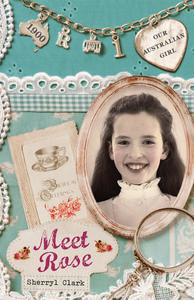
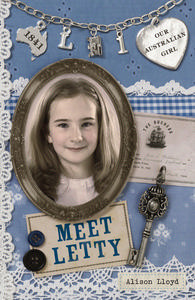
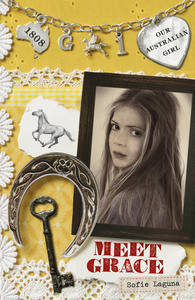
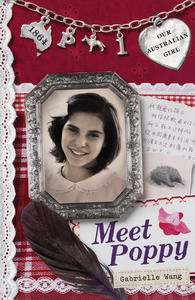
This month there is a new series out called Our Australian Girl. Each story in the series is set in a particular era of Australian history and the first books in the series explore the convict era and colonisation, the goldrush and Federation. In the first books we meet Grace, Letty, Poppy and Rose. Each of their stories begins in a different era and each character has their own series of four books.
Today we are lucky to have one of the authors visiting Soup Blog. Gabrielle Wang is writing the series about Poppy. The first book, Meet Poppy, is out now.
Were you asked to write Poppy’s story in particular?
I was given the name Poppy by my publisher. But they let me decide on the era in Australian history that I wanted to write about. I chose the Gold Rush because it was a very exciting time, and because my great grandfather came to Australia then. He was Chinese. I have written him into the third book which is called Poppy and the Thief. I have never met my great grandfather so I don’t know what kind of man he was. I therefore had to make up a lot, especially about his personality. But I did know what town he settled in and what he did for a living. There is a plaque in Wahgunyah on the Murray River that is dedicated to him. He was a pioneer in that area.
Poppy’s story is set in 1864. Did you have to do some research before you starting writing?
With historical fiction you always have to do heaps of research. Even though Poppy is not a real person, a lot of the facts in the novel are true. For example, Harry Power is a real bushranger. When I write a story, I see a picture in my mind as if I’m watching a movie, so before I could start the Poppy series I had to have an image in my mind of the way Victoria looked back then—the towns, the way people dressed, their hairstyles, the food they ate etc. Because 1864 is quite early in the history of white settlement in Victoria, most of the towns we know today didn’t exist then. I had to be very careful not to write about a town that had not been built yet. How long did you need to research before you were ready to write?
I researched the story for about 4 months then I wrote a first draft. This is when you write and don’t stop to do corrections. You just want to get the story down. There are four books in the Poppy series but I wrote the first draft as if it was one long novel because that’s what it is really. Each small novel is only a part of a bigger story. Of course the research part doesn’t stop when you start writing. For example, in Meet Poppy, I needed to know how people lit stoves and fires in 1864. Were there matches? I needed to know what kind of lighting they used and what washhouses looked like, and much much more. As I wrote the story I was constantly on the internet searching for small details like these. We are so lucky that Google is available. It makes writing much easier. Did you go anywhere else to find your information?
I went to the State Library of Victoria and did a lot of my research there. Unlike suburban libraries, you are not allowed to borrow the books from any State Library. I also took books out from my own local library, used the Internet, bought books to keep, and interviewed people. The story takes place along the Murray River, so I drove up to Beechworth and stayed for the weekend to get a good idea of the vegetation and have a look at the historic towns there. Poppy is born to a Chinese father and an Aboriginal mother so I have had to work closely with several Aboriginal people to make sure everything I wrote concerning Indigenous matters was correct. Do you think growing up in 1864 was very different from growing up in 2011?
Try to imagine what life would have been like back then. There is no electricity, no computers, no aeroplanes or cars. The toilet is outside or just a hole in the ground. You ride on horses or in carriages or else walk. If your father is a gold prospector you probably live in a tent or bark hut if you’re lucky, by the banks of a creek muddied with gold panning. You don’t go to school unless you live in a town. Probably at least one of your brothers and sisters has died. If you are an Aboriginal girl, life is much worse for you. You would be forcibly taken away from your parents and put on a mission like Bird Creek. There you would be trained as a servant girl to work in a rich person’s home. You most likely would never see your mum or dad ever again. What do you like best about Poppy’s character?
Poppy is brave, much braver than I could ever be. She is resourceful and creative and most of all, she is very kind.
Have you read any of the other ‘Our Australian Girl’ books?
Yes. I love Grace and Letty and Rose. They are all such strong characters and their stories are very exciting.
Gabrielle Wang, author of Meet Poppy
Did you find writing ‘Meet Poppy‘ any different from writing your previous books?
The Poppy books, Meet Poppy, Poppy at Summerhill, Poppy and the Thief, and Poppy Comes Home are a series and I’ve never written a series before. But now I have a taste for it, I’ve decided to start on another series soon. I’m not sure what it’s going to be about, or what my main character will be called. I’ll let it simmer away in my mind first. Whenever I visit a school to talk about my books I’m constantly on the lookout for names to use in my next story.
Gabrielle Wang’s books include The Garden of Empress Cassia, The Pearl of Tiger Bay, The Hidden Monastery, The Lion Drummer, A Ghost in My Suitcase and Little Paradise. You can find out more about her and her books on her website http://www.gabriellewang.com/.
You can find out more about the Our Australian Girl series on the series website. The website also has a fun page including a quiz, activities and a competition.
Authors for Queensland is an online auction set up to raise money for the Qld Premier’s Disaster Relief Appeal. Up for auction are books signed by the authors and/or illustrators, picture book illustrations, manuscript assessments for writers, author mentorships, Alphabet Soup subscriptions and much more. (Make sure you check with an adult about bidding for items.)
Items that caught our eye included:
Signed copies of Wendy Orr’s new book Raven’s Mountain (out February)
Signed copies of Katrina Germein’s My Dad Thinks He’s Funny
Signed copies of Karen Collum’s Samuel’s Kisses
Signed copy of The Tomorrow Book by Jackie French
A full set of signed Billie B Brown books by Sally Rippin
Signed copy of This is the Mud by Kathryn Apel
Signed copies of Famous and Chess Nuts by Julia Lawrinson
Illustration (unframed) by Judith Rossell from Janeen Brian’s book Too Tight Benito









 alphabetsoup.net.au