Posted in authors

A picture book’s journey, with Claire Saxby

Sheep, Goat and the Creaking Gate

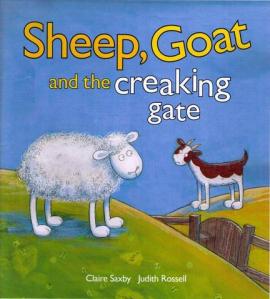
Australian author, Claire Saxby, is on a blog tour with her new picture book, Sheep, Goat and the Creaking Gate (illustrated by Judith Rossell.) Today we are talking to Claire about how she goes about writing a book, the illustrations in a picture book, and how long it takes for a picture book to be published.

How did you get your idea for the story of Sheep, Goat and the Creaking Gate?
I don’t actually remember where the original idea came from. I think it started with the creaking gate as I liked the idea of the silence and tranquility of the countryside being interrupted by the grating sound as Sheep became dissatisfied with her lot.

Where do you write your stories?
I generally write directly to the computer. I always travel with a notebook and will jot down ideas but I’ve become so accustomed to drafting on computer that I seldom draft on paper. However, when I’m stuck, I do use paper and pen, or even pencil. I just write and do the ‘what if?’ thing over and over until I work out where I need to take the story. When I do use a notebook, I only write on one side of the page, using the other side for notes, or facts I need to research

What do you do with drafts of the book once the book is published? Do you throw them away?
I tend to keep drafts. I’m not good at throwing much away although I do usually file them quite neatly! I’ll print out really different drafts, or save them as separate documents, particularly if the new draft is going in a really different direction. It’s like insurance, in case the new draft just loses its way. It’s always interesting to look back at the early drafts and see how a story has changed.

How do you come up with a title for your books? Does the title come to you before you write the story?
I love titles. I love finding the right title for each story. Sometimes it’s easy and sometimes the title even comes first, but not always. Then I do use paper and pen/pencil. I write down words or potential titles and keep doing it until I find the perfect title. If the story has changed a lot, often the title needs to change to reflect that. For Sheep, Goat and the Creaking Gate, the title came quite early although the story changed a lot through the drafting. I toyed with the idea of using specific names for the characters, but returned to the generic ‘sheep’ and ‘goat’. I’m not really sure why, but names can sometimes be too specific.

Do you ever change the title after you’ve written the story?
Sometimes, as above. But sometimes a publisher will suggest that the title change. There can be many reasons for this. For one book I did, the title was too similar to the previous one. Not in subject or style, but just in how they sounded. The title I had was also similar to another book still in print and the publisher felt this could cause confusion. That was an interesting process as I also decided to change the name of the character … even harder than changing the title. It took several weeks before I found an alternative character name that was a good fit. Then the title was easy.

Did you meet with an editor in person, or discuss your book via email?
There’s a bit of both, depending on where the publisher is. For Sheep, Goat and the Creaking Gate I met once with the editor face-to-face, but then we were in touch via email. Roughs (pencil sketches) and proofs (full colour art with some or all layout) are either emailed or posted to me and then there are phone and/or email discussions.

What does an editor say to you?
It varies with the project. Sometimes it’s global things, like ‘The text is a bit long, can you look at tightening it?’ Other times it can be very specific. I had an email conversation (several emails) about the placement and use of punctuation. After sketches and proofs the discussion will be about the relationship between text and illustrations and also about the layout.

Is it hard to make changes? Do you have to make the changes that an editor suggests, or can you say ‘no’ sometimes?
It can be hard, but producing a picture book is a collaboration despite the writing coming first, then the illustrations. Sometimes the changes are easy because a fresh set of eyes can point out something which then seems really obviously out of place. Other times, the changes will be about being clearer about my intention. Then I’ll clarify in discussion what I was trying to say, and the editor/publisher will say whether or not that’s been clear. Sometimes that leads to changes, sometimes tweaks, occasionally more. Editing for length can be tricky, but it’s all about making the book as strong as possible and leaving room for the illustrator to work their magic.

Do you make suggestions for the illustrations, or leave it to the publishing team and the illustrator to decide?
I generally don’t have a sense of what my characters look like unless it’s relevant for the plot (and it often isn’t). I am always very excited to see the first sketches to see what my characters look like from the outside. I write looking out through their eyes so don’t see what they look like to others. Most publishers prefer not to have any illustration suggestions, as it may limit the illustrator. There are times where I might put a very brief ‘Note for illustration’, but not often.

Do you see the illustrations before the book is published?
It varies but usually I’ll see a rough outline of the whole book. Then I’ll see coloured images, sometimes one or two, and then proofs when some layout and design has been done. Sometimes I’ll see a character sketch first, before the roughs are done. It’s always very exciting and I generally wear out my family and friends showing them everything!

When you’ve written a story, how long does it take before it is published?
Sheep, Goat and the Creaking Gate was accepted in mid 2007, so it will be just over two years from acceptance to release. That might seem a long time, but is fairly average in the world of picture books. It can take much longer. I have several other projects that have been longer in production. The timing has many components. Once the publisher accepts the manuscript then there is the search for the illustrator. Then the illustrator has to schedule in the time (up to six months or more) that it might take to do the illustrations. Next there is design and layout time and then printing. It’s a long process.

Are you working on another project now? Can you tell us anything about it?
I’m always working on several projects at once. They will generally be at different stages and of different length. Some will be at the research and reading stage, others in first, second, tenth draft form. For example, I’m working on a poem about a beautiful old tree in our street that has just been cut down, a picture book manuscript about a critically-endangered Australian animal, a historical novel set in early Melbourne and a non fiction biography.

Do you have any tips for budding authors?

Claire Saxby
Claire Saxby

Read and write. Simple as that, hard as that. Read widely because it helps a writer understand their world. Read for fun. Just read. And write. Know that your first draft will not be perfect, but by practising a writer will discover their voice. Write shopping lists, write letters, write novels and poems. Eventually you will learn how you most want to write and to make your work sing.

You can find out more about Claire Saxby and her books by visiting her website.
Ebi's BoatA Nest for KoraAmazing Humpback Whales

And follow her on her blog tour!:

Monday 17August: http://tips4youngwriters.wordpress.com
Tuesday 18 August: www.soupblog.wordpress.com (You’re here!)
Wednesday 19 August: http://belka37.blogspot.com
Thursday 20 August: http://www.sandyfussell.blogspot.com
Friday 21 August: http://orangedale.livejournal.com/
Saturday 22 August: http://sallymurphy.blogspot.com
Sunday 23 August: http://robynopie.blogspot.com
Monday 24 August: http://spinningpearls.blogspot.com

Posted in authors

Sheep, Goat and the Creaking Gate!

Have you ever wondered how long it takes for a picture book to be published? Does an author have to make the changes that the editor suggests? Does the author need to tell the illustrator what to draw?Sheep, Goat and the Creaking Gate

Come and visit us on Tuesday 18 August when we are talking to Claire Saxby, the author of picture book Sheep, Goat and the Creaking Gate. She’ll be answering those questions (and more!).

Claire is taking the book on a blog tour. Here are the other stops on her tour:

Mon 17August: Dee White http://tips4youngwriters.wordpress.com

Tues 18 August: Rebecca Newman www.soupblog.wordpress.com (You’re here!)

Wed 19 August: Mabel Kaplan: http://belka37.blogspot.com

Thurs 20 Aug: Sandy Fussell: http://www.sandyfussell.blogspot.com

Fri 21 August: Dale Harcombe http://orangedale.livejournal.com/

Sat 22 August: Sally Murphy http://sallymurphy.blogspot.com

Sun 23 August: Robyn Opie http://robynopie.blogspot.com

Mon 24 August: Sally Odgers: http://spinningpearls.blogspot.com

Claire Saxby
Claire Saxby

Posted in authors, competitions, info

Spring ’09 issue out soon!

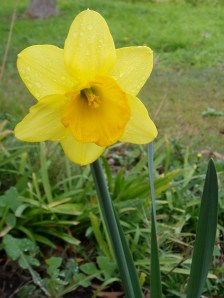
Well, here’s a photo of a daffodil which has just flowered in my front garden, isn’t it Happy daffodil growing in the Editor's garden!lovely? (Try not to notice the weeds at its feet!) This means, of course, that the spring issue of Alphabet Soup magazine is just around the corner – it will be out next week!

What will you find inside?

  • Q&A with Mark Greenwood, author of Simpson and His Donkey, The Legend of Moondyne Joe, and Fortuyn’s Ghost (among others!)
  • Curiosity corner: a family growing their own vegies
  • Stories and poems
  • Writing by kids!
  • Crossword
  • Book reviews
  • Writing tips for kids from The Book Chook
  • Spring writing competition
  • Design-a-cover competition

(You can subscribe to Alphabet Soup via our website – parents can order with a credit card online, or print off a form to post to us with a cheque. Subscribers with an Australian delivery address are entered into a draw each issue – this issue’s winner will receive a $200 book pack from Fremantle Press!)

Yes, this issue has a spring-is-in-the-air feel to it! Daffodils are easy to grow in Perth, and they suit my garden perfectly, as they don’t mind a bit of neglect! I do love to see their yellow trumpets bobbing about in spring. So – what’s growing in your garden at the moment?

Posted in authors

Sandy Fussell – author of the Samurai Kids series

Sandy PortraitsAs promised, today we are talking to Sandy Fussell – the author of the Samurai Kids series. The fourth book in the series – Monkey Fist – was published on 1 August 2009. (It’s hot off the press!)
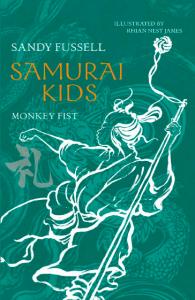
To celebrate its launch, Sandy is taking Monkey Fist on a Blog Tour. We’re excited to have her visiting Soup Blog today, and we asked her some questions about how she does the research for her books.

But first, a little about Monkey Fist:

Set in 17th century China, Monkey Fist follows the adventures of a group of samurai students and their teacher, Sensei Ki-yaga. Each student has a challenge to overcome on his personal journey. When Kyoko is kidnapped and hidden away in the Forbidden City, Sensei and the kids hurry to her rescue. They are aided by the Lin, a group of Chinese forest ninja and by Master Jang, the Poisoner.

And now, some questions for Sandy!

How do you do the research for your books?

I love the Internet but when using it for research you have to be very careful that the information is coming from a credible source – someone who knows the subject. The internet is both trap and treasure. I have been collecting history books since I was a child so have a huge personal collection covering my areas of interest – and am always looking for an excuse to buy another book. I like to write about the periods of history that are not so well known so there aren’t many relevant books in my local libraries. I do consult experts and they are always very happy to be involved in research for a children’s book.

Do you have a favourite way to research?

I love the internet because it is a real treasure chest. Following a link can lead to the most interesting and obscure information. I find things I didn’t even know I was looking for.

My real favourite of course, would be travelling overseas to do my research first-hand but I don’t think that is going to happen in the near future. Unfortunately. *Sigh*

How do you record your research, and why do you do it this way?

I make lots and lots of notes. I photocopy book pages and print out web sources. It’s important to document all the facts used when writing history.

I found this out the hard way. After I finished my first book, White Crane, I threw out all my notes. Then my publisher, Walker Books asked me for references to support the historical facts I had used in the narrative. I had to relocate everything and reproduce 30 typed pages of notes. It felt like I had written another book!

Before you write anything, do you get all your research done first? How do you know when to stop researching and start writing?

I like to spend a solid month researching and thinking about where my plot will fit – as in the geographic location, any significant events occurring at the same time. Then I start to write.

I am very structured and the Samurai Kids books are always on a deadline. I allocate a month because a month is all the time I’ve got.

How do you use your research when you sit down to write?

I reread constantly. Little facts take on new significance as the story emerges. I particularly like to read primary sources – texts written by people alive at the time. One of my favourites is The Book of Five Rings by the legendary samurai swordsman Miyamoto Musashi.

Do you enjoy the research as much as the writing? (Or is the writing more enjoyable?)

If I am writing a historical novel the two are so entangled they are impossible to pull apart. But I don’t want to try as I love doing both.

Do you ever find out something in your research that means you have to take the story in a direction you weren’t originally planning to?

Recently I discovered an arquebus (gun) from the mid-seventeenth century can only fire once before reloading. In the second chapter of my current manuscript (book 5) my character shot two birds in succession. So far it has always been small stuff like that and doesn’t affect the story direction. However I am a stickler for getting the facts right and check my references quite thoroughly so I don’t often find research errors.

How much time would you spend on each book in Samurai Kids?

The Samurai Kids books are generally on a six month schedule. I research for one month, write for four months and then revise and rewrite for one month in addition to the revision I do as I go. I always say there is a lot of mathematics in writing – the planning, the pacing and all those word counts!

Monkey Fist by Sandy Fussell

This is the eighth stop on the Monkey Fist Blog Tour. You can find out more about Sandy Fussell, the Samurai Kids series, and Monkey Fist by visiting the other hosts on the tour. (You can also visit the Samurai Kids website for fun activities related to the books, and take a quiz to find out which Samurai Kid you are!)

Blog Tour stops:

1 August http://tips4youngwriters.wordpress.com

2 August http://www.livejournal.com/users/orangedale

3 August http://www.letshavewords.blogspot.com

4 August http://www.bjcullen.blogspot.com

5 August http://belka37.blogspot.com

6 August http://sallymurphy.blogspot.com

7 August http://www.robynopie.blogspot.com

8 August https://soupblog.wordpress.com (You’re here!)

9 August http://thebookchook.blogspot.com

10 August http://jefferyedoherty.blogspot.com/

Posted in authors

Monkey Fist Blog Tour Starts Today!

Monkey Fist, by Sandy Fussell

Sandy Fussell, the author of the Samurai Kids series, is taking Monkey Fist on a blog tour, starting today! Visit the first stop on her blog tour to read an interview with a character from Monkey Fist. (Sandy will be stopping by Soup Blog on 8 August to talk about how she does her research for the Samurai Kids books. See you here!)

Monkey Fist Blog Tour stops:

1 August http://tips4youngwriters.wordpress.com

2 August http://www.livejournal.com/users/orangedale

3 August http://www.letshavewords.blogspot.com

4 August http://spinningpearls.blogspot.com/

5 August http://belka37.blogspot.com

6 August http://sallymurphy.blogspot.com

7 August http://www.robynopie.blogspot.com

8 August https://soupblog.wordpress.com (You’re here!)

9 August http://thebookchook.blogspot.com

10 August http://jefferyedoherty.blogspot.com/

Posted in authors, info

The Book Chook answers kids’ questions about writing

Book Chook
© Greg Mitchell

The spring 2009 issue of Alphabet Soup will be out in mid August and inside you’ll find a new writing tips column from the Book Chook!

‘But who is this Book Chook?’ we hear you ask.

The Book Chook is the secret identity of an Australian writer who loves to read, write, and dress up as a chicken. (Doesn’t everybody?) She enjoys reading great stories that make her laugh, and make her feel as if she’s right in the middle of the action.

She says: it’s exciting to join Alphabet Soup (Chicken Soup would not have been exciting at all). And I’m looking forward to chatting to kids about the craft of writing.

If you have a question about writing, email it to bookchook@alphabetsoup.net.au and your question might appear in a future  issue of Alphabet Soup!*

*If we use your question, we will only print your name, age and state/country in the magazine unless you advise us otherwise.

[Dear Readers, Just in case you’re wondering, the Book Chook is NOT ME! I do love reading, but my chicken costume hasn’t been worn in years … ~Rebecca – Alphabet Soup’s Editor.]

Posted in authors, illustrator

Author website: Hazel Edwards

book cover
book cover

There’s a Hippopotamus on Our Roof Eating Cake Answering Questions!

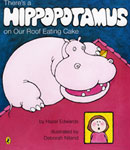
There’s a Hippopotamus on Our Roof Eating Cake (by Hazel Edwards and illustrated by Deborah Niland) celebrates its 30th birthday this year. Do you have a question you’d like to ask the hippo? You can ask away on Hazel’s website! (You can also find out the answers to to questions from other kids, like: What kind of cake is it? and Do you talk?)

The site also has news about Hazel’s latest picture book Flight of the Bumblebee, which comes with a CD of Antonia Kidman reading the story, and Rimsky-Korsakov’s famous music Flight of the Bumblebee.