
Posted in authors, interviews

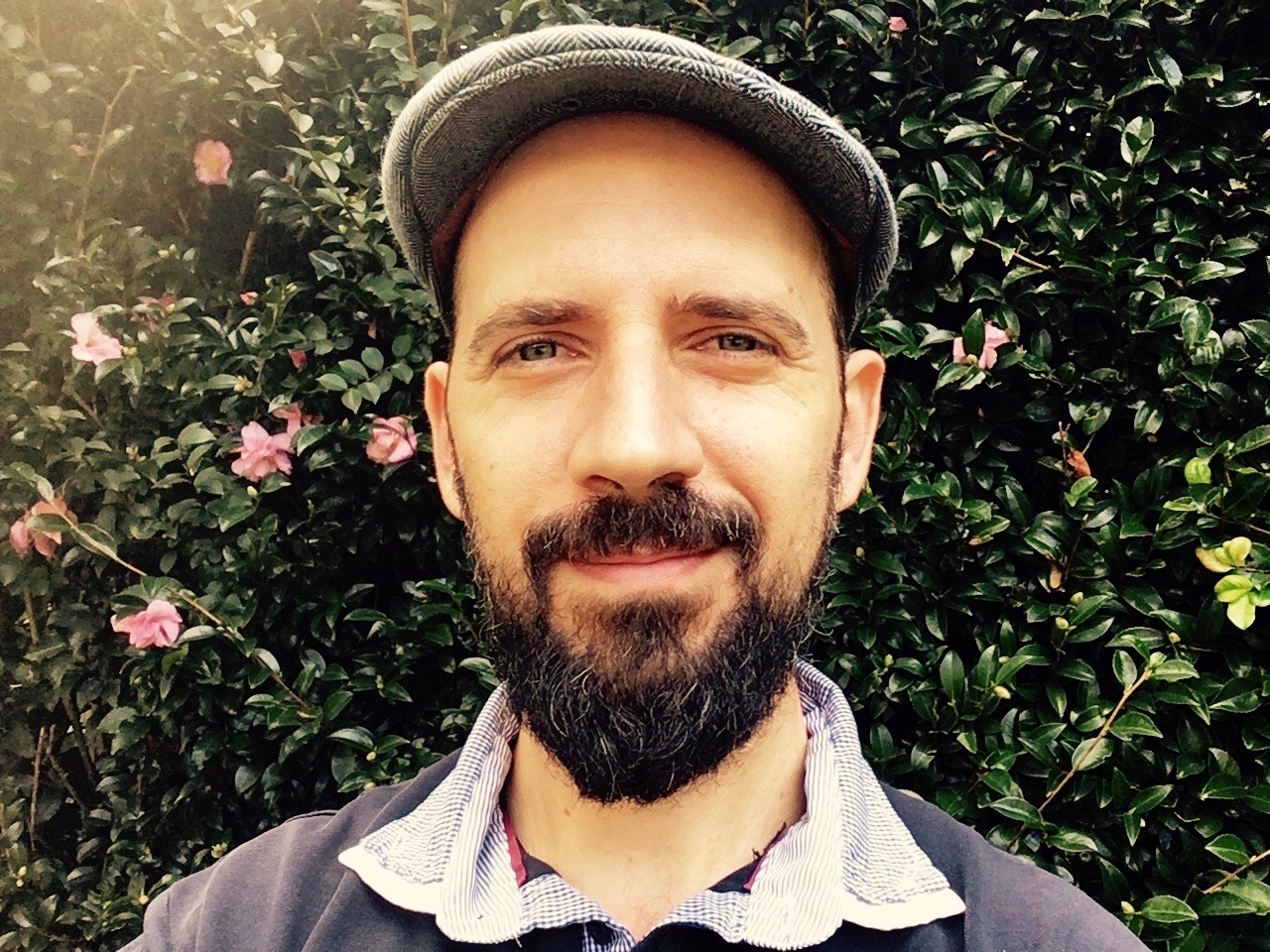
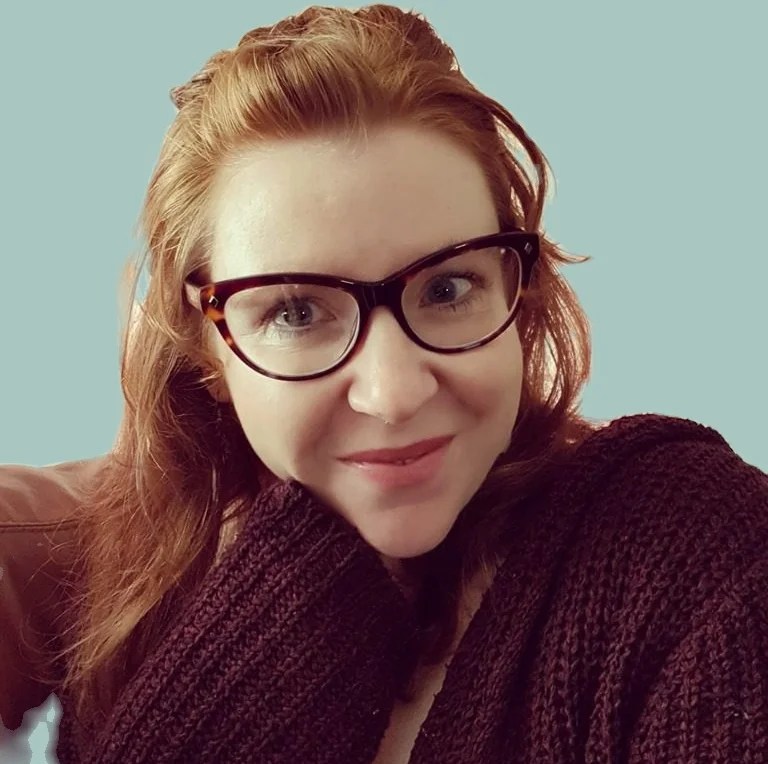
Emily Gale and Nova Weetman on Outlaw Girls

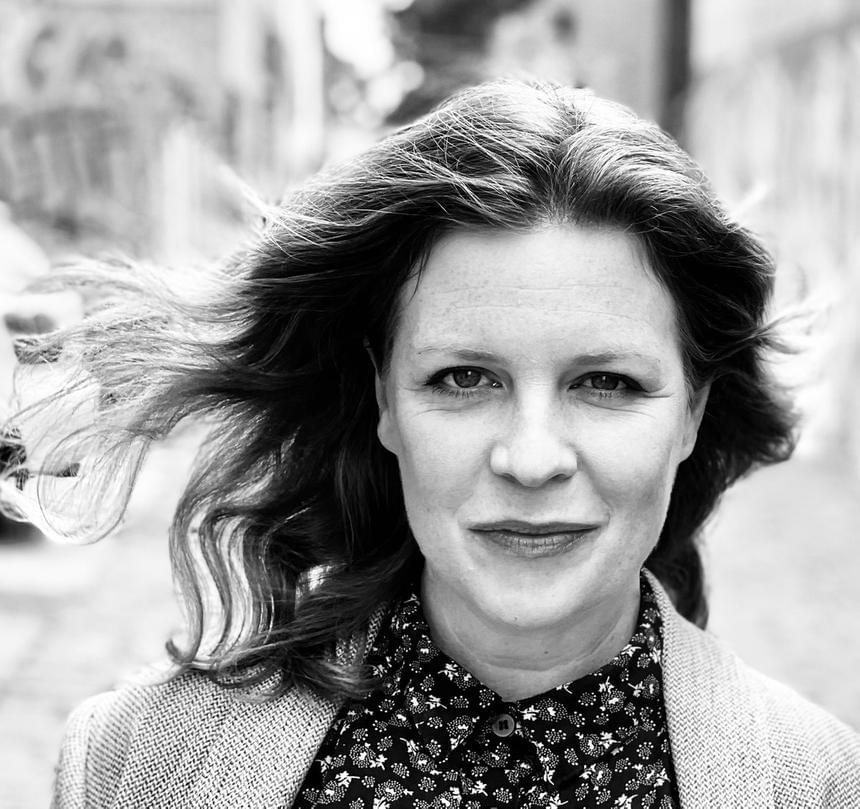
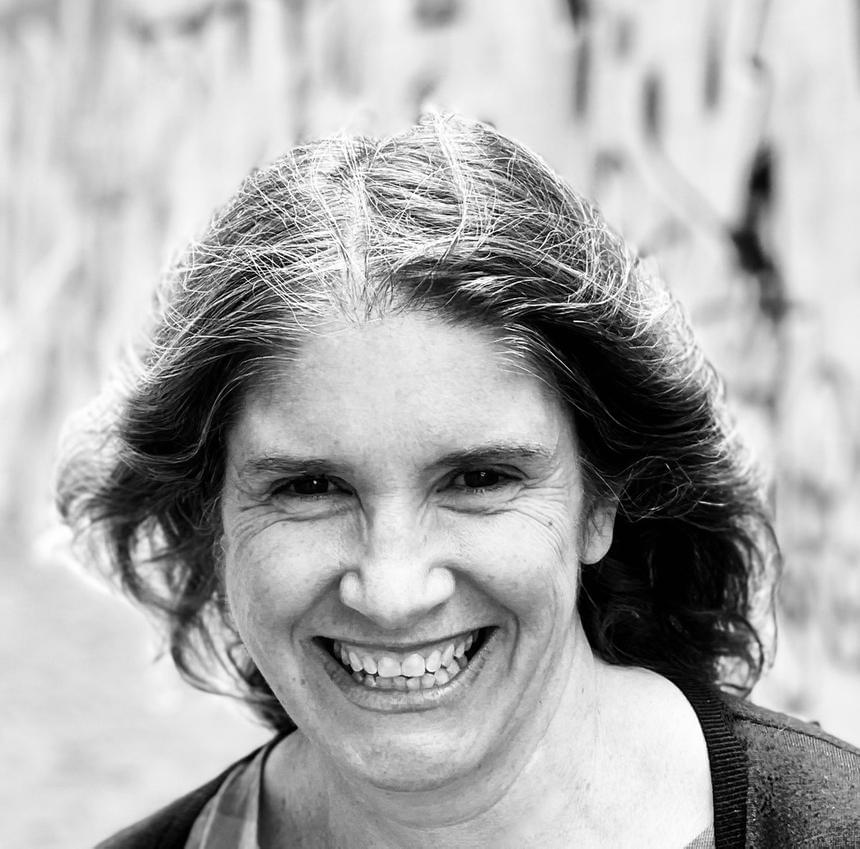
Emily Gale writes for children and for teenagers – you might know her novels I am out with Lanterns and The Other Side of Summer. Nova Weetman also writes for children and teenagers and you might have read some of her books, such as The Secrets We Keep and Sick Bay. Emily and Nova previously collaborated on Elsewhere Girls. Their latest book collaboration is Outlaw Girls, the second co-authored book by these authors. We’re thrilled to chat to them about Outlaw Girls today.

The publisher provided Alphabet Soup with a reading copy of Outlaw Girls.

From the publisher:


Nova Weetman: Outlaw Girls is a blend of historical research and fiction, so for the research part we spent several months visiting the sites of our ‘real’ character Kate Kelly and learning all that we could about her. Because Kate was Ned Kelly’s sister there was a ton of material to read and study.

We each wrote one character: Emily wrote Kate and I wrote Ruby. Before we started writing the chapters, we had to develop our own characters as well as plotting the entire book as a partnership. I started the Ruby story, then I sent my chapters to Emily and she wrote some of the Kate story, and then we went back and forth like that all the way to the end, giving and receiving chapters. Then we did the editing to make sure it flowed well. It’s important that the main story works but also that each character has their own storyline with its own satisfying ending.

Emily Gale: We did loads of research, all different kinds. Nova already knew a bit about Kate Kelly but I didn’t so I was starting from scratch. I read or listened to a lot of books. I looked in the index of even more books to see if they mentioned Kate and I read all of those bits too. I watched all the Ned Kelly movies, listened to podcasts, read books about horses, watched YouTube videos about young people taking care of their horses or going riding, and read old newspapers from 1878 on the website Trove, where it’s easy to look up articles from the past.

Then I made a Google Doc of all my research and shared it with Nova so that she could add to it.

A fun part of the research was going on the train with Nova to The Kelly Gang areas in Victoria. We saw the old chimney which is all that is left of the house where Kate Kelly grew up, and we walked around Glenrowan where The Kelly Gang came to an end.

Emily Gale: If I could guarantee that I could come home any time I would take a quick trip to ancient Italy, the first century AD, when the Romans had a time of not fighting anyone – it’s a period called Pax Romana. It would be very smelly, and I wouldn’t like to be a slave forced to participate in gladiatorial games, but I think it would be incredible to go that far back in time.

Nova Weetman: I’d like to take a whirlwind trip through important historical moments, watching them like an eagle from above and then time slipping into the next one once all the drama was complete. I’d meet Cleopatra, visit the Colosseum to watch a gladiatorial battle, and eat Marie-Antoiniette’s cake.

Emily Gale: I am working on a new story which instead of going back in time goes forward a generation. I’m only halfway through it so I can’t say much more but it’s interesting and challenging to make myself think about the future instead of the past.

Nova Weetman: I have just delivered the first draft of a new middle grade novel that is much lighter than the books I usually write, and I’m also working on a middle grade graphic novel with illustrator Renee Treml.

Do you have a tip for young writers who’d like to collaborate on a story?

Emily Gale: It helps to plan your story a little bit first so that you both know where you’re going. But you don’t have to plan every detail and it’s amazing when a story takes you somewhere unexpected, so you should both stay open to that. Choose a story idea that you are both very passionate about and listen to each other’s ideas carefully. If there is something the other person has written or suggested that you don’t like, you must be careful about how you say this: be very kind to each other always and don’t forget to tell them the things that you love about their writing – encouraging each other will get the most out of collaborating.

Nova Weetman: I think you need to be in agreement about how long and how complicated the story is before you start. It’s important that you are both thinking about the same sort of genre and tone, and that one of you isn’t imagining a murder mystery while the other is writing a romance. Have some really honest discussions before you start so there are fewer surprises when you begin to write.

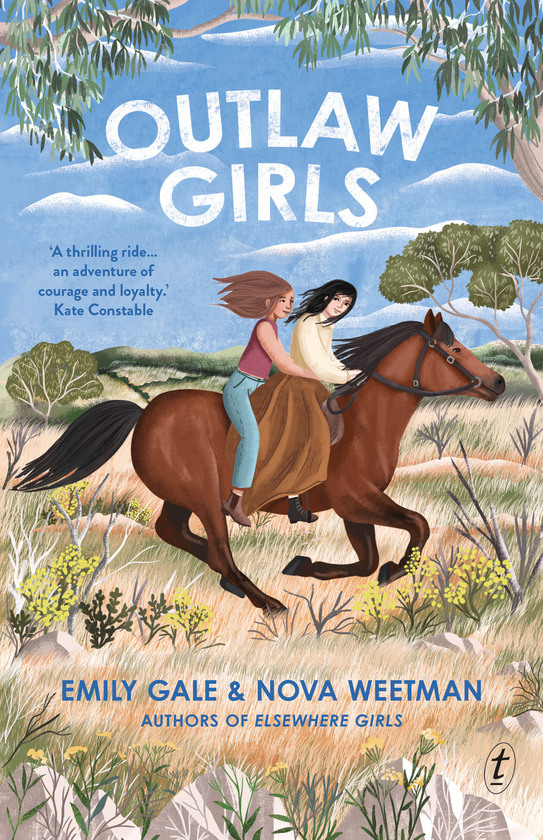
Outlaw Girls is out now! Ask for it at your favourite bookshop, library or order online.


AWESOME EXTRAS:

The cover of a children's novel: Outlaw Girls

Take a sneak peek inside the book (look for ‘Preview this book’ under the book photo on the publisher’s website)

Watch a video of the authors talking about Elsewhere Girls and Outlaw Girls [This link will take you to Facebook]

Download the Teachers’ Notes for Outlaw Girls

Visit Emily Gale’s website for more about her and her books

Visit Nova Weetman’s website for more about her and her books

Posted in authors, interviews

Peter Carnavas on Leo and Ralph

Peter Carnavas is the creator of over twenty books, many of which have been shortlisted or won awards. Peter’s books have been translated into many languages. He lives on the Sunshine Coast in Queensland. Today we’re chatting about Leo and Ralph, his latest novel.

The publisher provided Alphabet Soup with a reading copy of Leo and Ralph.

From the publisher:

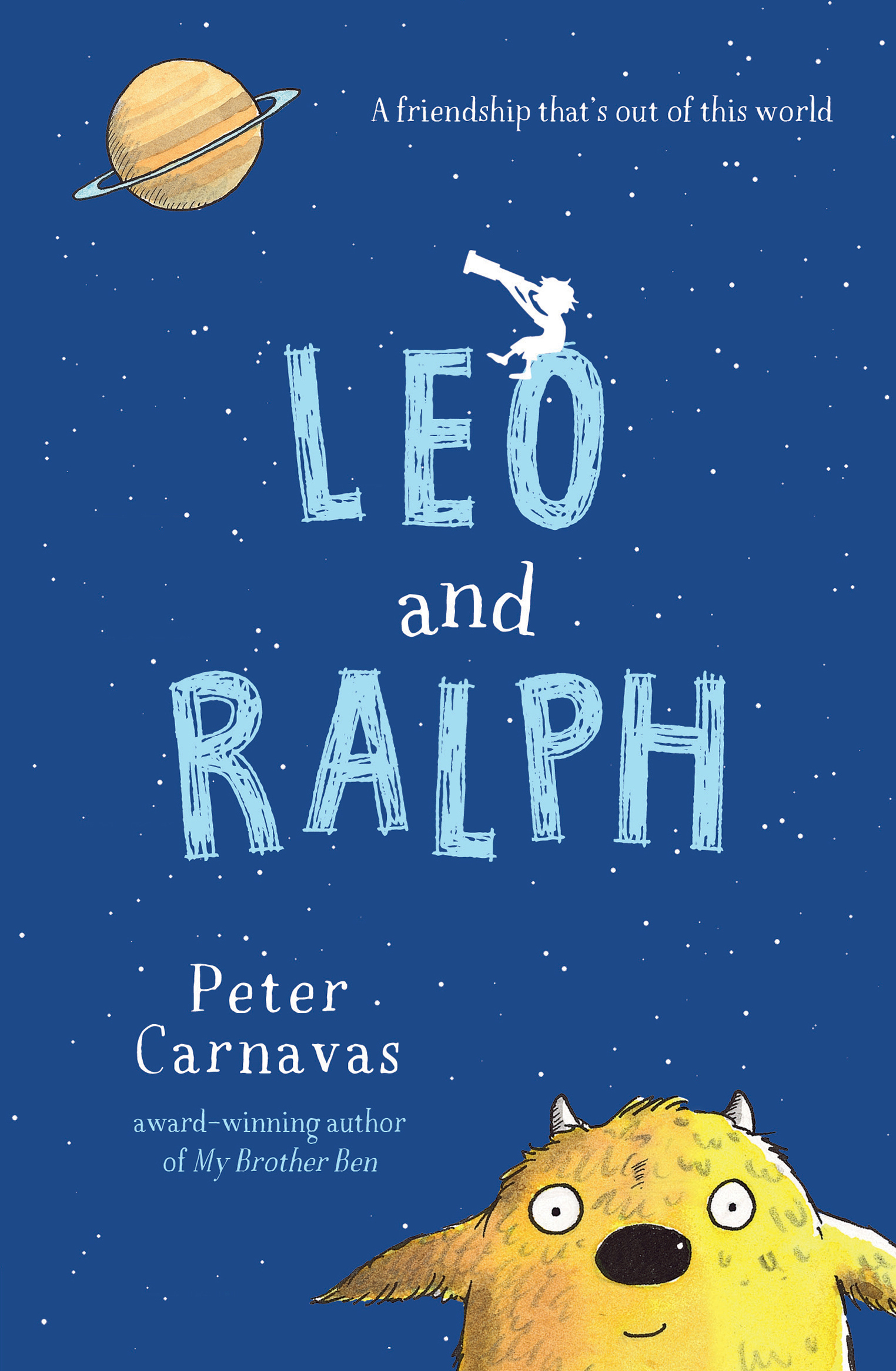
Leo and Ralph have been best friends ever since Ralph flew down from one of Jupiter’s moons. But now Leo’s older, and Mum and Dad think it’s time to say goodbye to Ralph. When the family moves to a small country town, they hope Leo might finally make a real friend. But someone like Ralph is hard to leave behind … 


I discovered my favourite space facts from one of my favourite books: Stellarphant, by James Foley. At the back of his book, he shows all the different animals that have been into space — rabbits, tortoises, frogs and chicken eggs!

It was either soccer or handball. I loved playing soccer, and lunchtime never seemed long enough — we always wanted to score just one more goal. In my mind, I was the greatest handball player in the school, but I don’t have any trophies to prove it. You’ll just have to take my word for it. 

As I wrote about Dundle, I pictured a lovely country town called Clermont, in the central highlands of Queensland. I lived there for five years when I started teaching and I have great memories of the town and the community. Leo isn’t too sure about Dundle when he first arrives but he grows to love it, just like I did with Clermont. 

I won’t say too much, as the idea has only started growing, but I’m planning a novel about animals, and the main character is a stubborn, curious and very brave goat. 

When you write stories, you’re in charge, so write the story you really want to write. There are some basic rules to remember — a main character that readers want to cheer for, and some big problems to create tension — but most of all, try to write the kinds of stories you love to read. 

Leo and Ralph is out now! Ask for it at your favourite bookshop, library or order online!


AWESOME EXTRAS:

Watch the book trailer! [YouTube]

Download the Teachers’ Notes from the publisher’s website

Visit Peter Carnavas’s website for more about him and his books

Posted in authors, interviews

A.L. Tait on The First Summer of Callie McGee

Allison Tait (A.L. Tait) is the internationally published bestselling author of adventure series The Mapmaker Chronicles, the Ateban Cipher novels, and the Maven & Reeve Mysteries. Today we’re chatting to A.L. Tait about her latest novel The First Summer of Callie McGee, a cosy mystery novel. 

From the publisher:

It’s the last summer before Callie starts high school and she’s been dragged along to yet another ‘family friends’ holiday. Determined to change her nerdy reputation, Callie sets out to make waves but nothing is quite as she expects. Her usual ally, Sasha, has outgrown Callie; her nemesis, Mitch, has brought his cousin Owen along; and the boring south coast town of Sawyer’s Point has been rocked by a series of burglaries. Callie, Owen and Mitch decide to investigate the robberies, bringing them face to face with a local gang … and a possible ghost. But then Sasha goes missing …


When you’re writing a story set in a fantasy world, you have to work incredibly hard to bring that world to life on the page with every tiny detail. You’re thinking about everything from what people wear and what they eat to how they buy things at the shops and how they travel from A to B – and then you have to make sure the reader understands all of that without resorting to long descriptive passages (boring!). 

In a contemporary world, your reader knows what a car is and what a double-storey brick house looks like, so that side of things is easier – but it’s still essential to build a world for the reader to immerse themselves in. 

The biggest challenge for me in the switch was the ‘real’ factor. In a fantasy novel, my characters can drink ale and fling themselves into rivers and readers know it’s not real, without having to be told not to try it themselves. In a contemporary novel, I felt like I had to take a lot more care about my character’s action. When Callie throws herself into a rip to rescue her younger friend Cody, for instance, I’ve already made it clear that she’s a strong swimmer and she’s been a Nipper, so she knows what to do.  

Sawyer’s Point is based on a real seaside village called Gerroa, about 20 minutes’ drive from my house. I’ve spent a lot of time there over the years (in a friend’s holiday house!) so I could see in my mind exactly where Callie and her friends were at any time. Having said that, I did move things around a bit – Sawyer’s Point has a surf club, but Gerroa does not.

I’ve always found names fascinating – what they say about us, how they fit us and, maybe, how we grow to fit them. And nicknames are even more interesting, because having one implies you have that easy sort of relationship with someone else. I didn’t try to change my name as a child (though I know people who did), and my nickname has always been Al.

Write what you know, but make it new. Choose a place that you know really well and then change one thing. That one thing might be bringing a new person (character) into that place (one of the best ways to describe a place is to show it through a new person’s eyes – even if it’s your class at school). It might be adding a mysterious statue that’s been there forever and then, one day, has vanished – or perhaps it’s never been there before and then, one day, appears out of nowhere. It might be putting a trapdoor in the floor that leads to a secret tunnel. 

I’m excited to be working on a new contemporary middle-grade novel, which will hopefully be out next year! It’s got all the things I love – a character with heart, adventure, and mystery. Watch this space!


The cover of a children's novel, The First Summer of Callie McGee by A.L. Tait.

Check out A.L. Tait’s ‘Writing Tips for Kids’ page.

Download the Teachers’ Notes for this book.

Read a review of the book by Mia, age 11

Visit A.L. Tait’s website for more about her and her books.

Posted in authors

Children’s Books at Perth Festival

Rebecca M. Newman, Alphabet Soup’s managing editor and the co-editor of Right Way Down and Other Poems, will be at the Perth Festival Writers Weekend on Saturday 24 February 2024. You can catch Rebecca at two sessions.

For adults:

Presenters on the ‘Telling Tales’ panel at the 2024 Perth Festival Writers Weekend.
'Telling Tales' (panel session, 45 mins).
10am, 24 February 2024 at the State Library of WA.
Price: Pay what you can. Suggested price, $24. Book tickets here!
Presented in association with Writing WA.

The creative minds of James Foley (Secret Agent Mole), Kylie Howarth (Crocs Stole My Socks) and Rebecca M Newman (Right Way Down) come together for an exhilarating conversation hosted by Writing WA Chair Lesley Reece AM. Join these writers and illustrators as they delve into the secrets of crafting engaging stories for young minds and celebrate the wonders of storytelling.

For children:

A flyer with two book covers and the text: Story Time with Tracey Dembo and Rebecca M Newman
Join Tracey Dembo & Rebecca M Newman for a live reading session at the State Library of WA
'Story Time with Tracey Dembo & Rebecca M. Newman'. (50 mins)
11am, 24 February 2024, Education Centre, State Library of WA.
Price: 'pay what you can' (even $0) but you will need to book to secure a spot.
Book tickets here!
Presented in association with Writing WA.

Tracey Dembo and Rebecca M. Newman combine their picture book and poetry forces to bring you an exciting one hour live reading session for kids! This session is going to have everything from time machines to rockets, cricket, shoelaces, the alphabet, and dragon eggs.

View the full Writers Weekend festival program here.

See you at the library!

Posted in authors, interviews

Sharon Giltrow on Samara Rubin and the Utility Belt

Sharon Giltrow grew up surrounded by pet sheep, sandy beaches, fields of barley, and her seven siblings. Sharon is the author of three picture books – Bedtime, Daddy!, Get Ready, Mama! and Let’s Go Shopping, Grandma! – and a chapter book, Samara Rubin and the Utility Belt. Today we’re chatting to Sharon about that latest book, illustrated by Thu Vu.

The publisher provided Alphabet Soup with a reading copy of Samara Rubin and the Utility Belt.


That is a great question. The Utility Belt series started as a picture book manuscript. When I shared it with my critique group back in 2019, they suggested it would make a great early middle grade book. I loved that idea, although it was a bit scary. I examined the story to see how I could turn 500 words into 10,000 words. Then I enrolled in an online middle grade course to learn the skills needed.

It all began with Samara’s sidekick. I brainstormed possible sidekicks for Samara. The sidekick had to be super cute, friendly and small enough to fit in Samara’s pocket. A gecko! Then I researched geckos to see which one would be best for the story. I chose a Madagascar Day Gecko because they are awake during the day and are beautiful. I researched all the superpowers geckos have. From there I invented tools for the utility belt. For example, many geckos can camouflage so one of the tools is camouflage drops. I thought about how and when Samara could use these tools.  At the start of the story Samara had to clean her room. But she didn’t want to so she used the camouflage drops to make the mess in her room disappear. Some of the tools that didn’t make it into the utility belt were a regenerator, rebreather, coloured looking glasses, flashlight, thermal rock, and a duplicator.

My sidekick would be a sugar glider because they show us what it means to take a “leap of faith” soaring to new heights, where we can the behold the view and gain a whole new perspective. The tools in my utility belt are already working because in 2024 I have decided to become a full-time author. I’ve taken the leap and given up my daytime job.

Think about the whole story. The beginning, middle and end. What happens during these parts of the story. Then work out what happens in each chapter. If the book is to have ten chapters, two chapters would be for the beginning, six chapters for the middle and two chapters for the end. Also be sure to end each chapter on a cliff hanger. So, the reader wants to keep reading.

Sure thing. I’m working on another early middle grade series about human evolution. And of course, there is a sidekick in this story, but I don’t want to give too much away.

Samara Rubin and the Utility Belt is out now! Ask for it at your favourite bookshop or local library.


The cover of a children's book: Samara Rubin and the Utility Belt

Watch a short book trailer for the book

Look at some of the illustrations from the book on Thu Vu’s website

Visit Sharon Giltrow’s website for more about her and her books

Posted in authors, interviews

Kitty Black on The Starting School List

Kitty Black has a background in psychology and teaching and believes stories are at the heart of who we are. Kitty is the author of many picture books, two of which have been translated into German and Turkish! Today we’re chatting to Kitty about her latest picture book: The Starting School List, illustrated by Cate James.

The publisher provided Alphabet Soup with a reading copy of The Starting School List.

From the publisher:

It’s Little Brother’s first day at school tomorrow. Luckily, Big Brother knows what that feels like. And what’s more, he has a list of what to expect …

You’ll learn where the loos are, and all about bugs.
You’ll learn a sad friend could do with a hug.
You’ll learn the best spot for sand that is slushy.
You’ll learn that tomato makes sandwiches mushy.


I was actually asked if I wanted to write a picture book about starting school by my publisher, I’d never thought about it before, but I instantly loved the idea. We knew that we wanted the book to be full of good advice, and who’s better at telling younger kids what to do than their older siblings. In a loving, helpful way of course!

I wouldn’t call this my favourite memory, but it’s definitely the strongest memory I have of starting school, I got left behind on my first day. My older siblings told me to wait outside my classroom and they’d come get me on the way to the bus stop, but they forgot! A teacher drove me home, and just as we were pulling into the driveway my Mum was marching out of the house, car keys in hand, shouting at my siblings about how could they forget their little sister. They never forgot me again!

This is my first rhyming book, and I was honestly surprised that I wrote it in rhyme. I tried writing the book without rhyme over and over again, but it just didn’t feel right. There was something about the first words in the book ‘Hey little brother, are you asleep?’ that just WANTED to rhyme. So, I guess I don’t know when a story should rhyme or not, but the story knows.

Go for it! Writing should be fun, so if an idea makes you giggle, make it into a book!

I am working on ANOTHER rhyming picture book, which was inspired by my cheeky dog.

The Starting School List is out now! Ask for it at your favourite bookshop or local library.


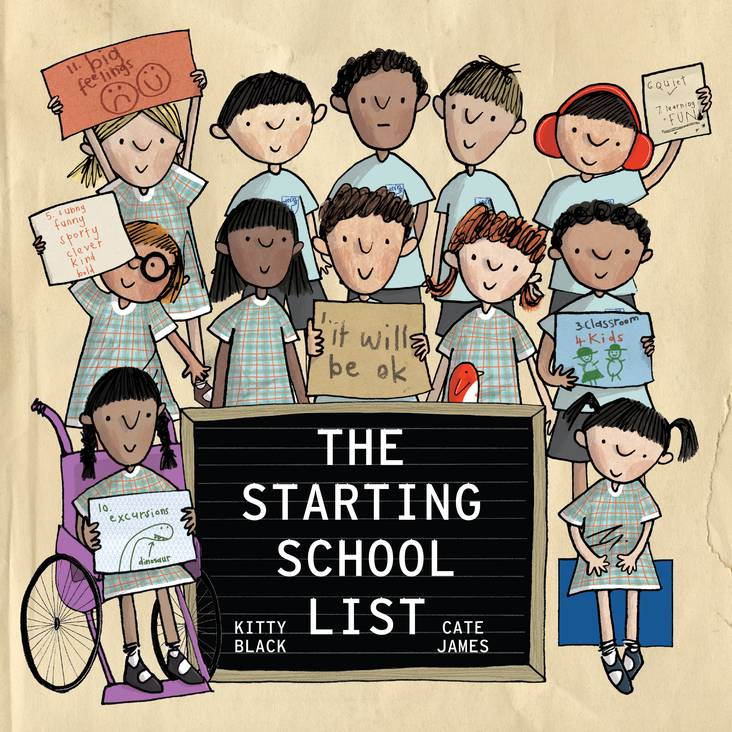
The cover of a picture book The Starting School List

See some sample pages from the book at Booktopia’s site

Grown-ups can enter a competition to win a Starting School pack with QBD books, closing 31 January 2024.

Check out Kitty Black’s website for more about her and the books she’s writing.

Check out Cate James’s website for more about her and her illustrations.

Posted in authors, interviews

Kristy Nita Brown on Where’s My Whistle?

Headshot of Kristy Nita Brown

Kristy Nita Brown is a Western Australian author, writing junior fiction books and delivering creative writing, independent publishing and film making workshops at libraries and schools. Today we’re pleased to be chatting to Kristy about the first book in her Mavey and Beth’s Double Act series: Where’s My Whistle?, illustrated by Alison Mutton.

A children's book with twin girls on the cover.

The author provided Alphabet Soup with a reading copy of Where’s My Whistle?

The Year Two song has whistling in it, and Mavey can’t whistle. To make matters worse, Mavey’s twin sister Beth has a mighty whistle. Terrified her classmates will laugh at her, Mavey and her family devise a plan to get Mavey whistling. Will Mavey learn how to whistle in time for the big concert? Or will Mavey’s toot stay mute? 


I can whistle. I remember my dad showing me how to whistle. We lived in the bush, so I had plenty of long car rides to practise. But Mavey and Beth’s Double Act: Where’s My Whistle? isn’t about me. It’s based on my eight-year-old daughter who can’t whistle. When she found out she was the only kid in her class that couldn’t do it, she was very upset. Together we searched the Internet for different ways to whistle. Do you know some adults can’t whistle too? 

At the back of the book I included facts about whistling, a pan flute activity and the Skipping Song to play on the recorder. These came last. The story came first, from watching my daughter struggle with the feelings that come along with being unable to do something your friends can. 

Music was one of my favourite subjects growing up because I played the flute. Every Saturday, I went to flute lessons at the Fremantle Music School. Then, on some Sundays, I performed with other kids in a small ensemble. My best friend at primary school also played the piano. We both loved music together. In high school, my favourite subject was small business. Because I sold lollies and washed the teacher’s cars, and made lots of money! 

My tip for young writers is to read as many books as you can that are similar to what you want to write. Then pick your favourite and follow the structure as you write your own story. Most chapter books have a similar number of chapters and word count. Usually, something happens in each chapter to move the story forward. At the end, the story is resolved in a way that the person reading it learns something, or feels good. Hopefully, following this structure will help a young writer get to the end, because I think finishing the story is the hardest part. 

I’m toying with a couple of ideas for the next Mavey and Beth book. I know the cover will be green and blue. I can picture the twins on the cover. But I’m not sure if the story will be about Mavey getting her ears pierced, a birthday party mishap, or a swimming lesson disaster. What do you think? 

Where’s My Whistle is out now! Find a list of stockists at the author’s website.


A children's book with twin girls on the cover.
Posted in authors, interviews

Allison Rushby on The Christmas Wish

Allison Rushby made a wish when she was six years old. She wished to be a ballerina with pierced ears. Not long after this, she wrote her very first book (not about a ballerina) and decided to be an author with pierced ears instead. She went on to write many more books, for both adults and children, though none of them were sticky-taped together like that first one. She lives in Brisbane with her family and her two not very useful assistants, Harry the Bordoodle and Titus the Sphynx. If you’ve ever dreamed of your wishes coming true, you’ll love Allison’s new series! Today we’re chatting to her about Book 5 in The Wish Sisters series, The Christmas Wish, illustrated by Karen Blair.

The publisher provided Alphabet Soup with a reading copy of The Christmas Wish.

From the publisher:


I didn’t! I’m a big sister. Though I always think it feels a bit strange to say that because my ‘little’ brother is very tall and I am not very tall at all! So my little brother is my big brother, really!

When I was a child, our family always had a real Christmas tree, which is something people don’t seem to have much anymore. I remember it smelled absolutely delicious – lovely and pine-y and fresh. Whenever I walk past the pine trees at my local park I take a big sniff of that sharp smell and always think about our family Christmas tree! Sadly, I have a very naughty Sphynx cat (one of the cats with no hair), so my Christmas tree for the past few years has been very dull – it’s made of wood and fits together a bit like a jigsaw puzzle. I can’t even have any decorations as he’s that naughty! I tried to have some twinkly lights this year, but he chewed through the wires!

This might sound like something very boring and adult to wish for, but I would wish for my oven to be fixed. It broke yesterday and I’m a bit worried it won’t be fixed for Christmas. A lot of baking needs to be done at Christmas! But I’d also be a bit wary of doing any wishing, because the imp is just as naughty as my cat. The imp manages to twist every wish in unexpected ways. I can’t even imagine what the imp would do to my oven!

I always tell young writers the most important thing they can do is read. Read, read, read and then read some more! But while you are reading, also take note of the stories you enjoy the most. Are there books you’ve read more than once? What was it about them that you loved? Was it the setting? The characters? Try to work out what you’re drawn to as a reader, because this is usually a good indication of what you will enjoy writing the most.

I’m currently writing a book about a mythical creature that’s set in the late 1600s in London. I’m having to do a lot of research, but it’s so much fun to lose myself in a whole other world each day.

The Wish Sisters is out now! Ask for it at your favourite bookshop or local library.


The cover of a children's novel: The Wish Sisters

Visit Allison Rushby’s website for more about her and her books (author)

Visit Karen Blair’s website for more about her and her books (illustrator)

Download the Teachers’ Notes for The Wish Sisters

Check out the five books in The Wish Sisters series!

Posted in authors, interviews

Ashleigh Barton on Solomon Macaroni and the Vampire Vacation

Ashleigh Barton lives in Sydney, Australia. As well as writing the Solomon Macaroni novels, Ashleigh is the author of several picture books. Today we’re pleased to have Ashleigh visiting Alphabet Soup to talk about the second book in the Solomon Macaroni series: Solomon Macaroni and the Vampire Vacation, illustrated by Sarah Davis.

The publisher provided Alphabet Soup with a reading copy of this book.

The world’s friendliest vegetarian vampire and his six mischievous cousins are going to Paris with Uncle Dracula. They can’t wait for the fine food, fabulous fashion and fang-dangled art. But Uncle Dracula is not himself. When the kids see the Mona Lisa, they get an idea to cheer him up … and it’s their naughtiest one yet.


I’m like Elvis – I would definitely be most looking forward to the food! The other thing I’d most be looking forward to is seeing the Bouquinistes of Paris (the booksellers of Paris), which are green wooden boxes along the Seine that hold hundreds of thousands of books, including second-hand and antique books. These open-air bookstores have been there for more than 500 years. I’d originally included a scene revolving around the Bouquinistes in Solomon Macaroni and the Vampire Vacation but it got edited out for pacing reasons. If I ever go to Paris again, I can’t wait to see these – I bet there would be so many amazing treasures to discover.

The Catacombs played a big part in this story and I haven’t seen them in person either, so I’d have to add that to my list too, along with a lot of other things I discovered in my research.

I have seen the Mona Lisa at the Louvre but it was a very long time ago! I was lucky enough to go to the Louvre when I was nine years old. It was quite incredible knowing how long ago the painting was made and how revered it is. When I was researching for the book, I watched a lot of videos and read a lot of accounts to see how other people felt when seeing the Mona Lisa in person and one thing I read a lot was how surprised people were by the size. It’s actually fairly small (which made it much easier for our characters to steal!).

Unfortunately I didn’t make it back inside the Louvre when I visited Paris again many years later, but I will have to add it to my wish list above!

If someone gave me a multi-flavoured ice cream tower I would have to try one of everything. When else would you get the chance to try every flavour in the shop and have no regrets about choosing the wrong one?

I think I’m a mix of both! I’m pretty terrible at admin generally and for me plotting feels a lot like admin. I also find that one idea leads to another, so things take unexpected turns for me along the way when I’m writing. But I do try to have some kind of plan in place, whether that’s a point A and point B with nothing planned to get from one to the other, or something more detailed. When I plotted this particular heist, I knew exactly what was going to happen once they pulled it off but I didn’t plan every step or the things that went wrong along the way until well into writing it.

I’m not sure what will be happening next with Solomon, but in the meantime, I have two picture books and a brand-new series coming out next year. I’m not sure I can say too much about this new series yet, but it’s completely different to Solomon Macaroni and for a slightly younger audience. It is contemporary fiction with a bit of a non-fiction twist and another amazing illustrator on board!

Solomon Macaroni and the Vampire Vacation is out now! Ask for it at your favourite bookshop or local library.


Read our 2022 interview with Ashleigh Barton

Watch Ashleigh Barton’s quick introduction to the book [YouTube]

Download the Teachers’ Notes for this book

Download a Solomon Macaroni activity pack on the author’s website

Posted in authors, interviews

Chenée Marrapodi on One Wrong Turn

Chenée Marrapodi is an author and journalist who has danced ballet and jazz her whole life, loving the stories that can be created through movement. Today we’re pleased to be talking to Chenée about her debut novel One Wrong Turn.

The publisher provided Alphabet Soup with a review copy of One Wrong Turn.

From the publisher:

Amelia is a ballerina on the rise — she’s talented, dedicated and set to star in the lead role of the annual production. But when Valentina arrives from Italy and joins the ballet academy, the competition gets fierce. Can Amelia outshine Valentina and keep her place in the spotlight?


At your book launch, you mentioned going to ballet classes in Australia and in Italy. Do you have a memorable ballet performance you were in when you were young?

My first ballet performance was definitely a standout. I was a sheep and two farmers had to shear our wool on stage! 

It’s funny to look back at now, but at the time I was so disappointed because in the previous year’s concert the girls got to be fairies.

What is your all-time favourite ballet production? ( … Would it be Cinderella?)

Cinderella is definitely one of my favourite ballet productions, which is one of the reasons it features in One Wrong Turn. There’s something special about seeing a familiar story brought to life on stage. I find it easier to get lost in the beauty of the dance because I already know the narrative so well. 

I particularly love WA Ballet’s production of Cinderella, which is described by Amelia in my novel. Amelia talks about getting to ride on Cinderella’s coach as a young child, which is something that kids actually get to do in WA Ballet’s performance. It’s really special to watch!

In particular, I love watching the Step Sisters. They are hilarious and always steal the show. I once saw one of the sisters do tap dancing on her toes in pointe shoes. I still don’t know how she managed to do it!

Did you need to do any research while you were writing One Wrong Turn? Or did your experiences growing up cover everything you needed to get your story down?

Most of the story was inspired by my own experiences in dance classes. Some of Miss Lily’s funny corrections were things I’d heard my own teachers say over the years. Given I was never training for a career in ballet, I did chat to a couple of professional dancers to make sure the amount of training my characters were doing was realistic. 

Valentina’s Italian family and traditions were also inspired by my own experiences. I’m Italo-Australian and grew up with big family meals and traditions like sauce and sausage making days. Valentina’s house is actually based on my Nonna’s and features some of the quirky pictures that used to hang on her walls.  

I also lived in Italy for a while and danced at a small school while I was over there. Like Valentina, I couldn’t translate my teacher’s corrections while I was dancing. I found it too hard to remember choreography, listen to music and translate corrections in a foreign language at the same time. It took my teacher a whole year to figure out my secret!

Despite being fluent in Italian, I got one of my good friends in Italy to double check the Italian phrases in the novel. I don’t speak the language as much as I used to and I’m a little bit rusty. The last thing I wanted was an error forever printed in my book! 

What’s the worst writing tip you’ve ever been given?

“Edit the story as you go.”

It might work for some people, but it doesn’t work for me. If I edit as I go, I get too fixated on trying to make every sentence perfect. It makes the whole task feel too overwhelming and I never make it to the end. Instead, I find it better to write a messy and fast first draft. I don’t reread my work until I make it all the way to the end of the story. It’s much easier to edit a messy page than a blank one.

Can you tell us a little about what you’re working on next?

I’m really excited to be working on a sequel to One Wrong Turn. It’s great fun being back at the ballet academy. You can expect the same characters, with a couple of new additions. There’ll also be lots of dancing (including a different style), fun, friendship, a tiny bit of romance and some very big challenges for everyone to overcome.

One Wrong Turn is out now! Ask for it at your favourite local bookshop or local library.


Read a sample chapter of the book.

Watch/listen to Chenée Marrapodi reading the first chapter of her book. [Youtube]

Download the Teachers’ Notes for One Wrong Turn.

Download these cool activity sheets to keep you on your toes.

Visit Chenée Marrapodi’s website for more about her and her books.