Posted in authors, interviews

Amy Freund on Amigo the Capybara

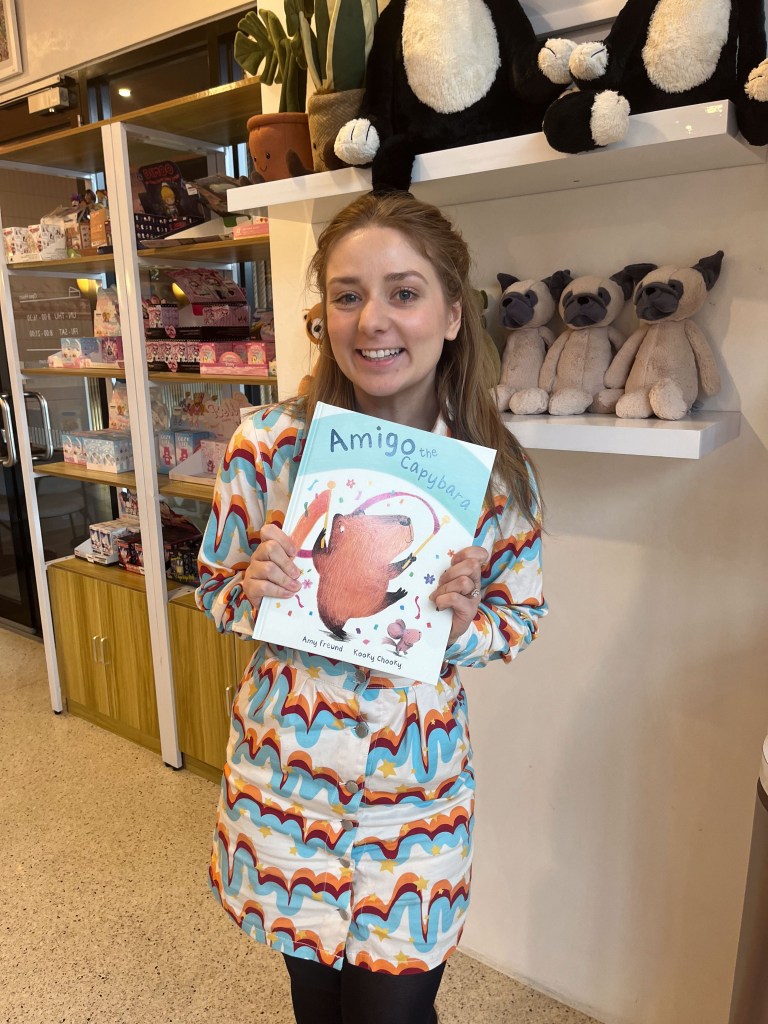
Amy Freund‘s debut picture book is Amigo the Capybara, illustrated by Kooky Chooky. Today we’re thrilled to be chatting with Amy about capybaras, writing in rhyme, and how she came to write the book.

The publisher provided Alphabet Soup with a reading copy of Amigo the Capybara.

From the publisher:

Amigo the capybara loves to party! But his neighbour, Mila the chinchilla, definitely does not. Will Amigo’s biggest performance yet be enough to win Mila over?


It all started a few years ago when I was playing a game and a capybara was one of the characters. I thought they were so cute and funny! But nobody I spoke to really knew what they were, until about a year ago when suddenly capybaras blew up on social media for being friends with all kinds of strange and unusual creatures. That was when I started to think about Amigo’s story and what a day in the life of an extroverted capybara would be like.

I am definitely more of an Amigo. I LOVE fiestas, noise and having my house full of people! But, my fiancé is definitely a Mila, so I’m sure he wishes I was less like Amigo sometimes! 

Amy Lee’s (Kooky Chooky’s) Illustrations are amazing! She did such a fantastic job bringing Amigo and Mila to life. I actually worked independently from Amy, as I wrote Amigo’s story almost a year before it was picked up by the publisher. But I was very lucky that the publisher found Amy, and she used the story and her imagination to come up with all the illustrations.

Rhyme can be very tricky to write, I still find it difficult! My best advice would be to choose the simplest and easiest words to rhyme with in your sentences. Think words with one or two syllables. For example, we might decide to write a story about a puppy wearing a hat. ‘Hat’ is one syllable – nice and easy. So, the first sentence of our book might say something like: ‘Roman is a puppy who loves silly hats’. I would then start listing words that rhyme with ‘hats’: cats, pats, mats, rats. Out of this list, I think ‘cats’ makes the most sense, because dogs and cats are always at odds! So, I would then write the second sentence, making sure I use the word ‘cats’ as the rhyming word: ‘But they’re always stolen by naughty cats!’ What else could happen with puppies in silly hats and thieving, naughty cats?! If you keep the rhyme simple, the story will write itself!

Another important part of a good rhyme is, of course, getting the rhythm right. This can be really hard, but if you read your rhyme out loud and clap per syllable, you will be able to hear where your sentences are too long/too fast, and can fix them up.

I’m going to write a sequel to Amigo the Capybara. This time, I think Mila and Amigo should have a fun adventure, like go on a trip to Brazil, or even have a sleepover. I think their different personalities will make for lots of funny stories, as they are so opposite, anything can happen!

Amigo the Capybara is out now! Ask for it at your favourite bookshop or local library.


Take a sneak peek inside Amigo the Capybara

Do you live in Victoria? Come to the book launch on November 24!

Visit Kooky Chooky’s website for more about the illustrations in the book

The cover of a picture book: Amigo the Capybara
Posted in authors, interviews

Ashleigh Barton on the Freddie Spector, Fact Collector series

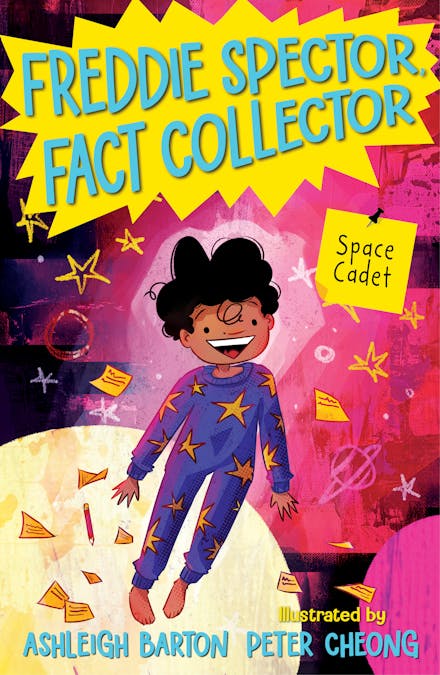
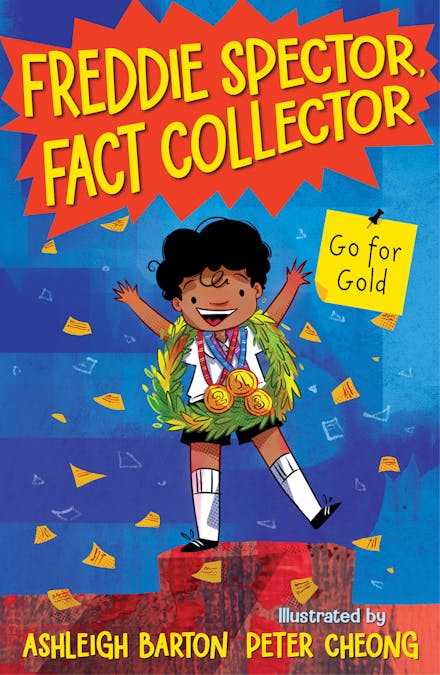
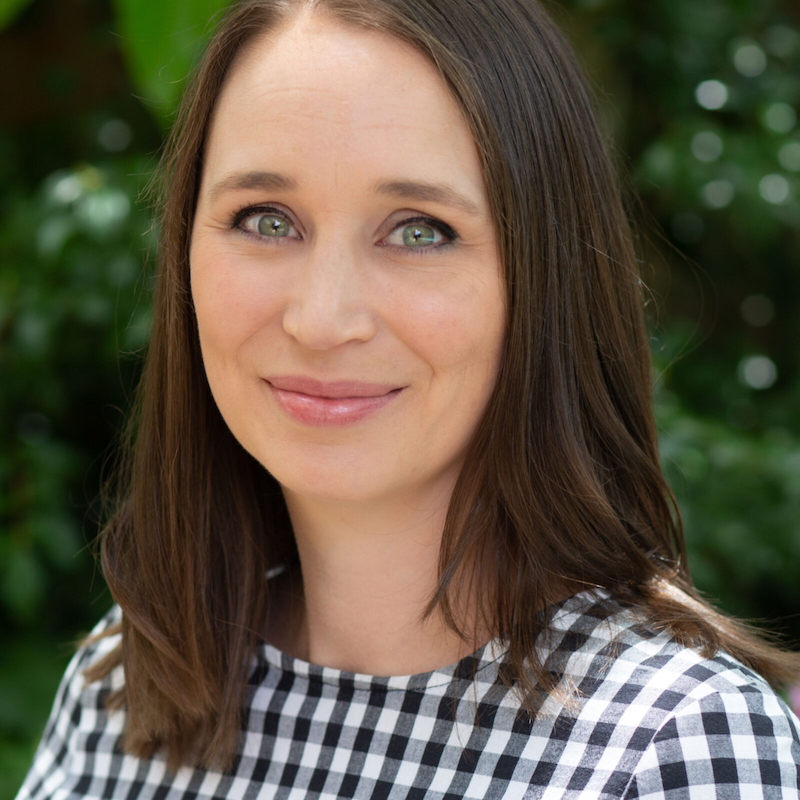
Ashleigh Barton writes picture books and junior fiction series for children. Before writing full time, she pursued her love of books (children’s books especially) by working in some of Australia’s biggest publishing houses. Today we’re chatting to Ashleigh about the first two books in her new Freddie Spector, Fact Collector series, illustrated by Peter Cheong.

From the publisher:

Fast-paced and humorous, this series is all about an everyday eight-year-old boy whose love of facts and extraordinary imagination come together with unexpected and hilarious results.

Go for Gold: Freddie is obsessed with facts about sport. It’s all he talks about: weird sports, Olympic sports, extreme sports, athletes and sporting history. And, when the medals for the school sports carnival go missing and the carnival is about to be cancelled, Freddie realises it’s up to him to solve the mystery and save the day.

Space Cadet: Freddie is obsessed with facts about space. It’s all he talks about: stars, planets, galaxies, astronauts, space travel – and, of course UFOs and extraterrestrials. And, after noticing some very suspicious goings-on, Freddie realises it’s up to him to discover the answer to a burning question: could aliens have landed in his neighbourhood?


Yes, I did so much research to collect Freddie’s facts! I actually spent more time researching than writing. My goal was to find facts that were as interesting, fun or as unusual as possible – things you probably wouldn’t be learning at school. The most startling facts for me would probably the effects space has on the human body. For example, you grow taller since there’s no gravity compressing your spine, you experience muscle and bone mass loss, and your vision can change. It did not make me want to go to space!

Well, funnily enough I’m not much of a sporty person at all. I did play a lot of different sports growing up – netball, basketball, software, tennis, touch football, soccer and swimming – but was pretty average at all of them. I based Freddie’s dread of the sports carnival on my own experience as a child.

I love Peter’s work too! And no – we didn’t work together at all. Peter completely did his own thing and brought the characters to life based on reading the story. I think he did an incredible job and I really love the way he’s portrayed Freddie and the other characters.

My tip for kids who’d like to write their own mystery would be to think about ways to keep the reader guessing. If the reader is trying to figure out what happened, they’re going to want to keep reading the story. Think about clues and twists and red herrings (clues that are intentionally misleading), you can include along the way.

At the moment, I’m working on some books that I haven’t shown anyone yet, but next year I’ve got a new middle grade novel and a picture book I’m super excited about. The novel, which will be published in May, is called How to Sail to Somewhere and the official tagline is: “A story of lost and found, of friendship, family, hope and the power of the ocean, for middle-grade readers who love a mystery.”  The picture book will be out a bit later in the year and is called Hedgehog Echidna. Another very talented illustrator is currently working on the illustrations, but I’m not sure how much more I can say about that one yet!

The first two books in the Freddie Spector, Fact Collector series are out now! Ask for them at your favourite bookshop or local library.


Take a sneak peek inside Go for Gold

Take a sneak peek inside Space Cadet

Download the Teachers’ Notes for this series

Visit author Ashleigh Barton’s website for more about her and her books

Visit illustrator Peter Cheong’s website for more about him and his books

Posted in authors, interviews

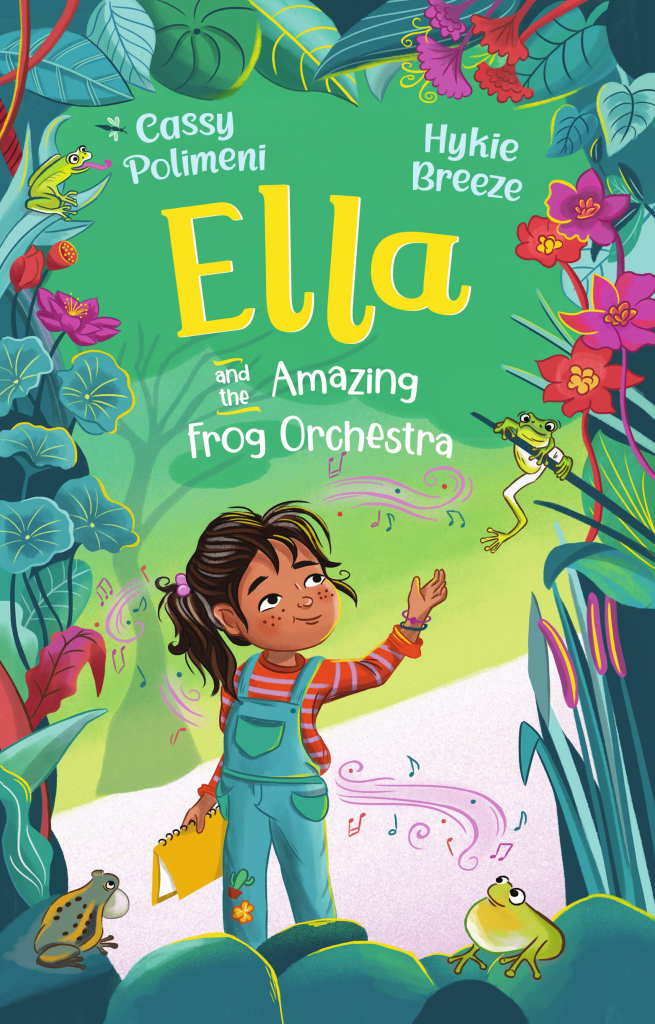
Cassy Polimeni on Ella and the Amazing Frog Orchestra

Cassy Polimeni writes books for children and young adults. She has worked as a bookseller, travel writer, magazine editor, TV book reviewer and airport chauffeur. Today we’re chatting to Cassy about Ella and the Amazing Frog Orchestra – the first in a fun four-book junior fiction series, illustrated by Hykie Breeze.

The publisher provided Alphabet Soup with a reader copy of Ella and the Amazing Frog Orchestra.

From the publisher:

Eight-year-old Ella hates her new house. She wants to be back in her old house with her best friend Viv next door … until one day Ella discovers a secret pond in her neighbours’ backyard with an orchestra of frogs! At her new school Ella meets Mai and learns about their class frog bog project. But when Ella finds out that the neighbours’ secret pond is under threat Ella and Mai must come up with a plan to save the frogs – before it’s too late!


I lived in the same house my whole childhood, but some of my closest friends at school over the years were ‘the new kid’. I think any new experience – starting school, a new after-school activity or joining a new social group – can feel a bit like moving house because you’re thrown into a new world with new faces and new rules and you might miss the comfort of familiar things. That got me thinking about what might make it easier for Ella and I decided it would be nature — and frogs! – and that connecting with this part of her new environment would help her feel more at home. I did love reading up my favourite tree when I was a kid, just like Ella does in the book. Seeing that childhood memory brought to life with Hykie Breeze’s sweet illustration was a highlight!

That’s too hard – with over 7500 species to choose from I need at least a Top 10! I have been fascinated with glass frogs lately — they’re see-through, so you can see their internal organs. Very cool and slightly gross. I’m also fascinated by a tree frog that was discovered in Western Australia recently who was bright blue because of a genetic quirk (tree frogs are usually green).

Both! When I had the idea for a frog orchestra I listened to lots of frog recordings (The Frog ID app is great for this) and tried to work out how to put the sounds into words (onomatopoeia) as well as which calls reminded me of which instruments in an orchestra. I didn’t include frog species names because I wanted people from all around Australia (and hopefully the world) to imagine these frogs might live near them.

One of my favourite frog facts is that frogs are an ‘indicator species’ (like bees and coral), which means they can tell us how healthy the environment is. Because of their extremely sensitive skin, frogs are the first to react and respond to changes in their environment, which makes them a bit like an alarm if something is wrong. They are canaries in the coal mine of climate change. Their sensitive skin also means it’s very important not to touch them if you can help it. Anything on your skin – even soap or sunscreen – could be harmful to them. It’s best to admire them from a distance, but if you ever need to pick up a frog for any reason you should use rinsed/dampened rubber gloves.

The next book in the series, Ella and the Sleepover Safari, will be out early 2025 so I’m excited to be able to start sharing that very soon. It’s about what happens when Ella’s old friend Viv and new friend Mai meet for the first time at her birthday party – a sleepover at the zoo! The girls don’t get along at first but when an animal escapes they need to figure out if they can work together. I’m also working on Books 3 and 4 in the Ella and the Frogs series as well as a narrative non-fiction picture book all about science and wonder with CSIRO Publishing.

Ella and the Amazing Frog Orchestra is out now! Ask for it at your favourite bookshop or local library.


Take a sneak peek inside the book (look for the thumbnails next to the cover)

Ask your grown-up if you can take part in the seventh annual FrogID Week (November 8th to 17th, 2024), which is the Australian Museum’s national citizen science project.

Visit Cassy Polimeni’s website to learn more about her and her books

Ella and the Amazing Frog Orchestra by Cassy Polimeni, illustrated by Hykie Breeze
Posted in authors, interviews

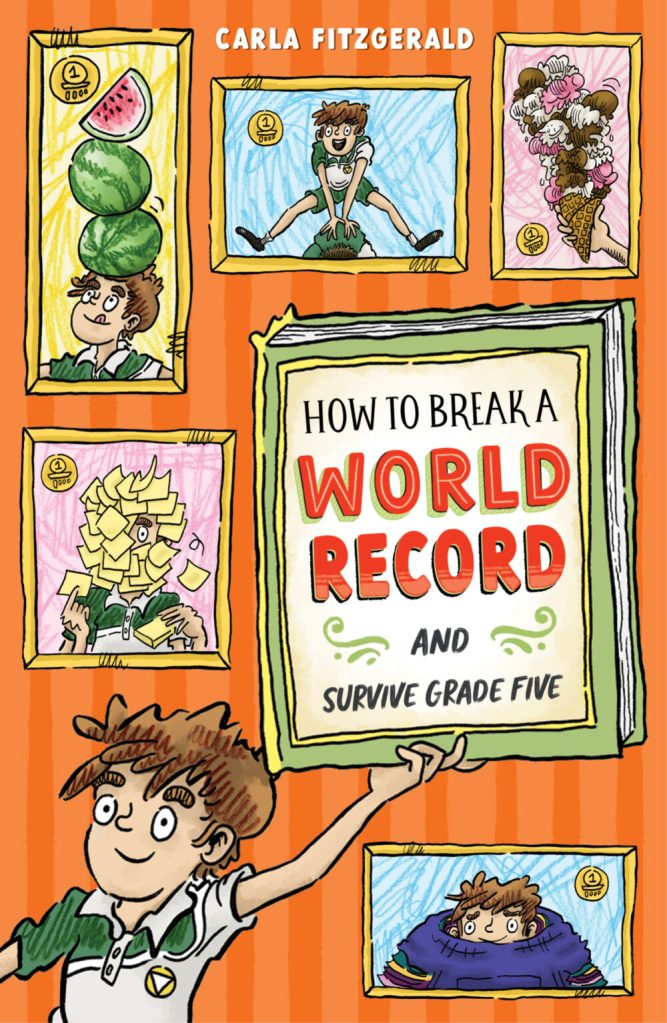
Carla Fitzgerald on How to Break a World Record and Survive Grade Five

Carla Fitzgerald is a children’s author, a recovered lawyer and mum of three. Carla has written three humorous books for children – one picture book and two novels. Despite numerous attempts, she has not yet broken a world record. Today we’re pleased to be chatting to Carla about her latest book: How to Break a World Record and Survive Grade Five.

The publisher provided Alphabet Soup with a reader copy of How to Break a World Record and Survive Grade Five.

From the publisher:

Sam is a kind and thoughtful eleven-year-old, but he thinks he’s not that great at anything. His sister, Ava, is a soccer star and his best friend, Vihaan, is an award-winning artist. The one thing Sam is good at is knowing all about the extraordinary feats in the Big Book of Records. When Sam is set a class project about a moment he’s proud of, he can’t think of anything and takes inspiration from his favourite book. He knows he’ll be proud of himself if he can break a world record! But breaking a world record isn’t easy … 


I love writing characters who are in Grade Five because I find kids of this age are funny, smart and interesting. And importantly, they’re often starting to think more about the world and their place in it, which is perfect for storytelling. 

My favourite record is ‘Most scoops on an ice-cream cone’ (125 scoops). You may notice that this record forms an important part of the novel! I actually tried to make a giant ice-cream as ‘research’ but I only made it to about 15 scoops. It was fun eating it though.

That is such a good question – it’s really got me thinking! I am proud that I pushed myself to finish my first manuscript and now I have a career that I love. I’m also proud of my spaghetti bolognese, which is the only thing all my kids will eat.

Include small details from life in your stories – this will make your story feel real to the reader. Does your Dad fidget with his ear while watching TV? Give that characteristic to one of your characters! Does your local corner shop smell like feet? Perhaps a setting in your story could smell that way.

I’m writing another ‘survive grade five’ at the moment. We haven’t got a title but here is a big hint: ‘How to win a <insert major sporting event> and Survive Grade Five.’

How to Break a World Record and Survive Grade Five is out now! Ask for it at your favourite bookshop or local library.


Take a sneak peek inside the book

Download Teachers’ Notes for the book

Visit Carla Fitzgerald’s website for more about her and her books

The cover of a children's novel: How to Break a World Record and Survive Grade 5
Posted in authors, illustrator, interviews

Kylie Howarth on Kev and Trev: Snot Funny Sea Stories

Kylie Howarth is an award-winning, internationally published children’s author-illustrator from Western Australia. Kylie has swum with whale sharks, manta rays and humpback whales in Ningaloo, piranha and pink dolphins in the Amazon, braved scuba diving with lionfish in Egypt, marine iguanas and hammerhead sharks in the Galapagos Islands and encountered great white sharks in South Africa! Today Kylie is visiting to talk about her latest book, the first in her graphic novel series, Kev and Trev: Snot Funny Sea Stories!

The publisher provided Alphabet Soup with a reader copy of Snot Funny Sea Stories.

From the publisher:


I once made rhyming mini-books for my kids which I’d pop in their school lunchboxes. The kids loved these short, funny stories and often shared them with their friends and teachers. This inspired me to create a graphic novel series, that included lots of short funny stories written by the characters, Kev and Trev.

I use sketch books and a pencil for my initial ideas and story planning. I then use a program called Procreate (on my iPad) to illustrate my books. I also use anything from seaweed to broccoli dipped in paint and pressed on paper, to create interesting textures for my illustrations.

Keeping a consistent rhythm and beat for each line of rhyming text really helps the story flow for your reader. To hear if your rhythm is working, try clapping along as you read your story out loud.

Ha ha! Kev and Trev’s editor is a grumpy squid named Mr Happy. Luckily my editor is never grumpy. She is also my publisher so identifies more with the lovely character of Tess the pug-lisher.

I love the mixed-up book titles like THE BUFFALO (instead of The Gruffalo) and POSSUM TRAGIC (instead of Possum Magic.)

I’m now working on the second graphic novel in this series – Kev and Trev: Snot Scary Jungle Stories.

Kev and Trev: Snot Funny Sea Stories is out now! Ask for it at your favourite bookshop or local library.


See a short video of Kylie designing a character in the book [Instagram]

Download Kylie’s rhyming books/zines printables

Visit Kylie Howarth’s website for more about her and her books

the cover of a children's graphic novel: Kev and Trev, Snot Funny Sea Stories by Kylie Howarth
Posted in authors, interviews

Mark Greenwood on the History Hunter series

Mark Greenwood is a history hunter! He enjoys searching for lost explorers and glittering treasure, delving into baffling mysteries and investigating famous cold cases. His many award-winning books examining history and multicultural themes have been honoured internationally. Today Mark chats to us about his new History Hunter series, exploring unsolved mysteries. The first two books in the series – The Vanishing and The Dragon’s Treasure – were released in July 2024.

The publisher provided Alphabet Soup with reading copies of these books.

From the publisher:


I’m drawn to real-life mysteries to search for the truth. The spark to write could be a character, a place, an event, a photograph that teases my imagination, an object or relic, or a tall tale recalled. Sometimes, I wonder if we come across stories by chance – or if stories find us. A curious, questioning mind kick-starts the research process and once history hunters get going, there is no stopping the search for truth.

The Dragon’s Treasure invites readers on an adventure back in time. The premise reads like the plot of a fictional novel – a fabled shipwreck, seven chests of treasure, a mysterious skeleton and 68 desperate castaways abandoned on a bleak coast. But sometimes truth is stranger than fiction. 

There are many mysteries out there, waiting to be discovered – secrets and hauntings, unexplained occurrences, lost treasure. There are mysteries that solve the disappearance of something or someone. There are mysteries that remain unsolved. Not to mention strange objects, legendary creatures, ghostly ships, freaky phenomena and cryptic codes. For history hunters, a mystery is anything inexplicable, unknown or puzzling. That is what drew me to the story of The Vanishing …

The Vanishing kicks the History Hunter series off with THE question – are we alone in the universe? The disappearance of pilot Frederick Valentich is Australia’s greatest aviation mystery. In 1978, he was on a routine flight over the Bass Straight when he reported an encounter with a UFO. His extraordinary voice transmission with Melbourne flight control was recorded in full. His last words were: ‘It’s not an aircraft …’ Neither Valentich nor his plane were ever found. What on earth (or not of this earth) happened? After years of research, I have formed my own opinion about what happened to Frederick Valentich. I conducted a thorough investigation, and The Vanishing provides evidence and enough information for readers to draw their own informed conclusions.

Yes – quite a few strange things have happened to me. I’ve learnt to embrace the mysterious, accept it and use the experiences creatively. These private episodes are random and rare, but always welcome.  

I’m a history mystery detective. I collect information, clues and evidence. I keep files on the people in each story, newspaper accounts, photographs, research documents, maps and books about the subject that are valuable sources of knowledge. These are the tools that help me brush away the layers of time so my readers can walk undetected in the past.

I’m thrilled to be working on the next two books in the HISTORY HUNTER series. Each case file invites readers to delve into the unexplained and investigate extraordinary historical mysteries. 

Case File No. 3 is the story of a legendary jewel that has crossed oceans and continents, passing from thieves to commoners, kings, and queens. The sinister forces that lurk beneath its indigo surface are said to have origins in an ancient curse.

The fourth book in the History Hunter series is set in the Great Depression – when a hero was needed to lift the spirits of a nation. The call was answered by an underdog with unflinching courage, a tall poppy who refused to be defeated, a battler who defied the odds, and an icon whose glorious life sparked one of Australia’s greatest unresolved mysteries.

The truth is out there …

The Vanishing and The Dragon’s Treasure are out now! Ask for them at your favourite bookshop or local library.


AWESOME EXTRAS:

Take a sneak peek inside The Vanishing

Take a sneak peek inside The Dragon’s Treasure

Download the Teachers’ Notes for The Vanishing

Download the Teachers’ Notes for The Dragon’s Treasure

Create your own newspaper article and comic inspired by the books

Visit Mark Greenwood’s website for more about him and his books

Books 1 and 2 in the History Hunter series by Mark Greenwood
Posted in authors, interviews

Cheryl Leavy on Yanga Mother

Cheryl Leavy is from the Kooma and Nguri Nations in western and central Queensland. She is an award-winning poet and writer who loves to tell stories that celebrate First Nations culture, history and Country. We’re thrilled to be chatting to Cheryl about her first picture book – Yanga Mother – illustrated by Christopher Bassi.

The publisher provided Alphabet Soup with a copy of Yanga Mother.

From the publisher:

Yanga Mother is a poetic celebration of First Nations languages. This powerful bilingual story honours connection to Country and the unbreakable bonds of never-ending motherly love. From award-winning writer Cheryl Leavy comes this beautiful picture book in Kooma and English about a grey kangaroo and her joey, and the unbreakable bonds of family.


On the surface, Yanga is a story about the love between Mother and child. It helps us to reflect on how our Mother is always with us in our hearts, even when she seems far away. It’s something a lot of readers will be able to relate to and lays the groundwork for empathy for the Stolen Generations.

Once the story was written, I thought carefully about how to illustrate it. I chose dhugundu, the grey kangaroo, because they are wonderful mothers and siblings. You can read more about how they love and protect each other in the notes for older readers.

I got started on the book itself by working out what words would go on each page (the pagination) and made notes for the illustrations for each of the phrases that make up the story. I set it out in a table, using a process I made up as I was going along. I wasn’t really sure how to make a book and what people in the publishing industry did. I just I wanted to be able to set out my ideas clearly and simply, and to make sure the visual storytelling reflected Kooma cultural values.

I spent a lot of time considering how I wanted the book to look. I studied many of my favourite children’s books, looking at the illustrations carefully to understand what made each of them so wonderful. One of those books was Aboriginal Tales, published in 1972 by Golden Press, which my mother had recently given me. The illustrations have lots of rich yellows and this made me wonder which colours are best to use in children’s books. I searched the internet and found a piece of research that said yellow was a colour that children prefer in children’s books.

Artist Christopher Bassi was then the obvious choice for the illustrator. He is a famous artist who uses yellow as the main colour in his work. I have loved Chris’s artwork for a long time and we have developed a close friendship. I was so happy when he agreed to illustrate and design Yanga Mother

An internal spread from Yanga Mother, including words in Kooma on the left and the English translation on the right
From Yanga Mother by Cheryl Leavy & Christopher Bassi (UQP)

We worked together very closely, talking through my suggested illustrations and exploring Chris’s vision for the book. We spent many happy hours together in Chris’s studio in West End, talking about each illustration, pouring over children’s books we each loved, thinking deeply about how we could honour the story and bringing our very best efforts to each illustration. We are both very proud of the final product and are looking forward to a new project together.

Most of the translation is almost exact. There are some examples where there is a tricky translation, where I have generally followed the patterns provided by the Kooma language. Take for example the concept of everywhen, which is an English word used to describe part of the Aboriginal philosophy of time. I wanted to translate this term from English to Kooma, but there is not a Kooma word recorded anywhere. I already know that “murra murra” means many hands and “gurragurra” means everything. So wandhandja-wandhandja would be everywhen.

Because I am a poet, I sometimes like to use the Kooma language more creatively. The term “yilungga yabangga”, which means everywhere, is a good example. It literally translates as here and there. It is a more playful way of saying everywhere and suits both the genre of a picture book and Yanga’s story. I settled on this choice when I was working with a linguist (language expert) who, like an editor, reviewed drafts towards the end of the project.

Another example of a translation that is not exact is “ngali wadjanbangali”. It literally means we two are going, or on the go. The closest translation that fits with both what I wanted to say and a clear English meaning is, “we two are always together.”

When my grandmother grew up on the Barambah Mission, she was punished if she spoke in Kooma. Like many Aboriginal people, this meant she spoke it less and less. I grew up speaking a little Kooma and other Aboriginal language words, but was not able to speak in sentences. There are not many learning resources for the Kooma language so learning it has been very difficult. I hope to be able to change that.

If you’d like to write poetry, the best way to start is by reading poetry, lots of it. Carry a pen and paper around with you always. Leave a note pad beside your bed. Write down ideas you have and read over them. This will get you thinking and writing down your thoughts. A poem often starts to take form in this way.

It is great to start a poem with inspiration that wells from within you, but you can also sit down with the intent of writing a poem. You can try using what writers call “prompts”. For example, you might sit down with the idea of writing a poem about your mum. This is often the kind of thing you will do if you join a writing club – read poetry, write down and share your ideas, write from prompts and then keep working on your poems until you feel they are finished. I have poems I have been working on for years!

The book I am working on right now is another picture book called, For You Country. It teaches the water cycle from a First Nations perspective. I am also working on a third children’s book titled Mugirri and Samson. It shares what a nyimanj (native ant) called Backbone learns about himself and his community after he comes across the first-ever yarraman (horse) on his Country.

Yanga Mother is out now! Ask for it at your favourite bookstore or local library.


AWESOME EXTRAS

* Take a peek inside the book

* Listen to Kooma Language pronunciations of words in Yanga Mother

* Download the Teachers’ Notes

* Going to the Byron Writers Festival? See Cheryl Leavy’s sessions on Sunday 11 August 2024

The cover of the picture book Yanga Mother.
Posted in authors, interviews

Shirley Marr on Countdown to Yesterday

Shirley Marr is an award-winning author and first generation Chinese-Australian living in sunny Perth. Shirley describes herself as having a Western Mind and an Eastern Heart and writes in the middle where both collide. She bases her stories on her own personal experiences of migration and growing up in Australia. Today we’re chatting to Shirley about her novel Countdown to Yesterday.

From the publisher:


Sometimes the title is the very first thing that I come with, but with Countdown to Yesterday, the quest to find the perfect title was a very long and drawn-out process that ended up involving my literary agent, my Australian, UK and US editors! I guess trying to find something clever, that also summed up all the big ideas in the book, was quite tricky. My working title was Tin Foil Tin Machine and other suggestions (among many more) included The Yesterday MachineMy Life in Six MemoriesSee You YesterdayIf We Go Back, Ground Control to Major Tom and My Favourite Yesterdays. I am interested in what the readers think of these alternatives!

I don’t think I would try and go back to change anything, even the very worst of my memories, in case it changes the life I am living today. Right now, I am a full-time author who gets to write every single day and I feel I’m living my best life. Even though it took a long and hard time for me to get to this position. If I had a chance though, to be part of the audience at the very last Ziggy Stardust and the Spiders from Mars concert, I would definitely say yes! I would just watch very enthusiastically and be very careful not to do anything to affect history.

That is the hardest question because I love them all. I’d have to say that like James in my book, I think the rocket cake is the best. I have never had it for my birthday, but I am hoping someone will bake it for my birthday next year. 

I am hoping that I can go back to Christmas Island either this year or the next. I grew up there as a child before arriving to Perth on the mainland and I would love to write an authentic and unique middle grade about the jungles, the basalt cliffs and the unique birdlife. I think the way that the red crabs migrate down to the beaches each year is a beautiful analogy for human migration. 

How about the word TIME?

Countdown to Yesterday is out now! Ask for it at your favourite bookshop or local library.


Read the first chapter of Countdown to Yesterday

Read a review of the book by Gabriel, age 13

Download a Countdown to Yesterday Word Search

Download the Teachers’ Notes for this book

Visit Shirley Marr’s website for more about her and her books

The cover of a children's novel: Countdown to Yesterday by Shirley Marr
Posted in authors, interviews, poetry

Deborah Abela on The Kindness Project

Deborah Abela with copies of The Kindness Project

Deborah Abela is an award-winning author and trained as a teacher before becoming writer/producer of a national children’s TV show. She has since written 30 internationally published and awarded books, including the Max Remy series, her climate change trilogy – Grimsdon, New City and Final Storm – and The Stupendously Spectacular Spelling Bee. The Book of Wondrous Possibilities is about the power of books to save us when we feel lost. Today we’re thrilled to host Deborah to talk about her latest book: The Kindness Project.


I’ve LOVED verse novels for so long. They’re like a regular novel, but instead of chapters there are verses. This means they have to get to the point very quickly, so they’re often real page-turners. I also LOVED playing with the look of the words on the page, so if something is  

BIG

I wanted the word to look big. Same if a character felt scared or lonely. That was fun.

The big skill was learning how to tell a big story with not so many words. That meant I had to concentrate really hard on finding the exact word for everything that happened.

That depended on who was in my group. If I was with my friends, it was fun, but sometimes I had to be in a group with people I didn’t know, and that was hard, but if we were excited about the project, it worked out really well! So when Ms Skye puts Nicolette into a group with kids who don’t like her, I totally understand why she’s nervous. 

Think about a something that has happened to you that made you feel happy or nervous or excited. eg auditioning for a play, getting your first pet, the soccer grand final. Tell that story, including how you felt, but only writing a few words per line. Include only the really important parts of that story. When you’re happy, look at the verse and see which words you can make look like their meaning. Here’s an example from pages 16 and 17. in The Kindness Project.

Page 16 from the novel The Kindness Project by Deborah Abela.
Page 17 from The Kindness Project by Deborah Abela
[Pages 16 & 17 from The Kindness Project]

I am working on two junior fiction ideas and a middle grade novel, but I have a new picture book coming out in February 2025 called No More Room in the Bed. It’s about a dark and stormy night and a bed that becomes full of frightened creatures who all want to squeeze in beside Dad. Until it all becomes too much! 

The Kindness Project is out now! Ask for it at your favourite bookshop or your local library.


Take a peek inside the book

Read some more writing tips from Deborah Abela

Cover of a children's novel: The Kindness Project by Deborah Abela
Posted in authors, interviews

Dr Vanessa Pirotta on Oceans at Night

Dr Vanessa Pirotta is a wildlife scientist, science communicator and author.

Vanessa’s research is extensive, she has even used drones to collect whale snot, and computer algorithms and AI for the detection of illegal wildlife trafficking! Vanessa is the author of three books, with more on the way. Today we’re excited to be talking to her about her latest children’s book: Oceans at Night, illustrated by Cindy Lane.

The publisher provided Alphabet Soup with a reading copy of Oceans at Night.

From the publisher:


Working with animals, like whales, can be dangerous because they are so big! We also have to make sure that we don’t touch anything that could be harmful as many sea creatures can bite and sting. When we conduct science, we always make sure that the animals are safe and so are humans. This means lots of planning and asking questions before we even go into the sea. Thankfully, we can use new technologies like drones to gather scientific information from whales without having to be close to them or needing to touch them.

Yes! I LOVE sunfish. These are the biggest bony fish in the sea! They look like aliens and flap their flips on the top and bottom of their big bodies. We sometimes see them off Sydney, Australia. I also swam with them in the Galapagos islands. I wanted to make sure this book showed some of the incredible creatures I love and have seen. I have yet to see cuvier’s beaked whales or dumbo octopus. Perhaps I can go on a quest to meet the creatures of Oceans At Night one day. 

That’s true! The dumbo octopus and angler fish are a great example of this. I think I would need to go down very deep in a submarine. Or, perhaps we could send a remotely operated underwater vehicle to try and spot one. Getting to the ocean depths is dangerous and expensive so I am not sure if I will ever get to see these creatures. Perhaps through ongoing scientific research, we might get to see one of these creatures in the near future. 

How important it is for all of us. Many of us might not know that the ocean is so important for our everyday lives here on land. The ocean helps provide the air we breathe, and regulates our climate. Whales, for example, are very important for eating in one area and pooing in another – moving nutrients (good things for our ocean) around. Whales are kind of like a cow on land, they eat and then their poo helps the grass grow.  

I LOVE writing books and I’ve been thinking about something very special for a long time now. I love being able to educate and explore different worlds inside and out of the school classroom. Watch this space. 

Oceans at Night is out now! Ask for it at your favourite bookshop or local library.


AWESOME EXTRAS:

Take a peek inside the book

Download the Teachers’ Notes for Oceans at Night [scroll down to the For Teachers tab]

Visit the author’s website for more about her and her books