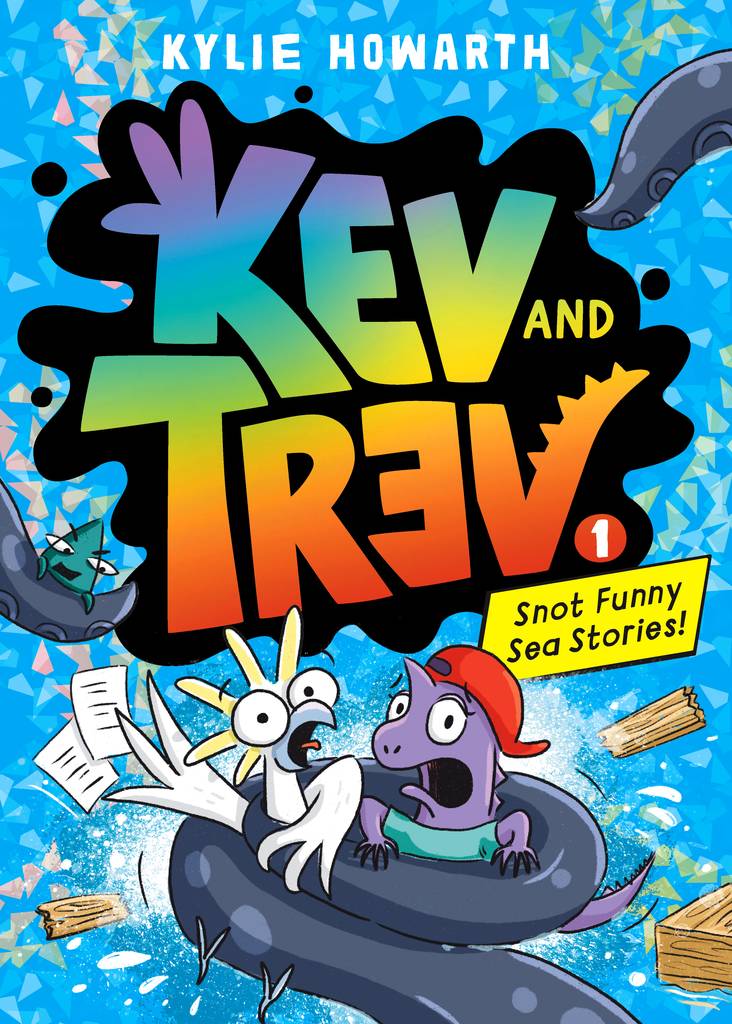
Kylie Howarth is an award-winning, internationally published children’s author-illustrator from Western Australia. Kylie has swum with whale sharks, manta rays and humpback whales in Ningaloo, piranha and pink dolphins in the Amazon, braved scuba diving with lionfish in Egypt, marine iguanas and hammerhead sharks in the Galapagos Islands and encountered great white sharks in South Africa! Today Kylie is visiting to talk about her latest book, the first in her graphic novel series, Kev and Trev: Snot Funny Sea Stories!
The publisher provided Alphabet Soup with a reader copy of Snot Funny Sea Stories.
From the publisher:
Join Kev and Trev’s epic deep-sea adventure – full of kraken laughs and comic commocean! Dodge flying coconut cannonballs, outrun ghost pirates, escape big sharks, pig sharks, and a punch-throwing pelican, all while hunting for mysterious merpugs and the missing emergency boat snacks! Water you waiting for? Jump on board Kev and Trev’s popcorn powered houseboat … and cross-your-claws it doesn’t sink!
You have published picture books and junior fiction novels and this is your first graphic novel. What brought you to create the Kev and Trev series?
I once made rhyming mini-books for my kids which I’d pop in their school lunchboxes. The kids loved these short, funny stories and often shared them with their friends and teachers. This inspired me to create a graphic novel series, that included lots of short funny stories written by the characters, Kev and Trev.
What tools do you prefer to use to create your graphic novels?
I use sketch books and a pencil for my initial ideas and story planning. I then use a program called Procreate (on my iPad) to illustrate my books. I also use anything from seaweed to broccoli dipped in paint and pressed on paper, to create interesting textures for my illustrations.
Your characters Kev and Trev write and illustrate their own rhyming short stories inside the book. Do you have a tip for kids wanting to experiment with rhyme?
Keeping a consistent rhythm and beat for each line of rhyming text really helps the story flow for your reader. To hear if your rhythm is working, try clapping along as you read your story out loud.
How does your editor feel about being turned into a squid? 😆
Ha ha! Kev and Trev’s editor is a grumpy squid named Mr Happy. Luckily my editor is never grumpy. She is also my publisher so identifies more with the lovely character of Tess the pug-lisher.
The book is stuffed full of puns and hilarious play-on-words conversations. What’s your favourite pun from Snot Funny Sea Stories?
I love the mixed-up book titles like THE BUFFALO (instead of The Gruffalo) and POSSUM TRAGIC (instead of Possum Magic.)
What’s next for Kylie Howarth?
I’m now working on the second graphic novel in this series – Kev and Trev: Snot Scary Jungle Stories.
Kev and Trev: Snot Funny Sea Stories is out now! Ask for it at your favourite bookshop or local library.
AWESOME EXTRAS:
See a short video of Kylie designing a character in the book [Instagram]
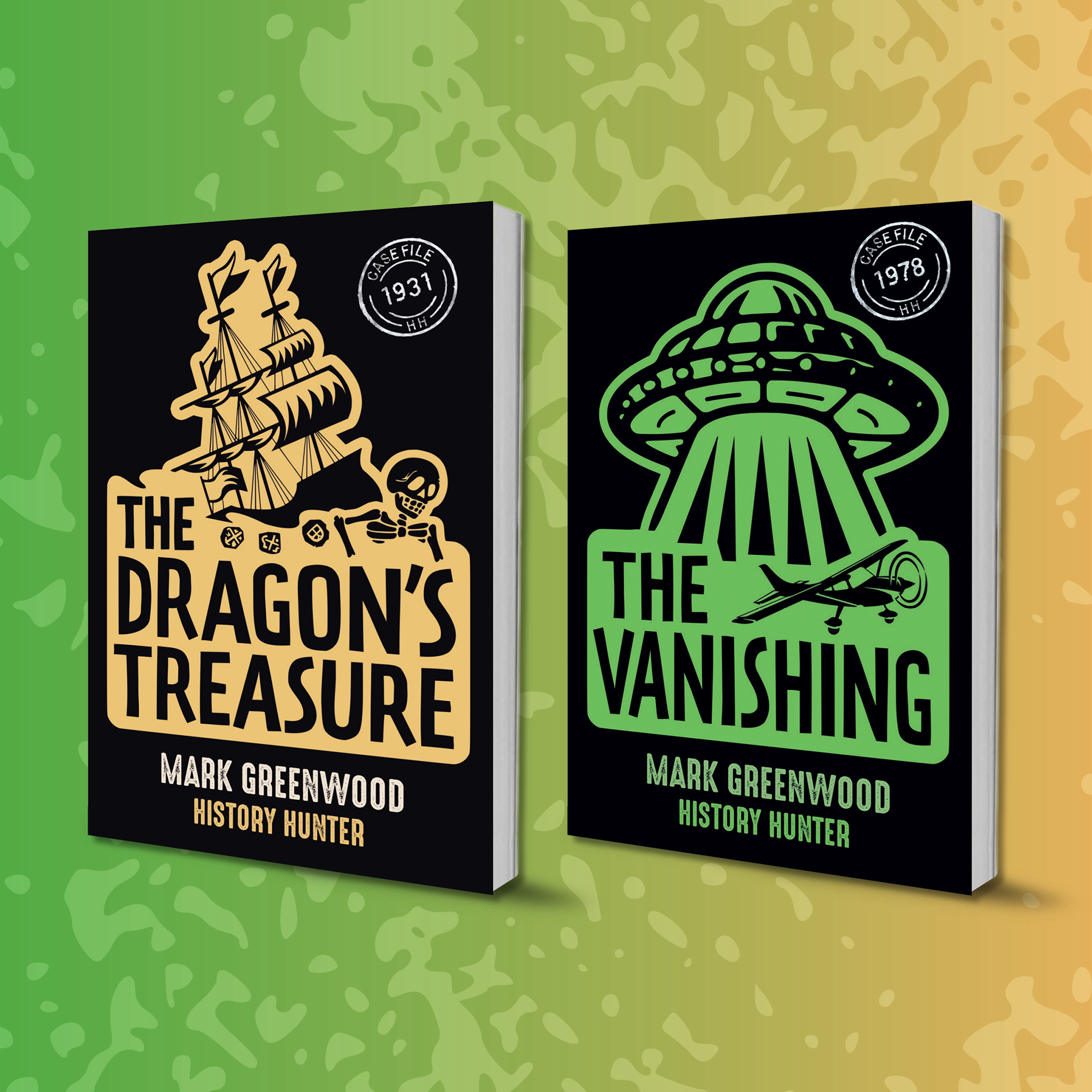
Mark Greenwood is a history hunter! He enjoys searching for lost explorers and glittering treasure, delving into baffling mysteries and investigating famous cold cases. His many award-winning books examining history and multicultural themes have been honoured internationally. Today Mark chats to us about his new History Hunter series, exploring unsolved mysteries. The first two books in the series – The Vanishing and The Dragon’s Treasure – were released in July 2024.
The publisher provided Alphabet Soup with reading copies of these books.
From the publisher:
The Vanishing:In 1978, a young pilot vanishes during a routine flight over a notorious stretch of water. His radio transmission to airport control is one of the most bizarre ever recorded. What did Frederick Valentich encounter? Where did he disappear to?
The Dragon’s Treasure: On a summer morning in 1931, four children on a remote beach make a remarkable discovery. But this is only one of many astonishing finds in the same area: silver coins, hidden chests, mysterious stones, strange objects and an unidentified skeleton. Why is it all there? Where has it come from? Can the truth be found?
Join the History Hunter to unravel these marvellous mysteries.
You’re an avid history hunter, but how did you come to hear about these two unsolved mysteries from 1931 and 1978? (Do you overhear conversations, or frequently look through old newspaper articles to uncover anything interesting?)
I’m drawn to real-life mysteries to search for the truth. The spark to write could be a character, a place, an event, a photograph that teases my imagination, an object or relic, or a tall tale recalled. Sometimes, I wonder if we come across stories by chance – or if stories find us. A curious, questioning mind kick-starts the research process and once history hunters get going, there is no stopping the search for truth.
The Dragon’s Treasure invites readers on an adventure back in time. The premise reads like the plot of a fictional novel – a fabled shipwreck, seven chests of treasure, a mysterious skeleton and 68 desperate castaways abandoned on a bleak coast. But sometimes truth is stranger than fiction.
There are many mysteries out there, waiting to be discovered – secrets and hauntings, unexplained occurrences, lost treasure. There are mysteries that solve the disappearance of something or someone. There are mysteries that remain unsolved. Not to mention strange objects, legendary creatures, ghostly ships, freaky phenomena and cryptic codes. For history hunters, a mystery is anything inexplicable, unknown or puzzling. That is what drew me to the story of The Vanishing …
Do you have an opinion about what really happened to the pilot who vanished?
The Vanishing kicks the History Hunter series off with THE question – are we alone in the universe? The disappearance of pilot Frederick Valentich is Australia’s greatest aviation mystery. In 1978, he was on a routine flight over the Bass Straight when he reported an encounter with a UFO. His extraordinary voice transmission with Melbourne flight control was recorded in full. His last words were: ‘It’s not an aircraft …’ Neither Valentich nor his plane were ever found. What on earth (or not of this earth) happened? After years of research, I have formed my own opinion about what happened to Frederick Valentich. I conducted a thorough investigation, and The Vanishing provides evidence and enough information for readers to draw their own informed conclusions.
Has anything strange or mysterious ever happened to you?
Yes – quite a few strange things have happened to me. I’ve learnt to embracethe mysterious, accept it and use the experiences creatively. These private episodes are random and rare, but always welcome.
Your books contain a variety of artefacts and primary source materials, like photographs, newspaper articles, investigation reports and more. How do you gather and store all that information and research for your writing?
I’m a history mystery detective. I collect information, clues and evidence. I keep files on the people in each story, newspaper accounts, photographs, research documents, maps and books about the subject that are valuable sources of knowledge. These are the tools that help me brush away the layers of time so my readers can walk undetected in the past.
Can you tell us a little about what you’re working on next?
I’m thrilled to be working on the next two books in the HISTORY HUNTER series. Each case file invites readers to delve into the unexplained and investigate extraordinary historical mysteries.
Case File No. 3 is the story of a legendary jewel that has crossed oceans and continents, passing from thieves to commoners, kings, and queens. The sinister forces that lurk beneath its indigo surface are said to have origins in an ancient curse.
The fourth book in the History Hunter series is set in the Great Depression – when a hero was needed to lift the spirits of a nation. The call was answered by an underdog with unflinching courage, a tall poppy who refused to be defeated, a battler who defied the odds, and an icon whose glorious life sparked one of Australia’s greatest unresolved mysteries.
The truth is out there …
The Vanishing and The Dragon’s Treasure are out now! Ask for them at your favourite bookshop or local library.
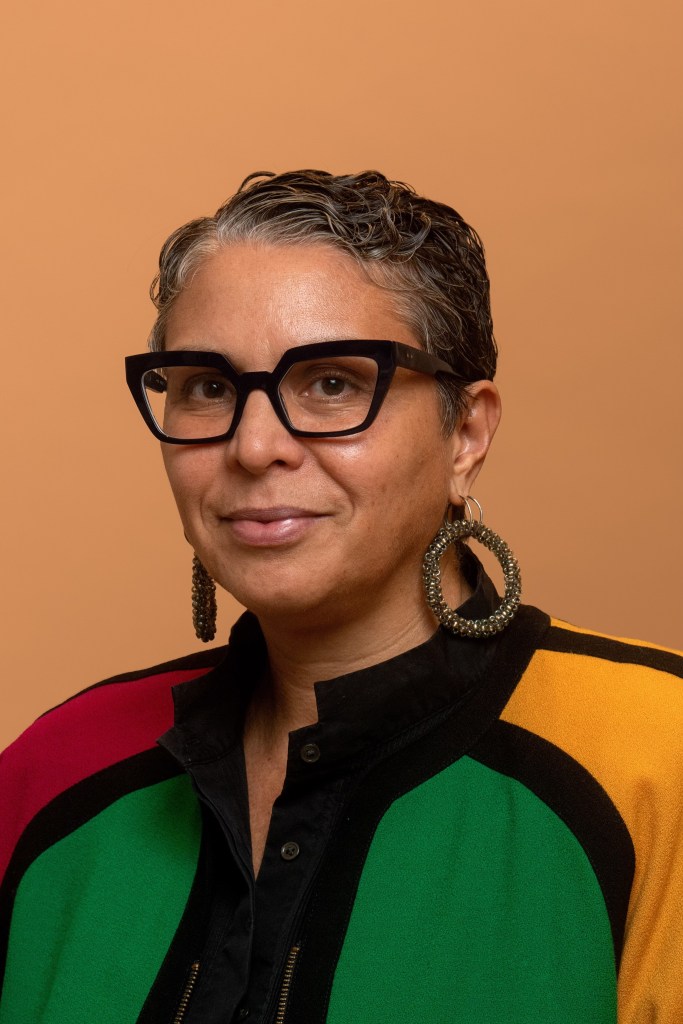
Cheryl Leavy is from the Kooma and Nguri Nations in western and central Queensland. She is an award-winning poet and writer who loves to tell stories that celebrate First Nations culture, history and Country. We’re thrilled to be chatting to Cheryl about her first picture book – Yanga Mother – illustrated by Christopher Bassi.
The publisher provided Alphabet Soup with a copy of Yanga Mother.
From the publisher:
Yanga Mother is a poetic celebration of First Nations languages. This powerful bilingual story honours connection to Country and the unbreakable bonds of never-ending motherly love. From award-winning writer Cheryl Leavy comes this beautiful picture book in Kooma and English about a grey kangaroo and her joey, and the unbreakable bonds of family.
Sometimes the author and illustrator of a book discuss the project during its creation, sometimes they work separately on the words (author) and artwork (illustrator). How did you work with Christopher Bassi while he was illustrating Yanga Mother?
On the surface, Yanga is a story about the love between Mother and child. It helps us to reflect on how our Mother is always with us in our hearts, even when she seems far away. It’s something a lot of readers will be able to relate to and lays the groundwork for empathy for the Stolen Generations.
Once the story was written, I thought carefully about how to illustrate it. I chose dhugundu, the grey kangaroo, because they are wonderful mothers and siblings. You can read more about how they love and protect each other in the notes for older readers.
I got started on the book itself by working out what words would go on each page (the pagination) and made notes for the illustrations for each of the phrases that make up the story. I set it out in a table, using a process I made up as I was going along. I wasn’t really sure how to make a book and what people in the publishing industry did. I just I wanted to be able to set out my ideas clearly and simply, and to make sure the visual storytelling reflected Kooma cultural values.
I spent a lot of time considering how I wanted the book to look. I studied many of my favourite children’s books, looking at the illustrations carefully to understand what made each of them so wonderful. One of those books was Aboriginal Tales, published in 1972 by Golden Press, which my mother had recently given me. The illustrations have lots of rich yellows and this made me wonder which colours are best to use in children’s books. I searched the internet and found a piece of research that said yellow was a colour that children prefer in children’s books.
Artist Christopher Bassi was then the obvious choice for the illustrator. He is a famous artist who uses yellow as the main colour in his work. I have loved Chris’s artwork for a long time and we have developed a close friendship. I was so happy when he agreed to illustrate and design Yanga Mother.
From Yanga Mother by Cheryl Leavy & Christopher Bassi (UQP)
We worked together very closely, talking through my suggested illustrations and exploring Chris’s vision for the book. We spent many happy hours together in Chris’s studio in West End, talking about each illustration, pouring over children’s books we each loved, thinking deeply about how we could honour the story and bringing our very best efforts to each illustration. We are both very proud of the final product and are looking forward to a new project together.
On each page, the poetic text of Yanga Mother appears in Kooma first with the English translation below it. When writers translate their work, it’s not always a word-for-word project. How did you go about choosing the words for your translation?
Most of the translation is almost exact. There are some examples where there is a tricky translation, where I have generally followed the patterns provided by the Kooma language. Take for example the concept of everywhen, which is an English word used to describe part of the Aboriginal philosophy of time. I wanted to translate this term from English to Kooma, but there is not a Kooma word recorded anywhere. I already know that “murra murra” means many hands and “gurragurra” means everything. So wandhandja-wandhandja would be everywhen.
Because I am a poet, I sometimes like to use the Kooma language more creatively. The term “yilungga yabangga”, which means everywhere, is a good example. It literally translates as here and there. It is a more playful way of saying everywhere and suits both the genre of a picture book and Yanga’s story. I settled on this choice when I was working with a linguist (language expert) who, like an editor, reviewed drafts towards the end of the project.
Another example of a translation that is not exact is “ngali wadjanbangali”. It literally means we two are going, or on the go. The closest translation that fits with both what I wanted to say and a clear English meaning is, “we two are always together.”
The book was inspired by your grandmother’s experiences in the 1930s; she was part of the Stolen Generations, when Aboriginal people were often prevented from speaking their own languages. Did you grow up speaking Kooma, or was it something you learned later in life?
When my grandmother grew up on the Barambah Mission, she was punished if she spoke in Kooma. Like many Aboriginal people, this meant she spoke it less and less. I grew up speaking a little Kooma and other Aboriginal language words, but was not able to speak in sentences. There are not many learning resources for the Kooma language so learning it has been very difficult. I hope to be able to change that.
Do you have a tip for young writers who’d like to write their first poem?
If you’d like to write poetry, the best way to start is by reading poetry, lots of it. Carry a pen and paper around with you always. Leave a note pad beside your bed. Write down ideas you have and read over them. This will get you thinking and writing down your thoughts. A poem often starts to take form in this way.
It is great to start a poem with inspiration that wells from within you, but you can also sit down with the intent of writing a poem. You can try using what writers call “prompts”. For example, you might sit down with the idea of writing a poem about your mum. This is often the kind of thing you will do if you join a writing club – read poetry, write down and share your ideas, write from prompts and then keep working on your poems until you feel they are finished. I have poems I have been working on for years!
Can you tell us a bit about your next project?
The book I am working on right now is another picture book called, For You Country. It teaches the water cycle from a First Nations perspective. I am also working on a third children’s book titled Mugirri and Samson. It shares what a nyimanj (native ant) called Backbone learns about himself and his community after he comes across the first-ever yarraman (horse) on his Country.
Yanga Mother is out now! Ask for it at your favourite bookstore or local library.
Shirley Marr is an award-winning author and first generation Chinese-Australian living in sunny Perth. Shirley describes herself as having a Western Mind and an Eastern Heart and writes in the middle where both collide. She bases her stories on her own personal experiences of migration and growing up in Australia. Today we’re chatting to Shirley about her novel Countdown to Yesterday.
From the publisher:
James wishes he could go back in time. Back to when his mum and dad were together, when he had one home, when his family laughed and climbed hills and went to the movies. After meeting the enigmatic Yan, a girl who looks at the world differently, James discovers time travel might not be impossible after all. But if James can live forever in one of his six favourite memories, which one will he choose?
Can you tell us how you choose a title for your books?
Sometimes the title is the very first thing that I come with, but with Countdown to Yesterday, the quest to find the perfect title was a very long and drawn-out process that ended up involving my literary agent, my Australian, UK and US editors! I guess trying to find something clever, that also summed up all the big ideas in the book, was quite tricky. My working title was Tin Foil Tin Machine and other suggestions (among many more) included The Yesterday Machine, My Life in Six Memories, See You Yesterday, If We Go Back, Ground Control to Major Tom and My Favourite Yesterdays. I am interested in what the readers think of these alternatives!
If someone turned up with a time machine and offered to send you back in time … would you decide to go?
I don’t think I would try and go back to change anything, even the very worst of my memories, in case it changes the life I am living today. Right now, I am a full-time author who gets to write every single day and I feel I’m living my best life. Even though it took a long and hard time for me to get to this position. If I had a chance though, to be part of the audience at the very last Ziggy Stardust and the Spiders from Mars concert, I would definitely say yes! I would just watch very enthusiastically and be very careful not to do anything to affect history.
What’s your favourite cake in the Women’s Weekly Birthday Cake Book? (Have you ever had it for your birthday cake?)
That is the hardest question because I love them all. I’d have to say that like James in my book, I think the rocket cake is the best. I have never had it for my birthday, but I am hoping someone will bake it for my birthday next year.
Can you tell us a bit about what you’re working on next?
I am hoping that I can go back to Christmas Island either this year or the next. I grew up there as a child before arriving to Perth on the mainland and I would love to write an authentic and unique middle grade about the jungles, the basalt cliffs and the unique birdlife. I think the way that the red crabs migrate down to the beaches each year is a beautiful analogy for human migration.
Could you suggest a word prompt for young writers wanting to start a new story?
How about the word TIME?
Countdown to Yesterday is out now! Ask for it at your favourite bookshop or local library.
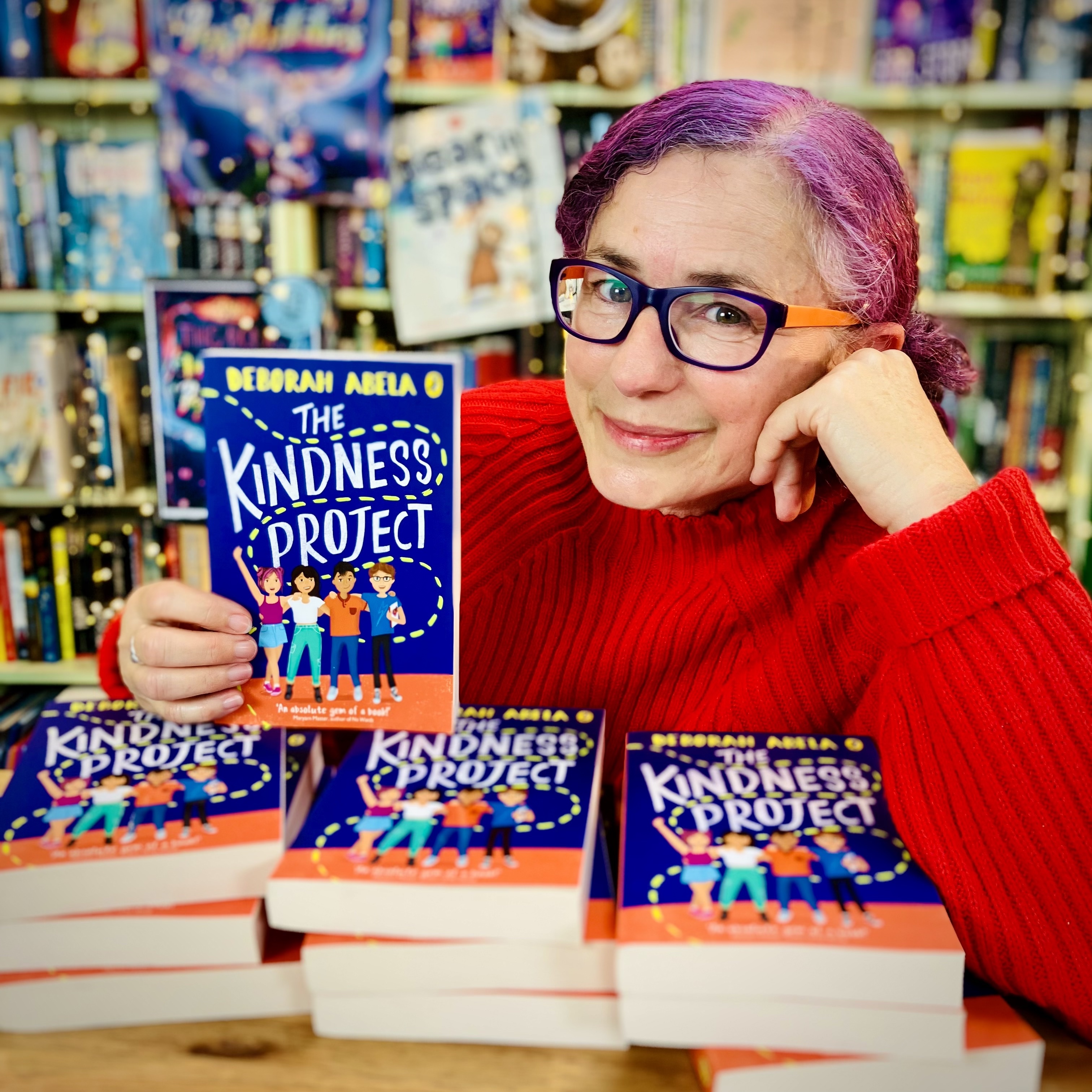
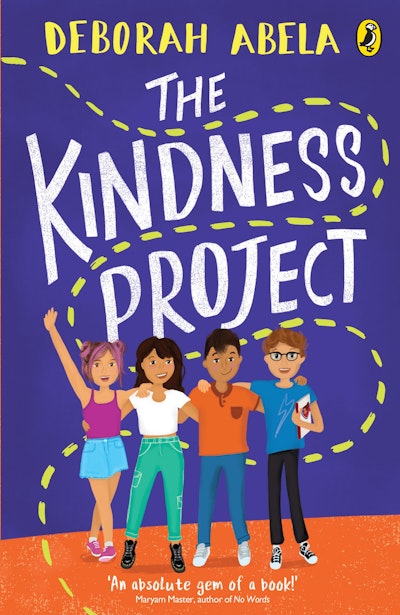
Deborah Abela is an award-winning author and trained as a teacher before becoming writer/producer of a national children’s TV show. She has since written 30 internationally published and awarded books, including the Max Remy series, her climate change trilogy – Grimsdon, New City and Final Storm – and The Stupendously Spectacular Spelling Bee. The Book of Wondrous Possibilities is about the power of books to save us when we feel lost. Today we’re thrilled to host Deborah to talk about her latest book: The Kindness Project.
Her teacher, Ms Skye, thinks kids can change the world with a Kindness Project. Nicolette wants to but how can she when Layla treats her like she’s invisible and DJ picks on everything she says? Leaf thinks Nicolette can be a superhero. So maybe if they work together they just might do it …
You’ve written 25 novels – what led you to write this one as a verse novel?
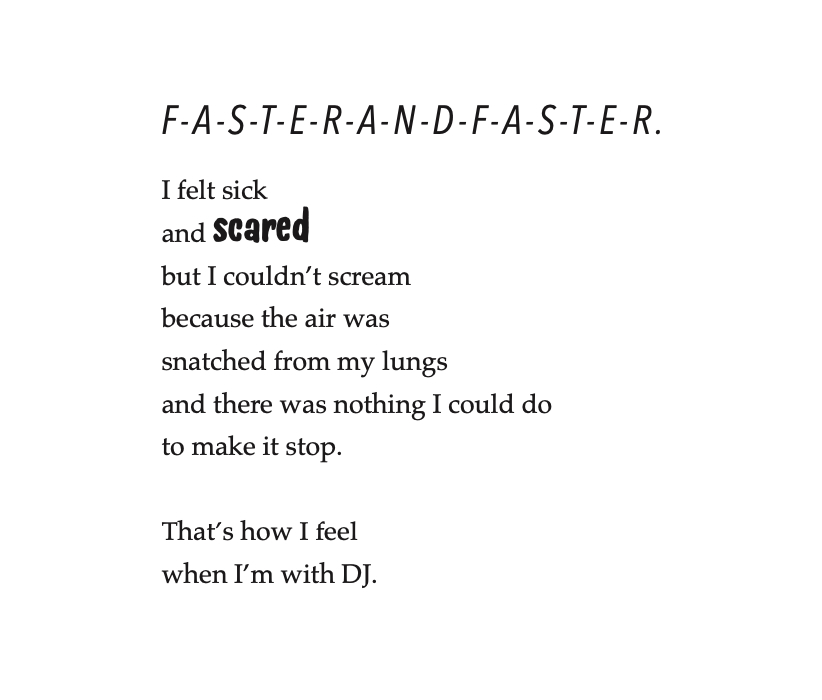
I’ve LOVED verse novels for so long. They’re like a regular novel, but instead of chapters there are verses. This means they have to get to the point very quickly, so they’re often real page-turners. I also LOVED playing with the look of the words on the page, so if something is
BIG
I wanted the word to look big. Same if a character felt scared or lonely. That was fun.
Did you need to learn any new skills before you started writing a novel in verse?
The big skill was learning how to tell a big story with not so many words. That meant I had to concentrate really hard on finding the exact word for everything that happened.
How did you feel about group projects when you were at school?
That depended on who was in my group. If I was with my friends, it was fun, but sometimes I had to be in a group with people I didn’t know, and that was hard, but if we were excited about the project, it worked out really well! So when Ms Skye puts Nicolette into a group with kids who don’t like her, I totally understand why she’s nervous.
Do you have a writing tip for kids who would like to try their hand at writing a verse novel?
Think about a something that has happened to you that made you feel happy or nervous or excited. eg auditioning for a play, getting your first pet, the soccer grand final. Tell that story, including how you felt, but only writing a few words per line. Include only the really important parts of that story. When you’re happy, look at the verse and see which words you can make look like their meaning. Here’s an example from pages 16 and 17. in The Kindness Project.
[Pages 16 & 17 from The Kindness Project]
What’s next for Deborah Abela?
I am working on two junior fiction ideas and a middle grade novel, but I have a new picture book coming out in February 2025 called No More Room in the Bed. It’s about a dark and stormy night and a bed that becomes full of frightened creatures who all want to squeeze in beside Dad. Until it all becomes too much!
The Kindness Project is out now! Ask for it at your favourite bookshop or your local library.
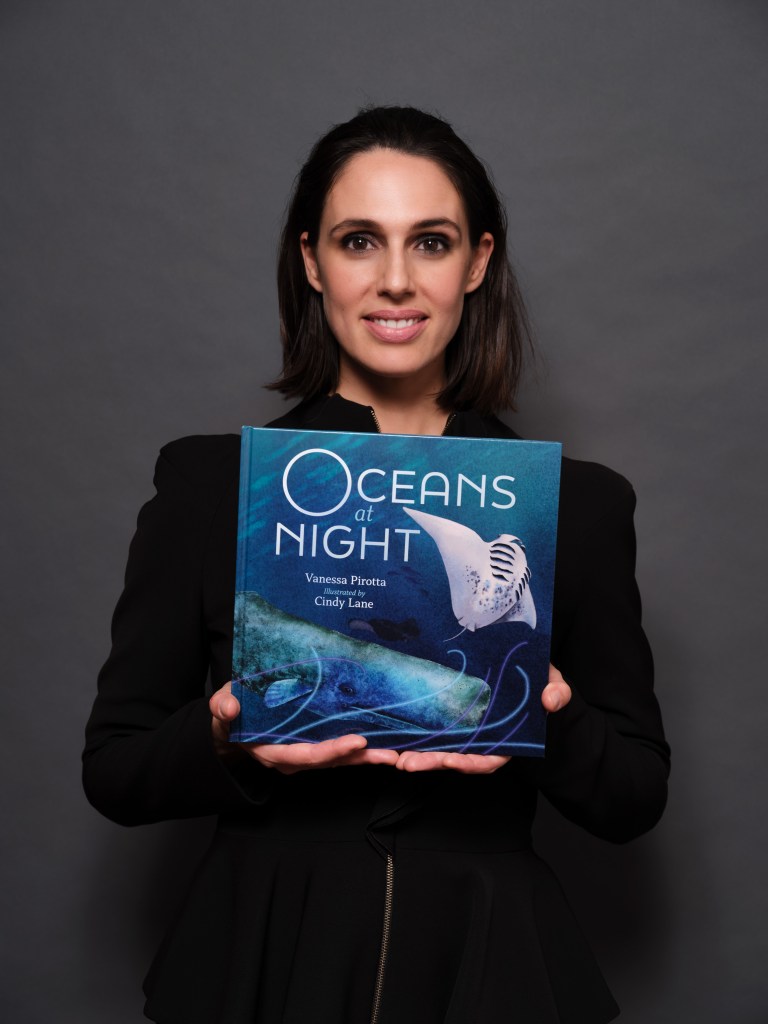
Dr Vanessa Pirotta is a wildlife scientist, science communicator and author.
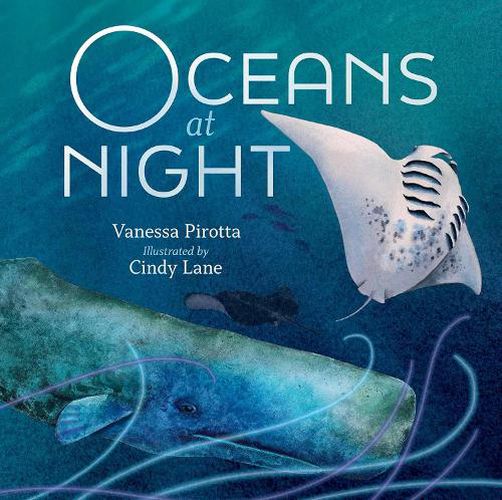
Vanessa’s research is extensive, she has even used drones to collect whale snot, and computer algorithms and AI for the detection of illegal wildlife trafficking! Vanessa is the author of three books, with more on the way. Today we’re excited to be talking to her about her latest children’s book: Oceans at Night, illustrated by Cindy Lane.
The publisher provided Alphabet Soup with a reading copy of Oceans at Night.
From the publisher:
As night-time nears, a world of creatures comes alive in our oceans. Settle in and explore the wonderful world under the waves, and see what animals do from sunset to sunrise. From penguins to sharks, giant squid and plankton, discover the fascinating after-dark lives of ocean creatures. Oceans at Night showcases the beauty and wonder of life below the sea, so dive deep and discover what happens while you sleep!
What dangers does a marine biologist face while conducting research?
Working with animals, like whales, can be dangerous because they are so big! We also have to make sure that we don’t touch anything that could be harmful as many sea creatures can bite and sting. When we conduct science, we always make sure that the animals are safe and so are humans. This means lots of planning and asking questions before we even go into the sea. Thankfully, we can use new technologies like drones to gather scientific information from whales without having to be close to them or needing to touch them.
Do you have a favourite sea creature from those included in Oceans at Night?
Yes! I LOVE sunfish. These are the biggest bony fish in the sea! They look like aliens and flap their flips on the top and bottom of their big bodies. We sometimes see them off Sydney, Australia. I also swam with them in the Galapagos islands. I wanted to make sure this book showed some of the incredible creatures I love and have seen. I have yet to see cuvier’s beaked whales or dumbo octopus. Perhaps I can go on a quest to meet the creatures of Oceans At Night one day.
Some of the sea creatures in the book live in very deep ocean. How do you study these creatures – can you get down there yourself somehow?
That’s true! The dumbo octopus and angler fish are a great example of this. I think I would need to go down very deep in a submarine. Or, perhaps we could send a remotely operated underwater vehicle to try and spot one. Getting to the ocean depths is dangerous and expensive so I am not sure if I will ever get to see these creatures. Perhaps through ongoing scientific research, we might get to see one of these creatures in the near future.
What do wish more people knew about our oceans?
How important it is for all of us. Many of us might not know that the ocean is so important for our everyday lives here on land. The ocean helps provide the air we breathe, and regulates our climate. Whales, for example, are very important for eating in one area and pooing in another – moving nutrients (good things for our ocean) around. Whales are kind of like a cow on land, they eat and then their poo helps the grass grow.
Can you tell us a bit about what you’re working on next?
I LOVE writing books and I’ve been thinking about something very special for a long time now. I love being able to educate and explore different worlds inside and out of the school classroom. Watch this space.
Oceans at Night is out now! Ask for it at your favourite bookshop or local library.
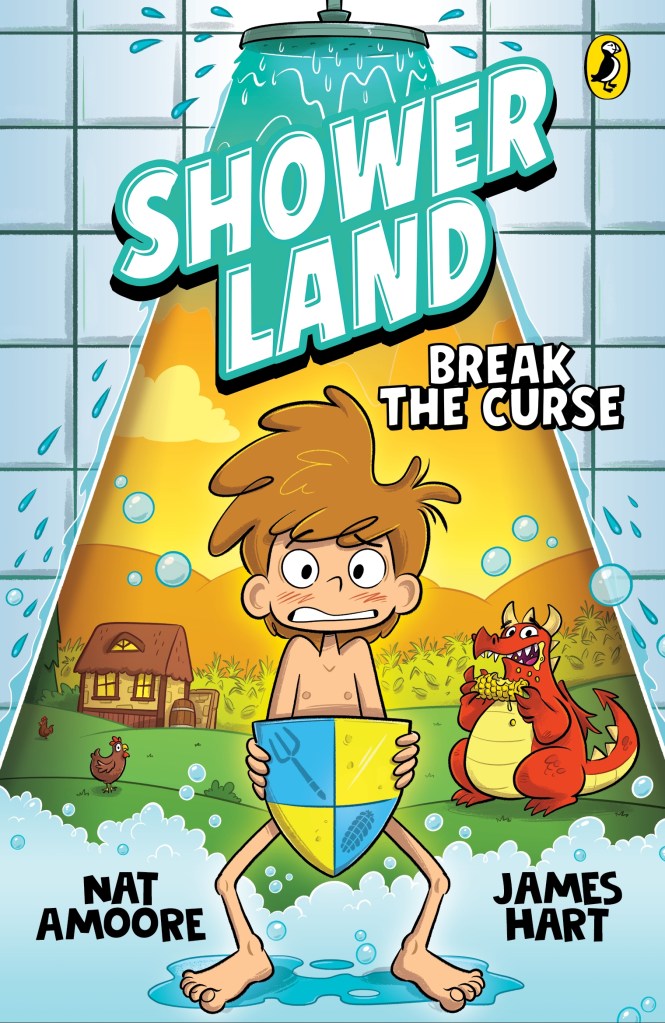
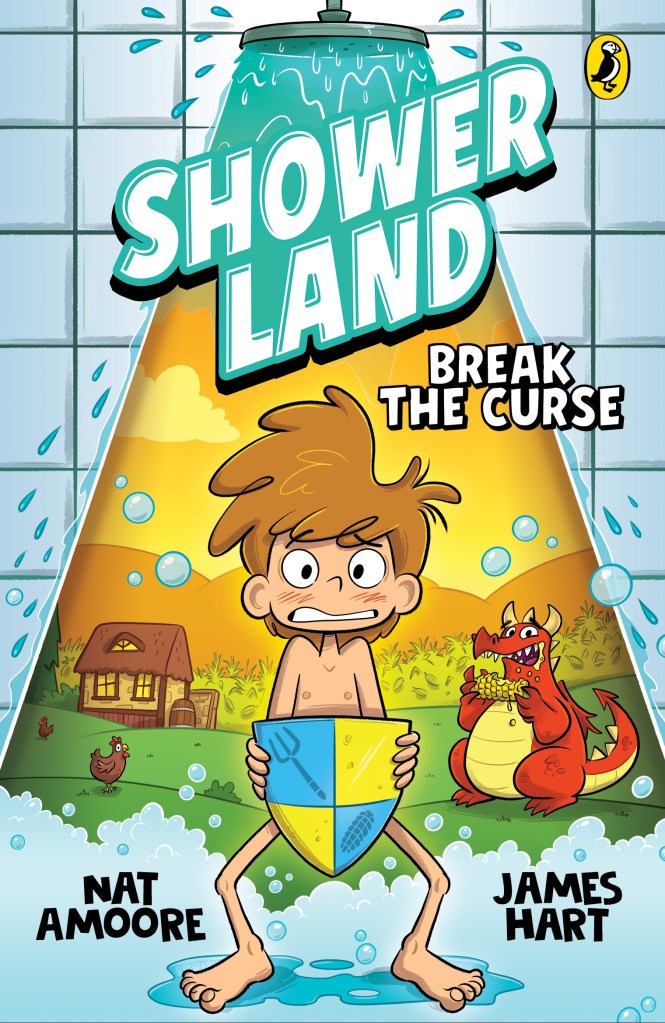
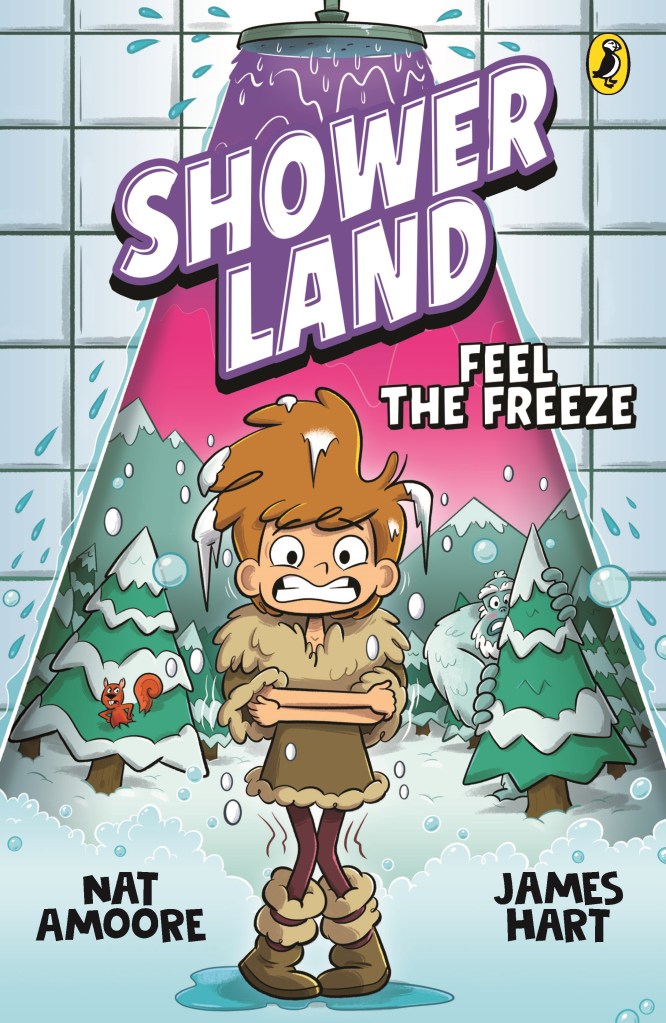
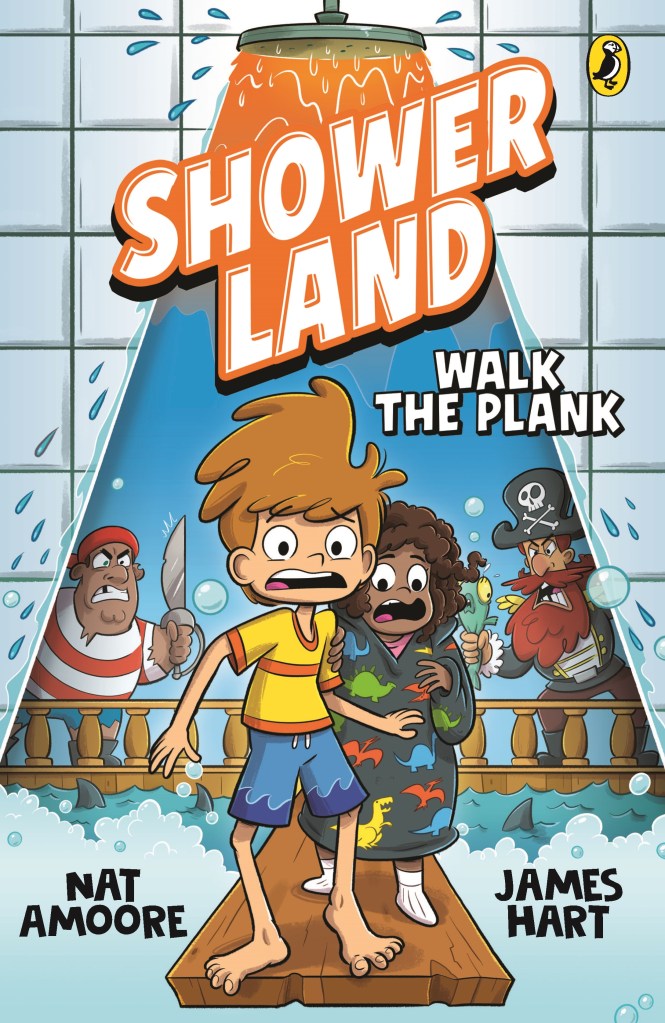
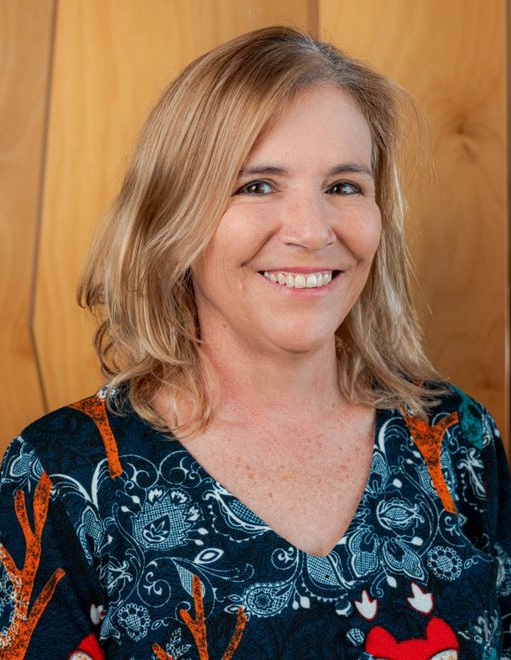
Nat Amoore has been a trapeze artist and circus performer, a podcaster, and now she’s an award-winning children’s author. Since Nat’s first book – Secrets of a Schoolyard Millionaire – was published in 2019, she’s published five more books and there are plenty more on the way! Today we’re pleased to be chatting about her latest venture: the Shower Land series, illustrated by James Hart.
From the publisher:
Felix hates Mondays. Dad’s yelling at him to get up. His little brother, Olly, is being super annoying. So when Felix shuts the bathroom door, he wishes he could get away. He turns on the shower and . . .REEEEKKKKKK!
A hilarious junior fiction series where getting in the shower might send you to another world.
When you were a kid were you up and out the door at the crack of dawn, or hard to get going after the alarm went off?
Oh, definitely up and out! I still am. I was never really much of a sleep-in kind of person. There was too much cool stuff out there waiting to be done. Even when getting up early meant going to school. Okay, so the actual school part wasn’t my favourite but I was always dying to see my friends. I also grew up on a farm so getting up early was kind of standard practice. My parents would kick us out of the house after breakfast and we would run around in the paddocks having cow poo fights and building treehouses. Then we were allowed back for lunch and sent out again until the sun went down. And to this day, I still get up early to write. I write best from about 5:30am until 12pm and then in the afternoon I’m kind of useless. So that’s when I do all my admin stuff … or go for a walk on the beach and pat everyone else’s puppies.
If you could be transported via shower to another place, would you try it? (Even if you might end up somewhere without any clothes on?)
ABSOLUTELY!!! Like Felix, I think I would figure out the clothes part quick enough. Teleporting to other worlds is my ultimate dream, even with all the risks involved. I mean it’s essentially why I’m an author right? So, I can just go to other worlds in my head for a living. Life is an adventure and I’ll take every cool experience I can along the way. Even with the risk of not knowing what or where, I couldn’t resist. Otherwise, I would always live in regret thinking, ‘What if I had said yes?’ Where would I have gone? What have I missed out on? I mean, once I had teleported to the prehistoric times and gotten my head bitten off by a T-rex, I might have second thoughts. But by then it’s too late anyway so YES! Let’s do it!
Even though Olly can be an annoying little brother, his jokes are pretty funny. Do you have a go-to joke for parties/Christmas lunch/ice-breakers at an event?
Ha! I love Olly. I’ve always wanted a younger sibling (I only have an older brother) and I love giving my characters funny younger siblings. I have a few go-to jokes. It’s good to have them up your sleeve I think and kids are ALWAYS asking me to tell a joke, or ‘what’s my best joke’? They change all the time but I like jokes that really rely on delivery and so my current favourite is …
What do we want? Low-flying airplane noises! When do we want them? NEEEEYYYOOOOOOOOWWWW!
But I also love …
What did the drummer call his twin daughters?
Anna 1, Anna 2
BA HA HA HA HA!
Do you have a tip for young writers who’d like to write a funny book?
Ooohhh, this is hard because I don’t really sit down and think ‘I’m going to write a funny book’. BUT what I am sure will help, is to think about what makes YOU laugh or what you think is funny and, even more importantly, what you DON’T find funny, especially when it is trying to be. I don’t like mean humour. Even when Olly makes fun of Felix, he’s not actually picking on any real characteristic of Felix’s. What is much stronger in the story and their relationship is the love, the banter and the bond that they have that allows for them to tease and play knowing that the brotherly love lies beneath. This then allows for them to joke and not get hurt. I would never have Olly insulting a random kid at school. Humour is less about the jokes and more about the interactions and relationships and the joy of laughter that falls in the gaps.
For a prompt, the next time you find something hilarious – I’m talking snort-laugh kind of funny – use that as a prompt for a story. It might be a joke your friend tells you, or when your baby sister comes out with her nappy on her head (clean or dirty, your pick!) Use this funny thing as a prompt for a story.
Can you tell us a little about what you’re working on next?
So, I’m working on two things at the moment. Firstly, the very final pages of Shower Land 3: Walk The Plank just before it goes to print. I love this stage of a book where you are just reading it for the last time and making any final little tweaks before you release it into the world. It’s nerve wracking and exhilarating at the same time. And I’m also working on a brand new middle grade book. It’s a bit of a change for me – a spooky, slightly fantasy style story but don’t worry, still funny! It’s a big project and I’m moving much more slowly on it than my other book because there are so many threads and important world building bits. I can’t wait to share it with you all!
Books 1 and 2 in the Shower Land series are out now! Ask for them at your favourite bookshop or local library.
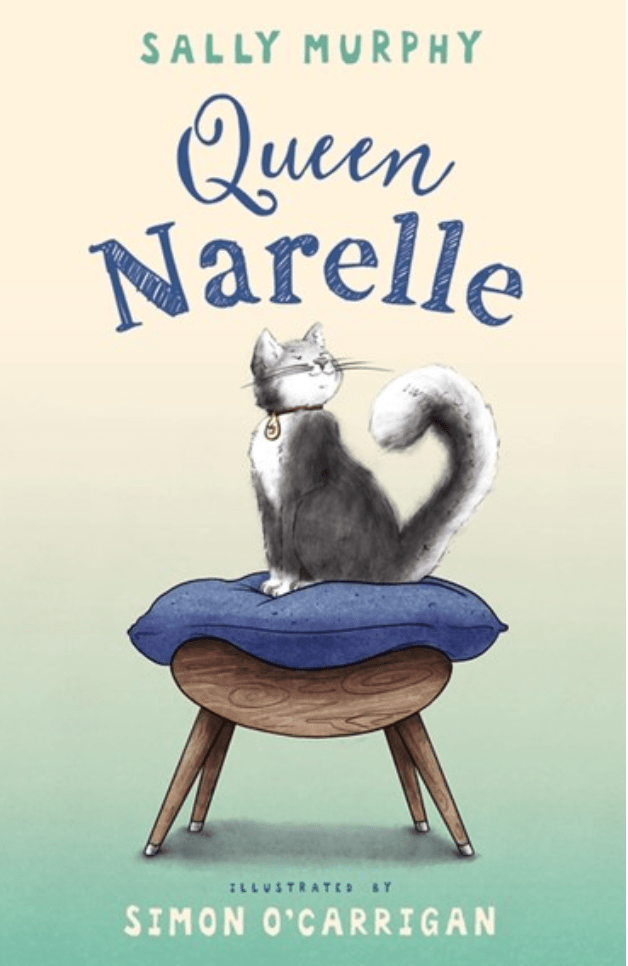
Sally Murphy is an author, poet, speaker and educator based in the South West of Western Australia. Sally has published more than 40 books, and we’re thrilled to be chatting to Sally about her verse novel: Queen Narelle, with illustrations by Simon O’Carrigan.
From the publisher:
Narelle is the queen of her household, ruler of the family and, most importantly, Maddie’s wisest and best friend. So when things are not going right for Maddie, and school feels like a lonely and sad place, it is Queen Narelle who regally watches, waits and listens to her favourite human in her time of need.
You have a dog (hi George!) … how did you come to write a book about a regal cat?
When I wrote the book I had not owned a cat for a very long time, but when I was a kid my only pets were cats, and I adore them. Narelle came to me as a cat-character and insisted I write her story. George is very much not amused. And, since the book came out, I once again have a cat – a gorgeous tortoiseshell kitten who I have had to name Narelle. The good news is that George and Narelle get along very well – except when they are busily play fighting.
Queen Narelle is your fifth verse novel and you’re also a multi-published poet. Do you find there’s a difference when writing a standalone poem compared to a poem that’s part of a verse novel?
Yes. Verse novels are poetry, but while they use many of the same techniques as standalone poems, they must also work as narratives. So it is important to include narrative elements such as plot, characterisation and dialogue in ways that aren’t always needed in standalone poems. So, when writing a verse novel I am trying to keep the narrative moving with each poem, while also drawing on the poet’s toolbox – things like line length, white space, imagery, repetition and more.
When you sat down to write Queen Narelle did you know it would be a verse novel (rather than a prose novel)?
Yes, this was always going to be a verse novel. I had written others before I wrote this one, and had decided that this cat needed a story. I started by writing from the cat’s perspective and, as I wrote, a story started to emerge. Later I realised that Narelle’s human, Maddie, would also need to tell her story, and so alternated their voices.
Do you have a tip for young writers who would like to write from the point of view of an animal?
I think its important to write about animals that you are able to closely observe or have had close contact with. Not every cat will be the same, and nor will each dog, or rat, or elephant. It’s only by observation that you can see the habits and mannerisms of an animal, and use those to develop a personality which will in turn lead to the way the animal speaks or thinks. Using first person helps to take you inside those thoughts of the animal so that you are not describing, but showing.
What’s next for Sally Murphy?
I have another verse novel, The Riding Gallery (with illustrations by Martina Heiduczek) on its way. It’s quite different from Queen Narelle, because it is based on some real events that happened in St Kilda during World War I. A man named Anton Weniger, who was born in Germany, opened a new merry-go-round on the St Kilda foreshore but, unfortunately, because he was German, some people did not want him there. I took this real event and added some fictional characters, two children who befriend him. I have also had some fun playing with poetic form – including some poems written using words from newspaper articles from 1915, and other poems that are designed to be read by two people at the same time (Poems for Two Voices), so that we get both characters’ viewpoint at the same time. The Riding Gallery will be released in July this year.
Queen Narelle was released in 2023. Ask for it at your favourite bookstore or local library.
For grown-ups: Come to the launch of Sally’s next verse novel (July 18th 2024). Hear about the book, get teaching ideas, and network with fellow educators and children’s book enthusiasts.
Fionna Cosgrove is a Western Australian writer with a taste for the wonderfully macabre. Her writing has been published in The School Magazine and anthologies, and she’s also the author of the Twisted Trails series for young readers. Today we’re chatting to Fionna about how she writes her Twisted Tales!
About the Twisted Trails series:
Will you end up a zombie’s breakfast? Or maybe coming face to face with a kelp-haired sea witch is more your style? Whatever your taste, you’ll find it in this wild and spooky interactive series … How will your story end? Well, that’s entirely up to you.
What brought you to write The Midnight Manor (Book 1 of your series)?
It actually came about while I was waiting to hear back from publishers about another manuscript. I had sent out one manuscript and was wondering what to write next. It was around October, and I thought why not quickly write a book for my niece and nephew for Christmas? So I started writing The Midnight Manor. It was only meant to be a short choose-your-path book, aimed at kids 6–8. With that in mind, the word count was quite low, so I wrote the book within a few weeks. It was once I went back and started fleshing it out that the book kept expanding, and expanding and expanding, and I realised pretty quickly I had a middle grade book in my hands … and not just one, but a whole series. Once I had written the draft I figured if I’m going to get it printed for my niece and nephew, why not self publish it and put it out into the world? So with shaking hands, I started the process!
The idea for a series developed pretty easily after that. Why not write more if the first one was so much fun? Plus, there are MANY more creepy settings I’d love to explore!
How do you go about plotting a choose-your-path style book when there are so many different storylines/endings to keep track of?
I found this tricky. I initially just started writing and at any point that felt like a decision needed to be made, I made a fork and went on my merry way. It was only after a few forks and a few dead ends and plot holes, that I realised I needed to be a bit more organised. I pulled out a giant piece of paper and started drawing a big old story map. I start with one box at the top then drew two lines out of that for each decision with more and more boxes and lines indicating the paths. It sounds a bit complicated but it’s actually pretty easy. I’ve even made some free printouts you can download from my website that talk you through it.
One thing that can get confusing is time lines. Trying to remember where all your characters would be if different choices were made or not made can get a little confusing, but plotting it out helps! As far as the endings, I like to have a good mix of ‘reasonably happy’ endings and ‘not so happy at all’ endings, with one or two ‘absolutely perfect’ endings. I also try and figure out the ‘absolutely perfect’ endings first so that I have a bit of direction while I’m writing, otherwise I have a tendency to get myself a little lost …
You also write the regular kind of novels that only have one ending! Does one type of book take longer to write than the other?
The choose-your-path books are actually much quicker to write for me. They are full of crazy twists and turns and wild characters, but I don’t spend too much time on backstories or character growth. It’s fast-paced action with a lot of humour thrown in. And horror … a lot of horror.
I have a book coming out in October called Sadie and The Secret of The Swamp which has just one story line! I know, crazy. And that took me over a year and a half to write and edit. In comparison, The Midnight Manor only took three months from first draft to sending it off to my editor.
Do you have a tip for kids who’d like to try writing their own choose-your-path book?
Choose a great setting! With an interactive book you get dumped right into the action straight away so there’s less time for a detailed backstory. I find the best way to add some intrigue is to have a brilliant setting that acts as its own character. A spooky mansion that appears out of the mist at midnight … or a submerged grotto filled with bioluminescent coral in a deserted town, or my latest one – a creepy summer camp set in the middle of the forest.
And use a story map to keep track of your paths!
I’d also like to say plot everything out to save you running into plot holes and dead ends everywhere, but sometimes I think the most fun part of writing is discovering the story as you go. So just have fun. The first draft is meant to be messy and weird. The second draft is for making sense of it!
What’s next for Fionna Cosgrove?
I have two books coming out this year! I have book 3 of my Twisted Trails series: Camp Crypt. This is my creepiest one yet, with even my 45-year-old sister telling me she had to sleep with the lights on after reading it. (Spoiler, she’s not a fan of clowns). And I have another spooky mystery – Sadie and The Secret of the Swamp – coming out at the end of October. Other than that, I’ve booked in a few author talks across the year, so that should keep me and my nerves busy for a while. And in general, I just want to keep writing and live a creative life, however that looks at any particular moment.
Ask for the Twisted Trails series at your favourite bookshop or library, or order online.
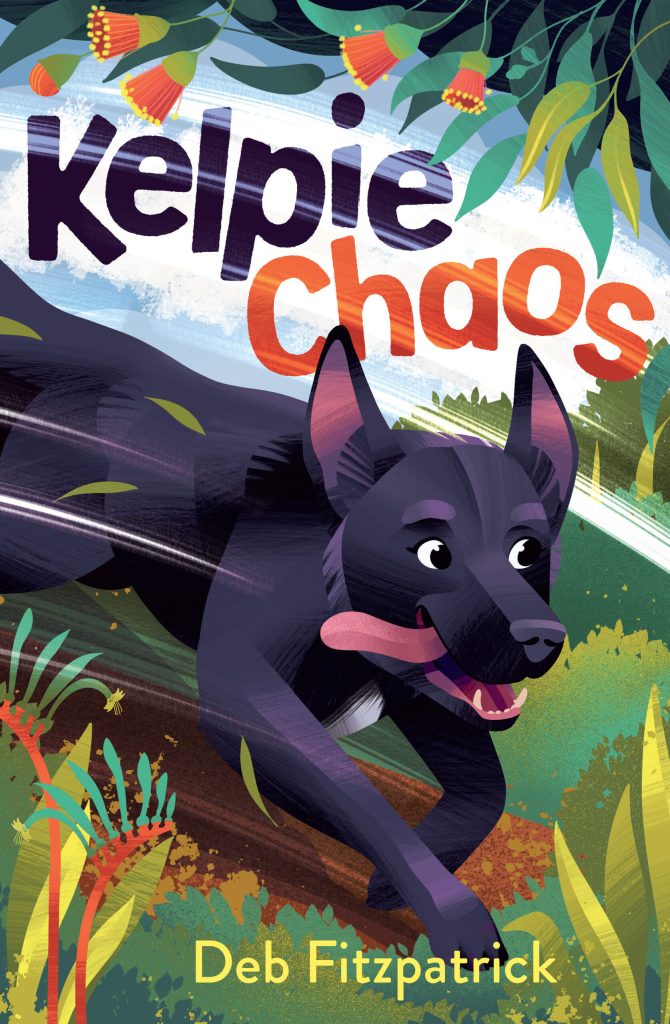
Deb Fitzpatrick writes for adults, young adults and children. She loves using stories from real life in her novels and regularly teaches creative writing to people of all ages. Deb’s own dog is a kelpie, who is absolutely not a failed sheep dog. Today we’re talking to Deb about her latest novel, Kelpie Chaos.
The publisher provided Alphabet Soup with a reading copy of Kelpie Chaos.
From the publisher:
A kelpie puppy is about to be sent to the pound and Eli knows he has to do something. After adopting the flame-chested kelpie, now named Zoom, the family falls in love, but they soon learn there’s a lot involved in raising a dog. Especially a working dog, who is hardwired to round up pretty much everything … even socks. When Zoom goes missing on a family bushwalk, the family sets out on a frantic search. What mischief could a dog get up to in the bush?
Can you tell us a bit about your own dog?
First thing I need to say here is I adore our dog, Louie. He really is our fur-baby!! He is a kelpie crossed with Australian shepherd, just like Zoom in Kelpie Chaos. And just like Zoom, he can be cheeky. Louie is black all over and has a small white flame on his chest, is dead handsome and smart-as. He has a huge loving heart, prefers people to dogs, and loves to take us on walks as frequently as possible!
Louie was a huge inspiration for Zoom in Kelpie Chaos, along with a story another dog-walker told me about her father’s kelpie. This kelpie would spend all day with him out at work on construction sites in the country. One day he disappeared, and what happened next became part of the book.
What’s the naughtiest thing your dog has ever done?
Thankfully, our dog Louie isn’t very naughty, except when it comes to chasing cats. By far the naughtiest dog we’ve ever owned was a gorgeous, intelligent and seriously cheeky fox terrier, when we lived in Costa Rica. We used to call him Chester the English Fox Terrier. My husband had gone to a lot of effort to bake a cake one morning and he left it to cool on the counter while the two of us went out to work. When we returned home, the cake was just crumbs all over the floor. Chester the English Fox Terrier did not spend that night inside with us, put it that way. I re-imagined this story in Kelpie Chaos, changing it to suit the book. I love to take things from real life and mash them into my fiction, as some of your readers may know from my other books.
What are some of your favourite books about dogs?
There are so many brilliant books about dogs and the connection between children and their dogs. There are several picture books about dogs that I particularly love, starting with Dog In, Cat Out by Gillian Rubinstein, which I read with my kids when they were younger. More recently, I love Briony Stewart’s Magoo books and When Billy was a Dog by Kirsty Murray and Karen Blair. Dianne Wolfer’s Scout and the Rescue Dogs is a huge personal favourite and I’m so happy to see it shortlisted in multiple literary awards this year! When I was a kid I adored Lassie Come-Home by Eric Knight and then developed an obsession with the television show ‘Lassie’. Finally, I have to mention the ABC TV documentary series about working dogs, ‘Muster Dogs’, which I can’t get enough of. Those beautiful kelpies and border collies!
Do you have a word prompt or scenario you’d like to challenge young readers to try?
Here’s my challenge to Alphabet Soup readers: Write a scene or story, poem or song about your dog (or other beloved pet). Weave in a human character who is a bit like you and feel free to tweak a few details and add an event to make the story funnier or more dramatic. Have fun and see where it takes you! That’s pretty much all I do with my writing, and somehow I now have a small pile of novels with my name on them!
What’s next for you and your writing projects?
I’m halfway through the first draft of a new book – similar to Kelpie Chaos and also for middle readers,but this one’s about a different animal and a different family … It has adventure-in-the-forest vibes and that’s all I’m willing to reveal at this stage! Watch this space!
Kelpie Chaos is out now! Find it at your favourite bookshop, library or order online.









 alphabetsoup.net.au