Posted in authors, interviews, poetry

Deborah Abela on The Kindness Project

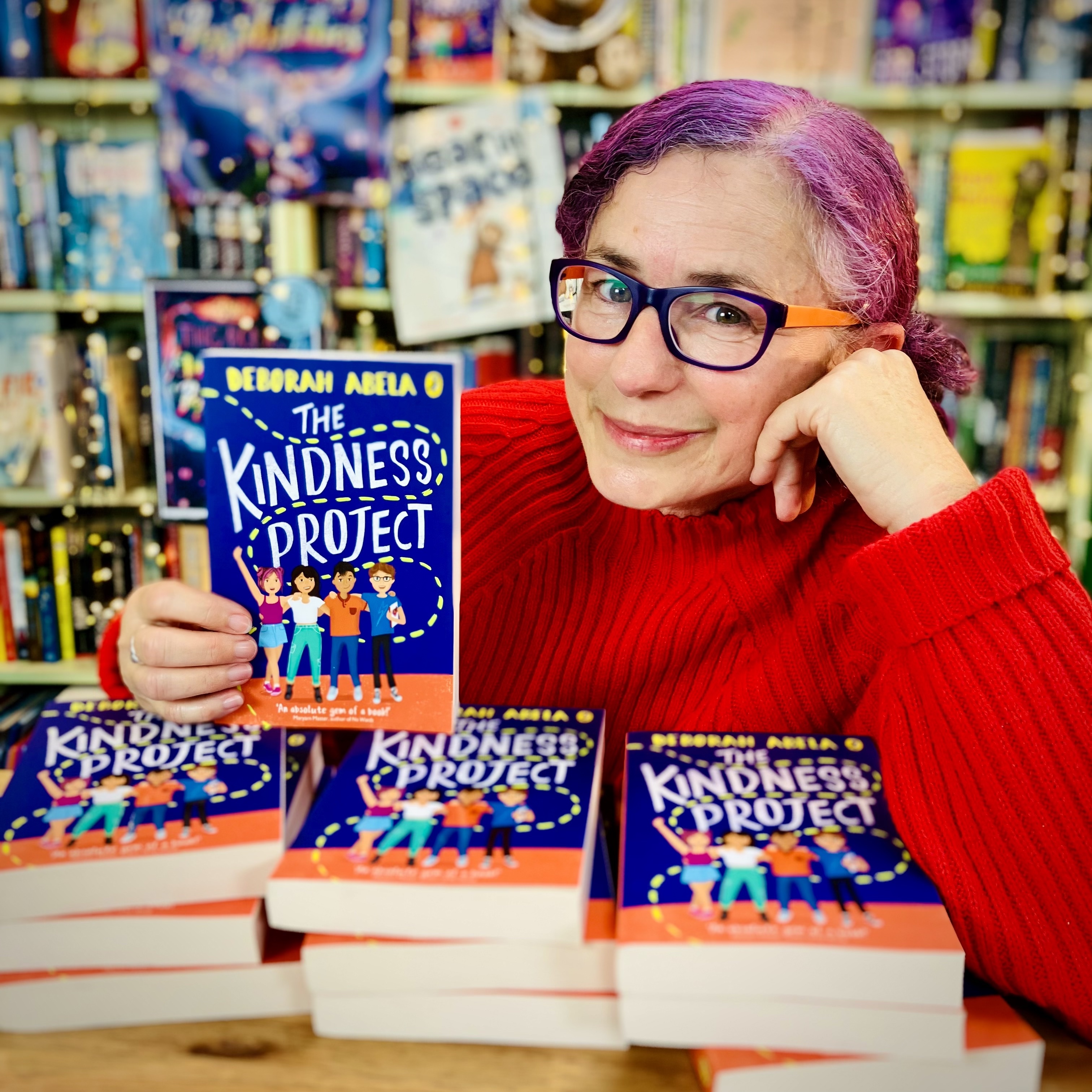
Deborah Abela with copies of The Kindness Project

Deborah Abela is an award-winning author and trained as a teacher before becoming writer/producer of a national children’s TV show. She has since written 30 internationally published and awarded books, including the Max Remy series, her climate change trilogy – Grimsdon, New City and Final Storm – and The Stupendously Spectacular Spelling Bee. The Book of Wondrous Possibilities is about the power of books to save us when we feel lost. Today we’re thrilled to host Deborah to talk about her latest book: The Kindness Project.


I’ve LOVED verse novels for so long. They’re like a regular novel, but instead of chapters there are verses. This means they have to get to the point very quickly, so they’re often real page-turners. I also LOVED playing with the look of the words on the page, so if something is  

BIG

I wanted the word to look big. Same if a character felt scared or lonely. That was fun.

The big skill was learning how to tell a big story with not so many words. That meant I had to concentrate really hard on finding the exact word for everything that happened.

That depended on who was in my group. If I was with my friends, it was fun, but sometimes I had to be in a group with people I didn’t know, and that was hard, but if we were excited about the project, it worked out really well! So when Ms Skye puts Nicolette into a group with kids who don’t like her, I totally understand why she’s nervous. 

Think about a something that has happened to you that made you feel happy or nervous or excited. eg auditioning for a play, getting your first pet, the soccer grand final. Tell that story, including how you felt, but only writing a few words per line. Include only the really important parts of that story. When you’re happy, look at the verse and see which words you can make look like their meaning. Here’s an example from pages 16 and 17. in The Kindness Project.

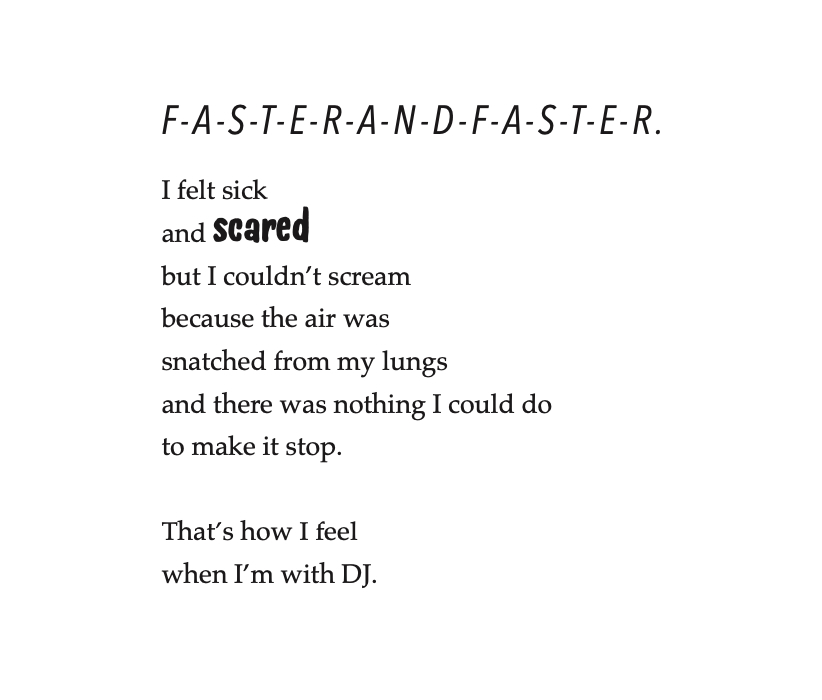
Page 16 from the novel The Kindness Project by Deborah Abela.
Page 17 from The Kindness Project by Deborah Abela
[Pages 16 & 17 from The Kindness Project]

I am working on two junior fiction ideas and a middle grade novel, but I have a new picture book coming out in February 2025 called No More Room in the Bed. It’s about a dark and stormy night and a bed that becomes full of frightened creatures who all want to squeeze in beside Dad. Until it all becomes too much! 

The Kindness Project is out now! Ask for it at your favourite bookshop or your local library.


Take a peek inside the book

Read some more writing tips from Deborah Abela

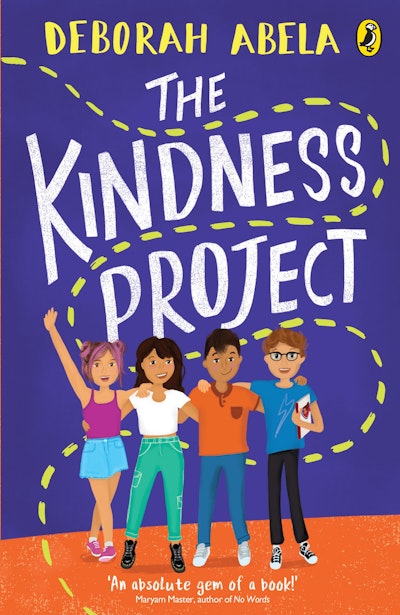
Cover of a children's novel: The Kindness Project by Deborah Abela
Posted in authors, interviews, poetry

Sally Murphy on Queen Narelle

Sally Murphy is an author, poet, speaker and educator based in the South West of Western Australia. Sally has published more than 40 books, and we’re thrilled to be chatting to Sally about her verse novel: Queen Narelle, with illustrations by Simon O’Carrigan.

From the publisher:


When I wrote the book I had not owned a cat for a very long time, but when I was a kid my only pets were cats, and I adore them. Narelle came to me as a cat-character and insisted I write her story. George is very much not amused.  And, since the book came out,  I once again have a cat – a gorgeous tortoiseshell kitten who I have had to name Narelle. The good news is that George and Narelle get along very well – except when they are busily play fighting.

Yes. Verse novels are poetry, but while they use many of the same techniques as standalone poems, they must also work as narratives. So it is important to include narrative elements such as plot, characterisation and dialogue in ways that aren’t always needed in standalone poems. So, when writing a verse novel I am trying to keep the narrative moving with each poem, while also drawing on the poet’s toolbox – things like line length, white space, imagery, repetition and more.

Yes, this was always going to be a verse novel. I had written others before I wrote this one, and had decided that this cat needed a story. I started by writing from the cat’s perspective and, as I wrote, a story started to emerge. Later I realised that Narelle’s human, Maddie, would also need to tell her story, and so alternated their voices.

I think its important to write about animals that you are able to closely observe or have had close contact with. Not every cat will be the same, and nor will each dog, or rat, or elephant. It’s only by observation that you can see the habits and mannerisms of an animal, and use those to develop a personality which will in turn lead to the way the animal speaks or thinks. Using first person helps to take you inside those thoughts of the animal so that you are not describing, but showing.

An invitation to a book launch at Curtin University, 4.30pm on 18 July 2024 for a new book by Sally Murphy

I have another verse novel, The Riding Gallery (with illustrations by Martina Heiduczek) on its way. It’s quite different from Queen Narelle, because it is based on some real events that happened in St Kilda during World War I. A man named Anton Weniger, who was born in Germany, opened a new merry-go-round on the St Kilda foreshore but, unfortunately, because he was German, some people did not want him there.  I took this real event and added some fictional characters, two children who befriend him. I have also had some fun playing with poetic form – including some poems written using words from newspaper articles from 1915, and other poems that are designed to be read by two people at the same time (Poems for Two Voices), so that we get both characters’ viewpoint at the same time.  The Riding Gallery will be released in July this year.

Queen Narelle was released in 2023. Ask for it at your favourite bookstore or local library.


Hear Sally read some of her poetry (scroll down to find the videos)

Visit Sally Murphy’s website for more about her and her books.

For grown-ups: Come to the launch of Sally’s next verse novel (July 18th 2024). Hear about the book, get teaching ideas, and network with fellow educators and children’s book enthusiasts.

Download the Teachers’ Notes for Queen Narelle.

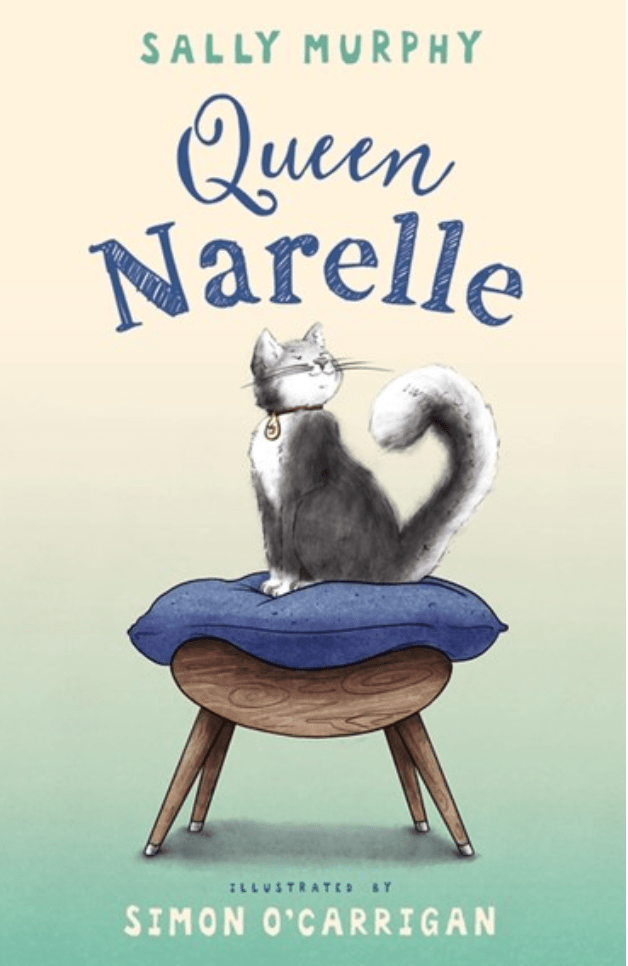
The cover of a children's novel: Queen Narelle
Posted in poetry

WA school holiday event

A flyer advertising a school holiday activity at Subiaco Library in April

Western Australian family-friendly event: Bring a picnic blanket and enjoy a morning of poetry and outdoor activities to  celebrate the release of Right Way Down, a brand new ⁠children’s poetry collection from WA authors. 

Poetry readings; games; activities; light snacks; and book sales from Dymocks Subiaco.
Some of the contributing authors will be there on the day for signings.

WHEN: Saturday April 6th, 10:30am
WHERE: Rankin Gardens, cnr Hamersley Rd and Rokeby Rd, Subiaco, WA
BOOKINGS: FREE but required, via eventbrite.

Posted in interviews, poetry

Amber Moffat and writing poems about animals

Amber Moffat is a writer and visual artist from New Zealand but currently based in Western Australia. She is a maker of work for both adults and children. Amber’s first picture book, I Would Dangle the Moon, was published in 2019. Her poetry has been published in The School Magazine, and in a 2022 poetry anthology Roar, Squeak, Purr. Today we’re chatting to Amber about writing poetry for this fabulous anthology.

From the publisher:

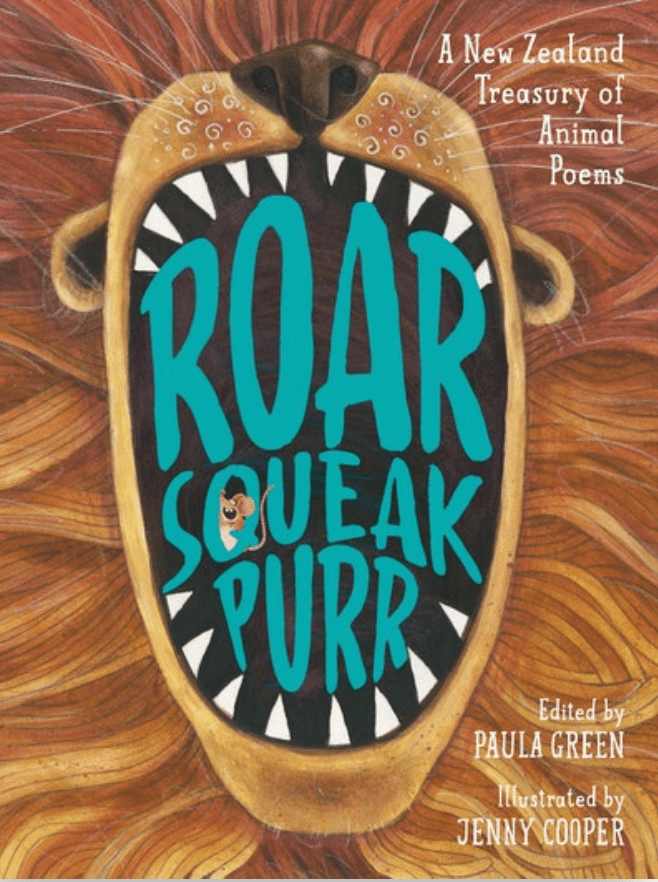
This exuberant treasury brings together over 200 animal poems by New Zealand’s best writers, and includes poems written by children. The poems were selected and edited by champion poet Paula Green, winner of the Prime Minister’s Award for Poetry [New Zealand] and creator of the popular Poetry Box blog, and teamed with Jenny Cooper’s cheeky, whimsical and adorable illustrations.
Roar Squeak Purr is destined to be a family treasure – and to inspire a new generation of poets.


You have five poems in Roar, Squeak, Purr – how did you go about writing poems for this anthology? (Did you already have these poems sitting in a drawer?)

I had one poem already and wrote the other four poems specifically for this anthology. The editor of the collection (the amazing poet Paula Green), asked me if I’d like to submit some animal poems as she knew my writing from my picture book, I Would Dangle the Moon. The poem I had already written was a poem about being cuddled up to a cat. I don’t have a cat anymore as I have two big dogs that are not cat-friendly, but when I was a kid I had several beautiful cats. That cat poem was written about that feeling when you are lazing about with a cat on your lap.

I had a couple of months to write the poems, and I wasn’t sure how many I’d write. I ended up writing one about black swans, one about a sheep-dog, one about two lions that escaped from a circus, and a riddle poem about a creature I won’t reveal here in case people want to try to work that one out themselves.

The swan and sheep-dog poems were based on memories of growing up in New Zealand. I loved to watch how both swans and sheep-dogs moved and both those poems are about trying to capture the unique ways those animals move. The poem about the lions was based on a true story that has fascinated me since I was a child. The lions were unfortunately shot after they escaped, and they are now in the Otago Museum in my hometown of Dunedin. I used to visit the lions at the museum and always imagined what they would be like running free instead of stuffed and still within a glass case. So that poem is very much about movement too actually. I really enjoyed writing from the lions’ point of view in that one, and that’s something I’d like to try again.

For me, all writing springs from something I am interested in and can’t let go of. If an idea keeps coming back to my mind then I know I have to write about it.

Do you prefer to write rhyming poems or free verse?

I definitely prefer to write in free verse and it feels more natural to me. All my poems in Roar, Squeak, Purr are in free verse. Writing in rhyme limits your options for word choice and you have to express your idea within a tight structure. I feel kind of like the lions in the circus when I’m writing in that way, and I end up wanting to escape!

If you’re writing a poem (or editing it) how do you know when your poem is finished?

It can be very hard to know when a poem is finished. Sometimes I think something is finished but if I put it aside for a few weeks and come back to it, I realise it still needs work. I’m very lucky to have some great writing friends and sometimes I show them my poems to them and get their feedback. That is a very helpful process and has made me better at editing my work. My poems usually go through about three edits to get them right. A lot of that is “tightening up” the writing, making sure every word that remains is working hard to convey the meaning of the poem.

Do you have a tip for kids who would like to write poetry?

Be bold and risk-taking when you are writing your first draft! All ideas are good ideas in the first draft. I try to write without thinking when I first jot down words for a poem. This helps me to avoid getting into a critical mode and lets the ideas flow freely. Then you need to be brave and ruthless when you are editing. You will probably need to change lots of things and that’s normal.

If you don’t like the feeling of cutting out parts of your poems then it might help you to have a system for saving all your different drafts, then you know you can always come back to earlier versions of the poem.

Can you tell us a bit about what you’re working on next?

I’m writing a novel for teenagers at the moment. It will be about 70,000 words when it’s finished so it’s a very different writing process to writing poetry! I’m still using the technique of writing without judgement to get the ideas down though. I hope to finish the first draft in a couple of months and then I will start the first round of editing.

Roar, Squeak, Purr is out now! Ask for it at your favourite bookshop or your local library.


AWESOME EXTRAS

Take a sneak peek inside the book (see if you can solve Amber Moffat’s riddle poem!)

Download some Poem Starters from the publisher’s website and write your own animal poems!

Visit Amber Moffat’s website for more about her and her work.

The editor of this anthology, Paula Green, chose all the poems in it. Visit her website: Poetry Box

Posted in poetry

Young writers in action: When the Sky

Photo shows a sky over mountains at sunset. The sky at the top of the photo is blue with white clouds gradually changing to deep red in a sunset near the bottom of the photo. At the base are dark mountains. All across the sky are the dark silhouettes of birds flying. Photo by Giani at pixabay.com

WHEN THE SKY by Ahil, 9, India

We can see the sky
where birds go to fly.
We can see the starry night
and the moon shining bright!

When the sky is blue
all looks so new.
When the sky is dark,
Rain! cries the lark!

When the sun goes down
the sky wears a black gown,
and clouds have nowhere to go
when sleep covers the rainbow!

This is Ahil’s first publication at Alphabet Soup. To send us YOUR story, poem, artwork or book review, check out our submission guidelines

Posted in authors, interviews, poetry

Kathryn Apel and What Snail Knows

Kathryn Apel lives among the gum trees, cattle and kangaroos on a Queensland grazing property, where she writes poetry, picture books and verse novels. Her previous books include Bully on the Bus, Too Many Friends, and The Bird in the Herd. Kathryn’s latest book is What Snail Knows, illustrated by Mandy Foot, and we’re thrilled to chat to her about the book today.

From the publisher:

Lucy’s glad she has Snail, the perfect pet for a lonely girl. If only she had her own shell to hide in every time she started at a new school. But this place is different. She likes her teacher, Miss Darling. She likes her classmates, especially Tahnee. She even likes Mei-hui’s van park, where she lives with Dad and Snail. This place feels like home. Can she convince her dad to stay?

You’re well-known for your verse novels, did you know you’d write this as a verse novel when the story idea first came to you?

I did not! I was talking with a friend about the ‘How Can I Help?’ unit I’d team-taught a number of years earlier, and my friend commented that it would make a great book. I was in the middle of prepping two picture books for print at the time (Up and Down on a Rainy Day and The Bird in the Herd) and I couldn’t imagine how to squeeze ‘How Can I Help?’ into a picture book. But 6 weeks later I realised it could be a verse novel. And I was very quickly excited about that idea!

How did you go about writing What Snail Knows? Did you write a plan before you begin working on the story?

My story plan unfolds as I’m writing. When I get some words on the page, I stop and think about the character more. Is the voice distinctive? What does s/he want? What could cause the problem? 

And that’s how this started … ‘It’s just you and me. We don’t need nobody else.’ I was thinking about my character and wondering how s/he could link in with ‘How Can I Help?’ when I realised I already knew her. And I didn’t need to create a whole class of characters for this story. I already had them! They were in my verse novel, Too Many Friends. The voice I had found was Lucy’s – the quiet girl who was always alone. I did wonder how I was going to fill a book when Lucy doesn’t say much … But she thinks. A lot. And she shares her thoughts with Snail.

I can tell you that there is a lot of stress when you’re 3/4 of the way through your first draft and you still don’t know what happened to your main character’s mum … or why they have to move a lot. Usually I know how a story will end … just not how it will get there. But this time I didn’t even know the ending. Would Lucy and her Dad have to move again? Why? How did things change and resolve? I had no idea, and I was very worried that I wouldn’t be able to finish this book! So – I wouldn’t say I recommend not planning …

Did you talk with Mandy Foot about the illustrations? Do you consider illustrations at all when you’re writing?

I didn’t know there were going to be illustrations – so I didn’t consider them when I wrote. And I didn’t talk to Mandy about them. But I loved them. That tangle of hair, the dirty smudges, and that sweet little face. Finding the right place for them in the story was a bit like a jigsaw – but when the puzzle was complete,  those little line drawings surprised me with the emotions they squeezed from the poetry. They captured the aloneness … And the moments of connection between Lucy and Snail, Lucy and Dad and finally Lucy and Tahnee.

Do you have a tip for young writers who would like to write a verse novel or a verse short story?

  • Say less, best. There are lots of small words we need in sentences that we don’t need in poetry. Cut them out.
  • Play with your words and where they sit on the page. 
  • Try line breaks instead of punctuation.
  • Read your writing aloud. Or better still – get someone to read it aloud to you.
  • Focus on individual poems. Write one poem. Then the next. Forget you’re writing a book and just write lots of small poems that fit together to tell a story. 

Could you tell us a bit about what you’re working on next?

I’m rather excited to have a picture book that has also just gone to print. Miss Understood, illustrated by Beau Wylie, will be released in May 2022 with Scholastic. It’s a romp of a rhyming picture book, as told by the wolf, Miss Understood. She is such a sweetie, and if you have never heard her side of things, you really must read this book, because truly, she has been … misunderstood.

I have a couple of other picture books and verse novels in various stages. And I’m a wee-bit excited about the possibility of another companion title to Too Many Friends and What Snail Knows. I’m still mulling it over in my head – and then I need to do some research. And that may involve me stepping waaaay out of my comfort zone.😬 So it may be a while, yet …

What Snail Knows is out now! Look for it at your favourite bookshop or local library.


AWESOME EXTRAS

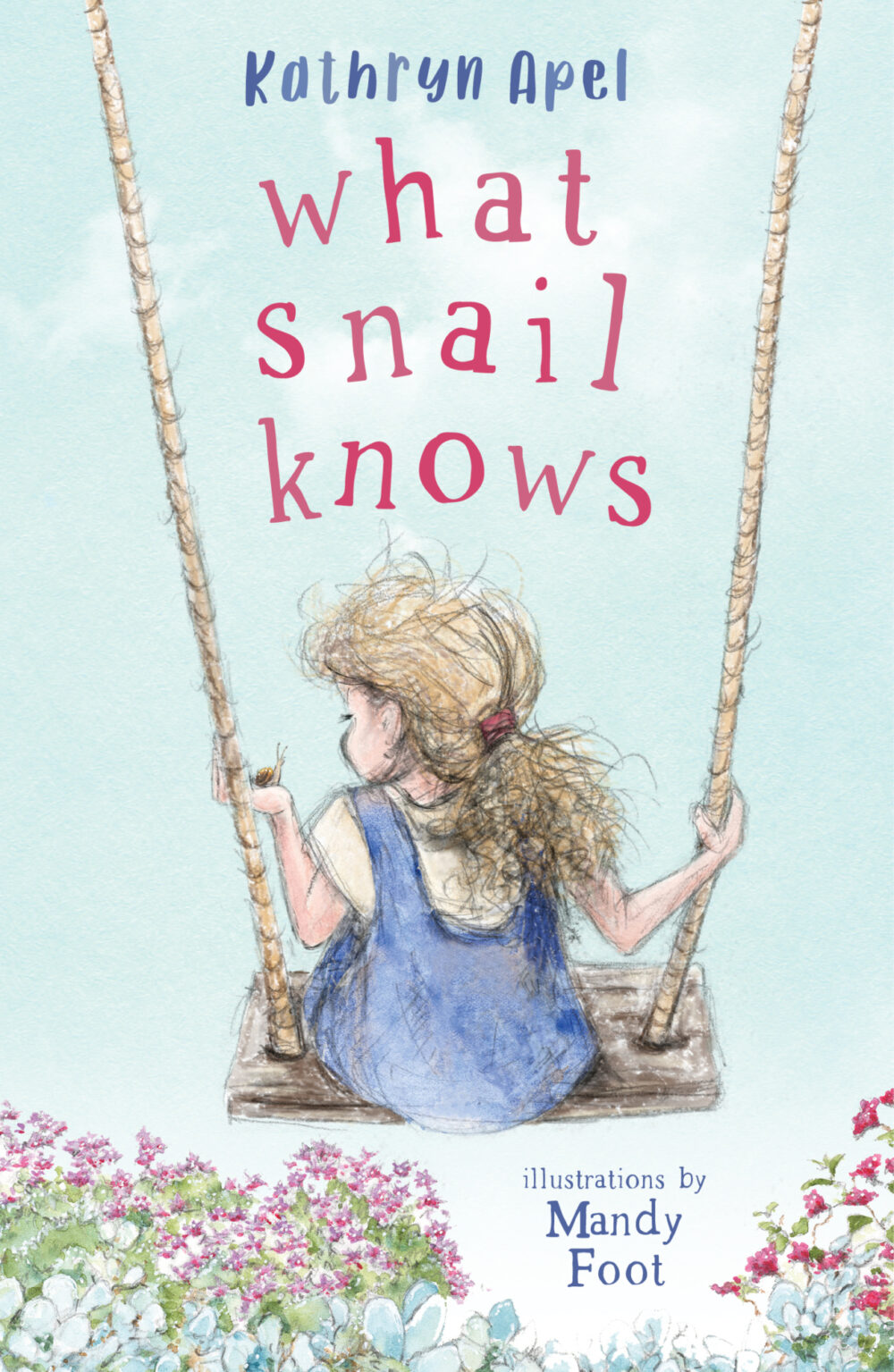
Image shows the cover of a children's verse novel: What Snail Knows by Kathryn Apel and illustrations by Mandy Foot. The cover illustration shows a small girl in a blue pinafore dress over a yellow tshirt. She's sitting on a swing, holding up a tiny snail in her left hand. She has messy hair pulled back into a loose ponytail. There's a flowerbed underneath the swing.

See some Snail poetry by Kathryn Apel on her blog

Read an earlier interview with Kathryn Apel about another verse novel

Download the Teachers Notes from the publisher’s website

Visit Kathryn Apel’s website to learn more about her and her books.

Posted in poetry

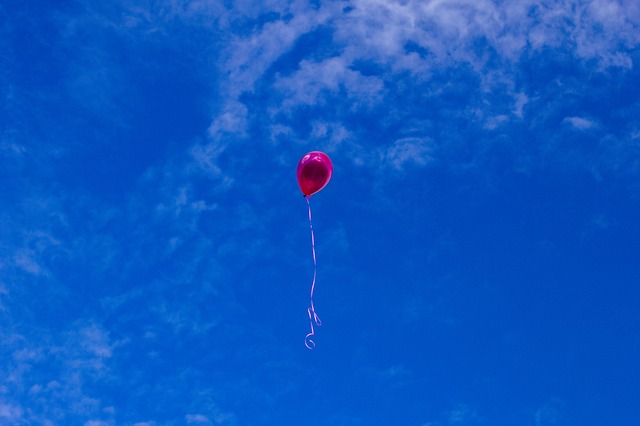
Young Writers in Action: The Red Balloon

THE RED BALLOON by Charles, 8, NSW

It floated in my backyard yesterday,
It was red and shiny with a white string,
I held it tight
But it tugged with all its might. 
So, I have a sigh and let it go.
While it floated away I whispered
Go to the sky.

This is Charles’s first publication at Alphabet Soup. To send us YOUR story, poem, artwork or book review, check out our submission guidelines. (We’re particularly keen to consider book reviews in November and December.)

Posted in authors, interviews, poetry

Sherryl Clark and Mina and the Whole Wide World

MEET THE AUTHOR

Sherryl Clark is an award-winning writer, editor and writing teacher. Sherryl has been writing poems and stories for children for over twenty years. We’re pleased to be chatting to her today about her latest verse novel – Mina and the Whole Wide World, illustrated by Briony Stewart.

From the publisher:

A powerful story about a young girl, Mina, and how she copes when her family take in a refugee boy and give away what was meant to be her first very-own bedroom.


What brought you to write Mina and the Whole Wide World?

I have been thinking about it for several years. I wanted to write something about refugees and also about what kids learn from their parents, and about how hearing someone’s story can change us and change how we perceive the world. But I was very conscious of appropriating stories – that stopped me in my tracks and the book just stalled after about five poems. Finally I went on a writing residency to Finland, and I realised one day that it was Mina’s story, and I could tell it from her point of view. Then the book just burst out – I wrote it in about five sittings of two to three hours at a time.

You write for a variety of ages and the style across your writings and books is also varied. Can you tell us about how you approached the writing? Did you set out to write it as a verse novel?

Yes, it was always going to be a verse novel. I think simple poems with lots of imagery and ideas allow the reader into the spaces and gaps, and they can then imagine and feel the story for themselves. Not all stories work in verse (and not all verse works). I’ve actually tried to write a fantasy novel in poems and I just got bogged down by the world-building and the plot details! On the other hand, Motormouth started as a prose novel and was really flat and stuck until I turned it into a verse novel.

How long did it take you to write the book from the first germ of the idea, to the final draft?

I think I wrote the first five poems about four years ago. They just sat in my notebook and I couldn’t keep going. I didn’t know how to tell the story. When I got to Finland, the silence in my writing room and the fact I was there to write and do nothing else seemed to allow my brain to expand and “see” better. It’s hard to explain. I went there to write a crime novel! And I did, but Mina and the Whole Wide World kept pushing in and the poems just kept coming. As soon as I had Mina’s voice, I started writing madly. So it was finished in less than three weeks (and the original five poems were back in Australia so I had to start from the beginning). I did another draft when I came home but it was mostly refining and changing a few things.

Do you have a tip for young writers who would like to try writing a verse novel of their own?

Think imagery and story, and put them together if you can. Having a clear story idea or a plot is really helpful. It acts like a beacon to keep you on track. I’d also think a lot about voice – who is telling the story? Who do you imagine is speaking through the poems? And keep the poems tight – don’t over-explain. It’s a balancing act!

Could you tell us a bit about your next project?

I’m writing another adult crime novel at the moment. I was a bit stuck because I had to do some important research about private investigators to help me sort out some plot problems. I finally found someone I could interview so now I have to do some rewriting before I can work on the rest of it. Sometimes it’s like that. You stop because you know something is missing or wrong, and you have to go away and solve it before you can keep writing.

Mina and the Whole Wide World is out now! Ask for it at your favourite book store or local library.


AWESOME EXTRAS

Visit Sherryl Clark’s website for more about her and her books
Download the teachers’ notes for this book

Listen to Sherryl Clark reading another of her verse novels Sixth Grade Style Queen (Not)

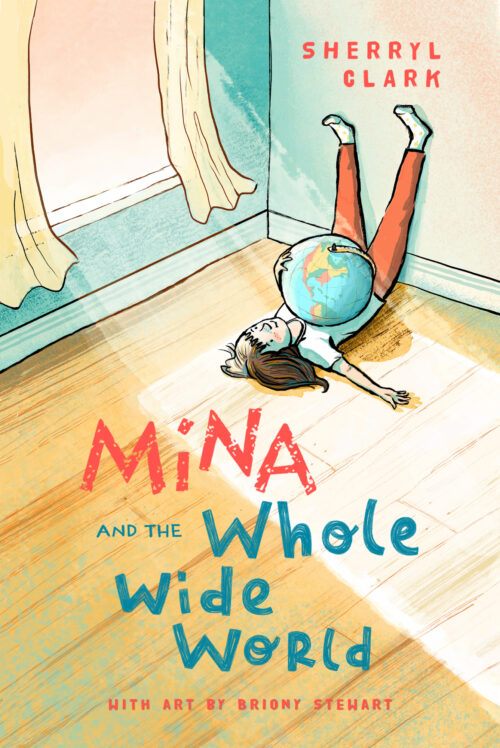
Mina and the Whole Wide World by Sherryl Clark and illustrated by Briony Stewart
Posted in authors, interviews, poetry

Kristin Martin and To Rhyme or Not To Rhyme?

MEET THE POET

Kristin Martin writes poetry for adults and children. Her poetry has been published in poetry collections as well as in magazines in Australia, UK and Ireland.

Kristin lives in South Australia in a house near the sea with her husband, two children, three turtles, lots of goldfish, and a bearded dragon named Ash. Her latest children’s poetry collection is called To Rhyme or Not to Rhyme? (illustrated by Joanne Knott).

From the publisher:

A stunning collection of  children’s poetry with a focus on the natural world. Poems truly are all around us, and in this collection Kristin Martin shares her love of nature and sense of fun on each and every page. Joanne Knott’s exquisite illustrations bring the animals and natural environment to magical life.

On with the questions!


When you’re putting together a poetry collection, how do you choose which poems to include and which poems to leave out?

When I was putting together my children’s poetry book, To Rhyme or Not to Rhyme? (which is published by a small independent publisher called Glimmer Press) I decided to only include poems that have something to do with nature: animals, plants, the sea or clouds. As most of the poems I write are inspired by nature, this was easy. I wanted roughly half the book to be made of rhyming poems, and half of non-rhyming poems, so I picked out my favourite rhyming nature poems, then actually had to write some more poems to have enough poems that don’t rhyme. It is much easier to write poems that don’t rhyme.

Do you have a tip for kids who would like to write rhyming poetry?

My tip for writing rhyming poetry is to read lots of rhyming poetry, and work out what the poet has done. Look at the syllables, and where the beats are in the words (where the natural stress falls when you read it aloud). I also suggest you ask someone else to read your rhyming poem aloud to you – then you can hear if it sounds right, or if there are any ‘clunks’ in it.

Do you have a favourite poem for performing/reciting to an audience?

My favourite poem changes all the time, but my current favourite is this, as it is fun to read aloud and have children guess what it is about. It is actually a (mostly) true poem, based on our family pet, Ash.

There’s a Dragon in my Bedroom by Kristin Martin

There’s a dragon in my bedroom
with a long and scaly tail.
She has spikes around her collar
that are sharper than a nail.

There’s a dragon in my bedroom
with four sets of razor claws.
She has rows of sharp incisors
set inside her fearsome jaws.

There’s a dragon in my bedroom
who’s out tracking down her prey.
When she’s hungry and she’s hunting
then I stay out of her way.

There’s a dragon in my bedroom
who adores her daily meal.
When she finds those jumping crickets
she just snaps them up with zeal.

There’s a dragon in my bedroom
who’s the nicest one I’ve met.
She’s a baby bearded dragon
and she’s my beloved pet.

(from To Rhyme or Not to Rhyme? Published by Glimmer Press, 2019)

Do you have a tip for kids who would like to try performing/reciting poetry themselves?

Before Covid, I used to help organise a poetry performance evening at the school I teach at called ‘Rap, Rhyme and Rhythm’. My tips for the students performing, and any other students who want to perform or recite poetry, are to make sure you understand the poem when you learn it, then recite it to put across the meaning, rather than focussing on the rhymes. If it’s funny, make sure the audience can hear the jokes and have time to laugh. If it’s sad, make sure the audience hears the sadness in your voice.

Can you tell us a bit about what you’re currently working on?

I’ve just completed my next poetry collection, which has 75 rhyming poems in it. The illustrator, Joanne Knott, is working on the pictures – I can’t wait to see them. It should be out next year. I am currently working on several rhyming picture books. I am at the editing stage, which is my favourite part of writing.

To Rhyme or Not to Rhyme? is out now! Ask for it at your favourite bookstore, at your local library, or you can buy a copy from the publisher.


AWESOME EXTRAS

Learn how to write your own poems

Download Kristin Martin’s Teachers’ Notes for To Rhyme or Not to Rhyme?

Read some more poems by Kristin Martin on her website

To Rhyme or Not to Rhyme by Kristin Martin and illustrated by Joanne Knott