We love reading all the work you send us and we really love publishing it, too. Sometimes we’re blown away by the amazing stuff we find in our inbox and our post office box. And that’s why we are thrilled to be announcing the inaugural ALPHABET SOUP CREATIVITY AWARD.
Prizes will be awarded in three categories:
Most outstanding story
Most outstanding poem
Most outstanding artwork
If you are a child who had work published in the magazine this year, you are automatically in the running for this Award. (This excludes the winning pieces in the writing or design-a-cover-competitions).
The prizes:
Most outstanding story—the winner will receive $50.00*, an ebook by Dee White, and a manuscript appraisal (professional feedback) from Dee White on a 500-word story they have written (not necessarily the story that was published in Alphabet Soup).
Most outstanding poem—the winner will receive $50.00*, a book of poetry by Lorraine Marwood, and a poetry appraisal (professional feedback) from Lorraine Marwood on an unrhymed poem up to 15 lines written by the winner (not necessarily the poem that was published in Alphabet Soup).
Most outstanding artwork—the winner will receive $50.00*, a book by James Foley, and an illustration appraisal (professional feedback) from James Foley on a piece of artwork (not necessarily the artwork published in Alphabet Soup).
You’ll hear more about these people and the prizes this week, starting on Monday. And on Friday we’ll announce the winners here on the blog. (If you are a winner, we will also notify you personally.)
We read some outstanding poems in our spring writing competition and we’re thrilled to be sharing these winning poems with you. Congratulations to the three winners!
UNDER 7s WINNER—Leith Bradbury
THE FIGHTING CROWS
Hungry hungry black crow,
High up in a hollow tree,
Glides down to the bottom of the hill
And grabs worm from happy crow.
Happy crow is now angry,
Scratching and pecking,
Biting and tugging,
Screeching and chewing,
All day long.
Then angry crow has an idea.
He nips the worm in half and gobbles his half.
He gives the other half to black crow.
They become friends.
In the Northern Suburbs,
On a light green field,
Two crows get in a fight.
Black bodies twist and twirl,
Feathers fly to the sky.
A crow falls to the ground.
No mercy for the wounded crow,
He dives and flies away,
Leaving the crow to cry his anger to the sky.
Another crow watches the scene inscrutably,
On a quiet afternoon in the Northern Suburbs.
Where the black billowing shapes of trees,
Shadowed from the sun,
Have the colour of the Fighting Crows.
A street bathed in afternoon shadow.
The grass is yellow green.
Time is unchanging and he sees the whole world at once.
The clouds can be touched by the hand.
Trees are poles with clouds on top.
Ten Years Later
Same old street that never changes.
Grass and trees, houses and clouds.
He wants to go to more exciting places, see more exciting things.
He wants to see something more than that suburban street with its straight path and quiet houses.
Winning poems in the Roland Leach poetry prize – on display at the Nedlands Library.
This afternoon we stopped in at the Nedlands Library to check out the winning poems from the 2012 Roland Leach Poetry Prize. (You can find the display in the Children’s Library section.)
Congratulations to Celine Ng—the 9-year-old poet who won the overall prize, as well as the Year 3, 4 & 5 category. Way to go!
In every issue of Alphabet Soup magazine we print an interview with an author or illustrator. We can’t fit all their answers into an issue of the magazine, so we publish the full interviews on the blog—we wouldn’t want you to miss out!
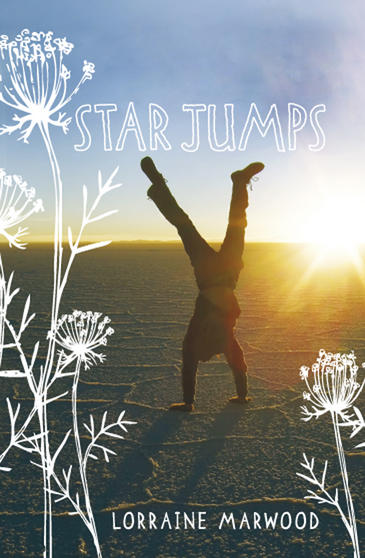
For issue 14 we talked to Lorraine Marwood. Lorraine is a poet, and the author of many books including Star Jumps, and Note on the Door, and A Ute Picnic.
What made you become a writer/poet?
I don’t think that anything ‘made’ me become a writer. It was a heartfelt feeling when I was about 8 years old—that was all I secretly ever wanted to do. And I never ever lost that longing. Or that passion for writing and reading.
Was it easy to get your first poem published? (Your first book/book of poems?)
No not at all. It wasn’t till I was about 16 years old that my first poem was published and that was after much writing and submitting—but what a thrill it was.
My first book of poems came after I’d had my children and was still farming. And it only came after I’d notched up publishing credits in literary magazines—a bit like an apprenticeship in poetry.
Where do you get your inspiration and ideas?
From everything happening around me—little incidents, nature, my family, newspapers, what I read and of course big doses of thinking and jotting down.
Did you read poetry when you were growing up?
My teacher read us classic poetry like Banjo Paterson, Wordsworth and we had a class reader for the year and we always read the poems in that (but as a teenager I discovered T.S. Eliot and a Russian poet called Yevtushenko). But we mainly read rhyming poetry which was also mainly English poets.
Did you have a favourite poet/poem/book of poetry when you were growing up?
T. S Eliot ‘The journey of the Magi,’ and also Australian Bruce Dawe.
Is your poetry influenced by particular poets/writers?
Yes, I think I’m influenced by those poets I really admire—like ee cummings, I love the freedom and rhythm of his work; Bruce Dawe’s Vietnam poem—‘They’re bringing them home’; T.S Eliot; Sue Cowling; ‘FiveBells’ by Australian poet Kenneth Slessor; Judith Wright; and now I read lots of children’s poets. I think I’m influenced by those poets who tell a story, a narrative, that surprise and use their poetic craft really well. What do you like to do when you are not writing?
I love to make things—sew, bead, garden, pot up cuttings, read, make cards, op shop—they are creative things to do (well, for me!) think, wonder, pray.
Do you mostly write on paper or on a computer?
Now that’s an interesting question because for poetry I like to write in one of my notebooks, but for stories I write on my laptop.
Is there a difference in the way you approach writing a poem and writing a verse novel?
Yes, a poem is a little unit on its own with beginning, middle and end. But a verse novel is many components that lead on and borrow from story telling—it’s a more ‘prosy’ way of writing, where a poem is tiny and delicious like a ripe strawberry.
Are you working on a collection of poems or a book at the moment?
I am working on another collection of poems—so for that, I need to aim for about 100 new poems. At the moment I’m thinking of section headings or groupings for the poems, a bit like chapters in a book. This collection will be entirely new. And as I write, I’ve already finished another verse novel—again entirely different from my other verse novels in content and for a slightly older age group—but awaiting the green light from my publisher. Do you have any advice for young poets?
Yes, write whenever you can. Start with lists of what is around you—lines of three or four words, get all the details down and use those wonderful senses too. Keep these jottings in a note book, put the date on them and keep them. Look back over them and see if any ideas for a fuller poem can be found.
No lines of writing are ever wasted, they lead you on a journey to becoming a writer/poet. It’s such a surprise to see what comes from your pen or keyboard. And a such a pleasure to read again after a few weeks or months have gone by …
—
Find out more about Lorraine Marwood and her books and poetry—visit her website, or check out a bookstore or library near you!
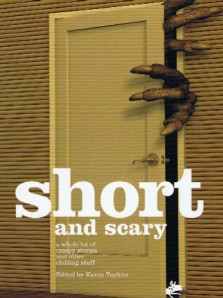
All through October, Alphabet Soup is celebrating turning three. We have heaps of writers and illustrators stopping by to answer THREE QUICK QUESTIONS and today’s visitor is poet Jackie Hosking. You might have seen some of her poems in The School Magazine, The Scrumbler and in Alphabet Soup! You’ll also find her writing in the anthology Short and Scary.
1. Where do you like to write?
I love to write in bed with a nice cup of tea.
2. Can you name a book you’d recommend to our readers?
Anything by Lorraine Marwood. A Ute Picnic is brilliant and I’m about to read Note on the Door. Her poetry is so accessible and beautiful to read.
Jackie recommends A Ute Picnic by Lorraine MarwoodJackie also recommends Note on the Door by Lorraine Marwood
3. Can you offer a word or phrase that kids could use for inspiration if they have writer’s block?
One of my favourite unblockers is the phrase ‘Once upon a time … ‘ It seems to unlock the door to possibilities. So if you’re stuck, just write Once upon a time … and see what happens.
You can find out more about Jackie Hosking in an earlier interview (or keep an eye out for our November issue which will include one of Jackie’s poems).
All through October, Alphabet Soup is celebrating turning three. We have heaps of writers and illustrators stopping by to answer THREE QUICK QUESTIONS and today’s visitor is 8-year-old poet Frederique who runs a poetry blog called Petals for Fred.
1. Where do you like to write?
At the dinner table.
2. Can you name a book you’d recommend to our readers?
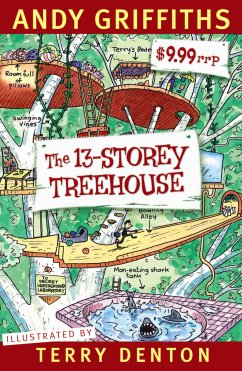
The 13-Storey Treehouse, by Andy Griffiths and Terry Denton. It was funny, it had thirteen chapters, thirteen of everything!
Fred recommends The 13-Storey Treehouse by Andy Griffiths, ill. Terry Denton
3. Can you offer a word or phrase that kids could use for inspiration if they have writer’s block?
Treehouse!
Find out more about Fred and her poetry on her blog, Petals for Fred.
Lorraine Marwood is celebrating her new book of poetry, Note on the Door, with a poetry competition. You can win a copy of the book (there are prizes for kids AND grown-ups, so make sure you tell your Mum and Dad, too!)
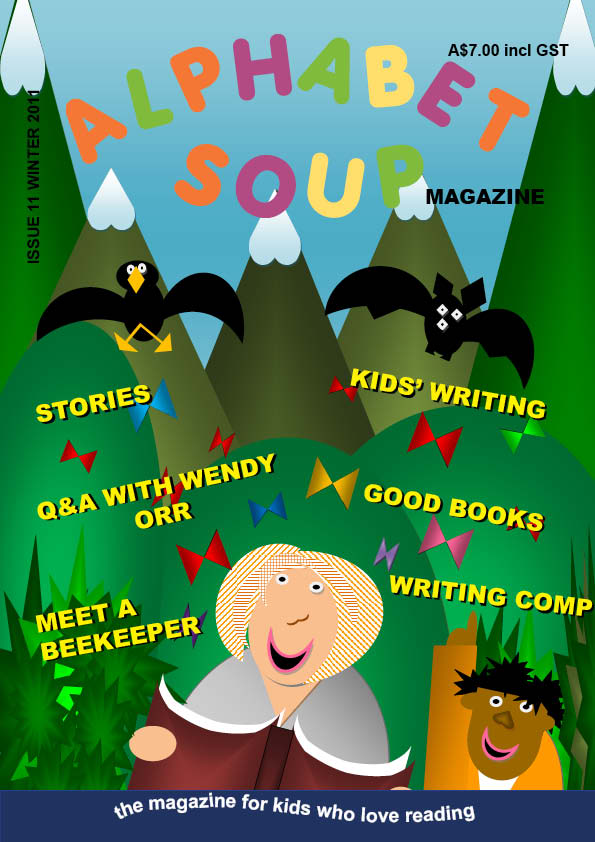
Poetry by Edel Wignell, Jackie Hosking and Lorraine Marwood
Stories, poems and book reviews by kids
Crossword
Our winter writing competition
Our annual design-a-cover competition
and more!
Later today we’ll be posting the Q&A with Wendy Orr and on Monday we’ll be posting the winning stories from our recent story-writing competition. So stay tuned!
I love pockets, and the bits and pieces carried around in them (except tissues, after the washing machine—I don’t love those). Carrying a poem around in your pocket is fun. You can read it to yourself if you need cheering up. You can read it to someone else if they need cheering up. You can give it to someone—as a Poem in Your Pocket Day present. And you can even use it for inspiration to write your own poem.
The first poem I ever remember learning (if you don’t count nursery rhymes) was The Swing by Robert Louis Stevenson. My mum used to recite it whenever we went to the park and we begged her to push us on the swings.
The first poem I remember learning at school was Forgiven by AA Milne. And that’s the poem I have in my pocket today.
Forgiven
by AA Milne
I found a little beetle; so that Beetle was his name,
And I called him Alexander and he answered just the same.
I put him in a match-box, and I kept him all the day …
And Nanny let my beetle out—
Yes, Nanny let my beetle out—
She went and let my beetle out—
And Beetle ran away.
She said she didn’t mean it, and I never said she did,
She said she wanted matches and she just took off the lid,
She said that she was sorry, but it’s difficult to catch
An excited sort of beetle you’ve mistaken for a match.
She said that she was sorry, and I really mustn’t mind,
As there’s lots and lots of beetles which she’s certain we could find,
If we looked about the garden for the holes where beetles hid—
And we’d get another match-box and write BEETLE on the lid.
We went to all the places which a beetle might be near,
And we made the sort of noises which a beetle likes to hear,
And I saw a kind of something, and I gave a sort of shout:
“A beetle-house and Alexander Beetle coming out!”
It was Alexander Beetle I’m as certain as can be,
And he had a sort of look as if he thought it must be Me,
And he had a sort of look as if he thought he ought to say:
“I’m very very sorry that I tried to run away.”
And Nanny’s very sorry too for you-know-what-she-did,
And she’s writing ALEXANDER very blackly on the lid,
So Nan and Me are friends, because it’s difficult to catch
An excited Alexander you’ve mistaken for a match.
—
Do you know a poem you’d like to put in your pocket? If you had a poem in your pocket, would you keep it a secret? Or would you read it to someone?
Here is the winning Under 12s poem from our summer 2010 writing competition. You were asked to write a poem incorporating the word ‘snap.’
A reminder: always check the rules of the competition. If you don’t stick to the rules, we have to disqualify your entry and that makes us sad!
–
Under 12s winner: B Apel (QLD)
Timber!
Vrooooom … vroom
The big tree falls,
smashing through the canopy
severing branches with a snap!
creating a chain-reaction;
like dominoes
they fall
until petering out
with a final …






 alphabetsoup.net.au