We were thrilled to discover a new poetry blog this week, called Fred’s Petals. We liked it so much, we asked Frederique if we could interview her, and she kindly agreed.
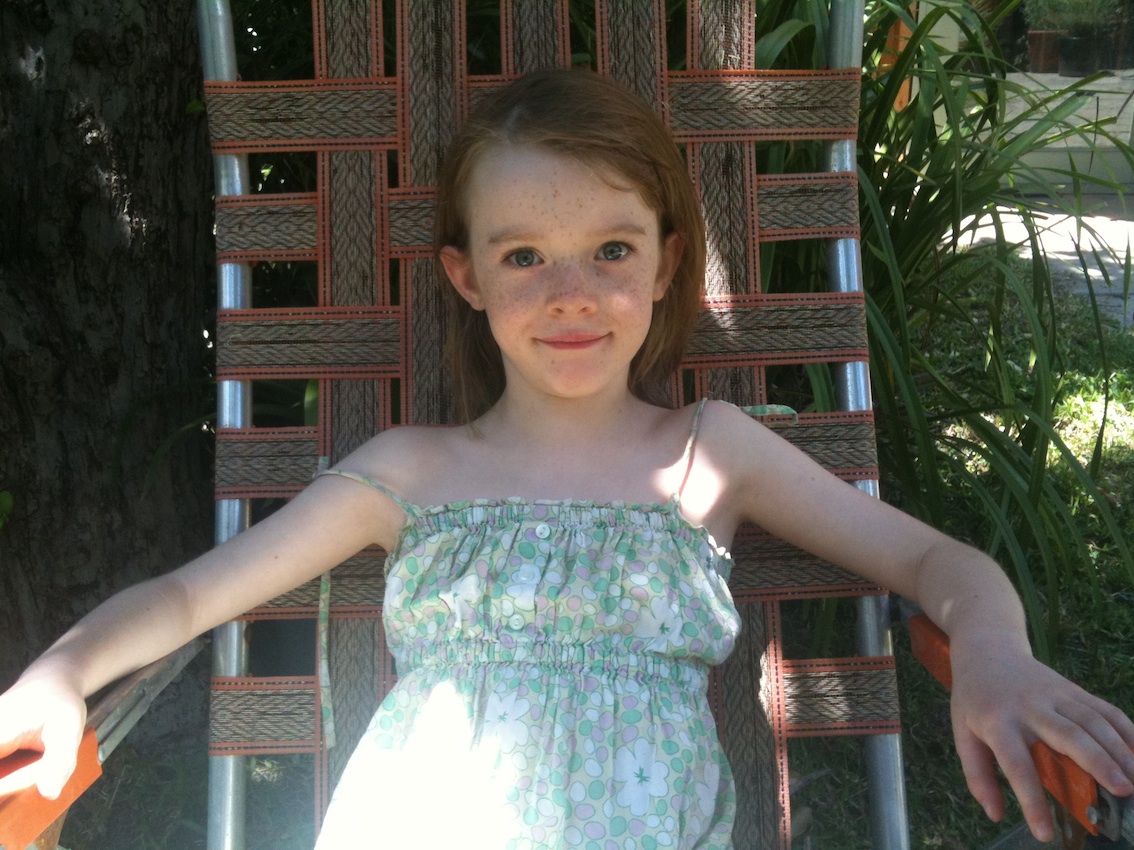
Fred, the poet behind Fred's Petals (2011)
Fred, can you tell us a bit about yourself?
My name is Fred, I live in the bush. I’m seven years old and I have a sister called Una, and a little baby brother called Avery. I like reading books and magazines and I like writing poetry.
How long have you been writing poems?
For three years.
Why did you decide to start the Fred’s Petals blog?
For my friend Yumi could read them, she lives in Canada.
Where do you get your ideas for your poems?
Things around me give me ideas and sometimes my family helps me.
Do you like to read (or listen to) other people’s poems ?
I like to listen when somebody reads poems to me. I like listening to other people’s poems have great ideas like my mum.
Some kids think writing poems is hard. Do you have any advice that would help kids who want to start writing poems?
Well you just think of a name to start, and then write about the name and rhyme the words. I come up with my ideas by thinking about the things around me. You could try writing about where you are, and what they see, and come up with a little story that rhymes.
—
Be sure to visit Fred’s Petals and leave a comment. (All poets love some appreciation!)
Write a poem up to 10 lines long (shorter is fine). Your poem must include the word ‘snap.’ Include a competition entry form—you can print one from Alphabet Soup‘s website.
ENTRIES CLOSE 7 JANUARY 2011. (We’ll accept entries postmarked 7 January.)
This writing competition is open to children aged 12 and under. Entries are judged in 3 age categories.
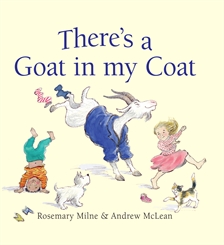
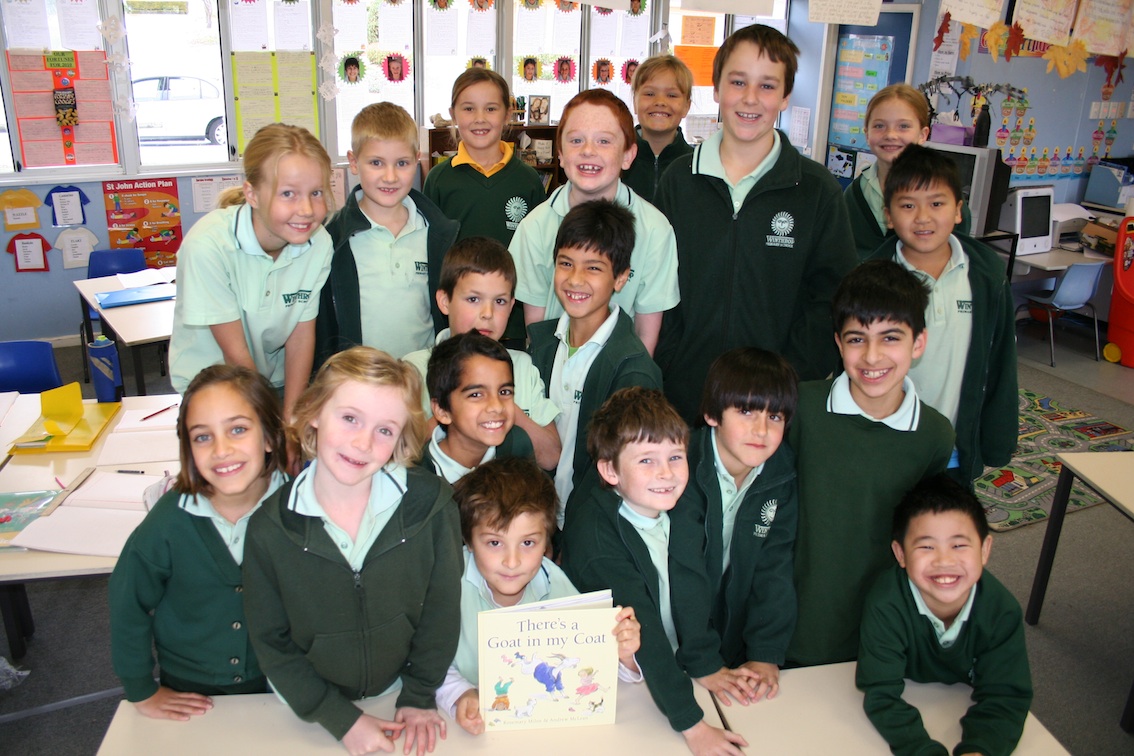
There’s a Goat in My Coat, by Rosemary Milne, illustrated by Andrew McLean
Reviewed by students at Winthrop Primary School, WA. Teacher: Mrs Therese Cianfrini.
Suitable for Ages: 0 – 7 years
Our Favourite Poems: Lazy Little Lizard, Piglet in Puddles, Wriggle and Giggle, Penguins, and The Hopping Song.
We loved the cover of the book, it was colourful and inviting, the illustrations made us want to open the cover and discover the exciting poems inside.
Each poem in the book was cleverly created with rhyme and rhythm that made the poetry fast and cheerful, with a good beat to encourage children to get involved with saying the poems. The author really used her imagination to create some hilarious and entertaining poetry that will encourage young children to learn as they sing along with these poems. They will learn to walk, count numbers and say new words.
Our little brothers and sisters would love this book of poems, they are silly and full of nonsense that would really make them laugh. The bright colourful illustrations would also involve them in the book. Rosemary Milne has created some awesome poems that will make small children want to hear and say them over and over again. The book keeps the reader interested, as you never know what the next page will have on it.
This exciting and entertaining book will even have the adults enjoying the time they spend reading to their young children. The book has a nice ending and would be a great bedtime reading book. We recommend that you get this fun book for your children, we know they will love it.
Winthrop Primary students review ‘There’s a Goat in My Coat’. Photo used with permission.
—
These Winthrop Primary students are members of our Undercover Readers Club, a book reviewers club for kids. (The book was provided by publisher, Allen & Unwin.) If you or your class would like to join the club, you can download an information pack (PDF) from the magazine’s website. Membership is free!
The closing date for entries for The Dorothea Mackellar Poetry Awards has been extended to 16 July 2010. But even if you aren’t entering the competition, their site has a page of excellent tips for writing poetry. Check it out!
And if you want to enter their competition and you’ll find all the info on their website.
Today we welcome Duncan Ball to the blog, talking about what he liked to read when he was growing up — he didn’t like to read under the covers! Duncan Ball wrote the books in the Selby series (including some Selby joke books), and the Emily Eyefinger series, but did you know he has also published a book of poetry, My Sister Has a Big Black Beard?
—
Duncan Ball
I didn’t read when I was a kid. I could read a bit but I was a very slow reader so it wasn’t fun. I never read books when I didn’t have to. I’d been read books so I liked what was in them but I didn’t have the key to unlock their secrets. So I didn’t read under the covers after lights-out. I’m sure my parents would have happily given me a torch if I did.
In primary school I lived in Alaska, the northernmost state in America. There was no TV and a lot of the year it was very cold and dark so you couldn’t play outdoors. We had toys, mostly basic wooden toys, but also games and puzzles to play with. My sister spent all her time reading. Even when we were driving somewhere and there was beautiful scenery she barely looked up from her book.
Duncan Ball with his sister, Sally. Mountain View, Alaska, around 1949.
Comic books saved my life. They were exciting and funny and I could manage the few words on each page. At school our reading books said things like: “This is Dick. He is a boy. This is Jane. She is a girl. This is Spot. He is a dog.” If they’d given us Superman or Batman comics I’d have learned to read much sooner.
When I was twelve my family moved to Spain. I was put into a Spanish school where no one spoke any English and I didn’t speak any Spanish. But the kids were great and soon I had lots of friends and had to learn Spanish to talk to them. We lived in the middle of Madrid, a big city completely different from the tiny place we’d lived in in Alaska. There was so much to see and do. It was a wonderful three years.
Duncan as a student in Madrid, about 1953
In Spain, I was able to get American comic books. I also read a few Spanish ones. Spanish comic book dogs said gua gua gua when they barked instead of bow wow or arf arf. If you pronounce that in Spanish I think it comes closer to a real dog’s bark than bow wow and arf arf.
As a teenager in Spain I started reading for enjoyment—in English. I loved poetry because a good poem can bypass your brain and go straight to your guts. But I also started reading novels, adult novels because what we now call “young adult” novels didn’t exist yet.
It seems strange that a boy who couldn’t read when he was in primary school now writes books like the Selby and Emily Eyefinger books for primary school kids. When I write them I try to remember what I was like at ten and I try to write stories that I think I would have loved when I was young. Recently I took time out and wrote a book of funny poems for kids called My Sister Has a Big Black Beard. It was great fun to write. I wonder if I’d have liked to read it when I was young.
Alphabet Soup magazine is celebrating the launch of Undercover Readers (our new reviewers club for kids)! If you’d like to join the Undercover Readers Club, you’ll find an information pack you can download from the Alphabet Soup website. As part of the celebrations, we have a different children’s author or illustrator visiting Soup Blog each day until 29 June 2010 to talk about what they used to read after ‘lights out’ when they were growing up.
Today we welcome Jackie Hosking, here to tell us about her experiences of reading undercover. She loves to write rhyming poetry. We’ve published several of her poems in Alphabet Soup magazine, and she’s had poems published elsewhere, including The School Magazine, and in an anthology, Short and Scary.
Jackie Hosking
As a child I loved to read. I read all of Enid Blyton’s The Secret Seven books ( http://www.enidblyton.net/secret-seven/ ), I loved their meetings in the clubhouse where their mother brought them homemade biscuits and lemonade. Later I enjoyed The Nancy Drew Mysteries and always looked forward to receiving a new copy at the end of the Sunday School Year.
At the time I was reading these books I lived in Cornwall, which is in the United Kingdom. I was about ten years old. Just after my tenth birthday my family and I came to live in Australia where I discovered the amazing stories of Roald Dahl. I particularly remember Charlie and the Chocolate Factory, Charlie and the Great Glass Elevator and James and the Giant Peach. At primary school I was a frequent visitor to the school library where I borrowed and read the Pippi Longstocking books by Astrid Lindgren and it was at about this time I discovered that I really enjoyed reading science fiction books.
I was encouraged to read at home and had always been read to as a child. I read in bed, on the couch, in my tent, on the grass, in the car, on the bus … but never, never, never at the dinner table. This was a time to chat and catch up with the goings on in the family. And we certainly weren’t allowed to watch television at meal times. In fact television was a bit of a luxury in our house as was being allowed to stay up late. Most nights I was in bed by 8pm and so had plenty of time to curl up with my favourite book. I don’t ever remember being told to stop reading or to turn my lights out but after reading for a couple of hours I can imagine that my eyelids would have made that decision for me. I was what you might call a pretty sensible child, boring others might say. I did as I was told, most of the time, including brushing my teeth, saying please and thank you and eating my vegetables, even the brussels sprouts!
Books were my escape where I could be brave, daring and brilliant. Where there were no bedtimes or manners, just adventure and excitement (without of course, any real danger). Nothing thrilled me more than to open the pages of a new book, eager to discover where I might end up and who I might meet. Books allow you to reinvent yourself; they give you permission to shine.
As an adult I still love to read. And you’ll find me in bed on a Sunday morning with my latest book texting my husband for a nice cup of tea!
Alphabet Soup magazine is celebrating the launch of Undercover Readers (our new reviewers club for kids)! If you’d like to join the Undercover Readers Club, you’ll find an information pack you can download from the Alphabet Soup website. As part of the celebrations, we have a different children’s author or illustrator visiting Soup Blog each day until 29 June 2010 to talk about what they used to read after ‘lights out’ when they were growing up. So be sure to check back tomorrow!
If you like to write bush poetry, there’s still time to get your entry in for the Bryan Kelleher Literary Award. It’s a bush poetry competition run by Australian Unity in association with the Australian Natives’ Association and Henry Lawson Memorial and Literary Society.
There are three $100 prizes to be won in the Young Achiever category. You can find details and download an entry form from the Australian Unity website. (Terms and conditions are on their left-hand side menu.)



 Alphabet Soup magazine is celebrating the launch of Undercover Readers (our new reviewers club for kids)! If you’d like to join the Undercover Readers Club, you’ll find an information pack you can download from the
 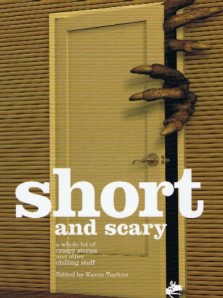 Today we welcome Jackie Hosking, here to tell us about her experiences of reading undercover. She loves to write rhyming poetry. We’ve published several of her poems in Alphabet Soup magazine, and she’s had poems published elsewhere, including The School Magazine, and in an anthology, Short and Scary.
 Alphabet Soup magazine is celebrating the launch of Undercover Readers (our new reviewers club for kids)! If you’d like to join the Undercover Readers Club, you’ll find an information pack you can download from the
  alphabetsoup.net.au