We are sad to hear that there won’t be any more Audrey paperbacks, but on the blog Christine Harris says there will be an Audrey picture book coming out, so stay tuned …
Sheryl Gwyther visited us last month as part of the celebrations for the launch of our Undercover Readers Club. She’s back today to talk a bit about how she got the idea for her latest book, Princess Clown. Welcome back, Sheryl!
What gave you the idea for writing Princess Clown?
Princess Clown began with a challenge – to write a chapter book using words that clashed. I chose CLOWN and PRINCESS.
(Musicians have used this same process to choose intriguing, unusual names for their bands. That’s why we have rock bands with names like Led Zeppelin, Guns ‘N Roses, Green Day, Pearl Day and Stone Roses.)
Once I had chosen the words Clown and Princess I asked myself, What if?
What if there was a princess who was different? What if she loved clowning and making people laugh? What if she was the heir to the throne? What if she was in trouble because she can’t stop clowning around? What if her tricks go terribly wrong?
Then before I could say, ABRACADABRA and ALLIBALOO, out sprang Princess Belle and a story was born.
Are you good at any circus skills yourself? Juggling, unicycle riding, back flips, squirting unsuspecting people with your joke flower/buzzing them with a handshake?
I prefer my bike with two wheels so I don’t fall off. I can’t do black flips or somersaults and neither do I have a zingy clown ring like Princess Belle, but I do have a set of three professional juggling balls – a perfect size and weight for my hand.
I’m trying to learn to juggle. So far, I’ve worked up to three throws and a catch, but it’s been difficult to throw that fourth throw. My brain does not like it at all! But I’ll never give up trying – one day I will get there.
How do you get inspiration and ideas for your writing?
I get ideas for writing stories from lots of places. Some start with daydreaming, or childhood memories, some from intriguing things I’ve read or heard about, some from combinations of words, a couple even came from dreams. Once I get the idea, I always ask, What if? And that is when the story really begins to form in my imagination.
I like to write a rough outline while the idea is fresh in my brain. Then it’s a good idea to brainstorm – that fills out the characters’ development and also the plot.
While I’m writing the first draft, I play some background music on the CD player. When writing an adventurous part of my stories, I like the soundtrack from The Lord of The Rings – helps to keep the fast pace going. You might find that works for you too.
The closing date for entries for The Dorothea Mackellar Poetry Awards has been extended to 16 July 2010. But even if you aren’t entering the competition, their site has a page of excellent tips for writing poetry. Check it out!
And if you want to enter their competition and you’ll find all the info on their website.
Sheryl Gwyther will be here on Wednesday 7th as part of her Princess Clown blog tour. Be sure to stop by—she’ll be talking about how she gets her ideas, and she has some great writing tips for kids.
If you live in the Pilbara region of WA, you might be interested in this Photo and Story Comp. The winner receives a digital camera!
Write a narrative about your local environment and take photos to accompany your text. Entries close 5pm on the last day of Term 3. You can find out more about the competition here.
Now the ‘Lights Out’ visitors are gone, we thought it would be a good idea to compile a list of the children’s books that they liked reading undercover, and the ones they thought they’d like reading if they were reading after lights out today. So here’s a list! (Some of them might be out of print, but libraries will often have a copy of books that are out of print. Check your school library or your local public library. Ask your librarian!)
The Museum of Mary Child by Cassandra Golds
Swallows & Amazons series,
Anne of Green Gables by LM Montgomery
The Queen’s Music
Deb Abela’s ‘Max Remy’ series
Enid Blyton’s The Secret Seven series The Famous Five series, The Magic Faraway Tree, The Enchanted Wood, The Folk of the Faraway Tree, The Wishing Chair series.
The Nancy Drew Mysteries
Roald Dahl books: Charlie and the Chocolate Factory, Charlie and the Great Glass Elevator,James and the Giant Peach, The BFG
The Pippi Longstocking books by Astrid Lindgren
Dr. Suess, in particular Green Eggs and Ham and Horton Hears a Who, and Oh, The Places You’ll Go!
Maurice Sendak’s Where the Wild Things Are
Whiteoaks of Jalna Chronicles’ by Mazo de la Roche
Artemis Fowl
Diary of a Wimpy Kid
The Shark in Charlie’s Window
The Sky is Everywhere by Jandy Nelson
Thai-riffic by Oliver Phommavanh
Zac Power
Specky Magee
Bonnie and Sam
Captain Underpants
CS Lewis’s Narnia series, including The Lion, The Witch and the Wardrobe
Jaguar Warrior by Sandy Fussell
Silver Curlew by Eleanor Farjeon
David Grimstone’s Gladiator Boy series
Little Women
Black Beauty
What Katy Did
Heidi
My Friend Flicka
Thunderhead
Betsy in Spite of Herself by Maud Hart Lovelace, the adventures of a young teen in 1907.
The Works of Lewis Carroll
Hardy Boys
Nancy Drew
Nine True Dolphin Stories by Margaret Davidson
Fast-talking Dolphin by Carson Davidson
Mrs Piggle Wiggle books
What about you? Do you have any books you’d recommend? Tell us in the comments!
Well, the Undercover Readers Club is now officially launched. In case you missed it — we’ve had children’s authors, poets and illustrators visiting the blog to talk about what they used to read undercover when they were growing up.
Tomorrow we’ll post a list of all the books mentioned, in case you’d like to look for them the next time you’re at a library or book shop.
And if you came late to the tour, here’s a list of all our visitors. Thanks for helping us launch the Undercover Readers Club. Hurrah!
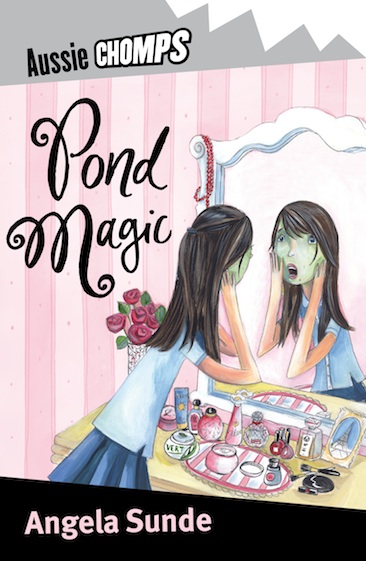
Today we welcome the last of our ‘Lights Out!’ visitors to our blog. Angela Sunde is here to tell us what she used to read after ‘lights out’ when she was a child. Angela Sunde’s book Pond Magic, is an Aussie Chomp and will be published by Penguin Australia in September 2010.
—
As a child I was a little scared of the dark. It’s not surprising really. You see, after lights out, when Mum and Dad were watching TV in the lounge room, my brother would slither into my room on his stomach and pop his head up next to my bed with a wicked grin. Then, when my face was as pale as the flannelette sheets tucked under my chin, he would point to the top cupboard above my wardrobe doors (a cupboard I was too small to have ever seen inside) and tell me “A witch lives in there”.
After many interruptions to their evening viewing, Mum and Dad replaced a light bulb on the wall above my bed with a red globe. It was warm and soothing and I could easily see my brother’s bottom as it slunk into the room, sticking up in the air like a shark’s fin (enter Jaws music here).
What the red light globe also allowed me was the pleasure of reading in bed. Every book and comic had a red tinge, but I could read for hours and fall asleep with adventures and words spinning through my head. Mum knew of course. The pile of reading material under my bed must have been a sure giveaway. She warned me I would damage my eyesight and I promised the red light was only there to keep away my fears, not to read.
That was a lie.
I devoured every book in the school library and my cousin’s collection of Enid Blyton’s ‘Famous Five’. A trip to the shops meant a detour to the bookstore, where I purchased the classics: Little Women, Black Beauty, What Katy Did, Heidi, My Friend Flicka and Thunderhead, and read them all by the red light of my room.
A favourite of mine was Betsy in Spite of Herself by Maud Hart Lovelace, the adventures of a young teen in 1907. But my large volume of ‘The Works of Lewis Carroll’ took pride of place on my bookshelf. The illustrations by John Tenniel had me in raptures and one year a friend and I went to a fancy dress party as Tweedledum and Tweedledee.
I never owned a picture book and coveted my cousin’s Green Eggs and Ham. Nowadays if I were caught reading after lights out, it would either be a picture book or a mid grade/YA novel. Adult fiction doesn’t excite me, even though I joined a book club to force myself to read it. It seems the young reader in me is still alive, tucked up in a flannelette sheet, reading under a red light.
Alphabet Soup magazine has been celebrating the launch of Undercover Readers (our new reviewers club for kids)! If you’d like to join the Undercover Readers Club, you’ll find an information pack you can download from the Alphabet Soup website. As part of the celebrations, we had a different children’s author or illustrator visiting Soup Blog each day until 29 June 2010 (that’s today!) to talk about what they used to read after ‘lights out’ when they were growing up. You can read back through the blog posts if you missed any!
The CYA conference is the Children and Young Adult Writers and Illustrators Conference. It’s actually a conference for adults interested in children’s and young adults books and writing them. But now there’s something for kids, too.
The CYA conference will include a kids’ conference, called Hatchlings, aimed at children 8 – 18 years old, who are interested in writing and illustrating, or who want to meet the authors/illustrators at the conference.
There will also be book launches by Paul Collins, Jo Thompson and Aleeseah Darlison and dads are welcome to come for Fathers Day Tea!
 Over on the Audrey of the Outback blog, Christine Harris talks about interviewing your characters as one way of getting ideas for your story. She interviews Audrey while she’s at it!
 For a morning of pirate songs, stories and pirate treats, go along to the Captain Clawbeak Pirate Party on at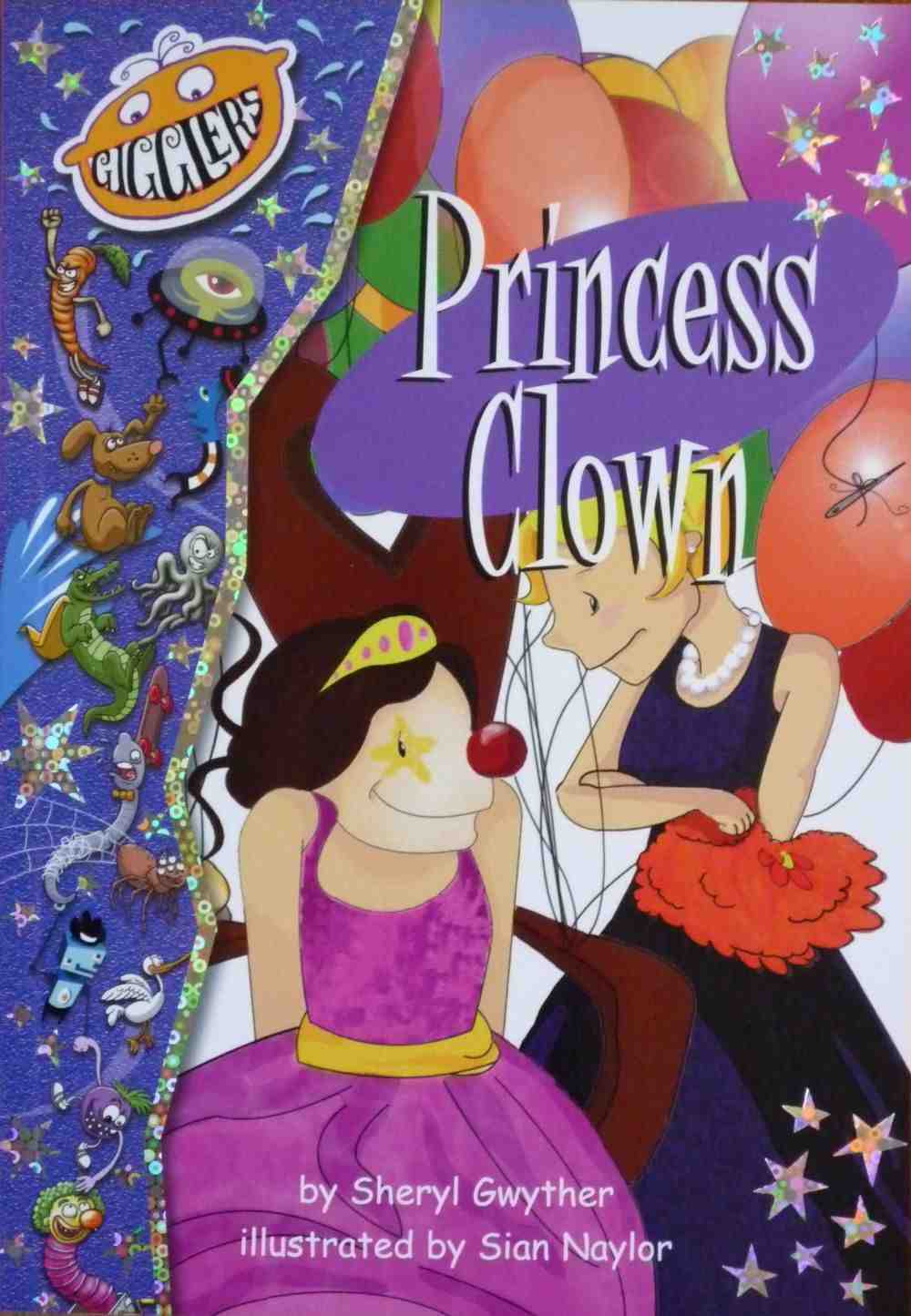


 Now the ‘Lights Out’ visitors are gone, we thought it would be a good idea to compile a list of the children’s books that they liked reading undercover, and the ones they thought they’d like reading if they were reading after lights out today. So here’s a list! (Some of them might be out of print, but libraries will often have a copy of books that are out of print. Check your school library or your local public library. Ask your librarian!)

 Alphabet Soup magazine has been celebrating the launch of Undercover Readers (our new reviewers club for kids)! If you’d like to join the Undercover Readers Club, you’ll find an information pack you can download from the
  alphabetsoup.net.au