Western Australian family-friendly event: Bring a picnic blanket and enjoy a morning of poetry and outdoor activities to celebrate the release of Right Way Down, a brand new children’s poetry collection from WA authors.
Poetry readings; games; activities; light snacks; and book sales from Dymocks Subiaco. Some of the contributing authors will be there on the day for signings.
WHEN: Saturday April 6th, 10:30am WHERE: Rankin Gardens, cnr Hamersley Rd and Rokeby Rd, Subiaco, WA BOOKINGS: FREE but required, via eventbrite.
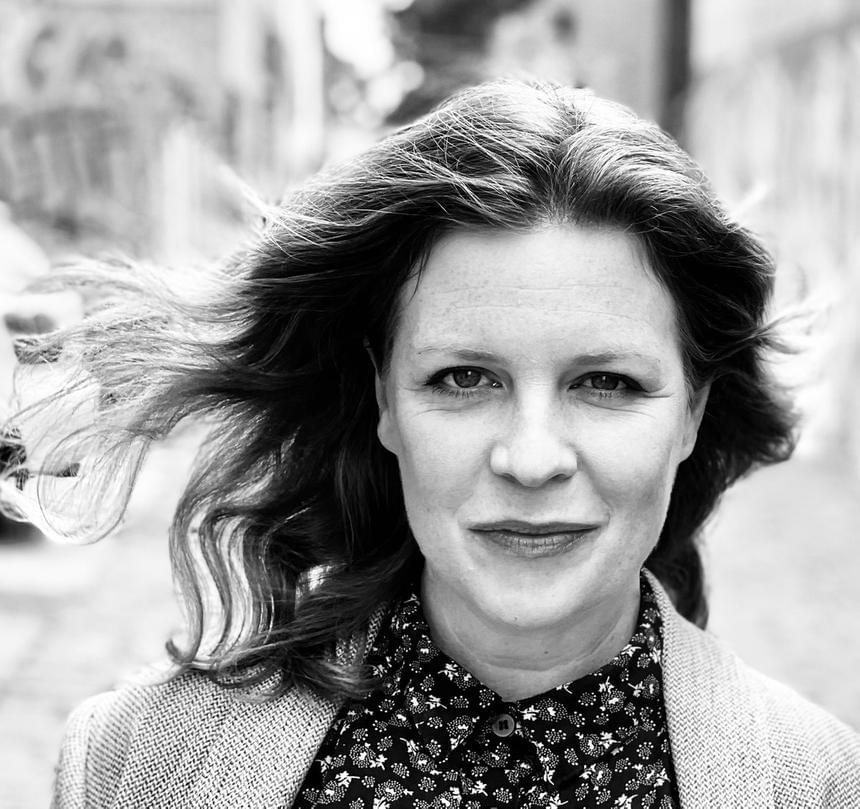
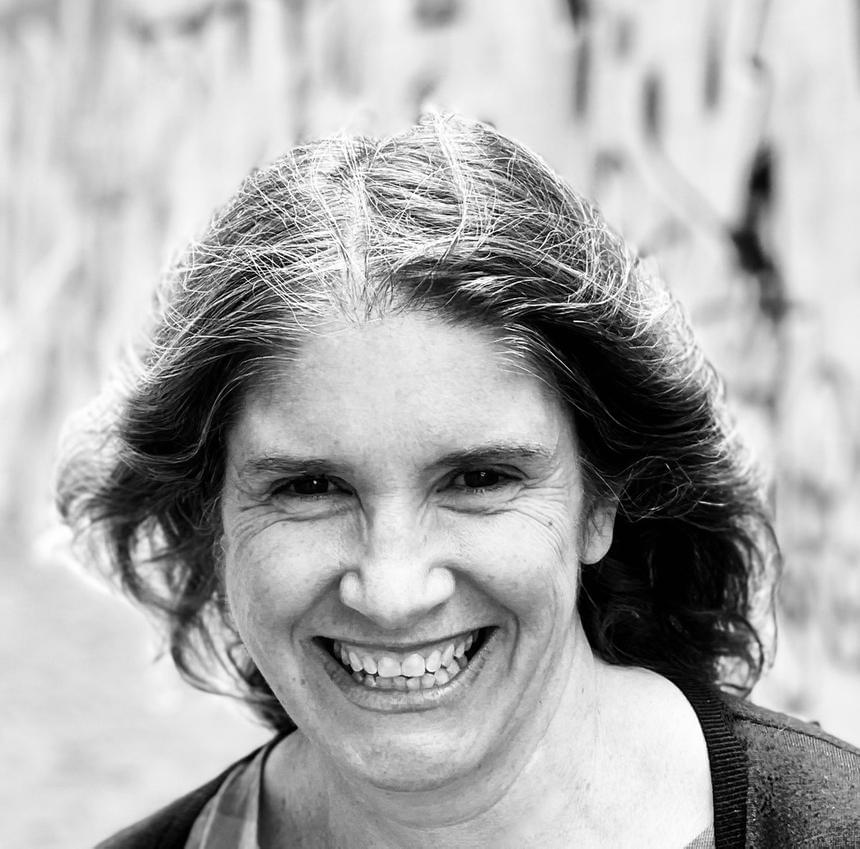
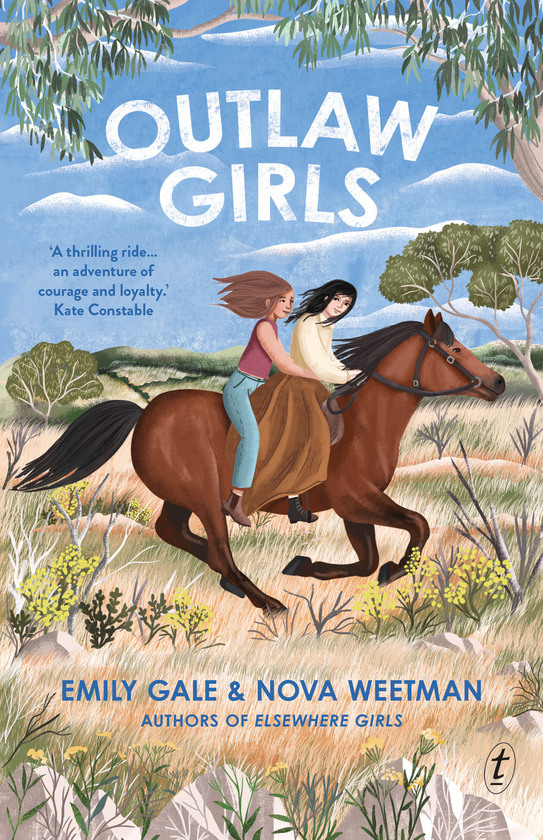
Emily Gale writes for children and for teenagers – you might know her novels I am out with Lanterns and The Other Side of Summer. Nova Weetman also writes for children and teenagers and you might have read some of her books, such as The Secrets We Keep and Sick Bay. Emily and Nova previously collaborated on Elsewhere Girls. Their latest book collaboration is Outlaw Girls, the second co-authored book by these authors. We’re thrilled to chat to them about Outlaw Girls today.
Emily GaleNova Weetman
The publisher provided Alphabet Soup with a reading copy of Outlaw Girls.
From the publisher:
Kate and Ruby live in the High Country in Victoria. They’re both daring, quick-thinking and prepared to break the rules, and they’re both brilliant horse riders –they’d probably be great friends. But they live in different times, 145 years apart.
Two authors, one novel. How do you go about writing a story when there are two writers?
Nova Weetman: Outlaw Girls is a blend of historical research and fiction, so for the research part we spent several months visiting the sites of our ‘real’ character Kate Kelly and learning all that we could about her. Because Kate was Ned Kelly’s sister there was a ton of material to read and study.
We each wrote one character: Emily wrote Kate and I wrote Ruby. Before we started writing the chapters, we had to develop our own characters as well as plotting the entire book as a partnership. I started the Ruby story, then I sent my chapters to Emily and she wrote some of the Kate story, and then we went back and forth like that all the way to the end, giving and receiving chapters. Then we did the editing to make sure it flowed well. It’s important that the main story works but also that each character has their own storyline with its own satisfying ending.
Ned Kelly is a familiar name for most Australians. Can you tell us a bit about how you went about your research for the character of his sister? Did you both collate information?
Emily Gale: We did loads of research, all different kinds. Nova already knew a bit about Kate Kelly but I didn’t so I was starting from scratch. I read or listened to a lot of books. I looked in the index of even more books to see if they mentioned Kate and I read all of those bits too. I watched all the Ned Kelly movies, listened to podcasts, read books about horses, watched YouTube videos about young people taking care of their horses or going riding, and read old newspapers from 1878 on the website Trove, where it’s easy to look up articles from the past.
Then I made a Google Doc of all my research and shared it with Nova so that she could add to it.
A fun part of the research was going on the train with Nova to The Kelly Gang areas in Victoria. We saw the old chimney which is all that is left of the house where Kate Kelly grew up, and we walked around Glenrowan where The Kelly Gang came to an end.
If you could time-slip to any time in history, what year would you choose?
Emily Gale: If I could guarantee that I could come home any time I would take a quick trip to ancient Italy, the first century AD, when the Romans had a time of not fighting anyone – it’s a period called Pax Romana. It would be very smelly, and I wouldn’t like to be a slave forced to participate in gladiatorial games, but I think it would be incredible to go that far back in time.
Nova Weetman: I’d like to take a whirlwind trip through important historical moments, watching them like an eagle from above and then time slipping into the next one once all the drama was complete. I’d meet Cleopatra, visit the Colosseum to watch a gladiatorial battle, and eat Marie-Antoiniette’s cake.
What you are both working on next?
Emily Gale: I am working on a new story which instead of going back in time goes forward a generation. I’m only halfway through it so I can’t say much more but it’s interesting and challenging to make myself think about the future instead of the past.
Nova Weetman: I have just delivered the first draft of a new middle grade novel that is much lighter than the books I usually write, and I’m also working on a middle grade graphic novel with illustrator Renee Treml.
Do you have a tip for young writers who’d like to collaborate on a story?
Emily Gale: It helps to plan your story a little bit first so that you both know where you’re going. But you don’t have to plan every detail and it’s amazing when a story takes you somewhere unexpected, so you should both stay open to that. Choose a story idea that you are both very passionate about and listen to each other’s ideas carefully. If there is something the other person has written or suggested that you don’t like, you must be careful about how you say this: be very kind to each other always and don’t forget to tell them the things that you love about their writing – encouraging each other will get the most out of collaborating.
Nova Weetman: I think you need to be in agreement about how long and how complicated the story is before you start. It’s important that you are both thinking about the same sort of genre and tone, and that one of you isn’t imagining a murder mystery while the other is writing a romance. Have some really honest discussions before you start so there are fewer surprises when you begin to write.
Outlaw Girls is out now! Ask for it at your favourite bookshop, library or order online.
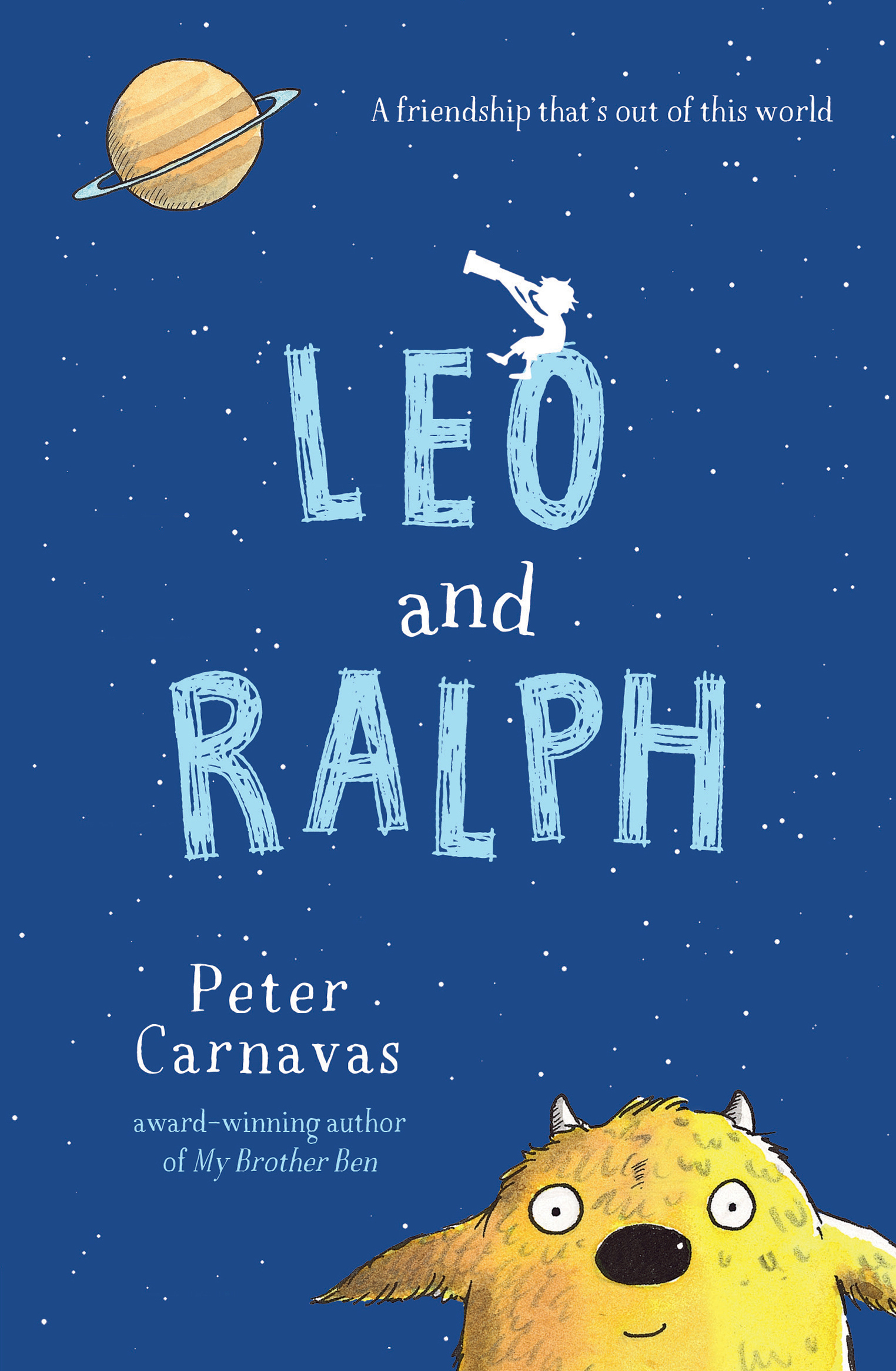
Peter Carnavas is the creator of over twenty books, many of which have been shortlisted or won awards. Peter’s books have been translated into many languages. He lives on the Sunshine Coast in Queensland. Today we’re chatting about Leo and Ralph, his latest novel.
The publisher provided Alphabet Soup with a reading copy of Leo and Ralph.
From the publisher:
Leo and Ralph have been best friends ever since Ralph flew down from one of Jupiter’s moons. But now Leo’s older, and Mum and Dad think it’s time to say goodbye to Ralph. When the family moves to a small country town, they hope Leo might finally make a real friend. But someone like Ralph is hard to leave behind …
Leo loves everything about space. What’s your favourite fact about space?
I discovered my favourite space facts from one of my favourite books: Stellarphant, by James Foley. At the back of his book, he shows all the different animals that have been into space — rabbits, tortoises, frogs and chicken eggs!
Can you share a memory of what you and your friends liked to do at lunchtime when you were Leo’s age?
It was either soccer or handball. I loved playing soccer, and lunchtime never seemed long enough — we always wanted to score just one more goal. In my mind, I was the greatest handball player in the school, but I don’t have any trophies to prove it. You’ll just have to take my word for it.
Leo’s descriptions of Dundle are so effective we can picture the country town in our mind’s eye. Is Dundle based on a real town?
As I wrote about Dundle, I pictured a lovely country town called Clermont, in the central highlands of Queensland. I lived there for five years when I started teaching and I have great memories of the town and the community. Leo isn’t too sure about Dundle when he first arrives but he grows to love it, just like I did with Clermont.
Can you tell us a bit about what you’re working on next?
I won’t say too much, as the idea has only started growing, but I’m planning a novel about animals, and the main character is a stubborn, curious and very brave goat.
Do you have a tip for young writers?
When you write stories, you’re in charge, so write the story you really want to write. There are some basic rules to remember — a main character that readers want to cheer for, and some big problems to create tension — but most of all, try to write the kinds of stories you love to read.
Leo and Ralph is out now! Ask for it at your favourite bookshop, library or order online!
Allison Tait (A.L. Tait) is the internationally published bestselling author of adventure series The Mapmaker Chronicles, the Ateban Cipher novels, and the Maven & Reeve Mysteries. Today we’re chatting to A.L. Tait about her latest novel The First Summer of Callie McGee, a cosy mystery novel.
From the publisher:
It’s the last summer before Callie starts high school and she’s been dragged along to yet another ‘family friends’ holiday. Determined to change her nerdy reputation, Callie sets out to make waves but nothing is quite as she expects. Her usual ally, Sasha, has outgrown Callie; her nemesis, Mitch, has brought his cousin Owen along; and the boring south coast town of Sawyer’s Point has been rocked by a series of burglaries. Callie, Owen and Mitch decide to investigate the robberies, bringing them face to face with a local gang … and a possible ghost. But then Sasha goes missing …
You’ve published multiple fantasy novels, what was different about writing contemporary realism?
When you’re writing a story set in a fantasy world, you have to work incredibly hard to bring that world to life on the page with every tiny detail. You’re thinking about everything from what people wear and what they eat to how they buy things at the shops and how they travel from A to B – and then you have to make sure the reader understands all of that without resorting to long descriptive passages (boring!).
In a contemporary world, your reader knows what a car is and what a double-storey brick house looks like, so that side of things is easier – but it’s still essential to build a world for the reader to immerse themselves in.
The biggest challenge for me in the switch was the ‘real’ factor. In a fantasy novel, my characters can drink ale and fling themselves into rivers and readers know it’s not real, without having to be told not to try it themselves. In a contemporary novel, I felt like I had to take a lot more care about my character’s action. When Callie throws herself into a rip to rescue her younger friend Cody, for instance, I’ve already made it clear that she’s a strong swimmer and she’s been a Nipper, so she knows what to do.
When your series The Mapmaker Chronicles began you talked about sketching a map of the books’ world. While you were writing The First Summer of Callie McGee, did you draw a map of Sawyer’s Point?
Sawyer’s Point is based on a real seaside village called Gerroa, about 20 minutes’ drive from my house. I’ve spent a lot of time there over the years (in a friend’s holiday house!) so I could see in my mind exactly where Callie and her friends were at any time. Having said that, I did move things around a bit – Sawyer’s Point has a surf club, but Gerroa does not.
Is Callie’s trying on of a new name based on your own childhood experiences – did you ever try out different nicknames for yourself when you were growing up?
I’ve always found names fascinating – what they say about us, how they fit us and, maybe, how we grow to fit them. And nicknames are even more interesting, because having one implies you have that easy sort of relationship with someone else. I didn’t try to change my name as a child (though I know people who did), and my nickname has always been Al.
Do you have a tip for kids who’d like to write a story based on a real place/setting?
Write what you know, but make it new. Choose a place that you know really well and then change one thing. That one thing might be bringing a new person (character) into that place (one of the best ways to describe a place is to show it through a new person’s eyes – even if it’s your class at school). It might be adding a mysterious statue that’s been there forever and then, one day, has vanished – or perhaps it’s never been there before and then, one day, appears out of nowhere. It might be putting a trapdoor in the floor that leads to a secret tunnel.
Can you tell us a bit about what you’re working on next?
I’m excited to be working on a new contemporary middle-grade novel, which will hopefully be out next year! It’s got all the things I love – a character with heart, adventure, and mystery. Watch this space!
Rebecca M. Newman, Alphabet Soup’s managing editor and the co-editor of Right Way Down and Other Poems, will be at the Perth Festival Writers Weekend on Saturday 24 February 2024. You can catch Rebecca at two sessions.
For adults:
Presenters on the ‘Telling Tales’ panel at the 2024 Perth Festival Writers Weekend.
'Telling Tales' (panel session, 45 mins). 10am, 24 February 2024 at the State Library of WA. Price: Pay what you can. Suggested price, $24. Book tickets here! Presented in association with Writing WA.
The creative minds of James Foley (Secret Agent Mole), Kylie Howarth (Crocs Stole My Socks) and Rebecca M Newman (Right Way Down) come together for an exhilarating conversation hosted by Writing WA Chair Lesley Reece AM. Join these writers and illustrators as they delve into the secrets of crafting engaging stories for young minds and celebrate the wonders of storytelling.
For children:
Join Tracey Dembo & Rebecca M Newman for a live reading session at the State Library of WA
'Story Time with Tracey Dembo & Rebecca M. Newman'. (50 mins) 11am, 24 February 2024, Education Centre, State Library of WA. Price: 'pay what you can' (even $0) but you will need to book to secure a spot. Book tickets here! Presented in association with Writing WA.
Tracey Dembo and Rebecca M. Newman combine their picture book and poetry forces to bring you an exciting one hour live reading session for kids! This session is going to have everything from time machines to rockets, cricket, shoelaces, the alphabet, and dragon eggs.
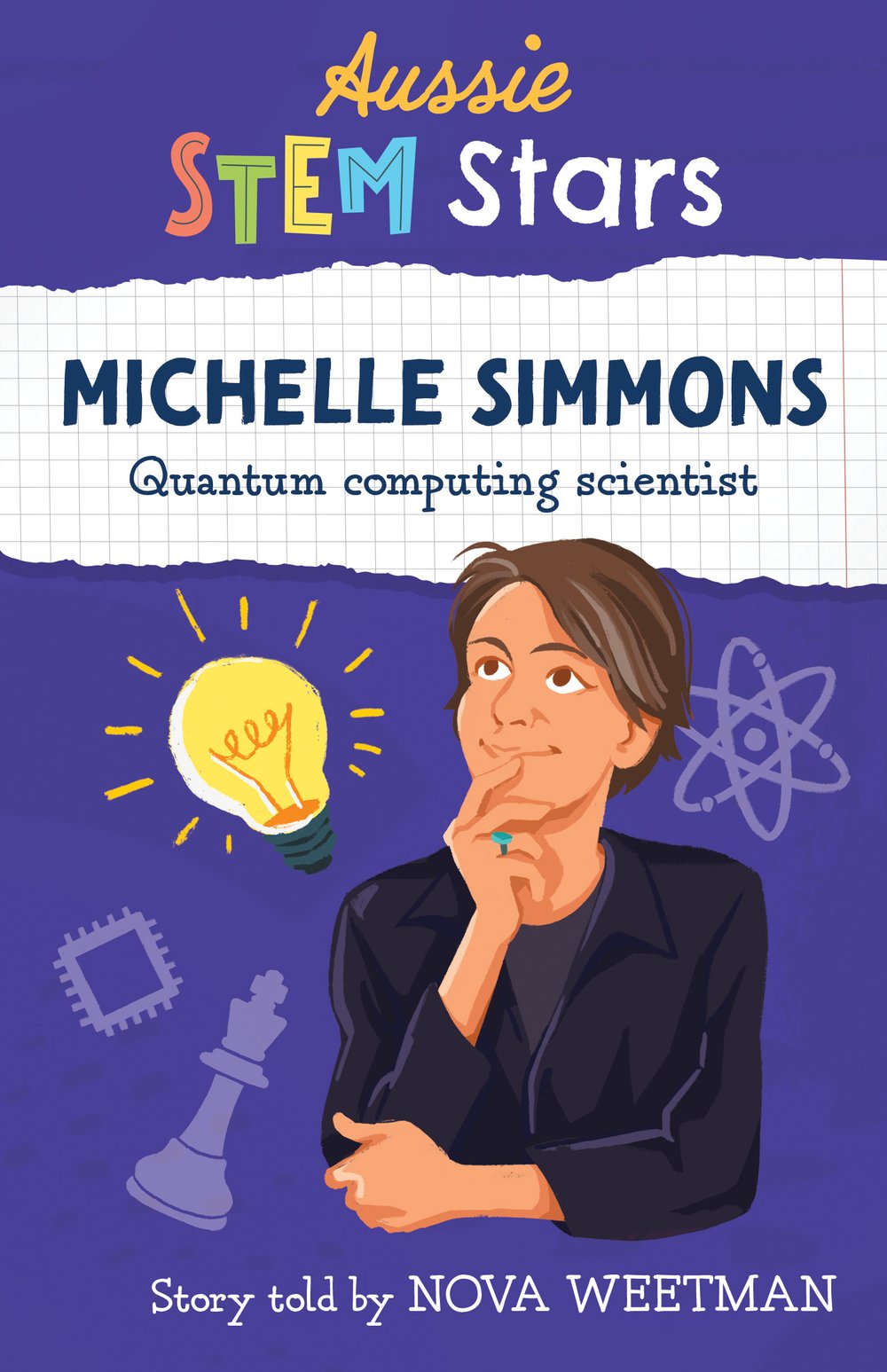
Michelle Simmons: Quantum computing scientist, told by Nova Weetman, Wild Dingo Press, ISBN 9781925893496
Gabrielle received a review copy of this book.
Michelle Simmons: Quantum Computing Scientist is penned by Nova Weetman, recording the life of the Australian of the Year for 2019. It unfolds the remarkable journey of a young girl who develops into the unconquerable English chess champion and discovers her passion for quantum computing, eventually leading to a groundbreaking achievement—the construction of the first silicon based quantum computer. Alongside her triumphs, the narrative delves into the challenges faced by her brother, Gary, who struggles with Behçet’s syndrome, a rare and deadly blood disease.
When Michelle developed the idea of using silicon to manufacture millions of micro transistors to the atomic level, skeptics among the English scientific community dismissed it. Despite the prevailing belief that increasing the production of silicon wouldn’t yield significant benefits, Michelle found support for her vision in Australia. A multi-million-dollar project was started, demanding years of careful planning to ensure each component met the stringent standards, given that even the slightest imperfection could lead to failure. Ultimately, the first silicon quantum computer emerged—a machine capable of completing calculations in hours that would take a computer years.
I would rate this book 4.5 out of 5 for its touching narrative and the valuable moral lesson it imparts—that with dedication and persistence, the seemingly impossible can be achieved.
I recommend this book for readers aged 10 and above, especially those with an interest in robotics and science.
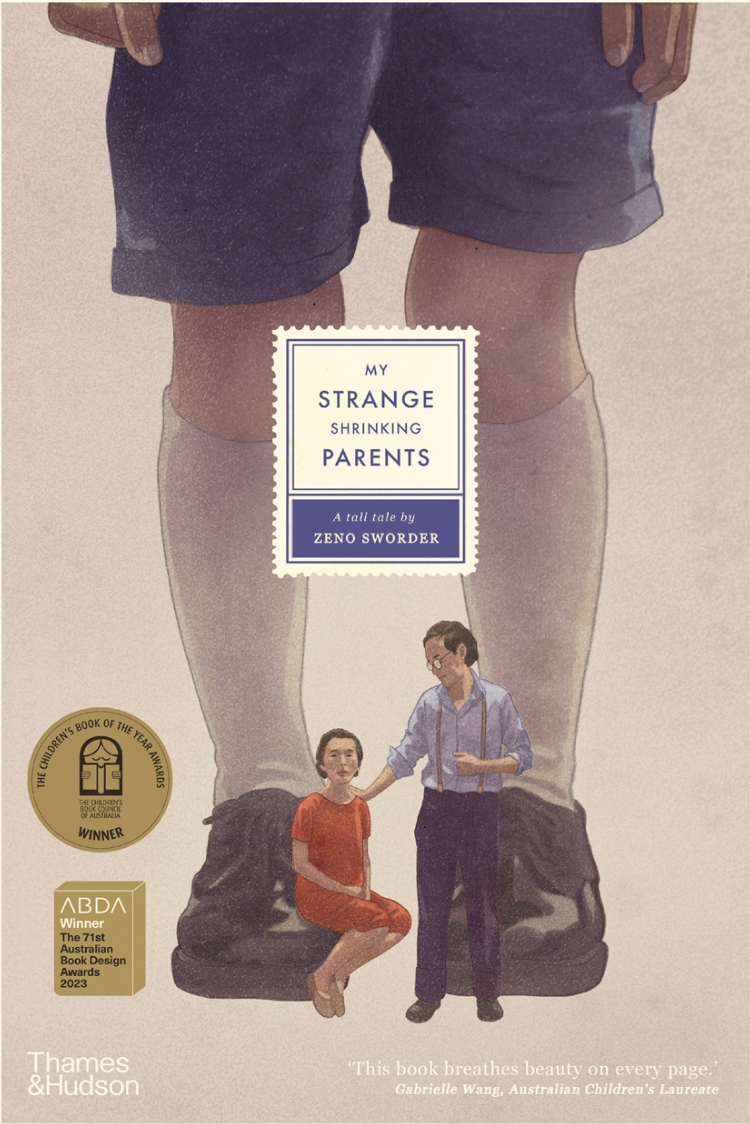
My Strange Shrinking Parents is a great book by Zeno Sworder. His book Is a fantastic read with an important moral at the end.
The moral of this book is the circle of love. This means that when you are younger your parents give to you by giving you good food, education, and their time. But when they grow older you give to them by giving them food, medical care, and time they need. My Strange Shrinking Parents do that. When they want their child to have something, but they don’t have enough money, they give height. An example is when the giving parents wanted their child to go to school but then they didn’t have enough money the principal said, ‘Three inches of height for each year of school’. Then there were uniforms, school books, and many more items, so again they gave away height. Once the young boy grew into a handsome man and had his children, he was responsible for looking after his parents. He used cedar branches to carve a wooden house with little furniture. His parents lived happily in there watching their son grow.
I think My Strange Shrinking Parents is a book for ages 6 to 10. It teaches you morals and important lessons. I rate it 5out of 5 stars! It engages you through the perspective of the parents and the boy. The book makes a spectacular read.
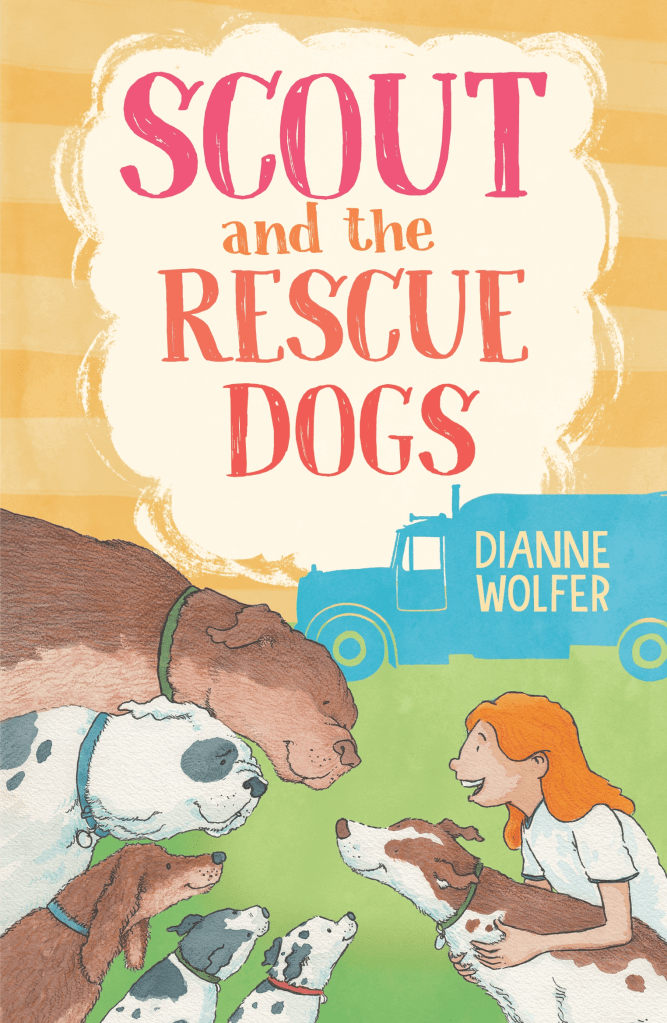
Scout and the Rescue Dogs by Dianne Wolfer, illustrated by Tony Flowers, Walker Books Australia, ISBN 9781760655860
Elizabeth received a review copy of this book.
Driving in Big Rig – Bill’s truck – Scout, who is in Year 7, and her dad deliver food to the dog shelters in Australia. Scout always wanted to own a dog herself after her mum passed away because dogs always reminded her of her mother. Her father allowed her to choose a dog, but Scout does not know which breed to choose because every dog is special in its own way. But bushfire season has sprung, and Scout discovers there are dogs in the dog shelter that no one wants. What will Scout do now with all the dogs and bushfire season?
What I found interesting was that Scout was being loving and kind to the people that were being disrespectful and rude to her. Two girls from school were laughing and mocking her but still she wrote a loving and generous letter and she forgave them.
I rate this book by Dianne Wolfer 10/10 because it is based on what happens in the bushfire season in Australia. This book has changed my perspective on what bushfires are really like such as how hard it is to live in the bush.
The publisher provided a review copy of this book.
Countdown to Yesterday by Shirley Marr introduces James, a 10–11-year-old boy whose world unravels when his parents suddenly divorce. The narrative unfolds with the aftermath of this disruption, as James grapples with the emotional fallout and the breakdown of the life he once knew.
Through Shirley’s skilful writing, the story delves into the mind of a young soul. “Countdown to Yesterday” becomes a heartfelt exploration of the fragility of happiness and the intricate interplay between past and present. Shirley’s narrative invites readers to empathise with James’ struggle while prompting reflection. He meets someone who has a time machine. But the past isn’t always what it seems. Layers and years of secrets buried in the past are uncovered.
With its relatability and emotional depth, Countdown to Yesterday is 5 out of 5 stars, leaving readers with a memorable and contemplative experience. I would recommend this book for children ages 9+ and who enjoy true stories with a touch of sci-fi.
Samara Rubin and the Utility Belt by Sharon Giltrow, illustrated by Thu Vu, Clear Fork Press, ISBN 9781950169887
Aashi received a review copy of this book.
Samara Rubin and The Utility Belt is a heartwarming story about a girl named Samara Rubin who is obsessed with geckos and faces bullying and teasing from her classmate, Toby King. Samara always wishes she could be granted one wish, standing up to Toby King.
On her eleventh birthday, Samara is gifted with a peculiar utility belt. It has strange tools called for example ‘The Restorer’ and ‘Cryptographic Sequencer’. But it comes with a catch, You have seven days to use all tools. You must meet this deadline. Otherwise …
I rate Samara Rubin and the Utility Belt 5 out of 5. It was a great book full of suspense and mystery, keeping you on the edge of your seat. It has a clear protagonist, kind and loving Samara, whose story is beautifully written. It also features an antagonist, Toby King, who adds depth to the story.
Overall, Samara Rubin and The Utility Belt is a charming and inspiring book that is perfect for young readers. It is a must-read for ages 8–11. I highly recommend it.