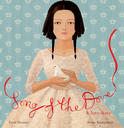
Song of the Dove by Errol Broome, illustrated by Sonia Kretschmar
This picture book for older children might remind you of Romeo and Juliet. This is the story of the rise to fame of Italian composer, Vincenzo Bellini.
Bellini falls in love with Maddalena Fumaroli, one of his singing students, but Maddalena’s parents refuse to allow her to marry a poor musician. Bellini and Maddalena agree that if Bellini writes ten great operas, her parents will see what a great musician he is and allow them to marry.
After writing his second opera, Bellini leaves for Naples and continues to write operas. His fame spreads and Maddalena’s parents do realise they have made a mistake. But is it too late for a happy ending?
The illustrations by Sonia Kretschmar are detailed and show how hard it is for Bellini and Maddalena to wait for so long. Through the artwork we also learn a little about the 19th century world—the art, music and fashion of the time. And we see how powerless you were if you were a young woman living then. Maddalena tells Bellini that doves live in pairs for life, and doves in the illustrations and endpapers reflect the couple’s story.
Song of the Dove includes a brief biography of Bellini, and a list of his ten operas.
Song of the Dove, by Errol Broome, ill. Sonia Kretschmar, Walker Books Australia, ISBN 9781921529245.
A review copy of Song of the Dove was sent to us by the publisher.
A good way to hone your writing skills is to enter a writing competition. You won’t always win, of course, but it’s a good way to get motivated, get ideas and get writing!
Keep an eye on the closing dates, and remember to read the guidelines. Judges hate it when they read a fabulous story or poem and they can’t award it a prize because it was longer than the word limit, or didn’t stick to a rule listed on the entry form.
I love pockets, and the bits and pieces carried around in them (except tissues, after the washing machine—I don’t love those). Carrying a poem around in your pocket is fun. You can read it to yourself if you need cheering up. You can read it to someone else if they need cheering up. You can give it to someone—as a Poem in Your Pocket Day present. And you can even use it for inspiration to write your own poem.
The first poem I ever remember learning (if you don’t count nursery rhymes) was The Swing by Robert Louis Stevenson. My mum used to recite it whenever we went to the park and we begged her to push us on the swings.
The first poem I remember learning at school was Forgiven by AA Milne. And that’s the poem I have in my pocket today.
Forgiven
by AA Milne
I found a little beetle; so that Beetle was his name,
And I called him Alexander and he answered just the same.
I put him in a match-box, and I kept him all the day …
And Nanny let my beetle out—
Yes, Nanny let my beetle out—
She went and let my beetle out—
And Beetle ran away.
She said she didn’t mean it, and I never said she did,
She said she wanted matches and she just took off the lid,
She said that she was sorry, but it’s difficult to catch
An excited sort of beetle you’ve mistaken for a match.
She said that she was sorry, and I really mustn’t mind,
As there’s lots and lots of beetles which she’s certain we could find,
If we looked about the garden for the holes where beetles hid—
And we’d get another match-box and write BEETLE on the lid.
We went to all the places which a beetle might be near,
And we made the sort of noises which a beetle likes to hear,
And I saw a kind of something, and I gave a sort of shout:
“A beetle-house and Alexander Beetle coming out!”
It was Alexander Beetle I’m as certain as can be,
And he had a sort of look as if he thought it must be Me,
And he had a sort of look as if he thought he ought to say:
“I’m very very sorry that I tried to run away.”
And Nanny’s very sorry too for you-know-what-she-did,
And she’s writing ALEXANDER very blackly on the lid,
So Nan and Me are friends, because it’s difficult to catch
An excited Alexander you’ve mistaken for a match.
—
Do you know a poem you’d like to put in your pocket? If you had a poem in your pocket, would you keep it a secret? Or would you read it to someone?
Sometimes writers need inspiration. Are you having trouble coming up with ideas for your next story?
Yesterday I found the writing tips page on Elaine Forrestal’s website. It has a section dedicated to writing tips—like how to get ideas, finding the right voice for your characters, and using metaphors and similes. (And some other tips too!)
Elaine Forrestal is the author of many books and her latest is the picture book Miss Llewellyn-Jones Goes to Town (illustrated by Moira Court).
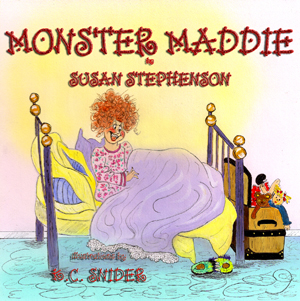
On Maddie’s first day at a new school, nobody notices her, even though she hangs around the edges of the other kids’ games and hopes to join in. On the second day, she becomes Monster Maddie, with ‘fangs and claws and wild, wild hair … “I’ll show them!” she said’. Of course her mean and hurtful behaviour doesn’t win her any friends and she realises nobody is going to invite her to play. She stomps away in tears—then, with the help of a curious kitten,she finally comes up with a better way to join in on the playground.
What sparked the idea for you to write Monster Maddie?
As a school teacher, I saw lots of kids like Maddie. They didn’t understand how to make friends, and acted out. They did mean hurtful things in a desperate effort to be noticed and they certainly didn’t realise their behaviour was driving other kids further away. Sometimes those kids grow up to be bullies; sometimes they’re lucky—they realise what’s happening, and make an effort to be friendly. I wanted to write a book for those kids.
When I was at University, studying German, we read a book called Metamorphosis by a writer called Kafka. In the beginning of that story, the main character wakes up as a giant bug. I guess the idea of Maddie actually looking monsterish came from the profound effect that book had on me. I’ve also written a short story where a guy wakes up as a rooster. So far, I have only woken up as a human, but that doesn’t stop me checking the mirror each morning!
Did you ever feel like Maddie when you were growing up?
I certainly felt awkward in new situations, but I don’t remember putting ooze in people’s shoes and dirt in their shirts! I was lucky in that when I switched schools I had lots of my friends with me. Being a new kid is difficult. Often it seems that people are ignoring you, when they just need you to find a way to include them in a game.
How long did it take to write Monster Maddie?
Months and months. The hardest part for me is always the rewriting of a book. I get feedback on it from my writing friends, think about it, put it away for a while and make changes to it when I can see it with fresh eyes.
You say you have to rewrite after you write the story down. Is Monster Maddie very different from the first version you wrote?
It was always a story about a little girl who got mad when the kids at her new school wouldn’t notice her, and turned into a monster. I think what changed was that it got fine-tuned. I deleted unnecessary words, made the structure of the story stronger, and worked hard to make sure the story sounded good to read aloud.
Have you met Monster Maddie‘s illustrator?
No, K.C.Snider lives in the USA and I live in Australia. But I talked to her via email.
Are you working on a new project at the moment?
At the moment, I’m working on two novels and a picture book. The picture book is about some sheep who want very much to go to the farmer’s wedding, only they aren’t invited. They try hard to get in, and end up succeeding in a most surprising way.
Monster Maddie includes 7 pages of activities, including a script for Monster Maddie to be performed. Do you think picture books make good theatre?
I think picture books are wonderful! They are perfect for kids to use to create their own reader’s theatre around, or just to act out the story for family and friends. I have a series of four articles at The Book Chook blog where I talk you through the process of using Reader’s Theatre.
You can find out more about Susan Stephenson and her books on her website. The Book Chook has writing tips for kids in every issue of Alphabet Soup magazine. You can find more about literacy for parents and teachers on The Book Chook’s blog).
Monster Maddie, by Susan Stephenson. Illustrated by KC Snider. (Guardian Angel Publishing, Inc.)
This picture book’s main character—Maddie—hates feeling invisible and ignored on her first day of school. After that terrible first day she decides she’ll make the other kids notice her. And she becomes MONSTER MADDIE, with ‘fangs and claws and wild, wild hair.’ Her mean tricks and bullying behaviour don’t win her any new friends, of course. Even she knows she’s become a monster and she doesn’t like it.
Sometimes it’s hard to know how to make new friends (especially if you’re a bit shy). Monster Maddie shows the approach that some kids might take when they feel lonely and frustrated about joining in. And Maddie is mean. ‘She put ants in their pants, dirt in their shirts, and ooze in their shoes.‘
When you’re reading the book, you can tell that she’s not going be asked to join in when she’s so mean. I’ve seen kids behaving like Maddie on the playground—back when I was growing up, but also when I’ve been around playgrounds as an adult. Luckily, by the end of the book Maddie comes up with a way to approach the other kids and join in with them. But it’s not much fun for the other kids OR for Maddie until she does!
This picture book includes 7 pages of activities, including a script of Monster Maddie as a play. This is a great idea for a book about bullying—sometimes acting out a story can help you to see things from a character’s point of view. The activities also include ideas for writing, thinking and creating. There are also some questions to get you thinking about bullying behaviour and what you might do if you feel like Maddie (or if you are one of the other kids in the story).
Susan Stephenson writes The Book Chook’s column (with writing tips for kids) in every issue of Alphabet Soup magazine.
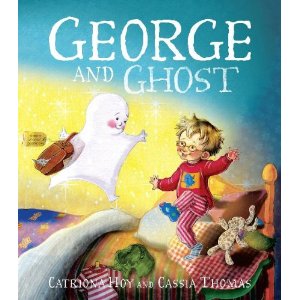
Today we are chatting with Catriona Hoy as part of her blog tour to celebrate her new book George and Ghost. Here’s a bit about the book:
George and Ghost are friends, but George isn’t sure he believes in Ghost anymore. How can Ghost prove to George that he is real?George and Ghost is a tale of friendship, with a little bit of science and philosophy thrown in.
The author writes the story and the illustrator works on the illustrations. Does a picture book need an editor?
Thanks for being part of my blog tour Rebecca. Glad you asked that first question.
People often think that picture books are simple to write and therefore edit, however, picture books are actually quite complex beasts. Picture books start as a series of words and or images in the author’s head. These words are then interpreted by the illustrator and the editor has the job of making sure that the illustrations match the text in tone and make sense. In many ways the illustrator will add extra layers of meaning and even their own ‘in jokes.’ The editor is much more than just someone who looks at the text; they have to see the whole picture.
Picture book editors begin by looking at the text which they may, or may not ask you to rewrite. They will look at it with fresh eyes to make sure the story flows, the language is clear and engaging. They may see the work in a completely different way to the writer.
I’ve worked with some great editors and have learnt something from the editing process with each book. Different editors have different ways of working but the process should be an ongoing dialogue. When I first began writing, I didn’t think about what should go on each page; whereas now I’ve learnt that with illustrations your eye should flow naturally from one page to the next … and the placing of the text is a big part in the unfolding of the story.
So the simple answer is yes, most definitely!
What sorts of things did the editor do/ask/say about George and Ghost?
I was very lucky with George and Ghost, as I had moved to the UK at that time and did not have a publisher over there. I sent a query email, as I was already published in Australia and was asked to submit. Within a couple of days I had a very positive response from the editor, which is almost unheard of in writing circles. So I felt good things would come. I ended up working with Emma Layfield at Hodder, who did a fantastic job.
George and Ghost is about half the size that it was when I wrote it and that comes down to the editor and I seeing the story in different ways. When I wrote George and Ghost, I was living in the UK and my children were going to school there. I was also teaching science in the local high school. My science teaching background influenced me to an extent, so to me the story was about the scientific method, matter vs energy, how to measure appropriately … all sorts of things. It was actually quite a complex book to write, to get such big ideas in a simple form. However, my editor saw it as a book about childhood friendship. Actually, it’s both. In this case, Emma operated on my original manuscript and removed what I considered at the time to be quite vital components. She also suggested rephrasing the text … as a scientist I had posed each challenge as a question, with the repeating phrase ‘prove it.’ That phrase was ditched and we ended up agreeing on a format.
(And it’s not just the editor who is involved, increasingly the marketing team is also involved at an early stage.)
Catriona Hoy, author of George and Ghost
Did you always agree with what your editor said?
I didn’t agree at first with the changes, especially as I felt such a large part had been cut out. It’s sometimes difficult to step back from something you have been so close to for a while. I emailed copies of the new text to friends to ask if it made sense and they said that it did. In the end, I came to the conclusion that the story was stronger for having some of that material removed and crossed my fingers and toes. I planned to have supporting curriculum material on my website.
Do you have to make changes to the story if the editor asks you to?
The bottom line … yes. It’s a commercial product after all. In the end if you can’t come to a compromise, you have the choice of walking away, which would be a really drastic step for an editor or an author to take. If you feel really strongly however, and can logically argue the point, most editors will listen. With George and Ghost, I insisted very strongly on one particular point. I’d conceded most of the changes—however, one change I felt was scientifically incorrect and I couldn’t see how it could be acceptable. Eventually we worked out a wording where we were all happy.
Basically, Ghost was trying to show that some things such as sunshine and music were real but didn’t weigh anything (because they are forms of energy). Ghost says ‘sunshine is real so it should take up space’ but in the next scene they try to weigh a ‘thought’. I didn’t want Ghost to say that thoughts were real, which would follow the pattern in the text. In the end we agreed on ‘And thoughts should weigh something,’ said Ghost. For me, that just felt a little better.
How did you work with your editor?
I usually work via email, that way, we’ve both got a record of what’s been said. That means that I can also work wherever I am. These days, illustrators can send big files, which is much easier than for my first book, where I had to go and physically view them. I can also think carefully about what I want to say. It’s always nice to meet the editor of course. I did meet the editor for George and Ghost after it was all done, at a publisher’s Christmas party in London, however I have other editors whom I have never met.
How would George and Ghost be different if it hadn’t had an editor?
Probably longer, and not quite so lovable! Emma also had the important job of finding the right illustrator and she made the perfect choice with Cassia Thomas. Her illustrations bring to life the emotions in the book, because in the end, it really is a simple story about friendship.
Thanks for having me visit today and I’ve really enjoyed answering your questions. Catriona Hoy
Check out the other stops on the George and Ghost blog tour: Mon 7 March Claire Saxby Art vs Science Tue 8 MarchAlphabet Soup Magazine Does a picture book need editing? Wed 9 MarchTrevor Cairney Writing journey Thur 10 MarchRobyn Opie Writing George and Ghost Fri 11 MarchDee White Ghosts? Do you believe? Sat 12 MarchChris Bell Writing picture books. Sun 13 March Day off! Mon 14 MarchLorraine Marwood In conclusion …
3. HANDS-ON CHEMISTRY: Visit the CSIRO website to see how you can make your own bath bombs. (Give as gifts, or drop one in your own bath and watch it FIZZ!)
4. TRY a YUMMY EXPERIMENT: experiment with reactions—visit the Science Wizard’s websiteto find out how to make your own sherbet. Yum! (You’ll find citric acid in the grocery store, near tartaric acid.)
5. READ some chemistry-themed books! We like George’s Marvellous Medicine by Roald Dahl. Can you think of any others? Click here to tell us your favourites, and we’ll add them to the list!
MUSIC LISTENING LIST
Our listening list is compiled by Danielle Joynt, from Cantaris. Danielle has also included comments for some of these pieces. (Tip: Ask about CDs at your public library—libraries often have a good collection of CDs for loan if you prefer not to buy.)
1. MUSIC FOR THE ROYAL FIREWORKS—GEORGE FREDERIC HANDEL
This is a suite—originally for wind-band and later re-scored for orchestra—composed by George Frederic Handel in 1749. The music was commissioned by King George ll of Great Britain to celebrate the end of the War Of Austrian Succession and the signing of the treaty of Aix-la-Chapelle in 1748.
The music was first publicly performed in rehearsal on 21st April 1749 in Vauxhall Gardens, London. Over twelve thousand people attended the rehearsal, causing a three hour traffic jam of carriages, after the central arch on the newly built London Bridge collapsed.
During the actual concert on the 27th April, the musicians were housed in a purpose-built theatre which caught fire after the collapse of a bas-relief scultpure of King George during the fireworks!
2. VOLCANIC ERUPTIONS SCORED INTO MELODIES
In 2003, researchers in Italy began transforming the low-frequency seismic rumblings of volcanoes into musical scores in an effort to predict when the volcanoes would erupt. Researchers created a concerto from the underground movements of Mount Etna in Sicily and created melodies from Tungurahua in Ecuador. By correlating music with precise volcanic activity, researchers hope to learn the signature tune of an imminent eruption.
3. CARL PHILIPP EMMANUEL BACH (1714-88) compared the music of his father’s generation with “overly-spiced cooking”.
Erik Satie likened the chromaticism of Wagner’s music to sauerkraut!
Sergei Prokofiev compared the cloyingly sweet berries he sampled on a visit to the country with Chopin’s “effete” nocturnes.
4. POPULAR MUSIC
Love Potion Number 9 is a classic popular song written in 1959 by Jerry Leiber and Mike Stoller. It was originally performed by The Clovers that year. The well-known version was recorded by The Searchers in 1963.
5. THE ENGLISH COMPOSER EDWARD ELGAR is said to have believed that the tune of the first of his “Pomp and Circumstance” marches would “knock ‘em flat”. As an amateur chemist, he proved that literally …
His friend, the conductor and composer William Henry Reed, tells how Elgar delighted in making a ‘phosphoric concoction’ which would explode spontaneously when dry—possibly Armstrong’s mixture, red phosphorus and potassium chlorate, used in toy cap guns. One day, Reed says, Elgar made a batch of the stuff but then musical inspiration struck. He put the mixture into a metal basin and dumped it in the water butt before returning to the house.
‘Just as he was getting on famously,’ wrote Reed, ‘writing in horn and trumpet parts, and mapping out wood-wind, a sudden and unexpected crash, as of all the percussion in all the orchestras on earth, shook the room … The water-butt had blown up: the hoops were rent: the staves flew in all directions; and the liberated water went down the drive in a solid wall. Silence reigned for a few seconds. Then all the dogs in Herefordshire gave tongue.’
The Lost Thing wins a 2011 Oscar for Best Short Animated Film
A few posts back, we mentioned that The Lost Thing—an animated film based on Shaun Tan’s book—was nominated for an Oscar. The very exciting news today is that it won the Oscar for Best Short Animated Film!
Hooray! Hooray!
If you haven’t already checked out the trailer, you can find it over on The Lost Thing‘s own website. (Due to the win, there are a lot of visitors there today, so make sure you check again later if you’re finding it slow to load!)
 This picture book for older children might remind you of Romeo and Juliet. This is the story of the rise to fame of Italian composer, Vincenzo Bellini.





 alphabetsoup.net.au