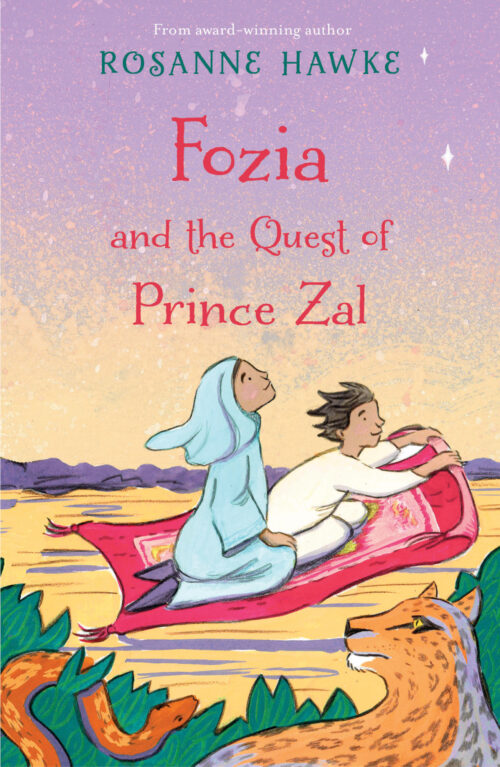
Fozia and the Quest of Prince Zal is an adventure and fantasy novel. This book is about Pakistan after the floods and about a girl called Fozia trying to find her family. Fozia lives with a boy called Jehan and his family after he saved her from the flood. Jehan’s family grow to love Fozia but they remind Fozia too much of her old family. So to help herself keep the memories of her family alive Fozia tells them a story. She tells a story about a prince with leprosy who is searching for his little sister in the jungle on a flying carpet. Prince Zal faces the beasts of the jungle and the pariyan to find his sister. Will he reach her before it’s too late? Everybody loves Fozia’s story but is it really fiction? Can Fozia learn to love her new family?
I liked this book as it was very original and creative talking about memory and hope as well as the love of friends but most importantly, family. The characters are very realistic, making you believe that this story actually could’ve happened, whilst still adding a bit of that fairytale magic.
This book showed me what the aftermath of a natural disaster would be like. This is the third book in the series so please read the other books first: Jehan and the Quest of the Lost Dog and Kelsey and the Quest of the Porcelain Doll.
If you like fairytales, history and real life references then I recommend this book for you. This book is probably best suited to 9 to 11-year-olds.
Evieis a member of Iona Presentation College’s student reviewers’ team. This is her first review for Alphabet Soup. To send us YOUR story, poem, artwork or book review,check out our submission guidelines. Happy reading!
REVIEWED BY EMILY, 9, WA (IONA PRESENTATION COLLEGE)
Wednesday Weeks and the Tower of Shadows by Denis Knight and Cristy Burne, Hachette Australia, ISBN 9780734420190
Alphabet Soup provided a review copy of this book.
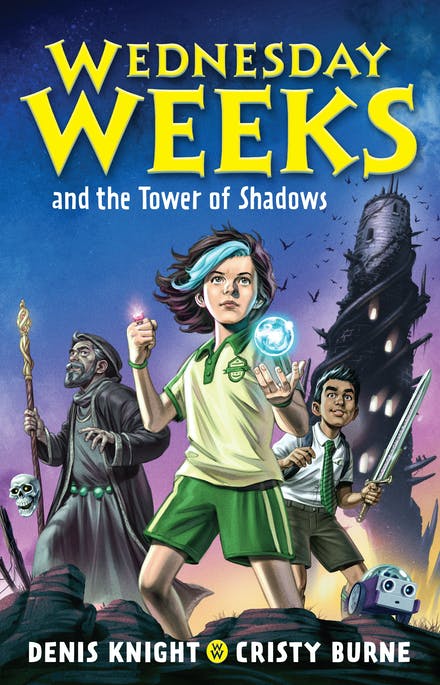
I found Wednesday Weeks and the Tower of Shadows to be a fascinating fantasy fiction adventure, but it is missing the absence of surprise when Wednesday made the portal back home. When Wednesday and Alfie fight off the laundry monster I imagined it wearing Alfie’s hat and I almost laughed so hard!
I enjoyed this story because of its detail and how each character showed perseverance and resilience to help family and friends. When I read Wednesday Weeks I had to notice its similarity to Scarlet and Ivy because both books try to help family and are about magic! I liked the skull, Bruce, because he was funny and helped Wednesday and Alfie.
Emily is a member of Iona Presentation College’s student reviewers’ team. This is her first review for Alphabet Soup. To send us YOUR story, poem, artwork or book review,check out our submission guidelines. Happy reading!
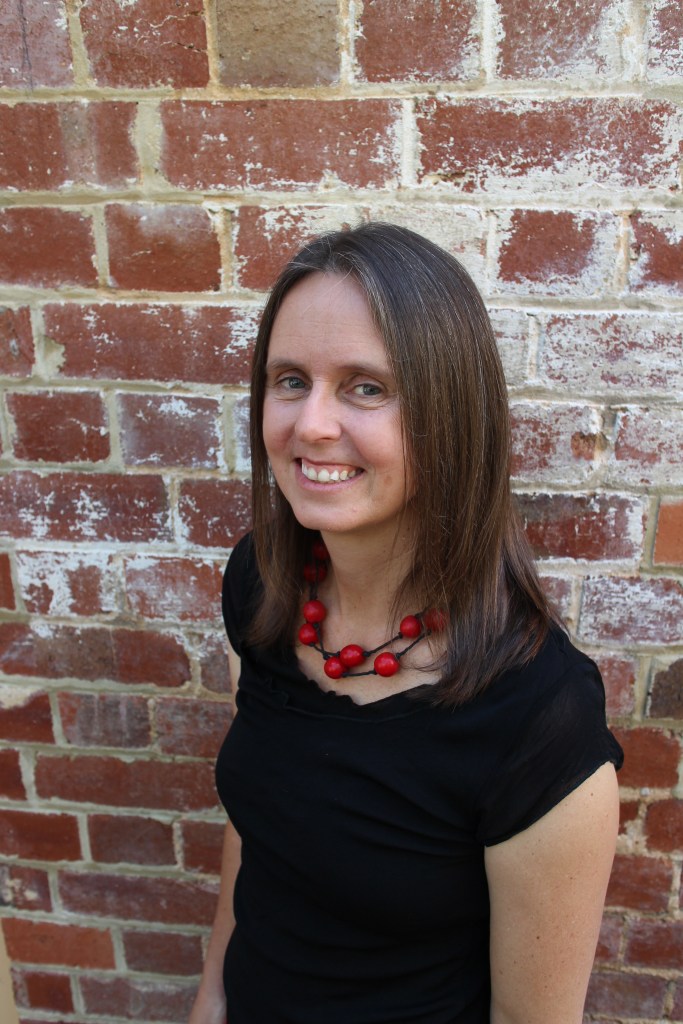
Meg McKinlay is an award-winning children’s writer and poet based near Fremantle, Western Australia. She has published eighteen books for young people from picture books through to young adult fiction. Today we’re thrilled to chat to Meg about her latest book Bella and the Voyaging House, a sequel to Bella and the Wandering House, both illustrated by Nicholas Schafer.
From the publisher:
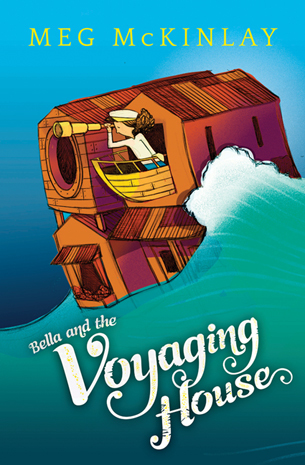
Bella’s house likes to travel, setting sail across the ocean while everyone sleeps. Bella’s parents don’t mind as long as the house is home by daylight. One night, Bella has a wonderful idea for her grandfather’s birthday. She wants to find a figurine he made of her grandmother, lost overboard in an accident. Bella and the house go in search, but things don’t quite go according to plan . . .
Bella’s house is drawn to the sea. Is sailing something you like/have liked to do? Did you go sailing for the writing of Bella and the Voyaging House?
I have no interest in sailing myself but I do love watching sailboats, which is what I was doing when I got the idea for Bella and the Voyaging House. I didn’t need to go sailing as research for the book because the descriptions of the house sailing aren’t technical at all. I just needed to know enough to get the feeling right, and I’ve been on boats enough to have that covered.
I do have a deep love of the ocean though – I love swimming and wave-staring and just generally floating about. Actually, it was after finishing this second Bella book that I realised that in many ways, the house is me. As a child growing up in a carless family in Central Victoria, the ocean was a kind of mythical place to me. On rare visits, my father, who grew up on the coast in WA, taught us to bodysurf, and my older brother and I made a quiet pact – that whenever we were near the ocean, we would hurl ourselves into it, regardless of the weather, conditions, or whether or not we had bathers. These days, I live a 10-minute bike ride from the beach and have vowed never to move away from it. I may not be made from the wood of an old boat, but I think I’m made from my father’s love of the ocean, and long to be near it, just as the house does.
If your own house could wander/sail off to somewhere, where would you hope it would take you?
Hmmm. I think I’d quite like a trip to Antarctica. I love the idea of the white and the silence and the solitude. I generally find that the further I am away from the noise and clutter of life, the happier I am. I’d also love to see a penguin sliding on its belly!
This book is the sequel to Bella and the Wandering House. Did you find it a quicker (or slower) project to write a sequel?
Well, the first book took about 12 years from first draft to final manuscript* so I can confidently say the sequel was quicker. It still took about 18 months though; no matter what I do, I just can’t seem to write quickly. In writing the sequel, it did help that I already knew the characters and the world of the story so I didn’t have to build everything from scratch. On the other hand, my love for the characters may have slowed me down a bit; I really wanted to make sure I wrote a story that would do them justice and give them room to shine.
(*This includes 10 years when the manuscript sat in a drawer, abandoned. I’d written it as a picture book but it wasn’t working and I didn’t know how to fix it, so I eventually gave up. Ten years later, I realised it needed to be a chapter book and rewrote the whole thing; it was published about two years later.)
Will there be any more books in this series?
I have no plans to write any more. Then again, when I wrote Bella and the Wandering House, I wrote it as a standalone book, with no intention of ever writing a sequel. Then again again, I love the way Bella and the Voyaging House ended – that final image feels very satisfying to me – and I think I’d be very happy leaving Grandad, Bella, and the house right there.
Can you tell us a bit about your next writing project?
I’m working on an odd sort of picture book at the moment. I say ‘odd’ because it’s not really a story but more like a series of instructions or guidelines. It’s hard to explain but I think it’s going to be great. It’s called Always Never Always, at least for now, and will be illustrated by Leila Rudge, who I’m very excited to be working with again.
I’m also in the home-ish stretch of the sequel to A Single Stone, and once that’s finished, I’m pretty keen to jump into some shorter novels that have been percolating for a while. They’re both fun and whimsical and I think I’m going to really enjoy writing them.
Bella and the Voyaging House is out now! Ask for it at your favourite bookshop or local library.
“Hello? Hello? Hello? Hello? Hello? ARE – YOU – LISTENING?”
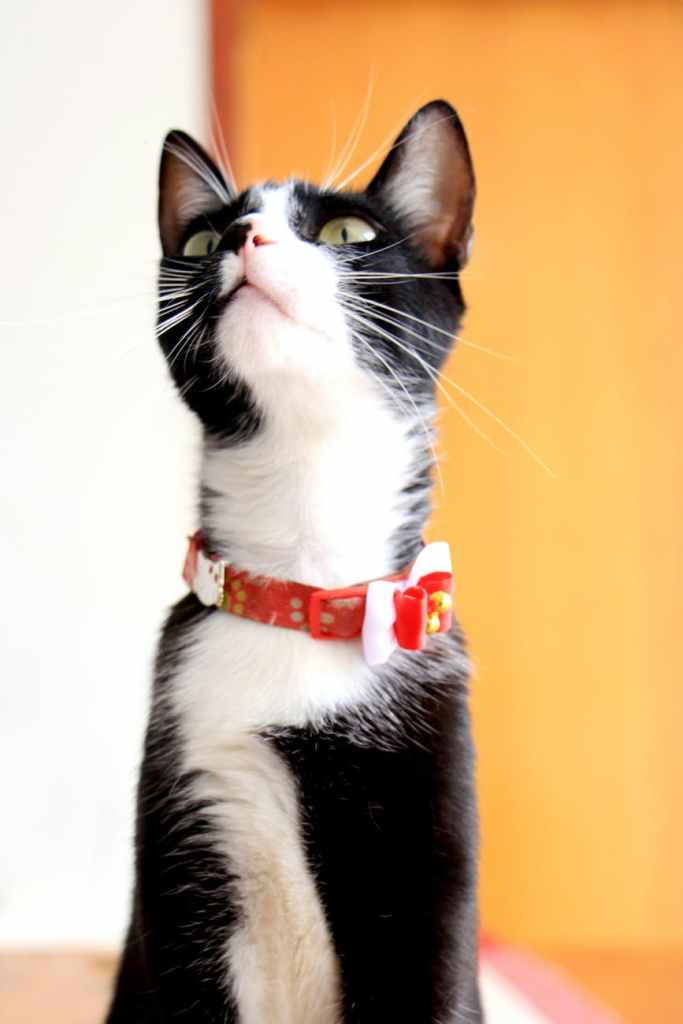
Humans are so annoying. I just want breakfast! The humans don’t listen and it’s so annoying. They walk around the house getting themselves food and then they brush their teeth, then their hair, then they pack, and then at the last possible moment, they give you food! Maybe I’m just overreacting a tad bit. I mean it is possible that I’m the first thing they feed in the morning but get this, they wake up at 7:30 am!
It never matters how hard I yowl or scream or cry because when they sleep they never wake up unless they want to. When their eyes finally open, I take advantage. I’m actually in the middle of that right now. The owner just woke up and I’m begging her to give me my tuna, my water, and my dry food.
“Please! I’ll do anything!”
She doesn’t listen. In fact, she walks like a sloth to the kitchen. In fact, sometimes I wonder if she’ll ever get there. She finally does. Then, I wait. She takes care of my water first. Why? I need food, not water!
“Food first!”
She continues to wash out my water bowl. Sometimes, it’s pointless to argue. Finally, she’s done. Placing my water dish on the counter, I continue to follow her to the vault. A rusty midnight-colored cabinet with smoke-colored metal openings. You have to curve your fingers around the bars in order to open the cabinet. I call it the vault because there’s no way my delicate paws can open it.
She doesn’t even bother to examine what tuna can I have. She just takes the one in front of her. The green can. I alternate between purple and green. One is tuna and chicken and the other one is tuna and turkey. I always get them confused on which way is which so I call them green and purple. When she took the green can, smoke came out of my ears.
Green? Green! I had green yesterday! Give me purple! Outrageous, inconsiderate, foolish child! How dare you give me green two days in a row! I have a very delicate stomach and if you mess with my palette, you’re cleaning up the mess!
She gives me green. Some things you can’t fight. As she pours the tuna and some of its liquid into the bowl, I try to push her arms away. She fights back refusing to give me my first lick.
“Why? Why? Give me my food!”
Then, I learn the horrid secret she’s been keeping from me. The secret that makes my eyes water. She puts in antibiotic powder!
“Nooooooooooooooooooo!”
Then she lets me have it but I don’t want it. Not after she kept that awful secret from me.
In protest I march to the dining room table and lay down, making sure my white and black fur gets everywhere. Stretching out again, nobody notices the mess I’m making. She just continues to refill my dry food then moves on to the mutt’s food. The mutt they call a dog. The inferior puppy that’s been ruining my life for a year and a half now.
I continue to stretch out on the dining room table, knowing that my actions would soon bring attention to me. When the girl came for breakfast, she stared me down.
“Cookie, will you please move?”
“No!” I replied in a sarcastic tone to make sure my anger was expressed. I don’t think the message got across. I guess some battles you just can’t win.
Samantha Wheeler fell in love with animals when, at the age of six, she received a tortoise. She went on to study agriculture, work with dairy farmers and teach science, until writing her first children’s book, inspired by koalas, in 2011. We’re thrilled to be able to chat to Samantha about her latest book, Devils in Danger.
From the publisher:
Killarney discovers a wild Tasmanian devil, denning under the house! Killarney is excited, but many of the locals are terrified. When rumours about dangerous devils begin spreading, Killarney is determined to protect her precious visitor. But can she convince an entire town these wild creatures are worth saving?
Have you ever seen or heard a Tasmanian devil in the wild yourself?
You bet! I first had the idea for writing this story when I saw Tassie devil footprints and scats on a path I was walking on in the Tasmanian wilderness. I was so excited, but sadly didn’t get to see that particular devil. Once I’d started planning the book though, I went back to Tassie and watched wild devils eating a carcass in the dark. It wasn’t as disgusting as it sounds, it was amazing! Killarney gets to do this in Devils in Danger and I know just how excited she would have felt! They are beautiful creatures, especially their red ears.
How did you know when you’d done enough research to start writing Devils in Danger?
I usually go and find out what the issues are for the particular animal first (Tassie devils in this case) and what my main character needs to do to help them. This gives me a rough idea of what the story might be. Then I begin to write but always find I need more details, like how big are the animals when they’re 3 months old, 6 months old, adults, what do they eat, what do they smell like, how many teeth do they have etc. So these details I usually have to google or go and see the animals, or ask an expert once I’m already writing the story. There’s always a lot of research to do, so luckily I love it.
Do you have a favourite Tasmanian devil fact?
Absolutely. I think the fact that they are creating their own immunity to facial tumours is simply incredible. They are saving themselves. So clever. But a funny fact is the pongy smell they emit when they’re frightened, kind of like a skunk. Who would have thought? They look too cute to be stinky.
How much do you find you need to change in a book, from first draft to final draft?
Oh my goodness. Nearly everything! My first few drafts are usually very bad and I have to change them a lot to make the story any good. One thing that happens with me is that I have too many ideas and can lose the central theme of the story by going off and getting distracted by little subplots. It’s often hard to know what I’m really trying to say. It can be a little frustrating but it’s worth it in the end.
Can you tell us about your next writing project?
I’m playing with a few ideas. I’d love to write another one like this about sharks (I feel really sorry for them, they need our help) and I’m also writing a junior fiction series about a family who inherit a farm but are useless at farming. It’s so cute. Then there’s a story I’m working on about a boy who gets left behind on a tropical island. So many ideas!
Devils in Danger is out now! Ask for it at your favourite book shop or local library.
REVIEWED BY INDI, 9, WA (IONA PRESENTATION COLLEGE)
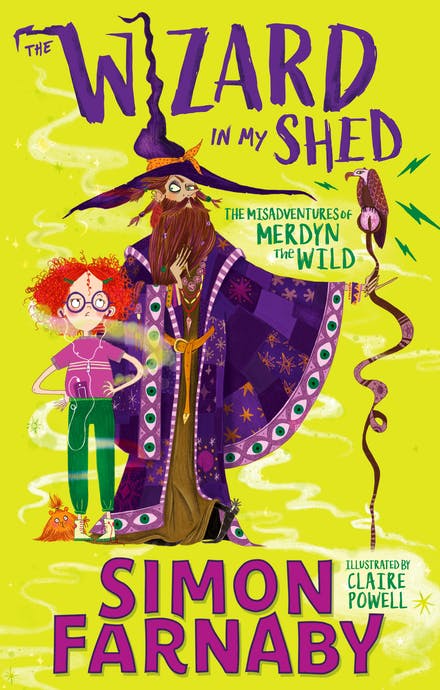
The Wizard in My Shed: The Misadventures of Merdyn the Wild by Simon Farnaby, illustrated by Claire Powell, Hachette Australia, ISBN 9781444954388
Alphabet Soup provided a review copy of this book.
The Wizard in my Shed is entertaining and takes you on a whimsical journey through the Dark Ages to the 21st century, meeting unique characters with different personalities. All the illustrations enhance and bring to life the story in a funny way.
In the book, Rose meets new friends and gets to know her family better, and though I love all the characters, my favourite is Bubbles (Rose’s guinea pig), and all the unexpected surprises!
I think this book is perfect for 8–10 year olds who want a hilarious and meaningful novel with a moral to read.
Indi is a member of Iona Presentation College’s student reviewers’ team. This is her first review for Alphabet Soup. To send us YOUR story, poem, artwork or book review, check out our submission guidelines. Happy reading!
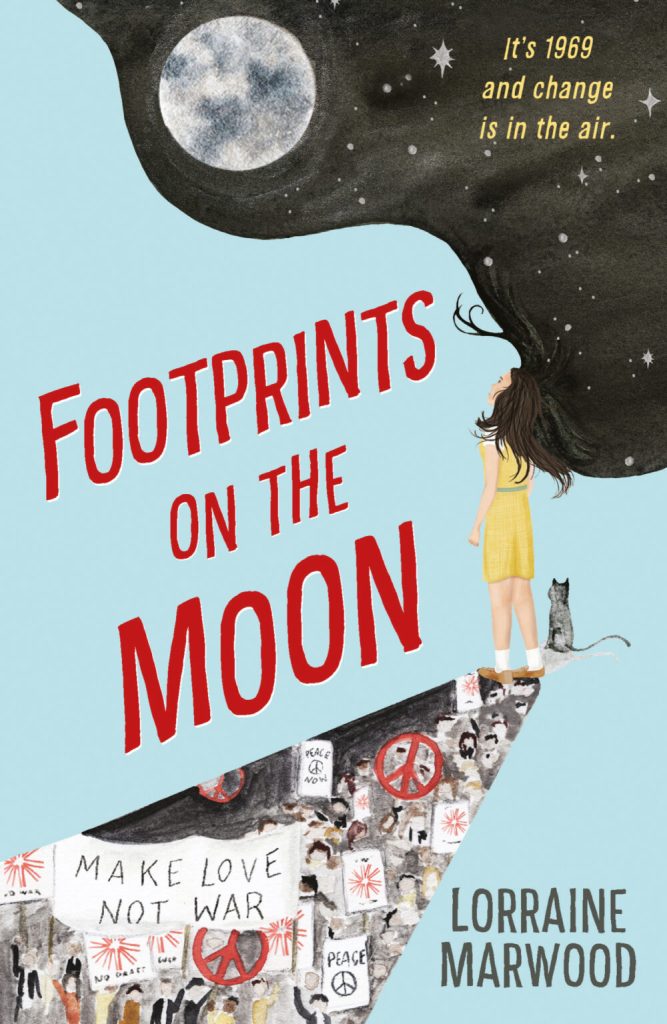
Sharnie Burley is in her early teens and is struggling with the problems of life. The year is 1969, around the time of the first moon landing and the Vietnam war. Sharnie’s sister Cas meets a soldier who has returned from the Vietnam war, after being conscripted. Cas becomes an anti-war protester, which causes conflict within the family …
The story is told through the eyes of Sharnie, as she starts to deal with the difficulties of adolescence. She is beginning her high school journey and finding it difficult to make new friends. It is a story about family relationships and growing up in challenging times.
This captivating and engaging story is easy to read and has an interesting storyline. I think that this book would suit children aged around 10-13 and I would definitely recommend it!
Iona Presentation College students are members of Alphabet Soup’s review team. This is Charlotte’s first review for Alphabet Soup. If YOU would like to send us a book review, check out our submission guidelines. Happy reading!
Anna Ciddor has always been fascinated by the past. It would be her dream come true to step through time! Instead, she immerses herself in research and hunts out the tiniest details so she can bring the past to life in her imagination. Anna has written and illustrated over 50 books on topics as diverse as Vikings, Irish druids, Australian history, travel, and toilets. Today we’re thrilled to talk to her about her latest book, The Boy Who Stepped Through Time.
From the publisher:
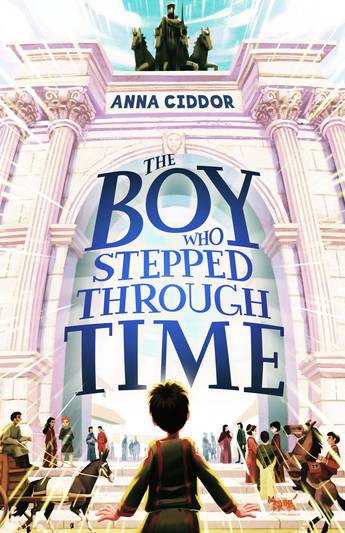
When Perry steps into a crumbling ruin while on holiday in France, he is not expecting to be transported back 1700 years to Roman times. While he hunts desperately for a way home, he must blend in as a slave in a grand villa – even if it means eating mice for dinner! He dodges the perils of Roman life. And all the time there is the danger that he will be trapped in the past forever …
How did you come to write a novel about Ancient Rome?
Well, it’s a long story because I actually started writing it when I was ten years old! You see, I read a book about Ancient Romans and I was fascinated by the idea of people lying around on couches eating with their fingers and spitting out their pips and bones on the dining room floor! I decided to write a novel about a boy from Roman times. I described him running down a stone-paved street dressed in a tunic. (A tunic was a type of dress that Roman boys used to wear.) I got stuck trying to work out what would happen to him though, so I stopped writing and went back to playing with my sisters. When I grew up, I became an author and illustrator, but it wasn’t until nearly fifty years after I started it, that I finally went back and finished the story about the Roman boy.
You joined forces with a researcher to help you with the accuracy of historical elements of the book. Could you tell us a bit about how you worked together?
I really needed help with the research because Roman times were so weird and different from the world we live in now. Romans cleaned themselves with olive oil instead of soap, they ate food like peacocks and dormice, they all got in a huge bath together, and they even went to the toilet together! The researcher and I worked for about a year researching the book and planning what was going to happen in every chapter. When I started writing and picturing the scenes though, I discovered I still needed more information. What sort of spell words did the Romans use? What medicine did they use to cure a sore throat? I kept sending the researcher text messages and she found me the answers but sometimes they were a big surprise. One Roman spell word was ABRACADRA. And one cure was to drink horse saliva!
You also illustrated the book. How did you go about the illustrations?
Again, the researcher helped me by finding Ancient Roman sources of things I was illustrating. For example, my granddaughter asked me to put a cat in the story so of course I did, and when I wanted to draw the cat, the researcher found me mosaics of real ancient Roman cats. They turned out to look exactly like my granddaughter’s two cats. Hers are tiger striped – one is orange and one is brown.
Is there an aspect of ancient Rome that you wish was still around today?
No! There are lots of things I am glad are NOT around today. The Boy Who Stepped Through Time is about a boy called Perry who goes back in time, and one of the things he hates most about Roman life is the toilets. The first time he needs to go, he opens the door and sees there are three toilet holes all in a row on a wooden bench, and a woman is sitting using one of the holes already. Even worse, instead of toilet paper they all share a sponge on the end of a stick.
Can you tell us a bit about your next writing project?
At the moment I am planning a sequel to The Boy Who Stepped Through Time. You can enter a competition for a chance to win your name in it! Click here to enter.
The Boy Who Stepped Through Time is out now! Ask for it at your favourite book shop or local library.
My aunt Daisy owns a cafe. The cafe’s name is Cove Daisy. My mum and I always order something there when we have time. Could be a blueberry muffin. Maybe some macarons! Carrot cake, chocolate fudge, choc chip cookies, or an American twist, whoopie pies! Whatever we order, it is always delicious, and that’s why I love Cove Daisy.
There’s a huge sign at the front of the cafe. It’s written in a beautiful font, and has a black outline. The words have a beach background, which I think is so cool. Inside there are cushions on the floor, and low tables with self-decorated menus placed on them. Of course, Cove Daisy is not a normal cafe. It is more like a fancy bakery.
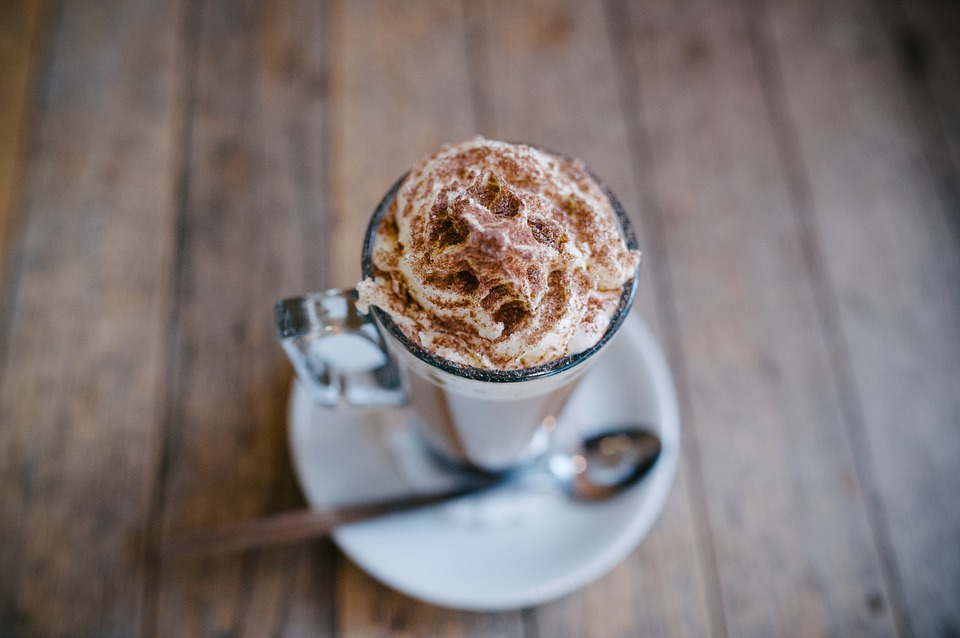
Every time you walk in, there is a faint smell of vanilla extract. It is always cozy and warm, which makes you super happy when you’re eating. But Cove Daisy doesn’t just sell delicious treats. It sells hot chocolate, and coffee. I don’t really get the point of coffee, and why adults like it so much, but I love the smell.
There’s two points in the day when you walk in and it’s packed. It’s before and after school, of course! I’m not the only kid who loves the treats at Cove Daisy. My friends – Charlotte and Nova – and I always head there before school for a quick pit-stop and after school if we’re hungry (which we always are!). Nova loves the energy balls, which have dates, coconut, and tiny bits of white chocolate. Our mums make Charlotte and I eat them, but we don’t like energy balls! We’d much rather have a cookie or a macaron.
I love Cove Daisy because there are so many yummy desserts there, and they’re healthy as well (at least, that’s what I say)! I hope Aunt Daisy finds more treats to make next time I’m there!
REVIEWED BY STEPHANIE, 11, WA (IONA PRESENTATION COLLEGE)
Girl of the Southern Sea by Michelle Kadarusman, UQP, ISBN 9780702262937
The publisher provided a review copy of this book.
When Nia’s life is turned upside down, can she still find the strength to keep going and persevere? I love how Nia is faced with so many difficult challenges throughout the book and how she gets through them all.
Her mother died giving birth to her younger brother, Rudi, her Bakap (dad) is always getting drunk and her best friend is making her keep a bad secret. Yet, Nina still has time to work the fritters cart, to help pay the rent, and look after her brother, Rudi. I think Nia is the strongest character from any book I have ever read, she is smart, helps others and is very devoted to her family.
If I had to rate this book I would give it 100 out of 10, that is how good it is. I loved learning some Indonesian words, I feel that it was a great touch to put Indonesian words in a book based in Indonesia. Overall, this is one of the best books I have ever read. I hope I can be as strong as Nia when life faces me with challenges.
Stephanie is a member of Iona Presentation College’s student reviewers’ team. This is her first review for Alphabet Soup. To send us YOUR story, poem, artwork or book review, check out our submission guidelines. Happy reading!




 alphabetsoup.net.au