FRAMED LOVE
by Charlize, 10, QLD
.
This is Charlize’s first poem published with Alphabet Soup. If YOU would like to send us a story, drawing, poem, or book review, check out our submission guidelines. Happy writing!
FRAMED LOVE
by Charlize, 10, QLD
.
This is Charlize’s first poem published with Alphabet Soup. If YOU would like to send us a story, drawing, poem, or book review, check out our submission guidelines. Happy writing!
REVIEWED BY MATILDA, 11, WA
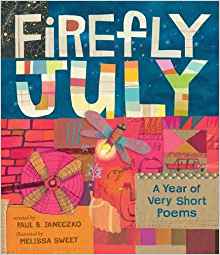
Firefly July by Paul Janeczko (editor), ill. Melissa Sweet, Candlewick, ISBN 9780763648428
Matilda reviews her own copy of this book.
This is a book of VERY short poems all about different subjects.
I like the way the book progresses from spring, then through all the seasons, and ends at winter. My favourite poem was called ‘Window’ by Carl Sandburg. It’s only 3 lines long and it’s about the dark night having slashes of light. I really liked the choice of words and I’d like to read more by this poet.
Melissa Sweet’s illustration style definitely suits the poems. It’s interesting that in many of the illustrations she uses a sort of collage.
I recommend this book for ages 7+ and for people who like short poems!
Matilda is one of our regular book reviewers. You can read Matilda’s other reviews here. If YOU would like to send us a book review, check out our submission guidelines. Happy reading!

It’s Friday! And that means it’s time for Pass the Book Baton. Every week Alphabet Soup features a book creator who will answer one question before throwing a new question to the next Friday visitor. (It’s kind of like a book relay in slow motion.)
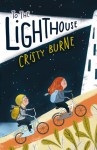
Today the book baton is passed to Cristy Burne. Cristy is an author, a past editor of CSIRO’s Scientriffic magazine for kids, a regular contributor to Crinkling News and Double Helix mag for kids/teens, and has worked as a travelling performer in the Shell Questacon Science Circus. Her latest book is To the Lighthouse.
You might recognise some of these books:
Last week Alice Pung asked:
You mention finding a plastic head in the rubbish bin as one of the inspirations for your Takeshita Demons books. This is fascinating! Could you tell us the true story about the head that inspired the books?!
Cristy answers:
Many years ago, when I was living in Japan, I was walking home from work when I received a huge shock. It was a freezing, wintry day, and the time of year when villagers put their large rubbish out on the verge, ready for council pick up. I didn’t have a whole lot of furniture in my house, so I was keeping an eye out for anything useful I might bring back. There were old wooden bookshelves, comfy chairs, storage chests, even what looked to be a pristine condition antique sewing machine … I wanted it all!
However, at that time in Japan, it was considered poor manners to collect ‘rubbish’ from off the verge. And anyway, these things were too heavy for me to lug home.
Then I spotted it. In a cardboard box, next to an old set of wooden drawers. Human hair.
It was straight and shiny. Thick, black human hair. Sticking out of the top of the box.
I gulped. I panicked. I looked around to see if anyone else had seen it. Human hair!!
But there was no one else in the street. No one at all. So I stepped closer to the box and peered inside.
Skin!! Through the shining hair, I could see the pale skin of a scalp!
I looked around again, starting to freak out. Should I call the police? Scream and run? What if the murderer was watching me right now? What should I do!?!
I knew I shouldn’t panic, so I took a deep breath, steeled myself. And I did what any ordinary, sensible person would do. I bent down to the box, grabbed a handful of that thick, shining hair in my fist, and lifted it up …
… and an entire head came with it! Was it a woman? A man? I couldn’t tell, but its eyes were staring right at me. PANIC!!
And worse, there was more hair in the box below. I grabbed another handful and pulled up another head. And another.
In all, there were three heads in that roadside box, all identical, all with lush black hair. All, thankfully, plastic. I guess they were old hairdressers’ dummies? Anyway, they’d been thrown out, so they were mine now!
I took them home, washed their faces, shampooed their hair, and stuck them in a pretty row in my front window, for passers-by to admire. They looked so realistic! It was the funniest thing ever to sit and sip tea and secretly watch the reactions of people in the street. (I recommend you do this anytime you want a good laugh.)
A few months later, I heard about the Japanese nukekubi—a mythical creature whose head detaches from its sleeping body so it can fly around and terrorise small puppies and children. And I started to wonder: what if these heads weren’t hairdressing dummies? What if they were nukekubi heads, still in search of their bodies? And so the idea of an adventure series featuring Japanese mythology was born. Takeshita Demons was the first book in that series, and my first published book (yay!).
And what about the heads?
Well, when I left Japan, I was too embarrassed to bring all three back in my suitcase. So I only brought one. And I still have it now. As I type, it’s staring at me, from across the room. Staring and maybe waiting, for just that right moment to spring back into life … ? I don’t know.
But I do know having your own plastic head is a great way to meet friends, dream up practical jokes, and get inspired to write a book!
Check out Cristy Burne’s website for more about her and her books.
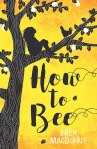
And now Cristy passes the book baton to the next Friday visitor — Bren MacDibble. Bren’s latest book is How to Bee, published in May 2017.
Cristy asks:
“I love that you have introduced the real-life issue of honey bee losses in your fictional novel, How to Bee. Can you please tell us more about how this issue grabbed your interest and its role in inspiring your story?”
Check in every Friday for mini interviews with children’s authors and illustrators.
See you next week!
REVIEWED BY MATILDA, 11, WA
Amazing Animals of Australia’s National Parks by Gina M Newton, National Library of Australia, ISBN 9780642278883
Matilda received a copy of this book from the publisher.
In this nonfiction book about Australian animals, there is one page for each animal with the headings:
What is it?
Where does it live? and
What is its life like?
I like the way the book is split up into the climates that the animals live in and the photographs are extremely professional. There is a ‘how to use this book’ page, which is really helpful for understanding certain symbols used in the book.
My favourite animal in this book was the Rufous Bettong (Aepyprymnus rufescens). This animal lives in woodlands, grasslands and forests.
I would recommend this book to anyone who loves animals and wants to know more about Australian animals.
Matilda is one of our regular book reviewers. You can read Matilda’s other reviews here. If YOU would like to send us a book review, check out our submission guidelines. Happy reading!

It’s Friday! And that means it’s time for Pass the Book Baton. Every week Alphabet Soup features a book creator who will answer one question before throwing a new question to the next Friday visitor. (It’s kind of like a book relay in slow motion.)
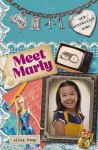
Today the book baton is passed to Alice Pung. Alice is an award-winning author and writes for adults, young adults and children. (And did you know — Alice’s father named her after the Alice in Alice in Wonderland?)
You might have read Alice Pung’s books from the Our Australian Girl series, illustrated by Lucia Masciullo.:
Last week Gabriel Evans asked:
You’re both a solicitor and author. How do you balance these two jobs? Is there a connection between the two?

Alice answers:
I work as both a lawyer and writer. I work three days a week at the Fair Work Commission (Wednesday to Friday), and write on Mondays and Tuesdays. I think it is a good balance because I feel like I am doing something to help the community with my law background, and the writing becomes more fun when I don’t have an infinite time to do it. I never get writer’s block because I always value my writing time and try and use it wisely!
Find out more about Alice Pung and her books — check out her website: www.alicepung.com
And now Alice passes the book baton to the next Friday visitor — Cristy Burne. Christy is a science writer, teacher, editor and children’s author. Her latest book is To the Lighthouse.
Alice asks:
“You mention finding a plastic head in the rubbish bin as one of the inspirations for your Takeshita Demons books. This is fascinating! Could you tell us the true story about the head that inspired the books?!”
Check in every Friday for mini interviews with children’s authors and illustrators.
See you next week!
May has come to a close and that means it’s time for some book recommendations. Our Top Reads Team* stops by on the last day of every month with a bunch of books you’re sure to enjoy! Please note: some of these books are for older readers.
You’ll find a recommended list from our Top Reads Team on the last day of every month (February to November). If you missed last month’s, don’t forget to check out the April Top Reads.
*All our Top Readers are kids aged 13 and under. No grownups allowed!

It’s Friday! And that means it’s time for Pass the Book Baton. Every week Alphabet Soup features a book creator who will answer one question before throwing a new question to the next Friday visitor. (It’s kind of like a book relay in slow motion.)
Today the book baton is passed to Gabriel Evans. He has illustrated over twenty books and designed over a hundred greeting cards, painted large gallery artwork, and travelled across Australia presenting illustration workshops and seminars in schools and festivals.
Here are some of the books he’s illustrated:
Last week Sue Whiting asked:
What would you do differently in terms of the development of your career as an illustrator if you had your time over again?
Gabriel answers:
It has been an absolute pleasure working with Sue during her time at Walker Books.
If I was to have my time again I would definitely experiment more with my art. I was always trying to make perfect, beautiful pictures that limited my experimentation.
It’s only in recent years I take enormous pleasure and satisfaction from making risks and discovering new, creative systems. That means using BIG brushes, spray bottles, palette knives, goose feathers, cardboard, fingers, sticks and anything else I can think of.
It’s all about learning through creative, messy fun!
Find out more about Gabriel Evans and his books and art — visit his website!
And now Gabriel passes the book baton to the next Friday visitor — Alice Pung. Alice writes books for a range of ages. You might have read her Marly books from the Our Australian Girl series.
Gabriel asks:
“You’re both a solicitor and author. How do you balance these two jobs? Is there a connection between the two?”
Check in every Friday for mini interviews with children’s authors and illustrators.
See you next week!
REVIEWED BY MATILDA, 11, WA
To the Lighthouse by Cristy Burne,
ill. Amanda Burnett, Fremantle Press,
ISBN 9781925164619
Matilda received a review copy of this book from the publisher.
Isaac and Emmy are two very different kids. They meet on Rottnest Island when their families are on holiday. Isaac is a shy, nervous boy, but Emmy is an extravagant daredevil. Emmy wants Isaac to begin a game of Dare — involving jumping into icy cold water, riding all the way to the lighthouse, and riding there at night by themselves. It’s dark, and it’s miles and miles away. Isaac’s Mum is very overprotective and she worries a lot. Luckily she doesn’t know they’re planning to go to the lighthouse at night …
It’s great to read a book that is set in WA, instead of the usual places in kids’ books (like England or Sydney). The illustrations are in black and white and appear about once in every chapter. They suit the story — they’re a bit quirky, like the characters in the book.
To the Lighthouse would be a good book for 7 to 10 year olds.
Matilda is one of our regular book reviewers. You can read Matilda’s other reviews here. If YOU would like to send us a book review, check out our submission guidelines. Happy reading!

Earlier this year Alphabet Soup started a series called Pass the Book Baton. Every week we featured a book creator who answered one question before throwing a new question to the next Friday visitor. (It was kind of like a book relay in slow motion.) Our book creators took a break for the school holidays but we are pleased to announce … Pass the Book Baton is BACK!
You might remember that we left Kelly Canby with the book baton in March. (She’ll be feeling quite tired by now.) Today she finally passes the baton to Sue Whiting.
Sue Whiting lives and works in a coastal village south of Sydney. She is an editor and an author and writes books for a range of ages, from picture books through to books for young adults. Her latest book is Platypus, illustrated by Mark Jackson.
Here are just some of Sue Whiting’s books:
Back in March, Kelly Canby asked:
When you’re in the planning stage of a new book, do you prefer to work in a quiet space where it’s just you and your thoughts or do you head out to cafes and parks where you’re surrounded by outside sources of inspiration — people/colour/activity — to help develop your ideas?
And now Sue Whiting passes the baton to the next Friday visitor — Gabriel Evans. Gabriel is an Australian illustrator of more than 20 books.
Sue asks:
“I have had the privilege of working with Gabriel (as an editor) and have been a big fan of his work for a number of years. It has been great to watch his career develop, going from strength to strength. So my question is: What would you do differently in terms of the development of your career as an illustrator if you had your time over again?”
..
Check in every Friday for questions and answers from children’s authors and illustrators.
.
See you next week!
REVIEWED BY MATILDA, 11, WA
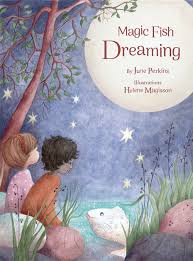
Magic Fish Dreaming by June Perkins,
ill. Helene Magisson, Gumbootspearlz Press, ISBN 9780980731187
Matilda received a review copy of this book from the publisher.
This book has poems mostly based around nature and families in the environment in Queensland. My favourite poem in the collection is called ‘Rain song,’ about the rain moving across the land and affecting banana towns, cassowaries, and fields of sugar cane. I liked the sense of movement.
The illustrations are floaty and dreamy (not bright and shabam!) and they suit the style of the poems. I really like the illustration for the poem ‘Tawny’ — you can almost feel the fluffiness of the bird.
The book is divided into two sections — ‘Hunting for Giggle Poems’, and ‘Magic Fish Dreaming’. I didn’t think that the poems’ themes in each of these sections really matched their section titles and so I thought it would have been more effective just to have the poems all in together, without dividing the book into sections.
This is a poetry book with a really Australian feel to it. I would recommend these poems to children ages 7 to 10.
Matilda is one of our regular book reviewers. You can read all of Matilda’s reviews here. If YOU would like to send us a book review, check out our submission guidelines. Happy reading!