Matilda borrowed this book from her school library.
This book is set in 1849. An Irish girl (Nellie) and her friend (Mary) are on their way to South Australia from a workhouse in Ireland and they have to look for jobs. If Nellie does get a job, will she ever see Mary again?
I borrowed this book from the library because my friend is from Ireland and she said she really liked it. I learned that in 1849 it was really hard to find jobs and that even kids had to find jobs or they’d starve. Also, it was very easy to get ill and there was no-one to help you if you did and lots of people died.
Meet Nellie is a mixture of happy and sad. There are four books in this series and this is the first book. I want to read the others because this one was so interesting.
Who played with a Dangerous Toy and suffered a Catastrophe of considerable Dimensions
by Hilaire Belloc
—
When George’s Grandmamma was told
That George had been as good as gold,
She promised in the afternoon
To buy him an Immense BALLOON.
And so she did; but when it came,
It got into the candle flame,
And being of a dangerous sort
Exploded with a loud report!
The lights went out! The windows broke!
The room was filled with reeking smoke.
And in the darkness shrieks and yells
Were mingled with electric bells,
And falling masonry and groans,
And crunching, as of broken bones,
And dreadful shrieks, when, worst of all,
The house itself began to fall!
It tottered, shuddering to and fro,
Then crashed into the street below —
Which happened to be Savile Row.
When help arrived, among the dead
Were Cousin Mary, Little Fred,
The Footmen (both of them), the Groom,
The man that cleaned the Billiard-Room,
The Chaplain, and the Still-Room Maid.
And I am dreadfully afraid
That Monsieur Champignon, the Chef,
Will now be permanently deaf —
And both his aides are much the same;
While George, who was in part to blame,
Received, you will regret to hear,
A nasty lump behind the ear.
MORAL:
The moral is that little boys
Should not be given dangerous toys.
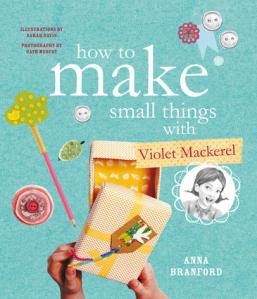
How to make small things with Violet Mackerel by Anna Branford, ill. Sarah Davis, photography by Cath Muscat, ISBN 9781922179401, Walker Books Australia
REVIEWED BY MATILDA, 8, WA
Matilda borrowed this book from her local library.
When I saw this book I got really, really excited because it’s based on the small things that Violet Mackerel likes to make and it tells you how to make them yourself. My favourite thing in the book is the leaf necklace with a secret pocket.
It gives you very good instructions for how to make everything. I wanted to make the shining sun ring except I don’t have a darning needle yet. But I made some of the other things like a wrist warmer and I made my Mum one of the pouches for a Mother’s Day present and she loved it. I also made one of the matchbox drawers, it was really cool. I also made a seasonal pencil topper, dangling day-counter using butterflies, and the notebook.
The matchbox drawers I made
The little pouch I made
My favourite thing I made from the book was the pouch.
Ages 6+ will like this book. You should read it if you like small things and if you’d like to know more things about Violet Mackerel.
It’s time for our team of keen readers* to share their TOP READS for the month — the best book each of them read during June 2014. If you’re after a good book, they recommend the following titles!
Geoffrey McSkimming is the author of Ogre in a Toga and Other Perverse Verses, the Cairo Jim chronicles, and the Phyllis Wong books. Today he is visiting to talk about writing and his new book Phyllis Wong and the Return of the Conjuror. Welcome!
—
Can you tell us a bit about where you live?
I divide my time between two places: Sydney, where I live in an old apartment by the water, only a short ferry ride to the Sydney Opera House and the city, and the second place is Cawdor in Scotland.
I write the Phyllis Wong books in both places (in Scotland we light the fire in the old stone cottage we stay in, and it’s the perfect place to lock myself away and travel into Phyllis’s world).
This is your second Phyllis Wong book. Is writing the second book of a series very different from writing the first book?
Yes and no. In Phyllis Wong and the Return of the Conjuror, Phyllis’s world opens up in huge new ways that she has never encountered before. She discovers magic far greater than the magic she has known. So that meant that because of what happens in the second book (and also in the third mystery, which I’m finishing at the moment), the story is very different from the first, even though many of the characters from Phyllis Wong and the Forgotten Secrets of Mr Okyto reappear in the second story.
But the overall atmosphere of Phyllis’s world from the first book is still there — the friends and neighbours, the places she visits in the city, the humour and the suspense. And the unexpected.
What gave you the idea for the Phyllis Wong books?
My publisher at Allen & Unwin, Anna McFarlane, got in touch with my agent and asked whether I’d like to write a novel for A&U. I hadn’t written a novel for a while, after having completed the 19 volume Cairo Jim chronicles; I’d been writing other things — character-based tours for the Art Gallery of NSW and a performance piece based on Hamlet, Prince of Denmark.
At about this time I’d come into contact with Australia’s leading female magician, Sue-Anne Webster, and I was publishing, in a magazine, a regular series of magic tricks she’d written. I’d also been using stage magic in the Hamlet presentation, which I performed for a while. Anna McFarlane became aware of all of this and when she asked whether I’d like to write a novel, the idea of a young girl magician came slowly to mind. The character of Phyllis has developed (and is developing) with the more I learn about magic from Sue-Anne (I don’t know the secrets behind the tricks; I don’t want to!) … it’s so true that magicians think in ways very different to most other folk, and I’ve learnt that from knowing Sue-Anne as well. It’s this way of thinking that propels Phyllis through the amazing mysteries she encounters.
Do you prefer to write with pen and paper, or using a computer/laptop?
Both. I make lots and lots of notes by hand in my notebooks, but I write the stories onto the laptop, simply because when I’m in the full force of the story I can write faster on the keyboard than with a pen.
What do you like to do when you are not writing?
Reading. I read lots, mainly old crime and detective novels. I never watch TV. I like to go for long walks (that’s great for sorting out story problems often), and we go to the pictures usually once a week — there’s a glorious art deco cinema nearby and it’s the perfect place to escape!
Did you have a favourite author when you were growing up?
I’m still trying to work out what growing up involves, but when I was younger I liked Ray Bradbury’s stories and Roald Dahl’s and Tolkien’s. Later on I read Shakespeare (and acted in some of his plays when I worked, long ago, as a professional actor), Evelyn Waugh, Graham Greene, Agatha Christie and a swag of Golden Age detective novel writers.
Do you have any advice for young writers?
Read lots.
Always carry a notebook around with you and jot every idea down, no matter how silly or little it might seem at the time. You never know when one of those little ideas will become a gem!
Listen and watch and soak up the atmosphere around you all the time.
Try to write a little bit every day (or a lot if you can manage it).
Enjoy the wonderful craft of scribbling. Have fun!
Are you working on any new projects at the moment and if so, are you able to tell us a bit about them?
I’m finishingthe third Phyllis Wong mystery and I’ve just started on the fourth. I’m having a ball finding the things that Phyllis discovers … with the new magic she finds in Phyllis Wong and the Return of the Conjuror, it enables her to try to solve crimes and mysteries that have started at various times way back in history and which have consequences for us today. I love the fun and the intrigue and I really enjoy uncovering things from the past that are, to use a robust cliché, stranger than fiction …
Is there is anything you would like to add?
The only thing I can add is to always remember: there is no such thing as a wicked gherkin.
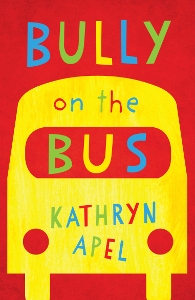
Bully on the Bus by Kathryn Apel, ISBN 9780702253287, UQP
REVIEWED BY JOSEPH, 10, WA
A review copy of this book was provided by the publisher.
This book is a cross between a kids’ novel and a poem book. (This means it’s a verse novel.) This is the first verse novel that I’ve ever read.
It’s about a young boy called Leroy who is getting bullied on the bus by a high school student called DJ. Leroy is getting scared of DJ and doesn’t want to go to school on the bus any more because of DJ. Leroy is left shattered after he makes a special green monster cupcake for his teacher and DJ finds it in his lunch box, starts eating it, and smashes it on the floor of the bus. He needs to do something about DJ. But what?
I liked how each chapter was a poem and had its own title. I forgot it was a verse novel halfway through and I was very worried for Leroy and couldn’t stop reading. I will definitely read it again.
After reading Bully on the Bus I would like to read more verse novels and maybe try writing one too. I would recommend this book to kids in years 1 to 4 and their teachers — especially the kids because it teaches them about bullying.
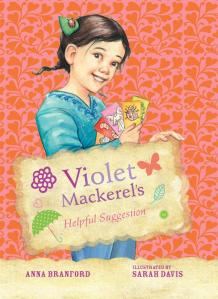
Violet Mackerel’s Helpful Suggestion by Anna Branford, ill. Sarah Davis, ISBN 9781 922244369, Walker Books Australia
REVIEWED BY MATILDA, 8, WA
A review copy of this book was provided by the publisher.
Do you know Rose from Violet Mackerel’s Possible Friend and Violet Mackerel’s Pocket Protest? Rose is going to go to Japan for six weeks. Violet is excited as well as Rose but it’s a particular sort of excited. Violet has a bad feeling. What if Rose forgets about her?
I think this is a very good book to lead on from Violet Mackerel’s Pocket Protest. I learned some Japanese words and at the back the activity is ‘How to make your own set of flashcards’ and I think I might try to do that for my spelling words.
My favourite part about this book is that Violet learns the Japanese word for smile (egau) and then she uses the Japanese word instead of the English word when she is talking about smiles after that.
I really like the illustrations in the Violet Mackerel books because I like the style of drawing. There was one thing I was thinking about: it is interesting how on the front cover Violet looks older than she does in the illustrations inside the book.
The Big Book of Old Tom by Leigh Hobbs, ISBN 9781743318447, Allen & Unwin
REVIEWED BY JOSEPH, 10, WA
A review copy of this book was provided by the publisher.
In this book there are five Old Tom stories:
Old Tom
Old Tom at the Beach
Old Tom Goes to Mars
Old Tom’s Guide to Being Good
A Friend for Old Tom.
I liked how it looks like a novel but inside it’s more of a picture book style so there were lots of pictures. The illustrations are humorous black and white sketches.
Because it’s such a chunky book to hold, it makes you feel satisfied when you finish it. My overall favourite was Old Tom’s Guide to Being Good because it has an unexpected twist.
This book is most suited to ages 6 to 9 because it’s good for kids who aren’t quite ready for big novels but are looking for something longer than a picture book. But I’m 10 and I still really enjoyed it.
–
Joseph is one of our regular book reviewers. His most recent review (if you don’t count this one) was of The Cay. If YOU would like to send us a book review, check out our submission guidelines. Happy reading!
Today we are thrilled to have Gabrielle Wang visiting Alphabet Soup again — we’ve talked to her before about her Poppy books (in the ‘Our Australian Girl’ series). Her latest ‘Our Australian Girl’ series is about a girl called Pearlie who lives in Darwin in the 1940s.
Our editor Rebecca was enchanted by one of Gabrielle’s books published in 2013 — The Wishbird. And Gabrielle was kind enough to take time away from her writing to talk to Rebecca about writing and illustrating the book.
—
The Wishbird is woven like a fairytale or folktale. As a child did you have any favourite fairytales, folktales or fables?
My favourite fairytale was The Little Green Road to Fairyland by the Australian sisters, Annie R Rentoul and Ida Rentoul Outhwaite. They were born in the late 1800s. I loved and still do love Ida Rentoul Outhwaite’s illustrations. As a child I was forever copying them.
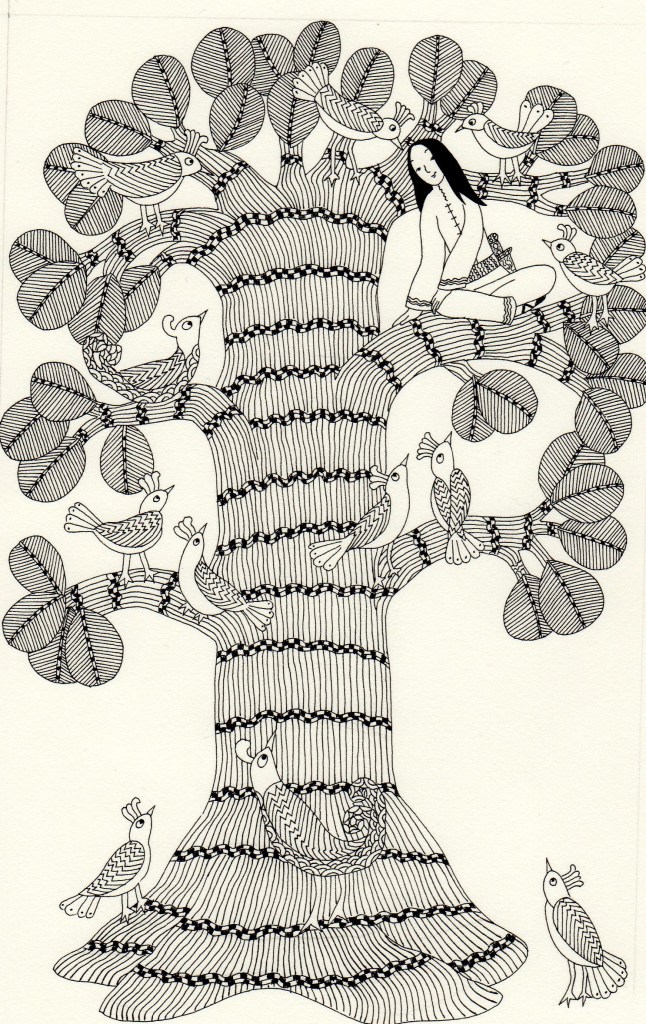
The pen-and-ink illustrations in The Wishbird are intricate — how long would it take you to do one of these drawings for the book?
At first I didn’t know what style to use. But then I saw some Indian folk art and I loved it.
I did many roughs in pencil on layout paper.
When I was happy with a drawing I traced it onto lunchwrap. This is much cheaper than buying tracing paper.
For the final illustration I used water colour paper, a rapidograph, which is a pen with a fine nib, and a lightbox.
The lightbox has a light inside it.
Mine is very old. I had it made when I lived in Taiwan many years ago.
I placed a sheet of water colour paper on top of the traced drawing and used a rapidograph to make the linework.
Because The Wishbird illustrations are so fine I had to look through a sewing magnifying glass.
Some illustrations took longer than others because when I made a mistake, I’d have to start all over again. Probably on an average, from concept to finished product, each one took about a week to complete.
Was it your own idea to include illustrations in The Wishbird or did the publisher suggest it?
I wanted to include illustrations not only because I like to draw, but also because these were the types of books I used to love reading as a child, especially books like The Magic Faraway Tree.
Do you sing or play an instrument yourself? What led you to write a book where music features so strongly?
I learnt the piano and took piano exams up to Grade 5. I began to love classical music then especially the works of JS Bach. In high school I took classical guitar lessons. I still play the guitar and used to compose my own pieces. When I was living in China, I also learnt the Chinese bamboo flute but I’m not very good at it.
Imagine if all the singers and musicians disappeared, never to be seen again. Music is outlawed. Even birds are killed because they sing. And because birds live in forests then the forests all around are burnt to stumps.
Music is an integral part of human existence. Every culture in the world makes music. Without it, the soul dies. This is at the heart of The Wishbird.
Did you write a plan before you began writing The Wishbird, or did you just start writing and see where it led you?
I hardly ever write plans for my novels. I like my story to grow organically. The only books I have written plans for were the Our Australian Girl books. Because they are historical fiction and in a series of four books I had to know where each story was going and how it fed into the next before I even sat down to write them.
Can you tell us a little about what you are working on now?
I’ve just finished the final edit for Pearlie’s Ghost, which is the fourth and final book in the Pearlie series.
I’m glad to have finished the series because they are hard work. But I’m also sad to leave Pearlie. Now she will have a life of her own out in bookshops and libraries.
I have started a new novel with another author. This is a new experience for me. It’s a very exciting way to write and we’re having lots of fun together. I can’t reveal much about it yet except to say that the working title is The Map of Tiny Coincidences and it will be filled with maps and drawings.
—
Find out more about Gabrielle Wang and her books at her website and her blog.
And LOOK! LOOK! You can even LISTEN to Gabrielle Wang reading the first two chapters of The Wishbirdhere.
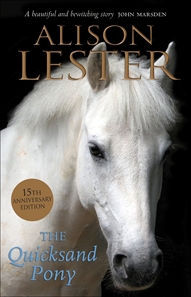
The Quicksand Pony by Alison Lester, ISBN 9781742378008, Allen & Unwin
REVIEWED BY KAILANI, 8, QLD
This book was a gift from Kailani’s Auntie Emma.
Biddy is ten years old and lives on a cattle farm near the headland with her Mum, Dad and Grandpa. Biddy wants to go on the cattle muster this year with her parents.
One day at school Biddy tells her friend, Irene about going on the muster and Irene tells her about the disappearance of her Auntie Joycie and her cousin Joe nine years ago.
Does Biddy get to go on the muster?
What will happen on the muster?
Will Jocyie and Joe be found?
To find out you will need to read this book.
I recommend this book for kids 4–14 (4–7 year olds might need someone to read it to them) and I rate this book 9 ½ out of 10.
—
This is Kailani’s first book review for Alphabet Soup (thanks, Kailani!). If YOU would like to send us a book review, check out our submission guidelines. Happy reading!




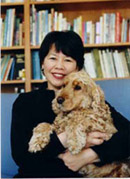 Today we are thrilled to have




 alphabetsoup.net.au