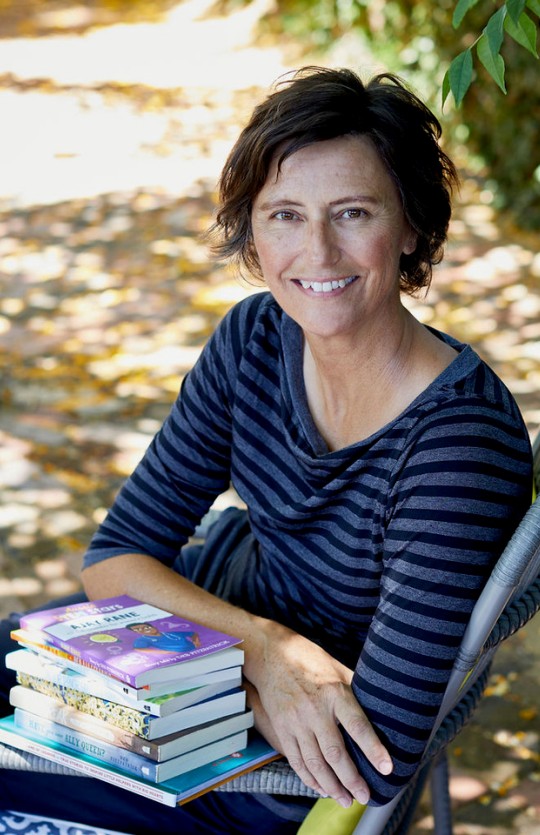
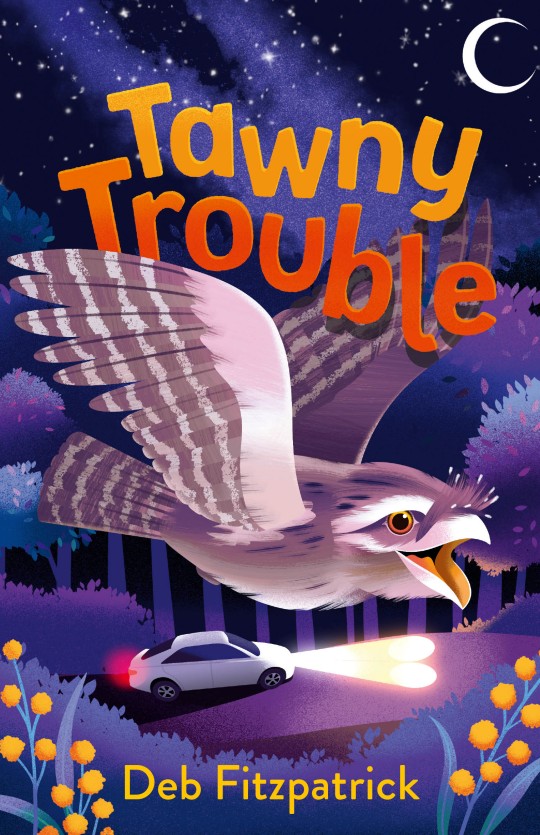
Deb Fitzpatrick writes for adults, young adults and children. She loves using stories from real life in her novels and regularly teaches creative writing to people of all ages. Deb loves bushwalking with her family. When she can, she sneaks away to a shack in the karri forest of the south-west of Western Australia. Today we’re thrilled to be chatting to Deb about her latest book: Tawny Trouble.
The publisher provided Alphabet Soup with a reading copy of Tawny Trouble.
From the publisher:
When Tessa’s family accidentally hit a Tawny Frogmouth while driving through the bush at night, they feel terrible. But the tawny is alive and needs their help. What Tessa doesn’t know is where that help will lead … Deb Fitzpatrick’s new novel is perfect for nature-loving readers who have a soft spot for animals.
How did a Tawny Frogmouth end up as the focus of your new book?
My family goes to the Nannup Music Festival every year and on the midnight drive home through the forest we always dodge Tawny Frogmouths, which feed on moths and insects attracted to the lights of cars. One year we came horribly close to hitting a tawny and it made me think: WHAT IF?? That question — what if? — is often the catalyst for my writing.
What’s your favourite Tawny Frogmouth fact?
I can’t just share one wonderful Tawny Frogmouth fact! I beg your indulgence, Alphabet Soup readers!
The most important fact we need to know about Tawny Frogmouths is that while they are nocturnal and as such are often confused for owls, they’re not owls. They’re closer to the nightjar.
Tawny Frogmouth feathers are soft, allowing for stealthy, silent flight. And their mottled grey, brown and black colouring helps them mimic tree branches — this is why Tawny Frogmouths are often referred to as the ‘masters of camouflage’.
You’re the author of many books. What do you find to be the hardest part of writing a book for you? (from the spark of the idea through to the book heading off to the printer?)
The spark of the idea is probably the easiest part for me, and the most exciting, and I think that’s true for a lot of writers. Reaching the end of a first draft is a huge relief, because for me the hardest part of writing any novel is getting through THE MIDDLE. Novel-writing is a sort of long-distance event; keeping positive, focused and confident in your abilities during that long middle phase can make or break the project. To maintain the sporting metaphor, that middle phase is about your creative stamina, your mental fitness, your willingness to go all the way. You really have to back yourself and your project, and it helps enormously to have the support of others during this time. I share my works-in-progress with another published children’s writer, and she sends me her work. We offer each other detailed editorial feedback including suggestions for improvement, observations on what’s working, and a solid dose of encouragement. I find this exchange really keeps me on track and lifts my motivation when I’m flagging.
Do you have a tip for young writers who’d also like to write adventure stories?
I would suggest incorporating a topic you’re fascinated by and want to know more about (I love native animals, for example, and love to write about them). Do some research (I had to do quite a bit to write Tawny Trouble as I didn’t know a lot about these beautiful birds) and weave a few facts into the story here and there. Before you know it, you’re engaging your readers while completely immersing yourself in research and writing — and it works because it’s something you care about.
Can you tell us a bit about what’s next for you?
I’m currently writing a novel for middle readers set on Penguin Island off the WA coast. It’s about 11-year-old Mitch, who gets caught up in an environmental adventure with the island’s Little Penguin population. Little Penguins are the only penguins that are native to Australia, and they’re the smallest of the 18 species of penguin in the world. This book is for readers who love nature and adventure, and perfect for fans of Kelpie Chaos and Tawny Trouble!
Tawny Trouble is out now! Ask for it at your favourite bookshop or local library.
AWESOME EXTRAS
Read the first chapter of Tawny Trouble
Download Deb’s nature tracker printable
Download the Teachers’ Notes for Tawny Trouble
Visit Deb Fitzpatrick’s website for more about her and her books


 REVIEWED BY CINDY, 7, VIC
 Amazing Animals of Australia’s National Parks by

 alphabetsoup.net.au