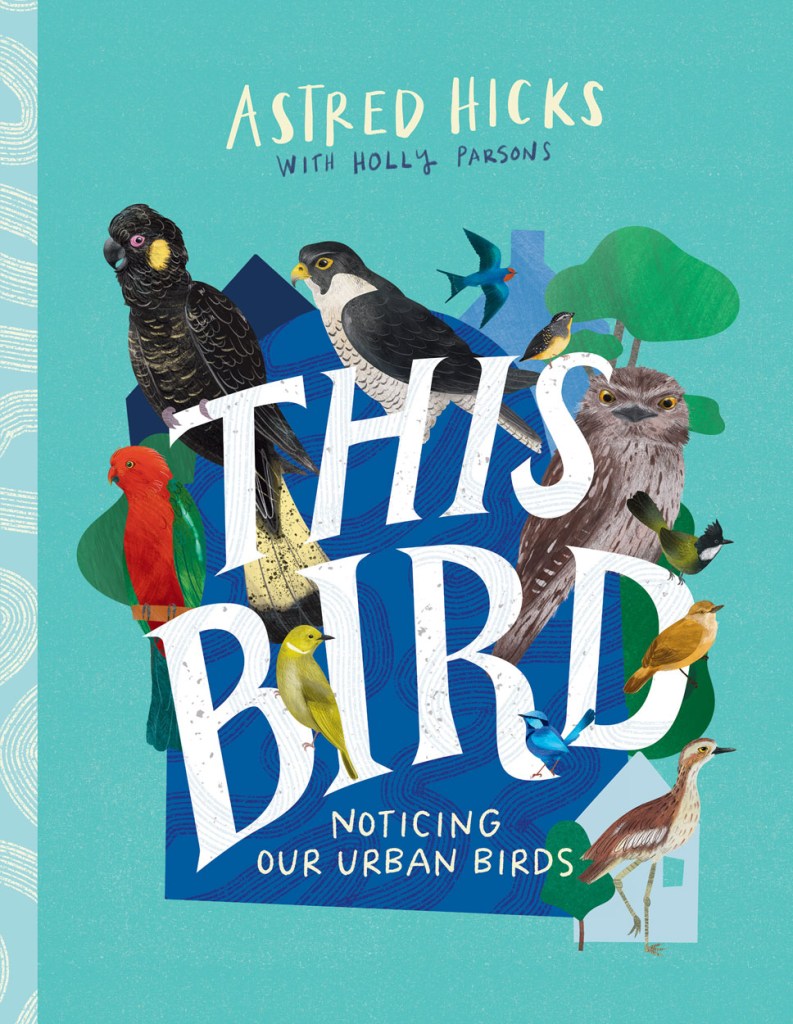
This Bird: Noticing Our Urban Birds by Astred Hicks with Holly Parsons, CSIRO Publishing, ISBN 9781486318452
REVIEWED BY MARLEY, 10, WA
Marley received a review copy of this title from the publisher.
From the publisher:
What’s so fancy about this bird? What’s so clever about that bird? Perhaps it’s a weightlifter, a marathon flier, an artist, or even a liar. You don’t need to go far to see intriguing birds, even in the city. From colourful parrots to artistic bowerbirds and fancy fairy-wrens, there’s lots to notice in our local backyards, streets and parks.
This Bird: Noticing Our Urban Birds is a great factual text book about birds. It explains everything from funny details to extraordinary facts that you would never find just reading on the internet. I loved and enjoyed reading this book very dearly. It has great illustrations with an eye for detail.
It would be good for any age, for anyone interested in wildlife. I read about the willie wag tail, which is my favourite bird, and I think it would be a great reference book for local wildlife.
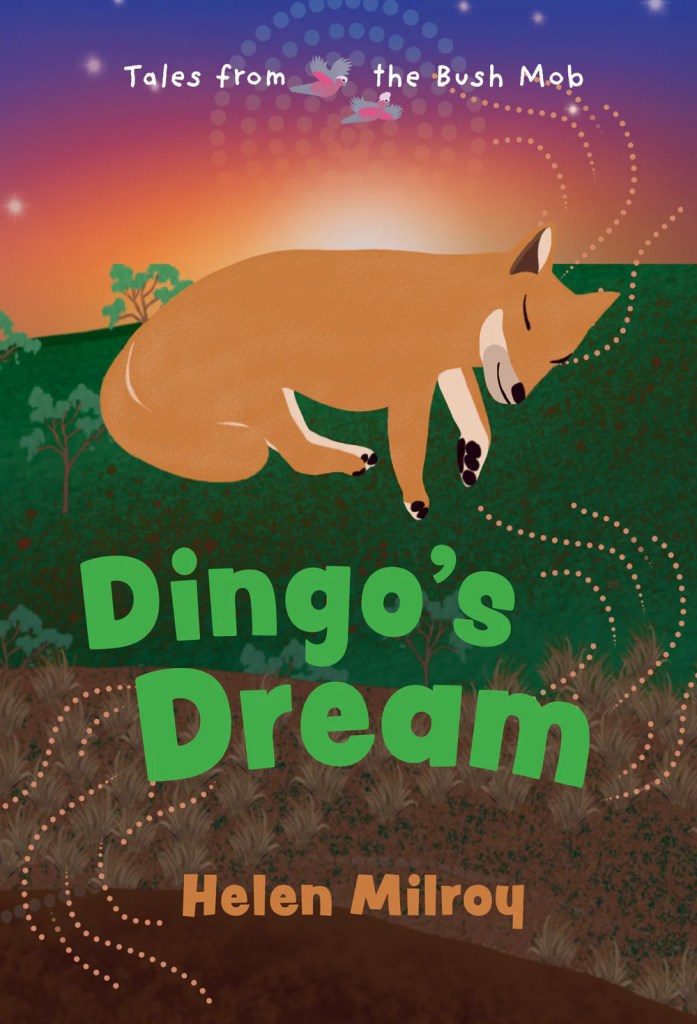
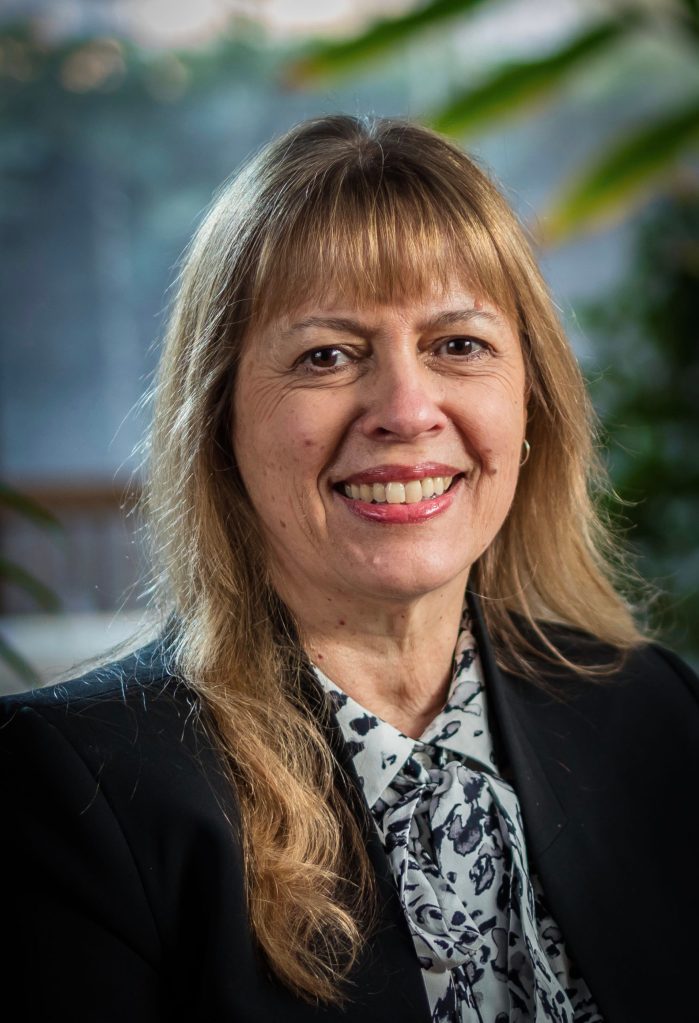
Helen Milroy is a storyteller and artist, and the author and illustrator of many books. She is a descendant of the Palyku people of the Pilbara region of Western Australia, but was born and educated in Perth. Helen has always had a passionate interest in health and wellbeing, especially for children. Today we’re thrilled to be talking to Helen about her book Dingo’s Dream, part of her Tales from the Bush Mob series.
From the publisher:
Dingo dreams that someone is in distress, but who? Dingo checks on everyone in his community, then searches all over the countryside until he stumbles across his homeland he hasn’t visited for many years and is now an empty landscape … There is a strange animal stranded at the bottom of a ravine.
The publisher provided Alphabet Soup with a reading copy of this book.
In your Tales from the Bush Mob series, each book centres a particular animal. What gave you the idea for the storyline for Dingo’s Dream?
Our dingoes have had a tough time in history and are often cast in a bad light. But dingoes are beautiful animals and share this country with us. Dingoes also have their country just like us but are often pushed away into other areas. I am also fascinated by the mournful howl of the dingoes at sunset and wondered what this was about. This became the stimulus for the story. What happens to country when our dingoes are not there to sing at sunset?
I do think our country calls to us, we are the children of mother earth and we need to hear her call.
This is the sixth book in the series. How do you go about creating your illustrations? Now that you’re up to Book Six, has anything changed about the way you approach the illustrating process?
Because this is a series, I can reuse some of the habitats such as Dingo’s den and other parts of country so it does make it a bit easier. But I also want to include other aspects and different landscapes for kids to see as well as introduce new creatures such as the Tasmanian Devil, so kids get to see the vast array of native animals that live here. I hope I have got a bit better at illustrating but I also don’t want to lose the naivety of the first book.
The colourful illustrations are rich and striking and give a real sense of place. Are your illustrations inspired by a particular place/landscape?
I really try to draw the colours of the landscape, particularly the north-west of WA which is beautiful. If I am flying over country I love to look out the window and see the patterns in the earth. When i am walking in country, I try to capture the experience and richness in the illustrations.
The Bush Mob friends all work together on a rescue and they each have their own strengths they bring to the group. Do you have a favourite animal in the Bush Mob series?
To be fair, I love them all but yes my favourites are dingo and willy wagtail. Dingo is kind, gentle and strong. He looks out for everyone. He reminds me of a big dog I had as a child who was always by my side and I felt like he was a companion but also a guardian. Willy wagtail is a feisty little bird with great courage and I always love watching the willy wagtails in my garden. They really do talk a lot so hence they play such an important role in bringing bush mob together in the first book.
Can you tell us a bit about what you’re working on next?
I still have another nine bush mob stories I have written which feature different animals so I really hope I can bring them all to life. I also have a sequel for Lofty the Emu as I think he was a great character to work with. In this story he doesn’t need his paraglider anymore but he does learn some really important game skills from some other members of bush mob, so stay tuned!
Dingo’s Dream is out now! Ask for it at your favourite bookshop or local library.
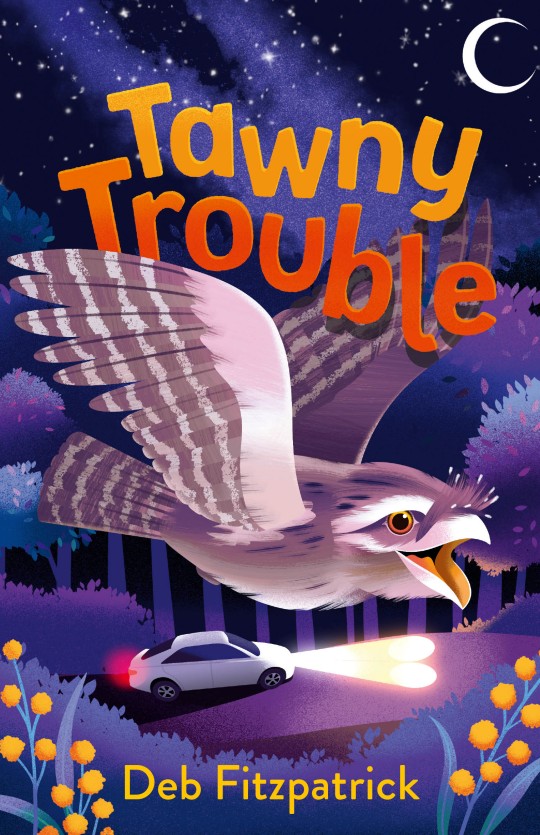
Deb Fitzpatrick writes for adults, young adults and children. She loves using stories from real life in her novels and regularly teaches creative writing to people of all ages. Deb loves bushwalking with her family. When she can, she sneaks away to a shack in the karri forest of the south-west of Western Australia. Today we’re thrilled to be chatting to Deb about her latest book: Tawny Trouble.
The publisher provided Alphabet Soup with a reading copy of Tawny Trouble.
From the publisher:
When Tessa’s family accidentally hit a Tawny Frogmouth while driving through the bush at night, they feel terrible. But the tawny is alive and needs their help. What Tessa doesn’t know is where that help will lead … Deb Fitzpatrick’s new novel is perfect for nature-loving readers who have a soft spot for animals.
How did a Tawny Frogmouth end up as the focus of your new book?
My family goes to the Nannup Music Festival every year and on the midnight drive home through the forest we always dodge Tawny Frogmouths, which feed on moths and insects attracted to the lights of cars. One year we came horribly close to hitting a tawny and it made me think: WHAT IF?? That question — what if? — is often the catalyst for my writing.
What’s your favourite Tawny Frogmouth fact?
I can’t just share one wonderful Tawny Frogmouth fact! I beg your indulgence, Alphabet Soup readers!
The most important fact we need to know about Tawny Frogmouths is that while they are nocturnal and as such are often confused for owls, they’re not owls. They’re closer to the nightjar.
Tawny Frogmouth feathers are soft, allowing for stealthy, silent flight. And their mottled grey, brown and black colouring helps them mimic tree branches — this is why Tawny Frogmouths are often referred to as the ‘masters of camouflage’.
You’re the author of many books. What do you find to be the hardest part of writing a book for you? (from the spark of the idea through to the book heading off to the printer?)
The spark of the idea is probably the easiest part for me, and the most exciting, and I think that’s true for a lot of writers. Reaching the end of a first draft is a huge relief, because for me the hardest part of writing any novel is getting through THE MIDDLE. Novel-writing is a sort of long-distance event; keeping positive, focused and confident in your abilities during that long middle phase can make or break the project. To maintain the sporting metaphor, that middle phase is about your creative stamina, your mental fitness, your willingness to go all the way. You really have to back yourself and your project, and it helps enormously to have the support of others during this time. I share my works-in-progress with another published children’s writer, and she sends me her work. We offer each other detailed editorial feedback including suggestions for improvement, observations on what’s working, and a solid dose of encouragement. I find this exchange really keeps me on track and lifts my motivation when I’m flagging.
Do you have a tip for young writers who’d also like to write adventure stories?
I would suggest incorporating a topic you’re fascinated by and want to know more about (I love native animals, for example, and love to write about them). Do some research (I had to do quite a bit to write Tawny Trouble as I didn’t know a lot about these beautiful birds) and weave a few facts into the story here and there. Before you know it, you’re engaging your readers while completely immersing yourself in research and writing — and it works because it’s something you care about.
Can you tell us a bit about what’s next for you?
I’m currently writing a novel for middle readers set on Penguin Island off the WA coast. It’s about 11-year-old Mitch, who gets caught up in an environmental adventure with the island’s Little Penguin population. Little Penguins are the only penguins that are native to Australia, and they’re the smallest of the 18 species of penguin in the world. This book is for readers who love nature and adventure, and perfect for fans of Kelpie Chaos and Tawny Trouble!
Tawny Trouble is out now! Ask for it at your favourite bookshop or local library.
Samantha Wheeler fell in love with animals when, at the age of six, she received a tortoise. She went on to study agriculture, work with dairy farmers and teach science, until writing her first children’s book, inspired by koalas, in 2011. We’re thrilled to be able to chat to Samantha about her latest book, Devils in Danger.
From the publisher:
Killarney discovers a wild Tasmanian devil, denning under the house! Killarney is excited, but many of the locals are terrified. When rumours about dangerous devils begin spreading, Killarney is determined to protect her precious visitor. But can she convince an entire town these wild creatures are worth saving?
Have you ever seen or heard a Tasmanian devil in the wild yourself?
You bet! I first had the idea for writing this story when I saw Tassie devil footprints and scats on a path I was walking on in the Tasmanian wilderness. I was so excited, but sadly didn’t get to see that particular devil. Once I’d started planning the book though, I went back to Tassie and watched wild devils eating a carcass in the dark. It wasn’t as disgusting as it sounds, it was amazing! Killarney gets to do this in Devils in Danger and I know just how excited she would have felt! They are beautiful creatures, especially their red ears.
How did you know when you’d done enough research to start writing Devils in Danger?
I usually go and find out what the issues are for the particular animal first (Tassie devils in this case) and what my main character needs to do to help them. This gives me a rough idea of what the story might be. Then I begin to write but always find I need more details, like how big are the animals when they’re 3 months old, 6 months old, adults, what do they eat, what do they smell like, how many teeth do they have etc. So these details I usually have to google or go and see the animals, or ask an expert once I’m already writing the story. There’s always a lot of research to do, so luckily I love it.
Do you have a favourite Tasmanian devil fact?
Absolutely. I think the fact that they are creating their own immunity to facial tumours is simply incredible. They are saving themselves. So clever. But a funny fact is the pongy smell they emit when they’re frightened, kind of like a skunk. Who would have thought? They look too cute to be stinky.
How much do you find you need to change in a book, from first draft to final draft?
Oh my goodness. Nearly everything! My first few drafts are usually very bad and I have to change them a lot to make the story any good. One thing that happens with me is that I have too many ideas and can lose the central theme of the story by going off and getting distracted by little subplots. It’s often hard to know what I’m really trying to say. It can be a little frustrating but it’s worth it in the end.
Can you tell us about your next writing project?
I’m playing with a few ideas. I’d love to write another one like this about sharks (I feel really sorry for them, they need our help) and I’m also writing a junior fiction series about a family who inherit a farm but are useless at farming. It’s so cute. Then there’s a story I’m working on about a boy who gets left behind on a tropical island. So many ideas!
Devils in Danger is out now! Ask for it at your favourite book shop or local library.
Matilda received a copy of this book from the publisher.
In this nonfiction book about Australian animals, there is one page for each animal with the headings:
What is it?
Where does it live? and
What is its life like?
I like the way the book is split up into the climates that the animals live in and the photographs are extremely professional. There is a ‘how to use this book’ page, which is really helpful for understanding certain symbols used in the book.
My favourite animal in this book was the Rufous Bettong (Aepyprymnus rufescens). This animal lives in woodlands, grasslands and forests.
I would recommend this book to anyone who loves animals and wants to know more about Australian animals.
Frog Finds a Place by Sally Morgan and Ezekiel Kwaymullina, ill. Dub Leffler, Omnibus Books, ISBN 9781742990231
Breanna read a copy of this book in her school library.
Frog wants to fly to the moon and stars to make friends.
One night Frog has a dream, He is with the moon and stars up in the sky, playing games telling jokes, until Old Crow comes along and ‘caws’ at Frog. Frog wakes up from his dream just as Old Crow flies away into the darkness.
Spider thinks that Frog could make a web to reach into space. Possum suggests that Frog could swing from a high vine in the woods. Crow reckons that Frog needs some feathers to fly high into space. Will Frog ever get to the moon and stars?
This book is about a frog who has a dream that he can’t achieve on his own. However, when he finds help, his hope grows like ours does when we have faith in an opportunity to try and achieve.
This is Breanna’s first book review for Alphabet Soup. If you’d like to read more book reviews by Oxley Christian College students, you can click on ‘Oxley Christian College’ in the grey categories box in the right column of this blog. To send us YOUR book review, check out our submission guidelines. Happy reading!
Antony read a copy of this book in his school library.
Emu is a very interesting combination of fiction and nonfiction. It’s about an emu’s birth and its life. There are lots of fun facts, predators like lizards and adventures like running away from circling eagles.
Did you know that:
emus will only fight if cornered. They will peck with their strong beaks or strike out with their clawed feet.
The story is set in the outback in spring. The main character is a male emu who is protecting his chicks. Will they survive?
The detail and illustrations are mind blowing. Readers will wonder how the illustrator made the drawings so realistic.
I think this is a really astonishing book for children aged 6 and up who want to learn more about emus and their lifestyle in a fun way.
—
Antony attends Oxley Christian College and this is his first book review for Alphabet Soup. If you’d like to read more book reviews by Oxley Christian College students, you can click on ‘Oxley Christian College’ in the grey categories box in the right column of this blog. To send us YOUR book review, check out our submission guidelines. Happy reading!
The book Emu is a great book, it is a story about an emu and its eggs and some great information about emus e.g. its features such as height, weight and its defences. The story Emu is based on Emu and how his eggs grow up: like where, when, the setting and life with Emu.
Mostly the story is on the left and the information is on the right, therefore it is a very organised and a well set out story. I recommend this book for any 9 to 12 year old children that are interested in the book. It has great illustrations that definitely suit the text.
I liked how the book was something you could use as research, you could pull it out of the bookshelf and read it to know, learn or use the information for an assignment. It’s got heaps of great information.
The book is a different book but it has better features than others. The illustrations work really well with the text.
—
This is Annaliese’s first book review for Alphabet Soup. If you’d like to read more book reviews by Beaconsfield Primary students, you can click on ‘Beaconsfield Primary School’ in the grey categories box in the right column of this blog. To send us YOUR book review, check out our submission guidelines. Happy reading!


 REVIEWED BY CINDY, 7, VIC
 Amazing Animals of Australia’s National Parks by


