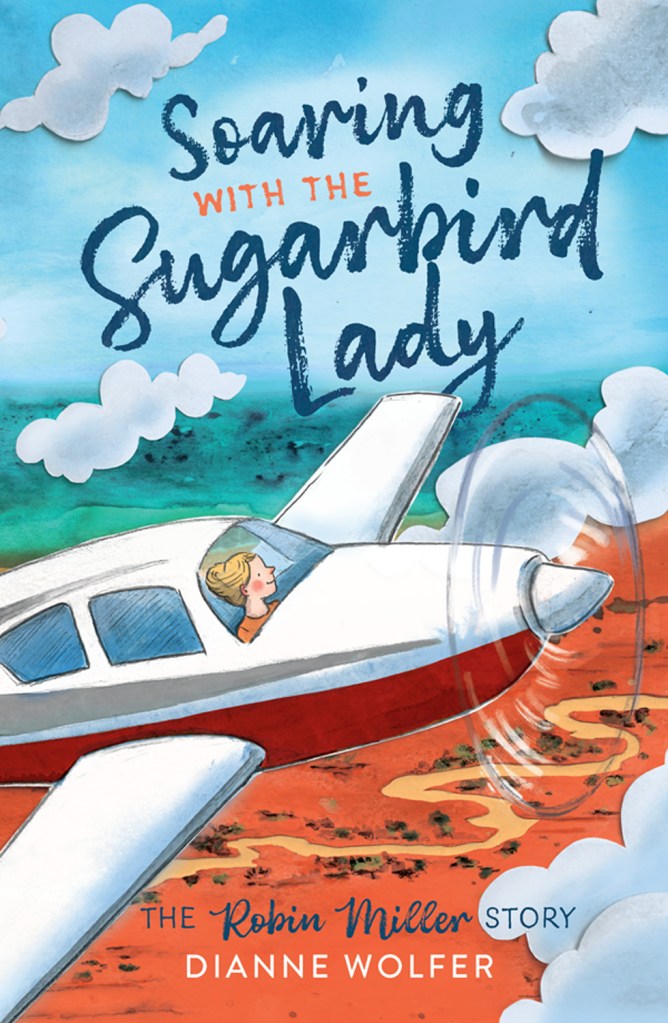
Soaring with the Sugarbird Lady by Dianne Wolfer, Fremantle Press, ISBN 9781760995270
REVIEWED BY ARJAN, 12, NSW
The publisher provided a review copy of this title.
Soaring with the Sugarbird Lady is about the story of Robin Miller. Since birth, Robin’s life was filled with the art of aviation. In her childhood, she would come home to the sight of Catalina aircraft roosting on the River Swan.
In Robin’s time, many people said that aviation was a man’s job and women could not participate and contribute to it. This angered Robin and fuelled her to push to fly even more, until she bought her own plane.
I found the book motivating. If you really want something, even in the face of challenges and you work for it, you can achieve it. I thoroughly enjoyed it. The description and the setting of the scenes really helped me picture Robin zooming over the Kimberly region in her little plane and vaccinating kids with anti-polio medicine dripped on sugar cubes, hence the name ‘sugarbird lady’. Anyone who likes adventure and aviation, this is the book for you.
In summary, I loved this book and the story itself. It’s a great book and I hope you will love it just like I did.
Dianne Wolfer is the award-winning author of 26 books, including the acclaimed ‘Light’ series, adapted for stage, street theatre, and choirs! She lives on the southwest coast with her husband, Pete, and dog, Harry. Today we’re thrilled to be talking to Dianne about her latest book, a biography of Robin Miller, Soaring with the Sugarbird Lady.
The publisher provided Alphabet Soup with a reading copy of Soaring with the Sugarbird Lady.
From the publisher:
Imagine flying solo, crisscrossing the north-west of Australia in your own plane, and single-handedly delivering life-saving vaccines to remote communities. Robin Miller did this, and at a time when most people didn’t think women should be pilots at all. Her arrival seemed like magic to the outback children who received her polio vaccine on sugar cubes. Before long, she became known as the Sugarbird Lady. And this was just the start of Robin’s extraordinary real-life adventures!
You’ve included quotes from Robin’s own diary at the start of each chapter. When you need to conduct research about someone from history like Robin Miller, how difficult/easy is it to find the information you need?
Researching someone as respected and loved as Robin Miller was challenging and an honour. To begin with I reread Flying Nurse, written by Robin and published in 1971, as well as The Sugarbird Lady, published after Robin’s death, and based on her diaries. I watched online presentations, including talks by Patsy Millett, Robin’s sister, and read books written by family members (Patsy, her father Horrie Miller, and mother Mary Durack). Both the State Library of Western Australia and the National Library in Canberra hold boxes of Robin’s papers and memorabilia. Sifting through items that Robin treasured helped give me a stronger sense of who Robin was, and how best I could write her story. I loved holding things like the brooch from her air race across the United States! After researching widely, I came back to Robin’s books. That’s where I heard her voice. Quotes from Robin’s books and diaries became the bedrock of my early drafts. Over many story drafts and edits, the quotes were pared back until just a few remain.
Other than diaries, how do you know when the information you find in your research is reliable?
It’s important to cross-reference and check all information. History is recorded by humans who can easily make mistakes and who write from their own perspective. I often asked myself, is this a trustworthy source?
Robin Miller packed in so much during her life and a book is a certain length – how do you decide what to leave out of the book?
Deciding what to leave out was the hardest part! My process is to overwrite then try to edit bravely, cutting out words and unnecessary scenes. So many amazing flights and adventures were left out while shaping the book, to keep the pace moving along. I hope readers will be inspired by Robin’s courage and determination, and that Soaring with the Sugarbird Lady will provide a taster to find out more about this amazing aviator.
When she was a young woman, society (and even family members) tried to put limits on what Robin could do in life and she persisted anyway. In your own life, have you ever faced limitations on what you wanted to do?
Readers might find it hard to believe that until the late 1960s, women who worked in the Australian public service had to give up their job when they married. My mother was one of them. Once the law changed, when I was seven, Mum returned to work. When I finished high school, four years after Robin’s death, it was still unusual for women to venture beyond teaching, nursing or office work. I was lucky that Mum encouraged my sister and I to embrace our adventurous spirits. She hid her worries when I travelled across south-east Asia alone and worked in a remote village in the Himalayas for a year. Over the years there have been improvements, but many industries are still challenging workplaces for women …
What’s next for you?
The start of 2025 has been busy, and wonderful. Three books are coming out with three different publishers: Soaring with the Sugarbird Lady (Fremantle Press), The Colt from Old Regret, illustrated by Erica Wagner (NLA Publishing), and Cattle Muster, illustrated by Frané Lessac (Walker Books). I’ve been working on each book for years and suddenly they’re all here!
I’m also excited to have just launched a newsletter. There’s a link to subscribe on my website. Two other exciting things that are happening: the regional tour of Theatre 180’s The Lighthouse Girl Saga, as well as the Chauvel Light Horse ride, where riders travel 750 km across regional Victoria/NSW to honour Sir Harry Chauvel. They’re presenting schools along the way with copies of The Last Light Horse, my book about the only horse to return from WWI.
Soaring with the Sugarbird Lady is out now! Look for it at your favourite bookshop or local library.
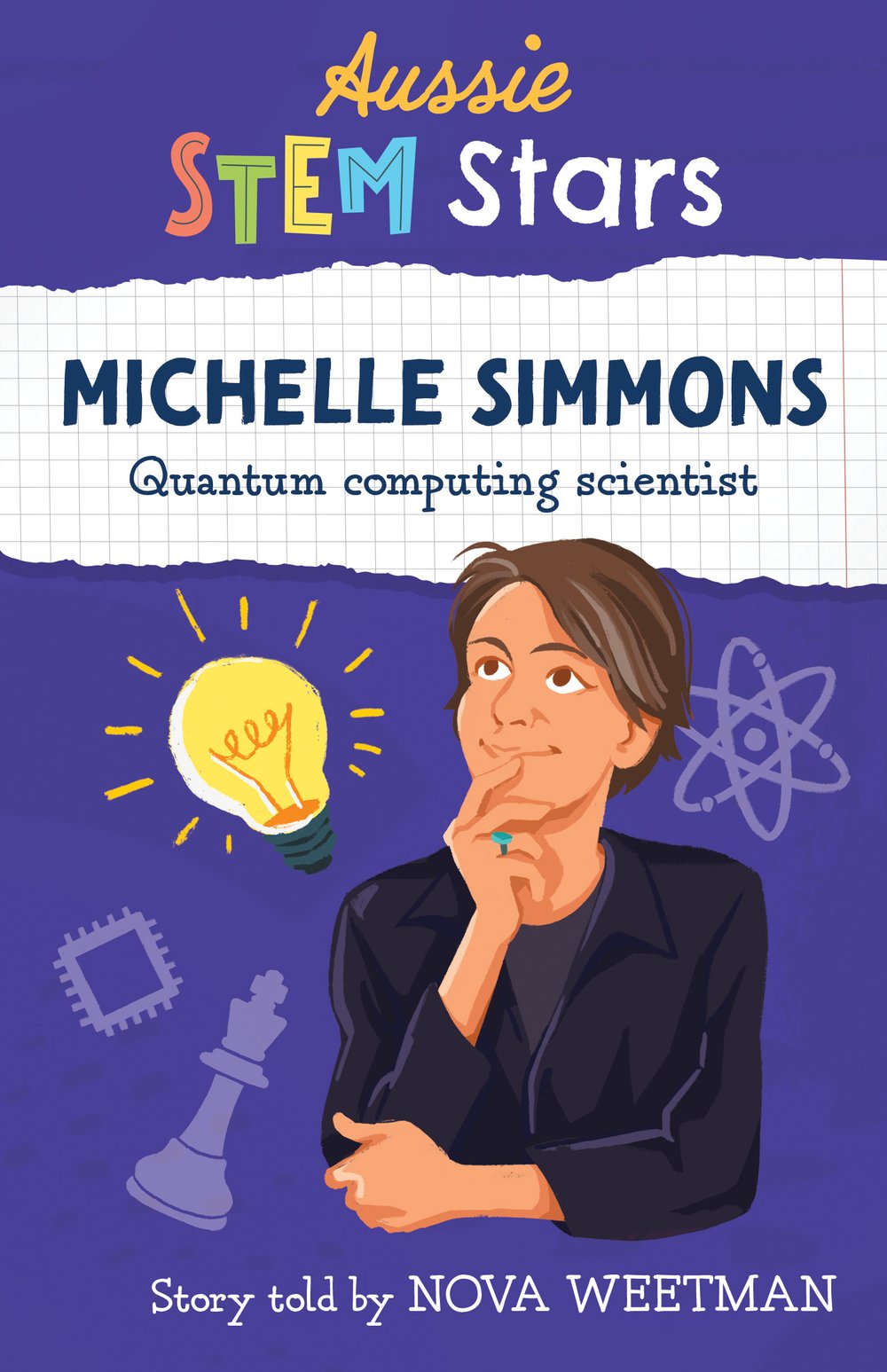
Michelle Simmons: Quantum computing scientist, told by Nova Weetman, Wild Dingo Press, ISBN 9781925893496
Gabrielle received a review copy of this book.
Michelle Simmons: Quantum Computing Scientist is penned by Nova Weetman, recording the life of the Australian of the Year for 2019. It unfolds the remarkable journey of a young girl who develops into the unconquerable English chess champion and discovers her passion for quantum computing, eventually leading to a groundbreaking achievement—the construction of the first silicon based quantum computer. Alongside her triumphs, the narrative delves into the challenges faced by her brother, Gary, who struggles with Behçet’s syndrome, a rare and deadly blood disease.
When Michelle developed the idea of using silicon to manufacture millions of micro transistors to the atomic level, skeptics among the English scientific community dismissed it. Despite the prevailing belief that increasing the production of silicon wouldn’t yield significant benefits, Michelle found support for her vision in Australia. A multi-million-dollar project was started, demanding years of careful planning to ensure each component met the stringent standards, given that even the slightest imperfection could lead to failure. Ultimately, the first silicon quantum computer emerged—a machine capable of completing calculations in hours that would take a computer years.
I would rate this book 4.5 out of 5 for its touching narrative and the valuable moral lesson it imparts—that with dedication and persistence, the seemingly impossible can be achieved.
I recommend this book for readers aged 10 and above, especially those with an interest in robotics and science.
Skye Blackburn-Lang: Eating bugs for the planet by Dianne Wolfer, Wild Dingo Press, ISBN 9781925893694
The publisher provided a review copy of this book.
Have you ever eaten a bug cookie? Well, Skye Blackburn-Lang has.
As the oldest child, Skye was curious about animals that when she was younger she even tried to eat a snail! She lived in Port Macquarie and Sydney where she took home insects to investigate and observe. Skye went to a museum on insects where she found jars of insects and spiders stacked to the ceiling. That’s when she knew that she wanted to be an entomologist. She was so interested in insects and spiders that she had a pet tarantula called Fluffy and she even kept its exoskeleton mounted in a frame!
This book is interesting because it is about Skye’s childhood and how she mixes food science and bugs to make sustainable food. Unlike the other books in this series this book is colourful, has photographs of insects and spiders and has two insect recipes at the end. I thought it was lovely.
I rate this book 10/10. I recommend this for children above 7 years old and those who like bugs.
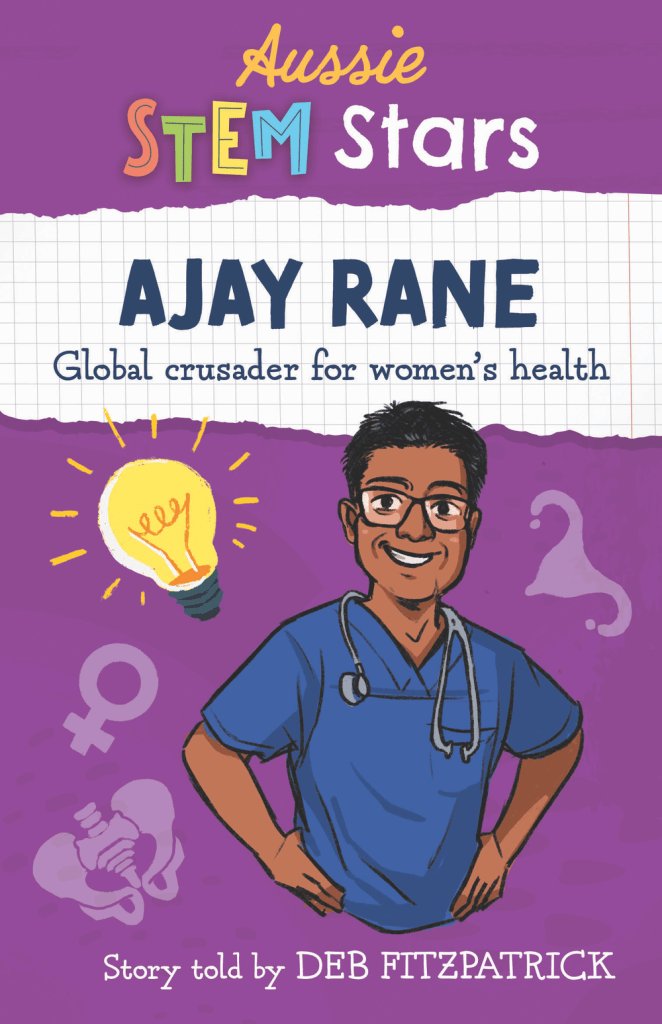
Ajay Rane: Global crusader for women’s health by Deb Fitzpatrick, Wild Dingo Press, ISBN 9781925893595
The publisher provided a review copy of this book.
‘Who is Ajay Rane and why should Australians know him?’ I hear you ask curiously. He is Dr Rane and he is an advocate for women’s health. He saves women’s lives by helping women who suffer from fistula after giving birth.
It all started with Ajay’s paternal grandmother. She told Murli, Ajay’s father, to remember the work he learnt at school. Murli tried his hardest and eventually became a doctor. Then he started a hospital in his home town. This is when Ajay comes into the story. Ajay followed his dad’s footsteps and became a doctor.
One of Ajay’s patients made me cry. She was a nurse until she had a baby and she could not go to work because she had fistula after giving birth. Then her husband kicked her out of the family. What will happen to her now?
I love this extraordinary book because it takes us back to Ajay’s ancestry. I have learnt so much about Ajay Rane and his family, like when Ajay was younger he celebrated the Diwali Festival with his family. Another section that was funny was when Ajay’s brother went to the toilet in his grandmother’s place in India only to find a pig in the toilet pit.
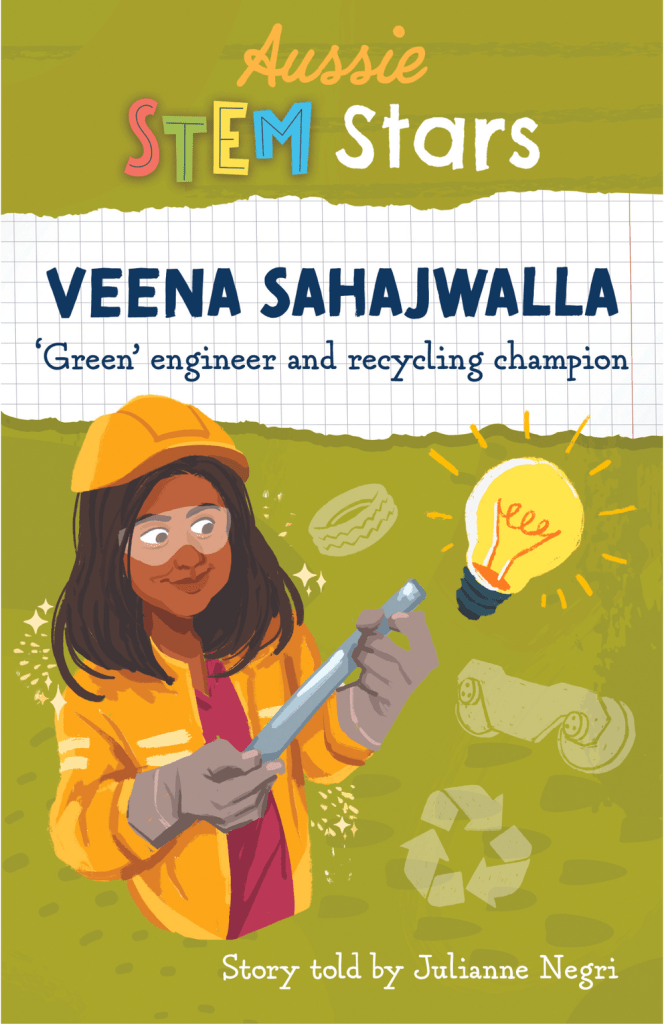
Veena is an inspiring person to the next generation because she changed the world by inventinggreen steel. When Veena was little she just liked to ride on her dad’s scooter around Mumbai all the time. But she did not think that she would become the recycling champion in the future.
From reading this book, I learnt that Veena is a very diligent, persistent and resilient person. When she was in school she did extra work because she loved doing homework. She was the only girl in the class in her university studies and she tried her best.
I rate this book 10/10 because this has even inspired me to be an engineer.
Veena Sahajwalla: ‘Green’ engineer and recycling champion is out now! Ask for it at your favourite bookshop or local library.
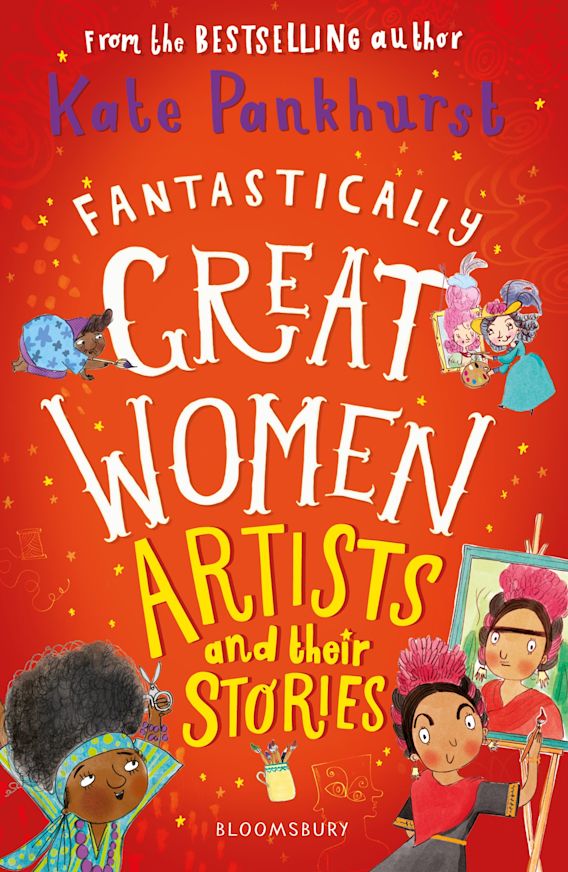
Fantastically Great Women Artists and their Stories by Kate Pankhurst, Bloomsbury, ISBN 9781526615343
The publisher provided a review copy of this book.
Fantastically Great Women Artists and their Stories is a non-fiction book. It is written by Kate Pankhurst and is about seven artists and one art collector. The artists in the book are Elisabeth Louise Vigee Le Brun, Frida Kahlo, Amrita Sher-Gill, Kathe Kollwitz, Dame Laura Knight, Emily Kame Kngwarreye and Faith Ringgold. The art collector is Peggy Guggenheim. She created one of the most important art collections in the world.
I learnt about the lives of these women. I knew a bit about Frida Kahlo already but I learnt more from this book. I found Kathe Kollwitz the most interesting of them all. At a time of war she showed parents and children grieving in her art works. The book made me feel sorrow and happiness. It made me feel inspired too.
The illustrations are detailed and show what the lives of the women were like. Although they have no colour they are spectacular.
I recommend this book for people who like doing art. It is good for people who are seven and over.
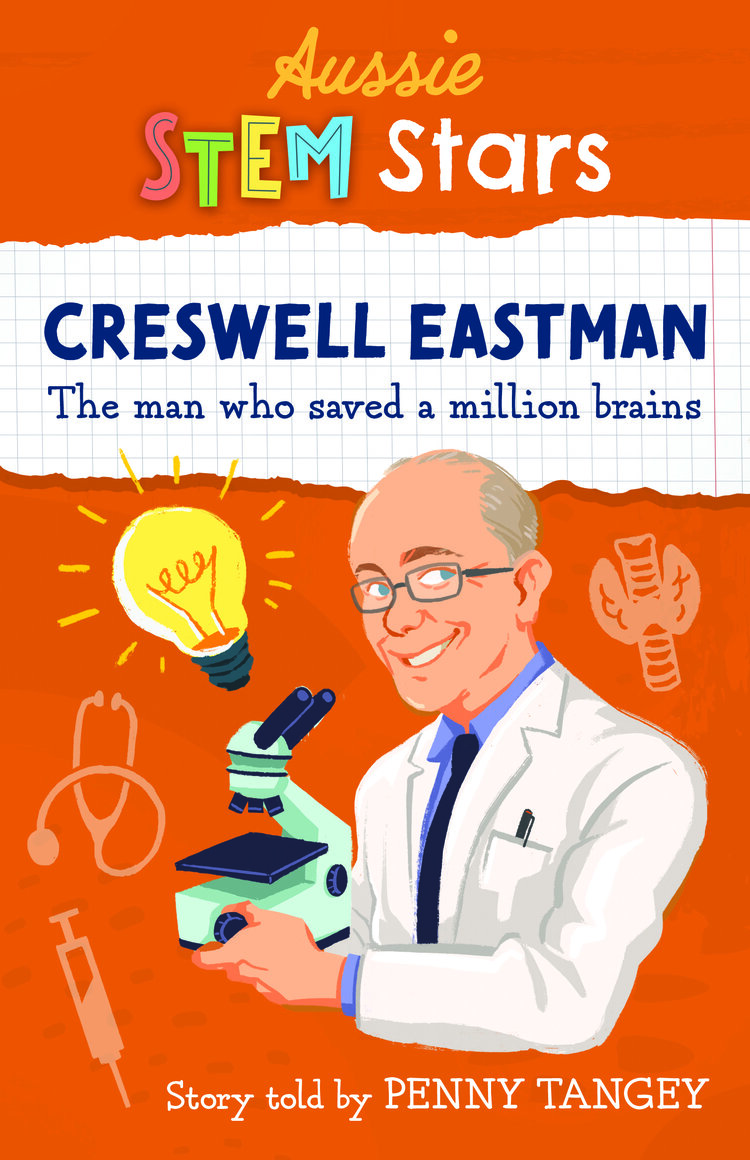
Creswell Eastman, the Man Who Saved a Million Brains by Penny Tangey, Wild Dingo Press, ISBN 9781925893526
The publisher provided a review copy of this book.
Creswell Eastman was the smartest child in the class. One day, Sister Francis asked Creswell to follow her in the hall. They walked through the senior school, into the classroom and he saw his older sister. He was tested to see if he was better at maths than anyone else. That afternoon a boy punched him for being better at maths. The next day at lunchtime his teacher, who was a nun, taught Creswell to defend himself. The following day the boy was waiting for Creswell. What would Cres do?
The thing I enjoyed the most about the book by Penny Tangey was learning how Creswell used medicine to help people. It is amazing that he saved so many people’s lives in Asia.
I recommend this book to 8 years old and up because it is wonderful and interesting. I rate this book 10 out of 10.


 alphabetsoup.net.au