Thanks to everyone who entered our Wombat Divine giveaway. (Refer to the comments at that post to see who won, if you haven’t already!)
We thought we could squeeze in one last book giveaway before Christmas is upon us. A while back we reviewed Bush Secrets, by Tjalaminu Mia and Jessica Lister, about a granddaughter sharing a secret with her grandfather, and then Grandpa sharing a special place in the bush with her.
We have one review copy to give away! To enter, leave a comment at any post on Soup blog, telling us the title of a children’s book you love (0r loved as a child!) that has a Christmas theme.
This giveaway has been extended and entries close on Thursday 24 December 2009 at 5 pm Perth time (that’s Perth in Western Australia!).
Well, there are only 7 sleeps left until Christmas day!
At this time of year, when I’m reading books to my children at bedtime, we always have at least one Christmas-themed book and (as we’re running out of days to talk about them) I thought I’d list a few all in one post!
One book that we continue to pull out since my eldest daughter was little is The Nativity, illustrated by Julie Vivas. It uses text from the Authorised King James Version of the Bible to tell the Christmas story and the illustrations really glow and make this a wonderful book. (You might know her illustrations from other books, like Possum Magic, Wilfrid Gordon McDonald Partridge and Our Granny, or many others!)
We also love Twelve Days of Christmas by Rachel Griffin. It comes with a CD of the song ‘The Twelve Days of Christmas’ and each double-page spread in the book covers one day of the twelve days. Each page has photographs of brightly-coloured embroidery showing scenes from that particular day – our favourites: the Five Gold Rings worn by an elephant, and the Pipers Piping, who are snake charmers. We love this book and we never get tired of the fun CD, and of course, the twelve days of Christmas aren’t over until Epiphany, so we can keep listening until well after Christmas! (This was published in the UK and my children seem to think that the twelfth day should be ‘Drummers drumming’ and not ‘Lords-a-leaping’, but I don’t know if this is an Australian preference or a Newman-children preference. If we’re singing it along with a piano we go with my children’s preference, but we respect the CD version when we’ve got that on!)
I believe Twelve Days of Christmas is currently out of print, which is A TERRIBLE THING! But I’ve seen it at several public libraries, so you could add it to your ‘must borrow’ list.
The Twelve Dogs of Christmas by Kevin Whitlark arrived in our house just before December and (you guessed it) is a silly version of ‘The Twelve Days of Christmas’ and full of all kinds of dogs doing doggy things. We like to sing ‘Three French Poodles, Two chewed up slippers, and a fat cat in a fur treeeeeee’ very loudly. If you love dogs (and Christmas carols), you will love this picture book. It really is very silly but it’s good fun and has been read quite a few times since it first arrived.
What about your holiday reading? Do you have any Christmas books that you just love and you think we should know about?
~ Rebecca Newman (Editor, Alphabet Soup magazine)
The Nativity, illustrated by Julie Vivas, Omnibus Books, ISBN 1862910529. This book was selected for review from the Editor’s own collection.
Twelve Days of Christmas, by Rachel Griffin, Barefoot Books, ISBN 9781841489407. This book was selected for review from the Editor’s own collection.
The Twelve Dogs of Christmas, by Kevin Whitlark, Scholastic Australia, ISBN 9781741694451. A review copy of this book was sent to us by Scholastic Australia.
For children in Western Australia, the Premier’s Summer Reading Challenge runs from 7 December 2009 until 8 February 2010.
On the ‘kids’ section of the website, you can find out about some authors and illustrators, register for the Challenge and download an entry form. (Make sure you get your mum or dad’s permission before doing this.)
And your parents can take part in the Challenge (and even win prizes), so make sure they get some reading in over the school holidays too! (Tell them to check out the ‘parents’ page on the website.)
Q: What should children read? A: Children should read what interests them. This could be a variety of books, magazines, comics and newspapers. They all count towards completing the Challenge.
See – you can even read Alphabet Soup and it counts. (And you’d be reading that anyway, right?)
The summer ’09 issue of Alphabet Soup includes a Q&A with Christine Harris. We decided to publish the Q&A here too, with a couple of extra sections that didn’t fit onto the pages for the magazine layout!
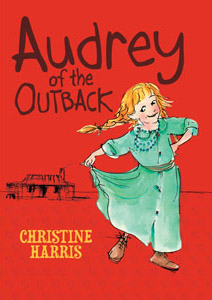
Christine Harris is the author of 50 books, including Audrey of the Outback. She was nine years old and sitting up a tree when she wrote her first book. (She claims not to sit in trees when she writes these days. Perhaps it’s too hard to lug a computer up there.)
What do you love best about being a writer?
The surprises, in both the writing and the things I learn about the world, myself and my characters.
The readers that I meet in person and through emails, I love their enthusiasm and eccentric ways of viewing life.
Freedom and the ability to make a difference with my words.
Where do you live?
In my head mostly. But my house is in Mt Barker, South Australia
What made you become a writer?
An impulse that I can only describe as a driving force. Even as a child I was captured by stories, telling them, reading them and then writing some.
Was it easy to get your first book published?
No. But I was determined. I gave myself three years to make something happen. I started with competitions, then went onto articles in magazine and newspapers and, eventually, publishers. I have had books shortlisted for prizes that were rejected previously by other publishers. My first short story was rejected 17 times, before someone said yes.
So? All great things take a lot of effort! The trick is to inform yourself of your best markets, be professional, creative and never give up.
Are there any ‘downsides’ to being a writer?
Starvation, isolation … any ‘ation’ you can probably think of. But, seriously, it is important to get out sometimes, rather than just staring at a computer all day. Talk to another human at least once a day. And it’s hard waiting for my agent or a publisher to say whether they like my material or not. That’s agony. Some parts of writing are boring, but not many. And if I feel like that I take a break or play music or sounds. I bought some CD which are just natural sounds like birds or rain or the ocean and they have no music or words.
What was your favourite book as a child? A Wrinkle in Time. Scared the pants off me. Then there was Midwich Cuckoos, The Chrysalids – oops, looks as though I like being scared.
Do you have any pets?
Just my husband, David. And he’s quite house trained.
Where do you get your ideas/inspiration?
Anything I see, hear, feel, smell, read … sparks come from all manner of places. What is important is to let the idea run its full length, allow time to mull over it, ask ‘What If?’ and write notes.
Of your own books, which is your favourite?
I don’t have a favourite because I only write books I like, and it depends on my mood which genre I might choose on any day.
What do you like to do when you are not writing?
Knit, watch movies, work in my garden, hike, read, and scour YouTube for funny videos.
Do you mostly write in a paper journal, or use a computer?
Computer, these days. My handwriting is awful now, and I can type faster. Also typing on the computer allows me to change or save very easily. But I do have a collection of notebooks that I use for ideas and some planning.
Are you working on a book at the moment? Can you tell us something about it? Maze is a psychological thriller for readers 11+ and I am halfway through, but I can’t talk about it as I am superstitious and think it will disappear if I talk about it too soon.
Do you have any advice for young writers?
Write often, in your own voice, and remember to enjoy it!
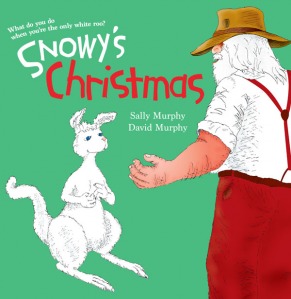
Today I am talking to Sally Murphy and David Murphy, author and illustrator of Snowy’s Christmas (reviewed in an earlier post). We asked Sally and David to share 5 things each – things you might not already have heard about their book!
You’ll find their answers if you read on. But before you do – we have one copy of Snowy’s Christmas to give away!
If you’d like a chance to win, email editor@alphabetsoup.net.au and tell me the date that David finished the final illustration of the final draft. (Hint: he tells you below!) I’ll put all the entries in a santa hat and draw out the winning name on 25 October 2009.
Now – over to you Sally and David!
Sally:
1.Snowy’s Christmas was inspired by the story of Rudolf the Red Nosed Reindeer. I have always bought lots of Christmas books for my own children, and when I bought a new version of Rudolf, it set me thinking about how people adapt and retell stories. I started thinking about how I could retell the story in an Australian setting – and wrote the earliest draft of this story.
2. It took several years from writing Snowy’s Christmas to sending it to a publisher. After I had written the story, I was at a conference where I heard a publisher say that Australian publishers were not interested in seeing manuscripts for Christmas and other seasonal stories, because it was cheaper to import them. I believed her, and so didn’t persevere with the story (though I did once submit it to a website, which then closed down – hopefully not because I’d submitted to them). Then, a few years ago publishers did start producing Australian Christmas stories, very successfully. But it took for Linsay Knight, the publisher at Random House, asking if I could adapt a manuscript of mine she was interested in for the Christmas market before I finally submitted Snowy. And boy am I glad I did.
3. I really have seen a white kangaroo – in fact several, at a wildlife park in Western Australia. You can see a photo here: http://wwwcavershamwildlife.com.au/feed-kangaroos.html I don’t know a lot about them, but believe they are not albino, but fairly rare.
4. The book was illustrated by my brother-in-law David. Okay, you might have already known that, but did you know that it is very rare for the author and illustrator to get to choose each other? Usually this is a decision made by the publisher. In this case, though, Linsay from Random House actually asked me to have David do some sample illustrations when I submitted the manuscript. I had known Linsay for quite some time and she met David when she sat with us at a conference breakfast. I think maybe she liked us, or at least the novelty of a family team. It was fun, and also special, to get to work with David.
5. The first draft of Snowy’s Christmas was about 1600 words – too long for a picture book. I did manage to cut it down to about 1000 words before I submitted it to Random House, but during the editing process we reduced it even further – it’s only about 600 words now. Picture book texts need to be short for young readers and often there is a lot that can be shown in the illustrations without needing to be told in the text.
David:
1. The illustrations for Snowy were sketched entirely with my left hand using pencils. I then used my right hand to ink the line work. After that, the line art was scanned and I completed the colouring using my computer. For each illustration there were multiple sketches before the right one was found. I would have drawn each page 6–10 times.
2. Snowy’s red roo friends were based on a mob of kangaroos who live in the bushland near my house. I was particularly interested in the joeys who spent hours chasing each other around and boxing.
3. All the white boomers have names and their own stories. Sally, Kimberley (the editor) and I discussed who they were and what their personalities were. These completed their characters in my mind and allowed me to create more meaningful illustrations.
4. The very first sketch I did for the book was of Snowy and his mum. He was quite small, which made me worry if he would be strong enough to pull the sleigh, so I made him a bit bigger.
5. The final illustration for the final draft was completed on Christmas Eve!
—
If you want to find out more about the book, Snowy’s Christmas has its own website: http://aussiechristmas.wordpress.com/ (You can even hear David in a radio interview!)
And the book is going on a blog tour in the lead-up to Christmas. Here’s where you’ll find Sally and/or David talking about Snowy:
Over the next few months, I’ll be reviewing a number of Christmas books. (Last year I reviewed Roland Harvey’s Big Book of Christmas, and that will certainly be back on our shelf when we pull all the boxes of tinsel out of the back cupboard!)
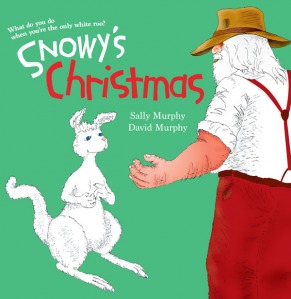
I have a number of Christmas books in my ‘to read’ pile, and on top of the pile is a picture book – Snowy’s Christmas, by author Sally Murphy, and illustrated by David Murphy.
Snowy is a white kangaroo and he’s feeling a bit ‘left out’. He can’t win races against the other roos as he bounces short and high – instead of long and low. He’s no good at hiding (it’s easy to spot a white kangaroo against all that red dirt), and he looks sadly into the billabong to see his ‘face reflected in the water was not rugged and red like the other roos, but soft and white.’
But then he meets a stranger, who shows him that his differences make him the perfect choice for an important job …
Snowy’s Christmas puts an Australian spin on the story of ‘Rudolph the Red Nosed Reindeer,’ and adds something ‘snowy’ to our hot summer Christmases! Snowy’s story is accompanied by David’s fun illustrations – make sure you look for a touch of Christmas on almost every page turn. (I really love the star stuck to an echidna’s spines, and the jingle bells around the neck of a platypus.)
This is a great picture book for celebrating Christmas in the heat.
Snowy’s Christmas is going on a blog tour, and we’ll be talking to the author and the illustrator here, on Sunday 18 October 2009. Be sure to stop by then for your chance to WIN YOUR OWN COPY of Snowy’s Christmas!
A review copy of Snowy’s Christmas was sent to us by Random House Australia
Australian author, Claire Saxby, is on a blog tour with her new picture book, Sheep, Goat and the Creaking Gate (illustrated by Judith Rossell.) Today we are talking to Claire about how she goes about writing a book, the illustrations in a picture book, and how long it takes for a picture book to be published.
How did you get your idea for the story of Sheep, Goat and the Creaking Gate?
I don’t actually remember where the original idea came from. I think it started with the creaking gate as I liked the idea of the silence and tranquility of the countryside being interrupted by the grating sound as Sheep became dissatisfied with her lot.
Where do you write your stories?
I generally write directly to the computer. I always travel with a notebook and will jot down ideas but I’ve become so accustomed to drafting on computer that I seldom draft on paper. However, when I’m stuck, I do use paper and pen, or even pencil. I just write and do the ‘what if?’ thing over and over until I work out where I need to take the story. When I do use a notebook, I only write on one side of the page, using the other side for notes, or facts I need to research
What do you do with drafts of the book once the book is published? Do you throw them away?
I tend to keep drafts. I’m not good at throwing much away although I do usually file them quite neatly! I’ll print out really different drafts, or save them as separate documents, particularly if the new draft is going in a really different direction. It’s like insurance, in case the new draft just loses its way. It’s always interesting to look back at the early drafts and see how a story has changed.
How do you come up with a title for your books? Does the title come to you before you write the story?
I love titles. I love finding the right title for each story. Sometimes it’s easy and sometimes the title even comes first, but not always. Then I do use paper and pen/pencil. I write down words or potential titles and keep doing it until I find the perfect title. If the story has changed a lot, often the title needs to change to reflect that. For Sheep, Goat and the Creaking Gate, the title came quite early although the story changed a lot through the drafting. I toyed with the idea of using specific names for the characters, but returned to the generic ‘sheep’ and ‘goat’. I’m not really sure why, but names can sometimes be too specific.
Do you ever change the title after you’ve written the story?
Sometimes, as above. But sometimes a publisher will suggest that the title change. There can be many reasons for this. For one book I did, the title was too similar to the previous one. Not in subject or style, but just in how they sounded. The title I had was also similar to another book still in print and the publisher felt this could cause confusion. That was an interesting process as I also decided to change the name of the character … even harder than changing the title. It took several weeks before I found an alternative character name that was a good fit. Then the title was easy.
Did you meet with an editor in person, or discuss your book via email?
There’s a bit of both, depending on where the publisher is. For Sheep, Goat and the Creaking Gate I met once with the editor face-to-face, but then we were in touch via email. Roughs (pencil sketches) and proofs (full colour art with some or all layout) are either emailed or posted to me and then there are phone and/or email discussions.
What does an editor say to you?
It varies with the project. Sometimes it’s global things, like ‘The text is a bit long, can you look at tightening it?’ Other times it can be very specific. I had an email conversation (several emails) about the placement and use of punctuation. After sketches and proofs the discussion will be about the relationship between text and illustrations and also about the layout.
Is it hard to make changes? Do you have to make the changes that an editor suggests, or can you say ‘no’ sometimes?
It can be hard, but producing a picture book is a collaboration despite the writing coming first, then the illustrations. Sometimes the changes are easy because a fresh set of eyes can point out something which then seems really obviously out of place. Other times, the changes will be about being clearer about my intention. Then I’ll clarify in discussion what I was trying to say, and the editor/publisher will say whether or not that’s been clear. Sometimes that leads to changes, sometimes tweaks, occasionally more. Editing for length can be tricky, but it’s all about making the book as strong as possible and leaving room for the illustrator to work their magic.
Do you make suggestions for the illustrations, or leave it to the publishing team and the illustrator to decide?
I generally don’t have a sense of what my characters look like unless it’s relevant for the plot (and it often isn’t). I am always very excited to see the first sketches to see what my characters look like from the outside. I write looking out through their eyes so don’t see what they look like to others. Most publishers prefer not to have any illustration suggestions, as it may limit the illustrator. There are times where I might put a very brief ‘Note for illustration’, but not often.
Do you see the illustrations before the book is published?
It varies but usually I’ll see a rough outline of the whole book. Then I’ll see coloured images, sometimes one or two, and then proofs when some layout and design has been done. Sometimes I’ll see a character sketch first, before the roughs are done. It’s always very exciting and I generally wear out my family and friends showing them everything!
When you’ve written a story, how long does it take before it is published? Sheep, Goat and the Creaking Gate was accepted in mid 2007, so it will be just over two years from acceptance to release. That might seem a long time, but is fairly average in the world of picture books. It can take much longer. I have several other projects that have been longer in production. The timing has many components. Once the publisher accepts the manuscript then there is the search for the illustrator. Then the illustrator has to schedule in the time (up to six months or more) that it might take to do the illustrations. Next there is design and layout time and then printing. It’s a long process.
Are you working on another project now? Can you tell us anything about it?
I’m always working on several projects at once. They will generally be at different stages and of different length. Some will be at the research and reading stage, others in first, second, tenth draft form. For example, I’m working on a poem about a beautiful old tree in our street that has just been cut down, a picture book manuscript about a critically-endangered Australian animal, a historical novel set in early Melbourne and a non fiction biography.
Do you have any tips for budding authors?
Claire Saxby
Read and write. Simple as that, hard as that. Read widely because it helps a writer understand their world. Read for fun. Just read. And write. Know that your first draft will not be perfect, but by practising a writer will discover their voice. Write shopping lists, write letters, write novels and poems. Eventually you will learn how you most want to write and to make your work sing.
You can find out more about Claire Saxby and her books by visiting her website.
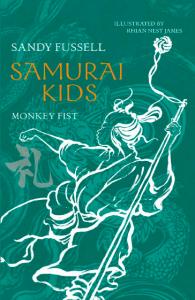
As promised, today we are talking to Sandy Fussell – the author of the Samurai Kids series. The fourth book in the series – Monkey Fist – was published on 1 August 2009. (It’s hot off the press!)
To celebrate its launch, Sandy is taking Monkey Fist on a Blog Tour. We’re excited to have her visiting Soup Blog today, and we asked her some questions about how she does the research for her books.
But first, a little about Monkey Fist:
Set in 17th century China, Monkey Fist follows the adventures of a group of samurai students and their teacher, Sensei Ki-yaga. Each student has a challenge to overcome on his personal journey.When Kyoko is kidnapped and hidden away in the Forbidden City, Sensei and the kids hurry to her rescue. They are aided by the Lin, a group of Chinese forest ninja and by Master Jang, the Poisoner.
And now, some questions for Sandy!
How do you do the research for your books?
I love the Internet but when using it for research you have to be very careful that the information is coming from a credible source – someone who knows the subject. The internet is both trap and treasure. I have been collecting history books since I was a child so have a huge personal collection covering my areas of interest – and am always looking for an excuse to buy another book. I like to write about the periods of history that are not so well known so there aren’t many relevant books in my local libraries. I do consult experts and they are always very happy to be involved in research for a children’s book.
Do you have a favourite way to research?
I love the internet because it is a real treasure chest. Following a link can lead to the most interesting and obscure information. I find things I didn’t even know I was looking for.
My real favourite of course, would be travelling overseas to do my research first-hand but I don’t think that is going to happen in the near future. Unfortunately. *Sigh*
How do you record your research, and why do you do it this way?
I make lots and lots of notes. I photocopy book pages and print out web sources. It’s important to document all the facts used when writing history.
I found this out the hard way. After I finished my first book, White Crane, I threw out all my notes. Then my publisher, Walker Books asked me for references to support the historical facts I had used in the narrative. I had to relocate everything and reproduce 30 typed pages of notes. It felt like I had written another book!
Before you write anything, do you get all your research done first? How do you know when to stop researching and start writing?
I like to spend a solid month researching and thinking about where my plot will fit – as in the geographic location, any significant events occurring at the same time. Then I start to write.
I am very structured and the Samurai Kids books are always on a deadline. I allocate a month because a month is all the time I’ve got.
How do you use your research when you sit down to write?
I reread constantly. Little facts take on new significance as the story emerges. I particularly like to read primary sources – texts written by people alive at the time. One of my favourites is The Book of Five Rings by the legendary samurai swordsman Miyamoto Musashi.
Do you enjoy the research as much as the writing? (Or is the writing more enjoyable?)
If I am writing a historical novel the two are so entangled they are impossible to pull apart. But I don’t want to try as I love doing both.
Do you ever find out something in your research that means you have to take the story in a direction you weren’t originally planning to?
Recently I discovered an arquebus (gun) from the mid-seventeenth century can only fire once before reloading. In the second chapter of my current manuscript (book 5) my character shot two birds in succession. So far it has always been small stuff like that and doesn’t affect the story direction. However I am a stickler for getting the facts right and check my references quite thoroughly so I don’t often find research errors.
How much time would you spend on each book in Samurai Kids?
The Samurai Kids books are generally on a six month schedule. I research for one month, write for four months and then revise and rewrite for one month in addition to the revision I do as I go. I always say there is a lot of mathematics in writing – the planning, the pacing and all those word counts!
—
Monkey Fist by Sandy Fussell
This is the eighth stop on the Monkey Fist Blog Tour. You can find out more about Sandy Fussell, the Samurai Kids series, and Monkey Fist by visiting the other hosts on the tour. (You can also visit the Samurai Kids website for fun activities related to the books, and take a quiz to find out which Samurai Kid you are!)
Sandy Fussell, the author of the Samurai Kids series, is taking Monkey Fist on a blog tour, starting today! Visit the first stop on her blog tour to read an interview with a character from Monkey Fist. (Sandy will be stopping by Soup Blog on 8 August to talk about how she does her research for the Samurai Kids books. See you here!)
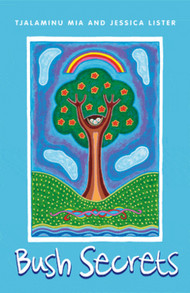 We thought we could squeeze in one last book giveaway before Christmas is upon us. A while back we reviewed Bush Secrets, by Tjalaminu Mia and Jessica Lister, about a granddaughter sharing a secret with her grandfather, and then Grandpa sharing a special place in the bush with her.
 One book that we continue to pull out since my eldest daughter was little is The Nativity, illustrated by Julie Vivas. It uses text from the Authorised King James Version of the Bible to tell the Christmas story and the illustrations really glow and make this a wonderful book. (You might know her illustrations from other books, like Possum Magic, Wilfrid Gordon McDonald Partridge and Our Granny, or many others!)
 We love this book and we never get tired of the fun CD, and of course, the twelve days of Christmas aren’t over until Epiphany, so we can keep listening until well after Christmas! (This was published in the UK and my children seem to think that the twelfth day should be ‘Drummers drumming’ and not ‘Lords-a-leaping’, but I don’t know if this is an Australian preference or a Newman-children preference. If we’re singing it along with a piano we go with my children’s preference, but we respect the CD version when we’ve got that on!)
 The Twelve Dogs of Christmas by Kevin Whitlark arrived in our house just before December and (you guessed it) is a silly version of ‘The Twelve Days of Christmas’ and full of all kinds of dogs doing doggy things. We like to sing ‘Three French Poodles, Two chewed up slippers, and a fat cat in a fur treeeeeee’ very loudly. If you love dogs (and Christmas carols), you will love this picture book. It really is very silly but it’s good fun and has been read quite a few times since it first arrived.
 The summer ’09 issue of Alphabet Soup includes a Q&A with Christine Harris. We decided to publish the Q&A here too, with a couple of extra sections that didn’t fit onto the pages for the magazine layout!
 What made you become a writer?
 Are there any ‘downsides’ to being a writer?
 Where do you get your ideas/inspiration?
 Today I am talking to Sally Murphy and David Murphy, author and illustrator of Snowy’s Christmas (reviewed in an earlier post). We asked Sally and David to share 5 things each – things you might not already have heard about their book!
 I reviewed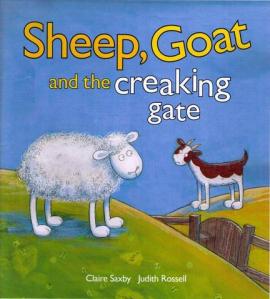


 As promised, today we are talking to Sandy Fussell – the author of the Samurai Kids series. The fourth book in the series – Monkey Fist – was published on 1 August 2009. (It’s hot off the press!)
 alphabetsoup.net.au