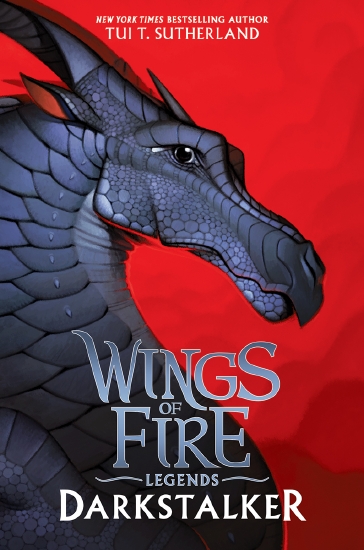
Wings of Fire Legends: Darkstalker by Tui T. Sutherland, Scholastic Inc, ISBN 9781338053623
REVIEWED BY SCARLETT, 10, QLD
Scarlett reviewed her own copy of this title.
Darkstalker is a book about dragons, and not just any old dragons. They are as complicated as we humans are.
It is a legend that happened 2000 years before the main Wings of Fire series, but I know it’s by far the best Wings of Fire book.
This book is about an Ice Wing Prince and a Night Wing who have eggs together and one of the eggs is … Darkstalker. One way or another he is going to change the dragon world forever whether it’s through tragedy or harmony but only he can decide …
If you want to know about the extraordinary terrain that the dragons live in, you can see it on the very well-drawn, detailed map at the front of the book. It’s enchanting to look at.
The characters are realistic and complex. The dragons seem like real people, especially Darkstalker. He has lots of different viewpoints and questions his view of the world. He is not one dimensional like superheroes often are.
My favourite character is Whiteout. She is a unique and very interesting character. She shows emotional and social development as the story goes on.
The author is very good at writing in first person, so everyone who reads it can understand the characters from the dragons’ own point of view, not from the author telling us about them.
The description in this book is exquisite. It is so immersive you will feel like you are really there. For example:
“… rain poured from a grumbling, fire-breathing sky. The river at the bottom of the canyon swelled and roared and ate the walls, sending all the dragons who lived down there scrambling for higher ground. The wind was so fierce it seemed to be sent from vengeful Ice Wings to rip every Night Wing out of the sky. It was veering quickly from a storm to a baby hurricane.”
This book is good for philosophical people, fantasy lovers, or people who are reading / have read the Wings Of Fire series before.
I think this book is suited to mature 9–11-year-olds and above because there are some philosophical topics and diaologue that may be difficult to understand and some violence towards the end.
And I rate this book 10/10.
This is Scarlett’s first book review for Alphabet Soup. To send us YOUR book review, read our submission guidelines. Happy reading!
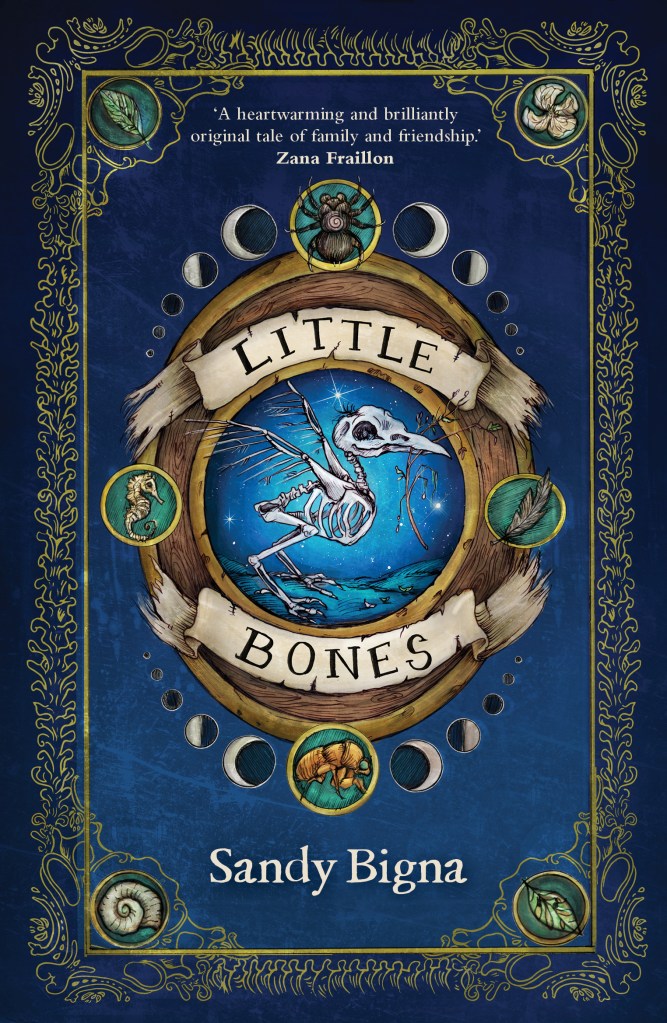
Little Bones by Sandy Bigna, illustrations by Tamlyn Teow, UQP, ISBN 9780702268878
REVIEWED BY MARLEY, 9, WA
The publisher provided a review copy of this book.
Little Bones is about a girl called Bones and she loves collecting animal bones for her collection. She doesn’t have many friends at school and people think she’s a freak. She ends up finding a little skeleton of a bird at the wetlands, she brings it back to her house and wishes the bird would come alive again. And guess what? He came alive.
The book is very different to other books I’ve read. It’s way more heart-warming and has different formatting. And I love the front cover.
I liked how there was always a cliff hanger and you could never stop reading the book without finding out what happened next.
My favourite character was Tenny, because Tenny is really sweet and kind. They are the perfect match for Bones as they are kind of Bones’ happy shadow. I liked the inclusion of diverse characters.
I liked the setting because it has very big home cosy vibes and it makes it feel more realistic.
I found the story very interesting because there aren’t many stories about people dying in kids books, but i think more should because you can’t just hide away what’s sensitive from kids. I didn’t find myself being sad, but intrigued to see how Bones would overcome her own sadness and regret.
I think people that are not super sensitive would enjoy this book. Its a mix between fantasy and adventure and about overcoming your fears. Also people that don’t feel like they belong might be intrigued to find out what’s in this book.
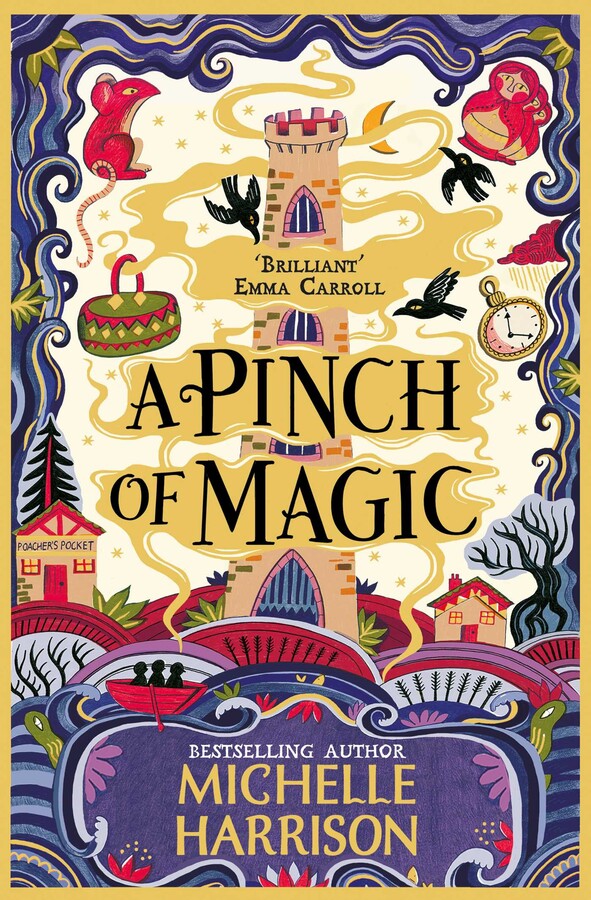
A Pinch of Magic by Michelle Harrison, Simon and Schuster, ISBN 9781471124297
Aashi reviewed her own copy of this book.
REVIEWED BY AASHI, AGE 10, VIC
Meet the Winddershin sisters, Betty, Fliss and Charlie, girls who have a taste for adventure. Betty is an adventurist and wants to explore the world. Fliss is very pretty but has a mind of her own. Charlie is always hungry and loves animals.
These girls have never been outside their home island, Crowstone. Most people who live in Crowstone are descendants of people locked up in prison or families who want to move closer to the prison.
Betty, whose birthday is on Halloween, decides to leave Crowstone and go to a nearby island to see a fair on Halloween night. She takes Charlie with her but soon discovers a curse haunting Winddershin females for years.
A Pinch of Magic is a very interesting story full of forgiveness, trust and loyalty. The book kept you on the edge of your seat as the girls went through life-or-death situations. I recommend it for 9-12-year-olds as it is a fantastic read. The author, Michelle Harrison, did a great job in keeping the readers entertained and suspenseful. It is a truly inspiring book for young people.
I rate the book 5 out of 5 stars as it is a great book for anyone who loves adventure.
Ask for A Pinch of Magic at your favourite bookshop or local library.
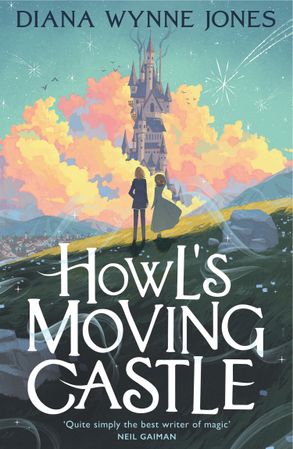
Howl’s Moving Castle by Diana Wynne Jones, HarperCollins GB, ISBN 9780007299263
Dexter’sreview of this book was longlisted in the 2024 Young Reviewers’ Competition.
If you’re a fan of fantasy and suspense, this is the book for you. Howl’s Moving Castle is a 302-page novel about a girl called Sophie who lived a quiet life, when she gets cursed by the witch of the waste. She can’t tell anyone about her curse, so she goes to visit a dangerous man called Howl who is the only person who might be able to break the curse. The problem is Howl lives in a giant walking castle with no signs on how to get in and is known for being a very bad criminal.
The book has trickery, comedy, adventure and loveable characters. The main characters are Howl, a funny wizard who can sometimes turn into a birdlike creature. Then there’s the main character Sophie, who was a hat maker and now her main priority is to break a curse. Sophie also has a lot of character development through the book. Then there’s one more main character – Calcifer, a fire spirit who’s funny, sassy and is Howl’s pet, who powers the castle and is always trying to make bargains. He also has a very emotional and happy ending. Also, there’s one side character that is quite important, his name is Michael. He’s Howl’s apprentice wizard, and he appears lots throughout the book.
I would say Howl’s Moving Castle is a mature book for ages 10 and above. It’s beloved by many and is still my favourite book. I read it all in one day and would rate it 5 out of 5 stars. It has two sequels and even has a fully animated movie produced by the wonderful Studio Ghibli.
Dexter’s review was longlisted in the Primary category of Alphabet Soup’s 2024 Young Reviewers’ Competition. The competition is now closed, but we publish book reviews by young writers all year round. To send us YOUR book review, read our submission guidelines. Happy reading!
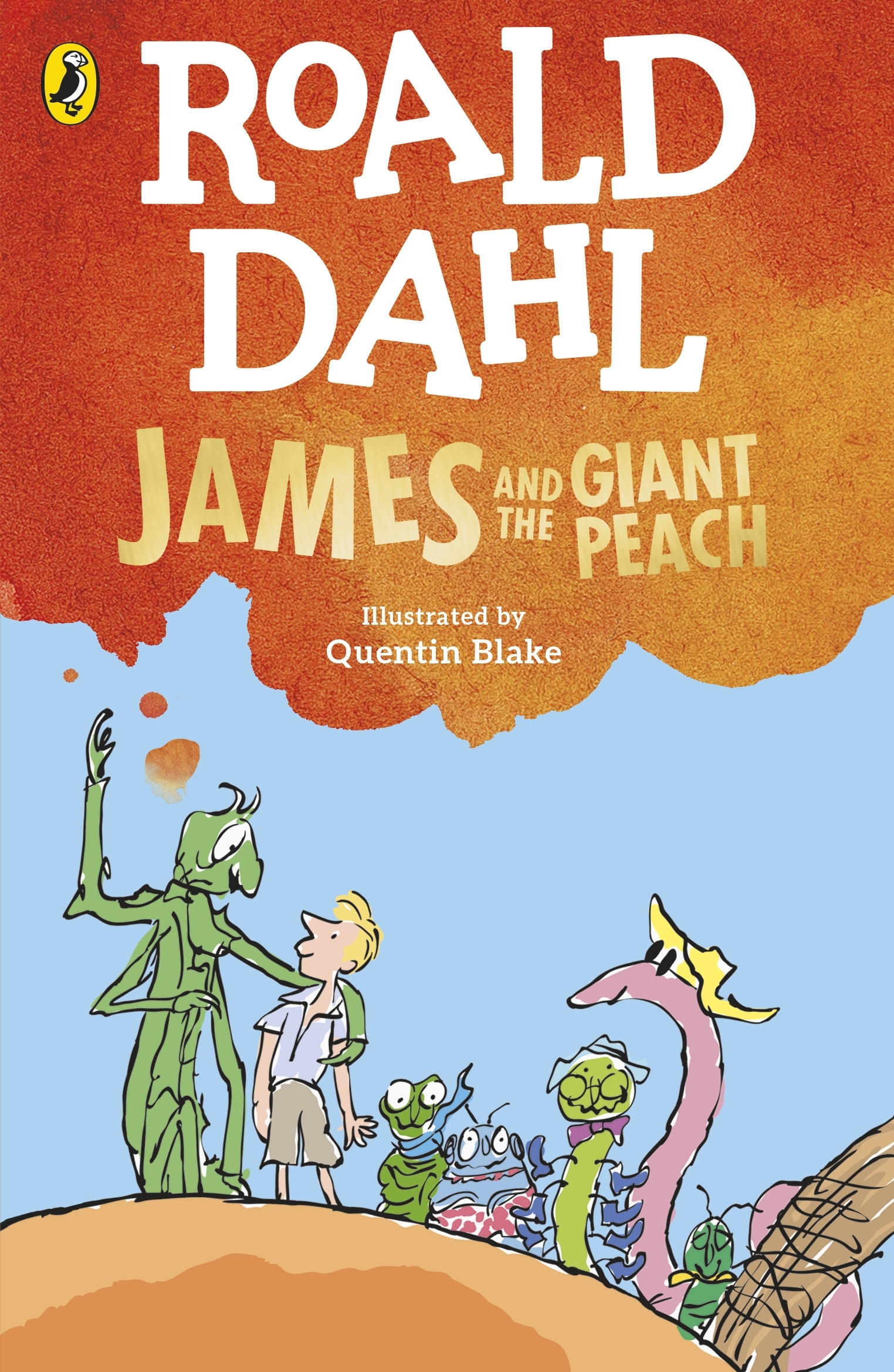
James and the Giant Peach by Roald Dahl, illustrated by Quentin Blake, Puffin, ISBN 9780241558331
Lachlan’s review of James and the Giant Peach was the winner in the 2024 Young Book Reviewers’ Competition.
The story is called James and the Giant Peach. It was illustrated by Quentin Blake. He has illustrated more than three hundred books, and he was awarded the Kate Greenaway medal. He was also one of the first children classics illustrators. The writer is Roald Dahl. He was a spy, an ace fighter pilot, a chocolate historian and a medical inventor.
In this story, James had a happy life until his parents died, and he had to live with his aunts who were both lazy. One day, an old man gave James some magic and told him to put it inside a glass of water and drink it in one gulp. On the way, James tripped over and spilt the magic on the ground. The magic went into insects and the peach tree.
The two aunts, Spiker and Sponge, came out shouting there was a enormous peach on the tree. Spiker asked people, “Who wants the peach?”.
At this same time, James found a tunnel in the peach and discovered a big room. In this room, Grasshopper introduced the insects that lived there. James and the insects had a big journey to the sea and James tied string to seagulls and they flew to America.
During the journey they solved problems. Spider said that James was so smart that she wanted to be smart like him.
My favourite part was when James lost his first chance of happiness but did not give up. I felt proud because he used to be miserable but now, he is happy. They also used good team work to solve their problems.
I highly recommend this book to children of all ages because they can learn how to be resilient. If they miss a chance, they can wait for another – and that includes being patient because sometimes things can turn out better than you think. This book also can teach children the importance of teamwork.
Lachlan’s review was the winner of the Junior category in Alphabet Soup’s 2024 Young Reviewers’ Competition. The competition is now closed, but we post reviews by young reviewers all year round. To send us YOUR book review, read our submission guidelines. Happy reading!
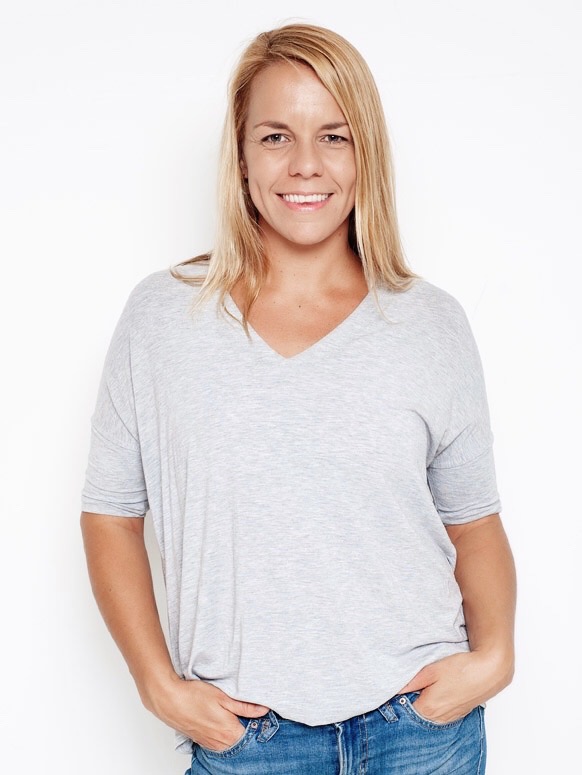
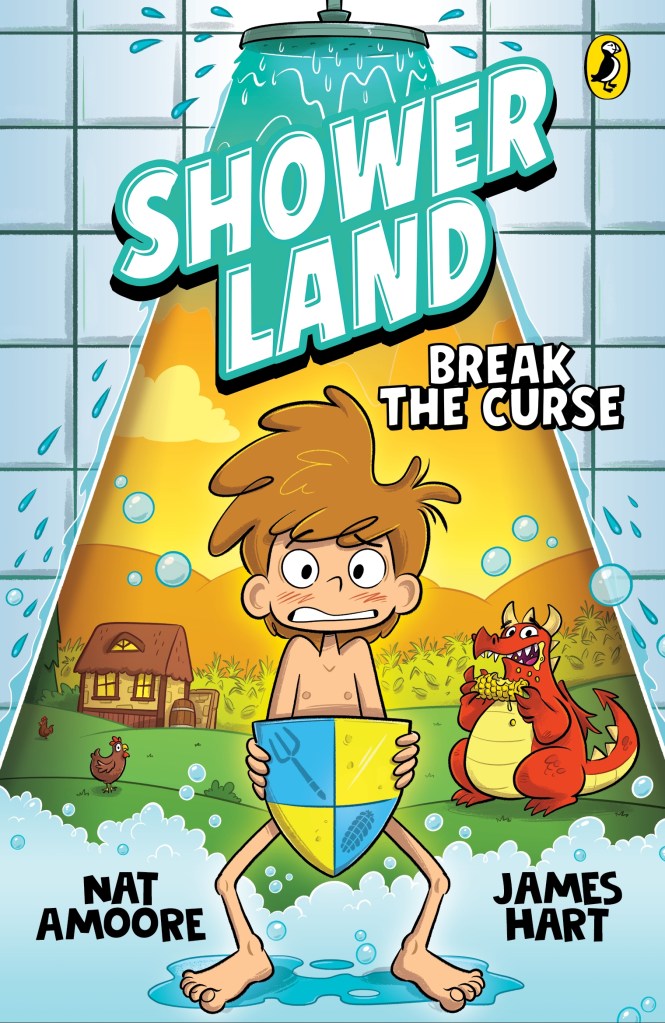
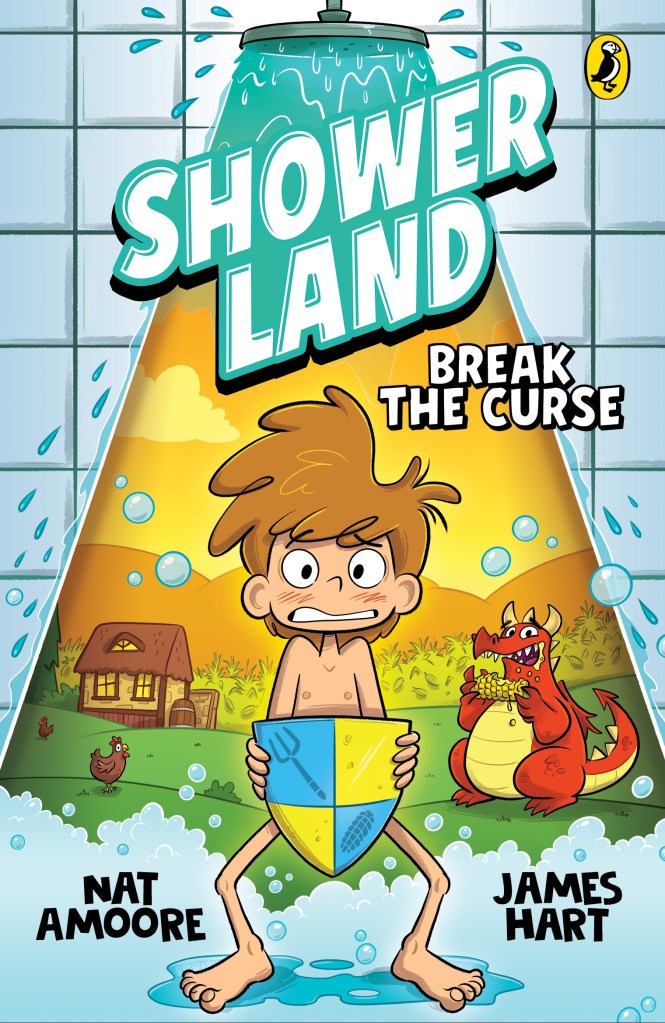
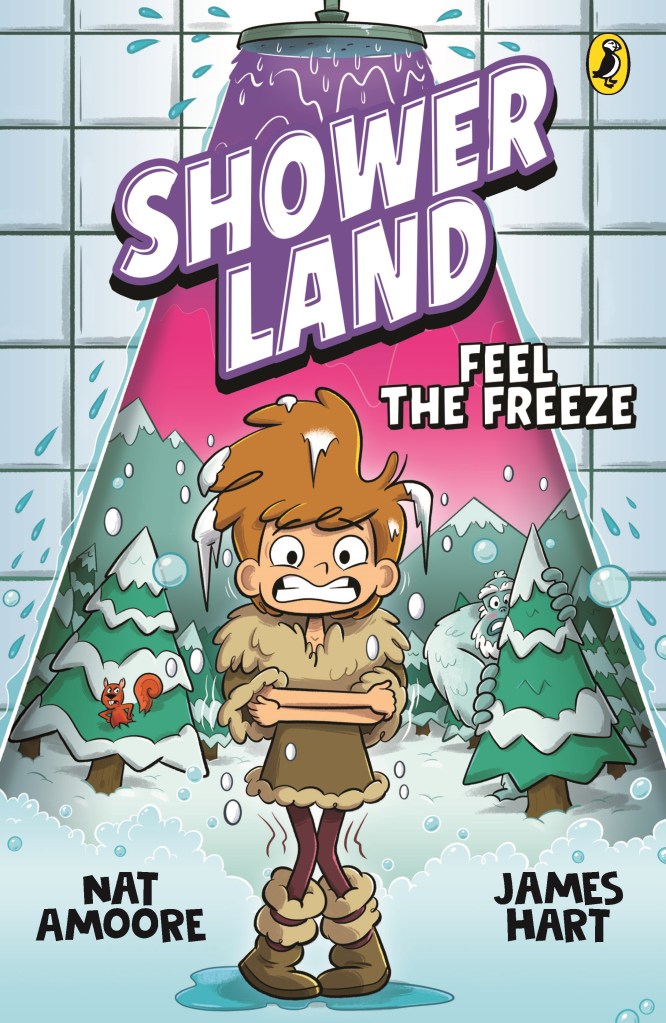
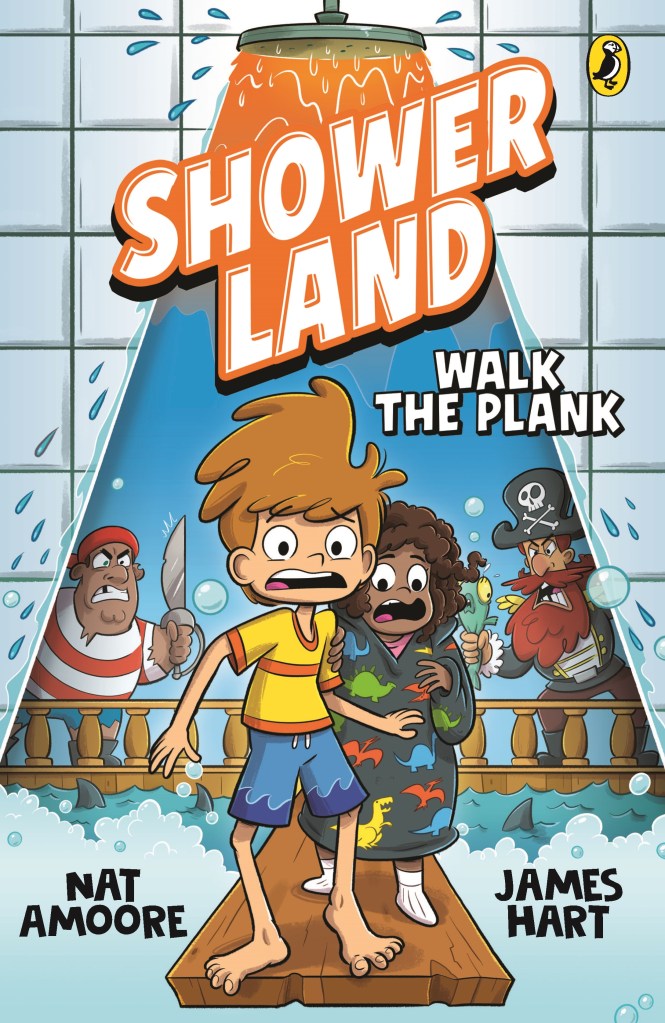
Nat Amoore has been a trapeze artist and circus performer, a podcaster, and now she’s an award-winning children’s author. Since Nat’s first book – Secrets of a Schoolyard Millionaire – was published in 2019, she’s published five more books and there are plenty more on the way! Today we’re pleased to be chatting about her latest venture: the Shower Land series, illustrated by James Hart.
From the publisher:
Felix hates Mondays. Dad’s yelling at him to get up. His little brother, Olly, is being super annoying. So when Felix shuts the bathroom door, he wishes he could get away. He turns on the shower and . . .REEEEKKKKKK!
A hilarious junior fiction series where getting in the shower might send you to another world.
When you were a kid were you up and out the door at the crack of dawn, or hard to get going after the alarm went off?
Oh, definitely up and out! I still am. I was never really much of a sleep-in kind of person. There was too much cool stuff out there waiting to be done. Even when getting up early meant going to school. Okay, so the actual school part wasn’t my favourite but I was always dying to see my friends. I also grew up on a farm so getting up early was kind of standard practice. My parents would kick us out of the house after breakfast and we would run around in the paddocks having cow poo fights and building treehouses. Then we were allowed back for lunch and sent out again until the sun went down. And to this day, I still get up early to write. I write best from about 5:30am until 12pm and then in the afternoon I’m kind of useless. So that’s when I do all my admin stuff … or go for a walk on the beach and pat everyone else’s puppies.
If you could be transported via shower to another place, would you try it? (Even if you might end up somewhere without any clothes on?)
ABSOLUTELY!!! Like Felix, I think I would figure out the clothes part quick enough. Teleporting to other worlds is my ultimate dream, even with all the risks involved. I mean it’s essentially why I’m an author right? So, I can just go to other worlds in my head for a living. Life is an adventure and I’ll take every cool experience I can along the way. Even with the risk of not knowing what or where, I couldn’t resist. Otherwise, I would always live in regret thinking, ‘What if I had said yes?’ Where would I have gone? What have I missed out on? I mean, once I had teleported to the prehistoric times and gotten my head bitten off by a T-rex, I might have second thoughts. But by then it’s too late anyway so YES! Let’s do it!
Even though Olly can be an annoying little brother, his jokes are pretty funny. Do you have a go-to joke for parties/Christmas lunch/ice-breakers at an event?
Ha! I love Olly. I’ve always wanted a younger sibling (I only have an older brother) and I love giving my characters funny younger siblings. I have a few go-to jokes. It’s good to have them up your sleeve I think and kids are ALWAYS asking me to tell a joke, or ‘what’s my best joke’? They change all the time but I like jokes that really rely on delivery and so my current favourite is …
What do we want? Low-flying airplane noises! When do we want them? NEEEEYYYOOOOOOOOWWWW!
But I also love …
What did the drummer call his twin daughters?
Anna 1, Anna 2
BA HA HA HA HA!
Do you have a tip for young writers who’d like to write a funny book?
Ooohhh, this is hard because I don’t really sit down and think ‘I’m going to write a funny book’. BUT what I am sure will help, is to think about what makes YOU laugh or what you think is funny and, even more importantly, what you DON’T find funny, especially when it is trying to be. I don’t like mean humour. Even when Olly makes fun of Felix, he’s not actually picking on any real characteristic of Felix’s. What is much stronger in the story and their relationship is the love, the banter and the bond that they have that allows for them to tease and play knowing that the brotherly love lies beneath. This then allows for them to joke and not get hurt. I would never have Olly insulting a random kid at school. Humour is less about the jokes and more about the interactions and relationships and the joy of laughter that falls in the gaps.
For a prompt, the next time you find something hilarious – I’m talking snort-laugh kind of funny – use that as a prompt for a story. It might be a joke your friend tells you, or when your baby sister comes out with her nappy on her head (clean or dirty, your pick!) Use this funny thing as a prompt for a story.
Can you tell us a little about what you’re working on next?
So, I’m working on two things at the moment. Firstly, the very final pages of Shower Land 3: Walk The Plank just before it goes to print. I love this stage of a book where you are just reading it for the last time and making any final little tweaks before you release it into the world. It’s nerve wracking and exhilarating at the same time. And I’m also working on a brand new middle grade book. It’s a bit of a change for me – a spooky, slightly fantasy style story but don’t worry, still funny! It’s a big project and I’m moving much more slowly on it than my other book because there are so many threads and important world building bits. I can’t wait to share it with you all!
Books 1 and 2 in the Shower Land series are out now! Ask for them at your favourite bookshop or local library.
Samara Rubin and the Utility Belt by Sharon Giltrow, illustrated by Thu Vu, Clear Fork Press, ISBN 9781950169887
Aashi received a review copy of this book.
Samara Rubin and The Utility Belt is a heartwarming story about a girl named Samara Rubin who is obsessed with geckos and faces bullying and teasing from her classmate, Toby King. Samara always wishes she could be granted one wish, standing up to Toby King.
On her eleventh birthday, Samara is gifted with a peculiar utility belt. It has strange tools called for example ‘The Restorer’ and ‘Cryptographic Sequencer’. But it comes with a catch, You have seven days to use all tools. You must meet this deadline. Otherwise …
I rate Samara Rubin and the Utility Belt 5 out of 5. It was a great book full of suspense and mystery, keeping you on the edge of your seat. It has a clear protagonist, kind and loving Samara, whose story is beautifully written. It also features an antagonist, Toby King, who adds depth to the story.
Overall, Samara Rubin and The Utility Belt is a charming and inspiring book that is perfect for young readers. It is a must-read for ages 8–11. I highly recommend it.
Sharon Giltrow grew up surrounded by pet sheep, sandy beaches, fields of barley, and her seven siblings. Sharon is the author of three picture books – Bedtime, Daddy!, Get Ready, Mama! and Let’s Go Shopping, Grandma! – and a chapter book, Samara Rubin and the Utility Belt. Today we’re chatting to Sharon about that latest book, illustrated by Thu Vu.
The publisher provided Alphabet Soup with a reading copy of Samara Rubin and the Utility Belt.
Samara knows wishes don’t come true. But if they did, her wish would be to have the courage to stand up to Toby King, the meanest boy at school. On her eleventh birthday Samara is given a mysterious utility belt. A belt with magical tools. But the belt comes with a catch …
As the author of three picture books, what led you to write a novel?
That is a great question. The Utility Belt series started as a picture book manuscript. When I shared it with my critique group back in 2019, they suggested it would make a great early middle grade book. I loved that idea, although it was a bit scary. I examined the story to see how I could turn 500 words into 10,000 words. Then I enrolled in an online middle grade course to learn the skills needed.
Samara’s utility belt holds a range of interesting tools. How did you decide what went into her utility belt? Were there any tools you included in earlier drafts that were scrapped in later drafts of the book?
It all began with Samara’s sidekick. I brainstormed possible sidekicks for Samara. The sidekick had to be super cute, friendly and small enough to fit in Samara’s pocket. A gecko! Then I researched geckos to see which one would be best for the story. I chose a Madagascar Day Gecko because they are awake during the day and are beautiful. I researched all the superpowers geckos have. From there I invented tools for the utility belt. For example, many geckos can camouflage so one of the tools is camouflage drops. I thought about how and when Samara could use these tools. At the start of the story Samara had to clean her room. But she didn’t want to so she used the camouflage drops to make the mess in her room disappear. Some of the tools that didn’t make it into the utility belt were a regenerator, rebreather, coloured looking glasses, flashlight, thermal rock, and a duplicator.
If YOU were given a utility belt for 2024, what are the tools you’d hope for in your own belt?
My sidekick would be a sugar glider because they show us what it means to take a “leap of faith” soaring to new heights, where we can the behold the view and gain a whole new perspective. The tools in my utility belt are already working because in 2024 I have decided to become a full-time author. I’ve taken the leap and given up my daytime job.
Do you have a tip for children who’d like to write their own chapter books?
Think about the whole story. The beginning, middle and end. What happens during these parts of the story. Then work out what happens in each chapter. If the book is to have ten chapters, two chapters would be for the beginning, six chapters for the middle and two chapters for the end. Also be sure to end each chapter on a cliff hanger. So, the reader wants to keep reading.
Can you tell us a bit about what you’re working on next?
Sure thing. I’m working on another early middle grade series about human evolution. And of course, there is a sidekick in this story, but I don’t want to give too much away.
Samara Rubin and the Utility Belt is out now! Ask for it at your favourite bookshop or local library.
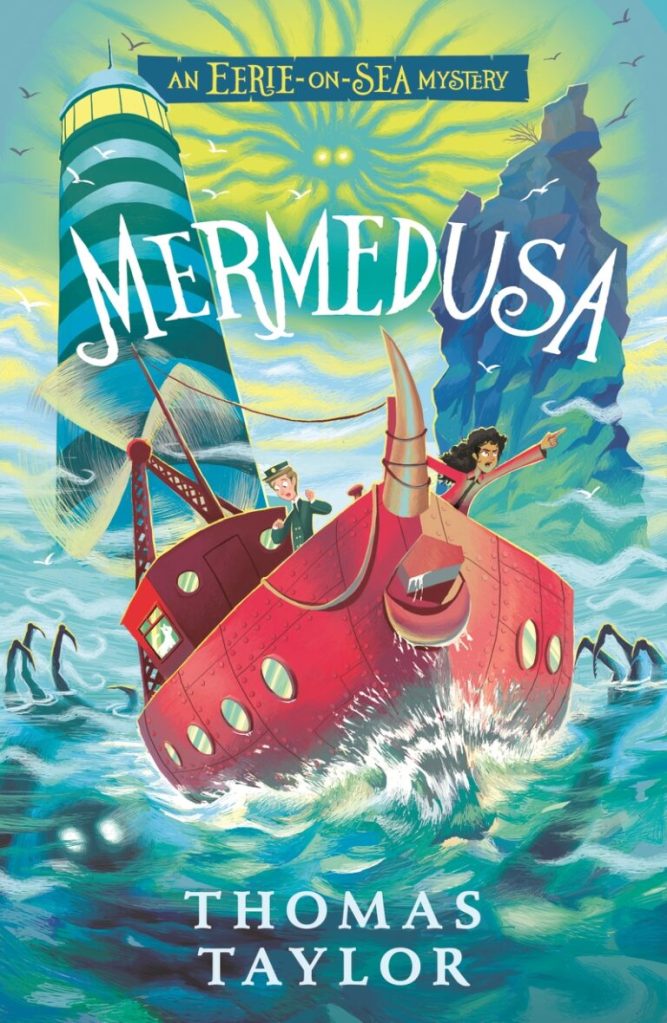
Mermedusa by Thomas Taylor, Walker Books Australia, ISBN 9781529502138
Rory received a review copy of this book.
Prepare for a wild, mysterious and funny adventure in Mermedusa, the final book in the Eerie-on-Sea book series. Join Herbie and Violet as ghostly things begin happening in the seaside town of Eerie-on-Sea. First podcasters coming to investigate the creepy myths of the town and next giant sea-monsters from the deep depths of the ocean trooping through the town!
When an eerie, hypnotic hum begins to resonate around the town and when Sebastian Eels – the friends’ worst enemy – starts driving his boat out into the stormy ocean at midwinter time, the most dangerous time of the year, Herbie and Violet instantly know something is up.
Suddenly everything starts coming into place: could the deepest secret of Eerie-on-Sea be close to getting revealed?
I rate this book a 10/10! It’s just so good with descriptive language, cliff-hangers, mysteries and more. There’s literally nothing bad about it! I think this book would be great for 9-year-olds and above. I read this book all night long and I know that you will too!
Wendy Orr is an award-winning author with 40 books for children, teenagers and adults Her books have been published in 29 languages and her Nim’s Island books were made into movies. We’re thrilled to be talking to Wendy about her latest book – Honey and the Valley of Horses.
From the publisher:
When Honey was four and her brother Rumi was a tiny baby, her family loaded up their converted ice-cream-van-camper and drove away from all they knew, as an illness swept the sad wide world. High in the mountains, they crossed a bridge to follow a mysterious herd of enchanted horses into a sheltered valley. The bridge and the track disappeared behind them – and now they are trapped in paradise.
The magical horses are the stars of the book. Is Moongold based on a horse you’ve known?
He’s a combination of our family’s first horse, Biddy, who was an American quarter horse with a touch of Thoroughbred, and my father in law’s palomino Australian stock horse, Pancho. Biddy was over 12 when we got her; I was ten, my sister eight and my brother three, and she behaved differently with each of us, deciding just how much she had to look after us. So she was always completely trustworthy with my little brother, but once I’d learned to ride she’d test me quite a bit – and when we did a paper route for a while, she got bored with doing the same ride every day and started throwing me every time! Pancho was probably the best trained horse I’ve ever ridden, an absolute delight to ride though a very spirited stallion. He had a fantastically smooth gallop, which was as wonderful to watch as to ride, and when he was galloping loose in his paddock, loved to race towards something and stop dead or spin around just before he hit it. And there’s a bit of my own horse Tala, who I got when I was fourteen. She was an enormous mostly Standardbred, who was quite neurotic and very flighty, but always tuned in to my moods and would be very affectionate and gentle if I was upset.
Honey’s family are living in a sort of paradise, but the catch is that they also face isolation and have to find their own way to survive. Was your storytelling influenced by Australia’s recent lockdowns?
Absolutely. Although we live in a rural area, we were classified as metropolitan Melbourne for the purpose of lockdowns, so it was very strict and long. My son and his wife and toddlers lived with us for the first year, but when they moved out they were more than 5 km away so for long periods we weren’t able to see them, or my daughter and her toddlers, who were on the other side of Melbourne. My parents and siblings were in Canada, and with the borders closed for so long I was very aware that I might never see my parents again – which in fact happened, as my dad became ill and died during 2021. So the isolation, the sense of not being able to see people we loved, and also the general fear and anxiety during this time were a crucial part of forming this book. The good thing is that it meant it was all the more important to create a fun and adventurous paradise for the family to escape to. It was certainly very important to me to escape to it while I was writing! And I hope that the reader will enjoy that escape too. We all need special places in our lives and our minds.
What did your editor think about you sending the editor in the book (Mum) off in an ice-cream van to the unfindable Valley of Horses?
She loved it! At first she was worried that no one would know what an editor does, so I hope I explained that during the book. But she loved escaping to the valley too, which made life easier for me.
Can you tell us a bit about what you’re working on next?
I have several things which range from already in a first draft, to an idea I’m quite excited about but don’t know very much about yet. All I can say right now is that I love thinking about how many thousands of people we’re all descended from. Each one of them had their own story – which is quite mindblowing when you think about it!
Do you have a tip for young writers who’d like to write stories with a touch of magic?
If you’re going to use a touch of magic, you need to have clues that something strange could happen, right from the start. It doesn’t need to be much: in Honey and the Valley of Horses I start with the sentence, ‘In the mountains there was a valley, and in the valley were the horses.’
The rhythm of that sentence suggests that this is a story-telling type of story, not a realistic ‘kids going to school’ type of story. Even saying, ‘the horses’ suggests something different than if I’d said, ‘There was a valley in the mountains, and lots of horses lived there.’ Those could be any horses, but saying ‘the horses’ suggests there’s something special.
Making up a world that has a bit of magic means that you can do anything you like – but it doesn’t mean that there are no rules. You need to work out what the rules are for your magic. In this book, the horses certainly have some kind of mysterious magic, and are stronger and faster than other horses – but they are still horses. For example, they can’t talk or fly. You could write it so they do talk or fly, but you would need to show that from the start, or if you didn’t want them to do it until the end, you could have a detail early in the story so that it made sense if they flew when they absolutely needed to. For example there might be a certain grass that people said would make horses fly if they ate it, or there might be old stories about a horse that flew, and people have noticed that this horse looks just like her ancestor, with the white snip above the left fetlock… Just some little hints.
Everything that isn’t magic has to make sense. Unless it’s part of the magic, water can’t run uphill, the sun rises in the east, people and animals need food, water and sleep…
Any touches of fantasy need to be significant for the story. They need to show the reader something important about a character, whether good or bad; or about the place; or they need to move the plot along. If you have a scene you really want to write – a purple sun that shines at night; birds standing still while dogs sing, whatever your imagination has built for you – you can use it as long as you work out why it belongs in the story. Working out the reason might take your story in a different direction, but that’s okay too.
If you roll all these tips into one, it would be, ‘Your story has to make sense right through. If magic is going to help resolve the problems, it needs to be hinted at from the beginning. And it should always be your character who actually solves the problem, whether it’s by being brave enough to dare to use a power, or by passing a test that makes a power appears, or by harnessing a power to do the right thing. But definitely try to avoid having a realistic character in a difficult but realistic situation, when suddenly at the end of the story, Abracadabra! everything is magically solved.
Also, don’t forget that good stories usually have many drafts. If you really liked that Abracadabra! scene you can keep it. You just need to go back and weave in some hints earlier in the story.
But don’t forget the most important writing tip of all, no matter what genre: Have fun, play with your story, and see what happens!
Honey and the Valley of Horses is out now! Ask for it at your favourite bookshop or local library.
Are you in Melbourne? You can meet the author and hear her talking about Honey and the Valley of Horses! 2pm, Saturday, 26 August 2023 at Readings Kids in Carlton. Tickets are free but bookings are essential.




 alphabetsoup.net.au