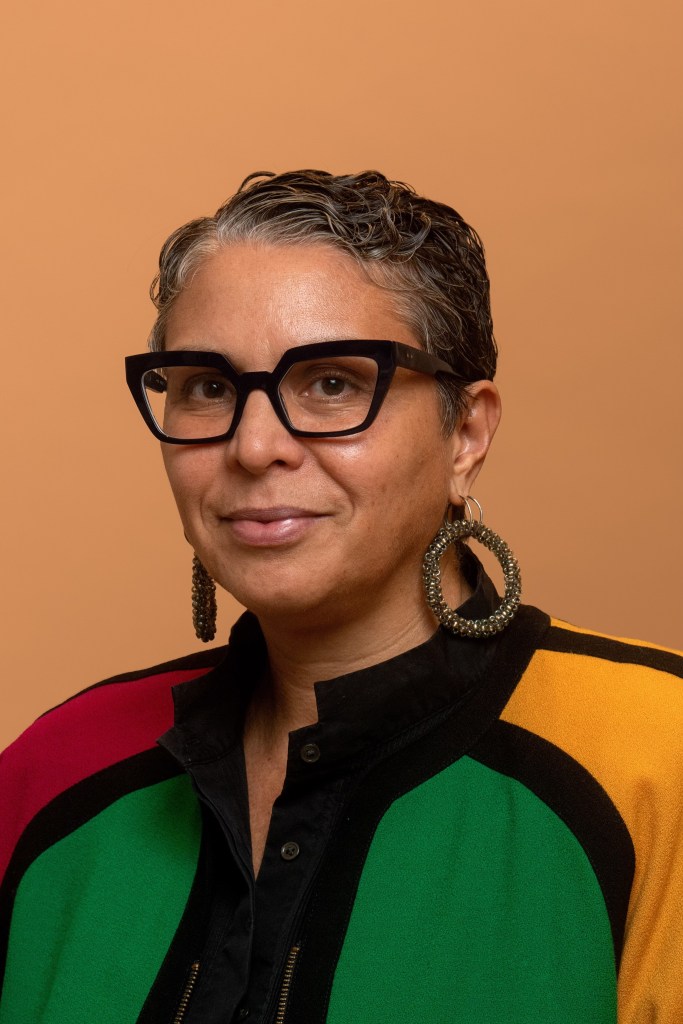
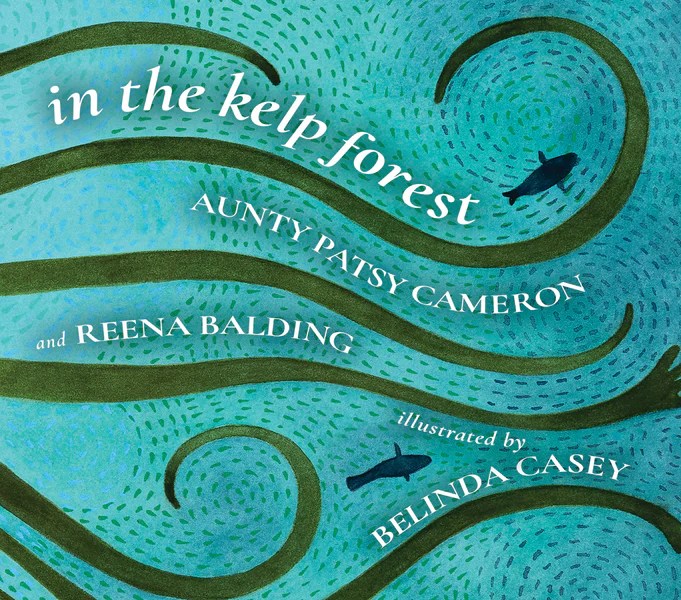
Today we’re chatting to the three creators of this stunning picture book, In the Kelp Forest, written by Aunty Patsy and Reena and beautifully illustrated by Belinda.
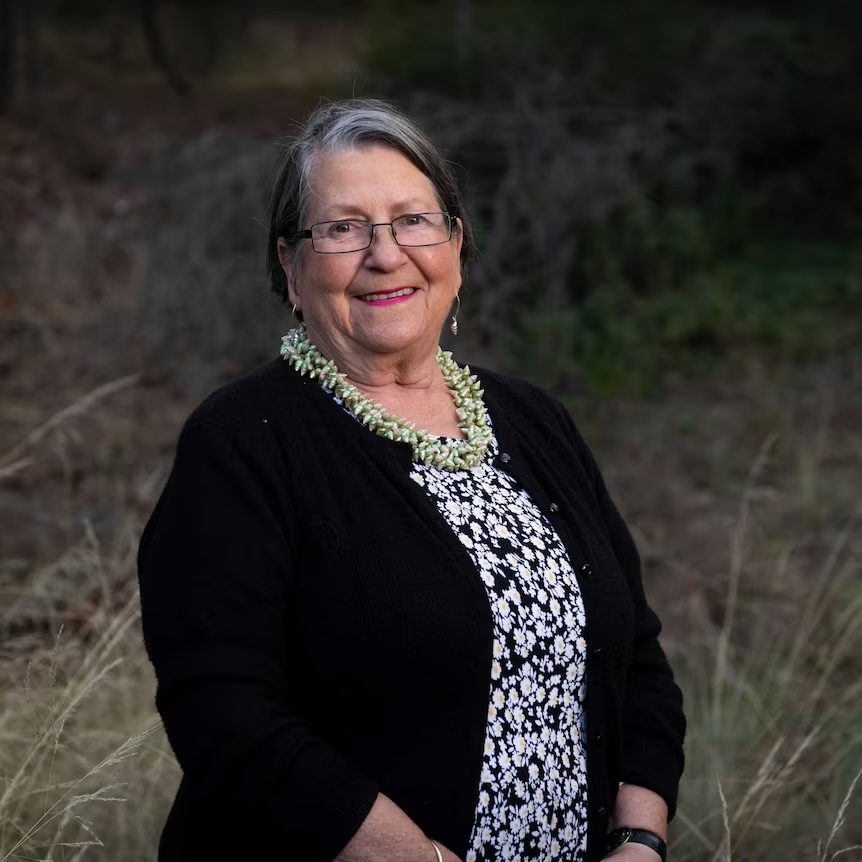
Aunty Patsy Cameron grew up on Flinders Island and can trace her Aboriginal heritage through her mother’s line to four Ancestral grandmothers; Pleenpereener, Wyerlooberer, Teekoolterme and Pollerelbrener. At the head of her family is Teekoolterme’s father, the revered Pairrebeenne/Trawlwoolway Clan leader, formidable warrior and seer, Mannalargenna.
Reena Balding grew up in Tasmania and left to travel the world where she worked for a newspaper in Turkey and became a yoga instructor in Bali. Now living with her family in Hobart, Reena publishes books for the Australian government and writes for children and adults.
Belinda Casey is a proud great granddaughter of legendary Tasmanian Aboriginal woman, Fanny Smith, whose traditional homeland is Tebrakunna Country in North Eastern Trouwerner/Tasmania. Belinda’s art practice honours the legacy of her ancestral grandmother and the strength and resilience of the Tasmanian Aboriginal people, their culture and connection to Country.
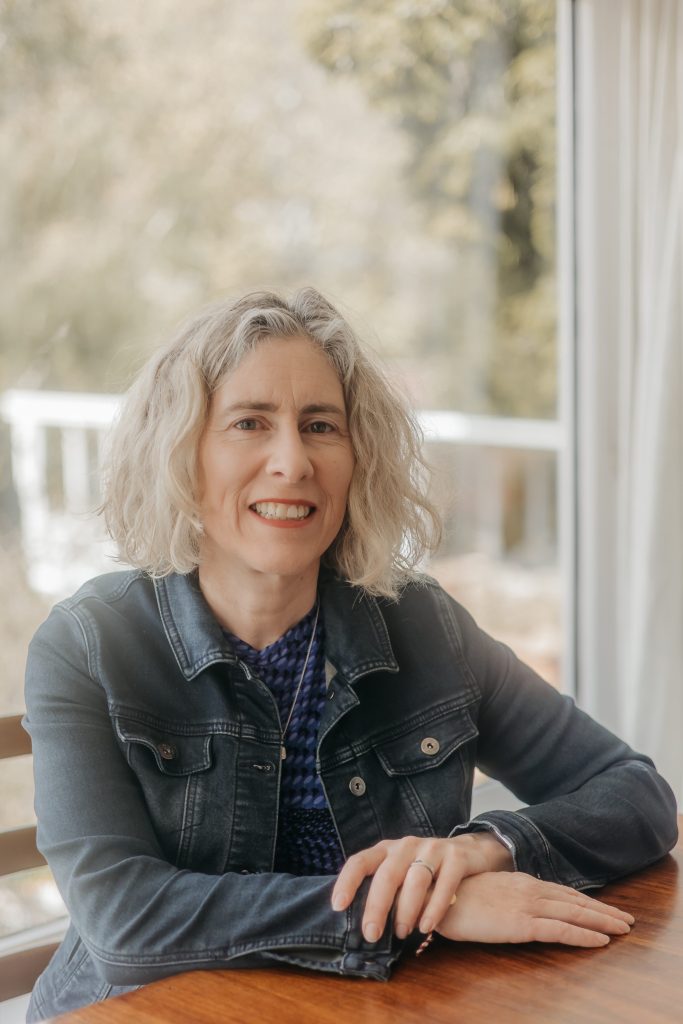
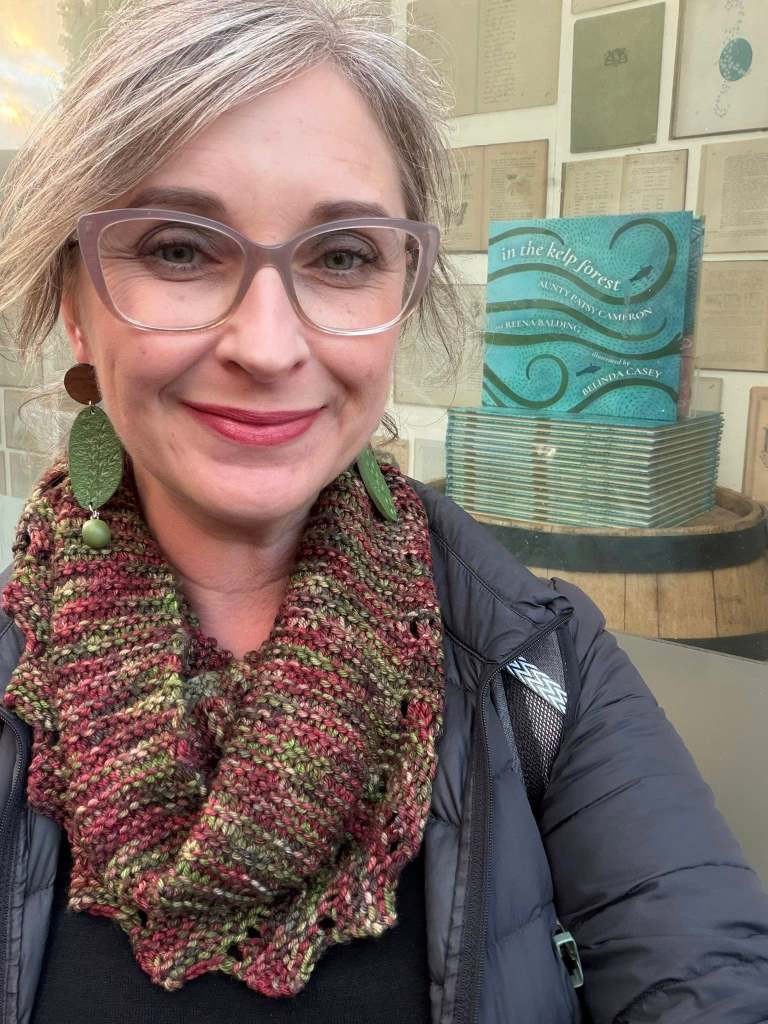
In the Kelp Forest explores the beauty and strength of Country beneath the waves and celebrates the living kelp forests, their creatures, and deep Cultural knowledge of Tasmania’s First Nations people. Kelp forests have intricate lives and play a key role in the balance of our oceans and seas. Myerlee, the giant kelp, sways beneath the waves, her forests alive with creatures that make her their home. Myerlee lives with the elements, shelters life, provides sustenence to those on the land and in the ocean and whispers her secrets to those who will listen.
Magabala Books provided Alphabet Soup with a reading copy of this book.
How did you collaborate on the writing of In the Kelp Forest? Did you work on it together or was there some back and forth between you on the text?
Aunty Patsy and Reena: We started by meeting on Country on a beach on the east coast of Tasmania. Aunty Patsy pointed out which parts of the kelp are good to collect. Then we talked about kelp and the different properties and importance of kelp. We also made various things out of kelp. Reena researched the different species of kelp and the life cycle of kelp and talked to kelp experts about what to include. Aunty Patsy researched the historic records of how kelp had been used and the different words for sea animals that lived in or around kelp forests. Then we put it all together.
What’s one thing you would like kids to know about kelp in Australian waters?
Aunty Patsy and Reena: Tasmanian Aboriginal people have used bull kelp (myerlee) for many, many years to make into useful things. The kelp is washed up onto beaches where it can be collected. When it is still wet and pliable it can be cut and made into baskets to carry water in. And also made into … shoes! There are historic records of people wearing a kelp shoe when they had a sore foot. We experimented with a piece of kelp and some string to see if a shoe really could be made from kelp, and it worked!
When fresh, kelp can be roasted over coals and eaten as a rich source of nutrients. This includes medicinal uses such as iodine that is good for your thyroid.
The book includes words from Oyster Bay nation language, Coastal Plains nations language, and Tyereelore language. How did you gather these words? Do you speak any of these languages yourselves?
Aunty Patsy: I grew up on Flinders island in eastern Bass Strait where Tyereerlore language was passed down across the generations for some shells and resources. I also have direct ancestral connections with Oyster Bay and Coastal Plains nations and use their words recorded in the 1800s in my writing and on occasions such as presenting Welcome to Country and when referring to place names and names for plants and animals.
Can you tell us about the watercolour illustrations for In the Kelp Forest?
Belinda: I had a marvellous time creating the illustrations for In the Kelp Forest. I’m a painter and usually work on quite large-scale canvases in oil paint and mixed media … I hadn’t really painted with watercolours before, so I more or less taught myself how to use them throughout the creation of the book. I chose watercolour for their portability but also their suitability to the book’s watery theme. I also love bluey greens, so I relished the opportunity to go crazy with my favourite colours! I broke my painting hand four weeks into the project, so while I was out of action I went and stayed at Bicheno on the east coast of Tassie for a few nights and photographed the kelp washed up on the beaches. I also videoed the kelp holding fast to the rocks and observed how it moved in the water. I then took my research material (plus a few specimens that I had collected) back to my studio and created the drawings partly from these images and partly from my imagination!
Can you tell us a bit about what you’re working on next?
Aunty Patsy: I am currently working on ideas for another children’s story about the moon and its significance to the lifeworld of Tasmanian Aboriginal people from deep time to the present day.
Reena: I would love to write a book about Tasmania’s weird and wonderful facts and stats. I also think there need to be more books about fascinating plants. Basically, there are too many ideas for non-fiction kids books and not enough time to write them all!
Belinda: I’m currently working on a series of large-scale mixed-media paintings inspired by objects found along the coastline of Bruny Island, so in a way I’m continuing with the watery themes of In the Kelp Forest. ☺️
In the Kelp Forest is out now! Ask for it at your favourite bookshop or local library.
AWESOME EXTRAS
Visit the publisher’s website for a look inside the book!
Find out about other books by Aunty Patsy Cameron
Visit Reena Balding’s website for more about her and her work