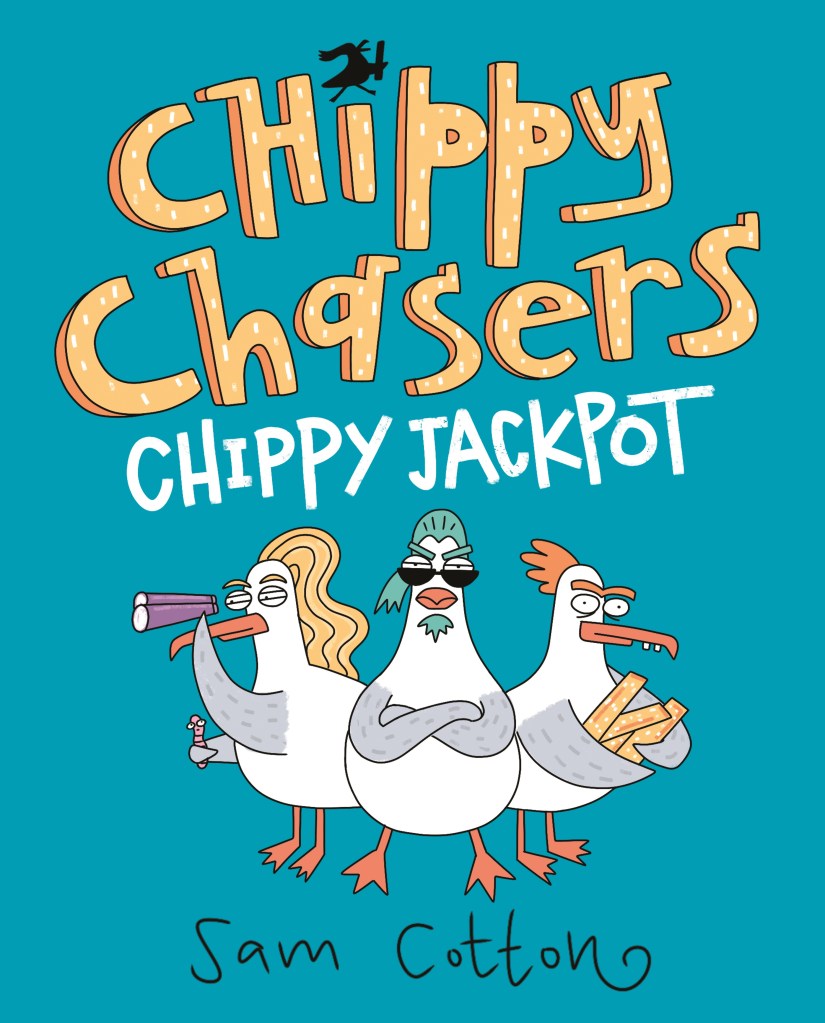
Chippy Chasers: Chippy Jackpot by Sam Cotton, Puffin (Penguin Australia), ISBN 9780143778547
REVIEWED BY MARCO, 9, NSW
Meet the Chippy Chasers! Three seagulls Stanley, Stacey, Steve-o and Wormy the worm. One day the best chippy maker, Brock, comes to Sydney. The Chippy Chasers think up a great plan to steal some of the best chippies in the world. Will they get them or not?
Of course, the plan does not work as they hoped it would. The Chippy Chasers are forced to work with what they have and do things in unexpected ways, which are really fun.
I love this graphic novel because of the humour, and all the Australian slang the Chippy Chasers use like “maate”, “bruthaa” and “bin chicken”. Not only does it make me laugh, whenever I read it I think of how yummy all the chippies would taste.
This book is so funny that I will rate it 5 out of 5. It’s great for ages 7 to 10. If you like the TV show Bluey you will probably like this book. I actually think this book is even more funny and entertaining than Bluey.
We’re pleased to be sharing a series of book reviews by Petersham Public School students, NSW.This is Marco’s first review for Alphabet Soup. To send us YOUR book review, read our submission guidelines. Happy reading!
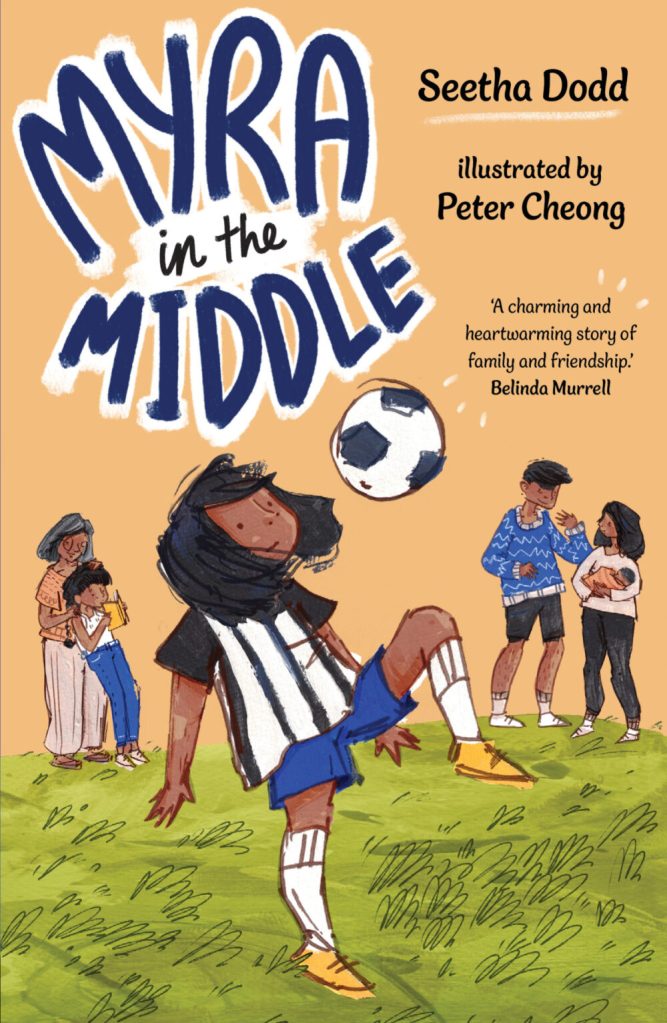
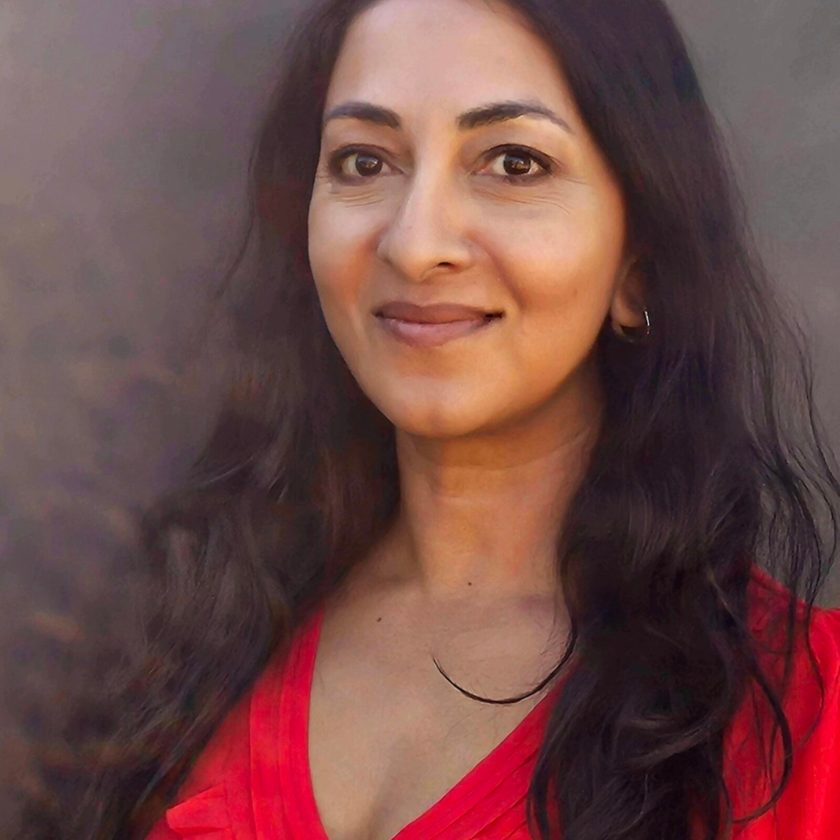
Seetha Dodd loves wordplay, humorous rhyme and lyrical prose. Drawing on her Malaysian–Indian heritage, and themes of family, identity and belonging, Seetha writes stories that empower children to challenge stereotypes and to celebrate uniqueness in all forms. She lives on Sydney’s Northern Beaches with her husband and three children. Today we’re chatting to Seetha about her junior fiction novel: Myra in the Middle, illustrated by Peter Cheong.
From the publisher:
Seven-year-old Myra likes maths, football and things staying the same. She lives with her mum, dad, Muthashi (grandma) and big sister, Anya. Her world flips upside down when her family welcomes a new baby. Myra is now a middle child – and everyone knows middle kids always get forgotten. On top of that, Myra tries out for the school’s soccer team, only to be put in the midfield. She can’t show off her skills when nothing exciting ever happens there! What will it take for Myra to feel marvellous in the middle?
The publisher provided Alphabet Soup with a reading copy of this book.
With the arrival of a new baby brother, Myra finds she is now the middle child in her family. Did you have siblings growing up? Are you a middle child yourself?
I am a middle child! I have an older sister and a younger sister. Just like Myra, I was nervous about the arrival of a new baby into the family. But as time went on, I realised how lucky I was. When you’re in the middle, you can learn from your older sibling and then try to be a role model for your younger sibling. It’s a unique position that also teaches you how to be adaptable and to see things from other points of view.
The book highlights the importance of names – the naming of Myra’s baby brother, getting someone’s name right/mixed up, the meaning of people’s names, even the names of the soccer teams Myra plays for and against. How do you go about choosing names for your characters in your writing?
I spend a lot of time naming my characters! I chose the name Myra for a few reasons. I wanted the title to have alliteration, so her name had to start with the letter M. Myra is a name that exists in many cultures, but as an Indian name it means ‘beloved’ – isn’t that beautiful? Then it made sense to have her sister’s name start with the letter A, and her brother’s name start with the letter Z, so even with their names, Myra, with the letter M, is in the middle.
Naming her friends was fun – I try not to make any of my characters’ names too similar, as it might get confusing. For example, I wouldn’t use another M name like Mia or Mariam, to make sure Myra stands out. I love searching for the perfect name – baby naming books are great for ideas.
As Myra points out, ‘names are very important’ and I especially love the part in the book where Myra and Muthashi discuss the meaning of their names.
Myra loves maths and draws pie charts and Venn diagrams to help her to think more deeply about the things that matter to her right now. Her sister Anya loves words and wordplay. Are you more of a words person or a numbers person yourself? Or both?
I have always been a words person first. I like trying to arrange words into a beautiful sentence, or into a funny rhyme. I also love poetry and how the words can have many layers of meaning. But I do also like using logic and mathematics to put things in order and make sense of a problem or a feeling, just like Myra does. Maybe you have done this too – perhaps a list of pros and cons when you’re making a decision, or using probability to discuss whether something is certain or unlikely. Venn diagrams are my favourite – they are the perfect combination of mathematics and language.
Myra’s grandma (Muthashi) prepares special foods for the family, which Myra finds comforting and familiar when she’s feeling lost in the middle of all the recent change. We hear about murukku, coconut candy, omelette, chicken curry, the best way to eat jelly slice … and more! Did you put all your favourite foods into the book? Do you like to cook like Myra and Muthashi?
I love cooking (and eating!) tasty treats. Most of the food in this book is inspired by my grandmother (Muthashi), who had a wonderful appetite for food and for life. She always cooked with love in her heart. I think this was her secret ingredient that made everything taste better.
Can you tell us a bit about what you’re working on next?
I have a picture book about dogs and cats coming out in September. It’s a fun, rhyming story with a gentle message about accepting those who are different to us. I am also working on an idea for another junior fiction novel. Right now, it is just a spark (which I suppose is how all ideas start out) but I hope to turn it into a story. I do need to find the perfect name, though!
Myra in the Middle is out now! Ask for it at your favourite bookshop or local library.
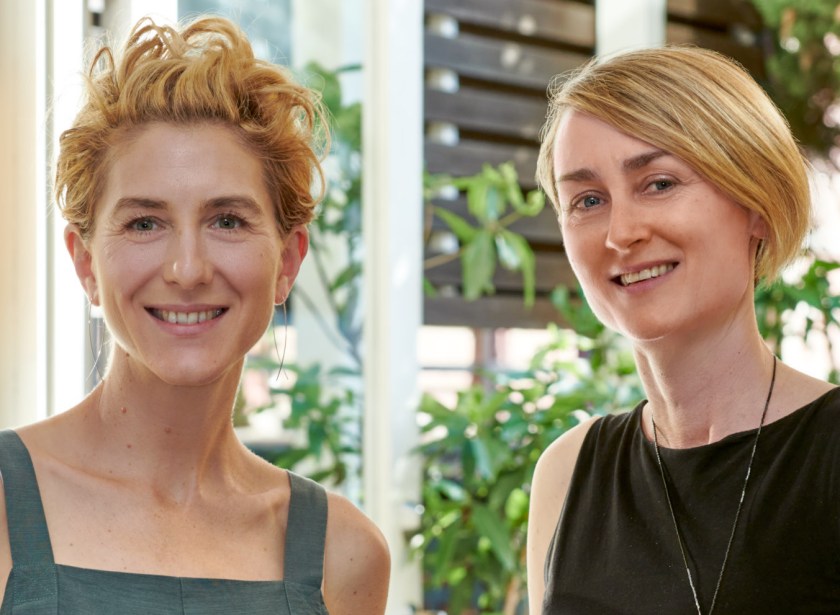
Maddy Mara (Hilary Rogers and Meredith Badger). Photo by Les Hallack.
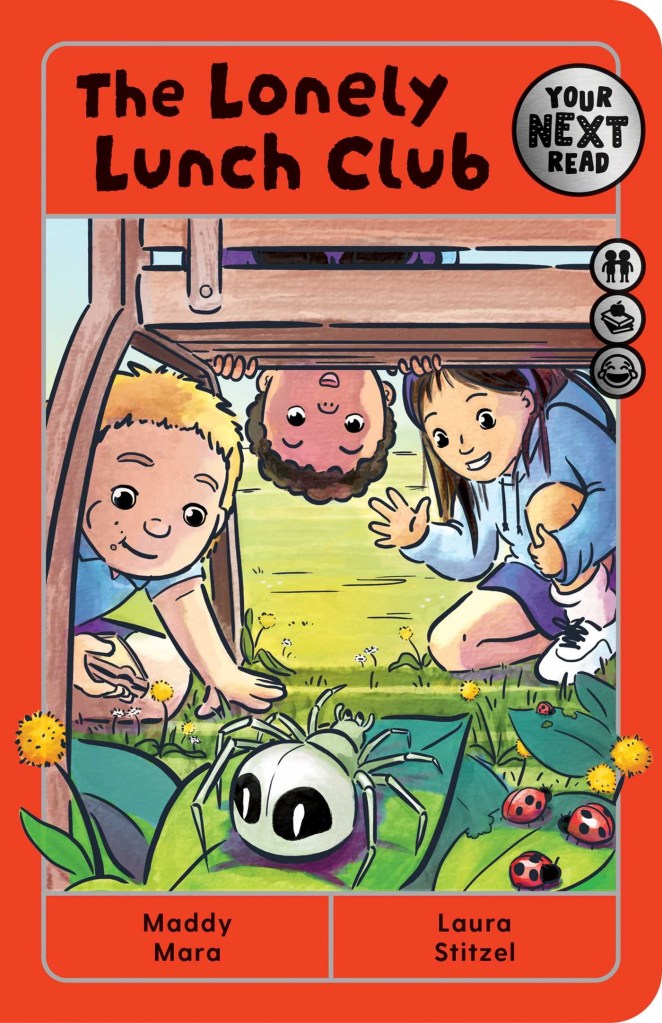
Maddy Mara is the pen name of Melbourne-based creative duo Hilary Rogers and Meredith Badger. You might have read Maddy Mara’s books in these popular series: Dragon Girls, Forever Fairies, Itty Bitty Kitty and Jet Set Pets! Hilary and Meredith have been collaborating on children’s books for nearly two decades. Hilary is an author and former publishing director; Meredith is the author of countless books for kids and young adults, and teaches English as a foreign language. Today we’re chatting about The Lonely Lunch Club, Maddy Mara’s junior fiction book in the Your Next Read Silver series, with fun illustrations by Laura Stitzel.
The publisher provided Alphabet Soup with a review copy of this book.
From the publisher:
Do you like FRIENDS, SCHOOL and FUNNY STORIES? Then this book is YOUR NEXT READ. One lunchtime, Benji goes to the worst bench in the whole school instead of playing footy. There he meets a girl named Alice and a spider named Mabel. And Mabel needs their help! But can Benji and Alice do it alone?
Maddy Mara is your pen name, and you are two writers creating one story! How do you go about working together on a book?
Yes, people are often surprised to learn that Maddy Mara is actually two people. We are Hilary and Meredith, but we write under the pseudonym (a fancy word for pen name) Maddy Mara. We love working together! For us, it’s like getting paid to do a school project with one of your best friends, who also happens to be smart, hardworking and funny!
When we’re working on a new book, we always start by talking about our ideas. We have a lot of ideas –some of them are terrible and some of them are great – so this is a fun part of the process. Once we’ve agreed on the rough shape of the story (it needs to be something we are super excited to work on), then we think about the characters, and what might happen to them. We also workshop what the story or series might be called – we love bold, catchy names (Dragon Girls! Itty Bitty Kitty! Jet Set Pets! The Lonely Lunch Club!). We then plan out what will happen in each chapter before we get writing (mostly this works, but sometimes we need an emergency meeting with strong coffee if it doesn’t).
It changes from project to project, but usually Meredith goes first, and Hilary goes next. Then we send the story back and forth quite a few times until we love it and can’t quite remember who did which bits. It really is a team effort.
Alice and Benji make friends with an alien butt spider called Mabel. Is an alien butt spider a real spider!? How did you find out about this spider?
It is a real spider! Using the alien butt spider was Meredith’s idea, and we basically chose it because it’s such a cool and funny name for a cool and funny spider. We also we didn’t want to pick a dangerous spider (kids, don’t go looking for spider friends!). The Latin name is Bijoaraneus praesignis which isn’t quite so snappy …
The great thing about the books we write is we have to discover interesting things about the world (like, is a great white shark faster than a killer whale? Or, what spiders have cool names and live in Australia?). But because we write a lot of fantasy, we also get to make things up (like, can a sea dragon roar fire underwater? We say YES!).
How do you add humour to a story? Is it part of the storytelling from the beginning? Or do you go back and add it in after you’ve written the story?
We always like to use humour in our stories, as a treat for our readers and to help them keep reading. We find that humour often comes from characters doing unexpected things (like, an adorable little kitten thinking she’s a brave tiger in Itty Bitty Kitty). The Lonely Lunch Club story starts with Benji doing something unexpected (not playing footy, like he normally does) meeting Alice doing something unexpected (hanging out with a spider, on the worst bench in the school). We then have an unexpected connection between these two kids, who don’t have anything in common except that they want to look after Mabel, the alien butt spider.
But we also rework all our stories to make them funnier as we go along – the final draft is always funnier than the first. A good example of this is when Benji and Alice are discussing what the coolest thing to find in your lunchbox might be. We had a lots of different ideas for this before we picked the one that ended up in the book: a bar of chocolate vs a bar of gold.
How did each of you like to spend your lunchtimes when you were in primary school?
Meredith wasn’t sporty, so she definitely wasn’t playing footy at lunchtime. But she did like doing handstands against the wall, and skipping and playing hopscotch. Hilary did gymnastics when she was a kid, so there was a lot of cartwheeling and backbending going on! But we both loved walking and talking with friends at lunchtime – and all these years later, we still do!
Can you tell us a bit about what you’re working on next?
We are always working on lots of things at the same time. We love to keep busy! We have just finished writing a second book for the Your Next Read series because writing The Lonely Lunch Club was so awesome. The new one is completely different – it’s set deep under water and (top-secret hint) features an excitable octopus. We also have some new Dragon Girls books that we’re working on (this series is now up to book 22!). And we have a brand new series called Max Beast, which is about a kid who finds a magical amulet that transforms him into a great white shark (and then other creatures in future books). It’s jam-packed with action and humour and lots of animal details. Max Beast is coming out in Australia in June, so look out for it!
The Lonely Lunch Club is out now! Ask for it at your favourite bookshop or local library.
Kev and Trev: Snot Scary Jungle Stories by Kylie Howarth, Affirm Press, ISBN 9781923022164
REVIEWED BY JOHN, 7, WA
The publisher provided a review copy of this title.
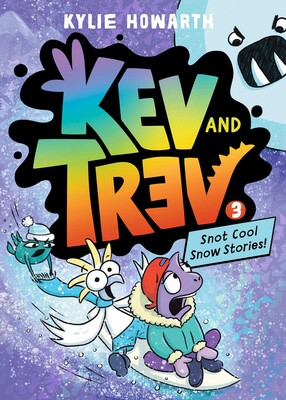
Kev and Trev: Snot Scary Jungle Stories is a graphic novel, the second Kev and Trev book. I liked this book even more than the first book because it is even funnier. This surprised me because I really liked the first Kev and Trev book!
Kev and Trev are on a jungle adventure to find pugorillas and other jungle animals and it is hilarious. There are so many funny moments and jokes.
The illustrations are really funny, I loved the jaguar, and I really liked the front cover, the sparkles are really cool and it looks really exciting and the book was really exciting too.
All ages would enjoy this book because young kids can look at the pictures and older kids will love the jokes!
This is John’s first book review for Alphabet Soup. To send us YOUR book review, read our submission guidelines. Happy reading!
Dragon Girls: Zoe the Beach Dragon by Maddy Mara, Scholastic Inc, ISBN 9781760265151
REVIEWED BY SCOUT, 8, QLD
Scout reviewed her own copy of this title.
Zoe the Beach Dragon by Maddy Mara is part of the ‘Dragon Girls’ series. I love that there are lots of animals like turtles and seals and lots more in this series.
In this book Zoe and her friends, Grace and Sofia, have to stop the Firesparks and their leader, the Fire Queen, from making the water disappear. They also need to save the ocean leaders like the turtle leader and the dolphin leader.
I think kids who like dragons and are aged 8, 9 and 10 would maybe like this book. I would give this book 10/10 stars.
This is Scout’s first book review for Alphabet Soup. To send us YOUR book review, read our submission guidelines. Happy reading!
Jeanette Stampone grew up in England in a spooky 300-year-old house surrounded by stories of local legends, ghosts, fairies, and pixies. Jeanette now calls Western Australia home. She is the author of two picture books and the Junior Fiction Ghost Detectives series, illustrated by Jasmine Berry. Today we’re chatting to Jeanette about book one in the series: Terry Fide and the Bakery Ghost.
From the publisher:
Nine-year-old Terry Fide dreams of being the next great ghost detective like his dad. But there’s one problem: Terry is terrified of anything remotely scary (except his ghost dog, Bones). When his dad is called to work in Sydney, Terry is left to deal with a spook causing havoc at the bakery.
How did you come to write about a ghost haunting a bakery?
I was born in England and lived in a three-hundred-year-old house. It was always very spooky and I spent quite a lot of time hiding under my covers! So, that’s where the ghost part came from. As for the bakery, well my parents owned a bakery, and when I turned 15, I worked there, too. So, I pretty much grew up in a bakery environment, and was always spoiled with yummy treats. When I was trying to think of an idea for the book, I decided it would be fun to combine these two elements and create a bakery ghost.
Terry Fide is a punny name for your main character and his name also tells us about his personality! Have you ever found yourself having to do something that you found terrifying?
I did a solo parachute jump! If that’s not terrifying enough, my walkie-talkie failed so I couldn’t hear the instructors as they tried to guide me down. Thankfully, I managed to get myself down safely. I have to say, it was an amazing experience.
What’s your go-to order when you visit a bakery?
Can I only choose one? I don’t think that’s possible, so I am picking a few! For sweets, I love carrot cake and caramel slice. For savoury, I won’t say no to a pasty or spinach & ricotta roll. Yum!
Do you have a tip for young writers who want to write their own novels?
Take lots of time to get to know your characters. Imagine you are interviewing them and ask about their lives, what they do for fun, their likes and dislikes. Imagine how they would respond to you. Would they roll their eyes? Would they get distracted? Would they speak fast or slow? Doing this will really help you to understand them and build a strong character. And from there, you can start to figure out story ideas. You’ll be surprised how many ideas start flowing after you’ve ‘interviewed’ your character!
Can you tell us a bit about what you’re working on next?
I am always working on picture book ideas. I also love to draw so I am hoping to become an author-illustrator one day. So, lots of doodling and playing on my favourite drawing app, Procreate.
Terry Fide and the Bakery Ghost is out now! Ask for it at your favourite bookshop or local library.
AWESOME EXTRAS:
If you live in Western Australia, you can book a private 10-minute story time experience with Jeanette on the Story Wheel as part of the Totally Lit Festival in Fremantle! (October 10, 2025) Info and bookings via the Totally Lit website.
Kristy Nita Brown is a Western Australian author writing junior fiction books and delivering creative writing, independent publishing and film making workshops at libraries and schools. Today we’re pleased to be chatting to Kristy about the second book in her Mavey and Beth’s Double Act series: The Hole Truth, illustrated by Alison Mutton.
The author provided Alphabet Soup with a reading copy of The Hole Truth.
Almost everyone in Year Three is rocking earrings. Shiny gold stars, diamond studs, dangly rainbows, buzzy bees. Everyone except Mavey, that is. With her twin sister Beth and her best friend Woody by her side, Mavey’s facing a big decision. Fit in? Stand out? Studs or no studs? Can Mavey figure it out before the whole school finds out the hole truth?
This is Book 2 in your junior fiction series. Have you planned out the series in advance or do you just focus on the book you’re currently working on?
When I first came up with the idea for Mavey and Beth, I only had one book in mind. But once I finished it, I realised it could work as a series, with the girls taking on a new challenge in each school year up to Year 4. I won’t go past Year 4, as this would push the series into middle-grade territory, and these are chapter books for early readers.
A fan recently asked me why the story is always told from Mavey’s point of view and not split with Beth over the books, since they’re twins. Mavey is shy, introverted, and thoughtful. I feel these kinds of characters are underrepresented in junior fiction. Beth is more outgoing and dramatic, the kind of character who’s already well represented. For me, Mavey is the heart of the story. She’s trying to figure out her place in the world and make sense of things other kids seem to grasp more easily, and that’s the perspective I want to explore.
Beth has her ears pierced, but her sister Mavey is nervous about getting her ears pierced. Do you have your ears pierced? How old were you when you made the decision?
The Hole Truth is inspired by my daughter and the pressure she felt from her peers in Year 3 to get her ears pierced. It’s a real issue for primary school kids and isn’t just girls, kids of all genders are getting piercings these days.
I do have my ears pierced, but I don’t remember when or how it happened. I also have my nose pierced. I did it while writing The Hole Truth to learn more about the process. The piercer explained everything to me including the process and the importance of consent. The person getting pierced is always in control, no matter their age, and can say “no” or “stop” at any time. Some of the stories of kids she’d pierced even made their way into the book!
What’s your best tip for someone who feels anxious about the pressure to do something they’re unsure about?
My best tip is to remember that it’s okay to take your time and say “no” if something doesn’t feel right. You don’t have to give in to pressure just to fit in or please others. It’s important to listen to your own feelings and boundaries. Sometimes talking it through with someone you trust, whether that’s a parent, teacher, or friend, can really help you figure out what’s best for you. And remember, you’re always in control of your choices, just like I learned from the piercer. Your choices are important, because they are yours.
Spelling homework gets a mention in the book – is spelling one of your superpowers or superchallenges?
Spelling is definitely not one of my superpowers, and I love telling kids this! So many young writers struggle with spelling, and I want them to know it doesn’t have to hold them back. Being an author doesn’t mean you have to be a perfect speller. We have editors who help fix punctuation, grammar, and spelling. Once kids realise this, they can let go of the fear and just focus on the story they want to tell. I even tell them I use voice-to-text when writing sometimes. You don’t even need a pen – just an idea! I’m living proof that you don’t have to be a perfect speller to be a storyteller. If you’ve got a good idea, there’s always a way to get it down on paper.
What’s next for Mavey and Beth?
Will there be a third Mavey and Beth book? In my mind, yes … I think there will be! It will be set in Year 4, and I’m thinking it might be about skateboarding … but I’m open to suggestions. If anyone has ideas for the next book, I’d love to hear them. Feel free to email me! That said, my writing time is limited because I also run the Book Builders Challenge in schools, which takes up a lot of my year. So, the plan is for a third book, but I’ll see how it all fits together!
The Hole Story is out now! See the list of stockists at the author’s website.
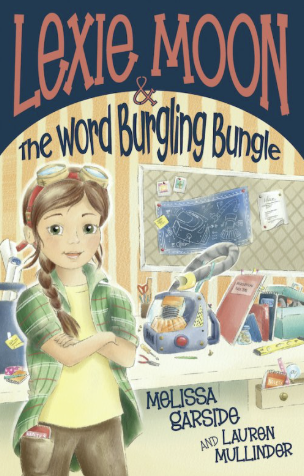
This book centres around the main character, Lexie Moon, who builds a contraption that takes someone’s words and gives them to someone else but alas Lexi’s invention gets stolen by a technology-crazy burglar.
Lexi Moon and the Word Burgling Bungle is perfect for tween readers who want a fun and interesting book. I absolutely loved keeping up with Lexi’s antics and the plot kept me guessing till the very end. I cannot wait to join Lexie Moon on her next adventure!
Ella and the Amazing Frog Orchestra by Cassy Polimeni, illustrated by Hykie Breeze, UWA Publishing, ISBN 9781760802899
REVIEWED BY ELLA, 9, WA
The publisher provided a review copy of this book.
Ella and the Amazing Frog Orchestra is a fiction book with lots of facts about frogs. The story is about Ella, who moves house and finds frogs near her new home.
I really liked the author’s descriptions of all the details in the book, and all the onomatopoeia, that made me feel like I was actually there. I thought Ella was a fun and likeable main character. The illustrations were really good, I just wish they had more colour in the book.
I think that anyone aged 5-9 would enjoy this book. Anyone who likes frogs or wants to learn about frogs, would love this book.