
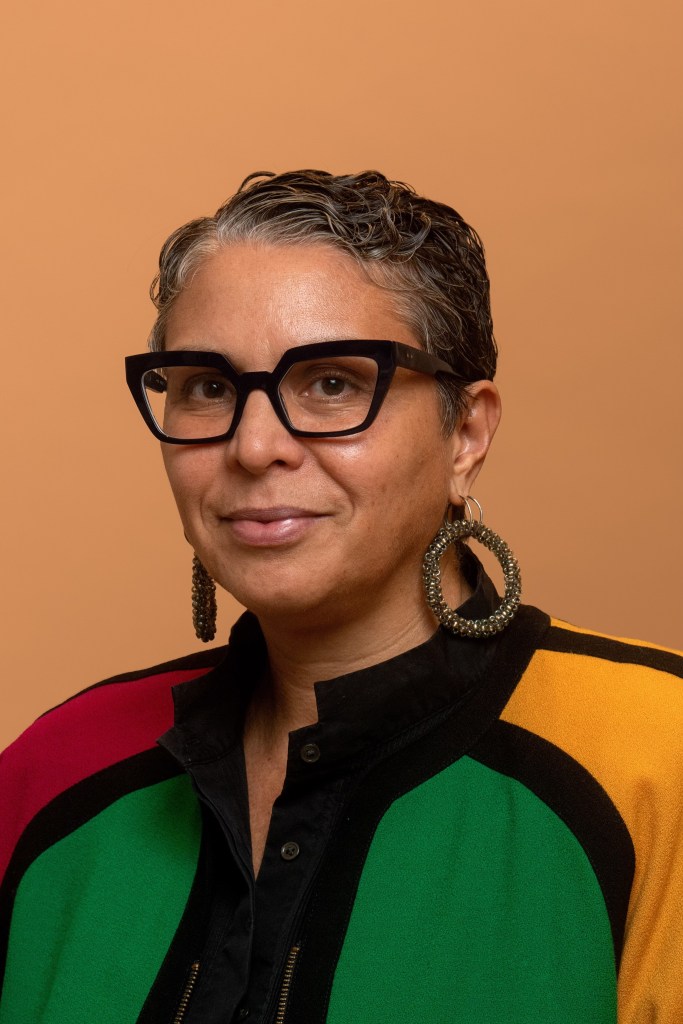
Cheryl Leavy is from the Kooma and Nguri Nations in western and central Queensland. She is an award-winning poet and writer who loves to tell stories that celebrate First Nations culture, history and Country. We’re thrilled to be chatting to Cheryl about her first picture book – Yanga Mother – illustrated by Christopher Bassi.
The publisher provided Alphabet Soup with a copy of Yanga Mother.
From the publisher:
Yanga Mother is a poetic celebration of First Nations languages. This powerful bilingual story honours connection to Country and the unbreakable bonds of never-ending motherly love. From award-winning writer Cheryl Leavy comes this beautiful picture book in Kooma and English about a grey kangaroo and her joey, and the unbreakable bonds of family.
Sometimes the author and illustrator of a book discuss the project during its creation, sometimes they work separately on the words (author) and artwork (illustrator). How did you work with Christopher Bassi while he was illustrating Yanga Mother?
On the surface, Yanga is a story about the love between Mother and child. It helps us to reflect on how our Mother is always with us in our hearts, even when she seems far away. It’s something a lot of readers will be able to relate to and lays the groundwork for empathy for the Stolen Generations.
Once the story was written, I thought carefully about how to illustrate it. I chose dhugundu, the grey kangaroo, because they are wonderful mothers and siblings. You can read more about how they love and protect each other in the notes for older readers.
I got started on the book itself by working out what words would go on each page (the pagination) and made notes for the illustrations for each of the phrases that make up the story. I set it out in a table, using a process I made up as I was going along. I wasn’t really sure how to make a book and what people in the publishing industry did. I just I wanted to be able to set out my ideas clearly and simply, and to make sure the visual storytelling reflected Kooma cultural values.
I spent a lot of time considering how I wanted the book to look. I studied many of my favourite children’s books, looking at the illustrations carefully to understand what made each of them so wonderful. One of those books was Aboriginal Tales, published in 1972 by Golden Press, which my mother had recently given me. The illustrations have lots of rich yellows and this made me wonder which colours are best to use in children’s books. I searched the internet and found a piece of research that said yellow was a colour that children prefer in children’s books.
Artist Christopher Bassi was then the obvious choice for the illustrator. He is a famous artist who uses yellow as the main colour in his work. I have loved Chris’s artwork for a long time and we have developed a close friendship. I was so happy when he agreed to illustrate and design Yanga Mother.

We worked together very closely, talking through my suggested illustrations and exploring Chris’s vision for the book. We spent many happy hours together in Chris’s studio in West End, talking about each illustration, pouring over children’s books we each loved, thinking deeply about how we could honour the story and bringing our very best efforts to each illustration. We are both very proud of the final product and are looking forward to a new project together.
On each page, the poetic text of Yanga Mother appears in Kooma first with the English translation below it. When writers translate their work, it’s not always a word-for-word project. How did you go about choosing the words for your translation?
Most of the translation is almost exact. There are some examples where there is a tricky translation, where I have generally followed the patterns provided by the Kooma language. Take for example the concept of everywhen, which is an English word used to describe part of the Aboriginal philosophy of time. I wanted to translate this term from English to Kooma, but there is not a Kooma word recorded anywhere. I already know that “murra murra” means many hands and “gurragurra” means everything. So wandhandja-wandhandja would be everywhen.
Because I am a poet, I sometimes like to use the Kooma language more creatively. The term “yilungga yabangga”, which means everywhere, is a good example. It literally translates as here and there. It is a more playful way of saying everywhere and suits both the genre of a picture book and Yanga’s story. I settled on this choice when I was working with a linguist (language expert) who, like an editor, reviewed drafts towards the end of the project.
Another example of a translation that is not exact is “ngali wadjanbangali”. It literally means we two are going, or on the go. The closest translation that fits with both what I wanted to say and a clear English meaning is, “we two are always together.”
The book was inspired by your grandmother’s experiences in the 1930s; she was part of the Stolen Generations, when Aboriginal people were often prevented from speaking their own languages. Did you grow up speaking Kooma, or was it something you learned later in life?
When my grandmother grew up on the Barambah Mission, she was punished if she spoke in Kooma. Like many Aboriginal people, this meant she spoke it less and less. I grew up speaking a little Kooma and other Aboriginal language words, but was not able to speak in sentences. There are not many learning resources for the Kooma language so learning it has been very difficult. I hope to be able to change that.
Do you have a tip for young writers who’d like to write their first poem?
If you’d like to write poetry, the best way to start is by reading poetry, lots of it. Carry a pen and paper around with you always. Leave a note pad beside your bed. Write down ideas you have and read over them. This will get you thinking and writing down your thoughts. A poem often starts to take form in this way.
It is great to start a poem with inspiration that wells from within you, but you can also sit down with the intent of writing a poem. You can try using what writers call “prompts”. For example, you might sit down with the idea of writing a poem about your mum. This is often the kind of thing you will do if you join a writing club – read poetry, write down and share your ideas, write from prompts and then keep working on your poems until you feel they are finished. I have poems I have been working on for years!
Can you tell us a bit about your next project?
The book I am working on right now is another picture book called, For You Country. It teaches the water cycle from a First Nations perspective. I am also working on a third children’s book titled Mugirri and Samson. It shares what a nyimanj (native ant) called Backbone learns about himself and his community after he comes across the first-ever yarraman (horse) on his Country.
Yanga Mother is out now! Ask for it at your favourite bookstore or local library.
AWESOME EXTRAS
* Listen to Kooma Language pronunciations of words in Yanga Mother
* Download the Teachers’ Notes
* Going to the Byron Writers Festival? See Cheryl Leavy’s sessions on Sunday 11 August 2024
 alphabetsoup.net.au