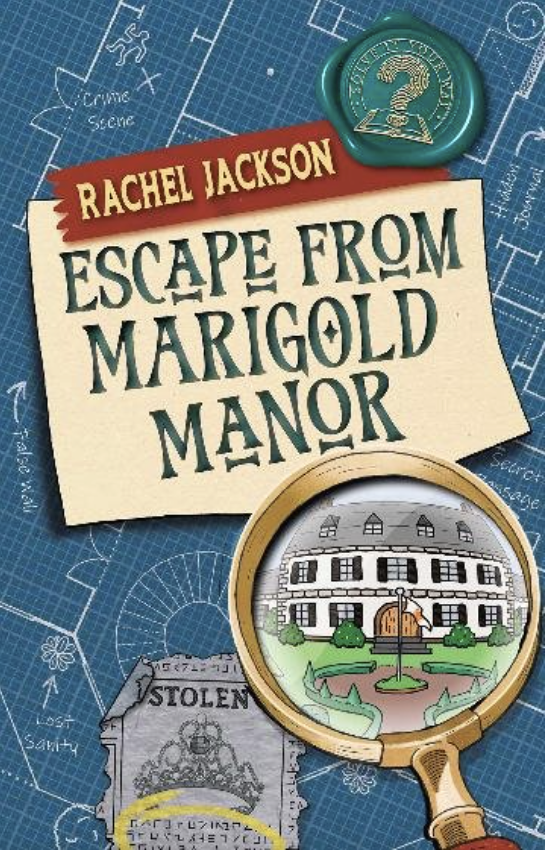
Escape From Marigold Manor by Rachel Jackson, Riveted Press, ISBN 9781763526068
REVIEWED BY ELLA, 9, WA
The publisher provided a review copy of this title.
Escape from Marigold Manor is a detective book with lots of cases, which the reader sometimes has to help solve.
This is not the kind of book I would usually read, but I enjoyed the surprising endings and interesting challenges. I did find some of the challenges a little bit tricky!
I would recommend this book to anyone who likes mysteries and puzzles, and choose-your-own-adventure books!
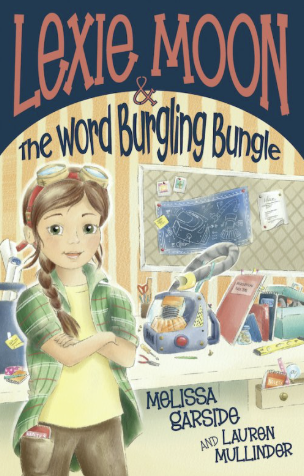
This book centres around the main character, Lexie Moon, who builds a contraption that takes someone’s words and gives them to someone else but alas Lexi’s invention gets stolen by a technology-crazy burglar.
Lexi Moon and the Word Burgling Bungle is perfect for tween readers who want a fun and interesting book. I absolutely loved keeping up with Lexi’s antics and the plot kept me guessing till the very end. I cannot wait to join Lexie Moon on her next adventure!
Rachel Jackson draws on her extensive experience as an intelligence specialist to create twisty branching plotlines. She’s also a sucker for good puzzles and bad jokes – subject matter that she shares generously with her readers in the Solve It Your Way series published by Riveted Press. Today we’re chatting to Rachel about her latest book in the series: Escape from Marigold Manor.
The publisher provided a review copy of Escape From Marigold Manor.
From the publisher:
You are the greatest detective in the land and you’re facing your biggest mystery yet. It turns out there is more than one way to leave Marigold Manor … You’ll find thirty-two unique endings in Escape from Marigold Manor. Each mystery requires you to complete a series of interviews and brainteasers in order to identify the culprit. The challenges include puzzles that you must crack in order to unlock safes, read secret messages and locate hidden clues. The casefiles at the back of the book will help you keep track of which cases you’ve sold, and which cases still await you in the mansion. Can you solve them all?
Escape from Marigold Manor has 32 mysteries in one book, with the reader’s choices affecting the path each mystery takes. As the writer, is it tricky to keep track of all those story paths?
I always joke that my brain is all over the place, and the Solve It Your Way books are just a reflection of my brain! Truth is, when I’m writing an interactive fiction like this, I use a spreadsheet to create a visual chart of the book’s structure. If you’ve ever done mind-mapping – with the ideas in little bubbles and lines branching out from there to more idea bubbles – it’s a lot like that.
The tricky part can be finding the right puzzle for a specific part of the story. This is particularly true in the case of Escape from Marigold Manor – where there are puzzles inside of puzzles as you navigate crime scenes and suspects.
When you read interactive stories like these, are you the kind of reader who picks a path and forges on – or do you keep a finger bookmarking the various pathways so you can try a different path if you don’t like the outcome of your first choice?
Oh, finger bookmarking – definitely! And I would run out of fingers. In fact, this is the exact reason that Escape from Marigold Manor has a checklist at the back with page numbers so you can reinsert yourself into the story at key junctions, without having to start all over again. Now, fingers are free for tearing out hair, biting fingernails or otherwise immersing yourself in the dastardly world of Marigold Manor.
In real life you have experience solving mysteries, and in Escape from Marigold Manor, the reader is the detective. When there’s a mystery to be solved, what makes a great detective?
Firstly, kindness. Because the whole point of trying to solve the mystery is that you want to help someone – the victim, their family, the community and even the offender.
Once you’re knee deep in clues and suspects you need to have enough attention to detail to gather all the information surrounding the mystery, but then you need to be able to decide which information is actually useful. If you find yourself faced with a mystery (say, your pencil is gone), start by asking small questions that you can answer (such as – when did you see it last? Two days ago, on your bookshelf!). This will lead you to bigger questions that you can’t answer – yet! (Who had access to my bookshelf in the last two days?). That knowledge gap is where you need to focus your investigation. You might want to interview suspects (your little brother?) to identify motive (he was looking for a pencil last week!) and opportunity (but he was camping with Dad the whole time, so he couldn’t have taken the pencil). Keep asking questions and chasing up new leads. Even the ones that don’t seem important at first (mum did the shopping yesterday), might turn out to be the key to solving the mystery! (Mum borrowed your pencil to write the shopping list.)
Do you have a tip for young writers who want to write a mystery story of their own?
Do it! Honestly, it’s so much fun. The key to a good mystery, in my opinion, is that more than one character should have good reason to have committed the crime. So, make your characters really interesting, with shades of good and bad. That way, whoever your villain turns out to be, it will make sense to the reader!
Can you tell us a bit about what you’re working on next?
The most wonderful thing about the Solve It Your Way Series is that I get to build these puzzle-filled interactive storylines in a brand new setting each time. First was a swashbuckling pirate adventure in Escape from Cuttlefish Cove, then came the detective who-dunnit in Escape from Marigold Manor. Up next – dragons! Oodles of dragons for the reader to collect and interact with. Sleep with one eye open – Escape from Firestone Fortress is coming!
Escape from Marigold Manor is out now! Ask for it at your favourite bookshop or local library.
Thea Stilton and the Chocolate Sabotage by Elisabetta Dami, Scholastic, ISBN 9780545646567
REVIEWED BY AASHI, 10 VIC
Aashi reviewed her own copy of this book.
The Thea Sisters set off on an adventure to Ecuador. They are visiting Paulina’s old friend, Antonio, who runs a chocolate factory. He runs Choco Loco with his cousin Hector.
Choco Loco is in the running for the Chocolate Cup award. The award is very prestigious so the competition is tough. Out of the blue there are multiple malfunctions in the factory. The Thea Sisters start to wonder if it is sabotage. Join them to solve the case.
The book is full of interesting and exciting scenes. Every Thea Sister is good and loves different things and together they are unstoppable. Colette loves fashion and is great at designing clothes. Violet is shy but so smart and great at classical arts. Pamela is talented at mechanics and cooking, she loves eating. Pauline likes technology and loves travelling. Nicky is enthusiastic about sports and fitness.
My favourite character is Violet because even though she is shy on the outside, in the inside she has such cool ideas and is so talented at many things.
Thea Stilton and The Chocolate Sabotage is a good fit for people who want to solve a mystery. You will definitely enjoy it if you enjoyed Sherlock Holmes. If you get stuck trying to solve the mystery, there are clues to help you.
I recommend the book for people aged seven to ten as it has some tricky words but lots of colourful pictures to illustrate it. I rate it 4 out of 5 stars as it could have had some clearer explanations.
Sandi Parsons is an avid reader, writer and storyteller. She lives in Western Australia with some problem puppies and many teetering stacks of books. Today we’re chatting to Sandi about her latest book: Salty.
The publisher provided Alphabet Soup with a reading copy of Salty.
From the publisher:
Dara longs to have a best friend, someone she can hang out with. But it seems like Josh, her new assignment partner, will land her in popularity purgatory. At least their assignment topic is perfect — Ned Kelly’s death mask. Now, Dara can drop words like ‘pseudomedicine’ and ‘phrenological analysis’ into casual conversation. When ‘Ned’s head’ is stolen, Josh is convinced the culprit is their new art teacher, Ms Isoba. As Josh hunts for clues to prove his theory, he discovers that Ms Isoba isn’t the only person with a secret. What’s Dara hiding?
Dara is a collector of interesting words – how did you choose which words to include as Dara’s words-of-the-day to include in Salty?
I researched lots of words before I settled on a handful I wanted to include. As a dog lover, groke (the way a dog stares at you, hoping you will share your food) was always going to be in the story. With my starter words in hand, I started writing Salty. In my second draft, if I felt a chapter needed a “word” that wasn’t in my word stash, I’d hunt about to see if I could find a word that would fit. That’s how I found chork (the sound shoes make when they are wet). Occasionally, my hunt wouldn’t reveal a suitable word, but would give me different word to use somewhere else in Salty.
Do you have a favourite word?Is it one of Dara’s words?
Originally, my favourite word, scurryfunge, (to rush about tidying up on the moments before a guest arrives) didn’t find a place in Salty. When I did a structural edit, some interactions between Dara, Melody and Justine changed places, and scurryfunge slotted into place like it was always meant to go there.
I’m also quite fond of snollygoster (a corrupt politician, or person who is in public service for their own benefit.) It’s a word that rolls off the tongue easily, but there wasn’t a logical place to include it.
How did Ned Kelly and his death mask end up in your story?
The original idea for Salty was a question. Why would a criminal need to hide in a school? After brainstorming some scenarios, the most likely answer was that students could be ‘camouflage” for someone casing a museum. Teachers on excursion have an excuse to take more photos than they need. I included Ned Kelly, because I wanted the thief to steal something uniquely Australian. The death mask was something I could picture Dara getting enthusiastic about, while Josh would turn his nose up at it.
Dara lives with cystic fibrosis. Are her day-to-day experiences at school similar to your own school experiences growing up?
I experienced way more problems with my digestive system than I did with my lungs when I was Dara’s age. So, to some extent, Dara’s experiences do mirror mine. No one with CF ever wants to have someone waiting for them in the bathroom! I wanted to go to friends houses and play after school, but I had to go home to do my afternoon treatments. This meant I was excluded from some friendship groups.
When I was six, my enzymes came in foil packets. They took ages to open, and there was no way to take them discreetly. Everyone would stare. I was ten when the foil packets were replaced with bottles. I would quickly pop them in my mouth hoping no one would notice (they always did). When I was older I turned it into a party trick. If you draw attention to something, you give it less importance. (Dara isn’t that confident yet!)
Everyone with CF has a story to tell about people staring when you cough. Some people have very loud looks! Others will make nasty comments.
What’s the hardest part about writing a mystery?
I wanted to make it clear to the reader from the beginning that Ms Isoba was not what she seemed. (Just like Count Olaf in A Series of Unfortunate Events.) So, my focus was on making Ms Isoba seem like she had fooled everyone while the reader knew she was … probably … guilty. It was tricky!
Salty is out now! You can buy copies online or ask for it at your local library.
The Sugarcane Kids and the Empty Cage by Charlie Archbold, Text Publishing, ISBN 9781922790996
REVIEWED BY AASHI, 10, VIC
The publisher provided a review copy of this book.
The Sugarcane Kids face a crisis: animals are mysteriously disappearing all over town, including Gloria, a beloved pet. Although the kids have their suspicions, the adults refuse to listen. It’s time for the kids to take matters into their own hands and embark on an adventure to solve the mystery.
The Sugarcane Kids and The Empty Cage is not just a story about solving a mystery; it’s a narrative that encourages young readers to take action, work together, and approach challenges with a growth mindset. This heartwarming tale will leave readers with smiles and a sense of hope that echoes long after they turn the final page. It’s a must-read for any young adventurer at heart!
The book is perfect for kids between 7 and 10 years old. I hope you get a chance to read this great story.
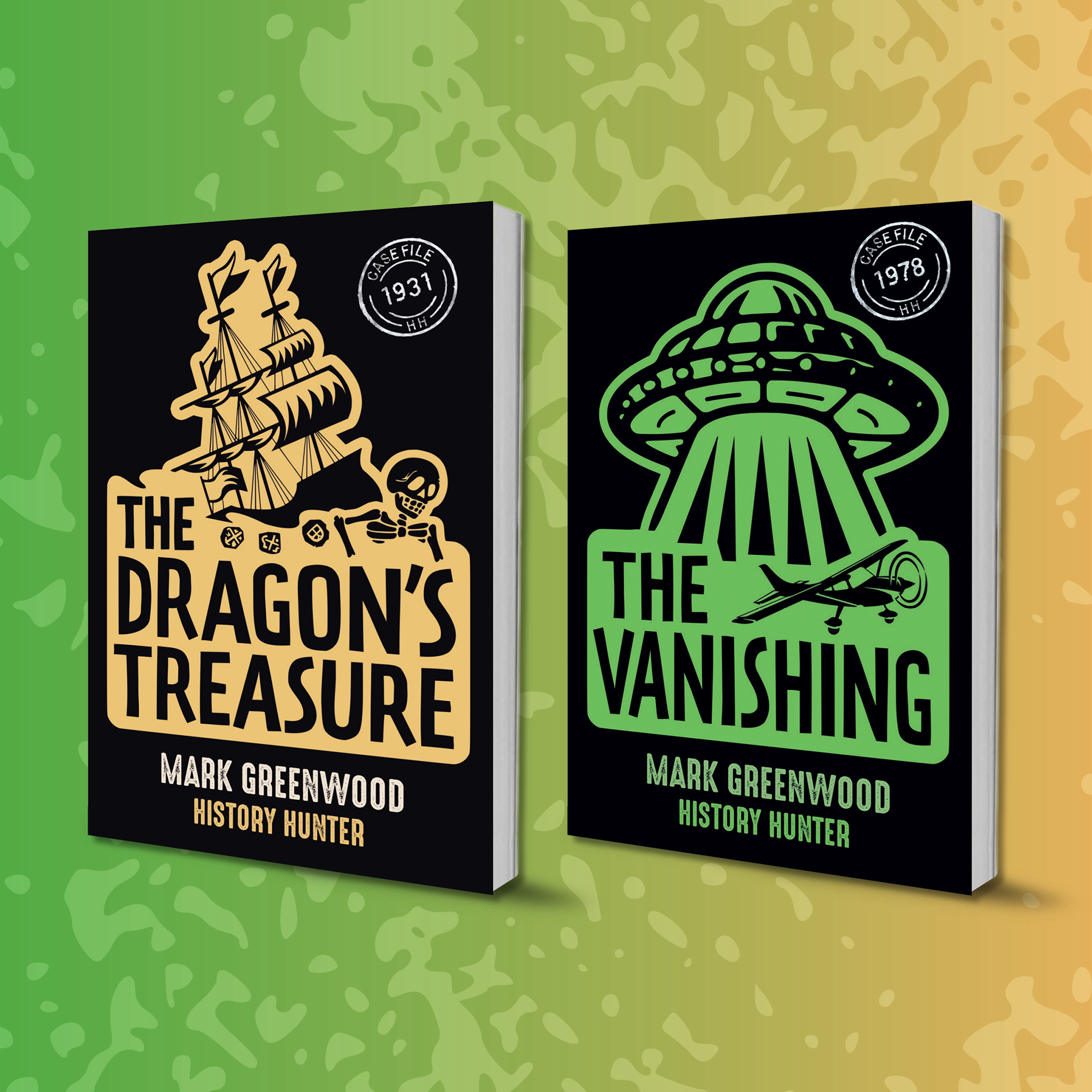
Mark Greenwood is a history hunter! He enjoys searching for lost explorers and glittering treasure, delving into baffling mysteries and investigating famous cold cases. His many award-winning books examining history and multicultural themes have been honoured internationally. Today Mark chats to us about his new History Hunter series, exploring unsolved mysteries. The first two books in the series – The Vanishing and The Dragon’s Treasure – were released in July 2024.
The publisher provided Alphabet Soup with reading copies of these books.
From the publisher:
The Vanishing:In 1978, a young pilot vanishes during a routine flight over a notorious stretch of water. His radio transmission to airport control is one of the most bizarre ever recorded. What did Frederick Valentich encounter? Where did he disappear to?
The Dragon’s Treasure: On a summer morning in 1931, four children on a remote beach make a remarkable discovery. But this is only one of many astonishing finds in the same area: silver coins, hidden chests, mysterious stones, strange objects and an unidentified skeleton. Why is it all there? Where has it come from? Can the truth be found?
Join the History Hunter to unravel these marvellous mysteries.
You’re an avid history hunter, but how did you come to hear about these two unsolved mysteries from 1931 and 1978? (Do you overhear conversations, or frequently look through old newspaper articles to uncover anything interesting?)
I’m drawn to real-life mysteries to search for the truth. The spark to write could be a character, a place, an event, a photograph that teases my imagination, an object or relic, or a tall tale recalled. Sometimes, I wonder if we come across stories by chance – or if stories find us. A curious, questioning mind kick-starts the research process and once history hunters get going, there is no stopping the search for truth.
The Dragon’s Treasure invites readers on an adventure back in time. The premise reads like the plot of a fictional novel – a fabled shipwreck, seven chests of treasure, a mysterious skeleton and 68 desperate castaways abandoned on a bleak coast. But sometimes truth is stranger than fiction.
There are many mysteries out there, waiting to be discovered – secrets and hauntings, unexplained occurrences, lost treasure. There are mysteries that solve the disappearance of something or someone. There are mysteries that remain unsolved. Not to mention strange objects, legendary creatures, ghostly ships, freaky phenomena and cryptic codes. For history hunters, a mystery is anything inexplicable, unknown or puzzling. That is what drew me to the story of The Vanishing …
Do you have an opinion about what really happened to the pilot who vanished?
The Vanishing kicks the History Hunter series off with THE question – are we alone in the universe? The disappearance of pilot Frederick Valentich is Australia’s greatest aviation mystery. In 1978, he was on a routine flight over the Bass Straight when he reported an encounter with a UFO. His extraordinary voice transmission with Melbourne flight control was recorded in full. His last words were: ‘It’s not an aircraft …’ Neither Valentich nor his plane were ever found. What on earth (or not of this earth) happened? After years of research, I have formed my own opinion about what happened to Frederick Valentich. I conducted a thorough investigation, and The Vanishing provides evidence and enough information for readers to draw their own informed conclusions.
Has anything strange or mysterious ever happened to you?
Yes – quite a few strange things have happened to me. I’ve learnt to embracethe mysterious, accept it and use the experiences creatively. These private episodes are random and rare, but always welcome.
Your books contain a variety of artefacts and primary source materials, like photographs, newspaper articles, investigation reports and more. How do you gather and store all that information and research for your writing?
I’m a history mystery detective. I collect information, clues and evidence. I keep files on the people in each story, newspaper accounts, photographs, research documents, maps and books about the subject that are valuable sources of knowledge. These are the tools that help me brush away the layers of time so my readers can walk undetected in the past.
Can you tell us a little about what you’re working on next?
I’m thrilled to be working on the next two books in the HISTORY HUNTER series. Each case file invites readers to delve into the unexplained and investigate extraordinary historical mysteries.
Case File No. 3 is the story of a legendary jewel that has crossed oceans and continents, passing from thieves to commoners, kings, and queens. The sinister forces that lurk beneath its indigo surface are said to have origins in an ancient curse.
The fourth book in the History Hunter series is set in the Great Depression – when a hero was needed to lift the spirits of a nation. The call was answered by an underdog with unflinching courage, a tall poppy who refused to be defeated, a battler who defied the odds, and an icon whose glorious life sparked one of Australia’s greatest unresolved mysteries.
The truth is out there …
The Vanishing and The Dragon’s Treasure are out now! Ask for them at your favourite bookshop or local library.
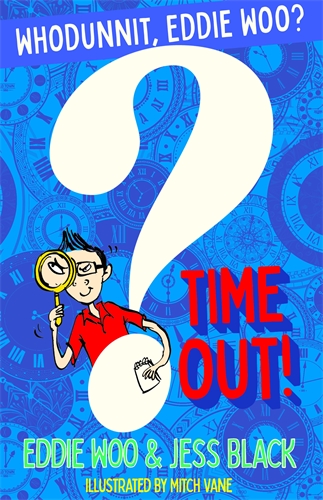
Searching for a new book to dive into over the holidays or when you are bored? Or figure you are a bit of a detective? Time Out! is a mystery novel by Eddie Woo & Jess Black. It is part of the Whodunnit? series currently containing two novels, the other one being Team Trouble. The main protagonist of the book is young Eddie Woo, a super sleuth and maths whizz. Together with his friends, Rusty and DT, they accidentally stumble across a treasure hunt created by Henry Cedric James in the 1880s. Even though their suburb of Red Hill is small there can still be an action-packed adventure.
Henry was the founder of Red Hill and hand-built many public buildings like the Council school, lighthouse, old cathedrals, parks and many homes. In some of these locations he left hints and ciphers to where the next clue might be. It is rumoured that Henry worked at the Ballarat Goldfields before founding the new suburb. When he passed away, he left most of his gold hidden, rumoured to be at the end of the treasure hunt. But every good story needs an antagonist so, someone is going to take drastic measures to ensure Eddie doesn’t reach the end!
This is an awesome book including maths and instrumental talents. I rate this book 5 stars out of 5 as it has a good climax, resolution and includes maths to explain things.
Scarlet & Ivy: The Lost Twin by Sophie Cleverly, HarperCollins, ISBN 9780007589180
Matilda borrowed this book from her local library.
Ivy was always the quiet twin, the mirror image, so when Scarlet disappears, Ivy really misses her. When Miss Fox (the principal of Scarlet’s school) turns up at Ivy’s front door, things start to get suspicious …
Why should Ivy have to pretend to be Scarlet?
I really loved this book, as there were so many twists in the plot. One moment you thought they were nearly at the end of the mystery, and the next moment something happens to change your mind. I would definitely recommend this book for readers who love mystery, and readers who love the St Clare’s and Malory Towers books [by Enid Blyton].
Readers aged 9 to 14 would enjoy this series. 4.5 stars!
Joseph borrowed this book from his public library.
I really enjoyed Escape from Mr Lemoncello’s Library (another book by the same author) so I was excited to find this book at the library. Although I enjoyed it, it wasn’t as good as Escape from Mr Lemoncello’s Library, which was my favourite book this year.
In this book: In the holidays Billy has to go to a boring cabin with his mum instead of staying at the apartment with his dad. Billy’s mum rented the cabin from Dr Libris, her university professor, for a very good price and she’s going to sit and work on her dissertation all holidays. Billy has to entertain himself, so when he smashes his iPhone and there is no other technology he has to amuse himself by reading books from Dr Libris’ giant collection. But as he starts reading he can hear strange sounds coming from the island in the middle of the lake. It’s almost as if the stories he’s reading are coming to life. Together with Walter — a boy he met around the cabins — he goes to investigate what’s happening on the island.
This is a fantasy adventure I would recommended for ages 10+ because it has quite a lot going on in the book and you need to be able to follow it. You’ll appreciate it best if you already know about well-known characters from classic literature like Robin Hood, Tom Sawyer and others.








 alphabetsoup.net.au