Spooky Sleuth & Solve:Decode mind-twisting mysteries inspired by classic creepy characters by Victor Escandell (an adaptation of mysteries by Ana Gallo), Chronicle Books, ISBN 9781797205908
REVIEWED BY ARJAN, 11, NSW
Arjan reviewed his own copy of this book.
This is a nice adaption of spooky stories for kids to read and added twist of detective work. I liked its goofy and hideous drawings.
I learned that you need to fully read and absorb the information given to be able to solve the mystery. The book helps with building comprehension skills. When I read the first story, I didn’t get the answer but by the third story I had improved my thinking and observation skills. It was fun solving the questions and decrypting the answers.
I recommend this book for kids to read for Halloween, and it gives ideas for Halloween costumes. It’s a fun book that has twists on classic scary stories. When I first started reading the book, I found it was quite creepy and dark, but the more I read, the stories became funny and interesting. My personal favourite story was ‘The Loch Ness Monster’ because you had to read the text thoroughly to get the answer.
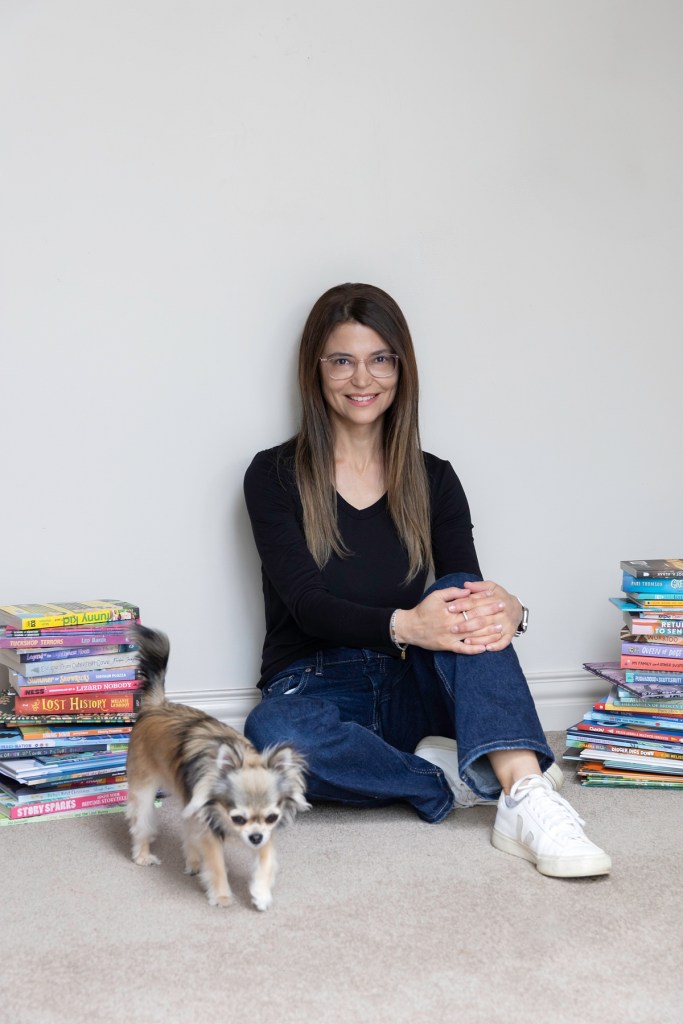
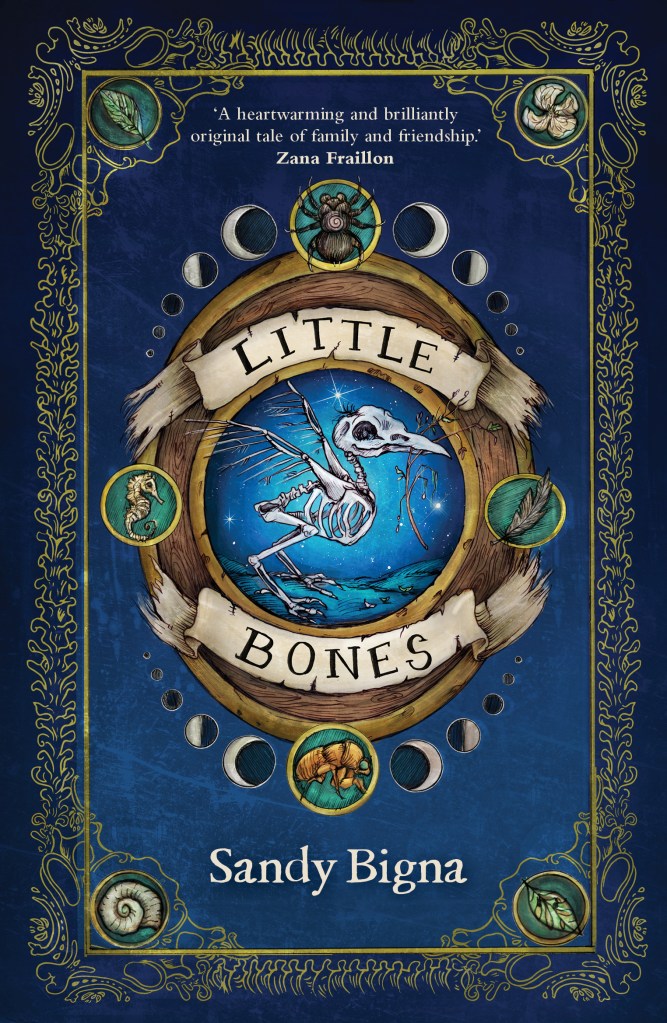
Sandy Bigna is a reader, a book reviewer and a writer. Today we’re excited to be chatting to her about her debut book – a verse novel called Little Bones.
The publisher provided Alphabet Soup with a reading copy of Little Bones.
From the publisher:
Since the accident, eleven-year-old Bones spends her time drawing animal skeletons and scavenging for dead things to add to her collection. One night, Bones wishes on a full moon and unintentionally resurrects the skeleton of a baby bird. Bird wants to return to his natural (dead) state, so Bones agrees to reverse the curse – not that she knows how. As she and Bird work out the secrets of the magic, Bones remembers what it’s like to have a friend. How can she let Bird go when she doesn’t want to say goodbye?
Sections of Little Bones begin with bones (or skeleton) related definitions. Do you collect bones yourself ? Or did you need to learn more about bones and skeletons as part of writing the book?
While I hadn’t started collecting bones myself before starting to write Little Bones, I’ve always had a fascination with them, and for people who do collect them. As bones are on the inside of us we don’t generally get to see them, which makes them seem mysterious and interesting. I remember once finding some tiny lizard bones in the driveway of the house where I grew up – and to me it was fascinating to have a glimpse of something that is usually hidden. I even took photos! It was this initial fascination that inspired the theme of bones and bone collecting. I needed to do some research to increase my knowledge about bones and skeletons – using both online sources and library books. I learnt many fun facts about bones. Did you know that birds sometimes eat animal bones to get calcium for making eggshells?
How did you come to write this story as a verse novel?
I’ve always loved reading verse novels. I love that they can tell a complete story, and convey such powerful emotions, in so few words. I love all the white space around the words, which helps you as the reader take a breather, and reflect on what is written – and on what is not written. I love the creative placement of words on the page and fun use of text font. I love reading verse novels so much that I always knew I wanted to try to write one of my own, and I’m so glad I did! It just felt like the right way to tell this story, and it was the most fun I’ve ever had writing a manuscript. I had the creative freedom to play with the joy of language.
Is the finished book very different from your first draft of the story? How did editing your work change the story?
Editing is such a valuable part of the journey to publication, and I enjoyed the editing process much more than I thought I would! The finished book changed quite a lot from the original draft that I submitted to the publisher. The first part of the story, and the ending, stayed mostly the same, but the middle part of the story received a much needed overhaul. The hardest part was cutting around 15,000 words from the manuscript! Thankfully my wonderful editor Felicity helped me with this part. We also decided to cut a couple of characters from the story (originally, there were going to be three animal skeleton characters, not just Bird). Once these characters were cut, we realised they were not essential to the plot. With each round of edits the plot was tightened, the magic elements made more consistent, the relationship between Bones and Bird strengthened, and the tension drawn out, to make a more satisfying conclusion. Each round of edits ultimately made the story so much stronger.
Do you have a tip for young writers who would like to try writing a verse novel?
The most important tip is to have fun and try new things! The best part about writing a verse novel is that you have the freedom to play with ideas and language and placement of words on the page. I would also suggest reading a lot – verse novels, as well as all types of fiction and non fiction, to generate ideas, and see how other authors have succeeded in your chosen genre. It’s not essential to read and write poetry to write a verse novel – but I found doing both quite helpful in inspiring me to experiment with free verse and lyrical language. You might even want to try reading song lyrics and listening to music – as in many ways, writing a verse novel is a bit like writing a song! Verse novels often have the same rhythm and energy as music.
Can you tell us a bit about what you’re working on next?
I’m excited about the next chapter of my writing journey. I have a two-book deal with UQP and would ideally like to continue to write for a middle grade audience, as this is where my passion lies, but I am always open to writing for different age groups or experimenting with other genres. I look forward to the next part of this writing journey and sharing more stories of hope, friendship and adventure with you all!
Little Bones is out now! Look for it at your favourite bookshop or local library.
Fionna Cosgrove is a Western Australian writer with a taste for the wonderfully macabre. Her writing has been published in The School Magazine and anthologies, and she’s also the author of the Twisted Trails series for young readers. Today we’re chatting to Fionna about how she writes her Twisted Tales!
About the Twisted Trails series:
Will you end up a zombie’s breakfast? Or maybe coming face to face with a kelp-haired sea witch is more your style? Whatever your taste, you’ll find it in this wild and spooky interactive series … How will your story end? Well, that’s entirely up to you.
What brought you to write The Midnight Manor (Book 1 of your series)?
It actually came about while I was waiting to hear back from publishers about another manuscript. I had sent out one manuscript and was wondering what to write next. It was around October, and I thought why not quickly write a book for my niece and nephew for Christmas? So I started writing The Midnight Manor. It was only meant to be a short choose-your-path book, aimed at kids 6–8. With that in mind, the word count was quite low, so I wrote the book within a few weeks. It was once I went back and started fleshing it out that the book kept expanding, and expanding and expanding, and I realised pretty quickly I had a middle grade book in my hands … and not just one, but a whole series. Once I had written the draft I figured if I’m going to get it printed for my niece and nephew, why not self publish it and put it out into the world? So with shaking hands, I started the process!
The idea for a series developed pretty easily after that. Why not write more if the first one was so much fun? Plus, there are MANY more creepy settings I’d love to explore!
How do you go about plotting a choose-your-path style book when there are so many different storylines/endings to keep track of?
I found this tricky. I initially just started writing and at any point that felt like a decision needed to be made, I made a fork and went on my merry way. It was only after a few forks and a few dead ends and plot holes, that I realised I needed to be a bit more organised. I pulled out a giant piece of paper and started drawing a big old story map. I start with one box at the top then drew two lines out of that for each decision with more and more boxes and lines indicating the paths. It sounds a bit complicated but it’s actually pretty easy. I’ve even made some free printouts you can download from my website that talk you through it.
One thing that can get confusing is time lines. Trying to remember where all your characters would be if different choices were made or not made can get a little confusing, but plotting it out helps! As far as the endings, I like to have a good mix of ‘reasonably happy’ endings and ‘not so happy at all’ endings, with one or two ‘absolutely perfect’ endings. I also try and figure out the ‘absolutely perfect’ endings first so that I have a bit of direction while I’m writing, otherwise I have a tendency to get myself a little lost …
You also write the regular kind of novels that only have one ending! Does one type of book take longer to write than the other?
The choose-your-path books are actually much quicker to write for me. They are full of crazy twists and turns and wild characters, but I don’t spend too much time on backstories or character growth. It’s fast-paced action with a lot of humour thrown in. And horror … a lot of horror.
I have a book coming out in October called Sadie and The Secret of The Swamp which has just one story line! I know, crazy. And that took me over a year and a half to write and edit. In comparison, The Midnight Manor only took three months from first draft to sending it off to my editor.
Do you have a tip for kids who’d like to try writing their own choose-your-path book?
Choose a great setting! With an interactive book you get dumped right into the action straight away so there’s less time for a detailed backstory. I find the best way to add some intrigue is to have a brilliant setting that acts as its own character. A spooky mansion that appears out of the mist at midnight … or a submerged grotto filled with bioluminescent coral in a deserted town, or my latest one – a creepy summer camp set in the middle of the forest.
And use a story map to keep track of your paths!
I’d also like to say plot everything out to save you running into plot holes and dead ends everywhere, but sometimes I think the most fun part of writing is discovering the story as you go. So just have fun. The first draft is meant to be messy and weird. The second draft is for making sense of it!
What’s next for Fionna Cosgrove?
I have two books coming out this year! I have book 3 of my Twisted Trails series: Camp Crypt. This is my creepiest one yet, with even my 45-year-old sister telling me she had to sleep with the lights on after reading it. (Spoiler, she’s not a fan of clowns). And I have another spooky mystery – Sadie and The Secret of the Swamp – coming out at the end of October. Other than that, I’ve booked in a few author talks across the year, so that should keep me and my nerves busy for a while. And in general, I just want to keep writing and live a creative life, however that looks at any particular moment.
Ask for the Twisted Trails series at your favourite bookshop or library, or order online.
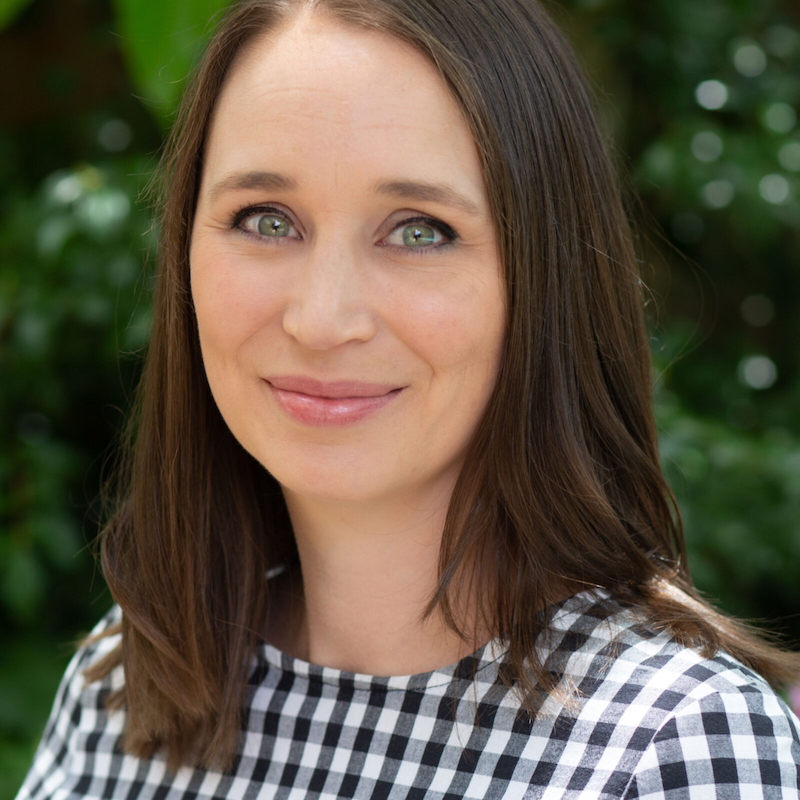
Ashleigh Barton lives in Sydney, Australia. As well as writing the Solomon Macaroni novels, Ashleigh is the author of several picture books. Today we’re pleased to have Ashleigh visiting Alphabet Soup to talk about the second book in the Solomon Macaroni series: Solomon Macaroni and the Vampire Vacation, illustrated by Sarah Davis.
The publisher provided Alphabet Soup with a reading copy of this book.
The world’s friendliest vegetarian vampire and his six mischievous cousins are going to Paris with Uncle Dracula. They can’t wait for the fine food, fabulous fashion and fang-dangled art. But Uncle Dracula is not himself. When the kids see the Mona Lisa, they get an idea to cheer him up … and it’s their naughtiest one yet.
Uncle Dracula takes Solomon and all the cousins on a holiday to Paris. If you were heading off to Paris yourself, what would you be most looking forward to?
I’m like Elvis – I would definitely be most looking forward to the food! The other thing I’d most be looking forward to is seeing the Bouquinistes of Paris (the booksellers of Paris), which are green wooden boxes along the Seine that hold hundreds of thousands of books, including second-hand and antique books. These open-air bookstores have been there for more than 500 years. I’d originally included a scene revolving around the Bouquinistes in Solomon Macaroni and the Vampire Vacation but it got edited out for pacing reasons. If I ever go to Paris again, I can’t wait to see these – I bet there would be so many amazing treasures to discover.
The Catacombs played a big part in this story and I haven’t seen them in person either, so I’d have to add that to my list too, along with a lot of other things I discovered in my research.
Have you seen the Mona Lisa at the Louvre?
I have seen the Mona Lisa at the Louvre but it was a very long time ago! I was lucky enough to go to the Louvre when I was nine years old. It was quite incredible knowing how long ago the painting was made and how revered it is. When I was researching for the book, I watched a lot of videos and read a lot of accounts to see how other people felt when seeing the Mona Lisa in person and one thing I read a lot was how surprised people were by the size. It’s actually fairly small (which made it much easier for our characters to steal!).
Unfortunately I didn’t make it back inside the Louvre when I visited Paris again many years later, but I will have to add it to my wish list above!
The cousins are big fans of ice-cream … which ice-cream flavours would be in your own multi-flavoured ice-cream tower?
If someone gave me a multi-flavoured ice cream tower I would have to try one of everything. When else would you get the chance to try every flavour in the shop and have no regrets about choosing the wrong one?
This book involves a careful plan being carried out with precise timing. Are you a plotter or a pantser when it comes to writing about planning a heist?
I think I’m a mix of both! I’m pretty terrible at admin generally and for me plotting feels a lot like admin. I also find that one idea leads to another, so things take unexpected turns for me along the way when I’m writing. But I do try to have some kind of plan in place, whether that’s a point A and point B with nothing planned to get from one to the other, or something more detailed. When I plotted this particular heist, I knew exactly what was going to happen once they pulled it off but I didn’t plan every step or the things that went wrong along the way until well into writing it.
Can you tell us a bit about what you’re working on next?
I’m not sure what will be happening next with Solomon, but in the meantime, I have two picture books and a brand-new series coming out next year. I’m not sure I can say too much about this new series yet, but it’s completely different to Solomon Macaroni and for a slightly younger audience. It is contemporary fiction with a bit of a non-fiction twist and another amazing illustrator on board!
Solomon Macaroni and the Vampire Vacation is out now! Ask for it at your favourite bookshop or local library.
Little Jiang by Shirley Marr, illustrated by Katy Jiang, Fremantle Press, ISBN 9781925816471
The publisher provided a review copy of this book.
This great novel is a wonderful joy to read. It is about a girl named Mei Ling Pang. Somehow, wherever she goes misfortune is dragged along. An example is when Little Jiang jumps out of his grave right into Mei’s life. Her neighbours have also turned into Chi-sucking jiangshi, which is even worse. This makes this story unbelievably interesting and the opposite of boring. This book is a playground for young readers who will be keen on wondering what will happen next.
This book has happy, exciting and disgusting events – for instance, eating very weird things. The characters in this book are thoroughly described and are beautifully drawn as well. The events are extremely clear and make you feel like you are actually in the book.
I would recommend this book to anyone who I know. In conclusion, this book is a perfect book for young readers who love adventure, climax and emotion.
Scarlet & Ivy: The Lost Twin by Sophie Cleverly, HarperCollins, ISBN 9780007589180
Matilda borrowed this book from her local library.
Ivy was always the quiet twin, the mirror image, so when Scarlet disappears, Ivy really misses her. When Miss Fox (the principal of Scarlet’s school) turns up at Ivy’s front door, things start to get suspicious …
Why should Ivy have to pretend to be Scarlet?
I really loved this book, as there were so many twists in the plot. One moment you thought they were nearly at the end of the mystery, and the next moment something happens to change your mind. I would definitely recommend this book for readers who love mystery, and readers who love the St Clare’s and Malory Towers books [by Enid Blyton].
Readers aged 9 to 14 would enjoy this series. 4.5 stars!





 alphabetsoup.net.au