Posted in National Year of Reading

Fabulous First Line Friday (18 May)

To celebrate the National Year of Reading, we are sharing some first lines from books on our bookshelves. So, every Friday for the rest of the year we’re posting a fabulous first line here on Soup Blog.

Here’s today’s Fabulous First Line*:

Abby leaned forward and stared.

Do you want to read on? Try using this as a writing prompt for a story or poem. What happens?

Do you know the name of the book? (We’ll put it right at the end of this post so you can try to guess first.)

*For the purposes of Fabulous First Line Friday, we’re counting the first line as the first line of chapter 1 in any book. So if there is an introduction or an author’s note or something before chapter 1, we don’t count that bit …
The book is Duck for a Day by Meg McKinlay, ill. Leila Rudge
Posted in illustrator, National Year of Reading

Meet the author-illustrator: Peter Carnavas

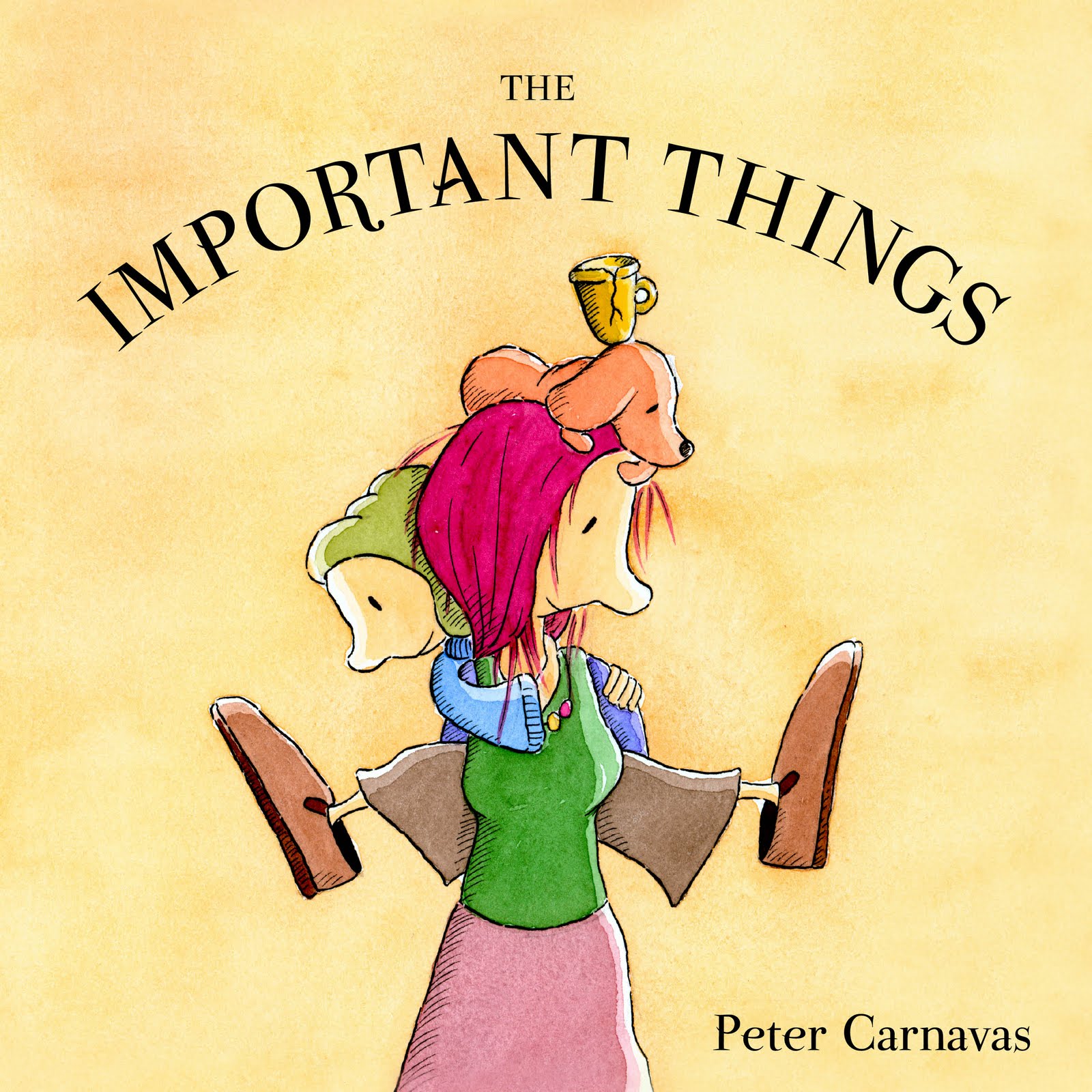
Peter Carnavas, author and illustratorIssue 15 is out now! And we’re thrilled to feature an interview with Peter Carnavas—author-illustrator of many fabulous picture books such as The Important Things, The Great Expedition, The Children Who Loved Books, and many more. We had far too many questions (and answers) to squeeze everything into the magazine’s pages, so we are very pleased to share the full interview with you here on Soup Blog.
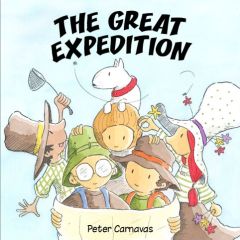


The Great Expedition (cover)The Important Things (cover)


Where do you live? 

I live in a beautiful little town called Mapleton, which is in the mountainous part of the Sunshine Coast, Queensland. I’m surrounded by trees and some very talkative birds.


Where do you get your ideas?

I start writing stories about things that I care about. Sometimes this happens after reading another book, reading the newspaper or watching a good movie. The best stories seem to jump in your head when you least expect it.

 
What made you become a writer-illustrator?

My wife! After I had made some picture books for my family, she encouraged me to take writing and illustrating more seriously and send something to a publisher.

 
Was it easy to get your first book published?

I was lucky enough to get my first book accepted by the first publisher I sent it to. It did take a lot of work to put the book together before I sent it. I made a lot of mistakes before I was happy enough to send it away.

 
Does the story influence your choice of materials for the artwork?

I usually use watercolours with an ink outline because that is what I’m comfortable using. The story definitely influences a lot of other choices I make when illustrating, particularly the style of the characters and the colours. Some of my stories have quite serious themes so I like to balance this out by using warm colours and making the pictures a bit light and whimsical.

 
When you work on your books, which comes first—the artwork or the story text?

I always write the story first with the pictures swimming around my head. When the story is finished, I spend a lot of time working on the storyboard (sort of like a comic-strip version of the book) and doing pencil sketches. Finally I’ll trace the pictures and paint them.

 
Are you working on a book at the moment?

I’ve just finished a book of mine called The Children Who Loved Books, which is about a family that discovers they cannot live without books. I’m also illustrating a novel at the moment.
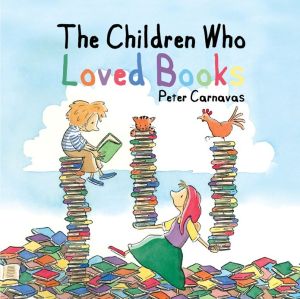
The Children Who Loved Books (cover)

 
Do you have any advice for young writers and artists?

Just keep writing and illustrating. Read as much as you can and spend a lot of time looking at your favourite illustrations. It’s always good to find other people who are interested in books, too, so you have someone else to share your interest. This might be a friend from school, or perhaps someone in your family or a librarian.

 
What do you like to do when you are not writing or illustrating?

I love spending time with my two daughters. I like walking my dog, fishing and tramping through rainforests. I also spend a lot of time playing music. I have lots of instruments that are bursting out of the cupboard, demanding to be played.

 
Is your work influenced by another writer and/or illustrator in particular?

I am a big fan of many picture book artists. Some of my favourites are Libby Gleeson, Freya Blackwood, Bob Graham, Stephen Michael King, Quentin Blake, Nick Bland and Oliver Jeffers. Plus many more!

© May 2012 “Interview with Peter Carnavas”  (Alphabet Soup magazine). Text by Rebecca Newman & Peter Carnavas.
Posted in info, National Year of Reading

Winter 2012 issue – out now!

You have probably heard lots of talk about reading lately and that’s because 2012 is the National Year of Reading. Our winter issue celebrates the National Year of Reading (because we do love reading and we know you do, too!).

Here’s what you’ll find inside issue 15:Alphabet Soup issue 15 cover

… and more!

Subscribe via our website (you can order single copies from the subscribe page, too). If  you’re in WA, rush in to one of our WA stockists—Westbooks (Victoria Park) and Zero to Ten (South Fremantle) who will have copies of the winter issue to sell you from Wednesday 16 May 2012.

Happy National Year of Reading!

National Year of Reading button 


Alphabet Soup magazine is a proud partner of the National Year of Reading.

Posted in competitions

Autumn 2012 writing comp winners

We received heaps of fabulous entries for our autumn writing competition!  We asked you to imagine a fairytale or folktale had been written as a newspaper article and you had to send us the perfect headline for that article. Congratulations to our winners—here they are:

Under 7s winner: L Sargasso (VIC)

Servant Girl Marries Handsome Prince

Under 9s winner: J Riordan (WA)

Emperor Exposed in Fashion Disaster

Under 12s winner: F Langer (WA)

Unexpected Guests at Grandma’s House!

The winner in each category won a $20 book voucher. Happy reading! (PS—details of our next writing competition will be up on Alphabet Soup’s website soon … )

Posted in Book reviews by kids

Book Review: Violet Mackerel’s Natural Habitat

Violet Mackerel’s Natural Habitat, by Anna Branford, ill. Sarah Davis, ISBN 9781921529191, Walker Books Australia

Reviewed by Eliza, 8,  QLD


Violet Mackerel's Natural Habitat (cover)

This is the third book in the Violet Mackerel series.  In this book Violet explores her theory of Helping Small Things and helps her sister with her natural science project.

I enjoyed reading about how Violet and her sister Nicola worked together. The illustrations by Sarah Davis are very detailed and help to make sense of the story.

I would recommend this book to girls aged 6+ who enjoy reading stories about children their own age and science.

The hardcover makes it a good present to give friends who also enjoy reading.

I am looking forward to reading more Violet Mackerel books in the future.


"Undercover Readers Club logo"* Eliza is a member of our Undercover Readers Club. A review copy of this book was provided by the publisher.

Posted in National Year of Reading, teachers' resources

Fabulous First Line Friday (11 May)

To celebrate the National Year of Reading, we are sharing some first lines from books on our bookshelves. So, every Friday for the rest of the year we’re posting a fabulous first line here on Soup Blog.

Here’s today’s Fabulous First Line*:

Marley was dead: to begin with.

Do you want to read on? What do you think comes next?

Do you know the name of the book? (We’ll put it right at the end of this post so you can try to guess first.)

*For the purposes of Fabulous First Line Friday, we’re counting the first line as the first line of chapter 1 in any book. So if there is an introduction or an author’s note or something before chapter 1, we don’t count that bit …
The book is A Christmas Carol, by Charles Dickens
Posted in authors

Davide Cali and writing picture books

Davide Cali, author
Davide Cali

Davide Cali is a children’s book writer and illustrator who was born in Northern Switzerland and grew up in Italy.

He has created more than forty illustrated books for publishers in Austria, France, Italy, Argentina and Portugal. His books have been translated for 25 countries.

Davide speaks French, Italian and English and he is currently on a blog tour before travelling to Australia to celebrate his new comic book/graphic novel, 10 Little Insects. (Kids Book Review has a sneak peek inside 10 Little Insects … check it out here. )

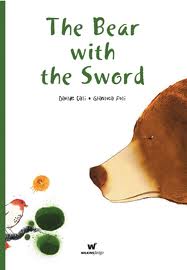
Today we are pleased to have Davide visiting Alphabet Soup‘s blog to discuss writing. We’re talking to him about his picture book, The Bear With the Sword.

The Bear with the Sword (cover)What brought you to write The Bear with the Sword?

At the beginning, the bear of the book was a man. Just a human warrior. The Italian publisher Zoolibri asked me to change it into an animal, to make it a little less tough.

In this book comes the theme of ‘the enemy’, but I wanted to talk about the fact that we always try to find someone else as guilty for our faults.

Did you meet the illustrator Gianluca Foli?

Yeah, a couple of times, but only when the book was already finished. You know, in this job often you don’t even know or meet the people you work with. I did four albums in France with Eric Heliot before we met and talked for the first time!

You write books for a range of ages. How do you know if a story would work best as a picture book or a novel?

Well, I read a lot of children’s books before I start my writing. As you probably know, I worked for a while in a public library which specialized in children books (during the civil service I did instead of military service). Later I spent a few months working for a magazine specialising in children’s book critics, so I really saw and read hundreds of books. These experiences helped me to fit something I got in my mind in a certain range of ages.

Could you give us your top tip for young writers who want to write picture books?

I guess the most important ones are: reading, writing.

I know it could sound a little obvious, but it’s not. Many people—even adults—who want to write, don’t read. I think reading is just like feeding yourself. And you know, writing is just like feeding others. So, how can you feed others if you don’t eat first?

And writing because: many people tell me “I really would like to write. What should I do?”

My answer is always: “Just do it!”

You have just to start it. Sometimes you don’t need to have a complete and perfect story already formed in mind to write it down. Stories come out just while you’re writing, and they often change while they’re coming out.

Check out the complete blog tour schedule (and reviews of Davide Cali’s books) on the Wilkins Farago blog.

© May 2012 “Interview with Davide Cali”  (Alphabet Soup magazine). Text by Rebecca Newman & Davide Cali.
Posted in National Year of Reading, teachers' resources

Fabulous First Line Friday (4 May)

To celebrate the National Year of Reading, we are sharing some first lines from books on our bookshelves. So, every Friday for the rest of the year we’re posting a fabulous first line here on Soup Blog.

Here’s today’s Fabulous First Line*:

Imagine yourself back when you were learning the alphabet for the very first time.

What do you think—if you opened a book and read that first line, would you want to read on?

Do you know the name of the book? (We’ll put it right at the end of this post so you can try to guess first.)

*For the purposes of Fabulous First Line Friday, we’re counting the first line as the first line of chapter 1 in any book. So if there is an introduction or an author’s note or something before chapter 1, we don’t count that bit …
The book is The Word Spy by Ursula Dubosarsky, illustrated by Tohby Riddle
Posted in National Year of Reading, teachers' resources

Fabulous First Line Friday (27 April)

To celebrate the National Year of Reading, we are sharing some first lines from books on our bookshelves. So, every Friday for the rest of the year we’re posting a fabulous first line here on Soup Blog.

Here’s today’s Fabulous First Line*:

One afternoon … a princess and her panther crossed the desert sand.

What do you think—if you opened a book and read that first line, would you want to read on?

Do you know the name of the book? (We’ll put it right at the end of this post so you can try to guess first.)

*For the purposes of Fabulous First Line Friday, we’re counting the first line as the first line of chapter 1 in any book. So if there is an introduction or an author’s note or something before chapter 1, we don’t count that bit …
The book is The Princess and her Panther by Wendy Orr, illustrated by Lauren Stringer