Posted in authors, interviews, teachers' resources

Secrets of a Schoolyard Millionaire: an interview with Nat Amoore

Nat AmooreMEET THE AUTHOR

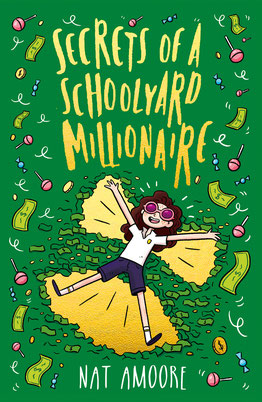
Nat Amoore is a Sydney-based writer and podcaster (if you haven’t heard of the One More Page podcast, you’d better check it out here). Nat is an accomplished entertainer and presenter for children, and has been a trapeze artist and circus performer for the international resort chain, Club Med. Her first children’s novel is Secrets of a Schoolyard Millionaire:

Finding a million dollars in your backyard – every kid’s dream, right? That’s what me and my best friend Toby thought too.

Jumping castles at school. Lollipops for our adoring fans. Wearing sunglasses indoors (‘cos that’s what all the millionaires do).

There’s a lot you can get with a million dollars . . . including a whole lot of trouble.

We’re thrilled to be chatting with Nat Amoore at Alphabet Soup today!


Secrets of a Schoolyard Millionaire by Nat AmooreOkay – what would YOU do with a million dollars if you suddenly became a millionaire?
Oooooohhhh, this is such a hard one even though I get asked it all the time. One of my favourite things about writing Secrets Of a Schoolyard Millionaire was being able to explore all the things I could/would do with a million dollars. But in the end, I think I’d divide it into three. First third would be to go wild with. Spend on whatever I wanted. Rent out Wet’n’Wild for all my friends so we didn’t have to wait in line. Buy heaps of books. Get a bed shaped like a race car. Take a holiday. Just get a little cray-cray! The second third I would put away and save for something responsible when I grow up, like buying a house or something adult like that. And the last third I would spend on other people who need it more. There are a lot of great charities out there and a lot of ways to help people who need it.

Did you base the characters in Secrets of a Schoolyard Millionaire on anyone you know?
I think A LOT of people who know me will tell you that there is a lot of me in Tess. My friends say when they read the book, they can hear my voice in their head as Tess speaks. A lot of the things Tess does in the book, I did when I was a kid.

Then with the other characters, there are a lot of ‘bits’ of them that come from real people. Toby has some elements about him that are based on a friend of mine. So does Kathy. I actually have a brother called Dane who had a dog just like Butthead when we were kids. So I think when I write, I’m a little bit like Doctor Frankenstein. I take bits of different people I know and then sew them all together to make new characters.

Writing a book: Pen and paper? Or write it straight onto the computer?
OMG, I CANNOT write with a pen and paper. Even when I was at school, I always got in trouble for my handwriting. I was the LAST kid to get their pen licence and if you go back and read my school reports they say ‘Nat still does not join her writing’. To this day I cannot do running writing, I always print. I always write in capitals and when I write in a birthday card, my hand aches for a week after. The only way my writing can keep up with my brain is if I’m typing. If I was born 100 years ago I would never have written a book because I would never have been able to do it with a paper and pen. So without a doubt, I’m a straight-into-the-computer kind of gal!

What’s your million-dollar tip for young writers?
Just write! Don’t worry about spelling or punctuation for now. Just get the idea out. You can come back later and fix all that stuff up. I’m not the greatest writer, I know that. But I have really great ideas. Fortunately I have editors and publishers who help me put all the commas and stuff where they are supposed to go. And you have people to help you with that too. But you’ll have nothing to fix if you don’t write it first. So get your idea down on the paper/screen and don’t let all that other stuff stop you. I still, don’t know, where all, those, pesky commas are, supposed to go,,,,,,

What are you working on next?
Right now, like RIGHT THIS SECOND, I am working on the follow up to Secrets Of A Schoolyard Millionaire. It is called The Power Of Positive Pranking and it’s coming out in June 2020. It’s not really a sequel so much, but it does happen in the same world as Secrets Of A Schoolyard Millionaire (the town of Watterson and Watterson Primary School) and you will see some of your favourite characters make a comeback. It’s a story told from the perspective of a very minor character who made a small appearance in the first book — ooooohhhhh the mystery!


Secrets of a Schoolyard Millionaire by Nat AmooreAwesome extras:

Click here to read a sneak peek of the book

Click here for Teachers’ Notes by Melissa Kroeger at Children’s Books Daily

Click here to visit Nat Amoore’s website

Click here for the One More Page podcast (where Nat Amoore is one of the hosts)

Secrets of a Schoolyard Millionaire is out now! Look for it at your nearest bookshop or library. 

Posted in authors, illustrator, interviews

I Would Dangle the Moon: an interview with Amber Moffat

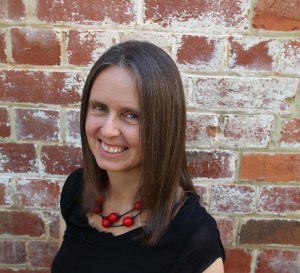
Amber MoffattMEET THE AUTHOR-ILLUSTRATOR

Amber Moffatt is a writer and visual artist based in Perth, Western Australia. If you live in WA and you’ve been to the AH Bracks library in Melville you might have been lucky enough to see her illustrations decorating the windows for Book Week 2019! Amber recently launched her first picture book, I Would Dangle the Moon, in Western Australia and in New Zealand. She regularly runs art workshops for children inspired by the artwork from the book.

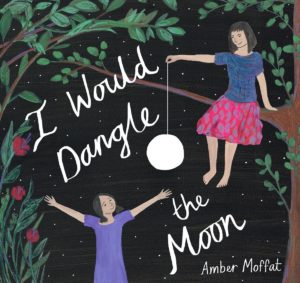
What would you do if you could pluck the moon from the sky? Would you scoop it up in an ice cream cone, or ride it like a snail shell across the night sky? This picture book will spark your imagination. 

Today Amber Moffat stops by to chat to Alphabet Soup about creating I Would Dangle the Moon.


I would dangle the moon by Amber MoffatYou’re an author AND an illustrator. When you were creating I Would Dangle the Moon, which came first – the words or the illustrations?
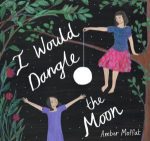
The words came first, but I did have a sense of the images in my mind too. The idea of a snail taking the moon for its shell and slithering across the night sky was the seed the story grew from.

How long did it take you to go from the story idea to the published book?
It took a really long time – three years! The initial text was developed quite quickly but it took a much longer time to develop the storyboard and find the right style of illutstration. I was really lucky to have author and illustrator Briony Stewart as my mentor for a year, and that helped me get the concept ready to submit to publishers. From when my publisher, MidnightSun Publishing, contracted me, it took nine months to complete the final artwork for the illustrations.

What have you been reading recently?
I’ve been enjoying Trouble in the Surf, written by Stephanie Owen Reeder and illustrated by Briony Stewart. The way Briony has used colour in the illustrations is really beautiful, and I keep going back to it to admire her technique.

When you’re doing illustration work, what’s your favourite medium?
Acrylic paint is definitely my preferred medium. I like the way it dries fast and you can paint over it easily. I also like to be able to scan images and alter them digitally. I often use computer editing to piece different paintings together and play with scale and composition.

Are you able to tell us something about your next writing project?
The picture book I’m currently working on explores the science of light, and it’s been a new experience for me to convey scientific ideas in the form of a picture book. I am also working on a novel for young adults, in which medical science is important to the story, so that seems to be a theme for me at the moment.

Amber reading with some helpers at the book launch
Amber Moffat (with some helpers) at the book launch.

I would dangle the moon by Amber MoffatAwesome extras:

Click here to WIN a copy of the book

Click here for a little peek at some of the illustrations from the book.

Click here to read a review of I Would Dangle the Moon (review by Anishka, age 9)

Click here to visit Amber Moffat’s website.

I Would Dangle the Moon is out now! Find it at your nearest bookshop or library.

Posted in authors, interviews

The Australia Survival Guide: an interview with George Ivanoff

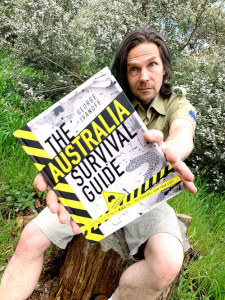
George Ivanoff holding a copy of The Australia Survival GuideMEET THE AUTHOR

George Ivanoff is the award-winning Melbourne author of over 100 books for kids and teens, including the Gamers trilogy, the interactive You Choose series, the RFDS Adventures, and the Other Worlds series. His latest book is The Australia Survival Guide. 

Australia has its fair share of dangers: sharks, snakes, cyclones and crocodiles can be a serious threat to your life! But don’t worry. This book will help you by providing the knowledge you need to survive in all kinds of Aussie conditions – in the bush, in the desert or even at the beach!

So get out there and look around! Even if you think Australia is trying to kill you, The Australia Survival Guide can save your life!

Today we are pleased to have George Ivanoff visiting Alphabet Soup to chat about books, writing, and The Australia Survival Guide.


Do you go about writing a nonfiction book differently from how you go about writing your fiction books?
Oh yes. The difference is in the research. While fiction will often require some research, it’s nowhere near as much as with non-fiction. With fiction, the research is usually for specific elements, such as setting, and is mostly about filling in detail. But with non-fiction, it is the cornerstone of the whole thing. You can’t even start without the research.

How long did it take you to go from the story idea for The Australia Survival Guide to the published book?
We had a reasonably short timeline for this book, so I delivered it section by section, so that the editor and designer could get started on their parts. There was about six months worth of work in this book for me. And then another six months after I was done before publication.

Do you have any children’s books (fiction or nonfiction!) you would recommend?
Oh, there are so many that I could recommend, but I’ll restrain myself and go one fiction, one non-fiction and one picture book.

Fiction:
Final Storm by Deborah Abel. This is the third book in the trilogy which began with Grimsdon. It’s a wonderfully adventurous science fiction series with an important environmental message.
Non-fiction:
How To Save the Whole Stinkin’ Planet by Lee Constable. Everything you ever wanted to know about garbage and what happens to it after we throw it out.
Picture Book:
Pippa, written by Dimity Powell and illustrated by Andrew Plant. Delightful story about a young pigeon’s first solo adventure, with gorgeous illustrations.

Do you have any advice for young writers who want to write nonfiction?
Get the research right. So many people think that in this age of computers and the Internet, research is just a matter of Googling your topic and following a couple of links. But so much of what’s on the Internet is questionable. So you need to verify the information. As you gather information online, you need to check the source. Is it reputable? And Wikipedia is not necessarily a reliable resource, as anyone can add or change the information it contains. Then you need to confirm your information, making sure you have more than one source. Never rush the research.

Are you able to tell us a bit about your next writing project?
I’m sticking with non-fiction for the time being. I’m working on a new Survival Guide, but with a very different topic. I’m hoping to announce the topic and title soon, so keep an eye on my website if you want to know more. http://georgeivanoff.com.au


THE AUSTRALIA SURVIVAL GUIDE by George IvanoffAwesome extras:

Click here for a sneak peek inside The Australia Survival Guide.

Click here to read a review of the book (review by Rory, age 7).

Click here to visit George Ivanoff’s website. 

The Australia Survival Guide by George Ivanoff is out now! Find it at your nearest bookshop or library.

Posted in authors, interviews, teachers' resources

Cryptosight: an interview with Nean Mckenzie

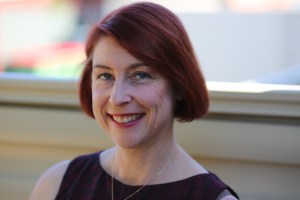
Nean McKenzieMEET THE AUTHOR

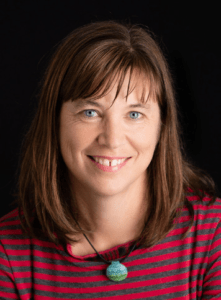
Nean McKenzie is a children’s writer and optometrist who lives in western Melbourne with her husband and two teenage children. When not writing or testing people’s eyes, Nean enjoys travelling to interesting places around the world. She also likes bush walking and reading books, especially ones for 8-12 year-olds. Earlier this year she published her first children’s novel, Cryptosight.

Rafferty Kaminski is a 13-year-old who believes in facts. Not like his Cryptozoologist father, who searches for creatures not proven to exist.

When their father disappears in the Flinders Ranges, strange things start happening to Raff and his younger sister Zara. They learn that their father belongs to a secret organisation and they are suddenly being pursued by bunyip hunters.

Today Hannah (age 13, QLD, and one of our regular book reviewers) interviews Nean McKenzie about writing Cryptosight. Over to you, Hannah and Nean!


Cryptosight by Nean McKenzieWhat inspired you to write about the wonderful world of cryptozoology?
Cryptozoology is a weird sort of world between fantasy and reality, which I thought was great to write about. While the likelihood of any of these crypto-creatures actually existing is really low, it’s still not impossible. I have had people talking to me since the book came out about things that they’ve seen, but no-one believed them! And the creatures are uniquely Australian.

Obviously a lot of research went into the creation of the novel. Can you describe how long the research period took and how the it impacted the overall story?
I like to go to the places I write about to get a feel for them, so we went to the Flinders Ranges and Mildura on family holidays. I’ve spent a lot of time in the Grampians – it’s one of my favourite places. I also went the Wombat State Forest, especially for story research. I really find it helps me to get ideas and also to describe smells, sounds, etc. I research as I write really, so it’s all part of the process.
.

When was the first moment you discovered you had a passion for
writing and it would be your career?

I’ve always wanted to be a writer, since I was about seven. I wrote my first novel when I was fifteen, an adventure story set in 16th century Scotland. I did a professional writing and editing course as an adult, which further inspired me to write. I have written quite a few books, but this is the first one to get published. I do have another job, as an optometrist which is good as it is not always easy to earn money as a writer! But when I write I can escape to other worlds and it makes me happy. I think I will always love it.

What advice would you give young writers?
The best advice I’ve been given is that writers need to write. It sounds obvious, but it’s not always easy to do. There are many things that get in the way of writing, but making time to do it and doing it often, makes the writing better, I think. I also think reading a lot is important as it feeds the mind and the imagination.

Can we expect a sequel or even a series for this novel?
I wanted Cryptosight to finish with a few unanswered questions as  cryptozoology is all about mystery and never really finding out what’s real. So I think that is the end of Raff and Zara’s story but I have written another story set in the cryptozoology world with different characters and creatures, and am working on a third. There is so much to write about!


Awesome extras:

Cryptosight by Nean McKenzie

Click here for teachers’ notes.

Click here to read a book review of Cryptosight (review by Hannah, age 13).

Click here to check out Nean McKenzie’s website.

Cryptosight by Nean McKenzie is out now! Find it at your nearest bookshop or library.

Posted in authors, interviews, teachers' resources

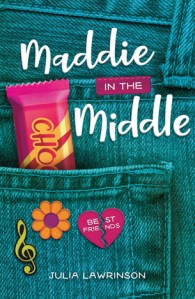
Maddie in the Middle: an interview with Julia Lawrinson

Julia LawrinsonMEET THE AUTHOR

Julia Lawrinson was born just after the first moon landing and grew up in the outer suburbs of Perth. Julia is an award-winning author of books for children, teenagers, and adults – her latest book is Maddie in the Middle.

Maddie Lee is in year six. Her best and oldest friend Katy is busy with school duties and music and scholarship plans, and Maddie feels lost and lonely. Then a new girl starts at school. Maddie wants more than anything to become friends with her. And she does. But Samara’s friendship comes at a high price, with consequences Maddie could never have imagined.

Today we’re thrilled to welcome Julia to Alphabet Soup to talk about writing books.


Maddie in the Middle by Julia LawrinsonWhat sparked the idea for Maddie in the Middle?
The novel was sparked by a friend telling me how her daughter was caught shoplifting. It was something completely out of character for this girl, and I began thinking of all the reasons good kids might do bad things. Then I began wondering what would happen if a kid was doing bad things for a good reason. And so Maddie and her story were born!

How long did it take you to go from the initial idea to the finished manuscript?
It took a couple of years. I work full time so I write in half hour blocks early in the morning, or on weekends, so progress is slow. Also, every book seems to take at least three re-writes before I have a grip on point of view and character development, and then what feels like a million edits after that! The team at Fremantle Press [the publishers] were wonderful to deal with – direct but sensitive with suggestions.

Pen and paper, or computer?
I prefer writing with pen and paper, but I am a fast typist, due to time constraints (see above!) all my drafts are done on the screen. I am still very fond of keeping a pen and paper journal, though.

Do have any advice for young writers?
Start writing! Practice writing – anything, from fake hashtags to parody lyrics to poems, short stories and scripts. Write and don’t worry about what will happen with it. Have fun!

What are you working on next?
Its working title is The ABBA novel’ – it’s set in 1979, features roller-skating, Countdown, horses, glitter pens, and prank calls, as well as letters to someone from the past. I am having the best fun writing it.


Maddie in the Middle by Julia LawrinsonAwesome extras:

Click here to WIN a copy of the book

Click here to read a sneak peek of the book.

Click here to read a review of Maddie in the Middle. (Review by Hannah, age 13)

Click here for Teachers’ Notes.

Click here to visit Julia Lawrinson’s website. 

Maddie in the Middle by Julia Lawrinson is out now! Find it at your nearest bookshop or library.

Posted in authors

Meet the author: Teena Raffa-Mulligan

Today we are very pleased to welcome Teena Raffa-Mulligan to Alphabet Soup. Teena’s publications for children include poems, short stories, picture books, chapter books and middle grade novels. She has also worked as a journalist and editor. Teena’s latest publication is a picture book called When the Moon is a Smile (illustrated by Amy Calautti). This is a gentle story about a small girl spending time with her dad, who no longer lives with them.


When was your first piece of writing published?
A long time ago! I was a member of an ABC radio club for kids called The Argonauts and I had a poem read during one of their sessions. That gave me the confidence to send it to the children’s page of the Sunday Times newspaper, where it was published. I’m not sure of the exact year, but I think it was maybe 1964. About 10 years later I had my first two children’s stories accepted and they appeared in Woman’s Day magazine.

You write poetry, picture books and novels – how do you know which format will be best when you have a story in your head?
Good question, Rebecca. Usually the story ‘tells’ me and I go along with that. However, sometimes I’ll write what I think is a picture book but then I can’t find a publisher. So I make a few changes and submit them as poems or short stories to magazines and anthologies – usually successfully. Interestingly, my children’s novel Mad Dad for Sale began as a picture book that I couldn’t sell. Catnapped and Getting Rid of Wrinkles also began as picture books.

Your latest book – When the Moon is a Smile – is a picture book. How do you go about writing a picture book once you have the story idea?
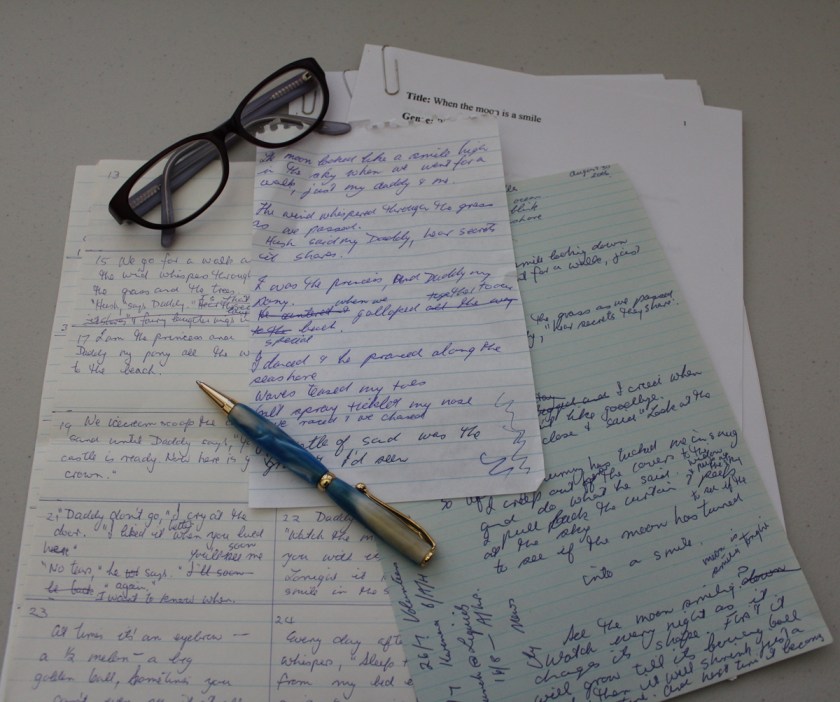
I scribble random sentences and paragraphs from anywhere in the story on scrap paper as they pop into my mind. Then I get a clean sheet of paper and divide it roughly into page spreads so I can work out how the book might work. When I finally sit down at the computer, it’s a bit like doing a jigsaw puzzle. I put all the bits and pieces in the right order and play around with them until everything feels like it’s in the right place.

Drafts of When the Moon is a Smile, a pile of paper with scribbled notes.
Teena’s drafts of When the Moon is a Smile.

Do you have a tip for young writers wanting to write a picture book?
Writing stories is fun. You get to create characters, put them in weird and wonderful situations and then decide what happens next. Don’t worry about whether what you’re writing is an amazing story. Just play with the words. Let one follow another and see where they take you. It’s an adventure.

What’s next for you?
I’m working on a novel called Talibut Vish. It’s about a kid who hires a parent tamer because he’s had enough of trying to sort out his problem parents. At first Mike thinks he’s found the solution to his dilemma. But when Vish becomes less of a friend and more of a threat, Mike realises he has a bigger problem than misbehaving parents. It’s a fun story to write but because I don’t really know what’s going to happen from one chapter to the next, it’s taking me a long time to get to The End. I’m 14 chapters in but I still have no idea how Mike is going to escape from Mr Vish, find his runaway parents and reclaim control of his life.

This interview is copyright http://www.alphabetsoup.net.au May 2019


When the Moon is a Smile will be available from June 2019. Find out more about Teena Raffa-Mulligan and her books by visiting her website: www.teenaraffamulligan.com

Posted in authors, poetry

Lorraine Marwood: writing a verse novel

Today we’re super excited to have Lorraine Marwood visiting Alphabet Soup to talk about writing verse novels. Lorraine is an award winning Australian writer of novels, verse novels and poetry for children.

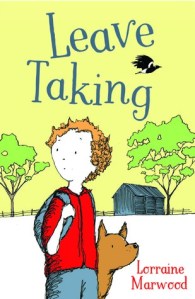
Lorraine’s latest book, Leave Taking, is about a boy and his family who are leaving their farm forever after the death of Toby’s younger sister.

Leave taking by Lorraine Marwood. Book cover.

What bought you to write Leave Taking as a verse novel?

That’s an interesting question. Often I’m asked if I write ‘normal’ stories, meaning all prose. The answer is yes I do — not everything I write is poetry or verse novels, except when the subject matter calls for a stronger emotional framework, then I use poetry. Sometimes it’s my natural voice; sometimes I sketch a character out in prose poetry much like an artist might sketch a character. Because Leave Taking has an emotional tug of saying goodbye to both a beloved place and a beloved family member, my natural instinct was to treat the story in a special prose poetry way.

For me this technique is quick and it also provides different layers for the reader to climb on and it allows us to cry or laugh at the time the reader feels a heartstrings pull.

A verse novel way of writing is like wearing a piece of comfortable clothing; I can confidently build an atmosphere and that is a huge gateway for me to enter the story. I have to feel the right atmosphere to plunge in.

What do you find most challenging about writing verse novels?

This way of writing does have pitfalls. For me it’s probably not to strike out in prose too much when it’s a blend of poetry and prose together.  And to keep that consistency of words to a line and to write more rather than less, which I tend to do as a poet. I try to paint a bare sensory picture for the reader to experience and that allows them to come to the story with their own ideas and reactions.

Do you have a tip for young writers who’d like to have a go at writing a verse novel?

  • Start out with a tale you know well and cut it down and put your own slant on it.
  • Try for short sentences and short phrases.
  • Try to give lots of senses and details.

Here’s a start of a well-known tale — continue on! Using first person voice is a good choice for a verse novel.

Aladdin

I am waiting, watching.
My mother said, ‘Go and hunt
for bargains in the market.’

There are shouts of stall holders,
banners flapping in the breeze.
‘Pies, fresh bananas, best in town!’
‘Silk, wool, rugs, soft and hardwearing!’

And amongst all the bleats of sheep,
or goats, I hear a musical voice;
‘Lamps, I buy old lamps, I pay good money!’
Now you continue on — try for 7 or 8 words a line.

Can you tell us a bit about what you’re working on next?

I have written a ‘normal’ big book, a fantasy, a genre I love. I have written another verse novel, which is under contract with University of Queensland Press, and always I write poetry and have some school writing workshops coming up.

Thanks for asking me these insightful questions.  And happy verse novel writing everyone — have a go!

Interview answers © Lorraine Marwood 2019.


Leave Taking has been shortlisted for the 2019 Children’s Book Council of Australia Book of the Year Award (Younger Readers category), AND shortlisted for the 2019 NSW Premier’s Literary Awards.

You can read earlier interviews with Lorraine Marwood here.

Posted in authors, Pass the Book Baton

Pass the book baton: Jen Banyard

PASS THE BOOK BATON logo

It’s Friday! And that means it’s time for Pass the Book Baton. Every week Alphabet Soup features a book creator who will answer one question before throwing a new question to the next Friday visitor. (It’s kind of like a book relay in slow motion.)

Today the book baton is passed to Jen Banyard!

Jen Banyard at the beach

Jen Banyard lives in Western Australia and writes fun adventure stories, including the Riddle Gully series. Her books have been serialised in the West Australian newspaper.

You might recognise some of these books:

Last week Jackie French asked:

Why do you write?


Jen Banyard answers:

You could say there are three main reasons I write. One is that when I write I feel I’m having the kind of experience I’m giving my characters. If I’m writing a sad part, I feel sad, a scary part, scared, or a funny part, happy. So when I sit down to write I’m giving myself lots of feelings and ‘experiences’ I wouldn’t otherwise be having that day.

Also, when you write stories you start looking more closely at the things going on around you—I mean really looking. Otherwise your stories miss the little details that bring them alive. Have you ever seen one of those nature films where everything is magnified and slowed down? Well, that’s what writing is like—it turns you into a giant magnifying glass and everything you see is more vivid and significant. (When I’m mid-sentence, though, a bird could poop on my head and I wouldn’t notice!)

Lastly, there’s the big buzz you get from creating something, be it building a raft or baking muffins. You’re in control of the story and you get to say how it turns out. You have all these parts—an idea, some images in your head—and gradually you file them down and shuffle and shape them into something people want to read. It’s awesome!

Read more about Jen Banyard and her books at her website: www.jenbanyard.com

and …

Read an earlier Alphabet Soup interview with Jen Banyard (from 2012!).


Gary by Leila RudgeAnd now Jen passes the book baton to our last Friday visitor — Leila Rudge. Leila Rudge is a writer and illustrator. Her books feature artwork in pencil, paint and collage.

Jen asks:

In your books you’ve painted ducks, bears, pigeons, dogs and skunks. If you could take all the best bits from the animal characters you’ve created, what would your animal look like?

(While you’re waiting for Leila’s interview you can catch up on all the interviews in the Pass the Book Baton series so far!)

Posted in authors, Pass the Book Baton

Pass the Book Baton: Jackie French

PASS THE BOOK BATON logo

It’s Friday! And that means it’s time for Pass the Book Baton. Every week Alphabet Soup features a book creator who will answer one question before throwing a new question to the next Friday visitor. (It’s kind of like a book relay in slow motion.)

Jackie French, photo by Kelly Sturgiss
Jackie French (photo by Kelly Sturgiss)

Today the book baton is passed to Jackie French. Jackie French is an ecologist, the author of more than 200 books, and the 2014–2015 Australian Children’s Laureate (and 2015 Senior Australian of the Year!).

You might recognise some of these books:

Last week Sherryl Clark asked:

What are your best or favourite research tools for your historical novels?


Jackie answers:

Old letters, newspapers, advertisements, paintings of the time.

Old diaries are great. People don’t lie in diaries.

Archeology surveys on the ground or by satellite.

Inscriptions in pyramids.

Ancient Viking rubbish tips.

Depends on the book. Incredible fun, like the best detective investigation in the universe. You never know where the trails will lead. Plus you get to play in a dozen different times with no danger of dying of the bubonic plague or getting your head sliced off by Vikings.

You can check out Jackie French’s website for more about her and her books: www.jackiefrench.com. Or read a 2015 Alphabet Soup interview with Jackie here


Riddle Gully Secrets by Jen BanyardAnd now Jackie passes the book baton to the next Friday visitor — Jen Banyard. Jen Banyard is the author of adventure stories, including the Riddle Gully series.

Jackie asks:

Why do you write?

Check in every Friday for mini interviews with children’s authors and illustrators. (While you’re waiting you can catch up on all the interviews in the Pass the Book Baton series so far!)

Posted in authors, Pass the Book Baton

Pass the Book baton: Sherryl Clark

PASS THE BOOK BATON logo

Sherryl ClarkIt’s Friday! And that means it’s time for Pass the Book Baton. Every week Alphabet Soup features a book creator who will answer one question before throwing a new question to the next Friday visitor. (It’s kind of like a book relay in slow motion.)

Today the book baton is passed to Sherryl Clark. Sherryl is an author and poet — with over 40 books published in Australia. 

You might recognise some of these!

Last week Yasmin Hamid asked:

I know you have travelled to many different countries, but do you find it difficult to write books that are set in an Australian landscape when in your mind you have the embedded landscapes and terrains of the New Zealand you grew up in?


Sherryl answers:

Farm kid by Sherryl Clark

I think it’s firstly the people from my childhood and teen years that are embedded! I often find myself using bits of them, or certain anecdotes (changed to fit my story, of course). But also I find I tend to write stories set in valleys, and in the country, probably more than writers who grew up in the city do.

It’s tricky because publishers often want city stories where most of their market of readers live. Whereas I think it’s good for city kids to read about living in the country. It’s one of the reasons I wrote Farm Kid, because the Australian drought in the 2000s was so devastating for farmers, but people in the city didn’t really understand what it meant.

I suspect the main effect, though, has been the urge to travel (common among Kiwis) which has led to me writing historical novels set in the USA, England and France. The lure of history and stories that can go back many centuries into the past.

Read more about Sherryl Clark, her picture books, novels and verse novels at her website: www.sherrylclark.com


Diary of a wombat by Jackie French and Bruce WhatleyAnd now Sherryl passes the book baton to the next Friday visitor — Jackie French. Jackie French was the 2014-2015 Australian Children’s Laureate, and has had more than 200 books published.

Sherryl asks:

What are your best or favourite research tools for your historical novels?

Check in every Friday for mini interviews with children’s authors and illustrators. (While you’re waiting you can catch up on all the interviews in the Pass the Book Baton series so far!)