
Posted in authors, Pass the Book Baton

Pass the book baton: Bren MacDibble

PASS THE BOOK BATON

It’s Friday! And that means it’s time for Pass the Book Baton. Every week Alphabet Soup features a book creator who will answer one question before throwing a new question to the next Friday visitor. (It’s kind of like a book relay in slow motion.)

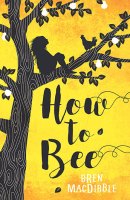
Today the book baton is passed to Bren MacDibble. Bren has a special interest in science fiction and loves to write to explore the future. Her latest novel — How to Bee — is set in a post bee, post famine Australia, where children hand-pollinate fruit trees.

You might recognise some of these books:

Last week Cristy Burne asked:
I love that you have introduced the real-life issue of honey bee losses in your fictional novel, How to Bee. Can you please tell us more about how this issue grabbed your interest and its role in inspiring your story?

Bren answers:
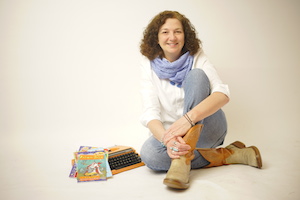
Bren MacDibble photoWhen I saw the beautiful photos in the Huffington Post article (linked on my website) about how farmers in a valley in the Sichuan Province in China were already spending their lives climbing through trees, hand-pollinating flowers, because there just aren’t any bees there anymore, I knew I wanted to write about the lives of hand-pollinators.

I’d also read an article about pigeon pea farmers in India who had been put into debt from purchasing insecticides. When they went back to the old ways of beating the bushes, and dragging a sheet through the rows of pigeon pea with a flock of chickens following, the health of the pea bushes improved, more people had work, no one went into debt, and chooks got nice and fat and laid lots of eggs. (Young Peony in How to Bee has chickens for this very reason, she also talks about circles of life, and how pesticides cut through them.)
 .
How to BeeI think children know a lot about climate change and it worries them, so I wanted to set a story in the future after the bees had gone and the world had changed. I didn’t want to terrify children with a famine caused by bee loss, I wanted to go further into the future and show the world after things had resettled. In particular, I wanted young readers to see children like them living in this new time, getting on with things. I wanted to show them coping, and learning what is most important in a new world.
Check out Bren MacDibble’s website for more about her and her books.
.
.

Something wonderfulAnd now Bren passes the book baton to the next Friday visitor — Raewyn Caisley. Her latest book is a picture book, Something Wonderful.

Bren asks:
“Looking at your recent picture books, I immediately get a sense of place, not just anywhere but of Western Australia or of New Zealand. Most of the scene setting is done by an illustrator in a picture book, but do you consciously try to contribute towards building a sense of place with your prose? And how do you do that?”

Check in every Friday for mini interviews with children’s authors and illustrators.

See you next week!

Save

Save

Save

Posted in authors, Pass the Book Baton

Pass the book baton: Cristy Burne

PASS THE BOOK BATON

It’s Friday! And that means it’s time for Pass the Book Baton. Every week Alphabet Soup features a book creator who will answer one question before throwing a new question to the next Friday visitor. (It’s kind of like a book relay in slow motion.)

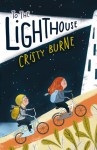
Today the book baton is passed to Cristy Burne. Cristy is an author, a past editor of CSIRO’s Scientriffic magazine for kids, a regular contributor to Crinkling News and Double Helix mag for kids/teens, and has worked as a travelling performer in the Shell Questacon Science Circus. Her latest book is To the Lighthouse

You might recognise some of these books:

Last week Alice Pung asked:
You mention finding a plastic head in the rubbish bin as one of the inspirations for your Takeshita Demons books. This is fascinating! Could you tell us the true story about the head that inspired the books?!


Cristy answers:

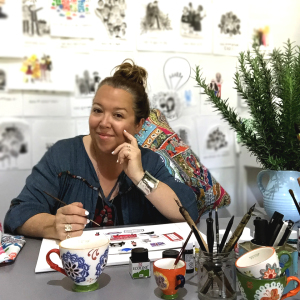
Cristy BurneMany years ago, when I was living in Japan, I was walking home from work when I received a huge shock. It was a freezing, wintry day, and the time of year when villagers put their large rubbish out on the verge, ready for council pick up. I didn’t have a whole lot of furniture in my house, so I was keeping an eye out for anything useful I might bring back. There were old wooden bookshelves, comfy chairs, storage chests, even what looked to be a pristine condition antique sewing machine … I wanted it all!

However, at that time in Japan, it was considered poor manners to collect ‘rubbish’ from off the verge. And anyway, these things were too heavy for me to lug home.

Then I spotted it. In a cardboard box, next to an old set of wooden drawers. Human hair.

It was straight and shiny. Thick, black human hair. Sticking out of the top of the box.

I gulped. I panicked. I looked around to see if anyone else had seen it. Human hair!!

But there was no one else in the street. No one at all. So I stepped closer to the box and peered inside.

Skin!! Through the shining hair, I could see the pale skin of a scalp!

I looked around again, starting to freak out. Should I call the police? Scream and run? What if the murderer was watching me right now? What should I do!?!

I knew I shouldn’t panic, so I took a deep breath, steeled myself. And I did what any ordinary, sensible person would do. I bent down to the box, grabbed a handful of that thick, shining hair in my fist, and lifted it up …

… and an entire head came with it! Was it a woman? A man? I couldn’t tell, but its eyes were staring right at me. PANIC!!

And worse, there was more hair in the box below. I grabbed another handful and pulled up another head. And another.

In all, there were three heads in that roadside box, all identical, all with lush black hair. All, thankfully, plastic. I guess they were old hairdressers’ dummies? Anyway, they’d been thrown out, so they were mine now!

I took them home, washed their faces, shampooed their hair, and stuck them in a pretty row in my front window, for passers-by to admire. They looked so realistic! It was the funniest thing ever to sit and sip tea and secretly watch the reactions of people in the street. (I recommend you do this anytime you want a good laugh.)

A few months later, I heard about the Japanese nukekubi—a mythical creature whose head detaches from its sleeping body so it can fly around and terrorise small puppies and children. And I started to wonder: what if these heads weren’t hairdressing dummies? What if they were nukekubi heads, still in search of their bodies? And so the idea of an adventure series featuring Japanese mythology was born. Takeshita Demons was the first book in that series, and my first published book (yay!).

And what about the heads?

Well, when I left Japan, I was too embarrassed to bring all three back in my suitcase. So I only brought one. And I still have it now. As I type, it’s staring at me, from across the room. Staring and maybe waiting, for just that right moment to spring back into life … ? I don’t know.

But I do know having your own plastic head is a great way to meet friends, dream up practical jokes, and get inspired to write a book!

Check out Cristy Burne’s website for more about her and her books.


How to BeeAnd now Cristy passes the book baton to the next Friday visitor — Bren MacDibble. Bren’s latest book is How to Bee, published in May 2017.

Cristy asks:
I love that you have introduced the real-life issue of honey bee losses in your fictional novel, How to Bee. Can you please tell us more about how this issue grabbed your interest and its role in inspiring your story?

Check in every Friday for mini interviews with children’s authors and illustrators.

See you next week!

Posted in authors, Pass the Book Baton

Pass the book baton: Alice Pung

PASS THE BOOK BATON

It’s Friday! And that means it’s time for Pass the Book Baton. Every week Alphabet Soup features a book creator who will answer one question before throwing a new question to the next Friday visitor. (It’s kind of like a book relay in slow motion.)

Today the book baton is passed to Alice Pung. Alice is an award-winning author and writes for adults, young adults and children. (And did you know — Alice’s father named her after the Alice in Alice in Wonderland?)

You might have read Alice Pung’s books from the Our Australian Girl series, illustrated by Lucia Masciullo.:

Last week Gabriel Evans asked:
You’re both a solicitor and author. How do you balance these two jobs? Is there a connection between the two?

Photo by F Roselli.
Photo by F Roselli.

Alice answers:
I work as both a lawyer and writer. I work three days a week at the Fair Work Commission (Wednesday to Friday), and write on Mondays and Tuesdays. I think it is a good balance because I feel like I am doing something to help the community with my law background, and the writing becomes more fun when I don’t have an infinite time to do it. I never get writer’s block because I always value my writing time and try and use it wisely!

Find out more about Alice Pung and her books — check out her website: www.alicepung.com


To the lighthouse (book cover)And now Alice passes the book baton to the next Friday visitor — Cristy Burne. Christy is a science writer, teacher, editor and children’s author. Her latest book is To the Lighthouse.

Alice asks:
“You mention finding a plastic head in the rubbish bin as one of the inspirations for your Takeshita Demons books. This is fascinating! Could you tell us the true story about the head that inspired the books?!”

Check in every Friday for mini interviews with children’s authors and illustrators.

See you next week!

Posted in authors, Pass the Book Baton

Pass the Book Baton: Sue Whiting

PASS THE BOOK BATON
Sue WhitingEarlier this year Alphabet Soup started a series called Pass the Book Baton. Every week we featured a book creator who answered one question before throwing a new question to the next Friday visitor. (It was kind of like a book relay in slow motion.) Our book creators took a break for the school holidays but we are pleased to announce … Pass the Book Baton is BACK!

You might remember that we left Kelly Canby with the book baton in March. (She’ll be feeling quite tired by now.) Today she finally passes the baton to Sue Whiting.

Sue Whiting lives and works in a coastal village south of Sydney. She is an editor and an author and writes books for a range of ages, from picture books through to books for young adults. Her latest book is Platypus, illustrated by Mark Jackson.

Here are just some of Sue Whiting’s books:

Back in March, Kelly Canby asked:
When you’re in the planning stage of a new book, do you prefer to work in a quiet space where it’s just you and your thoughts or do you head out to cafes and parks where you’re surrounded by outside sources of inspiration — people/colour/activity — to help develop your ideas?

Sue Whiting answers:
Thanks for this great question, Kelly.
 .
The planning stages of a new book fill me with great excitement. There are just so many possibilities! In fact, anything is possible. And I love that.
 .
I usually think about a new book idea for many, many months, letting it simmer away, slowly developing like a good stock. During this time, I might also do some research,  collect other ideas, try to make connections and get to know potential characters. And I do a lot of walking. Alone. Letting my characters chat away in my head while I eavesdrop on them! Then I hit the drawing board.
 .
Literally.
 .
I am lucky enough to have a drawing board that belonged to my son when he was studying engineering. When he flew the coup and left it behind, I quickly claimed it. It is my favourite place. I peg on large sheets of paper, grab a pencil and let all those bubbling thoughts spill out onto the paper. It’s the ultimate brainstorm. I ask myself questions and write numerous answers. I challenge myself to think outside the square, to think of unlikely scenarios and elements. Eventually, after many days of scribbling and scribbling, I start to circle the ideas that have the most appeal and seek out further connections. Gradually, elements of plot and story, character and setting start to emerge, and that’s when I begin wrestling the best ideas into some sort of order and to work out what it is that this story is actually about.
 .
All of this is done in my writing studio, in absolute silence. I need to be totally alone with my thoughts in order to release them and see where they take me. Sometimes, good ideas are very shy and need quite a bit of coaxing to emerge and even background music can be enough to make them hide away!
 .
Once I am about halfway through my first draft and have a clear idea of where I am heading, I can write just about anywhere — on the train, in a
café, on the sofa with the TV blaring!
 .
That all sounds quite nutty! But what can I say? You have to be a little nuts to be a writer, don’t you?
 .
 .

And now Sue Whiting passes the baton to the next Friday visitor — Gabriel Evans. Gabriel is an Australian illustrator of more than 20 books. 

Sue asks:
I have had the privilege of working with Gabriel (as an editor) and have been a big fan of his work for a number of years. It has been great to watch his career develop, going from strength to strength. So my question is: What would you do differently in terms of the development of your career as an illustrator if you had your time over again?
..
Check in every Friday for questions and answers from children’s authors and illustrators.
 .
See you next week!

Save

Save

Save

Posted in authors, illustrator, Pass the Book Baton

Pass the book baton: Kelly Canby

PASS THE BOOK BATON

It’s Friday! And that means it’s time for Pass the Book Baton. Every week Alphabet Soup features a book creator who will answer one question before throwing a new question to the next Friday visitor. (It’s kind of like a book relay in slow motion.)

Kelly Canby

Today the book baton is passed to Kelly Canby. Kelly is an internationally published illustrator and author of picture books, early reader books, chapter books, and colouring books. She lives in Western Australia — you can see her above, busy drawing and painting.

You might recognise some of these books:

Last week Lorraine Marwood asked:
Hello Kelly, I see you do illustrations for a range of children’s genres, as well as colouring books!  Can you tell us a bit about your illustrative journey and what you’d passionately love to draw in the future?

Kelly Canby answers:
Thanks for the question, Lorraine! My illustrative journey begins many years ago at university. I studied design at Curtin where I majored in Illustration and minored in Graphic Design and Advertising. When I graduated I freelanced for while as an illustrator for advertising agencies and eventually landed a full time graphic design job with the design studio of my dreams. From there I moved between working in design studios and advertising agencies until I became senior designer at a very wonderful, very creative and fun (really fun) design studio.

Then I needed to do something completely different so I bought a florist. And I made flower arrangements.

And once that was out of my system, I started to think about design and illustration again. Also, around this time, I was buying a lot of picture books for my son and I fell completely in love with them knew that’s what I had to do. I had to make children’s books for the rest of my life! So I hopped online and discovered SCBWI (Society of Children’s Book Writers & Illustrators), I made myself a portfolio of work, got an agent and began. That was about 4 and half years ago and since then I have illustrated around 14 books, written and illustrated one picture book, with another picture book that I’ve written in the works with Fremantle Press as I type, and I’m having so much fun doing it all.

As for what I’d passionately love to draw in the future … Well, on the very top of my wish list for a long time was to illustrate a middle grade novel with lots and lots of detailed, full page, black and white drawings, which I happen to be doing right now with Allen & Unwin so I am one very happy illustrator, indeed!

Visit Kelly Canby’s website to find out more about her and her books: kellycanby.com


PlatypusAnd now Kelly Canby passes the baton to the next visitor — Sue Whiting.

Sue writes picture books, chapter books and novels for teens.

Kelly asks:
Hi Sue, my question for you is, when you’re in the planning stage of a new book, do you prefer to work in a quiet space where it’s just you and your thoughts or do you head out to cafes and parks where you’re surrounded by outside sources of inspiration – people/colour/activity – to help develop your ideas?
..
Pass the book baton is taking a break for the school holidays. The series will resume at the end of April.
 ..
See you then!
Save

Save

Save

Save

Save

Save

Posted in authors, poetry

Pass the book baton: Lorraine Marwood

PASS THE BOOK BATON

It’s Friday! And that means it’s time for Pass the Book Baton. Every week Alphabet Soup features a book creator who will answer one question before throwing a new question to the next Friday visitor. (It’s kind of like a book relay in slow motion.)

Today the book baton is passed to Lorraine Marwood. Lorraine is an award-winning writer of novels, verse novels and poetry. You might recognise some of these books:

Last week Kylie Howarth asked:
Which poem or book you have written means the most to you?

Lorraine Marwood answers:

Ah, a perennial question that is often asked and at different stages or times in my writing journey there would be different answers.

Of course my first book picked up way back in 1999 part of the superdooper series ‘Rainbow Toes’ was a very exciting experience — even when the editor said I had to work on my ending before it was accepted. I was determined and still love this book today.

Or I could chose my first verse novel with Walker books Ratwhiskers and Me which allowed me to explore my love of history and my love of poetry in a fast paced narrative.

Then again I could choose my second verse novel Star Jumps, which was written in tears and shows life on a real live dairy farm as drought hits. This novel won the inaugural children’s section of the Prime Minister’s literary awards. So I love it because it celebrates my children’s growing up years and because it validated me as an author.

Or it could be my latest manuscript written last year at a May Gibbs literary fellowship in Brisbane. This one is close because it touches on grief — again another verse novel.

And poetry? I love writing poems mainly for children but continue to write literary poetry and be published in this genre too.

My latest collection Celebrating Australia: a year in poetry was a challenge to write, to research different celebrations (because I believe poetry should reflect facts as well as emotion) and to construct the poems in different ways.

A favourite poem from this collection was one on Christmas. My editor didn’t quite like the poem I’d already written and said to write a new one. I did, about a boy chosen to be the donkey in the nativity play, although he had no idea of what was going on — his friend Tiff kept explaining all the way through until he surprises himself and the reader right at the end. I love it when the right tone comes through for me and then the poem flows. Funny how my writing reflects my life because when I’d written that poem (the editor loved it by the way) my grandson was selected to be the donkey in his preschool play!

As my life continues on with many unexpected twists and new horizons, I love that my writing can help me adjust to new situations, to find meaning and to share this with my readers.

Poetry has the power to express what is on the inside and this is sometimes hidden to the poet too. So each new direction I take produces work which reflects that and looking back each poem or story contains the essence of that experience. So there are no favourites in my writing, just deep gratitude that writing is what I must do no matter what.

For more info about Lorraine Marwood and her books and poetry, visit http://lorrainemarwood.com or check out her blog http://lorrainemarwoodwordsintowriting.blogspot.com.au/


All the Lost ThingsAnd now Lorraine Marwood passes the baton to the next Friday visitor — Kelly Canby. Kelly is an author-illustrator living in Perth, WA.

Lorraine asks:
“I see you do illustrations for a range of children’s genres, as well as colouring books!  Can you tell us a bit about your illustrative journey and what you’d passionately love to draw in the future?  Thanks.”
..
Check in every Friday for questions and answers from children’s authors and illustrators.
 ..
See you next week!

Save

Save

Save

Save

Save

Save

Save

Posted in authors, illustrator, Pass the Book Baton

Pass the book baton: Kylie Howarth

PASS THE BOOK BATON

It’s Friday! And that means it’s time for Pass the Book Baton. Every week Alphabet Soup features a book creator who will answer one question before throwing a new question to the next Friday visitor. (It’s kind of like a book relay in slow motion.)

Today the book baton is passed to picture book author and illustrator, Kylie Howarth. Kylie’s books have been published in Australia, New Zealand, France and the USA. She grew up in the country with a dog, sheep, orphaned kangaroos and even an echidna.

Last week Geoff Havel asked:
How much of your love of stories and your ability to write them comes from your own childhood on a farm and how much comes from being surrounded by children now?

Kylie Howarth answers:
I do draw from my own childhood and now more than ever appreciate all the experiences my parents gave me. Not every kid had pet kangaroos or spent a year traveling around Australia. As a child I loved drawing and have always been fond of animals and the beach, which are both reoccurring themes in my books.

That being said I am now focused on creating stories that my children love. Their interests and personalities are definitely the biggest inspiration for my work. They contribute so much to my books too as I am constantly tweaking text and layouts based on their reactions and feedback. We also create paintings together in our backyard art sessions, which I then scan and use as textures in my illustrations.

For more info about Kylie Howarth and her books (and colouring sheets and craft activities), visit www.kyliehowarth.com


Celebrating Australia: a year in poetry (cover)And now Kylie Howarth passes the baton to the next Friday visitor — Lorraine Marwood. Lorraine is an award-winning children’s author and poet. Her most recent poetry collection is Celebrating Australia: A Year in Poetry.

Kylie asks:
“Which of your poems or books means the most to you?”
..
Check in every Friday for questions and answers from children’s authors and illustrators.
 ..
See you next week!

Save

Save

Save

Posted in authors, Pass the Book Baton

Pass the book baton: Geoff Havel

PASS THE BOOK BATON

It’s Friday! And that means it’s time for Pass the Book Baton. Every week Alphabet Soup features a book creator who will answer one question before throwing a new question to the next Friday visitor. (It’s kind of like a book relay in slow motion.)

Geoff HavelToday the book baton is passed to Geoff Havel. Geoff was born in the mountains of New Guinea and now lives in Western Australia. His first book — Ca-a-r Ca-a-a-a-r was written during uninterrupted sustained silent reading in a year 5 classroom at Walpole Primary School. His latest book is Dropping In — an action-packed novel that explores friendship, bullying, and living with a disability. (You can read a sample chapter of the book on the publisher’s website.)

You might recognise some of these books by Geoff Havel:

Last week Sally Murphy asked:
What is the thing (or things) you are most proud of in your writing career to date?

Geoff answers:
Every so often I come across a story that cries out to be told because it might make a difference. One such story was The Grave of the Roti Men. I was travelling back to the ferry terminal on the island of Roti in Indonesia when we passed a road turning off towards the ocean. I asked another traveler where the road went and he replied, “The Village of Widows and Orphans.” Right then I knew the story had to be told and I was the one to tell it.

It was the same for Dropping In. The story sort of dropped into my lap when I saw three boys rolling down my street on a couch skateboard they had built. It wasn’t long before I had a clear idea of the three main characters and what the book would be about. I am proud of both those books because it feels like they were meant to be written and I was the one to do it.

Visit Geoff Havel’s website for more about him and his books.

Read an earlier review of Dropping In by Joseph, aged 11.


1 2 Pirate StewAnd now Geoff Havel passes the baton to the next Friday visitor — Kylie Howarth. Her picture book illustrations include lively textures created from paintings by her two young children during their backyard art sessions.

Geoff asks:
How much of your love of stories and your ability to write them comes from your own childhood on a farm and how much comes from being surrounded by children now?
..
Check in every Friday for questions and answers from children’s authors and illustrators.
 ..
See you next week!

Save

Save

Save

Save

Save

Save

Save

Save

Posted in authors, Pass the Book Baton, poetry

Pass the Book Baton: Sally Murphy

PASS THE BOOK BATON

It’s Friday! And that means it’s time for Pass the Book Baton. Every week Alphabet Soup features a book creator who will answer one question before throwing a new question to the next Friday visitor. (It’s kind of like a book relay in slow motion.)

Today the book baton is passed to Sally Murphy. Sally has written over forty books for children including picture books, novels, non fiction, and verse novels. Her poetry has been published in magazines, anthologies and online. Sally’s latest book is Sage Cookson’s Fishy Surprise — book three in a series about a girl with parents who are celebrity tv chefs.


Sally’s next book — coming soon! — is called Looking Up. You might recognise some of these other books by Sally Murphy:

Last week Gabrielle Wang asked:
I would love to know how you began. I’m interested in hearing about that transition between being unpublished to being published. Did it take you long? Did you ever want to give up? Did you have many rejections?

Sally answers:
Where did I begin? Gosh that’s a hard one — I was always a writer. I started writing ‘stories’ before I could actually write anything legible, and as I grew up I didn’t really stop. I made up poems and stories all the time. I always knew I wanted to be an author, though by the time I left school I was less sure about how I would achieve that and earn a living.

So, although I kept writing I also did other things: became an English teacher, got married, had children. And I wrote in my spare time, and I submitted manuscripts, not really knowing a lot about the industry. I was rejected repeatedly. But persistence paid off. First I had a few poems published in small publications. Then, by chance, I saw an advertisement for teachers to write educational resource books and the next thing I knew, I had my first book contract. I was published!

It was a few more years, still writing and bringing up children (I have six) before I realised my dream of having fiction published. The educational books gave me the confidence to keep going, and I spent a lot of time studying market guides, and researching publishers and publishing on the internet, as well as improving my writing by writing, rewriting, getting critiques from a critique group, attending conferences and workshops and so on.

Looking Up by Sally Murphy
Looking Up (coming soon!)

My first trade publication came about because I saw online a call for manuscripts for a new chapter book series. I read the guidelines carefully and also read the few titles which had already been published in the series, to get a feel for what the publisher (Banana Books) wanted. Then I wrote, revised and submitted two manuscripts. The day that one of those was accepted was amazing.

Now, twenty years from my first educational book being published, I’ve had over 40 books (trade and educational) published. I still get rejections — more rejections than acceptances. And every time I get one I feel sad. But I also know that no piece of writing is wasted. Published or unpublished, that manuscript has added to my skills, a bit like sportspeople learn from every game or every training session.

Do I ever want to give up? Yes. When I get lots of rejections. Or when I can’t get a story to work. Or when I get a negative review. But the feeling never lasts long. I’m a writer. Writing is what I do.

Visit sallymurphy.com.au to find out more about her and her books.


Dropping InAnd now Sally Murphy passes the baton to the next Friday visitor — Geoff Havel. Geoff’s most recent book is Dropping In; an action-packed novel that explores friendship, bullying, and living with a disability.

Sally asks:
What is the thing (or things) you are most proud of in your writing career to date?
..
Check in every Friday for questions and answers from children’s authors and illustrators.
 ..
See you next week!

Save

Save

Save

Save

Save

Save

Posted in authors, illustrator, Pass the Book Baton

Pass the book baton: Gabrielle Wang

PASS THE BOOK BATON

It’s Friday! And that means it’s time for Pass the Book Baton. Every week Alphabet Soup features a book creator who will answer one question before throwing a new question to the next Friday visitor. (It’s kind of like a book relay in slow motion.)

Gabrielle WangToday the book baton is passed to author and illustrator, Gabrielle Wang. Gabrielle writes and illustrates picture books and novels, including two series in the Our Australian Girl series. Her latest novel is The Wishbird. Gabrielle says her Chinese heritage influences all her work and she likes to include Chinese philosophy and folktales in her novels. Keep an eye out for her new book The Beast of Hushing Wood, which will be published in April 2017.

Here are some of Gabrielle Wang’s books:

Last week, Michael Gerard Bauer asked:
In general I’d love to know how being an illustrator impacts on your writing. For example, if you are writing a novel, do you find yourself creating illustrations for the characters or scenes even though they might not be included in the published work? Have characters or stories ever started from something you have drawn? Is visual imagery an important part of your writing style?

Gabrielle answers:
While working on a novel, I don’t think about the illustrations. I do think in pictures and scenes though. Being a visual person, the very first thing I need to come up with when I begin a new novel is the setting. Only then can my characters begin to act out their story.

The Beast of Hushing Wood
The Beast of Hushing Wood will be published in April 2017.

In my forthcoming novel, The Beast of Hushing Wood, the woods play a major role. It is a character with its own moods, mysteries and emotions. Because of this it was important for me to travel to the USA to do research. I needed to immerse myself in place — to walk, feel, smell, touch and taste the woods before I could write about them.

Once I’ve completed the novel and it has been through all the major editing phases with my publisher, I then go back through the text wearing my illustrator’s hat. If a particular scene stands out and excites me then that’s the one I will illustrate. At the same time, I need to be practical and make sure that the illustrations are evenly distributed throughout, especially those that are full-page.

Because painting gives me such joy, I illustrate almost everyday. It’s a form of relaxation. I don’t know what I’m going to paint until I begin. I like illustrating animals so many story ideas come out of these illustrations. One day I would like to publish a picture book.

Visit gabriellewang.com to find out more about Gabrielle Wang and her books.


Sage Cookson book 1And now Gabrielle Wang passes the baton to the next Friday visitor — Sally Murphy. Sally has written over forty books for children including Pearl Verses the World, and a new series about the daughter of celebrity tv chef parents.

Gabrielle asks:
“I would love to know how you began. I’m interested in hearing about that transition between being unpublished to being published. Did it take you long? Did you ever want to give up? Did you have many rejections?”
..
Check in every Friday for questions and answers from children’s authors and illustrators.
 ..
See you next week!

Save

Save

Save

Save

Save

Save