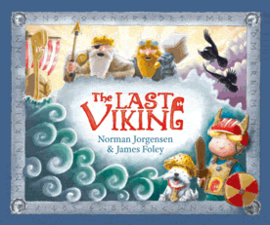
We are thrilled to welcome James Foley — our featured author-illustrator for May. You might remember our review ofThe Last Viking, which was the first book that James ever illustrated (written by Norman Jorgensen). Since then, James has also written and illustrated a picture book called In the Lion. Check out a cool book trailer for In the Lion:
Today we are talking to James about what it’s like to be an author and an illustrator.
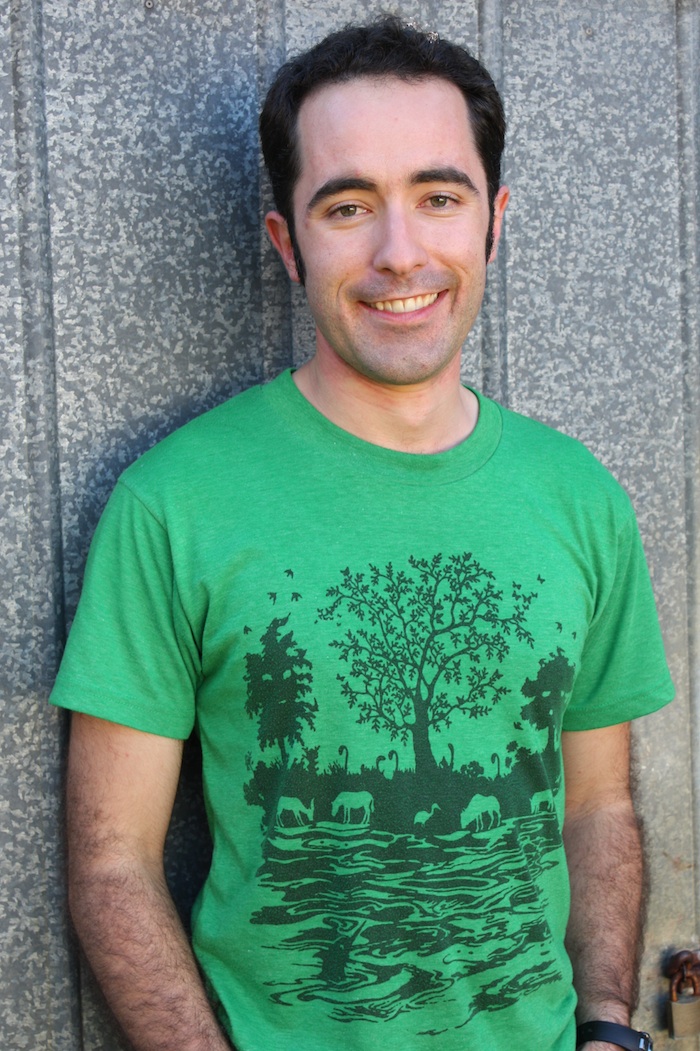
James Foley
Can you tell us something about where you live?
There are lots of picture books and comics in the bookshelves, and there are paintings hanging on most of the walls. I have some artwork made by Western Australian illustrators like Samantha Hughes, Karen Blair, Briony Stewart, Campbell Whyte and my favourite, Shaun Tan. And I have some original drawings by Batman comic artist Tim Sale!
Where do you get your ideas and inspiration?
I’m not sure. Sometimes it starts with a character that appears in my sketchbook. Then I try to come up with a story that they might feature in. Sometimes I start with a topic, like robots. Ideas come more easily when I am feeling relaxed — when I go for a walk, or when I am sitting quietly with a cup of tea. That makes me sound like a grandma …
Was it easy to get your first illustration contract?
I first sent my artwork off to publishers in 2000, when I was 17 years old. I had just finished high school. I didn’t get a contract until 10 years later, in early 2010. I spent the 10 years practising my drawing mostly, and doing a bit of writing in there too. I met Norman Jorgensen in 2009 and we started working on The Last Viking together — from that point things started to move a lot more quickly and I got two illustration contracts in two years. Once you have your first book published, it’s easier to get another one. But sometimes getting that first contract takes a long time.
Does the story influence your choice of materials for the artwork?
I’ve only published two books so far and I’ve used the same materials for both — pencil outlines and digital colour. I think the setting of the story is a big influence on the materials and textures I use … in The Last Viking I used stone, leather and parchment for borders and backgrounds. I used a lot of crumbly wall textures for In The Lion, because the walls of the lion enclosure took up most of the backgrounds. I’m doing a book about robots at the moment, so it will feature lots of metal and rust textures in it, but I’ll probably still draw things in pencil and put the colours in digitally.
—
When you write and illustrate your own books, which comes first — the artwork or the story text?
Good question. The story usually springs from an image that’s in my sketchbook or that’s in my head. Then I might do a bit of sketching of the main characters — not too much, just enough to give me a hint of what they might be like. Then I have to stop drawing and write. The story needs to come first! I’ve learned this the hard way … I’ve been working on a story since April last year, and I didn’t start with the words — I started with rough drawings for every page. The drawings might have looked cool and exciting, but the story was too complicated and wasn’t making enough sense. I had to forget about the drawings I’d done and go back to square one, figuring out who my characters were and what the story was. It’s changed the story completely, but I think it’s much better now.
When you are illustrating a book written by someone else, do you like to discuss the story and illustrations with them?
Yes, definitely. This doesn’t usually happen, but I’ve been lucky. Norman and I were able to work closely on The Last Viking and bounce ideas off each other before we submitted our first draft to Fremantle Press. We’re doing the same thing with the sequel. We’ve caught up three or four times over the last 9 months to talk about our ideas and make a few rough sketches of scenes. We’ve just put a dummy book together that has very scratchy drawings, rough text and the basic layout. Norm sat next to me in my studio and we pieced it together. It works because we have the same sense of humour and the same vision for the story. This wouldn’t work for all authors and illustrators, some of them would probably tear each other’s hair out.
What do you like to do when you are not writing or illustrating?
I like to watch movies, play video games, read books. I like cooking. I like walking the dog. I have a kayak that I like to paddle, which I haven’t done in ages …
Is your writing and/or illustrating influenced by another writer and/or illustrator in particular?
I’m not sure. I have some favourites and I suppose they influence me, whether it’s obvious to me or not — Shaun Tan, Graeme Base, Jan Ormerod, Maurice Sendak. I started writing a story the other day, set it aside, then came back to it and realised it the words were in a Maurice Sendak kind of style (just not as well written, obviously).
Did you have a favourite author or illustrator when you were growing up?
Graeme Base was my favourite. I loved The Eleventh Hour and Animalia, I would read those over and over and pore over the details in the pictures.
Are you working on something at the moment?
Yes, I’m working on a few projects this year — another book I’m writing and illustrating called Brobot; a sequel to The Last Viking that doesn’t have a title yet; and some black-and-white chapter book illustrations for some stories written by Jon Doust and Ken Spillman.
Do you have any advice for young writers and/or artists?
Do it lots, and do it because you love doing it. Don’t listen to anyone who says that it’s not good enough yet. Just keep doing it and loving it. Have fun with it. You’ll get better and better the more you do it and the longer you do it for. Read, read, read — read novels, read comics, read books about history and myths, read the newspaper. And look, look, look — go to art galleries, go to museums, watch movies. Write and draw about the things that interest you. Love doing it.
Wendy Orr signing copies of The Nim Stories. Photo by Ryan Makepeace.
Nim’s Island and Nim at Sea are definitely in our pile of favourite books. (Nim’s Island was featured in our first ever issue of Alphabet Soup!) You probably know that Nim’s Island was made into a movie starring Abigail Breslin, and now the second Nim book has also been made into a movie called Return to Nim’s Island — and it’s out in Australian cinemas this school holidays. We asked the author Wendy Orr if we could talk to her about what it’s like to have your book made into a film. And here she is!
—
When did you first hear that Nim at Sea would be made into a movie, too?
Paula Mazur, the producer of the first Nim’s Island, wanted to do it as soon as she read the book when it was published in July 2007. However there were complications with the Hollywood studio and so three years ago she took it to an Australian company. They worked very hard to organise everything and in May 2012 we knew that it was going to be filmed. (Though I think everyone still had fingers crossed!) The filming started in August 2012.
There is a different Nim (Bindi Irwin) cast in this second movie. Were you allowed to choose the actors? Did it feel strange to see a different Nim?
It’s a lot like illustrators for the books I write — I’m not allowed to choose but if I suggest something the editor or producer is happy to think about it before making up their minds. They know a lot more than I do about the right illustrator or actor. I’ve been very lucky, with both illustrators and actors, and they’ve all felt very right for the parts. Of course, even though Abigail Breslin is a wonderful actor, by the time filming started [for the second Nim movie] she was 17, which is much too old to be Nim. But Bindi Irwin is absolutely perfect for the role — she loves animals and is used to handling them, and she’s incredibly strong and physically fit, just like Nim. That’s important to me, so I was delighted with the choice. It was also nice to hear that she’s always identified with Nim quite strongly and tells me the books have always been favourites.
I thought it would feel strange to watch different actors, but in fact it all seemed completely natural. And because no actor could ever be completely identical to the character I imagined, it’s actually made it easier to go back to the characters in my head as I work on the third book.
Do you ‘see’ the characters in your head while you write?
For me, writing a book is a combination of watching a movie in my head, and feeling it in my body — not exactly as if I’m living it, but the way you feel the action in a dream.
Did the movie make any big changes to the book? (without giving too much away for movie-goers-to-be!)
This movie had to make very big changes to the plot! The problem is that when I write a book, it doesn’t cost any more to print if my characters stow away on cruise ships than if they spend the whole book sitting in their bedrooms. But movies are different, and so the producer and directors have to decide how they can make a good movie, follow the story — and not spend more money than they have. So in this movie, Nim is very much the same character, just a bit older, and the feeling matches the book. Then they took two very important things from the plot: Nim making a human friend, and animal poachers threatening Selkie and other animals. But the story after that is quite different.
(It’s okay, Nim certainly doesn’t spend the whole movie in her bedroom!)
As the book’s author, did you have a role to play in the making of the movie?
I was a consultant, which means I read it at different stages and sometimes suggested some small changes. It was a bit like being an editor, which was a nice change for me. I also watched some of the filming, but that was just fun. I don’t know anything about filming, so the most useful thing I can do is stay out of the way.
You attended the premiere of Return to Nim’s Island at Australia Zoo. What was it like to be watching the movie of your own book?
The premiere of a movie is always incredibly exciting. It’s like getting the first copy of your new book, except with a huge party instead of a parcel in the mail. This one was exciting for all those reasons, but since I spent the whole day at the zoo first, with Bindi and Toby Wallace (Edmund), it was also really fun. I think these pictures will show why.
Wendy Orr with Toby and Bindi. Photo by Ryan Makepeace.Wendy Orr with Bindi at the premiere of Return to Nim’s Island. Photo by Ryan Makepeace.At Australia Zoo for the movie’s premiere. Photo by Ryan Makepeace.
Watching the movie of my own book is very strange, and quite emotional, especially the first time. It’s almost like looking at a family video, because it’s very familiar but different to actually see it on the screen. I thought it was good; I could see the audience enjoying it; sometimes I was afraid about what was happening next, even though I knew; sometimes I was amazed at the beautiful images — but mostly I just felt happy.
Will there be more Nim books?
Yes! My publisher would be very cross if I said no, because they have given me a contract for another Nim book, which I think will come out next year. It doesn’t have a proper title yet.
At the top of this post we can see a photo of you signing copies of The Nim Stories. Is it a bindup of Nim’s Island and Nim at Sea or a different book again?
Yes. It’s got the new cover but the two books are just the same, with the same illustrations.
OK. I have to ask … Can the movie EVER be as good as the book?
No.
Or maybe yes …
A movie can never be as good as the movie you make in your head when you love a book so much that you feel you’re inside the story — when you read about ice and feel cold even though it’s hot where you are, and when you see and hear the characters as if they’re alive.
But on the other hand, a movie could be a better movie than the book is a good book. [At Alphabet Soup we know that Nim at Sea is a good book and we’re sure that Return to Nim’s Island will be a good movie. So we’re glad they won’t have to compete!]
—
We’re looking forward to seeing Return to Nim’s Island these school holidays. In WA we haven’t started school holidays yet — so all you Nim fans on the east of Australia get to see the movie before us. Lucky you! (Will you write us a review?)
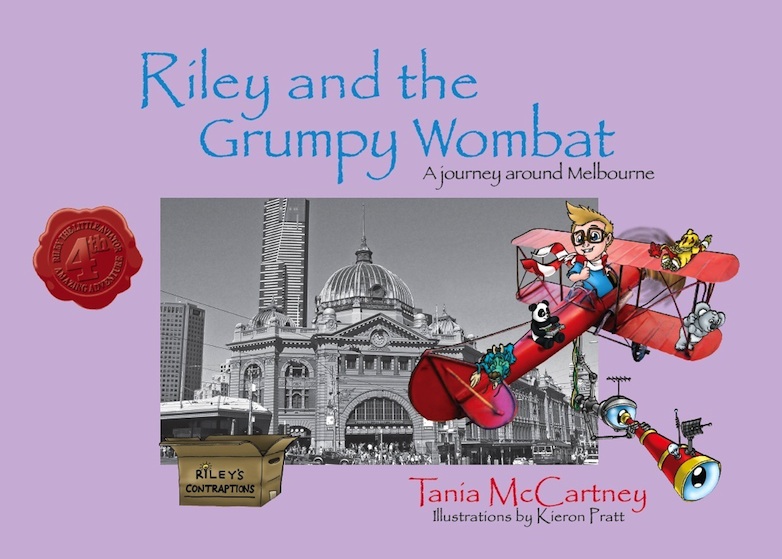
Tania McCartney writes children’s and adults’ books and was an ACT Ambassador for the National Year of Reading 2012. Her latest children’s book is Australian Story: An Illustrated Timeline. Tania is our featured author in the autumn 2013 issue of Alphabet Soup magazine. We can only include part of the Q&A in the magazine, so we’re sharing the full version with you here.
Read on!
— Can you tell us about where you live?
I live in Canberra with my husband and two kids (Ella, 12 and Riley, 9) in a paper house at the base of a book mountain. That’s what it feels like, anyway! There is so much paper and so many books, I could open a bookstore or run an origami festival. I’ve lived in lots of different places through my life, and my little family unit and I have so far lived in Melbourne, Adelaide, Beijing and Canberra—so we do feel like wanderers. Canberra is fun—we have so many cool things to see and do here, and of course, my favourite place of all is the National Library of Australia on Lake Burley Griffin.
How did you come to be a writer?
It chose me. My favourite possession is my grade three English book with the doggy sticker on the front—filled to brimming with creative stories. I’ve always loved to write and had my first poem published in a Tasmanian newspaper when I was 8. Since then, I’ve never stopped writing but it wasn’t until I was about 38 that I took it up full time. I feel very chuffed to finally say that my full time job is an author. It took a long time to get there (which is really why you absolutely must stick with your dreams—they do happen).
Is writing a nonfiction book very different from writing fiction?
Writing nonfiction is a little different because you may have to do lots of research (Australian Story involved around 8 months of research) but you still have lots of creative licence when you write the words. I actually find nonfiction easier to write because the bones of your work—the structure—is already there, and you can just pad it out with your research finds and all the fun bits. With fiction, you need to create everything—and that can be both thrilling and scary. The great thing about fiction though, is that you have full use of your imagination—and that basically means you can do and create whatever you want. I love that about writing.
Was it easy to get your first book published?
My publishing journey has been kind of odd and very untraditional. I sent an adult novel to a publisher when I was about 20 and they liked it so much, they sent it to an ‘outside reader’ which is basically a good sign. Because I was still so new to writing, they thought I needed more time to develop my work, so I wasn’t offered a contract. I remember being devastated and although I kept writing, I didn’t submit to any other publishers for a very long time. Then in my late 20s, I had the opportunity to take 8 months off to write my first nonfiction book—You Name It. I sent it off to about 8 publishers and had TWO acceptances (I chose the first publisher—Hodder and Stoughton), which was a real thrill. So, having my first book published was not too hard. Since then I’ve been published by four other publishers, but each acceptance was after building a relationship with the publisher. I send manuscripts to publishers all the time and still receive as many rejection letters as everyone else! but I’ll never, ever give up.
Where do you find your ideas/inspiration?
From everyday life—those little moments you experience on any given day. I also find lots of inspiration in children, particularly my own—the things they say, the things they do. My other big inspirations are travel and photography. I created my Riley the Little Aviator books from a love of travel and I also use photographs in the series. I’m a very visual person, so beautiful pictures and photos inspire me to create stories. I LOVE picture books—yes, even as a grown up—and have thousands of them in my house.
How do you do your research for a nonfiction book?
It really depends what the book is about. For Australian Story, I researched Australian history, so I scoured websites (mainly government and educational sites, because they are much more accurate) and read books and watched documentaries and talked to people. I also used Trove, which is the National Library’s online search engine for a mass of historical information. As I gathered the information, I kept it in a Word document on my computer. I collected as much info as I could, then when I was done, I began editing the information down into bite-size pieces. That’s the way I work best.
When you are working on a book like Australian Story, do you have to find your own photographs and images?
Most children’s books published by the National Library require the use of pictures from their very impressive image collection. I was tasked with wading through almost 130 000 online images—photos, maps, paintings, drawings, diagrams—in search of the perfect pictures to go with my text. It was a lot of work but I loved it! I found some really cool images—some really funny ones, too. Some of the illustrations in the book were done by the book’s designer, Peter Shaw. Of course, there are no existing photos of dinosaurs! so he added illustrations whenever we needed them. [Check out this earlier post for a peek inside some of the pages!]
Would you like to have lived in another point in history?
I would have loved to live between the 1920s and 1960s. Excluding the World Wars, I think this was a fascinating and creative period of time, when mankind made so many leaps and bounds across all areas—from film and culture to human rights. Ancient civilisations also fascinate me. How cool would it be to spend a day in Ancient Rome or Machu Pichu with the Incas or outback Australia with the Aborigines or Ancient Egypt … although I would have liked to take rose-petal milk baths and not have to build those pyramids!
What do you like to do when you are not writing?
I like to read. No—I LOVE to read. Being an ACT Ambassador for the National Year of Reading 2012 was a huge thrill as I’m passionate about books—and will seriously read wherever I can, whenever I can. I even read on the treadmill. I also love to travel, take photos of anything and everything, and bake delicious things with my children.
What was your favourite book as a child?
I really loved the Amelia Jane books by Enid Blyton but my favourite series of all time is the Chronicles of Narnia by CS Lewis.
Do you have any advice for young writers?
Write what you know and love. Just like reading, you need to focus on something that makes you smile—something you enjoy. Reading really, really, really helps you become a better writer. It expands your vocabulary and your understanding of word placement. It also helps you create really cool sentences. Writing what you see in your head rather than what you ‘hear’ or think you should write, is also vital. Write as though you were talking to a friend—use your own voice, invent your own words, don’t be afraid to be a little kooky. And when you’ve finished writing, be sure to re-draft. No one writes the perfect story first time. Write your story, let it sit awhile, then go back and make it even better. I think three or four drafts should do it.
Are you working on a book at the moment?
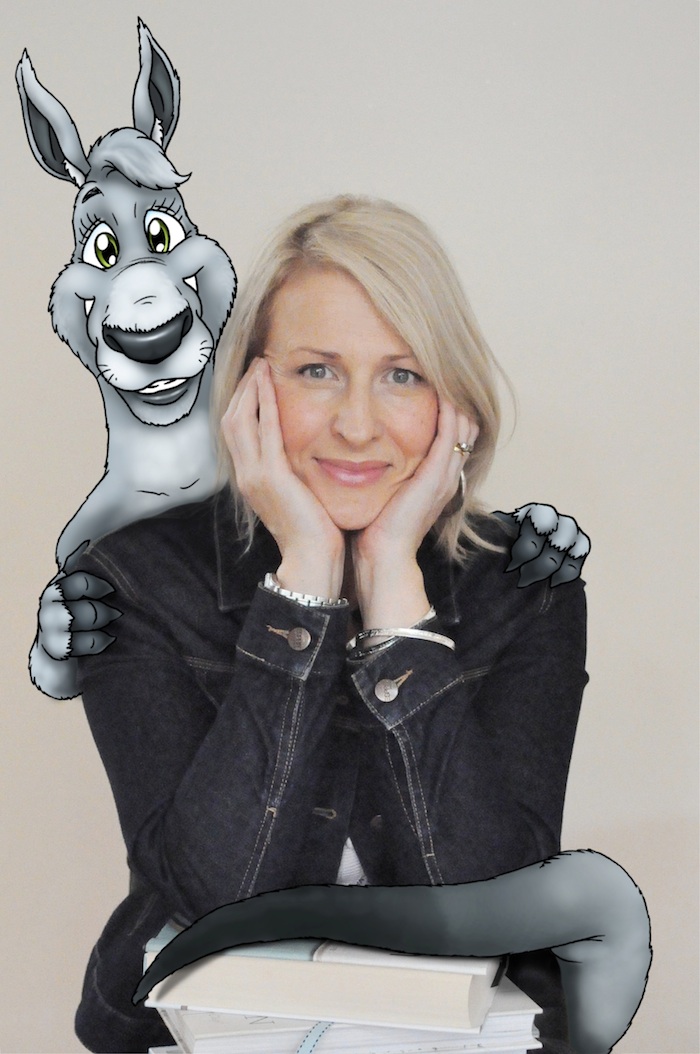
I’ve just finished writing my first junior fiction historical novel for New Frontier. It’s on Caroline Chisholm and I loved writing it, so I’d like to do more in that style. I’m also finishing up two more books for the National Library. One of them features the really beautiful botanical paintings from their image collection and the style of this book is unique and fun. I photographed my son and some other kids, and I’ve cut and pasted them into the pages of the book so they are adventuring through the paintings. It looks amazing! The second one is also a picture book about the evolution of the Aussie child. It’s being illustrated by one of my fave Aussie artists—Andrew Joyner, so that’s super exciting. I’m about half way through the next Riley book—about a jumpy kangaroo in Canberra (you can see her in my photo!)—and I’m spending the rest of the year working on my first junior fiction series—in fact, two series … one is a really kooky style of book showing kids how to act their age, and the other is for my very patient daughter, Ella, about a girl who loves animals. My Riley series is about my son Riley, so now it’s Ella’s turn!
—
Find out more about Tania and her books on these websites:
Yesterday we announced the Alphabet Soup Creativity Award—for outstanding work published in Alphabet Soup magazine in 2012. Today we welcome Dee White to share some ideas for what to write about, and to tell us about the prize she has donated for the winner in the Most Outstanding Story category.
Over to Dee!
A House Can Tell A Story
There are so many potential stories hidden inside your home.
You just have to use your imagination and look for them.
What if you opened a drawer and found a secret letter hidden there?
What if something in your house came to life and started chasing you or wanted to be your friend?
What if your house could talk and told you a story about the people who used to live there before you did?
What if your house got blown away like Dorothy’s in The Wizard of Oz and you ended up somewhere completely different?
What if there was a treasure chest hidden in your garden?
What if there was a secret compartment in the wall of your bedroom and it led to another world?
One of my favourite things to do when I can’t think what to write about is to look around a room in my house and pick an object. It could be a wall, a door, a light switch, anything.
Next I imagine what it would be like to be that object sitting there day after day. I think about what that object can see and do and how it might feel. Then I write a piece about it.
It’s fun to do this with a writing friend and see if they can guess which object in the room you are writing about.
This excerpt is from Dee’s new e-book, 10 Top Writing Tips For Kids: What to Write About.
Dee is donating a free copy of this book and one hour’s mentoring (a manuscript appraisal) to the winner of the Most Outstanding Story category of the 2012 Alphabet Soup Creativity Award.
THE MENTORING
Here’s how it works.
The winner will send a 500-word piece of writing to Dee. If it’s part of a longer story they’ll need to also send in a plot summary or information about what happens in the rest of the story. Dee will give tips on how to improve the piece of writing and the winner’s skills in general. She’ll also answer questions they might have about the piece or writing in general.
ABOUT 10 TOP WRITING TIPS FOR KIDS
10 Top Writing Tips For Kids by Dee White
Dee has written this series to encourage and inspire kids who love to write. 10 Top Writing Tips for Kids: What to Write About was released in November 2012.
Other books in the series coming in 2013 are:
10 Top Writing Tips For Kids – Heroes and Villains
10 Top Writing Tips For Kids – Want to Be a Writer?
10 Top Writing Tips For Kids – Make Your Writing Sparkle
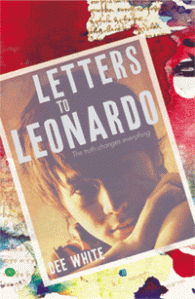
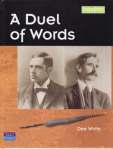
Dee White has worked as an advertising copywriter and journalist, but wanted to be an author from the time she was seven. Her first book for young adults, Letters to Leonardo, took more than ten years to research and write. Dee’s other titles include Hope for Hanna, A Duel of Words and Harry’s Goldfield Adventure.
Dee is passionate about encouraging young readers and writers, and her blogs Writing Classes for Kids and DeeScribe Writing are full of career and writing tips for students and new and emerging writers.
She runs writing workshops for primary and secondary students across Australia with sessions focusing on story ideas, plotting and character development. She also runs them online at Writing Classes for Kids.
She is honoured to be providing the prize for the inaugural Alphabet Soup Creativity Award, and hopes that it will help encourage young writers.
For more information on the 2012 Alphabet Soup Creativity Award, visit the Award page (there’s a tab at the top of this blog).
In every issue of Alphabet Soup magazine, you’ll meet an Australian writer or illustrator. In the summer issue we talk to Mark Wilson who is an author AND an illustrator. It’s hard to fit the whole conversation in the magazine, so we’ve posted the whole interview here on the blog. Read on!
–
Where do you live?
I live in Frankston with Ros, my wife and our two dogs—Toby and Couta. (Silky terrier and a Shitsu Cross.) We have 7 fish in our pond, and lots of native birds visit as well. We live near the beach where I go for long walks when I get the chance.
Where do you get your inspiration?
I have so many stories in my head! At the moment, I am obsessed with trying to save sea turtles and whales, and will be doing that forever. All are endangered thanks to plastic bags and coastal developments, amongst many other things. Also anything about Australian history inspires me. The explorers and pioneers were so brave and determined to do what they did!
An idea can come from a photograph, an article in a newspaper, or something someone said. I write everything down and then it might pop up as a part of a story
How did you come to be a writer and illustrator?
All I ever wanted to be was an artist, or a fighter pilot or an architect. I was terrible at maths, so the last two were out! I loved telling stories in pictures when I was little, and still do. Always loved just drawing things!
Was it easy to get your first book published?
It was very good luck! I had a weird collection of surrealistic black and white drawings and applied for an illustrator’s job on Pursuit Magazine in Melbourne. I got it—my first illustrations were pretty strange too!
Does the story influence your choice of materials?
Never. I use everything from a pencil to house paint, including derwents, ink sand, dirt, feathers etc. Lots of pencil drawing go straight into my books.
When you are creating your own books, which comes first—the artwork or the story text?
Usually the pictures, then I make up a story around them. Lately I have been writing stories first, which is strange for me. An idea can also come from a photograph, an article in a newspaper, or something someone said. I write everything down and then it might pop up as a part of a story.
When you are illustrating a book written by someone else, do you discuss the story and illustrations with them?
Always. I love to hear an author’s ideas and they often see things that I wouldn’t see. Gary Crew was great for illustration ideas, and Jackie French had some wonderful ideas for A Day to Remember, and I used them in the illustrations too!
Are you working on a book at the moment?
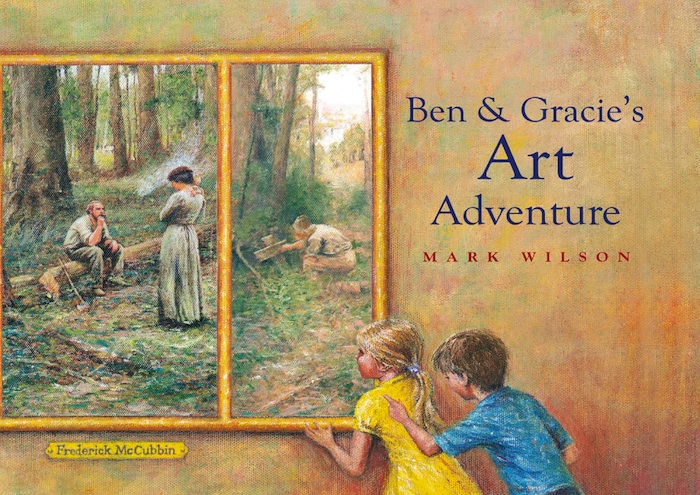
I am working on a book about the Vietnam War that is the 3rd book in the Children in War Trilogy. (The other books in the series are My Mother’s Eyes and Angel of Kokoda). It will be out early next year. There is also a new Ben and Gracie’s Art Adventure book underway!
Do you have any advice for young writers and artists?
Write everything down. Keep a journal and make notes for your stories in it.
Observations, quotes, discussions, interesting things—write them all down.
Writing takes practise, so keep writing; stories, poems, song lyrics, anything and everything. Talk to your grandma and grandpa—discover the stories in your own family, there are so many!
What do you like to do when you are not writing?
I love singing in my blues band, playing drums and reading books about the Romans, Vikings and history in general.
Is your writing influenced by any writers in particular?
The Australian Impressionist painters Frederick McCubbin and Arthur Streeton are my favoutites. I am also inspired by the French Impressionist Monet, and Australian Illustrators Robert Ingpen and Shaun Tan. You can tell I’m a bit of a melting pot, but the Australian Impressionists painters mainly. I particularly love children’s paintings. They use really fresh colours and simple shapes. I am trying to get back to doing that myself!
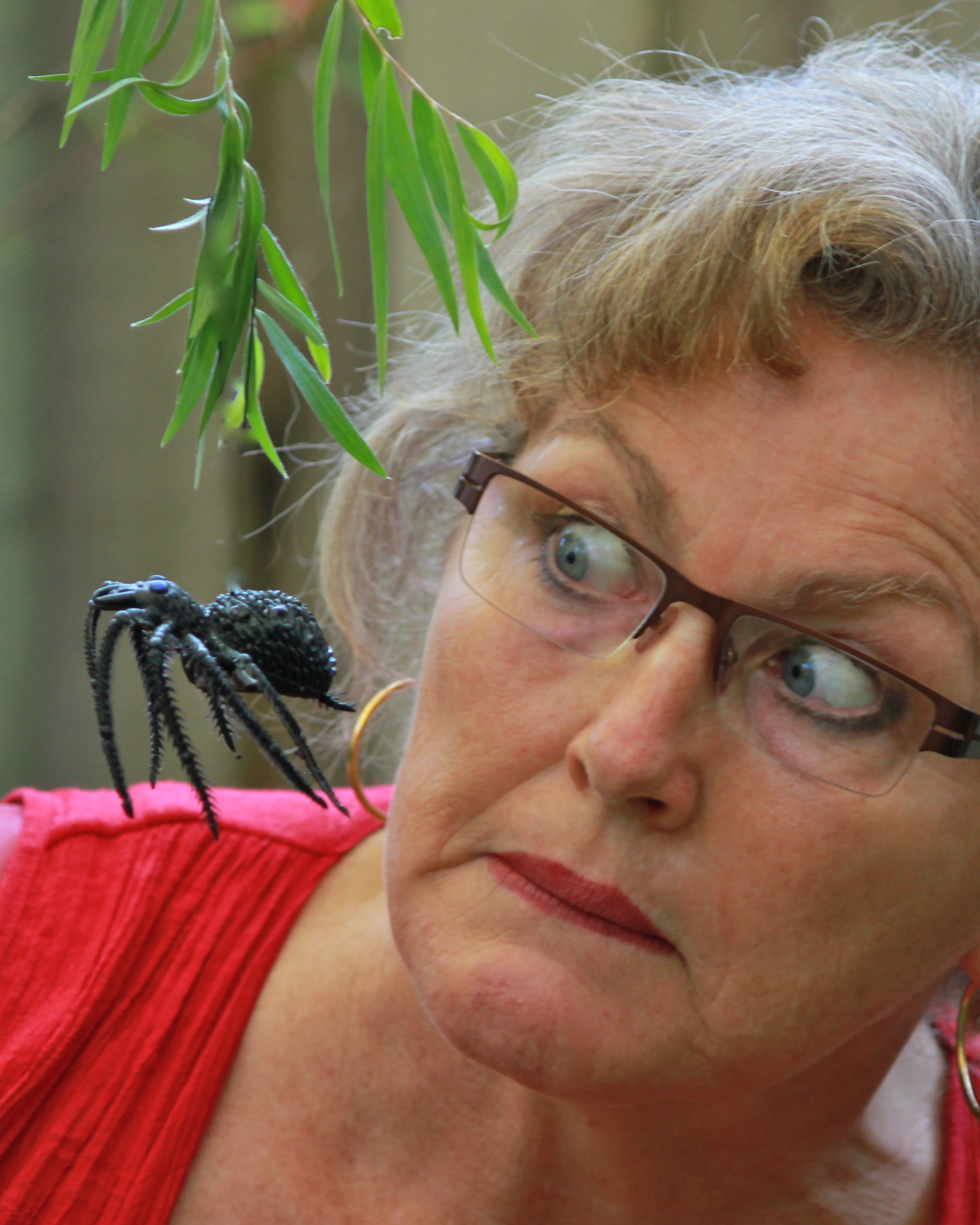
In every issue of Alphabet Soup magazine, you’ll meet an Australian writer or illustrator. In the spring issue we talk to Jen Banyard about being a writer and about her books—Spider Lies, and Mystery at Riddle Gully. We can’t fit everything into the magazine (so many interesting answers!) so we’ve posted the whole interview here on the blog. Read on!
—
Where do you live?
I live in Floreat (in WA), which makes it nice and easy to go walking on the Bold Park bush trails (I love going after dark!) or to swim at City Beach. Until last year we had a Kelpie-cross dog but she died of old age; now we just have a tabby cat and a noisy family of possums in the roof.
Where do you get your inspiration?
I usually carry a small notepad with me and jot down interesting things about people (not while they’re looking!), funny names or phrases, or quirky ways of looking at things. I keep an ‘ideas box’ and fill it with ideas I’ve written on bits of paper, newspaper and magazine clippings (articles and photographs)—anything that might kick off or spark up a story. A story is usually a combination of a few ideas.
I like to read magazines or books about the craft of writing, too. Sharing the experiences and advice of successful writers keeps me keen.
How did you come to be a writer?
I used to write and edit pretty staid stuff for government departments, universities and such. Eventually, I decided to do what I’d wanted to do for ages—write fun, lively stories. I guess that’s how I ‘came to be a writer’—by deciding to do it and giving myself a chance. (I wasn’t all that good at first … but I’m learning!)
Was it easy to get your first book published?
Yes and no (mainly no). I sent quite a few things to publishers before anything was accepted. But I wasn’t doing my research and sending the right piece to the right publisher (they all want or like different things). Also, adults played too big a role in my work. The first time I got both those things right, a major children’s magazine in NSW bought my story. That opened doors which led to the publication of Spider Lies.
How long does it take you to write a book?
The first draft is usually pretty quick (and fun), but the fine-tuning can go on forever—until the editor says ‘Enough!’ and drags the manuscript from under your hand. Spider Lies (21,000 words) took nine months or so, spread over about 18 months. Mystery at Riddle Gully (38,000 words) took about 15 months, spread over two-and-a-half years. The long time spans are partly because there’s a lot of to-ing and fro-ing with the editors and publisher, and things don’t always happen quickly with those busy people. So between bursts of working on one story, you go on with something else. I know someone who wrote a novel in a weekend. I’m not like him!
Do you prefer to write with pen & paper, or on the computer?
Pen and paper wins hands-down for the first draft. I scribble away (trying to stay in ‘the zone’), crossing out and adding in all over the place. Then I type what I’ve written into a computer, usually a few chapters at a time. The tinkering after that is mostly on my laptop. Before I submit a manuscript to a publisher, I print out the whole thing and read it through, ideally aloud. Doing that, I usually find a heap of things to change that had looked fine on the screen.
What did you like to read when you were growing up?
I ate up the Famous Five mystery series by Enid Blyton (all those smugglers and treacherous tides) and, later, Rider Haggard’s African adventures, King Solomon’s Mines and She. I remember being very moved (another way of saying that I cried like a baby) by Jack London’s The Call of the Wild and James Fenimore Cooper’s The Last of the Mohicans.
Are you working on a book at the moment?
A quarter-length version of Mystery at Riddle Gully is being serialised in The West Australian newspaper’s ‘Ed!’ section at the moment. There’s also a shorter novel starring a terrorising cat that’s probably ready to be sent into the big, wide world. I’m busy at the moment with my PhD project for university—a historical novel for adults and an academic study—but I’m also mustering ideas for a sequel to Mystery at Riddle Gully.
Do you have any advice for young writers?
Collect ideas like a magpie.
Write little and often.
Be yourself (aim to sound like ‘you’, not a ‘proper writer’, whatever that is)
Push on when you’re feeling a bit flat and you think you’ll never finish your story—it’s just a rough patch, and who said writing was all a bowl of M&Ms anyway?
Don’t aim for perfection in the first draft—it’s way too inhibiting. Be happy to throw out some (or a lot) of what you’ve written if you have to.
Lastly, read a lot. Bit by bit, some of the good writing will rub off on you.
Oh, and lastly-lastly, don’t beat yourself up if something you send to a competition or a publisher gets rejected. It means you can call yourself a real writer!
What do you like to do when you are not writing?
Jen Banyard playing the ukelele at the launch of Mystery at Riddle Gully.
I love anything to do with the water, especially the ocean—swimming or snorkelling in it, kayaking or sailing on top of it or watching it. With the rest of the family, I’m into the sport of lacrosse. When there’s no-one around to laugh or groan, I sing and play my ukulele (but don’t tell anyone!)
Is your writing influenced by any writers in particular?
Hmmm … that’s a toughie. I know by whom I’d like my writing to look like it was influenced, but whether it does is another thing entirely! Ideally, my stories would be a mind-blowing mix of the styles of Dav Pilkey, Sonya Hartnett, Andy Griffiths, Tim Winton, Paul Jennings … and me.
If you’re in NSW, head over to The Children’s Bookshop in Beecroft on 11 August—there will be lots happening to celebrate National Bookshop Day.
The bookshop will have authors working in the shop window, an artist in residence will be creating some illustrations, there will be book busking, face-painting, a sausage sizzle and balloons.
Schedule for the Morning:
10–10.45am Special Story-Time!
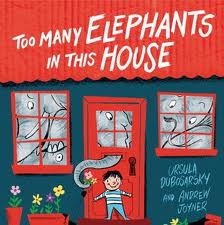
Meet Ursula Dubosarsky who will be reading such books as Too Many Elephants in This House and The Terrible Plop.
11.30am Meet Duncan Ball, author of Selby and Emily Eyefinger. (Selby will also be there to meet the kids.)
10am–12 noon Meet a range of authors in the Living Window—authors will be writing in the window! The Artist in Residence for the morning, Lisa Stewart, will also be working on illustrations in the shop.
Where: The Children’s Bookshop, 6 Hannah Street, Beecroft NSW
Davide Cali is a children’s book writer and illustrator who was born in Northern Switzerland and grew up in Italy.
He has created more than forty illustrated books for publishers in Austria, France, Italy, Argentina and Portugal. His books have been translated for 25 countries.
Davide speaks French, Italian and English and he is currently on a blog tour before travelling to Australia to celebrate his new comic book/graphic novel, 10 Little Insects. (Kids Book Review has a sneak peek inside 10 Little Insects … check it out here. )
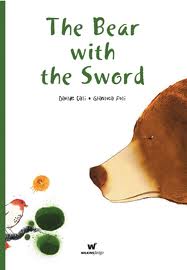
Today we are pleased to have Davide visiting Alphabet Soup‘s blog to discuss writing. We’re talking to him about his picture book, The Bear With the Sword.
—
What brought you to write The Bear with the Sword?
At the beginning, the bear of the book was a man. Just a human warrior. The Italian publisher Zoolibri asked me to change it into an animal, to make it a little less tough.
In this book comes the theme of ‘the enemy’, but I wanted to talk about the fact that we always try to find someone else as guilty for our faults.
Did you meet the illustrator Gianluca Foli?
Yeah, a couple of times, but only when the book was already finished. You know, in this job often you don’t even know or meet the people you work with. I did four albums in France with Eric Heliot before we met and talked for the first time!
You write books for a range of ages. How do you know if a story would work best as a picture book or a novel?
Well, I read a lot of children’s books before I start my writing. As you probably know, I worked for a while in a public library which specialized in children books (during the civil service I did instead of military service). Later I spent a few months working for a magazine specialising in children’s book critics, so I really saw and read hundreds of books. These experiences helped me to fit something I got in my mind in a certain range of ages.
Could you give us your top tip for young writers who want to write picture books?
I guess the most important ones are: reading, writing.
I know it could sound a little obvious, but it’s not. Many people—even adults—who want to write, don’t read. I think reading is just like feeding yourself. And you know, writing is just like feeding others. So, how can you feed others if you don’t eat first?
And writing because: many people tell me “I really would like to write. What should I do?”
My answer is always: “Just do it!”
You have just to start it. Sometimes you don’t need to have a complete and perfect story already formed in mind to write it down. Stories come out just while you’re writing, and they often change while they’re coming out.
—
Check out the complete blog tour schedule (and reviews of Davide Cali’s books) on the Wilkins Farago blog.
Maroochydore Library (Sunshine Coast) a fun event to celebrate the launch of Australian Story! Come dressed as your favourite Aussie character. For more info and bookings, visit Tania’s blog.
2. Sunday 25 March at 3.30pm
Join Tania McCartney at Black Cat Books and Cafe for a fun afternoon of interactive historical fun! Things kick off at 3.30pm. Come dressed as your favourite Aussie historical character and you could win a prize! For more info and bookings, visit Tania’s blog.
Tania visited Soup Blog earlier this month to talk about Australian Story and why history is cool. Read her post here.














 alphabetsoup.net.au