
It’s Friday! And that means it’s time for Pass the Book Baton. Alphabet Soup features a book creator every Friday who will answer one question before throwing a new question to the next Friday visitor. (It’s kind of like a book relay in slow motion.)
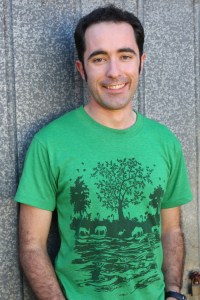
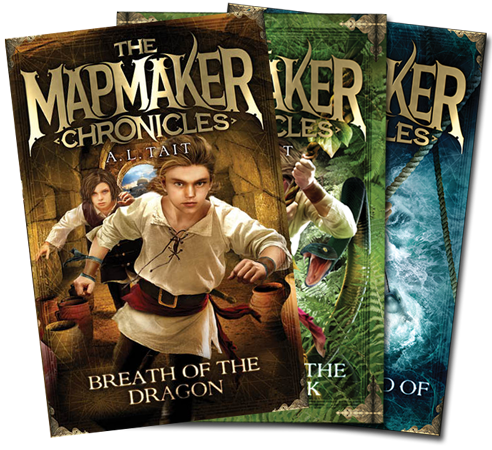
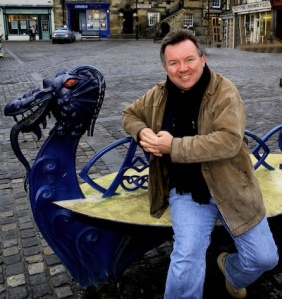
Today bestselling author AL Tait takes the baton. AL Tait is the author of The Mapmaker Chronicles — a series full of danger and adventure.
Q. Which book in your Mapmaker Chronicles series have you enjoyed writing the most?
A. It’s funny, but kids always ask me which of the three books are my favourite, and I always give the same answer: I love them all. But then, I qualify that answer. I love the first book a little bit more because that’s where I met all of my characters for the first time. As someone who doesn’t plot very much, I’m really watching the story unfold and the characters develop in much the same way as the readers are.
Q.Does creating a series get easier or harder to achieve?
I think the most difficult part of any series is the middle. But then I feel the same way about every book I write — the middle (act two) is the most difficult section to write. I’m in the process of writing a brand new series at the moment and I’ve whisked my way through book one, and am about to climb the mountain that is book two. Writing a series does teach you the value of at least having an outline to work from, even if you don’t plot every detail.
And now AL Tait passes the baton to the next Friday visitor — James Foley. James is an illustrator and an author-illustrator. His most recent book is a graphic novel, Brobot.
AL asks: You started out as an illustrator — what made you decide to write In The Lion and Brobot yourself? As an author-illustrator, do you start with the words for a story or start with the pictures?
Check in every Friday for questions and answers from children’s authors and illustrators. See you next week!
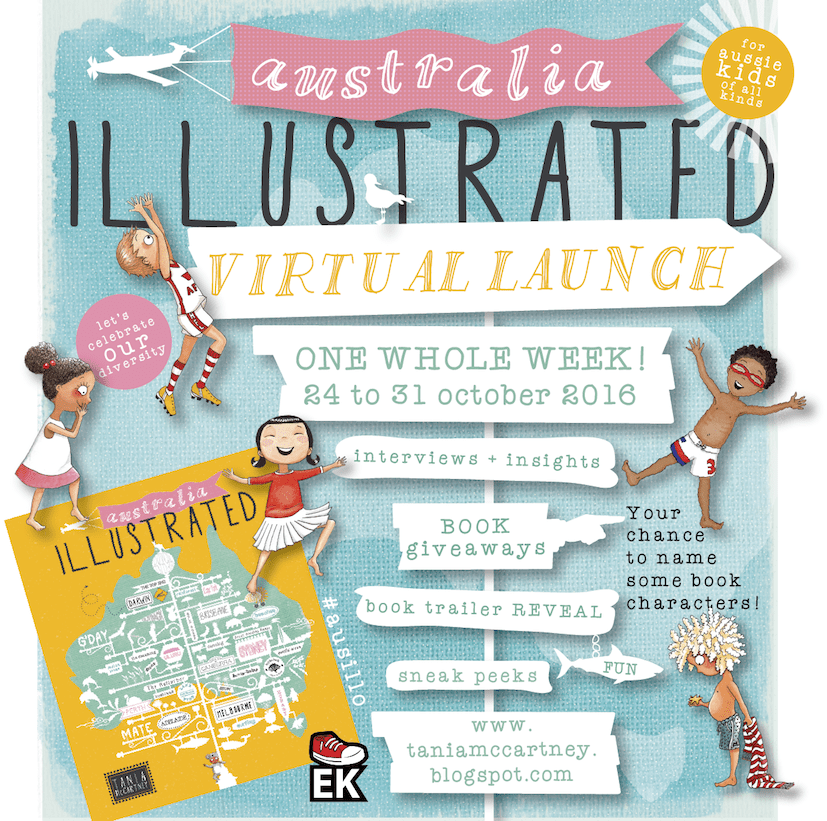
Tania McCartney is the author of fiction and nonfiction picture books. Now she is launching the first book she has written and illustrated. Today one of our regular book reviewers — Matilda, aged 10 — asks Tania some questions about her new book Australia, illustrated.
Matilda: Why did you think of illustrating this book yourself when your other books are illustrated by other people?
Tania: Just like you, I’m sure, I absolutely loved to draw when I was a kid. Writing and drawing was my thing. I did it right through school and into high school but then something terrible happened. I became an adult.
Well, actually — it’s not terrible to become an adult! But what IS terrible is that so many adults stop doing the things they love, and instead do the things they ‘should’. So I lost my ability to draw, and I really, honestly believed I could no longer do it.
I began writing children’s books around 10 years ago (around when you were born! spooky!), and I had a secret dream to illustrate my own books. I never, ever thought that would happen because I still believed I could no longer draw.
Then, in 2014, I started the 52-Week Illustration Challenge [a group of illustrators where the members each create their own illustration in response to a weekly prompt] and over two years I learned that I could still draw! I couldn’t believe it! At first, my drawings were pretty horrid, but over that time, they quickly improved — and that goes to show that practice does make ‘better’!
I was stunned and delighted when my publisher said they’d be happy for me to illustrate my new book idea — Australia Illustrated. I was also a bit scared. Could I do it??? Well, I did. And I still have to pinch myself!
Here is a picture of my first drawing for the 52-Week Illustration Challenge, and then after that you’ll see a page from Australia Illustrated. Do you think I’ve improved?
Tania’s first illustration in the 52-week illustration challenge.
A page from Tania’s new book.
Matilda: How did you have the idea for a book like this about Australia?
Tania: There are so many books about Australia, but I wanted to do something really different. I don’t know of any other book like this one.
For a start, it’s a whopping 96 pages! (Picture books are generally 24 to 32 pages.) And it’s also unusual in that it’s mostly pictures, with only a handful of words.
It also covers parts of Australia that are really well known (like our animals and icons like the Sydney Opera House) but it covers things people don’t know much about, too — like quokka selfies or Tasmanian chocolate factories.
The other thing I’ve done with Australia Illustrated is that I’ve included lots and lots and lots of kids of all different cultures and races. I think it’s important to celebrate the multicultural country we live in!
Matilda: How many of the places in your book have you also been to?
Tania: What a great question. I’m going to look through the book and tell you exactly!
Okay, I’m back. So, out of all the places I cover in the book (towns, sites, states) I’ve been to around 70 out of around 100. This doesn’t include the maps I’ve done for each state which have hundreds of place names — though I have been to a lot of those places, too. I like to travel!
My big dream is to go to Uluru. I used to be a flight attendant and I used to fly over it all the time! If they’d given me a parachute, I could have jumped out and gone to see it! I’m hoping next year I can go.
Matilda: What was different about illustrating your own book instead of having someone else illustrate it?
Tania: Oh, it was SO different. It was the first time I’d ever illustrated an actual book so I wasn’t really sure how to do things. In fact, I did the cover first … and books are hardly ever done that way! But it worked out really well for me.
It was fantastic being able to have control over how the book looked visually. And it was also fantastic to get to draw whatever I wanted — it was such a creative process and I loved it so much. I could mix things up and change things and dream up kooky things. It was just SO much fun.
When you have an illustrator doing pictures for you, it’s a whole different experience because the illustrator reads your words and has their own thoughts about how the pictures should look. When my illustrators send me their pictures, it’s like Christmas! Opening the email to get a wonderful surprise — a beautiful picture. It’s really exciting — and you can never guess what they might have created.
You may have heard of that saying ‘two heads are better than one’ and when I work with an illustrator, I find they bring so many great ideas and thoughts to the text. They might read my words and see things completely differently from me — and they could add some wonderful things to the story with their illustrations … extra things that I may not have thought of.
I love both ways — illustrating my own books and having illustrators create the pictures, too. They are totally different but both are a lot of fun.
Oh, and also — when you illustrate your own book, it’s twice the work!
Matilda: Are you planning to illustrate more books?
Tania: I am. I’ve already started on three illustrated books and each one of them is going to be digitally illustrated. In December, I’m starting work on a big book for the National Library of Australia. I’m doing the illustrating but someone else is compiling the book — someone quite famous! I can’t say more yet but I’m really excited about that one.
I also have some ideas for more picture books I want to illustrate but I want to try a different style — perhaps just watercolour. And a few people have asked me to illustrate their books, too. I might be doing one for a friend, not sure yet — we’ll see! The thing about publishing is that we so often say ‘we’ll see!’
Thanks for the wonderful questions, Matilda. I just loved them.
It’s Friday! And that means it’s time for Pass the Book Baton. Alphabet Soup features a book creator every Friday who will answer one question before throwing a new question to the next Friday visitor. (It’s kind of like a book relay in slow motion.)
Today Perth author Paula Hayes takes the baton. Paula has one husband, four children, three dogs and five rabbits. She is the author of a YA novel and also a recent children’s novel, Lily in the Mirror, which one of our regular reviewers (Matilda, 10) described as ‘creepy but good’.
Last week Joshua Button and Robyn Wells posed a question for Paula. They ask:
Q. Your character Lily loves all things dark and mysterious. Were you inspired by any real life mysteries, strange events or unusual people?
A. Lily loves all things dark and mysterious and so do I. I like fantasy that is almost scary but not too scary. The book was inspired by a room in my grandmother’s house full of vintage family treasures. The door would shut behind you but that was because the house really did need restumping and not due to supernatural events. But add a little imagination … and I was in the Rosy Room.
And now Paula Hayes passes the book baton to the next Friday visitor — AL Tait. AL Tait is the author of the bestselling series, The Mapmaker Chronicles.
My question(s) for AL Tait: Which book in your Mapmaker Chronicles series have you enjoyed writing the most? Does creating a series get easier or harder?
Check in every Friday for questions and answers from children’s authors and illustrators. See you next week!
It’s Friday! And that means it’s time for Pass the Book Baton. Alphabet Soup features a book creator every Friday who will answer one question before throwing a new question to the next Friday visitor. (It’s kind of like a book relay in slow motion.)
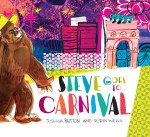
Today we are lucky to have two visitors at once! Joshua Button and Robyn Wells collaborated over ten years to create their recently published picture book Steve Goes to Carnival.
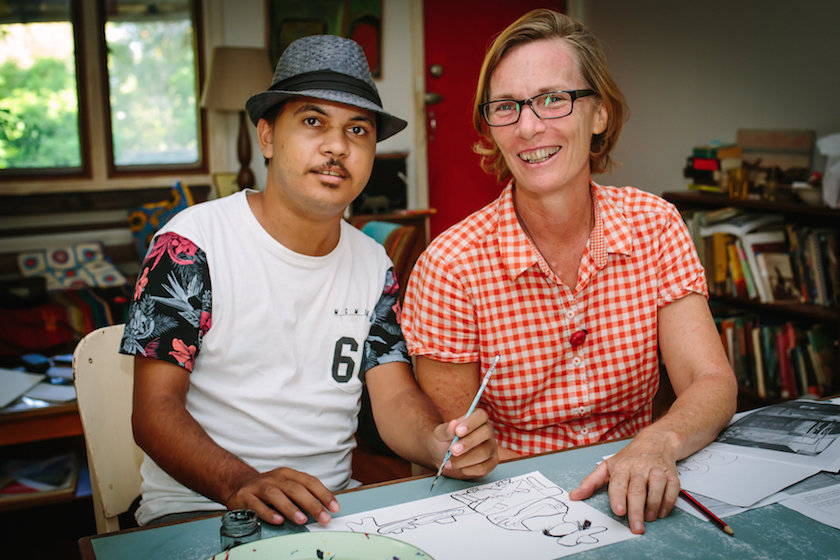
Joshua Button and Robyn Wells.
Joshua Button is an Indigenous artist from Broome. He is descended from the Walmajarri people of the East Kimberley in Western Australia. He first worked with Robyn in a literacy program at primary school that resulted in the picture book Joshua and the Two Crabs. Robyn has a degree in Fine Arts and has lived in the Kimberley for many years. She is passionate about enabling young people to express themselves through language and art.
Kathryn Apel posed a question for Joshua and Robyn. Kathryn asks:
Q. I read that you collaborate for hours over the kitchen table. Can you describe your process — and how you came to form this wonderful working partnership?
Joshua answers:
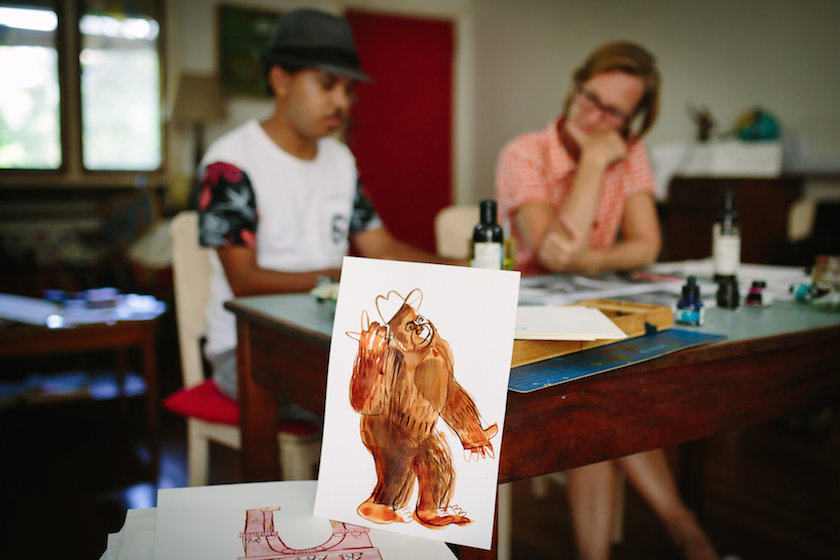
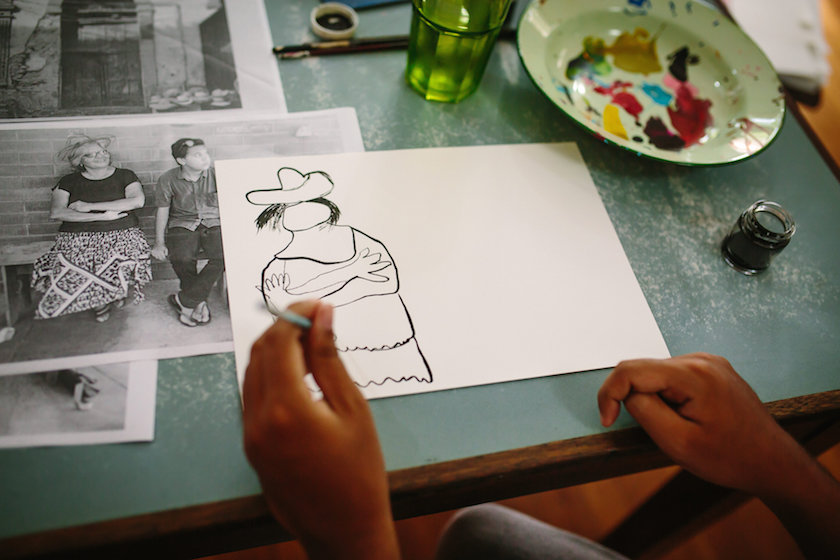
Robyn and I help each other a lot with the artwork. Robyn often cuts out stencils and does the background textures with sponges. Then I usually use black drawing ink to paint the characters or animals over the background textures.
Robyn and I research the animals and characters together. We look at the size and shape of the animals, the structure of their bones and the texture of their fur. Sometimes we take photos of people we know in Broome to base the drawings on — we study the colour of people’s skin, how they are standing, the expressions on their faces and what clothes they are wearing.
Robyn and I work really well together. We don’t have any arguments — working with someone else means it takes half the time to finish the work!
[Here are some photos of Joshua Button and Robyn Wells working together. Thank you to Magabala Books for permission to use these photos.]
Joshua and Robyn creating a picture book together.Joshua working with ink.
And now Joshua and Robyn pass the book baton to next Friday’s visitor — Paula Hayes. Paula is the author of the novel Lily in the Mirror.
Our question for Paula Hayes is: Your character Lily loves all things dark and mysterious. Were you inspired by any real life mysteries, strange events or unusual people?
Check in every Friday for questions and answers from children’s authors and illustrators. See you next week!
Today we introduce a new Friday feature — Alphabet Soup will be featuring a book creator every Friday who will answer one question. And then they will ask one question of the next Friday’s visitor. (It’s kind of like a book relay in slow motion.)
We’re thrilled to have Kathryn Apel visiting for our first ever Pass the Book Baton! Kathryn writes poetry, picture books, novels and verse novels. You might know some of her books from the photo below.
Kathryn starts our interview series, so we asked Joseph to give her an interview question. (Joseph is 12, and is one of our Top Reads team members. He has reviewed Kathryn’s verse novels for Alphabet Soup.)
Q. I really enjoyed Bully on the Bus and On Track, both verse novels. But you’ve written other books, too. Why did you decide to write those two books as verse novels?
A. Verse novels very often deal with issues that have a lot of heart. They have humour and laughter too, but I think the raw emotions are key. I really wanted to try writing a verse novel, and chose a topic that would interest sporty kids. My first attempt was a verse novel about training, with threads of sibling rivalry and self-doubt. But I didn’t get far before I panicked. In fact, I’d only written 139 words! (I think I was feeling that self-doubt!)
I put it away to think about (or forget about) and went back to polishing a manuscript about bullying. It was a chapter book I’d written for younger readers. But then I had feedback from a critique-buddy, and realised the chapter book I was writing was really the verse novel I wanted to write. I sat down straight away, and started working Bully on the Bus into a verse novel. At first, I thought I’d flick between verse and prose (poetry and paragraphs) … but once I started, the prose sounded clunky and heavy, whereas the verse was lighter and so much better. It all needed to be written in verse.
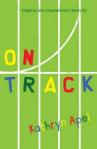
Bully on the Bus was accepted … and published … and I was still writing that verse novel about training; On Track. I thought it was going to tell Toby’s story. I didn’t realise that his older brother Shaun also had a story to tell. Being a verse novel made it easier to feel the emotions from both sides — and to switch between the two brothers.
My heart soars when I’m writing verse novels. Maybe because I’m writing about topics that are important? That can make a difference in someone’s life? Or maybe because they’re just so very beautiful to write … and read. Though I do often get teary when writing them … and reading them — even my own. It’s also fun to slip in short and snappy little jokes, and the verse novel format enables that.
Writing a novel — without the verse — scares me. It seems so enormous! But writing a verse novel, I can write short, complete pieces, individual poems that slowly, carefully, bit by bit, build to tell the story.
I remember when you reviewed Bully on the Bus, Joseph, you said you would like to read more verse novels and maybe write one, too. I’m wondering how you’ve got on with that. Don’t worry if you haven’t written much yet — ideas grow once you’ve made the start.
And now Kathryn can pass the book baton to our next visitor. (Actually two visitors at once — Joshua Button and Robyn Wells who are the author-illustrators behind Steve Goes to Carnival.)
My question for Joshua Button & Robyn Wells: I read that you collaborate for hours over the kitchen table. Can you describe your process — and how you came to form this wonderful working partnership?
Every Friday Alphabet Soup will feature an interview with a children’s book creator — writers, illustrators and writer-illustrators. Our Friday guest will answer a question and then ask one question of the next writer or illustrator. (It’s a bit like running a book relay in slow motion.)
We’re calling it:
Be sure to check in on Fridays. Our first writer will be setting off with the baton tomorrow morning. See you then!
Aleesah Darlison & Alyssa hold copies of Zoo Ball.
Aleesah Darlison has over 20 books published in Australia. Her latest picture book is Zoo Ball and the best part is that it is illustrated by Australian school students! Aleesah is visiting today as part of a Blog Tour to celebrate the book.
Have you ever wondered where authors get their ideas from? Read on!
—
As an author, I’m often asked ‘Where do you get your ideas from?’.
For me, generating ideas isn’t the problem. Why? Because ideas are all around us!
Ideas for stories are in everything we do, everything we hear and everything we see.
We can collect ideas from conversations, from holidays we go on and places we visit, from stories friends tell us, from articles we read in newspapers, from things we experience ourselves, from news reports on TV, and from our imaginations.
Ideas start from the smallest, most simple seeds. The hard part is recognising a great idea and being able to turn that into a short story, a picture book, or a longer work such as a novel.
If we keep our eyes open, our ears open and our minds open, we find that ideas will come far more easily to us.
It’s always a good idea to write these ideas down, or if you have an iPod, iPhone or voice recorder of some sort, to record the ideas on those devices so you save them for later.
Another way to collect ideas, ready to use in a story, is to brainstorm or mind map them.
Brainstorming is a loose form of planning that people of any age can work with.
If you’re worried about where to start your story, what sentences to form, or the correct grammar to use etc, brainstorming lets you cut everything back to its most simple form. You can use single words or pictures (by drawing your own, printing pictures off the internet or cutting photographs out of magazines) to record your ideas. Each item you place on your page or mind map acts as a story prompt, a place to jump off and start writing.
Three terrific things about brainstorming:
Allows you to put all of your ideas on paper in the one place quickly and easily
Helps you plan a story before you start
Allows you to work through various options and combinations of ideas until you find one that works best
Here’s an easy example of brainstorming to start with.
When choosing a main character, or characters for a story, I start with the three categories:
Human
Animal
Fantasy
Then I might list 10 or 20 or sometimes 50 different items under each of these headings.
Let’s look at animals (my favourite).
On a blank piece of A4 copy paper, write the heading ‘ANIMAL’. Now list 10 animals. They might be your most favourite animals. They might be your least favourite animals. They might be animals that you’ve seen books on before. They might be animals you’ve never seen books on before. My ANIMALS list would look like this:
Cat
Giraffe
Dog
Dolphin
Rabbit
Wolf
Elephant
Mouse
Meerkat
Otter
The idea of brainstorming is not to use every idea we write down. It’s to use our best ideas only. And if you’re like me and listed lots of animals, you probably couldn’t fit them all into one story — not very well, anyway.
So let’s choose two animals from the list. I choose:
Meerkat
Dolphin
Now you have two main characters for your story. You can choose any combination of characters that you like.
Give each character a name.
My meerkat is called Millie. My dolphin is called Bubbles.
While you’re brainstorming your animal main characters, you might already be getting an image in your mind of what they look like. It’s a good idea to draw your characters too. This helps you visualise them and they become more real to you, the author. And if your characters are more real to you as the author, they will be more real to your reader.
You can now follow this process for brainstorming problems your characters might face.
Do they get lost?
Are they trying to save the world from destruction?
Or is it their first day at a brand new school?
There are almost limitless possibilities.
When you’ve brainstormed and mind mapped as much as you can, it’s time to write your story.
Introduce your character and their problem quickly. Drop your reader straight into the action then spend the remainder of the story having the character try to solve their problem.
Remember to pace your story well. Include a beginning, a middle and an end (resolution).
Don’t solve your character’s problem too soon in the story. Make sure you build the humour, tension or drama until you reach a climax.
When you’ve finished your story, always be sure to edit it to make sure it really is as good as it can be. Then you’ll be ready to share your story.
Happy writing!
Best wishes Aleesah Darlison
Zoo Ball is unique — it’s written by an award-winning author and illustrated entirely by Australian school children. The publisher, Wombat Books, ran an illustration competition. Winners for each page were chosen and the overall winning entrant was also asked to illustrate the front cover. With the launch of Zoo Ball, 23 young illustrators were published — before they’ve even finished school!
For more information about Aleesah Darlison and her books, visit her website: www.aleesahdarlison.com
Jackie French has written more than 140 books — and she’s received over 60 awards in Australia and overseas. Wow! Jackie is also the 2014–2015 Australian Children’s Laureate. As part of her role, she has co-created the Share a Story calendar (you can download it!) and given each month a theme. June’s theme is HEAR A STORY, SEE A STORY, FEEL A STORY.
If you were an Alphabet Soup reader from long ago, you might remember that Jackie French was the very first author we interviewed in our print magazine! Today we’ve invited her back to answer three questions from members of our Top Readers team.
—
—
—
How long does it take to write a book? (Celine, 12, WA)
Three months or thirty years, depending what answer you like best! I think about a book for at least three years before I begin to write, and many are based on ideas I have been thinking about since I was your age. The actual writing takes about three months, but then I rewrite and rewrite, and each book takes a different amount of time to both think about, and write, or rewrite.
—
—
Has your son read every one of your published books? (Joseph, 11, WA)
I don’t think he has read any of them! Except maybe a few he has read to kids as bed time stories.
It’s hard to be a mum and a writer too. There were stories I told my son as his mum when he was small, and those were his stories, and I won’t publish them. But the private ‘mum’ and the public ‘writer’ are two different roles, and his schools were good at making sure he didn’t have to read or study one of my books. It’s a bit like being the son of a teacher — you need to keep the teacher role and the parent role separate. He said that people talk too much in my books, too. —
— Which one of your books did you enjoy writing the most? (Matilda, 9, WA)
Diary of a Wombat: I just had to watch her, listen to her, and write it all down — and supply carrots — then work out how to create a wombat voice, in English. And every time I read the book I remember Mothball.
—
—
Do you live in Perth, WA? Jackie French will be at a public event at St Stephen’s School Library, 100 Doveridge Dr, Duncraig at 5pm on Monday 22 June 2015. (A small donation is requested towards the Laureate program as a door entry fee.)
A.L Tait is the author of The Mapmaker Chronicles — an exciting new series, full of danger and adventure. The first book — Race to the End of the World — is already out in bookshops. The second book — Prisoner of the Black Hawk — will be published in April 2015. Today we’re talking to A.L. Tait about writing, and what inspired The Mapmaker Chronicles.
—
Can you tell us a bit about where you live?
I live on the south coast of NSW, with my family, four goldfish and a very cheeky puppy.
Do you prefer to write with a pen and paper, or onto the computer?
I prefer to write on a computer these days because I type very fast — much faster than I can write with pen and paper — and that means I can keep up with my thoughts. I have to also confess that my handwriting is very bad and I can barely read it myself — so typing is probably the safest option.
What do you like to do when you are not writing?
I like to read! I also like to spend time with my two boys, who are 8 and 11, walking, riding our bikes, going to the beach, and watching movies (we love adventure stories!).
What sort of books did you like to read when you were growing up?
I loved mystery stories, like the Trixie Belden series, The Famous Five, and Encyclopedia Brown. When I got a bit older I read The Lord of The Rings over and over. But the books I most remember are those that made me feel deeply — Storm Boy by Colin Thiele, and Callie’s Castle by Ruth Park are two that stand out.
Did you know you would be writing a series when you started writing Race to the End of the World?
I always thought it had to be a series — or one very long book! A race to map the world isn’t something you can cover in one novel.
What led you to write the series — are you good at making maps yourself?
I’m actually not very good at making maps — but I do love them when they’re made by other people. I particularly love the old maps, made when people weren’t really sure where things were. These are the ones that feature mermaids, and sea monsters and angels in the wind. They’re so beautiful and show us so much about what was known — and what wasn’t.
As for where the ideas for the series came from… my two boys are both fans of the ‘head-hurting’ question. We have long-and-involved conversations about where space ends, how high the stars are, whether there are any places in the world that remain unexplored, which dwarf from The Hobbit I would invite to a dinner party … you get the idea.
Several of those conversations, close together, led to The Mapmaker Chronicles.
“How far does space go?” asked Mr11, one night.
“Nobody knows,” I answered.
Then the next night: “How did they map the world?”
“Well, they had to go out there and find out,” I answered, distractedly.
“They must have been brave,” he answered.
“They were,” I said. “They would have felt exactly as we feel looking out into space, not knowing how far it goes or what’s out there.”
And just like that, in my mind I saw a race to map the world, and a boy who really didn’t want to go.
Do you have any advice for young writers?
My first tip is to read a lot. And not just the things you usually read, but all the books you can get your hands on. The more you read, the more you learn about writing.
My second tip is to write a lot. It takes a long time to learn how to write a book — the sooner you get started, the better!
Are you working on any new projects at the moment?
At the moment, I’m busy finishing the editing process for book three in The Mapmaker Chronicles series. After that, I’m not sure. I have lots and lots of ideas, and I need to work out which one of them to write first. I’ll keep you posted!
—
Check out The Mapmaker Chronicles website to read Chapter 1 of Book 1 (for free!), find out about old maps, cartography, and more.
Today we welcome Frané Lessac to Alphabet Soup. Frané is an illustrator and author — she’s the illustrator behind Ned Kelly and the Green Sash, Midnight, and The Greatest Liar on Earth (and many, many more books!).
We asked Frané if we could talk to her about A is for Australia: A factastic tour — her latest book. Here it is in all its glory:
What is the Fremantle Doctor? Where is Qui Qui? And why are some islands named after days of the week? You’ll uncover these exciting facts when you explore the A to Z of Australia — from Bondi to Kakadu and all the way to Taronga Zoo. Discover why Australia is one of the most amazing countries in the world …
—
Frané Lessac
Can you tell us a bit about where you live?
I live in the port city of Fremantle in West Australia. From my front porch, I can see a sliver of the Indian Ocean and Rottnest Island. Our house is over 120 years old and we’ve built an art studio in the back garden where I paint.
When you were working on A is for Australia, what came first — the artwork or the text?
Location came first. We had to decide what locations would be depicted for each letter of the alphabet. There were incredible alternatives and that made it hard to choose, but what made it easier was the need to represent all states narrowing down the locations. Next came the text, then art.
How long did it take you to create the book?
I first approached Walker Books with the idea over seven years ago! They were familiar with my other alphabet books based on New York, Washington D.C., Texas and the Caribbean. They knew the format and the market. I wasn’t sure if I was going to write the book myself initially, but with a twist of the arm, I did it!
What do you like to do when you are not illustrating (or writing-after-your-arm-has-been-twisted)?
Over the years I’ve lived in New York, Los Angeles, Paris, London and the Caribbean before settling in Australia twenty-five years ago. My closest friends and my family are spread right across the globe and l love to visit them as much as I can. When I’m home in Fremantle, I like to walk along Dog Beach.
What sort of books did you like to read when you were growing up?
My mother was an avid reader and placed an importance on reading and books. She took me to the library at an early age to pick out my own books. I started with Beatrix Potter and moved onto The Hardy Boys and the Nancy Drew mysteries.
What led you to create A is for Australia? A is for Australia is a celebration of Australian people, places and culture. I wanted to create a book for children so they could discover why Australia is one of the most amazing countries in the world. I hope that visitors from overseas also grab a copy and share it back home.
Do you have a preferred medium?
I use gouache paint on watercolour paper. There’s an enormous range of colours and they are also easy to mix. The paint dries fast and I can paint in layers, which allow me to make any changes easily.
Do you have any advice for young artists?
Believe in your art and don’t compare what you create to anyone else’s. Everyone draws differently. Be confident. If I worried about what other people created, I never would have created one single book. I never went to art school and I was never the best artist in the class, but I always loved to draw and paint.
Are you working on any new projects at the moment?
I recently received a folktale from my UK publisher that’s set in India. It’s called Pattan’s Pumpkins and it’s right up my alley. Jungles and animals and bright pumpkins! Exciting to work with this publisher again — I met the editor over thirty years ago and we created three folktales together set in West Africa, Papua New Guinea and Polynesia.
—
For a peek inside the pages of A is for Australia, visit Frané’s blog. And you can hear Frané talking about making the book on the book trailer:
You can find out even more about Frané Lessac and her books by visiting her website: www.franelessac.com.