Just a reminder—if you want to enter our design-a-cover competition, entries close on 16 September 2010. The winner will see their artwork on the cover of our summer competition (out in November) and receive $20 worth of art supplies. You can find details and an entry form on the Alphabet Soup website.
And if writing is more your thing, don’t forget we run a writing competition for kids in every issue of the magazine. Our spring story competition closes on 22 October 2010. There are $20 book vouchers for the winners in three age categories. You’ll find details and an entry form over at the Alphabet Soup websitefor that, too.
Subscribe to Alphabet Souptoday and you’ll be helping the Indigenous Literary Project—we will donate 10% of all orders received today (1 Sept 2010) to the project. Indigenous Literacy Day aims to help raise funds to raise literacy levels and improve the lives and opportunities of Indigenous Australians living in remote and isolated regions.
If you already subscribe (thank you and hooray!) don’t forget that single copies make a light-to-post gift, or consider donating a subscription to your child’s primary school.
Indigenous Literacy Day aims to help raise funds to raise literacy levels and improve the lives and opportunities of Indigenous Australians living in remote and isolated regions. On 1 September our editor will be in Perth city checking out ILD events organised by Fremantle Press.
If you’ve been thinking about buying a subscription, make sure you place an order on Wednesday! You can subscribe and order single copies of the magazine via our website. (Actually, if you order any day this week and add a note marking it ‘ILD order’, we’ll count it with the orders for 1 Sept!)
Dr John Long is a palaeontologist and a writer of fiction and nonfiction for children, including The Big Picture Book of Human Civilisation. We interviewed Dr Long about writing nonfiction, and you can read some of his answers in the spring 2010 issue of Alphabet Soup magazine. We couldn’t fit all of his answers in the magazine—so we thought we’d post the whole interview here. Read on!
Why did you become a writer?
I have always enjoyed writing since my school days. I used to write essays for the school magazine about dinosaurs and other prehistoric animals and later in high school I contributed poems to the school magazine. I think enjoying reading is the first step towards thinking about writing. I read lots of books and enjoy trying my hand at writing for different levels of factual information, from straight nonfiction information books to occasional works of fiction where I can really indulge in using my imagination. (I’ve actually published 3 children’s novels.)
What do you love best about being a writer?
Using my imagination and trying to think of new ways to present information that is engaging and inspiring to my readers. I also love that moment when your new book comes out and you get to hold it in your hand.
Where do you live?
Currently I’m living in Santa Monica, a beach-side town within Los Angeles in the USA. It’s a great place with plenty of open space, where mountains meet the Pacific Ocean. It’s a groovy neighbourhood to be part of.
Do you have any pets?
Yes a white fluffy cat called Molly. We saved her from the RSPCA cat haven and have recently flown her over from Australia to be with us in the USA. I reckon she must be the first member of her family to travel overseas! She loves watching squirrels and hummingbirds from our balcony.
You’ve written fiction and nonfiction books for children. What’s different about writing a nonfiction book?
Writing nonfiction means you have to be accurate with your facts and figures, so there’s a lot of research work goes into making sure everything is correct. This often involves me ringing up professional friends who have specialist knowledge in some fields, or checking library references.
Was it easy to get your first book published?
It took quite a bit of work. I had an idea to write a book about Australian dinosaurs back in 1989 and wrote a sample section and did the drawings myself then sent it off to a number of publishers. After a few months I received an letter from a publisher saying they liked the idea and wanted to offer me a contract. That book, Dinosaurs of Australia, was published in 1991 and has been reprinted 2 times since (1993, 1998).
Are there any downsides to being a writer?
Yes, sometimes you commit to writing a book and as the deadline draws closer to deliver the final manuscript, you realise you have a lot more work to do, so you end up writing at nights and working all weekends to meet those deadlines. Also once the writing is done and you have your book in press with a publisher, you then have a lot of subsequent work checking proofs and organizing illustrations, and permissions for using artwork, which can also take up lots of time when you least expected it.
What was your favourite book as a child?
I loved The Hobbit by Tolkien and also The Lord of the Rings but I only worked my way through the latter in my teenage years.
How do you do your research for a book?
As a scientist (paleontologist) by trade I am already accomplished in doing research work. I know that I can search databases for primary information from scientific and history journals, search museums collections for suitable objects to illustrate my writing, and can even ring up other experts in the field to get information or arrange to have my writing checked for accuracy.
When you write a book like The Big Picture Book of Human Civilisation, do you have to find your own photographs and images for the book?
As I have travelled the world extensively I sometimes draw upon my own images for some of my books, but most are sourced from photo libraries or as images form museums that the publisher can buy for use in a book. I use many of my own photos in both The Big Picture Book and The Big Picture Book of Environments but none of my own shots were used in TheBig Picture Book of Human Civilisation.
What do you like to do when you are not writing?
I love reading, exploring new places and bushwalking in wilderness environments.
Of your own books, which is your favourite?
Probably the book I am most proud of is The Big Picture Book, as I’ve received a lot of great feedback about it from both children and teachers in Australian schools when I give talks.
Would you like to have lived in another point in history?
No, I’m very happy living with our present levels of medical science and advanced technology right now, thank you very much.
Are you working on a book at the moment? Can you tell us something about it?
Yes I’m nearly always working on a new book at any time. I want to explain in very simple language for children How Do We Know Stuff?
How do you know when you read something in the paper, or on the internet or see it on TV that it is likely to be true or an approximation of the truth? So much information in the media is simply not accurate, and I want to provide kids with a bit of a roadmap to be able to decide for themselves how to determine the accuracy of information they find.
Do you have any advice for young writers (and in particular young writers of nonfiction)?
Yes, make sure you first know how to find reliable (i.e. accurate) information and then think about how you want to get it across to the reader in ways that haven’t been done before. Writing is much like speaking, if you can communicate vocally well you can generally write well. The trick is how you present your information to make it exciting and engaging, and this is where time is needed for thinking. Practise writing at any chance you get, the more you write, the better you become.
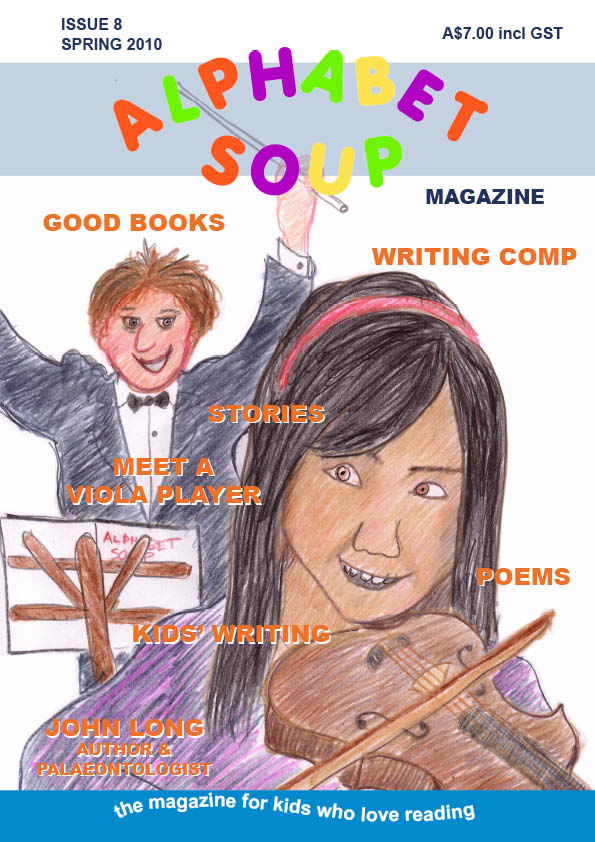
Issue 8 of Alphabet Soup magazine will be out in a few weeks, and it has us humming a happy tune. It will be heading off to the printer very soon—here’s a taste of what you’ll find inside.
Q&A with John Long, author and palaeontologist
a round chant in four parts you can try with your friends
Stories, poems and book recommendations
crossword
kids’ writing and artwork (stories, poems, book reviews and artwork)
The Book Chook’s latest writing tips (How to write funny stories)
Do you subscribe to Alphabet Soup? The winner of our issue 8 subscriber draw will receive a $200 book pack from Fremantle Press. If you’d like to subscribe, you can subscribe online (and order single copies of the magazine) via our website. 🙂
Write a short story no longer than 350 words. Your story must include the word ‘ice’. Include a competition entry form. This may be printed from the website, photocopied, or contact us to have one emailed or posted to you.
Your entry can be handwritten or typed. Make a copy of your entry as we cannot return entries.
As you know, we are running our annual cover-design competition and entries close 16 September 2010. Here are some covers from our recent issues (the one on the left was the 2009 cover-design winner).
And now, here are some tips for all you budding artists!
Important — your artwork must be on one side of a sheet of white A4 paper. Make sure the paper is portrait orientation. Do NOT include the Alphabet Soup logo.
You may eneter as many times as you like, but each entry must have a competition entry form with the declaration signed by you and a parent. (Entry forms can be printed from the website, or contact us to have one sent to you.)
The winner will have their artwork on the cover of the summer 2010 issue of Alphabet Soup magazine, and will receive one copy of the summer 2010 issue and art supplies worth $20.
The theme for the cover is: WETLANDS. You might like to show an entire wetland setting, or focus on one aspect of wetlands — like crocodiles, or frogs, or tortoises, or water birds and plants that you find in a wetland, or someone exploring a wetland environment, or something else again! Artwork can be realistic, or abstract, or cartoon-like, or any style you choose.
If you’d like some more info on Australian wetlands, check out the following sites:
Remember that our covers don’t usually have a lot of unused white space. If you draw one thing in the middle of the page and nothing else, it would be tricky for us to turn it into a cover for the magazine!
There will be one winner chosen. By entering the competition, you agree to us using your artwork on the cover of the summer 2010 issue of Alphabet Soup magazine (out November 2010).
Spare Parts have school holiday performances of The Bunyip of Berkeley’s Creek (based on the picture book by Jenny Wagner). (Did you see a YouTube video of the show that we posted a while back?)
When: Sat 3 -Thurs 8 & Mon 12 – Thurs 15 July, 10am and 1pm; Fri 9 – Sat 10 & Fri 16 – Sat 17 July, 1pm & 6pm.
Where: Spare Parts Puppet Theatre, 1 Short St, Fremantle WA
Ages: suitable for all ages, Spare Parts says it is perfect for ages 4 to 9
Duration: approx 50 mins
Cost: $17.50 (Adults at children’s prices) Discounts for group bookings. Bookings essential.
Now the ‘Lights Out’ visitors are gone, we thought it would be a good idea to compile a list of the children’s books that they liked reading undercover, and the ones they thought they’d like reading if they were reading after lights out today. So here’s a list! (Some of them might be out of print, but libraries will often have a copy of books that are out of print. Check your school library or your local public library. Ask your librarian!)
The Museum of Mary Child by Cassandra Golds
Swallows & Amazons series,
Anne of Green Gables by LM Montgomery
The Queen’s Music
Deb Abela’s ‘Max Remy’ series
Enid Blyton’s The Secret Seven series The Famous Five series, The Magic Faraway Tree, The Enchanted Wood, The Folk of the Faraway Tree, The Wishing Chair series.
The Nancy Drew Mysteries
Roald Dahl books: Charlie and the Chocolate Factory, Charlie and the Great Glass Elevator,James and the Giant Peach, The BFG
The Pippi Longstocking books by Astrid Lindgren
Dr. Suess, in particular Green Eggs and Ham and Horton Hears a Who, and Oh, The Places You’ll Go!
Maurice Sendak’s Where the Wild Things Are
Whiteoaks of Jalna Chronicles’ by Mazo de la Roche
Artemis Fowl
Diary of a Wimpy Kid
The Shark in Charlie’s Window
The Sky is Everywhere by Jandy Nelson
Thai-riffic by Oliver Phommavanh
Zac Power
Specky Magee
Bonnie and Sam
Captain Underpants
CS Lewis’s Narnia series, including The Lion, The Witch and the Wardrobe
Jaguar Warrior by Sandy Fussell
Silver Curlew by Eleanor Farjeon
David Grimstone’s Gladiator Boy series
Little Women
Black Beauty
What Katy Did
Heidi
My Friend Flicka
Thunderhead
Betsy in Spite of Herself by Maud Hart Lovelace, the adventures of a young teen in 1907.
The Works of Lewis Carroll
Hardy Boys
Nancy Drew
Nine True Dolphin Stories by Margaret Davidson
Fast-talking Dolphin by Carson Davidson
Mrs Piggle Wiggle books
What about you? Do you have any books you’d recommend? Tell us in the comments!
 f you want to enter our design-a-cover competition, entries close on 16 September 2010. The winner will see their artwork on the cover of our summer competition (out in November) and receive $20 worth of art supplies. You can find details and an entry form on the Alphabet Soup website.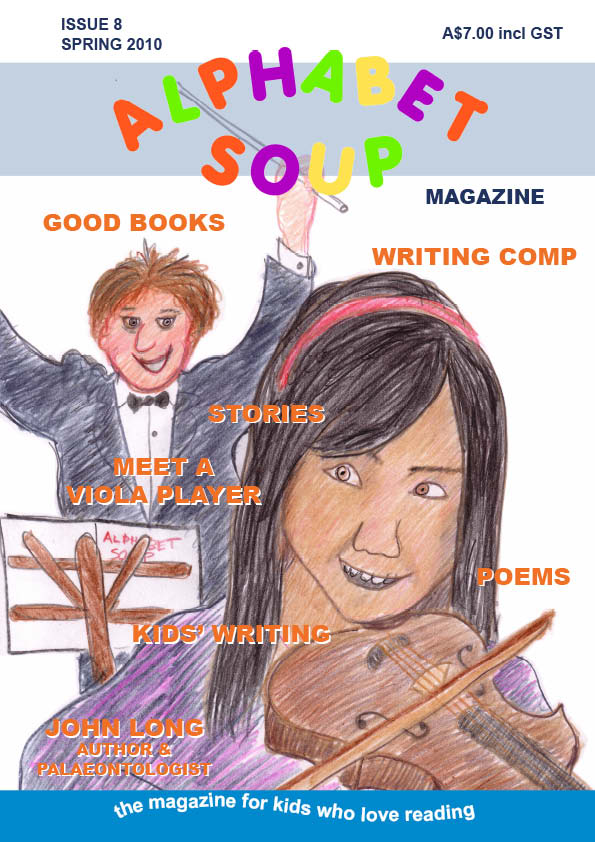




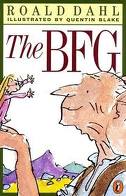 Now the ‘Lights Out’ visitors are gone, we thought it would be a good idea to compile a list of the children’s books that they liked reading undercover, and the ones they thought they’d like reading if they were reading after lights out today. So here’s a list! (Some of them might be out of print, but libraries will often have a copy of books that are out of print. Check your school library or your local public library. Ask your librarian!)
 alphabetsoup.net.au