Posted in authors, interviews

Dianne Wolfer on Scout and the Rescue Dogs

Dianne Wolfer lives on the south coast of Western Australia, but she grew up in Melbourne, Bangkok and Albury. Dianne writes picture books, novels for children and teenagers, and nonfiction for all ages. Today we’re chatting to Dianne about her latest novel Scout and the Rescue Dogs, illustrated by Tony Flowers.

The publisher provided Alphabet Soup with a reading copy of Scout and the Rescue Dogs.

The summer holidays have finally arrived and Scout can’t wait for her adventure in the big rig with Dad. They’re on a mission to deliver donations of dog food to animal rescue shelters right across the state. But Scout and her dad get more than they’ve bargained for. It’s bushfire season – and it’s not just the dogs who need rescuing …


We saw Harry on the SAFE rescue site ten years ago. He was huddled in a corner with a plastic cone around his head looking very sad and lonely. Harry was found running in the street. He’d been badly treated and was a terrified, little fellow. He had many fear triggers. When we were driving to collect him, another dog attacked Harry, so when we first met him, he had a nasty gash across his neck. We brought him home and truckloads of love soon helped him settle and trust people again. He’s had a good life since then, being walked, and spoilt. This past winter he enjoyed a road trip to Broome where he swam at the beach every day. Our grown-up kids reckon Harry is the favourite child.

No, however aspects of myself, my friends and family have found their way into the story. Like Scout, I love dogs and animals and was distressed by the impacts of the 2019/2020 bushfires on wildlife and our forests. 

I’d completed a read-through draft of the story when terrible fires broke out in many of the towns Scout visits. It happened around Christmas, the same time as my novel. I had to decide whether to change my settings or include the fires. My family was impacted by ‘Black Summer’, so I did the latter. Like Scout I experienced hellish orange skies and weeks of toxic air when I stayed with my mother in Albury. My sister evacuated her home in the Snowy Mountains. Before leaving she put out dozens of water trays for the birds and insects. My cousin’s husband and daughter fought huge, horrific walls of flames at Corryong, and the truck convoy taking hay to starving cattle was inspired by true events. I grew up near Scout’s Beechworth home and swam at Woolshed Falls and Lake Hume. My friends lived in Howlong and Burrumbuttock. The places in Scout’s story are all very familiar to me.

Not properly. I do a lot of country driving and was inspired by truckies during Covid, the unsung heroes who kept our country functioning. I’ve often parked beside big rigs and peered up into the cabins. Creating truck-driving characters was fun. Whenever I see a dog in a truck, I ask the driver if I can take a photo for my collection. There are some very cute truck dogs on the ‘Scout’ page of my website.

Real life inspires many of my stories. I often take a story spark from history or my life then use my imagination to weave a story around it. That can vary from surfing grannies in Albany (Granny Grommet and Me) to a wartime air raid (The Dog with Seven Names) or the only horse to return from WWI (The Last Light Horse). Or Scout!

My advice for writers is make time to write. Take lots of notes and get down a first draft, no matter how rough, without questioning yourself or overthinking it. Write the beginning and end, with dot point chapters in between, then join those dots. Once you have that first draft you can edit and rework it. Your characters might even take you in another direction. I do dozens and dozens of drafts. If you get stuck, put that story aside for a few weeks and work on another one. Don’t give up.

Scout and the Rescue Dogs is out now! Ask for it at your favourite bookshop or local library.


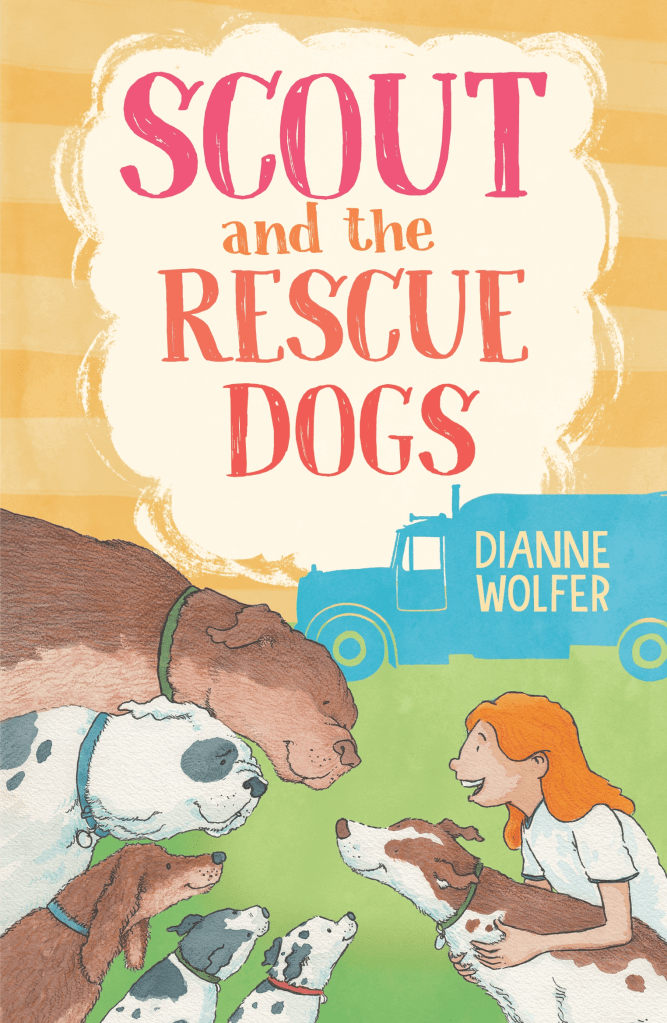
The cover of a children's novel: Scout and the Rescue Dogs. The cover illustration shows Scout (a girl with red hair) and six dogs of various breeds. In the background is a blue truck.
Posted in authors, interviews

Shivaun Plozza on Meet Me at the Moon Tree

Shivaun Plozza is an award-winning writer for children and young adults. She lives in Geelong with her cat, Fenchurch. Today we’re thrilled to chat to Shivaun about her latest book Meet Me at the Moon Tree.

The publisher provided Alphabet Soup with a reading copy of Meet Me at the Moon Tree.

For Carina Sugden, nothing is more special than a moon tree – a tree grown from the seeds taken on the Apollo 14 mission into space. Her father taught her everything she knows about them. But he passed away before they found one together. When Mum relocates the family to the Otway Ranges, Carina becomes determined to find a moon tree on her own. After a mysterious encounter with a black cockatoo, Carina realises there’s magic in this forest. And if magic exists, anything is possible, like seeing her dad one last time…


I was researching the world’s strangest trees for a story when I came across a reference to ‘moon trees’. Just the name ‘moon trees’ sounded so fascinating to me so I knew I had to discover everything about them. When I learnt their history I threw away my original idea and began working on Meet Me at the Moon Tree. It just goes to show how helpful research is (as well as allowing yourself to follow whatever sparks your curiosity!) to creative writing. 

I’ve always been interested in trees but I wasn’t at all knowledgeable about the different species or the many interesting facts I learnt about them along the way (such as the fact that they talk to each other!). I definitely had to do a lot of research. If anyone is interested in learning more about trees I’d highly recommend Can You Hear the Trees Talking by Peter Wohlleben.

From the beginning I knew that I wanted to write a story about a girl looking for a moon tree so I asked myself why she was looking: why did finding a moon tree matter so much to Carina? I wanted the reader to desperately want her to find one, as much as she wanted to find one herself, so it made sense for it to matter because of a promise she’d made to her much beloved father. 

One thing that helps is to treat your setting like it’s a character. Often we think about how we can bring our characters to life but we don’t always think about bringing the setting to life—we just assume our readers will know what we’re talking about when we write that our characters walked down a street or entered the kitchen. But does every street look the same? How about every kitchen? All settings, like people, are distinct so find out what makes that setting distinct and bring it to life on the page.

I’ve been thinking a lot lately about the shift from childhood into the tween years and how it can create tension in friendships if each friend is moving at a very different pace. So I’m writing about that.

Meet Me at the Moon Tree is out now! Ask for it at your favourite bookshop or local library.


The cover of a children's novel: Meet me at the moon tree by Shivaun Plozza. The cover illustration shows a child in tshirt and long pants sitting under a large tree and gazing out at the evening sky

Visit NASA’s website for more about the history of Moon Trees.

Download the Teacher’s Notes for Meet Me at the Moon Tree.

Visit Shivaun Plozza’s website for more about her and her books.

Posted in authors, interviews

Wendy Orr on Honey and the Valley of Horses

Wendy Orr is an award-winning author with 40 books for children, teenagers and adults Her books have been published in 29 languages and her Nim’s Island books were made into movies. We’re thrilled to be talking to Wendy about her latest book – Honey and the Valley of Horses.

From the publisher:

When Honey was four and her brother Rumi was a tiny baby, her family loaded up their converted ice-cream-van-camper and drove away from all they knew, as an illness swept the sad wide world. High in the mountains, they crossed a bridge to follow a mysterious herd of enchanted horses into a sheltered valley. The bridge and the track disappeared behind them – and now they are trapped in paradise.


He’s a combination of our family’s first horse, Biddy, who was an American quarter horse with a touch of Thoroughbred, and my father in law’s palomino Australian stock horse, Pancho. Biddy was over 12 when we got her; I was ten, my sister eight and my brother three, and she behaved differently with each of us, deciding just how much she had to look after us. So she was always completely trustworthy with my little brother, but once I’d learned to ride she’d test me quite a bit – and when we did a paper route for a while, she got bored with doing the same ride every day and started throwing me every time! Pancho was probably the best trained horse I’ve ever ridden, an absolute delight to ride though a very spirited stallion. He had a fantastically smooth gallop, which was as wonderful to watch as to ride, and when he was galloping loose in his paddock, loved to race towards something and stop dead or spin around just before he hit it.  And there’s a bit of my own horse Tala, who I got when I was fourteen. She was an enormous mostly Standardbred, who was quite neurotic and very flighty, but always tuned in to my moods and would be very affectionate and gentle if I was upset.

Absolutely. Although we live in a rural area, we were classified as metropolitan Melbourne for the purpose of lockdowns, so it was very strict and long. My son and his wife and toddlers lived with us for the first year, but when they moved out they were more than 5 km away so for long periods we weren’t able to see them, or my daughter and her toddlers, who were on the other side of Melbourne. My parents and siblings were in Canada, and with the borders closed for so long I was very aware that I might never see my parents again – which in fact happened, as my dad became ill and died during 2021. So the isolation, the sense of not being able to see people we loved, and also the general fear and anxiety during this time were a crucial part of forming this book. The good thing is that it meant it was all the more important to create a fun and adventurous paradise for the family to escape to. It was certainly very important to me to escape to it while I was writing! And I hope that the reader will enjoy that escape too. We all need special places in our lives and our minds.

She loved it! At first she was worried that no one would know what an editor does, so I hope I explained that during the book. But she loved escaping to the valley too, which made life easier for me.

I have several things which range from already in a first draft, to an idea I’m quite excited about but don’t know very much about yet. All I can say right now is that I love thinking about how many thousands of people we’re all descended from. Each one of them had their own story – which is quite mindblowing when you think about it!

If you’re going to use a touch of magic, you need to have clues that something strange could happen, right from the start. It doesn’t need to be much: in Honey and the Valley of Horses I start with the sentence, ‘In the mountains there was a valley, and in the valley were the horses.’

The rhythm of that sentence suggests that this is a story-telling type of story, not a realistic ‘kids going to school’ type of story. Even saying, ‘the horses’ suggests something different than if I’d said, ‘There was a valley in the mountains, and lots of horses lived there.’ Those could be any horses, but saying ‘the horses’ suggests there’s something special.

Making up a world that has a bit of magic means that you can do anything you like – but it doesn’t mean that there are no rules. You need to work out what the rules are for your magic. In this book, the horses certainly have some kind of mysterious magic, and are stronger and faster than other horses – but they are still horses. For example, they can’t talk or fly. You could write it so they do talk or fly, but you would need to show that from the start, or if you didn’t want them to do it until the end, you could have a detail early in the story so that it made sense if they flew when they absolutely needed to. For example there might be a certain grass that people said would make horses fly if they ate it, or there might be old stories about a horse that flew, and people have noticed that this horse looks just like her ancestor, with the white snip above the left fetlock… Just some little hints.

Everything that isn’t magic has to make sense. Unless it’s part of the magic, water can’t run uphill, the sun rises in the east, people and animals need food, water and sleep…

Any touches of fantasy need to be significant for the story.  They need to show the reader something important about a character, whether good or bad; or about the place; or they need to move the plot along. If you have a scene you really want to write –  a purple sun that shines at night; birds standing still while dogs sing, whatever your imagination has built for you – you can use it as long as you work out why it belongs in the story. Working out the reason might take your story in a different direction, but that’s okay too.

If you roll all these tips into one, it would be, ‘Your story has to make sense right through. If magic is going to help resolve the problems, it needs to be hinted at from the beginning. And it should always be your character who actually solves the problem, whether it’s by being brave enough to dare to use a power, or by passing a test that makes a power appears, or by harnessing a power to do the right thing.  But definitely try to avoid having a realistic character in a difficult but realistic situation, when suddenly at the end of the story, Abracadabra! everything is magically solved.

Also, don’t forget that good stories usually have many drafts. If you really liked that Abracadabra! scene you can keep it. You just need to go back and weave in some hints earlier in the story.

 But don’t forget the most important writing tip of all, no matter what genre: Have fun, play with your story, and see what happens!

Honey and the Valley of Horses is out now! Ask for it at your favourite bookshop or local library.


Image shows the cover of a children's novel: Honey and the Valley of Horses by Wendy Orr. The cover illustrations shows a valley with an ice-cream van parked under a large tree, a family of four in the shade of the tree and three horses galloping by.

Watch Wendy Orr talking about the book [YouTube]

Are you in Melbourne? You can meet the author and hear her talking about Honey and the Valley of Horses! 2pm, Saturday, 26 August 2023 at Readings Kids in Carlton. Tickets are free but bookings are essential.

Download the Teachers’ Notes at the publisher’s website.

Visit Wendy Orr’s website for more about her and her books.
Posted in authors, interviews

HM Waugh on Mars Underground

MEET THE AUTHOR

HM Waugh is the author of books for children and young adults. She’s also an environmental scientist and an educator with a love of wild places and high mountains. This has led to icy feet and sunburnt cheeks in magical countries like New Zealand, Nepal, Bolivia and Switzerland! Her latest book is book 2 of a duology: Mars Underground, the page-turning sequel to Mars Awakens.

From the publisher:

Dee, Holt and Chayse set out to cross the planet via a network of subterranean tunnels. Can they reach it without encountering the Others – the sinister biocloud they’ve been running from? And if they make it, can they convince the Newtonians to work with Davinci – those they’ve been trained to hate?


Did you set out to write these books as a duology or did the idea for a second book come after you’d finished writing Mars Awakens?

I am not what you’d call an awesome planner – I start a project by thinking up a character or two, and the details of their world, and I have a basic idea of what the plot might be, but I work the rest out as I write. If you’ve heard of plotters (who plot everything out before) and pantsers (who plan nothing and write ‘by the seat of their pants’), I’m a hybrid of the two, a plantser. So I was happily plantsing along, still writing Mars Awakens, when one day it hit me: there needed to be two books to finish this properly. So the duology was born.

This is your first published series. How did you find writing a sequel as compared to writing Book 1?

Completely different! In some ways it was easier, and in other ways: much harder!

The easier bits were things like the characters and the world – they were already there in my head, fully formed. I knew the main characters like they were my mates. I knew what they’d say, how they’d act. Sometimes, when I’m starting on a new idea, I might get a big way through a first draft and have to rewrite it because the characters finally come alive for me (this happened about 20,000 words into the first draft of Mars Awakens!). But I didn’t have that sort of issue with Mars Underground. Also, all the nitty gritty work of world building had already been done (thanks, Past Me!) so I just got to have super fun expanding it to places I hadn’t been yet. That was all awesome.

Some things were definitely harder, though. I felt this expectation that I’d never really felt before. There were all these readers who had connected with Dee and Holt’s story and were keen to see how it ended. Aaah! I didn’t want to let them down! Plus, I had a deadline! For all my other books I’d already written a full manuscript before signing a contract. But suddenly I had to write an entire sequel by a certain date? Double aaah!

I actually wrote 50,000 words of the sequel before Mars Awakens had been released, but when I picked it up again months later I knew it wasn’t right. And I’m not saying that like, ‘This isn’t quite right, I need to work on it a lot.’ I mean I archived the whole thing. Gone. Fresh document page. Start again from scratch. I re-read Mars Awakens to remind myself of the voice, and then launched into writing an entirely new sequel. And that became Mars Underground. I loved the draft so much, but I was still terrified there would be something missing. So I did multiple happy dances when my publisher came back with several big thumbs up! Yay!

Mars Underground involves your characters travelling via tunnels and caves on Mars, were their adventures inspired by caving adventures of your own?

I love pulling inspiration from real life, so their adventures were like a mix of my own, and the sort of caving and rafting adventures I’d love to have!

I remember going caving on a school holiday camp when I was in my early teens, shuffling on my stomach, so tight to the ground, to get to this special crystal cave. My helmet kept getting jammed, the ceiling was so low. And the crystals were protected behind this mouldering underground gate, so rusty the key could barely work. It was amazing! But once we’d crawled back out, we realised our camp leaders had already decided to leave. Without us. Everyone had climbed up and out, we could see them up by the pinprick of daylight that was the entrance, about to lock the main gates! I’m sure they would’ve realised we were missing before starting the bus, but what an adrenaline hit to be almost left behind in that deep wintry place, our torches running low!

Another experience I drew on was rafting what they call the God River, in Peru. Once we’d got onto the river, the gorge walls rose so high the only way out was through days of rafting. Changed your mind about going? Too bad! It was tough and it was amazing and I loved it! We got to one huge rapid, and the guide told me a girl had been lost there the previous year. I was like, ‘Did they find her again?’ and he looked at me and said, ‘Lost, like dead.’ That definitely made me realise exactly what I’d signed up to do.

So I tried to inject some of that danger and beauty and excitement into my characters’ adventures.

You ran a writing competition for young writers in 2022 and the winner had a character named after them in Mars Underground (Alice!). Did you already have a character ready and waiting to be named, or did you write the character into the plot while you were finishing writing the novel?

I had a few characters I knew I could change the names for, but I waited to see who’d won and what they’d written before I chose which character I’d use. And during editing I changed that character around to be even more awesome!

Can you tell us a bit about what you’re working on next?

As I write this, it’s halfway through July which means I’m deep in writing a project during Camp NaNoWriMo. I love writing with NaNoWriMo (the National Novel Writing Month) because it really gets me into the flow of my writing. Plus, I LOVE a good graph, and NaNo track my progress and give me badges and pep talks too! Normally I’d try to write 50,000 words in the month, but this month I’m aiming for 30,000 because I was on holiday for the first week.

Anyway, I’m loving this project so much. Dangerous new planet. Kids in a competition. Everyone watching their every move. A new friendship based on deception. And then something goes really wrong (of course!) and everything comes to the surface. How are they going to get out of this? It’s so. Much. Fun!

Mars Underground is out now! Ask for it at your favourite bookshop or local library.


Awesome extras:

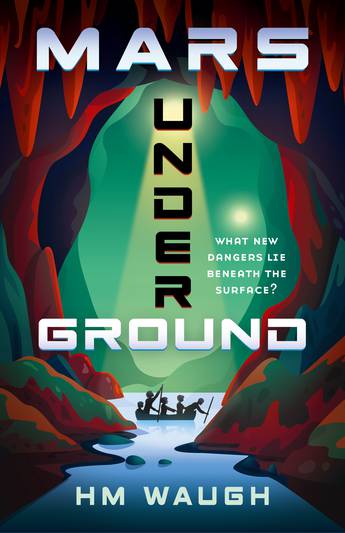
Image shows the cover of Mars Underground, a children's novel by HM Waugh.

Read our 2022 interview with HM Waugh about the first book in the duology.

Find out more about Mars on NASA’s website.

Visit HM Waugh’s website for more about her and her books.

Posted in authors, illustrator, interviews

Kelly Canby on Timeless

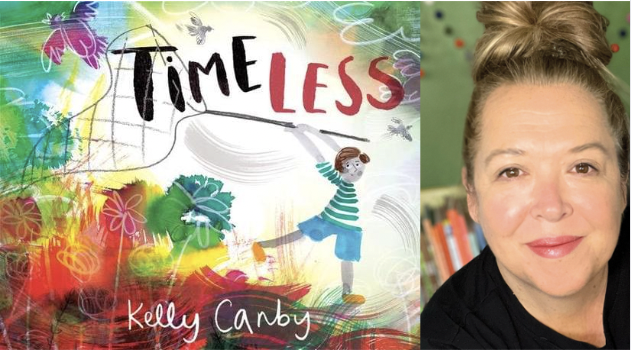
Kelly Canby, author-illustrator, and the cover of her new picture book: Timeless. The cover illustration shows a boy with a net trying to catch 'time'.

Kelly Canby is an award-winning, internationally published, illustrator and author of over two dozen books for children. Kelly was born in London, England, but has lived in Australia since the age of three. She says this is probably around the same age she started playing with pencils and crayons, and it was probably only a few years after that that she decided playing with pencils and crayons was something she wanted to do for the rest of her life. Kelly applies her quirky style to the pages of everything from picture books, to chapter books, to early reader books, to colouring books and beyond!

Today we’re talking to her about her new picture book, Timeless.

From the publisher:

Emit (whose parents turned back time to name him) is surrounded by busyness. Dad is too busy to read stories, Mum is too busy to play games and Emit’s brother and sister are simply too busy doing nothing to do anything, at all. Emit tries everything he can think of to get more time, he tries to catch it, wait for it, but it’s not until Emit tries to buy some time that he learns the secret …


Did you already have a stack of time-themed puns just begging to be turned into this book? Or did the idea for the book send you off in search of puns? 

The idea for the book came first and that then sent me down into a deep, deep, pun dive. In the end I had so many puns and idioms I couldn’t use them all! A couple of favourites that didn’t make it to the final book were Emit’s street address: 5 Oak Lock Lane, and a part where Emit told his family he’d like to be a time traveller when he grew up only they ‘didn’t think there was much future in it …’ Also there was a part in the first draft where Emit sticky taped two toy ducks together to create … A time pair o’ ducks. Genius ideas, I think, but in the end they didn’t suit the story so I had to leave them out.

What is your relationship with time? (Are you usually running out of it or always ‘on time’?)

I am that person who is always horribly … early! For appointments especially. And often times 30 or 40 minutes early too because I’m so afraid of being late. But it’s not always a bad thing because it gives me some thinking time in the car, or a chance to get familiar with where I need to be, or have a cup of tea, or reply to emails or ALL of those things. It’s amazing what I can squeeze into that half hour!

Your bright illustrations in Timeless almost seem to glow. Can you tell us about how you create your illustrations? 

The brightness all comes from the inks. I chose the most vibrant colours I could find and then got my fan brush (a brush shaped like a fan, of course) and splattered and flicked ink all over the page until it started to look like how I saw it in my head. I wanted the illustrations to have a lot of energy and movement, to echo how busy everyone was, and the fan brush was perfect for that. I didn’t mind at all if ink fell in odd places either because I thought it added to the chaos of being so busy. I also didn’t sketch any of the illustrations with pencil first, I just went straight in and created havoc! That’s right, this book is one great big happy accident!

Do you have a tip for kids who would like to write/illustrate their own picture book?

I definitely have a tip for illustrating and that is to not be afraid of the blank page. Ever! The important thing is to get down on that paper whatever is in your head and when you’re done, when its down, then you can edit or add to it or … throw it out if you wish! But just get something down. Usually I find not thinking about my work too much takes the pressure off and as a result my work looks alive and fresh and full of energy. Actually, that advice works for writing too.

Can you tell us a bit about what you’re working on next?

Right now I am trying to come up with a new idea for a picture book AND I’m working on illustrations for the fifth book in Jaclyn Moriarty’s Kingdoms & Empires series. One of those things is much harder than the other and I’ll leave you to guess which one it is (Hint: it’s the one where were I have to come up with a new idea) !!

Timeless is out now! Ask for it at your favourite bookshop or local library.


AWESOME EXTRAS

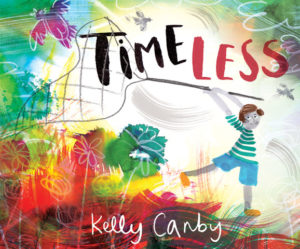
Image shows the cover of a picture book: Timeless by Kelly Canby. The cover illustration shows a boy waving a net behind him while colours and flowers and birds swirl around him.

Take a sneak peek inside Timeless

Download free activity sheets from the publisher’s website

Download the Teachers’ Notes

Visit Kelly Canby’s website for more about her and her books

Posted in authors, illustrator, interviews

James Foley on Secret Agent Mole: Book 1

MEET THE AUTHOR- ILLUSTRATOR

James Foley is the author-illustrator of a stack of picture books and graphic novels. His work has been published as books, in anthologies, and in magazines and newspapers. Today we’re excited to chat to James about the first book in his brand new graphic novel series, Secret Agent Mole: Goldfish-Finger.

From the publisher:

Max is a mole on a mission. With Helen Hippo and June Bug by his side, Max must stop the evil Goldfish-Finger from stealing a priceless, solid gold fishfinger. This dangerous, top-secret mission will involve explosions, a naked mole rat, and being flushed down a giant toilet. Will Max and the team defeat the fiendish fish? Time to rock and mole!


This is book 1 of a new series. How did you decide on the main characters for this series?

The whole idea came about from a conversation with fellow author/illustrator Matt Cosgrove. His publisher Scholastic had asked me to pitch them an idea for a book series, so I called Matt for some advice. I told him, ‘you can be my mole in the organisation‘. And that’s when the idea of Max Mole popped into my head. From there it was a pretty simple task to find his friends; all teams should have a variety of skills and personalities, plus when you’re drawing them it’s good to have a variety of sizes and shapes. So I picked a bigger, tougher animal (a hippo called Helena) and a much smaller, more fragile creature (a bug called Bug) to round out Max’s team. The main villain is a naked mole rat called Dr Nude, because naked mole rats are extremely funny. 

What’s your favourite graphic novel/comic book sound effect and why?

Good question. Probably any of the big, loud action ones (e.g. CRASH, SMASH, THUD, KABOOM). It usually means there’s something big and silly to draw.

Can you tell us about how you create your graphic novels?

First I write the events of the book as a series of bullet points. I put all my ideas down in order until I have enough ideas for a book. Then I write the book as a script – just like you would for a play or a film. It’s just the dialogue plus descriptions of the action. Then I lay out all the pages into a program called InDesign. This lets me see how much room the words need and how much space I have left to do the drawings. I figure out where all the panels are going to go and I start drawing the book as rough sketches straight into the program. Once all that is approved by my editor, I get started on the final artwork. I do all the black outlines in Procreate on my iPad, then I finish off all the shades of grey using Photoshop on my big Wacom Cintiq drawing tablet and my laptop. After about 6 months, I’ve got a 200 page graphic novel.

Do you have a tip for kids who want to write a graphic novel or their own comic book?

You don’t have to be a great at drawing to make a comic book; if you can draw stick figures then you can make a comic. 

The most important thing when making comics is to keep the reader in mind. Comics are meant to be shared, so you need to make sure that your reader will be able to understand the story you’re trying to tell. Every piece of information the reader will need must be on the page; you won’t be able to stand over their shoulder and help them if they get lost or confused. So you have to make sure every picture is large enough and clear enough; you have to make sure all the words are neat and readable; and you need to include enough pictures in the correct order to show what’s happening. It’s as simple and as complicated as that: make sure you have clear pictures and clear words in a clear order. If you can make those three things happen, then your reader will be able to understand and enjoy your comic. 

Can you tell us a bit about what you’re working on next?

I’ve just finished all the artwork for Secret Agent Mole book 2: The Boar Identity. That was a heap of fun! It will be out in August/September 2023.

Next up, I have to start writing the script for Secret Agent Mole book 3. Wish me luck!

Secret Agent Mole: Goldfish-Finger is out now! Ask for it at your favourite bookshop or local library.


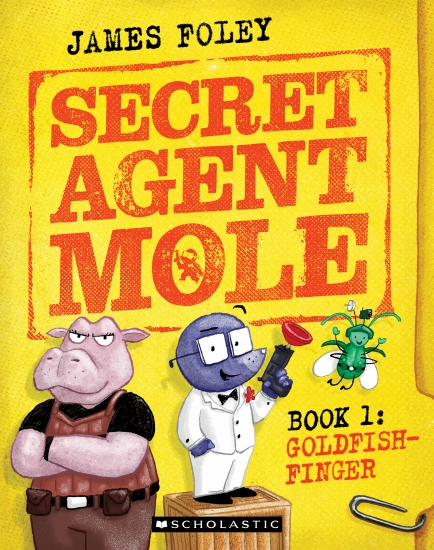
Image shows the cover of a graphic novel for young readers: Secret Agent Mole (book 1) - Goldfish-Finger by James Foley. The cover is predominantly yellow and features an illustration of ahippo in a brown vest with her arms crossed, a purple mole in a white tuxedo and wearing square glasses and holding a toy rubber-dart gun, and a tiny green flying bug wearing a hat. The typeface of the font suggests this is a spy-themed book.

AWESOME EXTRAS:

Watch the book trailer on YouTube

Meet the VILLAINS of the Secret Agent Mole series on the author’s blog

Visit James Foley’s website for more about James and his books

Posted in authors, interviews

Julie Lawrinson on City of Light

MEET THE AUTHOR

Julia Lawrinson has written more than a dozen books for children and teenagers, many of them award-winning. She grew up in the outer suburbs of Perth, Western Australia, not long after the first moon landing. She loves dogs, oceans, and sunsets, and still likes to gaze at the night sky, just in case. Today we’re chatting to Julia about her book City of Light, illustrated by Heather Potter and Mark Jackson.

From the publisher:

Our city is big.
The universe is bigger.
An astronaut from the other side of the world will fly over
our home, at night. We will see a tiny light and we’ll know
it’s him. But will he be able to see us?
One girl, one boy?
A true story.


City of Light is a story based on a real historical event. How did you go about gathering information before you began writing?

I knew absolutely nothing about this story before I began. The first place I looked was the WA Museum, which had this very comprehensive information. I went to the State Library and looked at the old microfiche with The West Australian from that time. The West Australian also had a helpful article online. And I talked to people like my stepmother, who was twelve at the time and remembers it vividly. Jenny Gregory’s book City of Light was also a helpful source of information. The event even made it into the Hollywood blockbuster film in 1983, called The Right Stuff.

I can’t believe it hasn’t been written about before, as it is such a great story of hope and optimism in the middle of the space race between the Soviet Union and the United States.

How did the book come to have two illustrators – Heather Potter and Mark Jackson?

The illustrators were chosen by the publisher. Heather and Mark are a husband and wife team, and I have not yet met them, though I hope to one day. Heather has also illustrated the work of Western Australian luminaries like Sally Murphy and Dianne Wolfer, so I would call her an honorary Western Australian!

You’re the author of many novels for children and teenagers and this is your first picture book! Can you tell us about your experience of sitting down to write a picture book after writing so many novels?

The first thing I said to the publisher at Wild Dog Books when she approached me was, ‘But I don’t write picture books.’ She replied, ‘I think you’ll be able to write this one.’ We agreed I would try, and I was happy to give it a go. After all, if she didn’t like it, neither of us would be worse off.

The first line came to me when I was walking, and I came home and scribbled it in a notebook, along with the words, ‘torches, car, astronaut, reaching out’.

For the rest, I approached this the way I (and many other writers!) approach most stories – what is the problem, and how are the characters going to fix it?

Do you have a tip for young writers who’d like to write a picture book?

The most important thing is to put a child or children (or a non-human character!) at the centre of the story. I would also say to read it aloud: it doesn’t need to rhyme, but it needs to have a pleasing rhythm.

Can you share a bit about what you’re working on next?

I am working on a historical novel based in the 1900s in the goldfields. It is very slow, and the research is sending me down lots of rabbit holes, but I am enjoying the process.

City of Light is out now! Ask for it at your favourite bookshop or local library.


Image shows the cover of a picture book: City of Light by Julia Lawrinson, illustrated by Heather Potter and Mark Jackson. The cover illustration shows a boy and a girl in clothes from the 1960s. They're shown at night on a dark street with all the houses lit up inside. Each child is shining a torch beam up into the starry sky.

AWESOME EXTRAS

Take a sneak peek inside the book at Booktopia’s website.

Download the Teachers’ Notes from the publisher’s website.

Visit Julia Lawrinson’s website for more about her and her books.

Visit Mark Jackson & Heather Potter’s website for more about them and their illustration & art.

Posted in authors, interviews

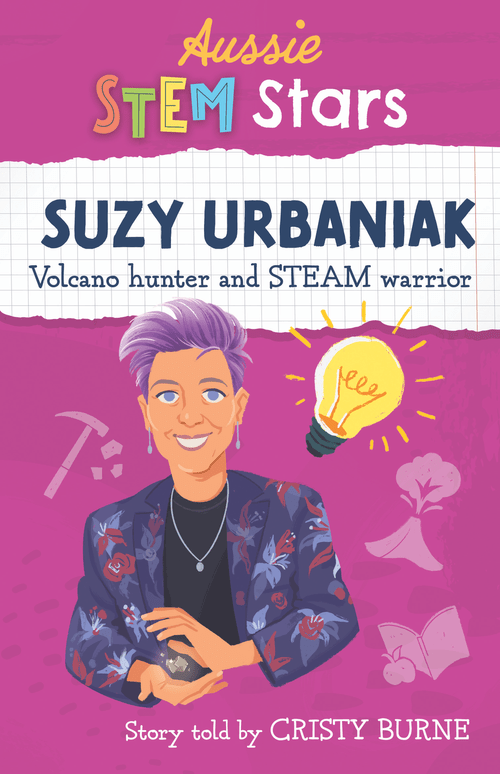
Cristy Burne on Suzy Urbaniak: Volcano Hunter and STEAM Warrior

Cristy Burne writes fiction and nonfiction and her books are bursting with adventure, friendship, family, nature, science and technology. Cristy has worked as a science communicator for nearly 20 years across six countries. She has been a science circus performer, garbage analyst, museum writer, and atom-smashing reporter at CERN, but her all-time favourite job is working with kids to embrace the intersection between science, technology and creativity.

Today Cristy is chatting to us about her latest book in the Aussie STEM Stars series – Suzy Urbaniak: Volcano hunter and STEAM Warrior.

From the publisher:

Geologist Suzy Urbaniak is a limbo-dancer, a crepe-baker, a risk-taker and a question-asker. Winner of the 2016 Prime Minister’s Prize for her out-of-the-box teaching, Suzy is all about passion, innovation, and doing things your own way.


How did you come to write a biography of Suzy Urbaniak – is geology a subject you’ve studied?

I collected rocks as a kid, but never went any further with my geoscience interest. If I’d met someone like Suzy, I could very well be a geologist today! The geologists I’ve met – Suzy obviously included – are incredibly passionate about rocks and our planet. They can look at a landscape and see into our past. That’s a magical ability!

Did you meet Suzy Urbaniak in person or gather your information for her biography another way?

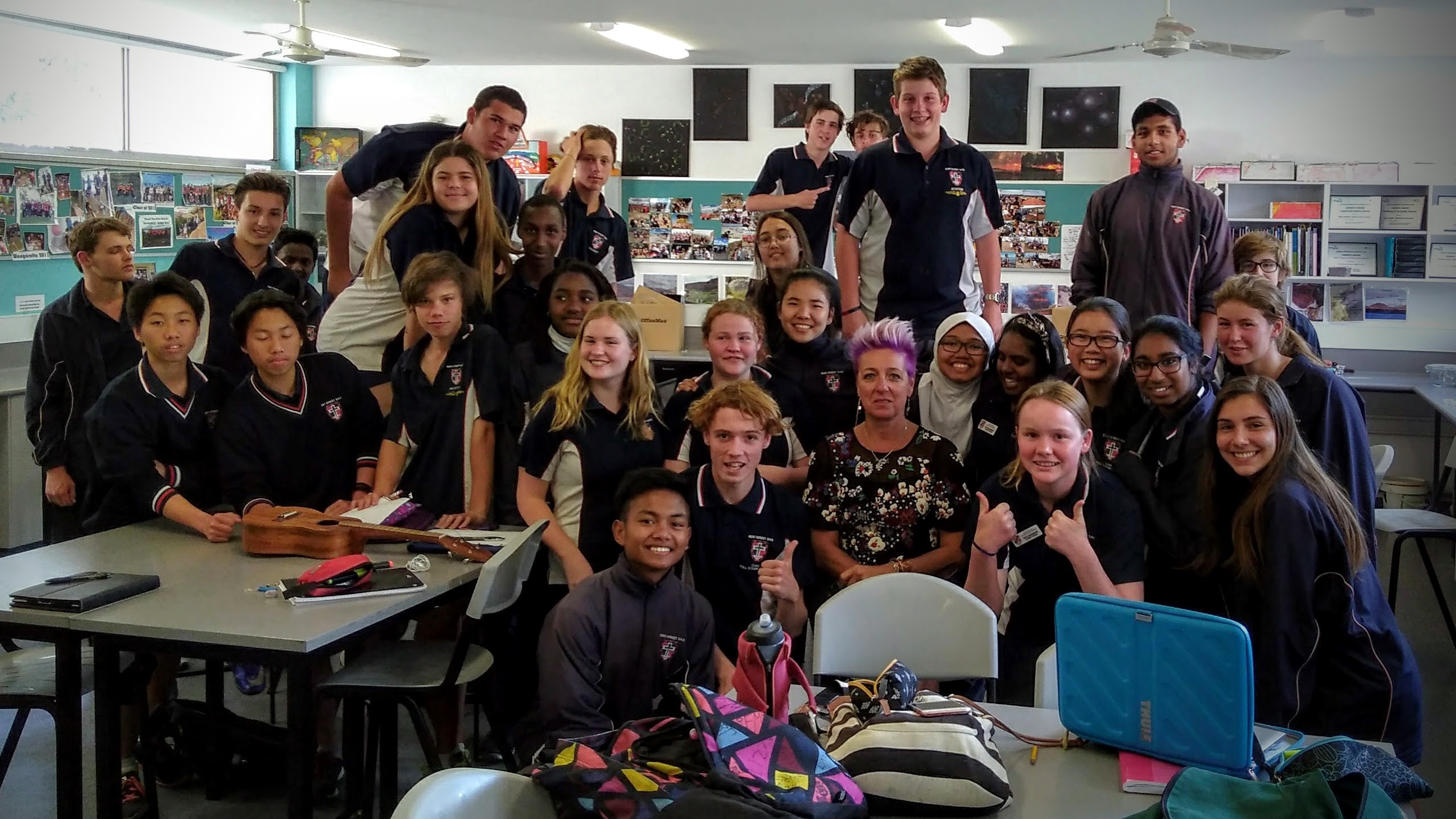
Suzy Urbaniak and yr 10 students in the classroom. Photo courtesy Cristy Burne.
Ms Urbaniak & yr 10 students.
Photo courtesy Cristy Burne.

I first met Suzy six years ago, in person, when I interviewed her for a newspaper. She was teaching at Kent Street Senior High School and had just won the Prime Minister’s Prize for Science Teaching – it was an incredible experience and I never forgot the buzzing energy of her students as they busily (and mostly autonomously) worked on their science learning.

Suzy and I stayed in touch (social media is good for something) and when she wanted help writing her life story, I immediately thought of Aussie STEM Stars. And the rest is history!

Just as for my Fiona Wood biography, Suzy and I did our interviews for the book over the phone. I think it’s easier to dive deep into memories when you’re not also thinking about eye contact, body language and social niceties. Over the phone, all you need to do is let your mind drift deep into childhood.

You’re passionate about science (and also adventures!) – have you ever stood on a volcano?

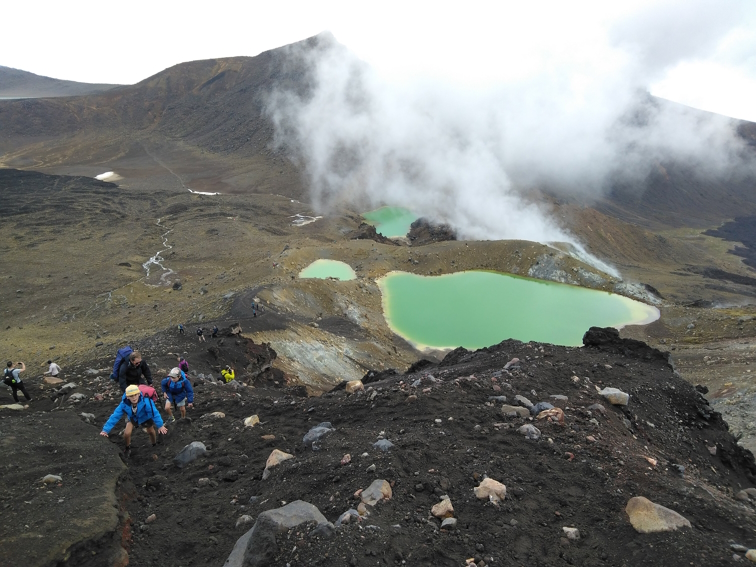
I grew up in New Zealand, so I’ve climbed in to the mouth of an extinct volcano (back when you could do that in Mt Tarawera) and hiked a whole bunch in Tongariro National Park, part of the Pacific Ring of Fire (where you can see steaming vents and boiling mud). I grew up close to Rotorua, where geothermal activity is literally just below the surface (and sometimes even on top!). I have a very healthy respect for volcanoes.

Photo shows children in blue jackets climbing in volcanic areas with green-blue lakes behind them and steam rising from the ground.
Volcano hunting! (Photo courtesy Cristy Burne)

Do you have any advice for young writers who would like to write biographies?

Biographies are non-fiction, but that doesn’t mean they’re just a long list of facts. To bring a biography to life we need to have stories, because stories bring emotion and connection. A good way to bring these stories out is to ask open questions that encourage longer answers, like: ‘Can you tell me about a time that …’

Can you tell us a bit about your next writing project?

I’m working on a graphic novel with publisher Larrikin House. It’s a wild comedy with aliens, explosions, disgusting adventures and desperate escapes, featuring a science-loving kid named Violet whose best friend is a conspiracy theorist and whose pet hermit crab can talk. It’s ridiculous, non-stop, unapologetic science-meets-comedy FUN!

WA (Fremantle) families: MEET Cristy Burne, Suzy Urbaniak and HM Waugh at 11.30am THIS Sunday 26 February 2023 at the Perth Festival, Fremantle Arts Centre! FREE. Includes a drop-in ‘make your own mini Mars-machine’ session.

Suzy Urbaniak: Volcano hunter and STEAM warrior is out now! Ask for it at your favourite bookshop or local library.


AWESOME EXTRAS:

Watch Suzy Urbaniak talking about winning the Prime Minister’s Prize for Excellence in Science Teaching in Secondary Schools [YouTube]

Download the Teachers’ Notes for this book

Download Cristy Burne’s Volcanic Science and Art activity ideas [PDF]

Visit Cristy Burne’s website for more about her and her explosively fabulous books!

Posted in interviews, poetry

Amber Moffat and writing poems about animals

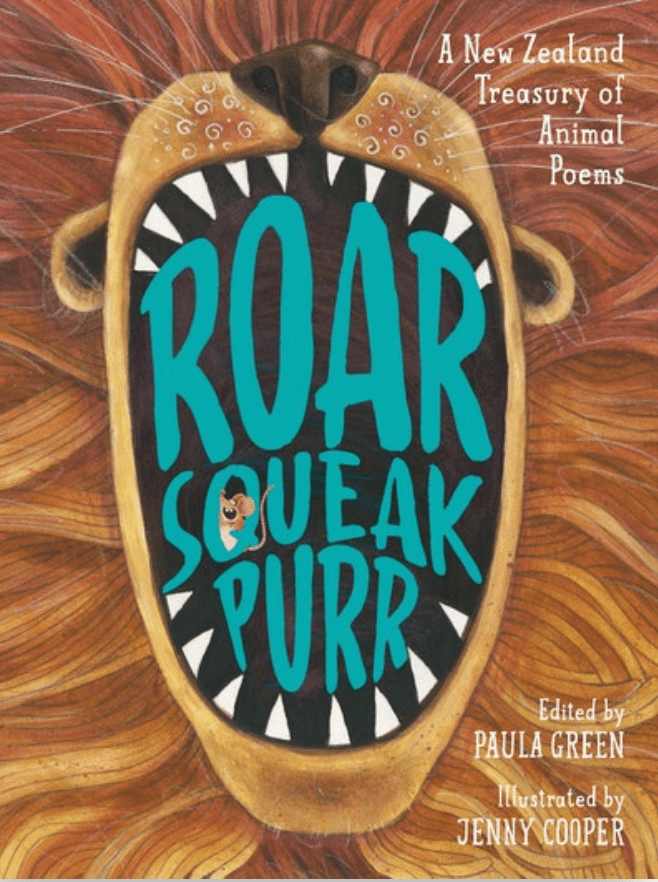
Amber Moffat is a writer and visual artist from New Zealand but currently based in Western Australia. She is a maker of work for both adults and children. Amber’s first picture book, I Would Dangle the Moon, was published in 2019. Her poetry has been published in The School Magazine, and in a 2022 poetry anthology Roar, Squeak, Purr. Today we’re chatting to Amber about writing poetry for this fabulous anthology.

From the publisher:

This exuberant treasury brings together over 200 animal poems by New Zealand’s best writers, and includes poems written by children. The poems were selected and edited by champion poet Paula Green, winner of the Prime Minister’s Award for Poetry [New Zealand] and creator of the popular Poetry Box blog, and teamed with Jenny Cooper’s cheeky, whimsical and adorable illustrations.
Roar Squeak Purr is destined to be a family treasure – and to inspire a new generation of poets.


You have five poems in Roar, Squeak, Purr – how did you go about writing poems for this anthology? (Did you already have these poems sitting in a drawer?)

I had one poem already and wrote the other four poems specifically for this anthology. The editor of the collection (the amazing poet Paula Green), asked me if I’d like to submit some animal poems as she knew my writing from my picture book, I Would Dangle the Moon. The poem I had already written was a poem about being cuddled up to a cat. I don’t have a cat anymore as I have two big dogs that are not cat-friendly, but when I was a kid I had several beautiful cats. That cat poem was written about that feeling when you are lazing about with a cat on your lap.

I had a couple of months to write the poems, and I wasn’t sure how many I’d write. I ended up writing one about black swans, one about a sheep-dog, one about two lions that escaped from a circus, and a riddle poem about a creature I won’t reveal here in case people want to try to work that one out themselves.

The swan and sheep-dog poems were based on memories of growing up in New Zealand. I loved to watch how both swans and sheep-dogs moved and both those poems are about trying to capture the unique ways those animals move. The poem about the lions was based on a true story that has fascinated me since I was a child. The lions were unfortunately shot after they escaped, and they are now in the Otago Museum in my hometown of Dunedin. I used to visit the lions at the museum and always imagined what they would be like running free instead of stuffed and still within a glass case. So that poem is very much about movement too actually. I really enjoyed writing from the lions’ point of view in that one, and that’s something I’d like to try again.

For me, all writing springs from something I am interested in and can’t let go of. If an idea keeps coming back to my mind then I know I have to write about it.

Do you prefer to write rhyming poems or free verse?

I definitely prefer to write in free verse and it feels more natural to me. All my poems in Roar, Squeak, Purr are in free verse. Writing in rhyme limits your options for word choice and you have to express your idea within a tight structure. I feel kind of like the lions in the circus when I’m writing in that way, and I end up wanting to escape!

If you’re writing a poem (or editing it) how do you know when your poem is finished?

It can be very hard to know when a poem is finished. Sometimes I think something is finished but if I put it aside for a few weeks and come back to it, I realise it still needs work. I’m very lucky to have some great writing friends and sometimes I show them my poems to them and get their feedback. That is a very helpful process and has made me better at editing my work. My poems usually go through about three edits to get them right. A lot of that is “tightening up” the writing, making sure every word that remains is working hard to convey the meaning of the poem.

Do you have a tip for kids who would like to write poetry?

Be bold and risk-taking when you are writing your first draft! All ideas are good ideas in the first draft. I try to write without thinking when I first jot down words for a poem. This helps me to avoid getting into a critical mode and lets the ideas flow freely. Then you need to be brave and ruthless when you are editing. You will probably need to change lots of things and that’s normal.

If you don’t like the feeling of cutting out parts of your poems then it might help you to have a system for saving all your different drafts, then you know you can always come back to earlier versions of the poem.

Can you tell us a bit about what you’re working on next?

I’m writing a novel for teenagers at the moment. It will be about 70,000 words when it’s finished so it’s a very different writing process to writing poetry! I’m still using the technique of writing without judgement to get the ideas down though. I hope to finish the first draft in a couple of months and then I will start the first round of editing.

Roar, Squeak, Purr is out now! Ask for it at your favourite bookshop or your local library.


AWESOME EXTRAS

Take a sneak peek inside the book (see if you can solve Amber Moffat’s riddle poem!)

Download some Poem Starters from the publisher’s website and write your own animal poems!

Visit Amber Moffat’s website for more about her and her work.

The editor of this anthology, Paula Green, chose all the poems in it. Visit her website: Poetry Box

Posted in authors, illustrator, interviews

Sean E Avery on Frank’s Red Hat

Sean E Avery is a teacher, sculptor, designer, and the author-illustrator of Harold and Grace, All Monkeys Love Bananas, and Happy as a Hog Out of Mud. Today we’re pleased to chat to him about his latest picture book, Frank’s Red Hat, which is out in Australia, Korea, France and Denmark!

From the publisher:

Frank is a penguin with ideas. Mostly terrible ones. That’s why his fellow penguins are nervous when he shows them his strange new creation. Something they’d never seen or expected to see in their cold and colourless Antarctic world — a red hat.


How did you come to set a book in Antarctica?

I wanted a black-and-white setting that I could slowly introduce colour to! Antartica fit the description perfectly. 

Do you know how to knit?

I do not. My boss (the principal at the school I work at) tried to teach me once but I gave up in a huff. I may have had a small tantrum and thrown my knitting needles over my head in frustration.

Can you tell us a bit about the illustration process for Frank’s Red Hat?

I use lots of different media – paint, crayons, pencils etc – to create textures that I scan into my computer. From there, I can cut the shapes I need from the scanned textures and arrange them to make, rocks, snow, water, seals, and penguins of course! 

Do you have a writing tip for kids who’d like to write their own books?

Write a little bit every day for a few months. It’s very hard (and not much fun) to try finish a whole book quickly in a week. If you work on something slowly, but consistently over a long period of time; the result will be better.

Can you tell us a bit about what you’re working on next?

I have three books coming out next year. Two of those are out next year. One is called Friendly Bee and Friends – a graphic novel about an annoyingly friendly bee who tries to make friends with every bug he meets. The other is a picture book called Mr Clownfish, Miss Anemone and The Hermit Crab which is an underwater adventure. 

Frank’s Red Hat is out now! Ask for it at your favourite bookshop or local library.


Image shows the cover of a picture book: Frank's Red Hat by Sean E Avery. The illustration is of a flock of penguins and only one penguin is wearing a tiny red beanie.

AWESOME EXTRAS

Take a look inside the book!

Visit Sean E Avery’s website for more about him and his books