Posted in authors, interviews

Michelle Kadarusman and Girl of the Southern Sea

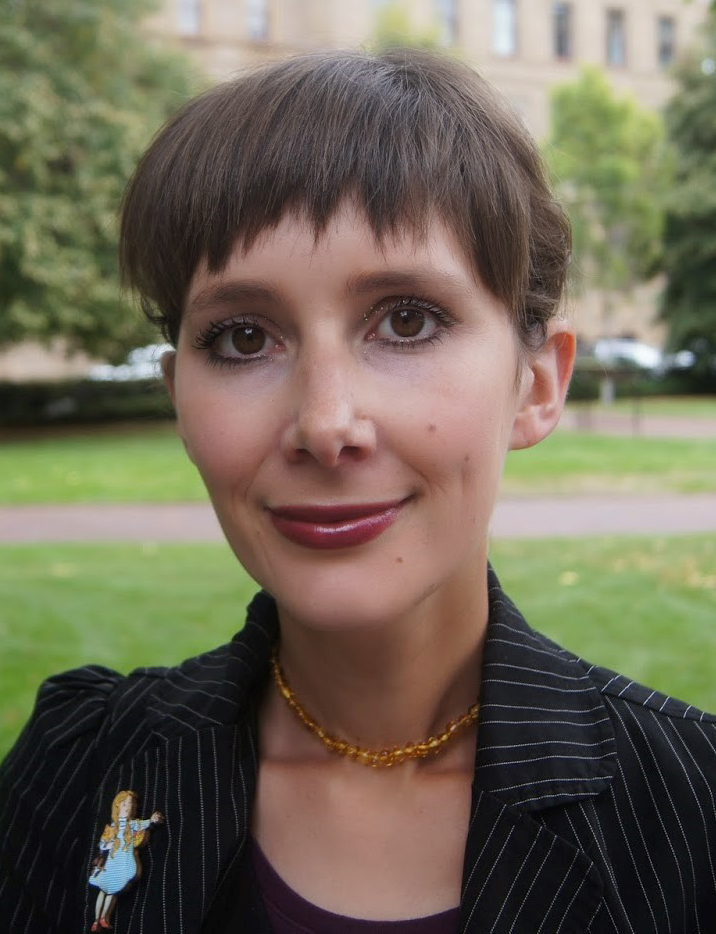
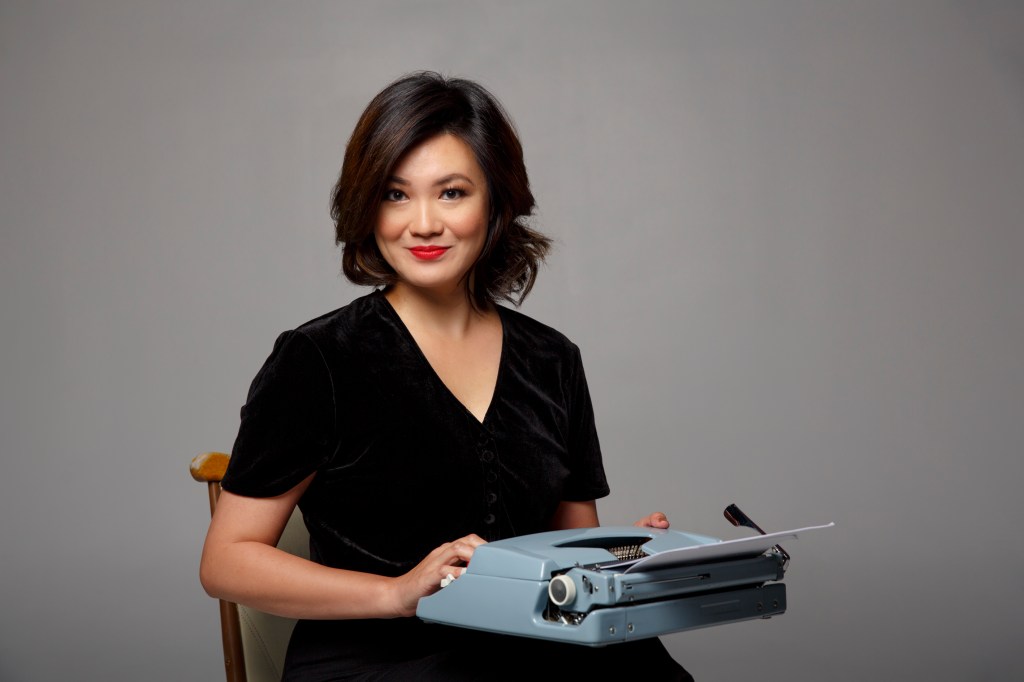
Michelle Kadarusman (photo by Micah Ricardo Riedl)

Michelle Kadarusman writes novels for children and teenagers. Michelle grew up in Melbourne, Australia, and has also lived in Indonesia and in Canada. Her books have been translated into Spanish and Turkish. Today we’re chatting to Michelle about her recent children’s novel Girl of the Southern Sea.

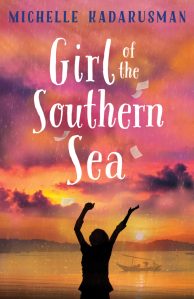
Girl of the Southern Sea by Michelle Kadarusman

From the publisher:

Nia longs to attend high school so she can follow her dream and become a writer, but her family has barely enough money for food, let alone an education. Nia’s days are spent running their food cart and raising her younger brother. Following a miraculous escape from a bus accident, Nia is gifted with good-luck magic. Or at least that’s what everyone’s saying. Soon their family business is booming and there might even be enough money to return to school. Then a secret promise threatens everything she’s hoped for. 

On with the questions!


What brought you to write a novel set in a slum in Jakarta?

When I was twelve, and on a family holiday to Indonesia, we took a train ride from the capital, Jakarta, to my father’s hometown of Bandung in West Java. It was on this train journey that I saw extreme poverty for the first time. Along the train tracks were shanty towns and people living in conditions that seemed unimaginable. But still, the children in these shanty towns would jump and wave and smile joyfully to us as we sped by. This journey was a pivotal moment for me and the images stayed with me. I wanted to give a voice to children, like the ones I saw that day, who opened my world view all of those years ago.

Your writing helps readers to picture Nia’s world – you include the sights, smells and food of her everyday life. When you’re writing your novels do you have any tools you use to help you disappear into the world where your story is set?

I wrote this story in Toronto, Canada, during winter, so it couldn’t have been more different to the location! I relied on memories and photographs from my years of living in Indonesia. I also cooked some yummy Indonesian dishes to fill the house with the smells and tastes of the delicious food. I talked to my sisters and brother a lot about our times together in Indonesia as children – this helped a lot. Somehow childhood memories evoke the richest details.

Nia tells her younger brother stories she’s written based on a tale her mother told her when she was little. Was this a tale you heard yourself when you were growing up?

When we were young, my dad used to tell us not to wear green if we went swimming, he said it was the favourite colour of the Queen of the Southern Sea, so wearing green would tempt her to take us. We knew this was just a superstition, but it always intrigued me. It wasn’t until I was older and living in Jakarta that I learned more about the mythical character. 

In an earlier interview with Alphabet Soup (about your book The Theory of Hummingbirds) you recommended that aspiring young writers read as much as they can. Which writers do you think have influenced your own writing?

Louisa May Alcott, author of Little Women, inspired me a great deal to become a writer. In fact, I named the main character Louisa in my book Music for Tigers, for her.

Can you tell us a bit about your next writing project? 

My current writing project is a middle-grade novel set again in Indonesia. It centres around a captive orangutan and two middle-schoolers who want to save it – one a budding activist and the other is the nephew of the orangutan’s owner. It will also delve into deforestation and the illegal exotic pet trade, identity and belonging.

Girl of the Southern Sea is out now! Ask for it at your favourite bookshop or library.


AWESOME EXTRAS:

Read another interview with Michelle Kadarusman about her previous book The Theory of Hummingbirds

Download the Teachers’ Notes for Girl of the Southern Sea

Find out more about Michelle Kadarusman and her books on the publisher’s website

Girl of the Southern Sea by Michelle Kadarusman
Posted in authors, interviews

Meg McKinlay on How to Make a Bird

Meg McKinlay, author, sitting in a library

Meg McKinlay is an award-winning children’s writer and poet. She has published seventeen books for children, ranging from picture books through to young adult novels. Meg lives with her family near the ocean in Fremantle and spends most of her time cooking up books. Her latest book is How to Make a Bird, illustrated by Matt Ottley.

From the publisher:

We shadow the protagonist as she contemplates the blue print of an idea, collects the things that inspire from the natural world to shape a bird. And breathes life into it before letting it fly free. It shows how small things, combined with a little imagination and a steady heart, can transform into works of magic.

How to Make a Bird by Meg McKinlay and Matt Ottley

On with the questions!


How long did it take you from the start of the idea for this book to the book being published?

Sixteen years! That may be some kind of all-time record and in this case it’s not because I’m such a slow writer. I actually wrote this manuscript quite quickly and the published version is almost identical to the original. The problem was simply that publishers didn’t want it. I sent it to lots of places in Australia and then in the US but got no interest at all, just lots of rejection letters telling me it was ‘odd’, ‘not a picture book’, ‘not relevant to children’ and ‘unillustratable’. Although I didn’t agree with those comments, I couldn’t do much but put it away in a drawer and sigh from time to time. Then in 2017, I pulled it out of the drawer, sighed a little more deeply, and thought I’d give it another shot. There was a new publisher at Walker Books, one with a particular love of lyrical language and perhaps a different sort of vision, and she signed it up on the spot.

Did you meet with the illustrator (Matt Ottley) while he was creating the illustrations? 


Matt and I had an informal catch-up before he started working on the book. We didn’t talk directly about the illustrations, but about the ideas behind the book. He wanted to get a sense of where it had come from for me, my personal connection to it and what I saw as being at the heart of it. We chatted over coffee about philosophy and creativity and all sorts of vaguely related things, and both came away feeling like we were very much in synch about what was important in the book. Matt was working on other projects at the time and it wasn’t until much later that he started his first sketches for this one. After that initial chat, conversations about the process and the nitty-gritty of the illustrations took place via the publisher, in consultation with their editor and art director.

You write books for a variety of age groups – picture books, junior fiction, novels for upper primary, and YA novels. Do you like to work a little on many projects at the same time, or do you focus on one book at a time? 


What I usually do is work on one longer project – usually a novel for upper primary or YA – and a bunch of other little bits and pieces such as picture books and poems. I always have a couple of picture books at various stages and there are hundreds of poems clamouring for attention. I’m not good with structure and story – narrative does not come naturally to me – so being able to dip in and out of these shorter or less structured fragments is really important creatively.

Can you tell us a bit about what you’re working on next?


At the moment I’m working on a sequel to A Single Stone, though I’m honestly not sure if I’ll ever get it over the finish line. It’s been a very disrupted few years and has been a real struggle to make progress. I also have some picture books in the pipeline and am currently putting the finishing touches on one that’s coming out next year. It’s called Ella and the Useless Day and is about a journey to the rubbish tip that doesn’t quite go according to plan. It’s a collaboration with illustrator Karen Blair, who has brought so much genius energy to the story; I’m so excited for it to hit shelves.

What are you currently reading? 


I recently got to read an advance copy of Peter Carnavas’ new middle-grade novel My Brother Ben and want to give it to everyone. It’s about brothers and birds and boats and it’s just absolutely beautiful.

How to Make a Bird is out now! Ask for it at your favourite bookshop or your local library.


AWESOME EXTRAS:

Hear Meg McKinlay talk about the book (YouTube)

Download teachers’ notes for How to Make a Bird

Take a look inside the book

Visit Meg McKinlay’s website for more about her and her books
Visit Matt Ottley’s site for more about him and his illustrations.

How to Make a Bird by Meg McKinlay and Matt Ottley
Posted in authors, illustrator, interviews

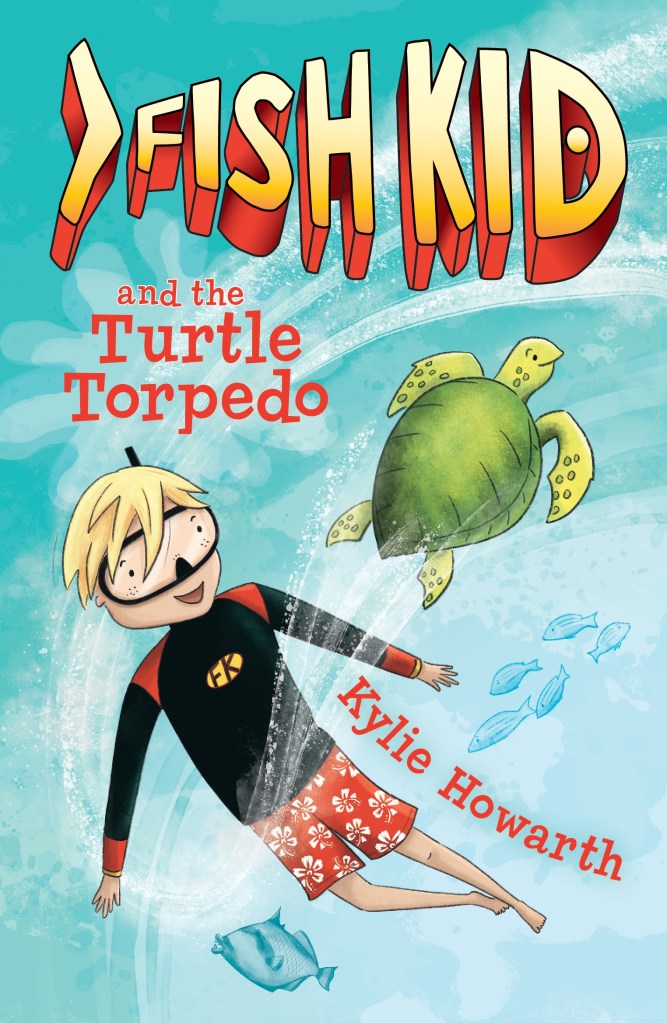
Kylie Howarth on Fish Kid and the Turtle Torpedo

Kylie Howarth is an award-winning, internationally published children’s author-illustrator from Western Australia.

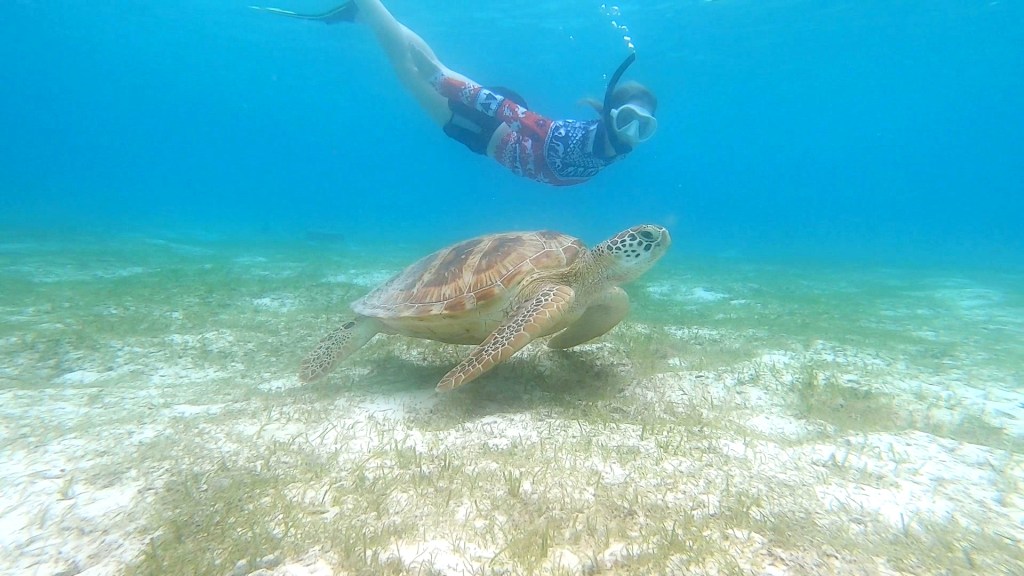
Kylie Howarth swimming with a turtle
Author-illustrator Kylie Howarth swimming with a turtle.

Kylie has swum with whale sharks, manta rays and humpback whales in Ningaloo, piranha and pink dolphins in the Amazon, braved scuba diving with lionfish in Egypt, marine iguanas and hammerhead sharks in the Galapagos Islands and encountered great white sharks in South Africa!

Kylie not only draws inspiration from her underwater travels but also her own two fish-kids who are ocean explorers too. The textures in Kylie’s book illustrations are created during their backyard art sessions. 

We’re pleased to have Kylie visit Alphabet Soup today to talk about her latest book Fish Kid and the Turtle Torpedo.

From the publisher:

Fish Kid’s friendship with bestie, Emely, soon hits a snag during a tricky sea turtle rescue. Secretly wishing for powers of her own, Emely’s strange behaviour leaves Fish Kid wondering if their friendship and the super-sick turtle will survive. And if things weren’t bad enough, another turtle from the sanctuary goes missing. Can this super hero-in-the-making use his fishy powers to save the day?


Have you been to all the places Fish Kid visits?

Yes! It’s tough work having to visit amazing places like the Galapagos Islands, Ningaloo Reef and the Maldives! Visiting these places allows me to meet the sea creatures that feature in my books. It was my scuba dive with 20 hammer head sharks that actually inspired the Fish Kid series.

Do you have a favourite sea creature?

I LOVE humpback whales. I was lucky enough to fulfil a dream recently, and swim with humpbacks as part of my research for Fish Kid and the Mega Manta Ray. I collect humpback whale sculptures, books, paintings and my favourite pair of earrings are humpback whales!

Each book in this series includes some featured pages with Fish Kid Facts about sea creatures. How do you go about researching for the books?

I try to meet all the creatures in my books face-to-face to learn about them. If I’m on a snorkelling tour, I’ll quiz the local instructors and underwater photographers to find out what they have observed about each sea creature. I then follow up with library and internet research, checking several different sources to ensure each fact is correct.

The Fish Kid books also include black-and-white illustrations scattered through the story. Can you tell us a bit about how you create your illustrations?

For the first book I used pencil and ink to create the illustrations. I’ve since taught myself to illustrate on an iPad using a program called Procreate. You can use pencil and ink looking ‘brushes’ drawing directly on the screen, so the second and third books in the series were done using this technique on my iPad. See if you can spot the difference!

Can you tell us a bit about what you’re working on next?

I have just completed final illustrations for a picture book I’ve also written, which will be released next year. Although most of my books have an ocean theme, I’ve branched out a little and this one features some Australian bush animals!

Fish Kid and the Turtle Torpedo is out now! Ask for is at your favourite bookshop or local library.


AWESOME EXTRAS:

Watch Kylie Howarth share some facts from the Fish Kid books (YouTube)

Learn how to draw a Hammerhead shark (YouTube)

Download some classroom activities

Make a woven turtle torpedo!

Visit Kylie Howarth’s website for more about her and her books.

Posted in authors, interviews

Shirley Marr and Little Jiang

MEET THE AUTHOR

Shirley Marr is a first-generation Chinese Australian, living in Perth, Western Australia. Shirley describes herself as having a Western Mind and an Eastern Heart and writes in the middle where both collide. She writes books for children and teenagers and today we’re thrilled to chat to her about Little Jiang, illustrated by Katy Jiang.

Little Jiang by Shirley Marr and illustrated by Katy Jiang (book cover)

From the publisher:

Mei Ling Pang was born at an inauspicious time on an inauspicious day, so wherever she goes, misfortune follows. When Little Jiang hops out of his grave and into Mei’s life, fangs and all, her luck goes from bad to worse. But in trying to help Little Jiang, Mei might just make her own future brighter.

We have to ask – is your favourite food Kung Pow chicken?

Yes it actually is! I believe in putting bits of myself in my writing. The best meal I ever had was Kung Pow chicken at a restaurant called Augusta Moon (as opposed to The August Moon restaurant in the novel). It wasn’t a fancy restaurant and it wasn’t a fancy dish, but it was special. So that memory made itself into my writing!

Katy Jiang’s grayscale illustrations are sprinkled throughout Little Jiang. Did you meet the illustrator during the book’s production?

My editor Cate from Fremantle Press acted as the coordinator during the illustration process. She started by asking me questions about what my characters looked like and which scenes I wanted illustrated and passed this information along to Katy. I would then receive the initial draft sketches back from Katy for my opinion. I didn’t want to interfere too much with Katy’s process, I wanted her to be free to be as creative as she liked! I wanted her to feel like she had the space. It was after all the beautiful illustrations were complete that I really wanted to know more about the wonderful artist! That is when I met Katy for lunch and coffee and we have been friends since! 

Your previous novels have been for young adult readers. How did you come to write Little Jiang, a novel for younger readers?

After I had my son (he’s six years old now), I really had a think about what type of stories I was writing. Books for young adults can be a little serious and angsty at times! I really wanted to write something adventurous and funny that I could read to him. And at the same time I wanted to honour the Chinese folk stories my own mum told me when I was little. I had never written a book for younger readers before, but I put my heart and my mind to it. Little Jiang was the result. It was so much fun!

Do you have a tip for young writers who would like to try writing their own spooky tales?

I would like to see writers take an old spooky creature (vampires, zombies, ghosts) and give them a funny and modern-day twist! See how creative they can be!

Can you tell us something about your next writing project?

I have another middle grade book out this month called A Glasshouse of Stars. It is my heart story, based on my immigration experience to Australia as a child. This one might make you cry instead of laugh. Right now, I am writing another book for younger readers based on my family history. I am always onto my next project!

Little Jiang is out now! Ask for it at your favourite bookstore or local library, or buy it direct from the publisher.


AWESOME EXTRAS

Read a sample chapter of Little Jiang

Read a review of the book by Kobe, age 9

Download the Teachers’ Notes

Visit Shirley Marr’s website for more about her and her books
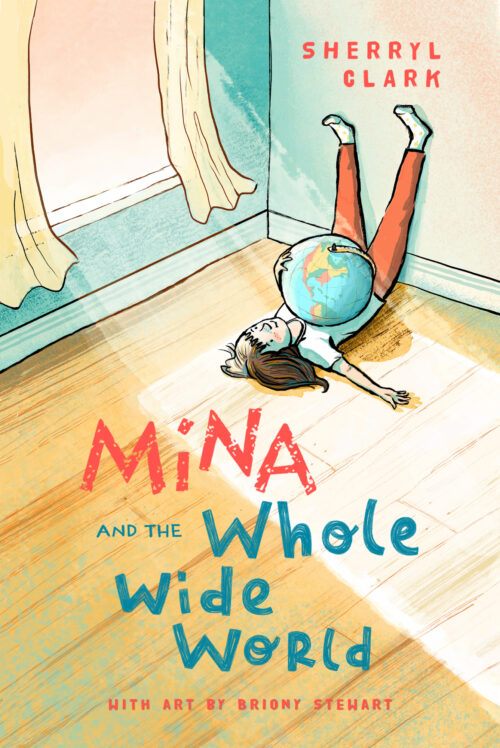
Little Jiang by Shirley Marr and illustrated by Katy Jiang (book cover)
Posted in authors, interviews

Emily Gale on Gisela Kaplan: Bird and Primate Scientist

Today’s visitor is author Emily Gale, author of books for children and teenagers. You might have read her the Eliza Bloom’s Diaries series, or the novel The Other Side of Summer. Emily Gale’s latest book is Gisela Kaplan: Bird and Primate Scientist, part of the Aussie STEM Stars series.

From the publisher:

Gisela Kaplan’s story begins in post-World War II Germany. Despite incredible challenges as a child, she retained a profound curiosity, care and compassion for all living things. Her captivating, ground-breaking scientific research on Australian magpies, tawny frogmouths and other iconic bird species, as well as primates, make Prof. Kaplan a world-leading expert in animal behaviour, especially of Australian birds. Professor Kaplan is on a mission to spread the word about how intelligent and surprising birds are, before time runs out for many of them.

How did you go about your research for writing about Gisela Kaplan? 

I love research and all the different pathways it can take you down. The first thing I did was to listen to a radio interview in which Gisela Kaplan talks about how she became so interested in Australian birds that it changed her life (Conversations, ABC: Talking magpies, grieving tawny frogmouths and canny galahs). She’s written several books on birds and animals so I got those out of the library and made plenty of notes. I searched the internet for research articles that she’s written, and I also found a clip from a documentary about her work rehabilitating birds (google Compass: Paws For Thought if you want to see some clips of Gisela with a tawny frogmouth and some juvenile magpies). To immerse myself in what Gisela’s early life might have been like, I watched documentaries and movies about Germany in the 1940s to 1960s, and I spent hours and hours walking by the river near where I live so that I could observe to birds, listen to their sounds, and make notes on their behaviour. Most importantly, I had lots of phone calls with Gisela. I asked her dozens of questions about her life and work. All the research helped me to know which questions to ask.

Have you meet Gisela Kaplan in real life? (And Pumpkin?)

I’m very sad to say that I have not met Gisela, or Pumpkin the sulphur-crested cockatoo, or the lovely tawny frogmouth who has lived with Gisela for over twenty years. I wrote this book during lockdown in Victoria when we weren’t even allowed to go more than 5km from our homes, whereas Gisela lives in NSW. While I was writing the book we spoke for two hours at a time over several sessions. The time would go so quickly because Gisela is a wonderful storyteller and has had such an interesting life. We also emailed each other regularly throughout the process, and we still keep in touch.

When you’re writing an autobiography about someone like Gisela (who’s had such a broad range of experiences and achievements), how do you choose what to put into the book and what to leave out?  

As the book is for children aged 10 and over I wanted to include plenty of information about what Gisela was like at around that age. She was born during the Second World War, in Germany, and had a challenging childhood in many ways involving poverty, hunger and bullying, so I wanted to spend time showing how she overcame those struggles. 

You can’t always guess what career a person will go into, or what twists and turns there will be along the way, and I wanted to show young people that even if the journey to being a great scientist doesn’t start when you’re very young, or if it gets off-track, it doesn’t mean you’re not going to get there in the end. Gisela’s career path has gone from opera singing to teaching to roaming the jungle in search of orang-utans, and that’s all before we get to her world-famous research into Australian birds. So my aim was to write about those life-changing decisions. 

Of course, life also contains boring bits, or sad times like losing loved ones and suffering illness. In science there can be long periods of time when your research is frustrating or slow. I skipped all of that and focussed on the highlights and plot twists.

You also write fiction for young readers and teenagers. Did you find it a faster or slower process to write a nonfiction book?

I wrote the book quickly for two reasons: first of all, I had a tight deadline, and there is nothing like a deadline to make me get on with it! Second, when you’re writing fiction the possibilities are endless. In one way this is an incredible freedom and something I enjoy, but it also means you can go down all sorts of wrong pathways or tie yourself in knots finding the story (you have a sense of what that is, but it’s like playing hide n seek without knowing what you’re looking for). But when you’re writing about someone’s life, the possibilities are limited and you have to work with the facts. So it’s a case of collecting the facts, looking at them and shaping them into a narrative that people will enjoy reading just as much as they’d enjoy a made-up story.

What are you working on next?  

I’m working on another middle-grade novel similar to the one I’ve just written with Nova Weetman (Elsewhere Girls) in the sense that it takes place now but also has a strong connection to the past. The story is about a girl in Year 6. It starts during 2020 and the setting is a Melbourne school, so I’m writing about lockdown and all the upheaval of remote school, and how strange our lives were during that time. And then come the ghosts . . . I’ve written novels with ghost-like characters before and it’s something I keep coming back to because I loved stories like that when I was roughly 10–14: this one is a little bit more creepy and mysterious than The Other Side of Summer, but there are three lovely dogs, two cats and an eccentric grandmother to balance out the haunting. Since writing about Gisela Kaplan, I decided that the novel also needed a bird or two.


AWESOME EXTRAS:

Take a sneak peek inside the book

Hear Emily Gale talking about the launch of the book (YouTube)

Listen to the call of a tawny frogmouth (Wild Ambience YouTube)

Visit Emily Gale’s website for more about her and her books

Gisela Kaplan Bird and primate scientist, story told by Emily Gale (book cover)
Bi
Posted in authors, interviews

Rebecca Lim on Eddie Woo: Superstar Maths Teacher

Today we’re pleased to have award-winning author Rebecca Lim visiting Alphabet Soup. Rebecca Lim is a writer, illustrator, editor and lawyer based in Melbourne, Australia. She is the author of nineteen books for children and teenagers. Her latest book is Eddie Woo: Superstar Maths Teacher, part of the Aussie STEM Stars series.

From the publisher:

Eddie Woo has already packed a lot into his short life. Australian High School Maths teacher, education ambassador and advisor, author, TV Host and YouTube sensation, Eddie has been putting the magic in maths for the past ten years, allowing students to learn in creative and practical ways, and being at the forefront of school-based integrated STEM education. His is an inspiring story of empathy, generosity, mentorship, personal connection, and overcoming adversity.

How did you go about your research for writing about Eddie Woo?

I was lucky, because Eddie has a huge social media presence and footprint and I could get to know him from his Maths videos as well as talks he’s done (like his 2018 Australia Day Address and TED talk) and TV and radio interviews he’s given, even before I actually got to speak to Eddie himself. He kindly let me ask him loads of personal questions over the course of several emails and phone calls. 

Did you watch any of Eddie Woo’s YouTube videos before writing this book?

I did watch some of Eddie’s YouTube videos including footage of Eddie spontaneously running over and giving the winner of the 2018 Top 10 Global Teacher Prize, Andria Zafirakou, a huge congratulatory hug. It was a prize that he was also shortlisted for, along with 9 other teachers from around the world. It told me that Eddie is exactly like he is in all his videos – spontaneous and warm and human. All great things in an educator, advisor and industry expert.

You moved to Australia from Singapore when you were a toddler. Were there similarities in your school experiences and Eddie’s?

I copped lots of casual racism when I was in primary school, even from ‘friends’, and experienced a brief, intense period of bullying when I started at a new school in Grade 6 because I was the new, very tall, very dorky Asian kid in class. I don’t think I’ve forgotten a single instance of racism that I’ve experienced in this country from the 1970s onwards – I can tell you where it happened, who I was with, how old I was. As recently as 2020, during the second Melbourne COVID-19 lockdown, I experienced racism from my neighbour’s extended family while I was standing in the ‘safety’ of my own backyard. So there are definitely similarities between Eddie’s school experiences and mine, but I didn’t get ‘roughed up’ like he did, which I’m very thankful for.  

Do you have a tip for children in primary school who’d like to try writing nonfiction?

Some key skills for writing non-fiction are:

·         being able to work through a lot of data, pick out the high points or themes and pull them together into a compelling narrative 

·         being observant about your subject, about the time that they live(d) in and how the things in their wider environment might have contributed to making them who they ended up becoming

·         being empathetic – you might not agree with the subject or the subject matter that you’re writing about, but you need to be objective and be able to step into your subject’s shoes or see things from their perspective 

·         being truthful and factual – whatever you write, you need to be able to argue it, defend it, back it up

Can you tell us a bit about what you’re working on next?  

Something with a bit of fantasy and paranormal in it because I love setting things in our world but then having the characters and the story go completely off road, into unexpected places. Like lots of writers I have three or four things on the go at the moment. The story with ‘legs’ will win out eventually!

Eddie Woo: Superstar Maths Teacher is out now! Ask for it at your favourite book store or library.


AWESOME EXTRAS

Take a peek inside the book

Find out more about the books in the Aussie STEM Stars series

Eddie Woo Superstar Maths Teacher story told by Rebecca Lim
Posted in authors, interviews

Nadia L King on The Lost Smile

MEET THE AUTHOR

Nadia L King

Nadia L King was born in Dublin, Ireland and now calls Australia home. Nadia writes for children and adults. She believes in the power of stories and that stories can change the world for the better. When she was a little girl, Nadia rode an ostrich. When she was older, she rode a camel. One day she hopes to ride an elephant! Nadia is currently a postgraduate student in English and Creative writing. She lives in Western Australia with her family, two tabby cats, a beautiful black Labrador and a vast (and growing) collection of books. The Lost Smile (illustrated by Nelli Aghekyan) is her third book.

The Lost Smile by Nadia L King and Nelli AghekyanFrom the publisher:

When Zaytoon wakes up sad, she goes on a search to find her smile. From the kitchen to the garden, Zaytoon searches high and low. Themes of cultural diversity, emotional intelligence, family life and the importance of connecting with nature and animals make this a perfect book for our times.

On with the questions!


Finding the best name for characters in a story can be challenging. How do you choose names for your characters?
Choosing names for characters is HARD. One of my favourite places to visit is the local cemetery (I know that sounds creepy!), and I like to read inscriptions on the tombstones. Sometimes they give me ideas for naming characters and I write names from tombstones down in my little book which I carry everywhere with me.

Did you meet/talk to the illustrator of The Lost Smile while it was being illustrated?
The illustrator of The Lost Smile is an artist called Nelli Aghekyan who lives in a country called Armenia. It’s very far away from Australia, about 12,000 kilometres away. Nelli and I spent a lot of time emailing and chatting about the illustrations for The Lost Smile and consequently, became friends.

The Lost Smile deals with themes about sadness and emotional intelligence. What are your ‘go-to’ activities if you’re feeling sad?
I don’t like being sad but I know that feeling sad won’t last forever. These are some of the things I do to help make me feel happier:

  • Have a cup of tea and a nice biscuit;
  • Go outside for a walk;
  • Look at the plants in my garden and sniff the flowers. I love smelling flowers.
  • Have a cuddle with my cats (if they let me), or with my dog Pippa who always lets me cuddle her.
  • Read a book. I love reading.

Nadia L King at the launch of The Lost Smile

Do you have a tip for young writers who’d like to write a picture book?
If you want to write a picture book, first you need to find ideas. Not just one idea, but a few because each story needs a few ideas. Think about a beginning and then think about an ending. In the middle, think about what could go wrong, what challenges and obstacles could your hero face? Congratulations, you’ve just mapped out a three-act story, well done!

Can you tell us a bit about your next writing project? 
I’m very excited about my next writing project which is a short YA novel being published later in 2021 (somewhere around August). The book is called Can the Real JR Stand Up, Please? and my favourite character in the book is a yoga-loving, talking dog called Baba Ami (I didn’t see that name in the cemetery. I made it up after researching Indian gurus on Google!). I can’t wait for Can the Real JR Stand Up, Please? to become a real book because it took me a very long time to write.

The Lost Smile is out now! Ask for it at your favourite bookshop or library.

The Lost Smile by Nadia L King and Nelli AghekyanAwesome extras:
Posted in authors, interviews, poetry

Lorraine Marwood and Footprints on the Moon

Lorraine Marwood

Today we’re pleased to have Lorraine Marwood visiting Alphabet Soup. Lorraine is an award-winning poet, novelist and verse novelist. She likes to write about the goldfields, country life, a tiny moment in time, families, animals, mystery, a longing for something, fantasy … and more! Lorraine’s latest

book is Footprints on the Moon.

From the publisher:

It’s 1969 and life is changing fast. Sharnie Burley is starting high school and finding it tough to make new friends. As the world waits to see if humans will land on the moon, the Vietnam War rages overseas. While her little cousin, Lewis, makes pretend moon boots, young men are being called up to fight, sometimes without having any choice in the matter. Sometimes without ever coming home.

Dad thinks serving your country in a war is honourable, but when Sharnie’s older sister, Cas, meets a returned soldier and starts getting involved in anti-war protests, a rift in their family begins to show. Sharnie would usually turn to her grandma for support, but lately Gran’s been forgetting things.

Can she find her own way in this brave new world?

We’re pleased to have Lorraine visiting today to talk all about the book!


Footprints on the Moon by Lorraine Marwood

Footprints on the Moon is historical fiction, set at the time of the moon landing and the Vietnam War. How did you go about your research?
I read newspapers, articles, personal stories, and delved into my own childhood memories of that time. This was in contrast with the exciting, exuberant conquering of man on the moon – how could there be such polarizing events operating at once?

I visited the Australian War Memorial and one impression that stayed was the fierce unearthly sound of the helicopters (choppers) that were an integral part of the Vietnam War. I came away with much material to read and ponder. I had newspaper articles of Vietnam War experiences, I researched posters of protest movements, found out numbers of conscripts sent to Vietnam etc.

Similarly I researched the moon mission and had many articles and booklets to read from many years collecting. I knew I wanted to write about this era but when it came to writing the book I needed to delve more deeply and think about the questions the teachers in the book might ask students about the Vietnam War. I also knew the prevalent attitudes of political and establishment at that time, as well as communism, had to be shown too. I also spoke with Vietnam veterans and families affected by the conflict.

This is your fourth verse novel. Can you tell us a bit about the editing process for a verse novel?
A very interesting question as I feel this verse novel is different in format from my other verse novels – each format seemed to reflect the subject matter and as this was set in a high school, it was written for a slightly older audience than two of my other verse novels.

Each poem or section has its own title to lead us into the narrative. I think the editing is the same for other novels, to get facts right, to get the main character to shine in her own story, to see growth in the character from start to finish, to find a climax of narrative, a progression, a flow, to take out unnecessary words and especially for the verse novel, to make sure those spontaneous lines of poetry flow and sparkle.

Did you watch the moon landing in 1969? Were you aware of the Vietnam War?
Yes indeed – just as the book says – in the cookery room of my secondary school, amazing, amazing and then looking up at the moon at night and noting that it had been conquered and was not the same mysterious orb that had always been there.

Yes the Vietnam War impacted family around me, male acquaintances anxiously waited for their birthdate to come up in the ballot. Political opinion was being rocked, the establishment was called into question and protests, especially the Melbourne ones called young protestors into action, to change history as it were.

Do you have a tip for young writers who’d like to write historical fiction?
Yes, delve into that era, immerse yourself in the nitty gritty of daily life, food, clothes, world events because this is where your story will flourish. Ask questions of anyone who might have experienced that era (contemporary era) look at old newspapers online, examine as many resources as you can, to see an entry point that resonates with you, then write the story. Once that is down you can check the facts later.

Can you tell us a bit about your next writing project?
Another historical novel – but not a verse novel, a longer one with mystery in it. I have researched the era it focuses on for years and years and written it on and off for years also and now have stripped it back and begun again. I am also tackling plot which is hard for me as I am a pantser but this will be a bigger novel …

Then of course I have enough material for another poetry collection and I’ve always wanted a picture book … lots of material there to work on!

Footprints on the Moon is out now! Look for it at your favourite bookshop or local library. 


AWESOME EXTRAS:

Footprints on the Moon by Lorraine Marwood

Download teachers’ notes from the publisher’s website

Do you live in Victoria? Go to the book launch celebration at the Bendigo library! 11 am, Saturday 27 February 2021. It’s free but you do need to book tickets online. 

Read our earlier interviews with Lorraine Marwood –

Posted in authors, interviews

Cristy Burne on Beneath the Trees

MEET THE AUTHOR

Cristy Burne holds Beneath The Trees Cristy Burne writes fiction and nonfiction and her books are bursting with adventure, friendship, family, nature, science and technology. Cristy has worked as a science communicator for nearly 20 years across six countries. She has been a science circus performer, garbage analyst, museum writer, and atom-smashing reporter at CERN, but her all-time favourite job is working with kids to embrace the intersection between science, technology and creativity.

Cristy’s latest book is Beneath the Trees, with illustrations by Amanda Burnett. From the publisher:

Cam and Sophie feel like they’ve been travelling forever to get to the rainforest and the river and their cousins. They just want to see a platypus in the wild, but with the rain tipping down and the river turning wild they can’t see a thing. Until suddenly, they can. A platypus is just below them, and it needs help! But when their rescue attempt goes horribly wrong, it’s not just the platypus that needs saving …


Your characters Cam and Sophie want to see a platypus in the wild. Have you ever seen a platypus yourself?
Beneath the Trees by Cristy Burne and illustrated by Amanda BurnettYes, and I loved it! In 2019 my family travelled across Australia to see platypus in the wild, just like in the book. In fact, that’s the whole reason Beneath The Trees exists. So the descriptions in the book of the forest, the rain, the river and the platypus are all real-life descriptions.

Platypus are so wonderful and so lovely to see in the wild. We need to do all we can to protect their habitat and our environment so animals like this don’t continue to decline.

You write books about kids having adventures in the great outdoors. Do any of your own childhood adventures make it into your books?
I grew up on a kiwifruit orchard and farm in New Zealand, so adventure was a huge part of my childhood. I remember being chased by bulls, rescuing a paddock of heifers from a flood, accidentally electrocuting myself with the electric fence while chasing a wayward cow through the orchard in the dead of night and in bare feet…

None of these adventures have made it into a book yet, but now you have me thinking….

Personal opinion: Leech or mosquito … which is worse?
Mosquito is way worse.

  1. Mosquito bites itch, but leeches use anaesthetic, so you don’t even know they’re biting you.
  2. Mosquitoes buzz around your room all night, but leeches are nice and quiet.
  3. Mosquitoes are responsible for millions of deaths (from diseases like malaria), but leeches are used to treat patients who are recovering from surgeries (like reattachment surgeries).

So leeches are way better than mosquitoes. And they’re way grosser too!

Do you have any tips for kids who’d like to write adventure stories?
Adventures stories are awesome to read, and awesome to write. The best bit is that you have to have experienced some adventure to write a good adventure story. You don’t need to have experienced the exact thing your character is experiencing, but you do need to know what it feels like to be frightened or lost, or how it feels to do the right thing, even when you’re afraid.

A good way to remember how you feel is to write about it in a diary each day. You’ll soon get bored of writing ‘I felt scared’ or ‘it was fun’ and you can start to experiment with new and scary and funny and original ways to describe your day. I dare you to start a diary and write in it every day for a week!

Can you tell us a bit about your next writing project?
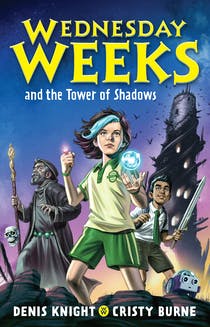
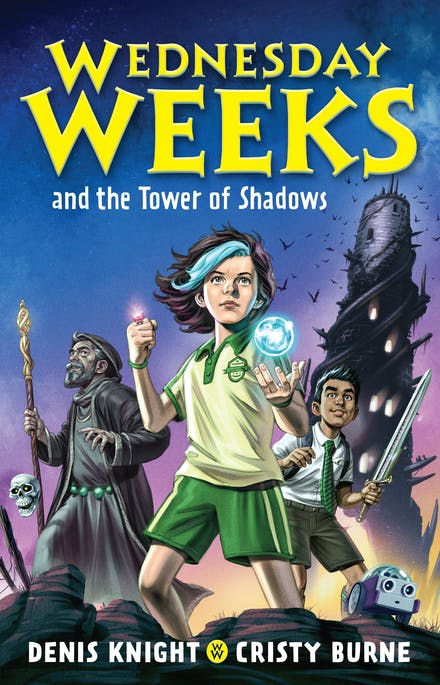
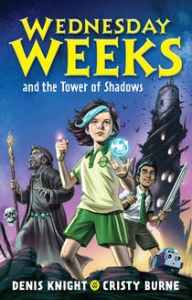
My next book comes out at the end of April. It’s the first in a science-meets-magic adventure series co-written with debut author Denis Knight. Book 1 is called Wednesday Weeks and the Tower of Shadows, and it’s about a schoolkid called Wednesday who mixes magic and science to save the universe from a power-crazy goblin king. It’s loads of laughs!

Beneath the Trees is out now! Ask for it at your favourite bookshop or local library. 


AWESOME EXTRAS

Beneath the Trees by Cristy Burne and illustrated by Amanda BurnettDownload Teachers’ Notes for Beneath the Trees

Read the first chapter on the publisher’s website

Visit Cristy’s website to see some photos of the Queensland environment where the story is set

Watch a YouTube video of Taronga Zoo Australian fauna team releasing a rehabilitated male playtpus back into the wild in NSW

Posted in authors, interviews

Dianne Wolfer and Munjed Al Muderis: from refugee to surgical inventor

MEET THE AUTHOR

Dianne Wolfer

Dianne Wolfer lives on the south coast of Western Australia, but she grew up in Melbourne, Bangkok and Albury. Dianne’s love of books is one reason she became a writer. She writes picture books, novels for  children and teenagers, and nonfiction for all ages. Her stories are about many things; different cultures, the environment, friendship, being brave, turns in the road and taking chances. Today we’re thrilled to have Dianne visiting to chat to us about her latest book, which is part of the Aussie STEM Stars series.

Munjed Al Muderis from refugee to surgical inventor

From the publisher:

Munjed is a humanitarian and world-leading pioneer of surgical osseointegration. The book follows pivotal moments in Munjed’s life: becoming a surgeon under the regime of Saddam Hussein, fleeing from war-torn Iraq and arriving at Christmas Island in a rickety boat, being held in the Curtin Detention Centre, his hard-gained medical success, and his acknowledgement as the 2020 NSW Australian of the Year.

On with the questions!


You’re a writer of fiction and nonfiction. What’s different about writing nonfiction compared to writing a fiction novel?
Writing fiction is just me and my imagination. There is some research, for example in The Shark Caller I wanted to find out more about Papua New Guinea and the practise of calling sharks, but with nonfiction you have to always check and double-check the facts that link to your book. When it’s biography, like Munjed Al Muderis from refugee to surgical inventor, and the person is alive, it’s super important to not only get the details correct but also to capture the ‘voice’ of the person you are writing about. That’s not easy. Historical fiction is different again, it sits between the two and some people call it ‘faction’. With the Light series, set in WWI, I imagined the characters; both real and fictitious. For example, when I began work on Lighthouse Girl in 2005, very little was known about Fay’s life on Breaksea Island in 1914. As time passes research sometimes uncovers interesting details that I wish I’d known way back then. Each genre has its own challenges and its own fun.

Your latest book is part of Aussie STEM Stars – a new series for kids celebrating Australia’s experts in Science, Technology, Engineering and Maths. Had you met Munjed Al Muderis before you began writing the book?
No, sadly I still haven’t met Munjed. He lives in Sydney and soon after I began work on his amazing story, COVID happened.

How did you go about your research for writing the book?
Munjed has co-authored two books for adults, given TED talks, been painted by Anh Do’s ‘Brush with Fame’ and been on many media shows, so although I could not meet him in person, I was able to watch Munjed on screen and listen to him speak about his life and surgical achievements. Munjed often spoke about pivotal life moments, like when he had to choose between probable death and cutting off the ears of prisoners, and coming to Australia by boat, and being locked in Curtin Detention Centre where they called him by a number instead of his name. These were some of the life-changing moments I pieced together to create the book. As I wrote I often asked myself, ‘How did these experiences shape the man Munjed has become?’

Australia is now the world-leader in osseointegration, a surgical technique that allows amputees to feel the ground as they walk, because of Munjed and his team’s surgical work. He’s the current NSW Australian of the Year and his resilience and positive ‘glass half-full’ (rather than ‘half-empty’) attitude inspired me as I drafted and re-drafted his story. “Life is about making a difference,” Munjed says. “We all have a mission in life, to leave behind a legacy.”

Do you have any tips for kids who would like to try writing a biography?
So many … capturing someone’s ‘voice’ is important. The more research you do, the better chance you will have of doing that. Then start writing and keep going until you get to the end. You can make notes along the way about things you’ll need to research in following drafts. When you’re finished a read-through, reread and let the story settle.

Then ask yourself questions like:

  • What is the heart of this story?
  • Why has my character made the choices she/he has?
  • Are there important turns in the road when they could have taken another path? Why didn’t they? Would their life have been very different if they had?
  • What does my character care most about and what drives them?
  • Who are the important mentors for my character?

Thinking about smaller things like the kind of clothes they wear, favourite music and the food they like is also a fun way to bring a character to life.

If ever I go to Iraq I will definitely try Gaymer & Kahi for breakfast.

Can you tell us a bit about your next writing project?
I thought I’d finished writing about WWI but one story kept calling me back. It’s a little like the ‘Light’ series but it’s also different (a special animal is the hero). I’ve done a lot of research and I hope I can share more about it soon. I’ve also completed a middle-grade novel which is on a publisher’s desk. Lots of other ideas are swirling about but these are the ones I’m working on.

Munjed Al Muderis is out now! Ask for it at your favourite bookshop or library or order it from the publisher.


AWESOME EXTRAS:

Munjed Al Muderis from refugee to surgical inventor

Download the Teacher’s Notes for this book. (PDF)

Watch a 30-second video of Dianne Wolfer talking about the book.

Visit Dianne Wolfer’s website to find out more about her and her books.