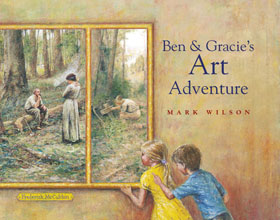
All through October, Alphabet Soup is celebrating turning three. We have heaps of writers and illustrators stopping by to answer THREE QUICK QUESTIONS and today’s visitor is Mark Wilson, author and illustrator of many books, including Ben and Gracie’s Art Adventure and The Little Wooden Horse.
1. Where do you like to write/do your artwork?
At the beach or around the coast somewhere. I love rock pools and rocky headlands.
2. Can you name a book you’d recommend to our readers?
The Mr. Badger series, by Leigh Hobbs. The most brilliant little pen and ink drawing on page after page!
Mark Wilson recommends the Mr Badger series by Leigh Hobbs
3. Can you offer a word or phrase that kids could use for inspiration if they have writer’s or illustrator’s block?
Two words … Stay cool.
Find out more about Mark’s books and illustrations on his website!
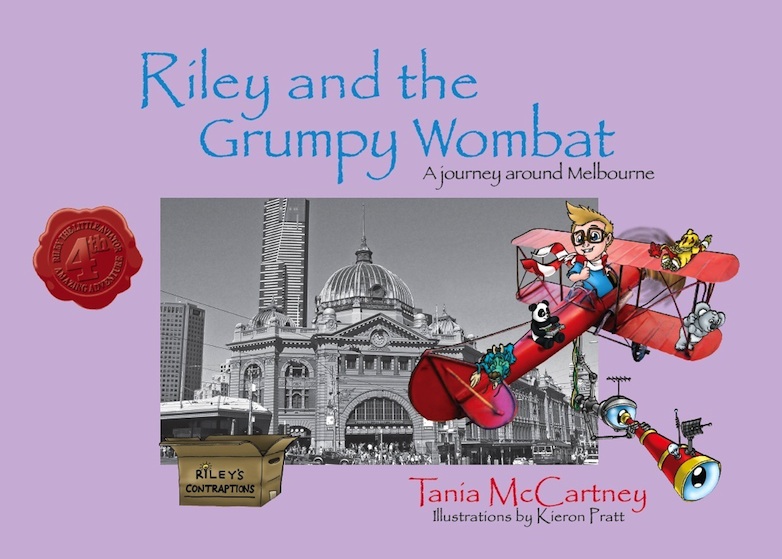
All through October, Alphabet Soup is celebrating turning three. We have heaps of writers and illustrators stopping by to answer THREE QUICK QUESTIONS and today’s visitor is Tania McCartney, author of the ‘Riley the Little Aviator’ series. The latest is the series is Riley and the Grumpy Wombat.
1. Where do you like to write?
In my trackie dacks. All hail the trackie dacks! I write from within these dacks … though of course, I don’t use my legs to type. I suppose I could get little teensy trackie dacks made for my fingers? I also like to write in cafés with my laptop, although I don’t wear my trackie dacks to the café. If you saw my trackie dacks, you’d know why.
2. Can you name a book you’d recommend to our readers?
I read the new Dr Seuss book—The Bippolo Seed and Other Lost Stories—and it wasn’t even published yet, so I felt very special seeing it so early. My heart was thumping out of my chest when I first picked it up. It thumped so hard, I had to give the book a hug to calm my heart down. I know I don’t need to recommend a new Dr Seuss book, because if you’re a reader, you’ll know how good the book will absolutely most certainly be. So I won’t say a thing. Except “read it”!
Tania McCartney recommends The Bippolo Seed and Other Lost Stories by Dr Seuss
3. Can you offer a word or phrase that kids could use for inspiration if they have writer’s block?
Onomatopoeia. (That’s all those funny words that sound like something—crash, tinkle, splash, squelch … you can use them to kick-start any sentence.)
Tania’s latest book—Riley and the Grumpy Wombat: a journey around Melbourne—is out now. See more on Tania’s books at www.taniamccartney.com or visit her book character Riley at his own blog—www.rileyaviator.blogspot.com. Make sure you stop by www.kids-bookreview.com for some really cool book reviews and author/illustrator interviews, too!
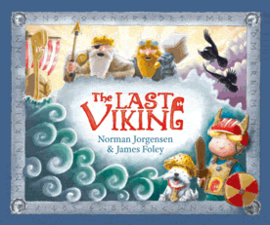
All through October, Alphabet Soup is celebrating turning three. We have heaps of writers and illustrators stopping by to answer THREE QUICK QUESTIONS and today’s visitor is James Foley, illustrator of picture book The Last Viking (by Norman Jorgensen).
1. Where do you like to draw?
My favourite place to draw is in my room, really early in the morning, while it’s still quiet, before the pets wake up … penguins can be very noisy when they’re hungry, and spider monkeys are incredibly grouchy until they’ve had a cup of tea and some toast.
2. Can you name a book you’d recommend to our readers?
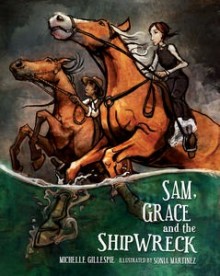
Sam, Grace and the Shipwreck written by new author Michelle Gillespie, illustrated by the incredibly talented Sonia Martinez. It’s coming out this month (October) and looks amazing. It’s the true story of how Sam Isaacs and Grace Bussell saved the crew and passengers of the Georgette when it was wrecked off the South West coast of WA a long time ago.
3. Can you offer a word or phrase that kids could use for inspiration if they have writer’s or illustrator’s block?
All through October, Alphabet Soup is celebrating turning three. We have heaps of writers and illustrators stopping by to answer THREE QUICK QUESTIONS and today’s visitor is Susan Stephenson, also known as The Book Chook, and author of Monster Maddie.
1. Where do you like to write?
We have a tree in our garden called the Thinking Tree. There’s a seat at its base where I love to sit, because it’s so peaceful there. I scribble and think, think and scribble, and listen to what my characters have to say.
2. Can you name a book you’d recommend to our readers?
One of my favourite books is Into the Unknown: How Great Explorers Found Their Way by Land Sea and Air. It was written by Stewart Ross, illustrated by Stephen Biesty, and published by Walker Books. I loved its stories about real-life explorers, and also all the maps and foldouts and the fantastic detailed drawings. Find out more about it in my review at The Book Chook.
3. Can you offer a word or phrase that kids could use for inspiration if they have writer’s block?
I think the very best phrase to use when stuck is “what if … ?” What if my hero falls flat on his face in front of the dragon? What if a raven swallowed the ring? What if the bully has a phobia about grasshoppers? That question has taken my stories in many surprising directions!
Susan Stephenson is a writer who lives about as far east as you can go on Australia without falling off. She loves reading, writing and pretending to be a chicken. Susan writes a blog about children’s literature, learning and literacy at The Book Chook.
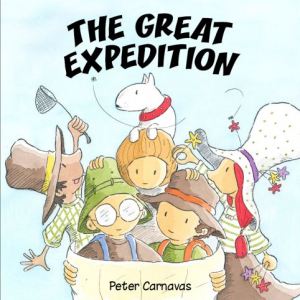
This story is loosely based on the expedition of explorers Burke and Wills. In The Great Expedition, the exploring party is assembled—with a leader, a navigator, a botanist, a biologist and an animal handler (to keep the dog under control). The group of young explorers needs to get a parcel safely to its destination. They set off in high spirits but soon run into all sorts of trouble … and then disaster strikes.
Although they are exhausted by their journey, obviously this adventure is not as arduous as the one Burke and Wills faced (plus, this journey has a happy ending!). This is a great picture book for kids learning about explorers—learning what happens on an expedition, and the roles of the people involved. At the end of the book there is a little about Burke and Wills, too.
Younger kids will enjoy the story as it is, older kids will appreciate the humour behind the kids’ expedition mirroring a real one. And everyone will love the quirky illustrations (look out for the dog in the endpapers!).
A fun adventure, and a springboard for learning about the great explorers of history.
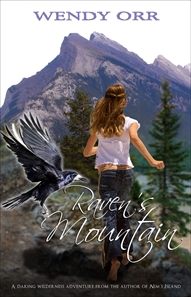
All through October, Alphabet Soup is celebrating turning three. We have heaps of writers and illustrators stopping by to answer THREE QUICK QUESTIONS and today’s visitor is Wendy Orr, author of Nim’s Island, Raven’s Mountain and many more.
1. Where do you like to write?
I’d love to say that it’s sitting on my favourite log out in the bush—but it’s actually at my desk. It’s a lot easier for my imagination and mind to fly free if my body is comfortable and in a good posture for writing—boring but true!
2. Can you name a book you’d recommend to our readers?
I’ve just finished City of Lies, the second in The Keepers trilogy by Lian Tanner. It was just as wonderful as the first (The Museum of Thieves).
3. Can you offer a word or phrase that kids could use for inspiration if they have writer’s block?
All through October, Alphabet Soup is celebrating turning three. We have heaps of writers and illustrators stopping by to answer THREE QUICK QUESTIONS and today we are lucky to hear from Frané Lessac, illustrator and author. Her books include Simpson and His Donkey, Ned Kelly and The Green Sash and many more!
On her website, Frané says “Travelling continues to be a major source of inspiration for my work as I render my impression of a country and its way of life in oil and gouache paintings.”
1. Where do you like to draw/paint/sketch?
I love to paint in my garden studio. I planted bright flowers in primary colours outside the big windows. My walls are covered with art painted by friends and favourite children’s book illustrators. It’s also full of objects that I’ve collected from my travels around the world.
Best of all, my cat and dog come in and join me when I work.
2. Can you name a book you’d recommend to our readers?
I’m a picture book person and enjoyed, Flood by Jackie French and beautifully illustrated by Bruce Whatley. It features a lone cattle dog during the recent Queensland floods.
3. Can you offer a word or phrase that kids could use for inspiration if they have illustrators’ block?
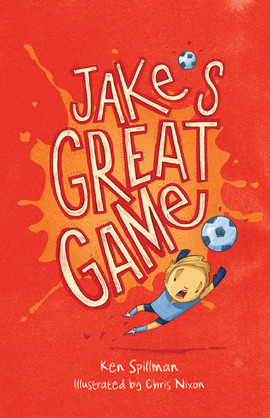
Jake’s Great Gameby Ken Spillman, ill. Chris Nixon, Fremantle Press, ISBN 9781921888502
A review copy of this book was sent to us by the publisher.
We are already fans of the Jake books, so we were excited to see the next book in the series, Jake’s Great Game.
Jake decides he wants to start playing soccer and his dad takes him to buy some boots—Jake likes the silver ones, and he’s sure he’ll be a soccer star. Then he finds soccer is not as easy as he thought it would be. Dribbling the ball is tricky … and everyone else seems to have the hang of it. The team has a game coming up. How can Jake be a soccer star if he can’t even dribble the ball?
Jake’s Great Game is a fun story for kids who are starting to read books with chapters. Chris Nixon’s black-and-white illustrations are on every page. You don’t have to have read the other Jake books to enjoy this one but if you have read the others, you’ll probably want to read this one, too—especially if you like books about sport.
We’re very excited about October because October is our Birthday Month. And this year we’re turning THREE.
So, three is our favourite number for a month. We have a three-themed writing competition, we’ll be giving away three writers’ journals later in the month (over three days) and from 3rd October we’ll have a stream of writers and illustrators stopping by the blog all month to answer THREE QUICK QUESTIONS.
All our writers and illustrators will be answering the same three questions:
1. Where do you like to write/draw?
2. Can you name a book you’d recommend to our readers?
3. Can you offer a word or phrase that kids could use for inspiration if they have writers’ block?
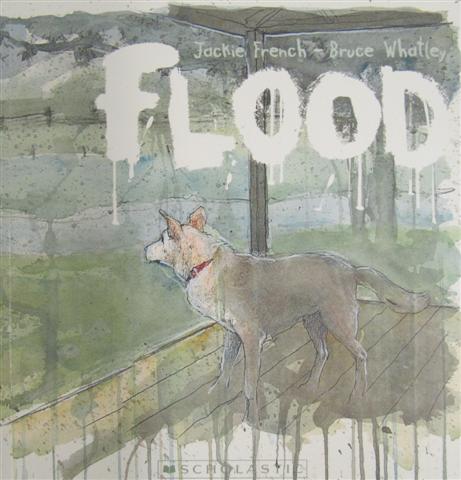
Flood by Jackie French, ill. Bruce Whatley, Scholastic Press, ISBN 9781742830728
A review copy of this book was sent to us by the publisher.
This book was written after the recent floods in Queensland. It tells the story of a flood—what happens before, during and afterwards—the power of a river and the people who are affected, and the kindness of strangers and volunteers.
Bruce Whatley notes at the end of the book that he did the artwork ‘vertically on an easel to get the paint running, enhancing the idea of wetness.’ The illustrations do seem to be still wet with paint dripping down the page—the reader follows the dog (shown on the cover) through the events of a flood as the people around him band together to save people and houses.
Scholastic advises that a copy of this book has been donated to every Australian primary school, and profits from sales will go to the QLD Premier’s Disaster Relief Appeal. At the end of the book there is some information about resources explaining what to do before, during and after a flood.
This is a book with a simple story and gentle illustrations that really help you imagine the landscape in a flood. It shows the danger and destruction of a flood—with a positive, hopeful ending.









 alphabetsoup.net.au