Posted in authors, competitions, teachers' resources

Our Australian Girl series — meet the author

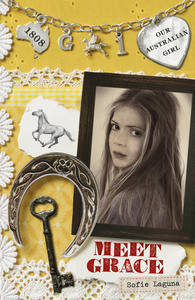
This month there is a new series out called Our Australian Girl. Each story in the series is set in a particular era of Australian history and the first books in the series explore the convict era and colonisation, the goldrush and Federation. In the first books we meet Grace, Letty, Poppy and Rose. Each of their stories begins in a different era and each character has their own series of four books.
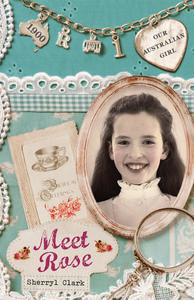
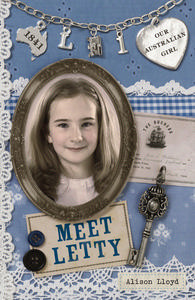
Meet Rose

Meet Letty Meet Grace

Today we are lucky to have one of the authors visiting Soup Blog. Gabrielle Wang is writing the series about Poppy. The first book, Meet Poppy, is out now.
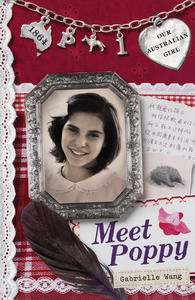
Meet Poppy

Were you asked to write Poppy’s story in particular?

I was given the name Poppy by my publisher. But they let me decide on the era in Australian history that I wanted to write about. I chose the Gold Rush because it was a very exciting time, and because my great grandfather came to Australia then. He was Chinese. I have written him into the third book which is called Poppy and the Thief. I have never met my great grandfather so I don’t know what kind of man he was. I therefore had to make up a lot, especially about his personality. But I did know what town he settled in and what he did for a living. There is a plaque in Wahgunyah on the Murray River that is dedicated to him. He was a pioneer in that area.

Poppy’s story is set in 1864. Did you have to do some research before you starting writing?

With historical fiction you always have to do heaps of research. Even though Poppy is not a real person, a lot of the facts in the novel are true. For example, Harry Power is a real bushranger. When I write a story, I see a picture in my mind as if I’m watching a movie, so before I could start the Poppy series I had to have an image in my mind of the way Victoria looked back then—the towns, the way people dressed, their hairstyles, the food they ate etc. Because 1864 is quite early in the history of white settlement in Victoria, most of the towns we know today didn’t exist then. I had to be very careful not to write about a town that had not been built yet.
How long did you need to research before you were ready to write?

I researched the story for about 4 months then I wrote a first draft. This is when you write and don’t stop to do corrections. You just want to get the story down. There are four books in the Poppy series but I wrote the first draft as if it was one long novel because that’s what it is really. Each small novel is only a part of a bigger story. Of course the research part doesn’t stop when you start writing. For example, in Meet Poppy, I needed to know how people lit stoves and fires in 1864. Were there matches? I needed to know what kind of lighting they used and what washhouses looked like, and much much more. As I wrote the story I was constantly on the internet searching for small details like these. We are so lucky that Google is available. It makes writing much easier.
Did you go anywhere else to find your information?

I went to the State Library of Victoria and did a lot of my research there. Unlike suburban libraries, you are not allowed to borrow the books from any State Library. I also took books out from my own local library, used the Internet, bought books to keep, and interviewed people. The story takes place along the Murray River, so I drove up to Beechworth and stayed for the weekend to get a good idea of the vegetation and have a look at the historic towns there. Poppy is born to a Chinese father and an Aboriginal mother so I have had to work closely with several Aboriginal people to make sure everything I wrote concerning Indigenous matters was correct.
Do you think growing up in 1864 was very different from growing up in 2011?

Try to imagine what life would have been like back then. There is no electricity, no computers, no aeroplanes or cars. The toilet is outside or just a hole in the ground. You ride on horses or in carriages or else walk. If your father is a gold prospector you probably live in a tent or bark hut if you’re lucky, by the banks of a creek muddied with gold panning. You don’t go to school unless you live in a town. Probably at least one of your brothers and sisters has died. If you are an Aboriginal girl, life is much worse for you. You would be forcibly taken away from your parents and put on a mission like Bird Creek. There you would be trained as a servant girl to work in a rich person’s home. You most likely would never see your mum or dad ever again.
What do you like best about Poppy’s character?

Poppy is brave, much braver than I could ever be. She is resourceful and creative and most of all, she is very kind.

Have you read any of the other ‘Our Australian Girl’ books?

Yes. I love Grace and Letty and Rose. They are all such strong characters and their stories are very exciting.

Gabrielle Wang
Gabrielle Wang, author of Meet Poppy

Did you find writing ‘Meet Poppy‘ any different from writing your previous books?

The Poppy books, Meet Poppy, Poppy at Summerhill, Poppy and the Thief, and Poppy Comes Home are a series and I’ve never written a series before. But now I have a taste for it, I’ve decided to start on another series soon. I’m not sure what it’s going to be about, or what my main character will be called. I’ll let it simmer away in my mind first. Wh enever I visit a school to talk about my books I’m constantly on the lookout for names to use in my next story.

Gabrielle Wang’s books include The Garden of Empress Cassia, The Pearl of Tiger Bay, The Hidden Monastery, The Lion Drummer, A Ghost in My Suitcase and Little Paradise. You can find out more about her and her books on her website http://www.gabriellewang.com/.

You can find out more about the Our Australian Girl series on the series website. The website also has a fun page including a quiz, activities and a competition.

Posted in teachers' resources

Meet Ken Spillman – author of the Jake books


"Jake's Gigantic List""Ken Spillman"

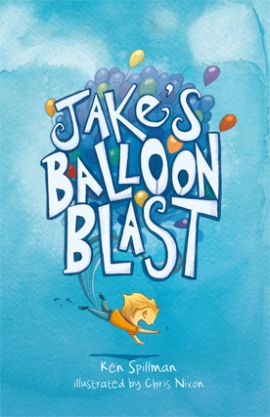
Our visitor today is Ken Spillman, author of many books, including Jake’s Gigantic List and Jake’s Monster Mess. The third book in the series Jake’s Balloon Blast will be out in March 2011.

What made you become a writer?

Quite simply, a love of stories.  That developed early and by the age of 8 I was a keen writer, even during school holidays.  When I was 15, my English teacher told me to keep writing.  He forgot to tell me to stop writing, so I’m still going.  It’s all his fault.

Was it easy to get your first book published?

It was, actually, but before that I’d published a lot of short stories and poems, while having quite a few rejections as well.

What was your favourite book as a child?

I had many, including adventure stories like Robin Hood and Tom Sawyer.  But an enduring favourite was – and IS – The Little Prince.  That always gets me thinking – I can revisit it every year and learn something new!

Where do you get your ideas/inspiration?

It’s very difficult not to get ideas – so the trick is to give some time to the ideas you do have.  For me, watching and listening leads to imagining, and that’s where story begins.  After that, it’s all about work.

What do you like to do when you’re not writing?"Jake's Balloon Blast"

I like to read!  But I also love sports and enjoy swimming or kicking a ball around.  Travelling is also great, and recently I’ve enjoyed talking to big groups of Jake fans in Asian countries.

Are you working on a book at the moment?

I’ve always got a few books on the go.  Chris Nixon is illustrating the fourth Jake book – with a sporting theme – and I’ve written two more.  I’m also working on a picture book for Scholastic and a new series for release by Puffin India later this year.

When you are writing the Jake books, do you work closely with Chris Nixon, or do you finish the text and then leave him to do the illustrations?

I finish the story first, but since the first Jake book I’ve been able to imagine what Chris will be able to do with it as I go along.  He nailed the Jake character straight off, so I know he’s always going to really ‘get’ what I write.

Do you have any advice for young writers?

First and foremost, have fun.  What a magical thing it is to create whole worlds – with just paper and ink!  If you enjoy writing, you’ll do it often – and that’s the second thing … work!

Posted in teachers' resources

Book Review: Brain Drain

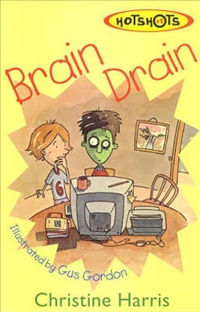
"Brain Drain by Christine Harris"Brain Drain by Christine Harris, ill. by Gus Gordon. Published by Hodder Headline Australia, ISBN 9780733612763

Reviewed by Elliana*, 9, WA

Brain Drain is about a young boy called Hamish. Hamish has a sister called Lucy. One day Hamish had too much time on the computer playing silly games when he got brain drained and the computer swapped brains with him. Lucy told her parents but they didn’t believe her. How can Lucy get old Hamish back and not acting like a computer anymore?

I think this book is suitable for girls and boys aged 9+ because they might find this book a bit confusing. I give this book 3/5. I liked the book because it was funny and silly.

[Brain Drain is out of print but your local library may have a copy.]

"Undercover Readers Club logo"*Elliana is a member of our Undercover Readers Club. A review copy of Brain Drain was provided by the author.

Posted in poetry, teachers' resources

Poetry tips from Fred (aged 7)

We were thrilled to discover a new poetry blog this week, called Fred’s Petals. We liked it so much, we asked Frederique if we could interview her, and she kindly agreed.

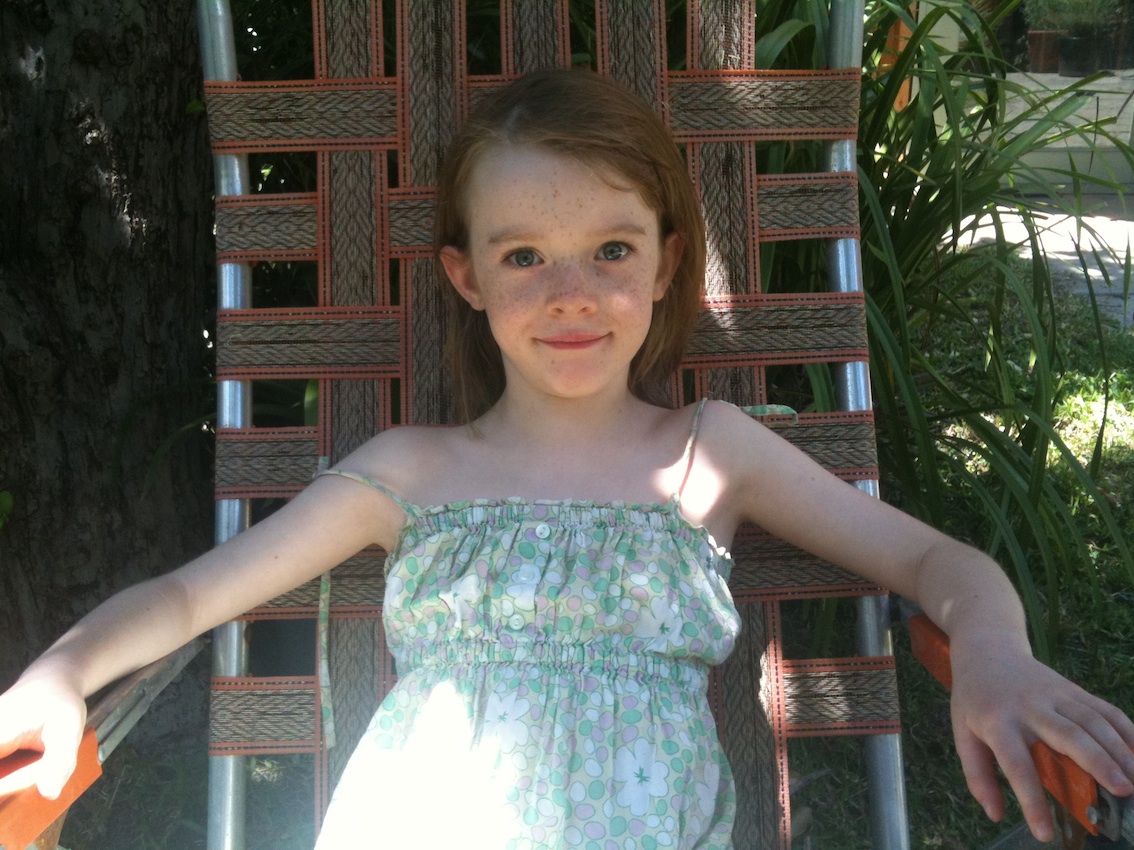
"Photo of Fred (Fred's Petals)"
Fred, the poet behind Fred's Petals (2011)

Fred, can you tell us a bit about yourself?

My name is Fred, I live in the bush. I’m seven years old and I have a sister called Una, and a little baby brother called Avery. I like reading books and magazines and I like writing poetry.

How long have you been writing poems?

For three years.

Why did you decide to start the Fred’s Petals blog?

For my friend Yumi could read them, she lives in Canada.

Where do you get your ideas for your poems?

Things around me give me ideas and sometimes my family helps me.

Do you like to read (or listen to) other people’s poems ?

I like to listen when somebody reads poems to me. I like listening to other people’s poems have great ideas like my mum.

Some kids think writing poems is hard. Do you have any advice that would help kids who want to start writing poems?

Well you just think of a name to start, and then write about the name and rhyme the words. I come up with my ideas by thinking about the things around me. You could try writing about where you are, and what they see, and come up with a little story that rhymes.

Be sure to visit Fred’s Petals and leave a comment. (All poets love some appreciation!)

Posted in authors, teachers' resources

Literary auction: $$ for Qld Floods

Authors for Queensland is an online auction set up to raise money for the Qld Premier’s Disaster Relief Appeal. Up for auction are books signed by the authors and/or illustrators, picture book illustrations, manuscript assessments for writers, author mentorships, Alphabet Soup subscriptions and much more. (Make sure you check with an adult about bidding for items.)

Items that caught our eye included:

  • Signed copies of Wendy Orr’s new book Raven’s Mountain (out February)"Raven's Mountain (cover)"
  • Signed copies of Katrina Germein’s My Dad Thinks He’s Funny
  • Signed copies of Karen Collum’s Samuel’s Kisses
  • Signed copy of The Tomorrow Book by Jackie French
  • A full set of signed Billie B Brown books by Sally Rippin
  • Signed copy of This is the Mud by Kathryn Apel
  • Signed copies of Famous and Chess Nuts by Julia Lawrinson
  • Illustration (unframed) by Judith Rossell from Janeen Brian’s book Too Tight Benito

The auction ends 24 January 2011.

Posted in Book reviews by kids, Book reviews by Pippa, Christmas

Book review: Quentin Blake’s A Christmas Carol by Charles Dickens

Here’s a review from one of our Undercover Readers—just in time for Christmas!

Quentin Blake’s A Christmas Carol, by Charles Dickens, ill. by Quentin Blake. ISBN 9781843651215, Anova Books.

"Quentin Blake's A Christmas Carol (cover)"Reviewed by Philippa, 9, WA.*

In this book, a crotchety old man, Ebenezer Scrooge discovered the true meaning of Christmas. But only after he is haunted by three ghosts!

It is written in an old-fashioned style but I like it, it’s a really good story. I especially love the illustrations. Quentin Blake is a great illustrator. My favourite illustration is the Ghost of Christmas Present because he looks a bit like Santa Claus.

I think that 9 to 99 year olds would like this book.


"Undercover Readers Club logo"*Philippa is a member of our Undercover Readers Club. The book reviewed here is Philippa’s own.


Posted in competitions, info, poetry, teachers' resources

Summer 2010 writing comp!

Win a $20 book voucher!

"Writing a poem"Write a poem up to 10 lines long (shorter is fine). Your poem must include the word ‘snap.’ Include a competition entry form—you can print one from Alphabet Soup‘s website.

ENTRIES CLOSE 7 JANUARY 2011. (We’ll accept entries postmarked 7 January.)

This writing competition is open to children aged 12 and under. Entries are judged in 3 age categories.

Posted in Beaconsfield Primary School, Book reviews by kids

Book reviews by Beaconsfield Primary Students

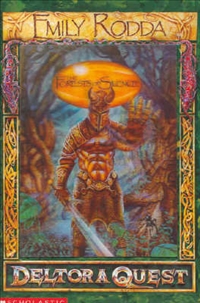
Today we hear from two year 5 students at Beaconsfield Primary School in WA. We sent the class a copy of Emily Rodda’s The Forests of Silence for review. Here’s what two of the students had to say.

The Forests of Silence, by Emily Rodda. ISBN 9781865046730, Scholastic Australia.

"The Forests of Silence cover"1. Reviewed by Jye, age 11, Beaconsfield Primary School.

The Forests of Silence, a short novel by Emily Rodda, is a fantastic fictional tale of fantasy and is great for eight to nine-year-old readers.

This story begins when prince Endon’s father, the mighty king, dies of a terrible sickness leaving a startled Endon the last surviving member of his great sovereign family and as ruler of the mighty city of Deltora. As “tradition” goes, Endon must wear the magical belt of Del upon kingship. But when his childhood friend, Jarrod, does some research on the mysterious belt, he finds that it must be worn at all times. Jarrod desperately tries to warn Endon but the evil governor, Prandine, stops him in his tracks. Upon banishment, Jarrod is forced to take refuge in the strugglingly poor city of Del.

Many years later, Jarrod marries but still awaits the king’s great and famous golden arrow; a call for help. One day, finally, a glimmer in the morning sky excites Jarrod and he joyously sprints to the castle walls to find a cleverly disguised map. He quickly follows it to his old friend. But something has gone terribly wrong and all hope for Del is almost lost for the seven stones on the belt of Del have been scattered across the land to far away and dangerous places.

This book is of the quest for the first gem. The quest is left to Jarrod’s son, Leif, and with an unlikely companion, he sets off to his first destination of danger; The Forests of Silence.

I found this book a bit short for I like to read the two hundred pages or more novels. I also thought it was kind of kiddie and predictable for a ten year old but it was alright.

I might have liked to read it on my own. It was rather short for my tastes and I think almost everyone in my class thought it was very predictable. But it was alright and it had a good storyline. I give it a five out of ten.

"The Forests of Silence cover"2. Reviewed by Erin, age 10, Beaconsfield Primary School.


The Forests of Silence is about a boy named Lief who is told he has to go on a quest to find a precious gem to defeat the Shadow Lord.

This is an adventure-filled novel about two young boys named Jarrod and Endon who grow up together as young boys in a palace till they are men.  Endon’s dad, who is king, died and straight away Endon was crowned king.

Jarrod is told to leave the palace for something he didn’t even do. About ten years later Jarrod and Endon married a lady each and later Jarrod and his wife tell their son Leif he will have to go on a dangerous quest to seek seven precious gems to defeat the Shadow Lord.

The Forests of Silence is a fantastic story if you like adventure and fantasy. It is a short and easy to read. From about the age seven to ten children will love this book. I enjoyed it but it is easy to predict in some parts of the story.

People will enjoy the Forests of Silence. It looks like a book for boys but I enjoyed it. I would not read the whole series because I’m not into fantasy books. I hope everyone who reads this book will like it as much as I do, maybe more.

*Beaconsfield Primary is a member of our Undercover Readers Club. A review copy of The Forests of Silence was provided by the publisher, Scholastic Australia.

"Undercover Readers Club logo"

Posted in Book reviews by kids, Duncraig Primary School

Book reviews by Duncraig Primary: Day 5 pt 2

Duncraig Primary School (in WA) has sent us some year 5 students’ book reviews.* We’ve been posting two reviews a day for the last 5 days and this is the final review. Well done to all the students for their fabulous reviews and for sharing some great books!

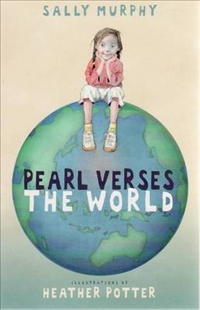
Pearl Verses the World, by Sally Murphy, ill. by Heather Potter. ISBN 9781921150937, Walker Books Australia.

"Pearl Verses the World"Reviewed by Lauren, age 10, Duncraig Primary.

This award-winning book is fantastic if you love reading books with characters, through their eyes and about their lives.

This book has won TWO awards WOW! One is a bronze award for a short-listed book and the second award is for a silver award for an honour book.

Pearl is a girl who is very fond of her grandma. She tells us at the beginning of the book that she is alone and that she is a group of one. Some of the groups at school which are not groups of one and are very tight are the ballet girls, rough kids and footy boys. Pearl tells us about her life at home and at her school. She soon finds out that she is really good at writing poems.

The wonderful illustrations that Heather Potter has done really put the picture in your mind, like you are there watching it in your own eyes. So, if you like books that make you feel you’re there watching the story, borrow it from a friend or take it out of the library today or buy it at a local book store.

I loved reading this book because it had poems in it and I especially loved the poem at the end. This book also has a bit of sadness in it, therefore I would recommend it for ages between 8 and 12 years.

I hope you enjoy the book as much as I did.

*Duncraig Primary is a member of our Undercover Readers Club. Books reviewed here are the students’ own.

"Undercover Readers Club logo"