Wonder by RJ Palacio, Random House UK, ISBN 9780552565974
REVIEWED BY EMILY, 10, New York, USA
Emily reviewed her own copy of this title.
Wonder by RJ Palacio is an incredible book. It is about the main character, Auggie Pullmen and the challenges he has to face at a real school because of a facial disorder that he was born with. This is a book of mixed emotions – some of his feelings were happy, sad, mad and embarrassed.
Auggie had many struggles at school and with his friends because he was different. One example of when Auggie felt embarrassed is when Auggie trusted Jack with secrets of his surgeries, but Jack let him down by making fun of him with other kids behind his back. Even though this made him feel sad he didn’t forget about his other friendships. Another friend, Summer, made Auggie feel stronger about himself. Summer was always there for him and she didn’t care what other kids thought about his face. And Summer was very kind to Auggie. The way Jack treated Auggie made me feel unhappy and sad because you should always treat others the way you want to be treated. But Jack was unkind and didn’t care about how Auggie felt.
The life lesson of this book is to be brave and to not care what other people think of you. And to try and overcome those challenges in life even if it’s hard.
This is Emily’s first book review for Alphabet Soup. To send us YOUR book review, read our submission guidelines. Happy reading!
D-Day Dog by Tom Palmer, illustrations by Clohosy Cole, HarperCollins, ISBN 9781781128688
REVIEWED BY Arjan, 11, NSW
Arjan reviewed his own copy of this title.
D-Day Dog is a book that teaches kids about the D-Day landings on 6th June 1944. Eleven-year-old Jack has an admiration for war heroes, particularly men on D-Day. But his beliefs are questioned when his dad is called up for active service in Afghanistan. Out of the blue, Jack’s class is taken on an excursion to Normandy. There he learns the true story about D-Day and how one paratrooper took his dog with him at the airborne landings. Sadly neither of them survived.
I loved the shared dialogue between the different characters as well as the descriptions of the characters and the places. I liked the dream sequence, it showed Jack’s emotional turmoil.
The book teaches kids that war is not a good thing and empathises with different characters and their common traits.
This is Arjan’s first book review for Alphabet Soup. To send us YOUR book review, read our submission guidelines. Happy reading!
Kristy Nita Brown is a Western Australian author writing junior fiction books and delivering creative writing, independent publishing and film making workshops at libraries and schools. Today we’re pleased to be chatting to Kristy about the second book in her Mavey and Beth’s Double Act series: The Hole Truth, illustrated by Alison Mutton.
The author provided Alphabet Soup with a reading copy of The Hole Truth.
Almost everyone in Year Three is rocking earrings. Shiny gold stars, diamond studs, dangly rainbows, buzzy bees. Everyone except Mavey, that is. With her twin sister Beth and her best friend Woody by her side, Mavey’s facing a big decision. Fit in? Stand out? Studs or no studs? Can Mavey figure it out before the whole school finds out the hole truth?
This is Book 2 in your junior fiction series. Have you planned out the series in advance or do you just focus on the book you’re currently working on?
When I first came up with the idea for Mavey and Beth, I only had one book in mind. But once I finished it, I realised it could work as a series, with the girls taking on a new challenge in each school year up to Year 4. I won’t go past Year 4, as this would push the series into middle-grade territory, and these are chapter books for early readers.
A fan recently asked me why the story is always told from Mavey’s point of view and not split with Beth over the books, since they’re twins. Mavey is shy, introverted, and thoughtful. I feel these kinds of characters are underrepresented in junior fiction. Beth is more outgoing and dramatic, the kind of character who’s already well represented. For me, Mavey is the heart of the story. She’s trying to figure out her place in the world and make sense of things other kids seem to grasp more easily, and that’s the perspective I want to explore.
Beth has her ears pierced, but her sister Mavey is nervous about getting her ears pierced. Do you have your ears pierced? How old were you when you made the decision?
The Hole Truth is inspired by my daughter and the pressure she felt from her peers in Year 3 to get her ears pierced. It’s a real issue for primary school kids and isn’t just girls, kids of all genders are getting piercings these days.
I do have my ears pierced, but I don’t remember when or how it happened. I also have my nose pierced. I did it while writing The Hole Truth to learn more about the process. The piercer explained everything to me including the process and the importance of consent. The person getting pierced is always in control, no matter their age, and can say “no” or “stop” at any time. Some of the stories of kids she’d pierced even made their way into the book!
What’s your best tip for someone who feels anxious about the pressure to do something they’re unsure about?
My best tip is to remember that it’s okay to take your time and say “no” if something doesn’t feel right. You don’t have to give in to pressure just to fit in or please others. It’s important to listen to your own feelings and boundaries. Sometimes talking it through with someone you trust, whether that’s a parent, teacher, or friend, can really help you figure out what’s best for you. And remember, you’re always in control of your choices, just like I learned from the piercer. Your choices are important, because they are yours.
Spelling homework gets a mention in the book – is spelling one of your superpowers or superchallenges?
Spelling is definitely not one of my superpowers, and I love telling kids this! So many young writers struggle with spelling, and I want them to know it doesn’t have to hold them back. Being an author doesn’t mean you have to be a perfect speller. We have editors who help fix punctuation, grammar, and spelling. Once kids realise this, they can let go of the fear and just focus on the story they want to tell. I even tell them I use voice-to-text when writing sometimes. You don’t even need a pen – just an idea! I’m living proof that you don’t have to be a perfect speller to be a storyteller. If you’ve got a good idea, there’s always a way to get it down on paper.
What’s next for Mavey and Beth?
Will there be a third Mavey and Beth book? In my mind, yes … I think there will be! It will be set in Year 4, and I’m thinking it might be about skateboarding … but I’m open to suggestions. If anyone has ideas for the next book, I’d love to hear them. Feel free to email me! That said, my writing time is limited because I also run the Book Builders Challenge in schools, which takes up a lot of my year. So, the plan is for a third book, but I’ll see how it all fits together!
The Hole Story is out now! See the list of stockists at the author’s website.
Kylie Howarth is an award-winning, internationally published children’s author-illustrator from Western Australia. Kylie has swum with whale sharks, manta rays and humpback whales in Ningaloo, piranha and pink dolphins in the Amazon, braved scuba diving with lionfish in Egypt, marine iguanas and hammerhead sharks in the Galapagos Islands and encountered great white sharks in South Africa. She can also confirm that ice-cream bean trees are real and not fiction! (And the fruit does taste just like vanilla ice-cream.) Today Kylie is visiting to talk about her latest book, the second in her graphic novel series, Kev and Trev: Snot Scary Jungle Stories!
The publisher provided Alphabet Soup with a reader copy of Snot Scary Jungle Stories.
From the publisher:
Join Kev and Trev’s epic jungle adventure – full of roarsome new friends and frightfully fun times! Outswing a scary jaguar, steer clear of hairy spiders, poison frogs and cheeky monkeys, and dance like your life depends on it, all the while searching for mysterious pugorillas … and Kev’s missing shorts! Jump on board Kev and Trev’s popcorn powered houseboat and sail to the jungle for their most tree-mendous journey yet.
How long does it take you to create a Kev and Trev book?
The first book took three to four years! Developing a new concept and new characters can take a lot of time, but it’s also my favourite part of the process. At the same time, I was studying how graphic novels work as I had not made one before. Now that I’ve finished Book One and know the main characters well, each new book will become faster to make. I’ll be creating one Kev and Trev book every year.
Book 2 (like Book 1) is laugh-out-loud funny and full of puns. Do you brainstorm a bunch of themed jokes before you start writing the plot? Or do you find the jokes pop up as you get into the story?
Ha ha, thanks! I love humour in books and my family thrives on jokes and banter too. So, the funny bits just pop up naturally once I start writing the dialogue. I’ll then read my rough draft to my kids, who’ll suggest more jokes (usually funnier than mine) and I’ll add those in too.
Which of the characters is your favourite to draw? (We promise not to tell the others.)
My Happy is the easiest to draw and I kind of wish I’d made the other characters just as simple. Then perhaps I could make two graphic novels in a year instead of one! Mr Happy is also my favourite as I draw him with school kids at my author visits. I love seeing him drawn in all the different kids’ styles and enjoy reading the funny speech bubbles they write for him.
Graphic novels and comics feature a lot of speech bubbles. Do you draw the speech bubbles first and then fill in the text? Or put the text in first and then draw the speech bubble around it?
It is always easier to write or type the text first and then draw the bubble around it. That way you ensure the text fits nicely inside and won’t get too squishy. I am passionate about creating books that are inclusive of struggling readers, so making sure the text is clear and easy to read is important.
Excerpt from Snot Scary Jungle Stories by Kylie Howarth
Can you tell us a bit about what you’re working on next?
I’m excited to be working on Kev and Trev Book 3!!! I’ve plotted a draft outline with another unexpected twist (like Book 2). I am now starting to plan each page by roughing out loose sketches. I still have a long way to go yet, though. The next steps after that will be to write and refine all the dialogue and short stories then research and design the new characters. The research stage will be fun as Kev and Trev are off to the snow in Book 3 and so am I! There will be some very COOL snow animal characters.
One last thing, thank you to all the kids who’ve read Kev and Trev! You are EPIC!!
Kev and Trev: Snot Scary Jungle Stories is out now! Ask for it at your favourite bookshop or local library.
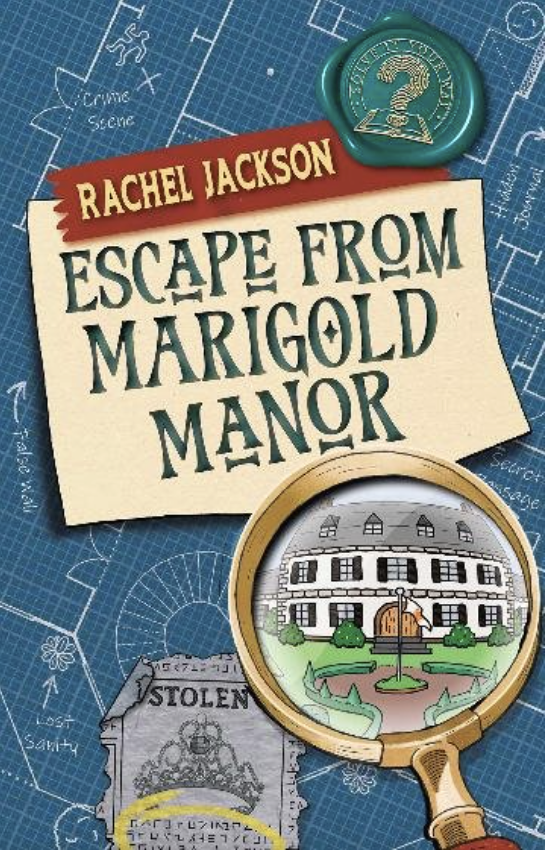
Escape From Marigold Manor by Rachel Jackson, Riveted Press, ISBN 9781763526068
REVIEWED BY ELLA, 9, WA
The publisher provided a review copy of this title.
Escape from Marigold Manor is a detective book with lots of cases, which the reader sometimes has to help solve.
This is not the kind of book I would usually read, but I enjoyed the surprising endings and interesting challenges. I did find some of the challenges a little bit tricky!
I would recommend this book to anyone who likes mysteries and puzzles, and choose-your-own-adventure books!
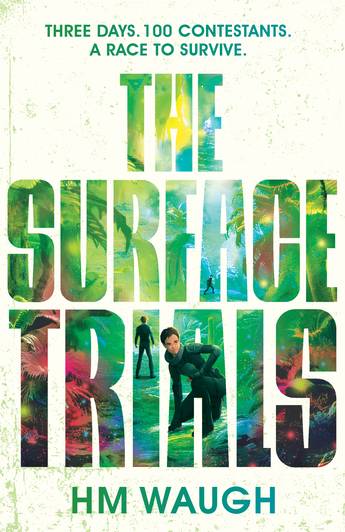
Teams of kids on an alien planet competing to get into Starquest Academy, three clues and only three days to find their way to the finish line. Today we’re chatting with HM Waugh about her latest book: The Surface Trials. HM Waugh is a children’s author, educator and environmental scientist with a long-term love of wild places and outdoor adventures. She has handled dragons for a job, and dreams of one day blasting into space. Her books mix humour, danger and friendship with a dash of science and imagination.
From the publisher:
An epic page-turner full of twists you won’t see coming, set on an alien planet where, under the watch of a galaxy-wide TV audience, Ammy Antares and her fellow competitors must complete a challenging quest to gain entry into an elite interplanetary academy. Welcome to the Surface Trials.
In your novel, squads are groups of children competing and the groupings are assigned. If you were in The Surface Trials, what talent/knowledge/skills wouldyou bring to your squad?
I love the idea of a squad, because when I’m in an escape room there’s no way I’m getting out without other people’s ideas and points of view.
I think I’d offer my squad some halfway decent analysis of clues to try and break codes – I love pulling things apart searching for hints and patterns … Sometimes I’m even successful! I have a vast array of potentially unhelpful facts about science, gardening, and my favourite fantasy and sci-fi books. I can read maps and building plans like a pro, thanks to an early love of architecture and an ongoing commitment to epic fantasy novels. And I think I’d be pretty good at navigation and survival. I ought to be, since I teach that stuff as part of my job. Plus, every time I’ve become lost in the wilderness, I’ve made it out again!
I am also very good at eating chocolate …
The squads face some pretty hairy scenarios. How do you go about writing a scary scene for your characters? How do you let go of those ideas at night so you can sleep?
Hairy, huh? I think I know exactly what scene you’re referencing there! Scary scenes are so much fun to write! They’re important for making a story exciting, and they give my characters a chance to work out how awesome they are – which is kind of the purpose of a story, I think. For me, making words on a page capture a reader is the result of lots of little things added together.
First, I need scary subject matter. I like to get inspired by freaky science, weird facts, mind-blowing history and mouldering industrial ruins. I make sure the stakes are high – failure has to mean something bad, so the reader is on the edge of their seat. To have this work, I need to connect the reader to the characters before I launch into a big scary scene. I want the reader to see the characters as real people, people they care about. People they don’t want eaten alive by a newly-hatched alien.
Next I need rising tension – that ever-increasing sense of impending doom. This is what keeps a reader hooked to the page. I keep raising the tension throughout my books, but every big scene is a tension peak. Increasing tension in a scary scene is about shorter, sharper sentences. It’s about concentrating on what the characters would be noticing in that moment – they’re not going to be giving a monologue on the colour of the sunset if they’re being chased by a ravenous monster. They’ll be more concerned about where their friends are, where they can hide, and how hot the monster’s breath is on the backs of their legs. I also often add in little elements of humour, right smack bang in the middle of the scariness. Honestly, I don’t want my readers terrified! Plus, that dash of a laugh makes the rest of the scene seem even scarier.
Finally, to make it feel real I inject real emotions. I may not have been in any of the exact situations I put my characters in, but I think of the times I’ve been terrified and I try to write those emotions onto the page.
How do I sleep at night afterwards? Blissfully. Once a scene is written down, my mind knows it doesn’t have to keep thinking about it. It’s time to start dreaming about what my characters might face next! But if I’m partway through writing a scary scene? Yeah, that can sometimes mean a bit of a sleepless night, but that also gives me lots of great ideas about what could happen when I continue writing the next day.
The storytelling offers multiple points of view in this book; we hear from several of the squad members. Why did you decide to tell the story this way, rather than choosing to tell the story through the eyes of one character only?
Choosing points of view (POVs) is always difficult. Two of my main characters, Deneb and Ammy, are both drafted into the same squad but they’re very different people. So I felt we needed to hear from both of them. For instance, how Ammy sees herself is not always how others perceive her, and I wanted some of that vulnerability and self-doubt to show. Deneb’s POV provides this.
And, of course, I have a disguised character. Nobody in the Surface Trials knows which contestant is actually Rian Amalthea, the uber-famous and mega-rich heir to two massive space Dynasties. He could literally be anyone. I didn’t even know at first! Having Rian’s POV deepens that mystery. Where is he? Which squad is he in? Who could he be?
Do you have a tip for young writers who would like to write their own page-turner?
First off, rising tension is your friend. It works (like I’ve talked about already) with scary scenes. It also works across an entire story. Rising tension keeps the reader hooked. So … keep ratcheting it up. The stakes need to keep getting higher, the mystery more mysterious, the dangers more dangerous. But beware! Too much continuously rising tension weirdly means it stops being tense. The reader gets used to it, and it loses its impact. To avoid this, I drop the tension slightly after each peak scene so the reader can sigh in relief, before I crank it back up and they realise things are actually worse than ever! <evil laughter>
Secondly, experiment with ending your chapters on mini-cliffhangers. I like to picture all the kids out there (my own included) who have been told they can read to the end of the chapter and then it’s lights out. My aim is to have them still reading many chapters later because they just have to know what happens next. I hope they’re so deep in the book they don’t even realise they’ve read past the chapter end. If this is you, feel free to tell your responsible adult that it’s not your fault, the author (me!) did it on purpose 😊.
Can you tell us a bit about what you’re working on next?
I have three things I’m working on at the moment, and I’m in love with each of them for very different reasons. None are contracted to be published. Yet!
The Surface Trials is out now! Ask for it at your favourite bookshop or local library.
The publisher provided a review copy of this book.
Higher Ground is a picture book about a grandma, brother, sister and one rabbit who get stranded on a really tall apartment building in the rooftop garden, because of a huge flood and lots of rain. There’s nowhere to go unless they take a boat. The water is filled to the brim.
Their grandmother teaches them ways to survive with a scarce amount of food. She taught them how to tie knots and how to eat every part of a fish. She teaches them all of the knowledge she has so they can pass it on in the future.
My favourite page is where the illustrations show how they have all grown up over time. You can even see at this point, in their faces, that they have lost hope.
They end up never giving up and have enough hope that something great will happen. The moral of this book is to never give up and keep on pursuing what you believe in.
My favourite thing about this book is that there is always a cliffhanger to keep it interesting.
The book itself feels really high quality with an embossed cover and thick pages of illustrations.
I really enjoyed this book and people that like big cliffhangers and that are into adventure books and like learning new things would enjoy this book too.
A sudden rain deluge, a flooded gold mine, and a father trapped underground. Today we’re excited to be talking to Julia Lawrinson about her latest book: Trapped! The Entombed Miner of Bonnie Vale. Julia is an award-winning author of more than a dozen books for children and young adults. Her books are often about friendship, family … and the occasional Jack Russell. Trapped! is her first verse novel.
The publisher provided Alphabet Soup with a reading copy of Trapped!
From the publisher:
In 1907, the mining town of Bonnie Vale experiences a sudden deluge of rain that floods a gold mine while miners are still at work down the shaft.
Joe’s dad is one of them. And it soon becomes clear that he’s the only one who hasn’t made it back out yet. Where is he? Why didn’t he escape with the others? And more importantly, how will they rescue him?
You’ve written many novels for children and teenagers. Can you talk a bit about the experience of writing a verse novel for the first time?
I started off writing the story of Trapped! in regular prose. I went between the main character of Joe and the rescue of his father from the mine. As the story went on, I got bogged down in the details of the rescue – partly because it was all so interesting. So then I tried to work out what the main story was: what was essential, rather than just fascinating. Before I knew it, I had all these short sentences.
It was different to writing prose because I read a lot of it aloud as I wrote, to make sure it sounded like a song or a poem.
How did you first come to hear of the entombed miner?
I was in Coolgardie for Children’s Book Week, and I went into the Coolgardie Museum. It had a whole room dedicated to the story, written out on these long panels. Everyone who was there was captivated by the story, moving from panel to panel, learning about this Italian miner who was trapped underground for nine days.
Then I read on one panel that the miner had five children, and the oldest was 12. My imagination was sparked, and then I found out everything I could about the event, which made headlines around the world.
The tale is inspired by a true story from 1907. How/where did you find information for the story?
I used a combination of newspaper articles, a brilliant and very detailed book called The Entombed Miner by Tom Austen, and the State Library Western Australian collection, where I got accounts of what school life was like in 1907. I also bought The Temple Reader, which was a book used in schools with short stories, poems, and excerpts from ancient history texts and the Bible. I love doing research – it’s my favourite part of writing!
Modesto (also known as Charlie) is trapped underground for days on end, in the dark. If you were trapped underground, what do you think you would do to keep yourself calm and to pass the long hours on your own?
I would sing every song I could remember and talk to my imaginary friends.
Do you have a tip for young writers who would like to write stories based on true events?
First, find a strong story – there are so many out there! Then find a strong character and put them in the middle of the action. Once you have those two things, you’ll be able to work out what historical detail you need to flesh out your story.
Trapped! is out now. Ask for it at your favourite bookshop or local library.
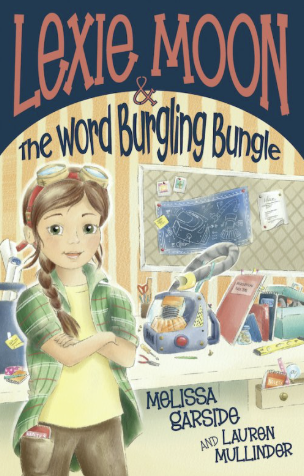
This book centres around the main character, Lexie Moon, who builds a contraption that takes someone’s words and gives them to someone else but alas Lexi’s invention gets stolen by a technology-crazy burglar.
Lexi Moon and the Word Burgling Bungle is perfect for tween readers who want a fun and interesting book. I absolutely loved keeping up with Lexi’s antics and the plot kept me guessing till the very end. I cannot wait to join Lexie Moon on her next adventure!




 alphabetsoup.net.au