Funny Kid: Belly Flop by Matt Stanton, HarperCollins Publishers, ISBN 9780733340604
REVIEWED BY AASHI, 10, VIC
Aashi reviewed her own copy of this book.
Meet Max, a professional prankster. He is always trying to make people laugh and have a blast. This means he gets in trouble a lot.
Max is on another adventure where he is going to the Red Hill Pool for swimming lessons. Max does not think it is fair that he has to be in his undies in front of his whole class while jumping into a pool.
Max’s enemy, Abby, is up to no good. She fakes notes to get her out of swimming, which is completely unfair. Finally, Max has had enough and challenges Abby to a hard competition.
Belly Flop is a funny book with lots of jokes. It made me laugh so hard. This is a book suitable for ages eight to ten. It is best for people who love humour and friendship.
If you have read David Walliams books including Gangsta Granny, World’s Worst Parents and World’s Worst Children, then you will love Belly Flop. All these books include humour, exaggeration and friendship.
Angie Cui was born in Harbin, China and now lives in Melbourne with her husband and two children, whom she calls the ‘ABC Family’ – four people, three cultures – Australian, Bangladeshi and Chinese (her kids are Australian-born, and her husband is originally from Bangladesh). She loves the rich culture of her family’s languages and enjoys using them to tell stories. Today we’re chatting to Angie about her debut picture book: My Mum is a Bird, illustrated by Evie Barrow.
The publisher provided Alphabet Soup with a reading copy of My Mum is a Bird.
From the publisher:
Today is Parents’ and Carers’ Day at school. I don’t want to bring anyone, but my mum is coming anyway.She is a bird.
The mum in this picture book is clearly a bit different – she is a bird, while the main character (and everyone else!) is human. When you decided to show their differences this way, what made you choose a bird?
When I first started writing this story about four years ago, I wasn’t sure where it would go. In my original draft, Mum was a phoenix in a human body, but feedback from editors and writing friends pointed out that it felt too mature and a little too scary for younger readers. I didn’t want to create something that was too serious, sad, or frightening, so I decided to use the bird as a metaphor. I wanted to show difference in a fun, fantastical way – something playful and positive. Birds seemed perfect for that. They’re loud, colourful, free-spirited, and a bit out of place in a human world. They also have wings and can fly, symbolising freedom and adventure. A bird mum could soar, sing, swoop, and flap – this energy felt right for the message I wanted to convey about embracing who you are, even when it makes you stand out.
The illustrations highlight the themes in the book – like diversity, acceptance, the importance of a welcoming community, and perspective. Did you work closely with the illustrator, Evie Barrow, or did you each work separately on the text and illustrations?
A little behind-the-scenes story: I pitched the story idea at the Kidlit VIC Conference in 2022. After my publisher offered me a book deal, they asked if I had a preferred illustrator. Evie was my top choice! Surprisingly, my publisher had already reached out to her to check her availability. So, we ended up choosing Evie almost by coincidence!
In traditional publishing, authors and illustrators don’t typically work directly, which is quite common with picture books. I personally don’t like to give many illustration notes unless the publisher asks me if there’s anything I’d like included or changed. I certainly didn’t want to stifle Evie’s creativity, as I believed she would bring her own unique vision to the story. From the moment I saw her early sketches, I knew the book was in great hands. Her work brings so much warmth, humour, and gentle quirkiness to the pages – exactly the tone I had planned. She captured the heart of the story beautifully, balancing the child’s mix of awkwardness, love, and growing confidence, along with the bird mum’s joyfully unapologetic presence. Her illustrations do a lot of the storytelling, especially the emotional moments (my favourite).
In a way, I made the skeleton, and Evie gave it a soul. Together, we created a book!
How do you take one of your picture books from the first idea to the final draft, ready for an illustrator?
Each story is different, so my process can vary, but I often start with a strange image or a question that makes me stop and think: “What if … ?” For My Mum is a Bird, the idea was inspired by a close friend’s experience – she’s always felt different from her family. This made me wonder: What if a child had a mum who was different from all the other mums?
From there, I write lots of drafts, exploring different structures, voices, and points of view. As I mentioned earlier, I wasn’t sure where the story would go initially, so I experimented with various versions until I found one that felt right. I didn’t want to write something too didactic, but rather a story that was easy to read and emotionally engaging.
A picture book tells a story in just a small number of pages. Do you have a tip for young writers?
Absolutely! Tip one: start small but stay curious. A picture book doesn’t need a complicated plot – it just needs an idea. Write down your thoughts, your emotions, and what’s important to you. You can even write about how you feel today, something you’ve experienced, or even just something or someone you noticed. As you get more comfortable with writing, let your imagination run wild!
Tip two: Patience is the key! Don’t worry if things seem messy or don’t make sense at first. Think of it as planting a small seed and nurturing it until it grows into something bigger over time.
Also, keep in mind, though, that writing picture books can be challenging. You’re basically trying to tell a complete story in 500 words and make it feel like a movie! The last draft I handed to my publisher was about 800 words, and I had to trim it down to 500. It might sound easy, but it was tough as a first-time author. However, during the editing process, I realised that a lot of the story could be conveyed through illustrations, and that’s the magic of picture books.
So, tip three – when you write a picture book, think about how the illustrator will bring your words to life. Picture books are a team effort, and the art plays just as big a role as the words.
Can you tell us a bit what you’re working on next?
I have two more picture books coming out this year and next. They cover completely different themes than My Mum is a Bird. I’m also working on other projects across different genres – one junior fiction book, one middle-grade novel, and two adult novels (I’m trying to keep myself busy! Haha).
My Mum is a Bird is out now! Ask for it at your favourite bookshop or local library.
Thea Stilton and the Chocolate Sabotage by Elisabetta Dami, Scholastic, ISBN 9780545646567
REVIEWED BY AASHI, 10 VIC
Aashi reviewed her own copy of this book.
The Thea Sisters set off on an adventure to Ecuador. They are visiting Paulina’s old friend, Antonio, who runs a chocolate factory. He runs Choco Loco with his cousin Hector.
Choco Loco is in the running for the Chocolate Cup award. The award is very prestigious so the competition is tough. Out of the blue there are multiple malfunctions in the factory. The Thea Sisters start to wonder if it is sabotage. Join them to solve the case.
The book is full of interesting and exciting scenes. Every Thea Sister is good and loves different things and together they are unstoppable. Colette loves fashion and is great at designing clothes. Violet is shy but so smart and great at classical arts. Pamela is talented at mechanics and cooking, she loves eating. Pauline likes technology and loves travelling. Nicky is enthusiastic about sports and fitness.
My favourite character is Violet because even though she is shy on the outside, in the inside she has such cool ideas and is so talented at many things.
Thea Stilton and The Chocolate Sabotage is a good fit for people who want to solve a mystery. You will definitely enjoy it if you enjoyed Sherlock Holmes. If you get stuck trying to solve the mystery, there are clues to help you.
I recommend the book for people aged seven to ten as it has some tricky words but lots of colourful pictures to illustrate it. I rate it 4 out of 5 stars as it could have had some clearer explanations.
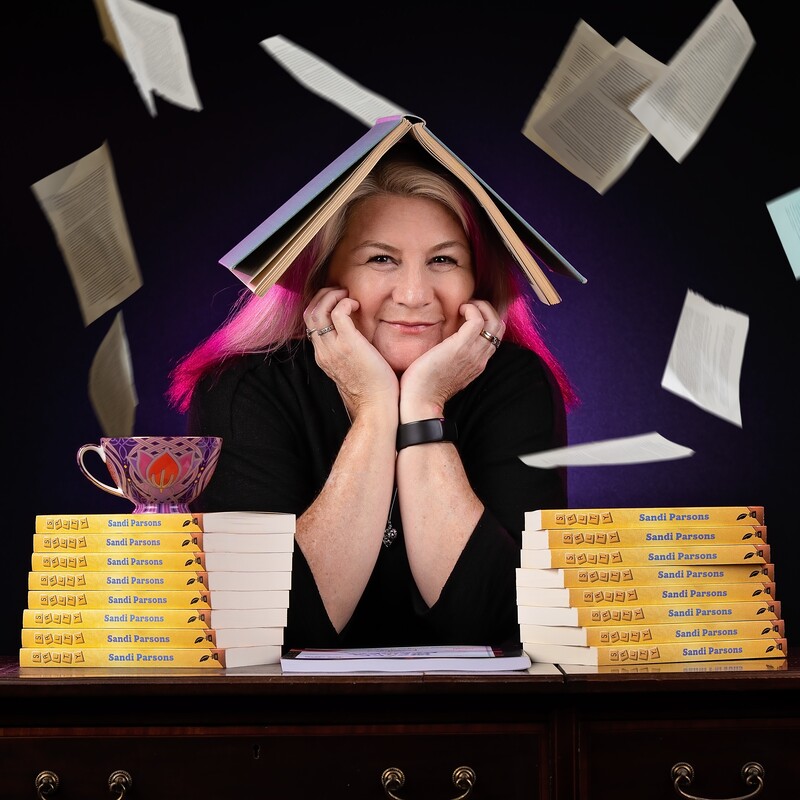
Sandi Parsons is an avid reader, writer and storyteller. She lives in Western Australia with some problem puppies and many teetering stacks of books. Today we’re chatting to Sandi about her latest book: Salty.
The publisher provided Alphabet Soup with a reading copy of Salty.
From the publisher:
Dara longs to have a best friend, someone she can hang out with. But it seems like Josh, her new assignment partner, will land her in popularity purgatory. At least their assignment topic is perfect — Ned Kelly’s death mask. Now, Dara can drop words like ‘pseudomedicine’ and ‘phrenological analysis’ into casual conversation. When ‘Ned’s head’ is stolen, Josh is convinced the culprit is their new art teacher, Ms Isoba. As Josh hunts for clues to prove his theory, he discovers that Ms Isoba isn’t the only person with a secret. What’s Dara hiding?
Dara is a collector of interesting words – how did you choose which words to include as Dara’s words-of-the-day to include in Salty?
I researched lots of words before I settled on a handful I wanted to include. As a dog lover, groke (the way a dog stares at you, hoping you will share your food) was always going to be in the story. With my starter words in hand, I started writing Salty. In my second draft, if I felt a chapter needed a “word” that wasn’t in my word stash, I’d hunt about to see if I could find a word that would fit. That’s how I found chork (the sound shoes make when they are wet). Occasionally, my hunt wouldn’t reveal a suitable word, but would give me different word to use somewhere else in Salty.
Do you have a favourite word?Is it one of Dara’s words?
Originally, my favourite word, scurryfunge, (to rush about tidying up on the moments before a guest arrives) didn’t find a place in Salty. When I did a structural edit, some interactions between Dara, Melody and Justine changed places, and scurryfunge slotted into place like it was always meant to go there.
I’m also quite fond of snollygoster (a corrupt politician, or person who is in public service for their own benefit.) It’s a word that rolls off the tongue easily, but there wasn’t a logical place to include it.
How did Ned Kelly and his death mask end up in your story?
The original idea for Salty was a question. Why would a criminal need to hide in a school? After brainstorming some scenarios, the most likely answer was that students could be ‘camouflage” for someone casing a museum. Teachers on excursion have an excuse to take more photos than they need. I included Ned Kelly, because I wanted the thief to steal something uniquely Australian. The death mask was something I could picture Dara getting enthusiastic about, while Josh would turn his nose up at it.
Dara lives with cystic fibrosis. Are her day-to-day experiences at school similar to your own school experiences growing up?
I experienced way more problems with my digestive system than I did with my lungs when I was Dara’s age. So, to some extent, Dara’s experiences do mirror mine. No one with CF ever wants to have someone waiting for them in the bathroom! I wanted to go to friends houses and play after school, but I had to go home to do my afternoon treatments. This meant I was excluded from some friendship groups.
When I was six, my enzymes came in foil packets. They took ages to open, and there was no way to take them discreetly. Everyone would stare. I was ten when the foil packets were replaced with bottles. I would quickly pop them in my mouth hoping no one would notice (they always did). When I was older I turned it into a party trick. If you draw attention to something, you give it less importance. (Dara isn’t that confident yet!)
Everyone with CF has a story to tell about people staring when you cough. Some people have very loud looks! Others will make nasty comments.
What’s the hardest part about writing a mystery?
I wanted to make it clear to the reader from the beginning that Ms Isoba was not what she seemed. (Just like Count Olaf in A Series of Unfortunate Events.) So, my focus was on making Ms Isoba seem like she had fooled everyone while the reader knew she was … probably … guilty. It was tricky!
Salty is out now! You can buy copies online or ask for it at your local library.
The Secret of the Stone by Kathryn Lefroy, Fremantle Press, ISBN 9781760994648
REVIEWED BY AASHI, 10, VIC
The publisher provided a review copy of this book.
The Secret of the Stone is an exciting book about adventure and loyalty, packed with surprises. When Olive and her friends discover a mysterious stone, they realise it has the power to grant wishes. They know that they should use it for good purposes. However, they can’t resist having a little fun with it first!
Since the stone is so powerful and magical, other people with malicious intentions want to possess it. Olive and her friends must protect the stone no matter what.
I really liked Olive who was always kind and sympathetic to her friends. She was a good friend who tried her best at everything.
This book is great for people who liked the books Keeper of The Lost Cities or The Sugarcane Kids and the Empty Cage. Kathryn Lefroy used lots of exciting vocabulary and great imagery.
The book is amazing as it teaches you about loyalty and friendship. The book is suitable for ages eight to ten. I recommend the book to anyone who loves adventure and excitement.
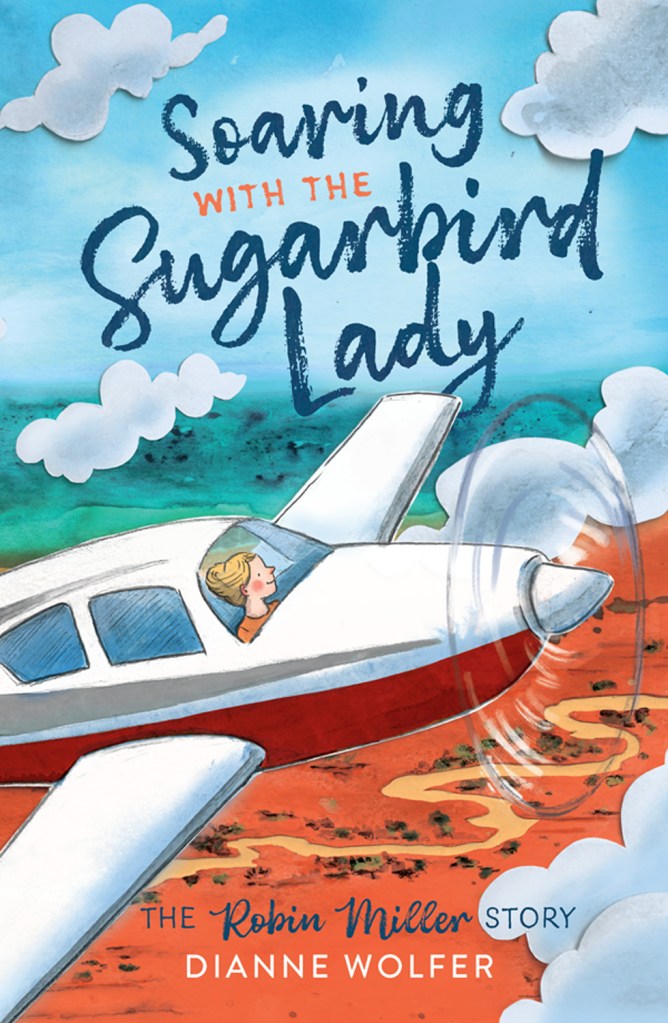
Dianne Wolfer is the award-winning author of 26 books, including the acclaimed ‘Light’ series, adapted for stage, street theatre, and choirs! She lives on the southwest coast with her husband, Pete, and dog, Harry. Today we’re thrilled to be talking to Dianne about her latest book, a biography of Robin Miller, Soaring with the Sugarbird Lady.
The publisher provided Alphabet Soup with a reading copy of Soaring with the Sugarbird Lady.
From the publisher:
Imagine flying solo, crisscrossing the north-west of Australia in your own plane, and single-handedly delivering life-saving vaccines to remote communities. Robin Miller did this, and at a time when most people didn’t think women should be pilots at all. Her arrival seemed like magic to the outback children who received her polio vaccine on sugar cubes. Before long, she became known as the Sugarbird Lady. And this was just the start of Robin’s extraordinary real-life adventures!
You’ve included quotes from Robin’s own diary at the start of each chapter. When you need to conduct research about someone from history like Robin Miller, how difficult/easy is it to find the information you need?
Researching someone as respected and loved as Robin Miller was challenging and an honour. To begin with I reread Flying Nurse, written by Robin and published in 1971, as well as The Sugarbird Lady, published after Robin’s death, and based on her diaries. I watched online presentations, including talks by Patsy Millett, Robin’s sister, and read books written by family members (Patsy, her father Horrie Miller, and mother Mary Durack). Both the State Library of Western Australia and the National Library in Canberra hold boxes of Robin’s papers and memorabilia. Sifting through items that Robin treasured helped give me a stronger sense of who Robin was, and how best I could write her story. I loved holding things like the brooch from her air race across the United States! After researching widely, I came back to Robin’s books. That’s where I heard her voice. Quotes from Robin’s books and diaries became the bedrock of my early drafts. Over many story drafts and edits, the quotes were pared back until just a few remain.
Other than diaries, how do you know when the information you find in your research is reliable?
It’s important to cross-reference and check all information. History is recorded by humans who can easily make mistakes and who write from their own perspective. I often asked myself, is this a trustworthy source?
Robin Miller packed in so much during her life and a book is a certain length – how do you decide what to leave out of the book?
Deciding what to leave out was the hardest part! My process is to overwrite then try to edit bravely, cutting out words and unnecessary scenes. So many amazing flights and adventures were left out while shaping the book, to keep the pace moving along. I hope readers will be inspired by Robin’s courage and determination, and that Soaring with the Sugarbird Lady will provide a taster to find out more about this amazing aviator.
When she was a young woman, society (and even family members) tried to put limits on what Robin could do in life and she persisted anyway. In your own life, have you ever faced limitations on what you wanted to do?
Readers might find it hard to believe that until the late 1960s, women who worked in the Australian public service had to give up their job when they married. My mother was one of them. Once the law changed, when I was seven, Mum returned to work. When I finished high school, four years after Robin’s death, it was still unusual for women to venture beyond teaching, nursing or office work. I was lucky that Mum encouraged my sister and I to embrace our adventurous spirits. She hid her worries when I travelled across south-east Asia alone and worked in a remote village in the Himalayas for a year. Over the years there have been improvements, but many industries are still challenging workplaces for women …
What’s next for you?
The start of 2025 has been busy, and wonderful. Three books are coming out with three different publishers: Soaring with the Sugarbird Lady (Fremantle Press), The Colt from Old Regret, illustrated by Erica Wagner (NLA Publishing), and Cattle Muster, illustrated by Frané Lessac (Walker Books). I’ve been working on each book for years and suddenly they’re all here!
I’m also excited to have just launched a newsletter. There’s a link to subscribe on my website. Two other exciting things that are happening: the regional tour of Theatre 180’s The Lighthouse Girl Saga, as well as the Chauvel Light Horse ride, where riders travel 750 km across regional Victoria/NSW to honour Sir Harry Chauvel. They’re presenting schools along the way with copies of The Last Light Horse, my book about the only horse to return from WWI.
Soaring with the Sugarbird Lady is out now! Look for it at your favourite bookshop or local library.
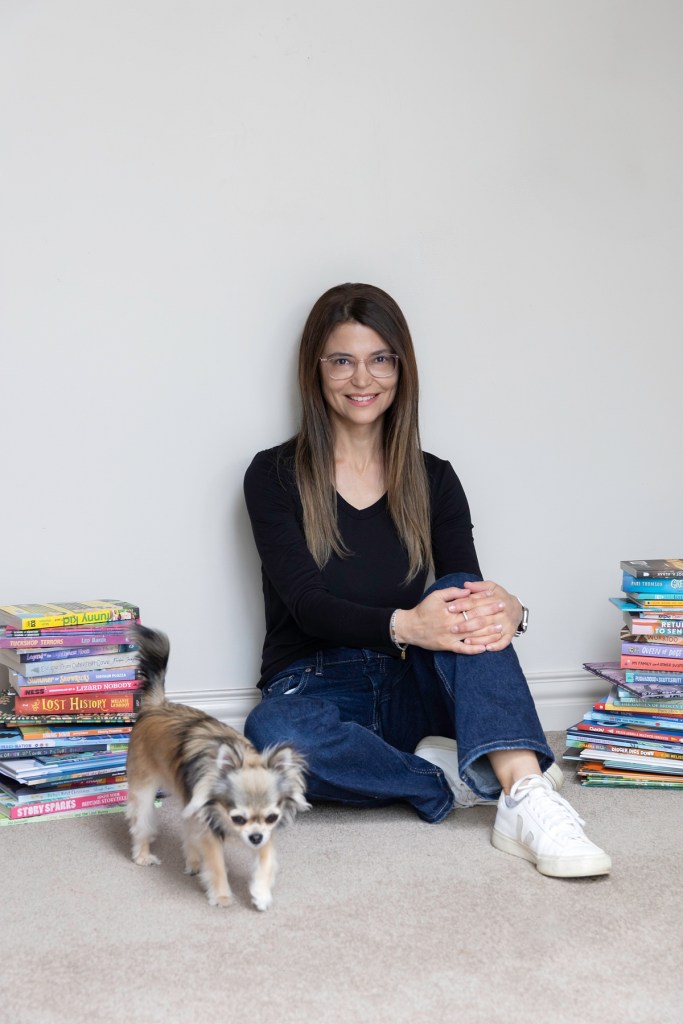
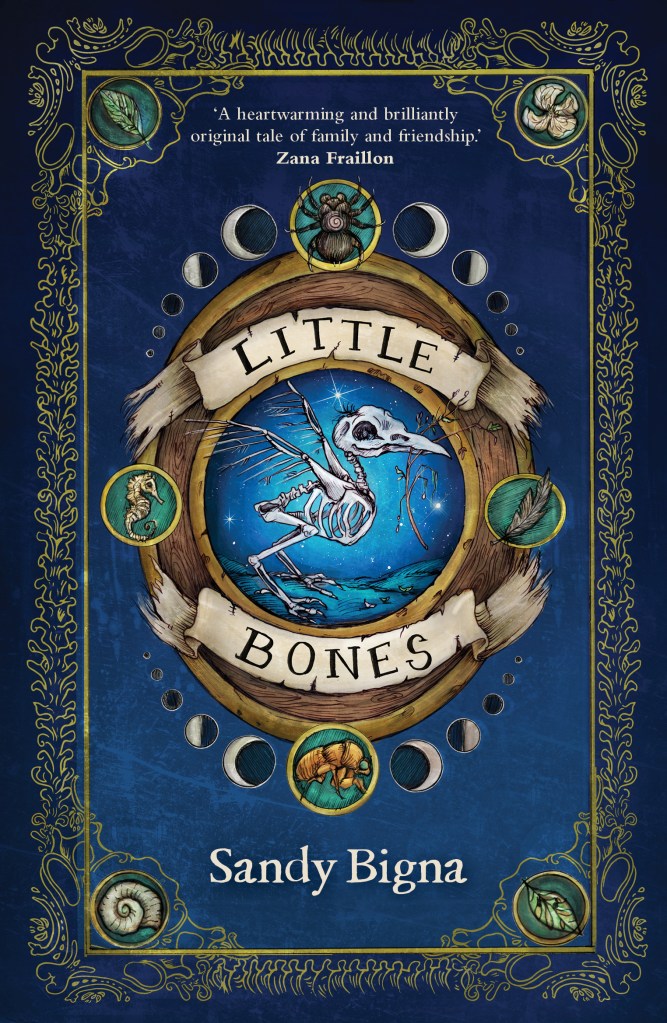
Sandy Bigna is a reader, a book reviewer and a writer. Today we’re excited to be chatting to her about her debut book – a verse novel called Little Bones.
The publisher provided Alphabet Soup with a reading copy of Little Bones.
From the publisher:
Since the accident, eleven-year-old Bones spends her time drawing animal skeletons and scavenging for dead things to add to her collection. One night, Bones wishes on a full moon and unintentionally resurrects the skeleton of a baby bird. Bird wants to return to his natural (dead) state, so Bones agrees to reverse the curse – not that she knows how. As she and Bird work out the secrets of the magic, Bones remembers what it’s like to have a friend. How can she let Bird go when she doesn’t want to say goodbye?
Sections of Little Bones begin with bones (or skeleton) related definitions. Do you collect bones yourself ? Or did you need to learn more about bones and skeletons as part of writing the book?
While I hadn’t started collecting bones myself before starting to write Little Bones, I’ve always had a fascination with them, and for people who do collect them. As bones are on the inside of us we don’t generally get to see them, which makes them seem mysterious and interesting. I remember once finding some tiny lizard bones in the driveway of the house where I grew up – and to me it was fascinating to have a glimpse of something that is usually hidden. I even took photos! It was this initial fascination that inspired the theme of bones and bone collecting. I needed to do some research to increase my knowledge about bones and skeletons – using both online sources and library books. I learnt many fun facts about bones. Did you know that birds sometimes eat animal bones to get calcium for making eggshells?
How did you come to write this story as a verse novel?
I’ve always loved reading verse novels. I love that they can tell a complete story, and convey such powerful emotions, in so few words. I love all the white space around the words, which helps you as the reader take a breather, and reflect on what is written – and on what is not written. I love the creative placement of words on the page and fun use of text font. I love reading verse novels so much that I always knew I wanted to try to write one of my own, and I’m so glad I did! It just felt like the right way to tell this story, and it was the most fun I’ve ever had writing a manuscript. I had the creative freedom to play with the joy of language.
Is the finished book very different from your first draft of the story? How did editing your work change the story?
Editing is such a valuable part of the journey to publication, and I enjoyed the editing process much more than I thought I would! The finished book changed quite a lot from the original draft that I submitted to the publisher. The first part of the story, and the ending, stayed mostly the same, but the middle part of the story received a much needed overhaul. The hardest part was cutting around 15,000 words from the manuscript! Thankfully my wonderful editor Felicity helped me with this part. We also decided to cut a couple of characters from the story (originally, there were going to be three animal skeleton characters, not just Bird). Once these characters were cut, we realised they were not essential to the plot. With each round of edits the plot was tightened, the magic elements made more consistent, the relationship between Bones and Bird strengthened, and the tension drawn out, to make a more satisfying conclusion. Each round of edits ultimately made the story so much stronger.
Do you have a tip for young writers who would like to try writing a verse novel?
The most important tip is to have fun and try new things! The best part about writing a verse novel is that you have the freedom to play with ideas and language and placement of words on the page. I would also suggest reading a lot – verse novels, as well as all types of fiction and non fiction, to generate ideas, and see how other authors have succeeded in your chosen genre. It’s not essential to read and write poetry to write a verse novel – but I found doing both quite helpful in inspiring me to experiment with free verse and lyrical language. You might even want to try reading song lyrics and listening to music – as in many ways, writing a verse novel is a bit like writing a song! Verse novels often have the same rhythm and energy as music.
Can you tell us a bit about what you’re working on next?
I’m excited about the next chapter of my writing journey. I have a two-book deal with UQP and would ideally like to continue to write for a middle grade audience, as this is where my passion lies, but I am always open to writing for different age groups or experimenting with other genres. I look forward to the next part of this writing journey and sharing more stories of hope, friendship and adventure with you all!
Little Bones is out now! Look for it at your favourite bookshop or local library.
The publisher provided a review copy of this book.
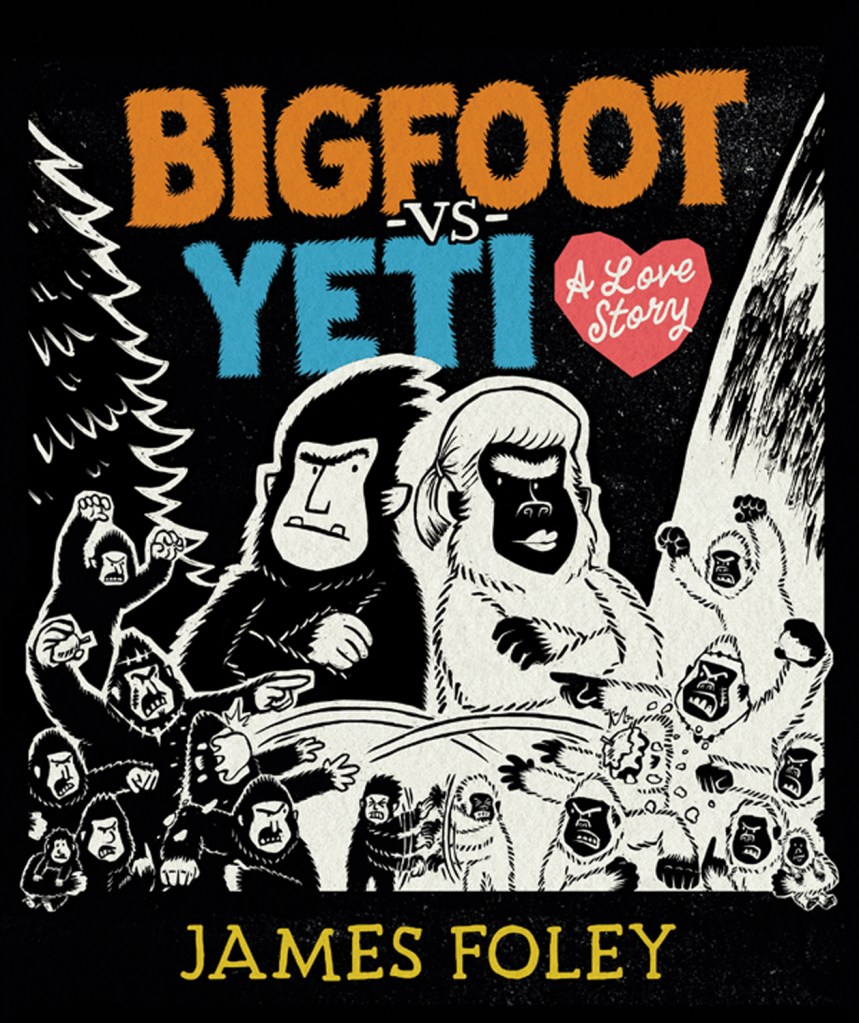
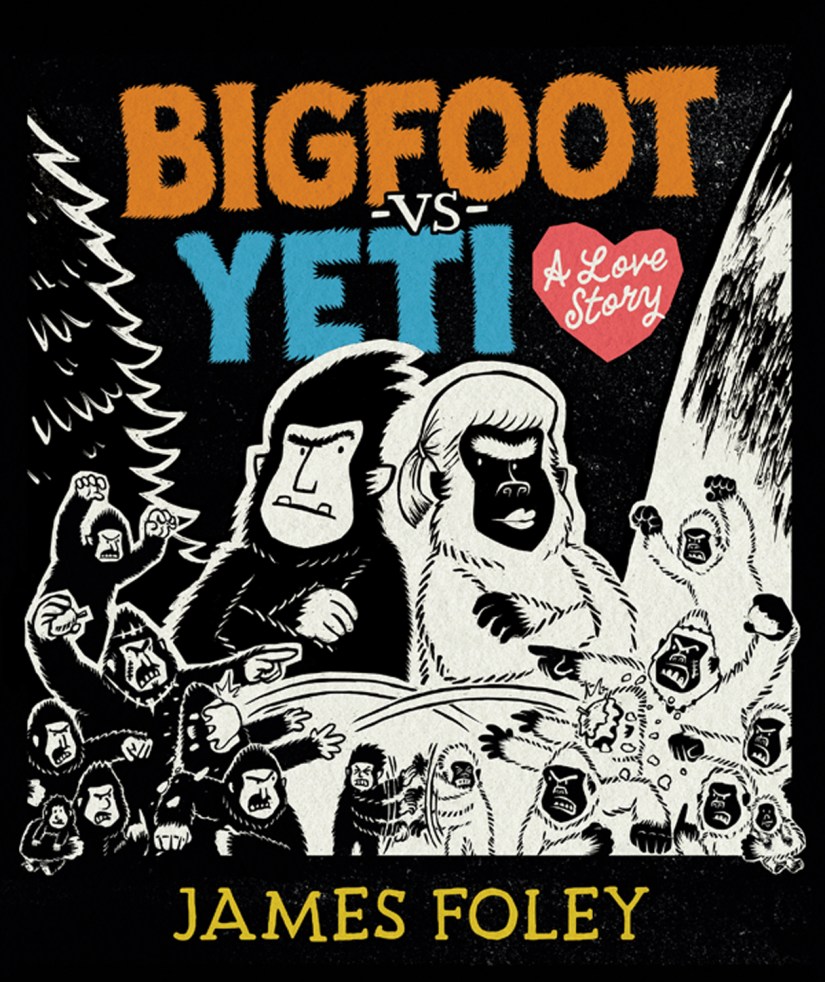
Bigfoot vs Yeti is about a Yeti and a Bigfoot and how there was a great big mist and rift between their two colonies. The two colonies always hated each other because they didn’t know anything about each other and were trying to protect themselves from what they didn’t understand, and because they couldn’t see them. One night a bigfoot and a yeti were on the edge of the rift on watch duty and they both had the exact same thought at the exact same time, that they wanted to be face to face and put an end to the rift. Back at home, their colonies were in a fight because they thought the other colony were responsible for each other’s lost bigfoot and yeti. While they were fighting, the bigfoot and the yeti were talking to each other and getting to know each other …
Bigfoot vs Yeti is a picture book, but it’s not like other picture books I’ve read. It’s black and white at the beginning and towards the end a little more colour starts to show. I enjoyed this book because it’s different and at the end you get to see the interesting ending (which I won’t give away). I really liked all the illustrations and they pulled the whole book together.
I think kids of all ages would enjoy it.
I think more than bigfoot and yeti, this book also means to not be afraid to show who you are, and that not everything you don’t know or understand is harmful.
Dorothy raised the key to the lock, but the door creaked open before she could insert it.
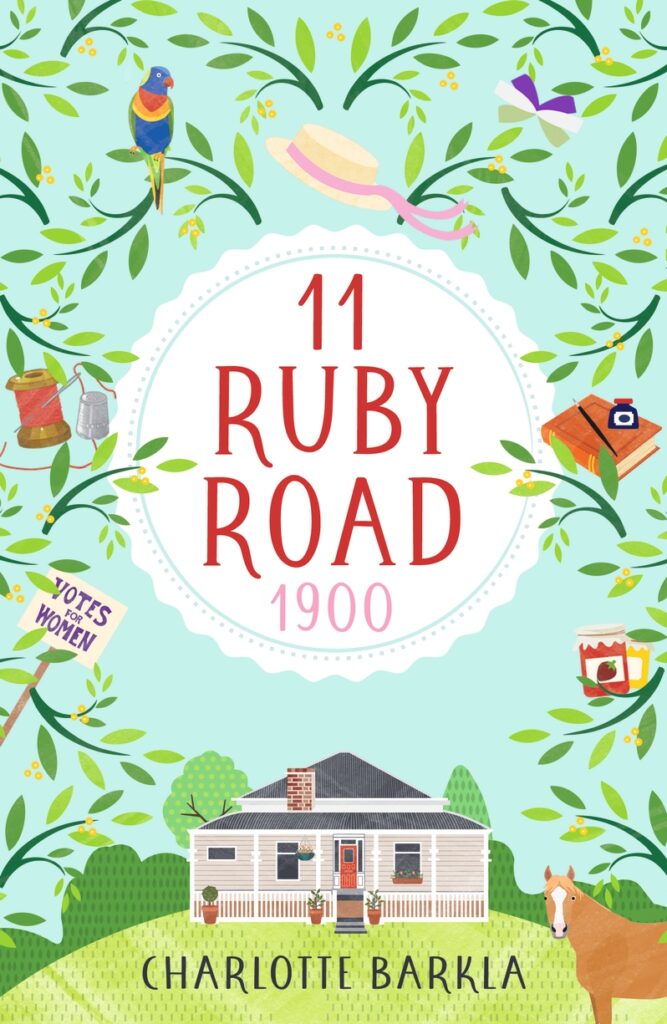
When ten-year-old Dorothy opened the door to her new home, she also opened the door to a new adventure at 11 Ruby Road. Dorothy insisted to everyone that the door opened by itself which made her feel curious, but no one in the family seemed to pay attention. She had a vivid imagination and was always noticing minor details.
This book is about Dorothy and her family moving from a farm to the city, Brisbane, also known as the new Sydney. Starting school, Dorothy already knew it was not going to be easy. Will she enjoy her new life there?
I am impressed that Dorothy is determined and tenacious. She is an inspiring person to me because she is always eager to share what is right and to include others. I rate this book 10 out of 10 because it grabs my attention and is thought provoking. This book shows how much a little 10-year-old can do.
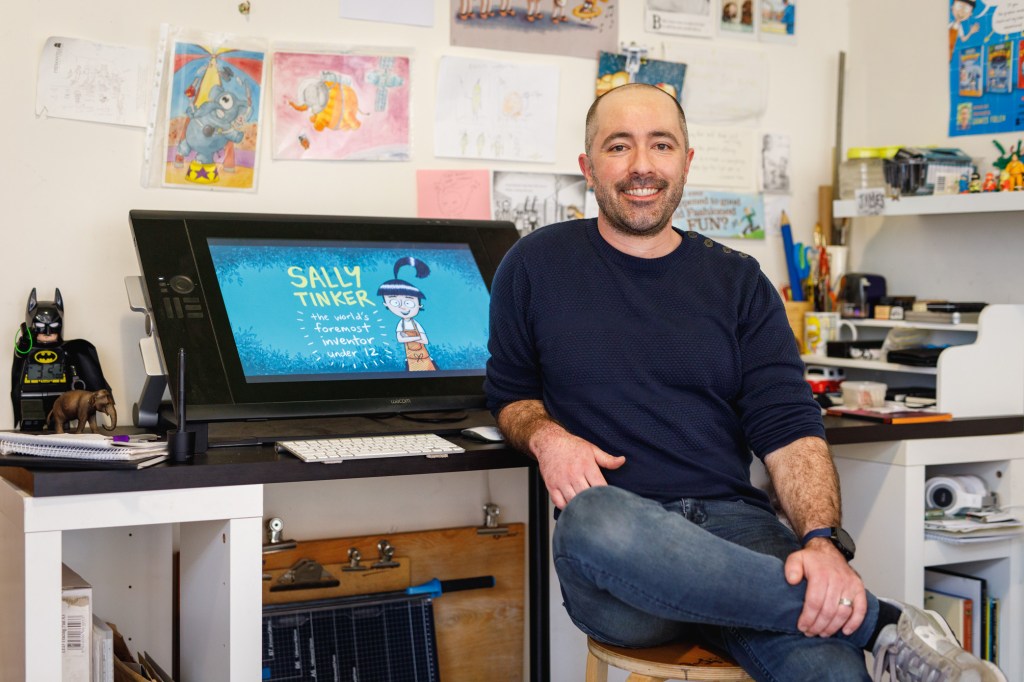
James Foley makes picture books, novels and graphic novels for kids. He creates with pen and ink, pencil, charcoal, and watercolour and also uses digital tools for his work. Today we’re excited to be chatting with James about his latest picture book: Bigfoot vs Yeti.
The publisher provided Alphabet Soup with a reading copy of Bigfoot vs Yeti.
From the publisher:
The Bigfoots say it started when a Yeti threw a snowball across the rift. The Yetis say it started when a Bigfoot threw some fruit across the rift. Who could say for sure? One night, a young Bigfoot and a young Yeti decide to find the end of the rift so they can finish the feud – once and for all. Things are about to get hairy …
You used a digital linocut technique for the illustrations – can you tell us a bit about how you created them?
At first I tried real linocut, which is a printmaking technique – you basically take a piece of lino (flat rubbery plastic) and you carve little bits out of it to make the picture. Then you add ink to it, and then you press it on paper. You’re basically making a giant stamp! But I quickly realised it would take a lot more time than I had, and I would need a lot of supplies (and practice) to do it properly. I also wouldn’t have the luxury of an undo key if things went wrong; I would just have to start a picture again.
So rather than doing proper linocut, I used the same techniques digitally: I opened Procreate on my Ipad, downloaded some ‘linocut’ brushes that some much cleverer people had designed, and I created my images that way: digitally ‘carving’ out the images bit by bit.
It was still a challenge, because linocut is the opposite way of thinking to normal drawing. If I want to draw a black line on white paper, then I just get a black pen and draw the line. But if I want to make a black line using linocut, then I need to start with black and add the white around the space where I want the black line to be. I’m carving out all the spaces around where I want the lines to go. It takes a bit of getting used to!
Bigfoot vs Yeti has a touch of Romeo and Juliet (spoiler: with a happier ending). How did you come to choose bigfoots and yetis for the characters in this feud-busting love story?
I didn’t set out to make a story about the ancient feud between Bigfoots and Yetis; that was a surprise! It all started with a character idea. Without giving away too much about the book, there’s a character at the very end that was the first thing I came up with. Then I worked backwards – where would this character come from? And how could I make their backstory full of drama and conflict? That’s where the story came from.
The rift is a metaphor as well as a physical presence in the story. Were the rift illustrations inspired by a place you’ve visited?
The rift wasn’t inspired by an actual place, but I found photos of forests and snowy mountains and lakes, sometimes all together – particularly around the Pacific Northwest of North America. I’d love to visit in person one day.
The story is fun to read aloud, how do you go about drafting a tale like this?
This picture book took a while to marinate – just like Stellarphant did. Both stories are very important to me and I wanted them to be the best they could be. So I wrote many, many versions. Early versions of this didn’t work, so I left it for a long while, brainstormed lots of possibilities, and let the best ideas rise to the top. Then when it came to writing the story, I often read it aloud as I went. I always want to make sure that when the book is bought and taken home, that it’s going to be pleasing for the person who’s reading it as well as the child who’s listening.
Can you tell us a bit about what you’re working on next?
I’m working on four books this year – a capybara sequel, a funny picture book about onomatopoeia, a junior fiction novel written by Nathan Luff, and [drum roll] a non-fiction follow-up to Stellarphant. I can’t wait to share these with everyone! The capybara sequel should be out later this year and the others will be 2026-ish.
Also out this year are the colour editions of Dungzilla (April) and Chickensaurus (June). Exciting times!
Bigfoot vs Yeti is out now! Ask for it at your favourite bookshop or local library.





 alphabetsoup.net.au