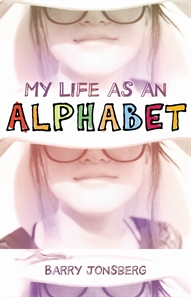
Candice Phee has led an extraordinary life, and her family has gone through much sadness: the loss of her younger sister’s life, her mother’s breast cancer, and her father’s fight with his brother. Candice herself has no friends, and many of her classmates think of her as someone who has ‘special needs’, even though she is perfectly normal. She desperately wants her family and herself to become normal, and happy as they used to be. When Douglas Benson, the new kid in class becomes friends with Candice, things start to change. Candice decides that she will make everyone happy, and so, with the help of Uncle Brian and the advice of Earth-Pig-Fish, Candice strives to make her world a better place. Will her plan work?
This book is recommended to girls who love stories about relationships with a twist of science fiction. It was a marvellous story, and although some of it was hard to believe, I would give this book a rating of 10/10.
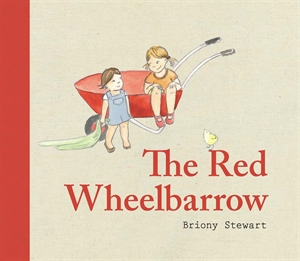
There are no words in this picture book — the pictures tell the story. There’s a big sister and a little sister and they have a red wheelbarrow to sit in and eat lollies. One has a blanket and one has pigtails. They love each other but there is some fighting because the little sister wants another lolly but the big sister won’t give her another one. There are some chickens watching nearby.
I’d love to have a wheelbarrow I could play in — I could put a pillow in it and drag it into my room and sleep in it. It would be so relaxing to have a bed on wheels.
There’s a photo at the end of the book which shows you that the book is really about when Briony and her sister used to sit in a wheelbarrow when they were kids.
I think little sisters and big sisters will like this book. (It teaches them not to be selfish to the little sister, or not to have a tantrum if the big sister is being selfish.)
The Red Wheelbarrow would be good for 3 to 7 year olds.
Imagine the tragedy that
Had befallen me
The boomerang flung through the air
No, it didn’t hit me
I walked through the long grass
No, a snake didn’t bite me
The sunset was blooming
The boys were on their gleaming motorbikes
No, they didn’t run me over
But the noise should’ve killed me.
I took it all in
Smiling, breathing
And leaned on the fence
Right in front of me
I, of course, had forgotten
That I was on a farm
And when fences are silver
You don’t lean on them.
Thank you to all the young poets who entered our 2014 Poetry Competition. We were blown away by the quality of your poems and our judge (Rebecca Newman) had a very hard time choosing one winner. Rebecca did have a fabulous time reading all your poems!
The winners:
1st place — $30 book voucher
‘The Electric Fence’ by Veronica Hester, 11, NSW
Judge’s comments: This free-verse poem crafted a clear scene for the audience. Effective use of repetition builds anticipation and the voice of the storyteller is engaging. What is not said (but left to our imagination) adds an amusing layer to the poem.
2nd place
‘Sounds of the Night’ by Jamie D’Mello, 7, WA
Highly Commended
‘The Dark Clown’ by Meg Edelman, 12, WA
—
Certificates (and first prize) will be posted out to these poets at the end of the week. Don’t go away! We’ll post Veronica’s winning poem here on the blog later today …
Here we are at the end of November — and the end of the year is in sight! We hope your last weeks of school are fun and it’s not too hot just yet. It will be time for holiday reading very soon and here are some great reads, recommended by our team of young readers. These titles are their favourites read during November. (Check back on 31st December with the last TOP READS for 2014!)
Orpheus and Eurydice, retold by Hugh Lupton & Daniel Morden, ill. Carole Hénaff, Barefoot Books, ISBN 9781846867842
REVIEWED BY MATILDA, 8, WA
Matilda reviews her own copy of this book.
This is a Greek myth and it tells the story of how Orpheus and Eurydice got married but then Eurydice died. Orpheus really loved Eurydice so he goes to the Land of Forgetfulness (the Land of the Dead) to ask for Eurydice back. He thinks he can get her back if he plays his lyre for the god Hades and the goddess Persephone. Will life go back to normal for Orpheus and Eurydice?
I already knew this myth from school and this book explains the story really well.
I like the illustrations because they are like paintings from a mural and I like the extra decorations added — like swirls in Eurydice’s hair.
The story does have creepy parts, so BEWARE! In other bits the words are so soothing and they get into your heart and make your heart burn with sadness for Orpheus and Eurydice.
People from ages 8+ will like this book and also people who like Greek myths, folktales and adventures.
–
Matilda is one of our regular book reviewers. Her most recent review (if you don’t count this one) was of The Lost Girl.If YOU would like to send us a book review, check out our submission guidelines.Happy reading!
Dianne (Di) Bates has published 120+ books mostly for young readers. Some of her books have won children’s choice book awards. Di is a former teacher, schools’ performer and newspaper editor, and has worked as an editor on three children’s magazines. In 2008, Di was awarded The Lady Cutler Award for distinguished services to children’s Literature. Di lives near Wollongong, NSW, Australia, with her prize-winning YA author husband, Bill Condon.
Di Bates and Bill Condon
Di is visiting Alphabet Soup today to tell us about a new anthology of children’s poetry coming out in 2016!
You are the commissioning editor for a poetry anthology for children coming out with Walker Books. What was your role in the book?
I spent many hours finding poems which were written by Australians and which would suit the themes I’d decided on for the anthology (such as sport, families, being a kid). I had to record the source of each poem (if it was in a single poet collection, an anthology, a magazine or if it was unpublished). I also tracked down contact addresses of the poets, gave the anthology a title (Our Home is Dirt by Sea) and then had to find a publisher for the whole anthology. This all sounds easy, but it took me several years.
Note: A poetry collection is written by a single poet; an anthology contains poems by numerous poets.
There are a lot of poems in an anthology. Do all the poets get paid if they have a poem published in an anthology?
Yes, poets are paid. As the editor, I get paid, as well. Unfortunately the publisher couldn’t include all the poems I wanted, because of financial limitations.
Does an editor ever change the words in a poem once it’s accepted for an anthology? Does the poet have a say in any changes?
I would never change the words — or the punctuation — in a poem without approval from the poet. I didn’t change any of the poems in my anthology.
Can you tell us a bit about the upcoming anthology?
Titled Our Home is Dirt by Sea, the anthology consists of 60 poems in the following categories: Australia, Mostly Me, Families, People, Animals, Sport, School, and Special Times. A few of the poems are lyrical, some make children think and some are humorous, but all are child-friendly and relatively short. The style of poems ranges from rhyming verse to free verse. I aimed for poems which make the reader feel some emotion when reading them, and for children to ‘see’ themselves or the world around them. Some of the poets are well-known such as Steven Herrick, Elizabeth Honey, Doug McLeod and Max Fatchen, but others are lesser known (to children) such as Robert Adamson, Kyle Seeburg, Andrew Leggett and Rodney Hall.
I have also compiled two other children’s poetry anthologies, but they are so far unpublished. And I’ve published a book of mad verse for children titled Erky Perky Silly Stuff (Five Senses Education).
Do you write poetry yourself? (Does that help when you are selecting poems for an anthology?)
Yes, I do write poems, but I don’t consider myself a very good poet. There are none of my poems in Our Home is Dirt by Sea, though there are a few by my husband, Bill Condon (who has published three collections). I know a lot about poetry from having a life-long love of poetry, teaching verse speaking, performing poetry and reading extensively. I’ve also run children’s poetry competitions and have a blog, Australian Children’s Poetry which showcases Australian children’s poets.
—
Keep an eye out for Our Home is Dirt by Sea in 2016! And you can find out more about Di Bates on her website: www.enterprisingwords.com.au.
We’re nearing the end of our 2014 poetry festival. Before you start feeling despondent, here’s something to cheer you up.
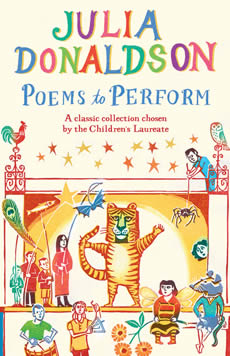
WIN a book of fabulous poems — specifically, this one:
This poetry anthology was compiled by Julia Donaldson when she was the UK Children’s Laureate (2011–2013). The poems were selected because they are fantastic to read aloud by more than one voice — from two voices, up to a whole class! This is a book that you are guaranteed to want to share with a friend … or two … or three …
Scattered throughout the book are striking black-and-white lino-cut illustrations by Clare Melinksy.
Julia Donaldson has included a section called ‘Suggestions for performance’ at the back of the book. (If you are new to performing poetry in public, you’ll find this section very handy.)
This giveaway has now closed. The winner is Ernie Donato.
They shut the road through the woods
Seventy years ago.
Weather and rain have undone it again,
And now you would never know
There was once a road through the woods
Before they planted the trees.
It is underneath the coppice and heath,
And the thin anemones.
Only the keeper sees
That, where the ring-dove broods,
And the badgers roll at ease,
There was once a road through the woods.
Yet, if you enter the woods
Of a summer evening late,
When the night-air cools on the trout-ringed pools
Where the otter whistles his mate,
(They fear not men in the woods,
Because they see so few.)
You will hear the beat of a horse’s feet,
And the swish of a skirt in the dew,
Steadily cantering through
The misty solitudes,
As though they perfectly knew
The old lost road through the woods.
But there is no road through the woods.
We’re very pleased to have Lorraine Marwood visiting us at Alphabet Soup today. Lorraine writes verse novels and poetry collections for children and she has a new poetry collection coming out in 2015. Here’s the cover in all its glory!
Your earlier poetry collections have themes (‘notes’ and ‘animals’). Does your upcoming collection have a theme?
Yes my new book does have a theme — ‘Celebrations!’ And the title reflects this. Celebrating Australia: a year in poetry.
When you were writing poems for this collection , did you set out to write to a particular theme? Or did a theme emerge?
Yes the theme began the collection and I began to research those celebrations that I had little first hand knowledge about — the journey was fascinating.
How long did it take you to finish this book?
About 18 months, some poems had to be re-written completely to suit the overall nature of the collection.
How do you choose which poems to include (and which poems to leave out) for a collection?
Ah, a good question. I wrote in batches — for example I researched ideas and words for the Valentine’s day poem and after the initial draft my editor suggested it needed to be more grounded in what kids might do — this is where a refrain came in to make the poem flow: ‘cutie pie, cutie pie, my high five, be mine forever.’ It was hard trying to make something like Bastille day or United Nations day poetic. My editor suggested significant milestone celebrations in the Australian calendar and I chose some myself like ‘International dot day’ and ‘Talk like a pirate day.’
I tried to make a variety of formats for the poems, including some with refrains, even one that rhymes, some humourous, some grounded in image and emotion.
Do you have a tip for young writers who want to try writing in free verse?
I think a good way to begin is to think of using images. Here’s an example. Let’s liken the sky to:
a crinkle of aluminum foil or a smudge of vanilla yoghurt.
It can be set out like this:
Today the sky is like a crinkle of aluminum foil
Have a go! Look at the sky right now and think of an object or a colour in your fridge or kitchen and liken the sky to that — it will make the sky more visual, more sensory, more striking for the reader and that’s what we want, to be different and move away from cliché. Sometimes rhyming leads us into cliché.
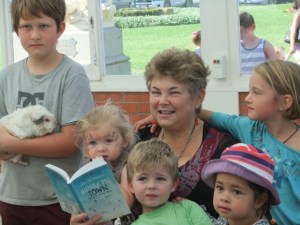
Lorraine Marwood, reading Guinea Pig Town to some of her grandchildren.
Is there anything else you can tell us about Celebrating Australia: a year in poetry?
I loved the hard work put into my collection by my editor and the final finishing touches by graphic designer Amy Daoud. For me each poem was a mini story in itself — with its own research, own format, own rhythm and own beginning and end. I learnt so much about other culture’s celebrations and embraced the whole multi-cultural feel of Australia right now.
I am planning for a launch with the Bendigo, Goldfields library in February, can’t wait!
—
To find out more about Lorraine Marwood and her poetry and books, visit her website. And check out our other interviews with Lorraine here and here.



 alphabetsoup.net.au