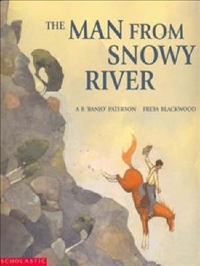
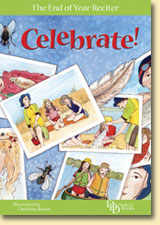
Alphabet Soup’s poetry festival continues until the end of August, so we thought we’d pick some poetry books to read together during The Reading Hour. Here are the books we will be reading together tonight:
Have you chosen the books you’ll be reading tonight? Will you read any poetry during Reading Hour? (Say yes! Say yes!)
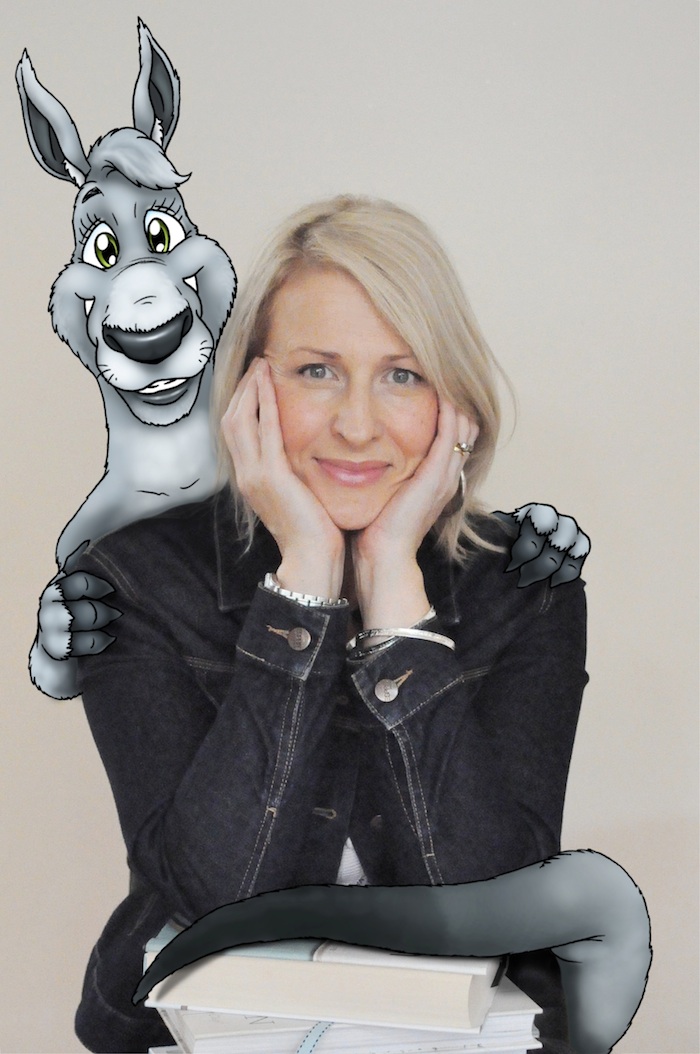
Today we have Janeen Brian visiting Soup Blog to talk about her poetry and poetry-writing. (Janeen also writes picture books, short stories, nonfiction and novels. She’s a busy writer!)
When did you first start writing poetry?
I can’t remember writing anything much at all as a child, so I’d guess I began writing poetry in my late twenties or early thirties.
What sort of poetry do you like writing best of all?
Both rhyming and free verse. I tend to use rhyme for more of my humorous pieces, but not exclusively. I love the word-manipulation, the struggle and the joy of creating rhyme. Free verse excites me too, but for a different reason. There, I aim to convey something to the reader by way of a new point-of view, a twist at the end, a particular rhythmic pattern, or a feeling. I love selecting the right word. It can take hours, or longer. But when it does — oh, what a feeling!
What sort of poetry do you like reading?
I love reading ballads, humorous, quirky, clever verses, verse novels, free verse and rhyming verse. I prefer reading children’s poetry because that’s the main area in which I write, but I also read adult poetry and have also written in that field.
Where can we find your poetry?
My poetry has been included in the following anthologies:
100 Australian Poems for Children
There was a big fish (limericks)
Christmas Crackers
Fractured Fairytales and Ruptured Rhymes
Four and Twenty Lamingtons
Petrifying Poems
Stay Loose Mother Goose
Off the Planet
Vile Verse
Putrid Poems
Side by Side
Machino Supremo
(Tadpoles in the Torrens due for release September, 2013. Our Home is Dirt by Sea due for release 2014)
Books of my own poetry:
By Jingo!
Silly Galah!
Nature’s Way A-Z of biodiversity.
(Our Village in the Sky due for release 2014)
Rhyming picture books:
I’m a dirty dinosaur
Meet Ned Kelly
I Spy Mum!
I Spy Dad!
The super parp-buster!
Shirl and the Wollomby Show
Columbia Sneezes.
Over 150 poems have been published nationally and internationally in the following magazines:
There’s a comma
of a dog
lying on the mat.
Dozing belly and
curl of tail
ears no longer
playtime exclamation marks
eyes closed as hyphens
and soft brackets of sighs
snuffling from
that comma of a dog
sleeping
in a circle
of sun.
I write every day. It might be my diary, my ideas book, some research notes, a page of practice writing, a draft of a poem or story or rewriting earlier drafts of work.
Do you prefer to write with a pen and paper or straight onto the computer?
Note-taking, ideas gathering, early paragraphs or lines of poetry are mostly done by hand with pen and paper (an exercise book), but I gradually take the work onto the computer and work from there on.
What’s your number one tip for budding poets?
Choose a book of poetry. Write out several poems that you like and then work out how the poet has written them. Think and discover. And practise.
—
Janeen’s Poetry Prescription corner
IF YOU’RE HAVING A SHAMBLY DAY — read the following poem:
Here’s how:
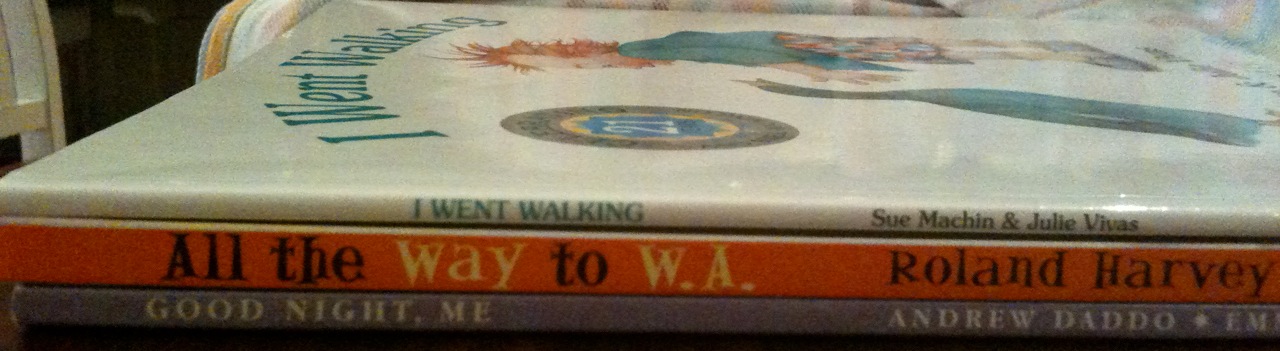
Collect a number of books from your bookshelf and stack them in a pile. Read the titles aloud slowly, like a poem. You might want to change the order of a few of the books, or remove or add one or two books.
Here’s a short spine poem I constructed using books from my children’s bookshelves:
I went walking
All the way to WA
Good night, me
If you have your parents’ permission, we’d love to read your spine poems in the comments below — you don’t have to post a photo, just write out the titles like I have above. I promise to try to guess the authors of each book! Grownups are welcome to share poems, too. (Soup Blog is G-rated.)
~ Rebecca
—
Until the end of August we’ll have a new poetry challenge every Tuesday.
Read these earlier Poetry Challenges from the 2013 Soup Blog Poetry Festival. (You can still add your poems in the comments at each post if you like!)
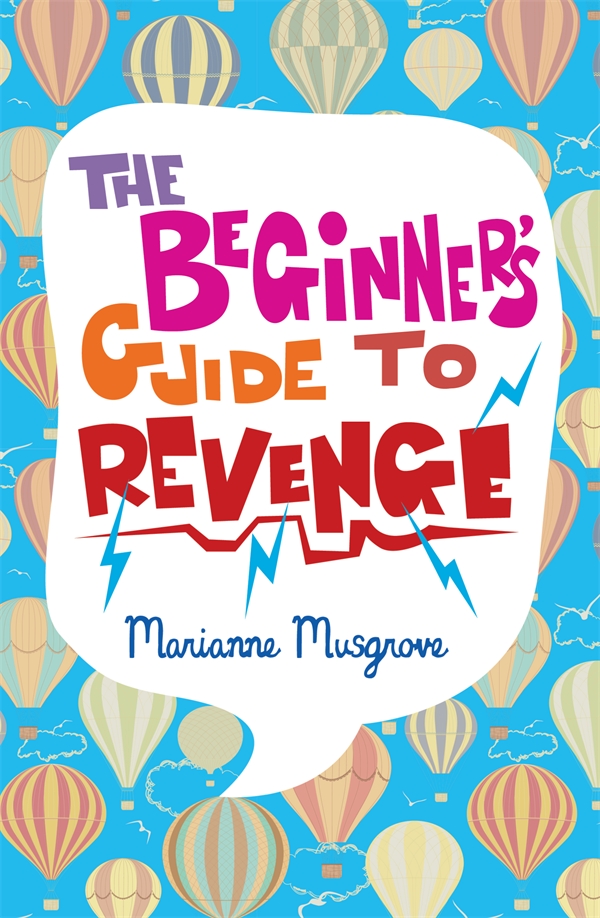
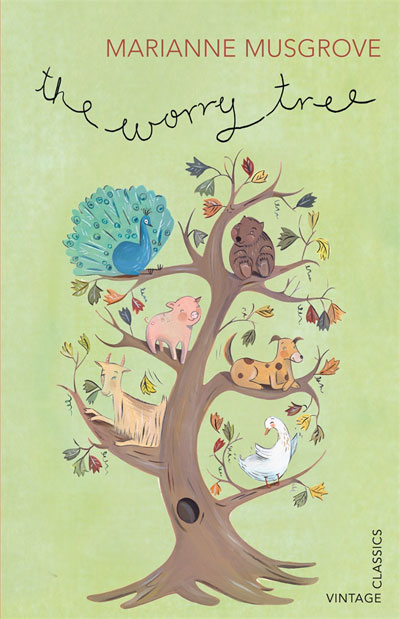
Today we welcome Marianne Musgrove to the Soup Blog Poetry Festival. Marianne is an award-winning children’s author and poet, not to mention a descendant of King Henry VIII’s librarian — you could say books are in her blood! A former social worker and one time tomato picker, Marianne finally found her calling as a writer with her first book, The Worry Tree. Her most recent novel, The Beginner’s Guide to Revenge, was short-listed for the 2013 Prime Minister’s Literary Awards for Children’s Fiction. (You can read one of her poems in the interview below. Excellent!)
–
When did you first start writing poetry?
When I was nine, I wrote a poem called ‘Parents — boo!’. It was read out at assembly in front of the whole school as well as some invited parents (including my own!).
What sort of poetry do you like writing best of all?
Poems that make you feel something. I was once writing a poem about sadness so I listed off all the empty things I could think of. For example, shoes without feet, hats without heads, churches on weekdays and hollowed out logs. I never used the word ‘sadness’ in the poem but the poem felt sad because of the images…
What sort of poetry do you like to read?
Poems that sound good when you read them out loud; ones where you can roll the words around in your mouth like a lolly.
Where can we read your poetry?
[Here is one of Marianne’s poems!]
Animal Dreams by Marianne Musgrove
Gulls have sea-salty-fish-and-chip dreams
Pigs have trough-snouting-mud-grunting dreams
Worms have dark-digging-composty dreams
Seals have slip-slidey-fish-gulping dreams
Dogs have tongue-and-tail-lick-slurping-thud-thumping-
leg-twitching-paw-padded-stick-catching dreams.
And what about you?
You’re an animal too!
First published in Countdown: The School Magazine, July 2008, No. 6.
And more poetry here:
Tadpoles in the Torrens (Wakefield Press), a collection of poetry by South Australian children’s poets (to be released August 2013)
I tend to write a lot in a big chunk then nothing at all for days. Like bread dough, my ideas take time to rise. So when it looks as if I’m doing nothing, I’m really just waiting for the yeast — the inspiration — to take effect (at least that’s what I tell my family when they catch me drinking hot chocolate and eating muffins in the middle of the afternoon!).
Do you prefer to write with a pen and paper or straight onto the computer?
Pen and paper for poetry, computer for stories. I have quite a collection of notebooks with cool designs as I find it more inspirational when creating ideas.
What’s your number one tip for budding poets?
It’s good to be original so here’s an exercise you might like to try:
Write down a list of colours. Next to each one, note down words you’d typically use to describe that colour. For example, rose red, grass green, sky blue. Now cross out rose, grass and sky etc, and think of all the unusual things you can use to describe that colour. For example, tumeric orange, honeydew melon green, toothpaste white, piano keys cream. Using your new list, try and describe a sunset or your backyard or, even better, something of your own choosing.
–
Marianne’s Poetry Prescription
IF YOU’RE HAVING A QUIET, THINKING-ON-THE-INSIDE KIND OF DAY — read the following poem:
Here we are with this week’s Tuesday Challenge (yay!).
Write a shape poem.
A shape poem (or concrete poem) can either be a poem that fills up a shape or a poem where you shift letters and words around until it resembles a shape. So if you wanted to write a shape poem about a cat, here are two ways you could go about it:
write your poem and then sketch out a cat shape and fill it with your poem. (You might make some of the words BIGGER and others smaller until the shape is filled with the poem.)
write your poem, moving the words and lines and spaces until they sort of resemble a cat shape. (You don’t have to sketch a shape.)
Do you know Lewis Carroll’s poem ‘The Mouse’s Tale’? That’s an example of a shape poem.
Here’s a simple one I tried:
On
weekends
I like to sit here
where the shade is deep
to read my books and think
about the week behind, the week
that’s still to come. But sometimes birds
will sing above my head and chatter to their chicks
and then
I like
to sit
and
listen
with
eyes
shut
Shape poems often work better when they are read on the page. If you read them aloud, your audience can’t see the shape along with the words. Shape poems are like art and poetry combined.
As always, we’d love to read your poems … It might be a bit tricky to paste shape poems in the comments but if you email us a scan of your poems, we’ll paste them into the post here! (Don’t forget to ask permission from a parent or teacher first.)
~ Rebecca
Here is the first of the shape poems sent in by you!
—
Until the end of August we’ll have a new poetry challenge every Tuesday.
Read these earlier Poetry Challenges from the 2013 Soup Blog Poetry Festival. (You can still add your poems in the comments at each post if you like!)
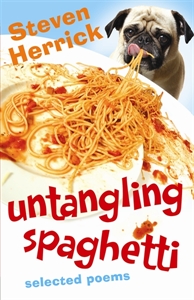
To make your Friday even happier, today we have Steven Herrick stopping by to talk about writing poetry and verse-novels for children. (He writes for young adults and adults, too.) If you visit his website, you’ll see that he loves soccer and in summer he plays on a soccer team called ‘The Marshmallows’ … It doesn’t look too summery in the photo he sent us above!
—
Here he is — performing his poem ‘Lost in the Mist’ (from his book Untangling Spaghetti).
—
—
When did you first start writing poetry?
I wrote my first poem when I was 18. It was called ‘Love is like a gobstopper’. I sent it to magazine and they published it and sent me $5!!!
—
What sort of poetry do you like writing best of all?
I like writing narrative poems for children and verse-novels for YA and children.
Last Friday we posted a poem by Sara Coleridge called ‘The Months’. Sara Coleridge lived in the northern hemisphere—so her description of what happens each month describes the world where she was living.
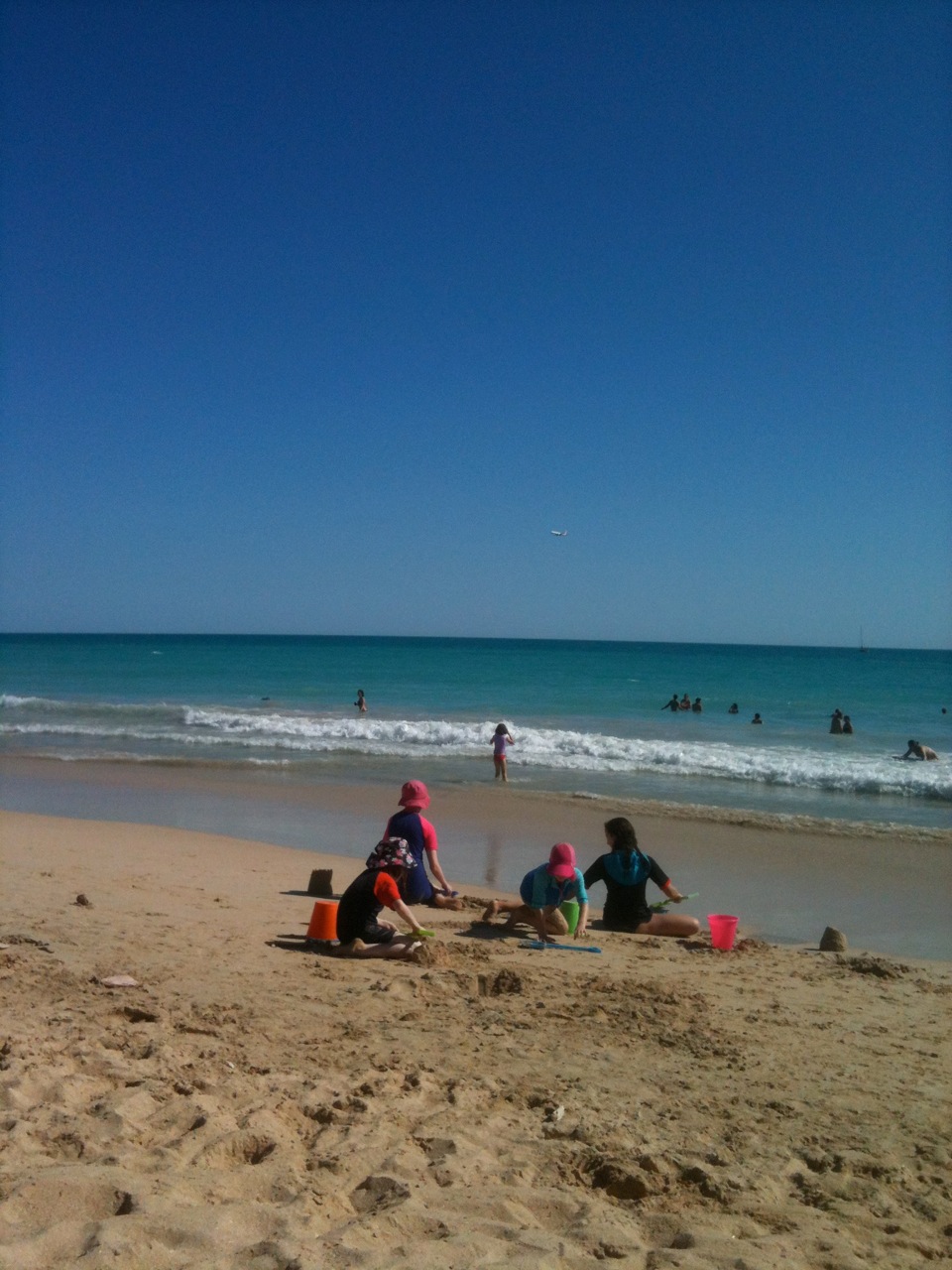
Read the poem again and think about what happens in each month where you are living. (Do you have snow in January? Maybe you do … Here in Perth—where I live—we don’t get snow in January, we’re more likely to be at the beach.)
‘The Months’ is written in pairs of rhyming lines, called rhyming couplets. If you look closely, you’ll see that every month has a new (different) rhyming couplet.
This week’s Tuesday Challenge—write your own poem called ‘The Months’, describing each month where you live. (Extra challenge: use rhyming couplets like Sara Coleridge did.)
We love reading your poems! Post your fabulous poems in the comments (do ask permission from a parent or teacher first). If you don’t finish your poem today, you are welcome to come back and post it in the comments for this post when you are ready.
Poems from grownups are also welcome, so ask your teachers and parents and aunties and uncles to share their poems, too! (Soup Blog is G-rated.)
~ Rebecca
—
Until the end of August we’ll have a new poetry challenge every Tuesday.
Read these earlier Poetry Challenges from the 2013 Soup Blog Poetry Festival. (You can still add your poems in the comments at each post if you like!)
When I was a kid at rural school. Poetry was important. We read it in our School Readers every day. Recitation was a subject for every age, so we all learnt to recite.
What sort of poetry do you like writing best of all?
Funny rhyming verse is my favourite.
What sort of poetry do you like reading best of all?
Humorous poetry.
Where has your poetry been published/distributed?
My poetry has been published in magazines (including Alphabet Soup) and on-line, and read on radio in Australia, the US and the UK. It has also been included in poetry anthologies in Australia and overseas.
Where can we find your poems?
Here’s one of my poems. A poem in this format has a special name. (What is it?)
(Ruth’s Tooth was first published in Puffinalia, 1982; read on ABC Radio 3LO, 1991; also published in Annette Kosseris, Here We Go Again: New Poems for Children 3-10, 1999, Kindamindi Publishing, Sydney.
Do you prefer to write with a pen and paper or straight onto the computer?
I learnt to touch-type when I was thirteen, so I prefer to create on the screen. I power-walk early every morning, so I often create a poem in my head while I’m out. Then I write it when I arrive home.
What’s your number one tip for budding poets?
Write every day — a short session or a long one — free or rhyming verse. You don’t have to show it to anyone.
—
Edel’s Poetry Prescription
IF YOU’RE HAVING A SPOOKY DAY — read the following poem:
‘A Ghost with the Most’ in Bill Condon’s poetry collection, Don’t throw Rocks at Chicken Pox, illustrated by Kerry Millard. [It’s out of print but you might find it in your local library.]
January brings the snow,
makes our feet and fingers glow.
February brings the rain,
Thaws the frozen lake again.
March brings breezes loud and shrill,
To stir the dancing daffodil.
April brings the primrose sweet,
Scatters daises at our feet.
May brings flocks of pretty lambs,
Skipping by their fleecy dams.
June brings tulips, lilies, roses,
Fills the children’s hands with posies.
Hot July brings cooling showers,
Apricots and gillyflowers.
August brings the sheaves of corn,
Then the harvest home is borne.
Warm September brings the fruit,
Sportsmen then begin to shoot.
Fresh October brings the pheasant,
Then to gather nuts is pleasant.
Dull November brings the blast,
Then the leaves are whirling fast.
Chill December brings the sleet,
Blazing fire, and Christmas treat.
—————————————————————
Sara Coleridge lived in the northern hemisphere in the nineteenth century — snow in January sounds strange to us! We’re sharing this poem as part of the Soup Blog Poetry Festival. Until the end of August we’ll be posting poems, interviews with children’s poets, tips for reading and writing poetry, and Poetry Prescriptions (poetry is good for the soul!).
Today we have pressed the pause button on our Poetry Festival to take time out for a celebration! We are very happy to have Tania McCartney visiting as part of her Riley and the Jumpy Kangaroo Book Launch Blog Tour — A Very Jumpy Tour. This is the fifth book in the Riley series, so we asked Tania some questions about how she goes about writing picture books in a series.
This is the fifth book in your Riley the Little Aviator series. When you wrote the first book, did you plan to write a series or did Riley and the Sleeping Dragon enter the world as a standalone picture book?
I wrote Riley and the Sleeping Dragon while living in Beijing — and I never dreamed the book idea would become a series. As this book was just a little personal project of mine, I was surprised when the book did well in China and I was even more surprised when the book did well in Australia, when we returned home in 2009. These kinds of surprises are very nice!
Because it did so well, I wondered if another title might work. And it did! so I just kept going. So far Riley has visited Beijing, Hong Kong, Sydney, Melbourne and Canberra.
Each book in the series is set in a different part of the world. How do you choose where to send Riley next?
I had originally planned for Riley to travel to Asian cities, but kids in Australia were desperate to have Riley visit their home town, so I quickly changed that concept to Australian cities. Sydney came first because it has the largest population, followed by Melbourne.
I wanted to send Riley to Canberra this year because it’s where I’m currently living, and the Riley books have a bit of a cult following here. I also wanted to help celebrate Canberra’s Centenary Year — 100 years old in 2013!
I choose the place depending on where we’ve visited as a family because all the photos used in the Riley books are taken by me. I have a lot of photos up my sleeve including Tasmania (we spent two weeks touring the island in 2010; it’s SUCH a cool place and I’m actually a Hobart girl), New Zealand, the west coast of the United States, and several Asian and European countries/cities.
I’d actually love to send Riley overseas again. I’ve even had thoughts of sending Riley to the North Pole. Shall have to rug up for that visit!
Is there anything different about each new title, or do you try to keep all the Riley books as much the same as possible (apart from the plot)?
It’s important to tie a book series together and this is usually done with the way the books look, and the same kind of plot structure/theme. I also think it’s important to add extra elements that make new books in a series feel fresh and exciting.
For the Riley series, I changed up the way I did each book — just so I could add that freshness.
In Riley and the Sleeping Dragon, the dragon isn’t seen in any of the photos … until right at the very end. This helps make the ending more of a surprise.
In Riley and the Dancing Lion, there are lions all through the book, but they’re never the one Riley is looking for. This makes kids wonder what the ‘right’ dragon will look like, and helps build suspense.
In Riley and the Curious Koala, the koala is hiding on the pages, sometimes in different forms, like a cloud or an umbrella. Kids LOVE to hunt for koalas in every photo (though he doesn’t appear on the page featuring Luna Park — so don’t break your eyes looking for him!).
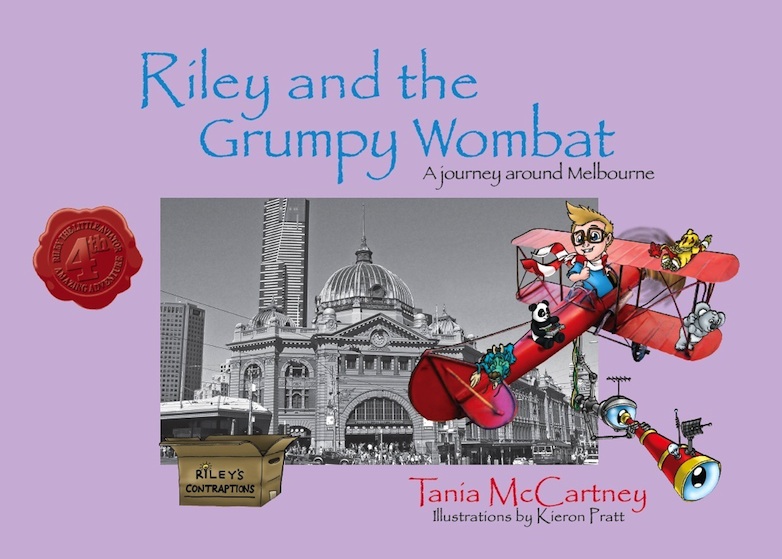
In Riley and the Grumpy Wombat, the wombat isn’t revealed until the end, but I gave Riley a series of amazing ‘contraptions’ he can use to help find her (because the wombat travels underground and Riley would have found it hard to spot her while flying a plane!).
In Riley and the Jumpy Kangaroo, I decided to change things up by adding colour to the photographs for the first time. As the story unfolds, more and more colour creeps into the images — and when you see the very last photograph over a double page spread, you’ll understand why!
Is there anything you need to keep in mind each time you start writing a new book in the Riley series?
Yes — I need to make sure we include the animal from the last book! Each time Riley starts a new adventure, a little toy version of the critter from the previous book joins the entire crew. Eventually, Riley will have an entire zoo of creatures accompanying him. Kieron and I have joked about attaching a hot air balloon to Riley’s plane so all the creatures can sit in it.
I also need to ensure I keep the style and ‘voice’ of the book the same as the others. This is what ties it to a series. Sometimes this is difficult to do because as you grow as an author, your voice and style changes and (hopefully!) improves. I would actually love the opportunity to do the Riley books a little differently now but I can’t alter the look of an established series.
Have you decided in advance how many titles will be in the Riley series? How do you decide on the right number of books for a series?
I was hoping to release a Riley book every year, forever! But my work on other books has become so busy, Jumpy Roo took two years to produce. The next one may even be three years away. This is upsetting because I adore the books and I have kids asking for them all the time. I will try to make them more frequent!!
Where to next for Riley?
I’m thinking maybe Tassie or New Zealand. I’d love to visit Tassie again soon, so that may sway me. Or maybe I could ask the kids of Australia to nominate Riley’s next destination. Perhaps I’ll send him to the city where kids make the loudest noise!
Is there anything else you’d like to add?
The Jumpy Roo book launch is being held at Floriade this year! Anyone living in or visiting Canberra on 15 September is invited along, but RSVPs are essential if you want a goodie bag and balloon! You can find out more here.
You can also visit the Riley the Little Aviator website to see updates, learn more about the places Riley visits, and see behind-the-scenes work. There are also some fun activities for kids.
This post is just one stop in the Riley and the Jumpy Kangaroo blog tour. For the full Blog Tour schedule, jump in your little red plane and head right here.