Posted in info

The spring issue is just around the corner …

We’re putting the finishing touches to issue 12—our spring issue. It will be winging its way to your letterboxes in a few weeks.

Remember, you don’t have to subscribe to the magazine to send us your work or to enter our writing competitions.

"Wombat Books"

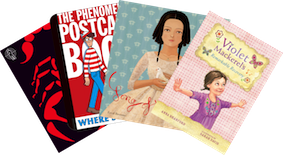
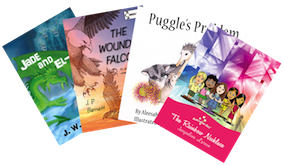
For those of you who DO subscribe, all our subscribers are entered into a prize draw every season. The winner of the issue 12 Subscribers’ Draw will receive a $200 book pack from Wombat Books—you can see some of their books above. (Books in the winner’s pack might vary.)

See you in spring!

Rebecca Newman, Editor

Posted in teachers' resources

Activites for issue 11

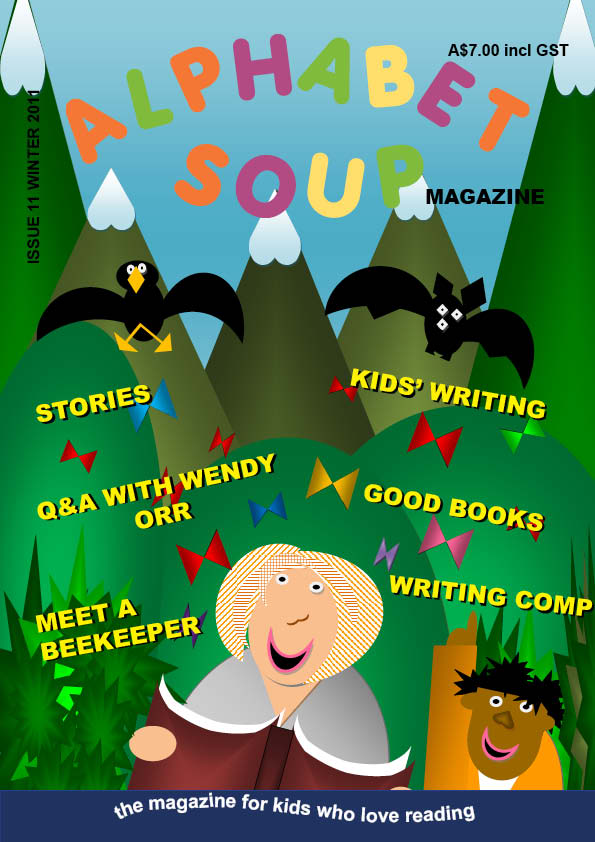
Issue 11 cover, Alphabet Soup magazine

ACTIVITIES AND LISTENING LIST

for Issue 11—WINGS

1. MAKE paper butterflies. Use a square of colourful paper or cut up some junk mail. Make concertina folds—fold the top edge of the paper down towards yourself in a thin rectangle. (Don’t fold the paper in half, that fold is too big!). Flip the paper over so that the folded side is now face down on the table and at the bottom of the page. Fold the bottom of the page up, so that the previous fold lines up with it. Flip the paper over again so the folded pieces are now face down on the table and at the top of the paper. Fold the paper from the top again and continue folding and flipping until the whole page has been folded like a concertina. Then pinch the rectangle at the centre and twist a pipecleaner (chenille stick) around it to hold it tight. The two ends of the pipecleaner will be the antennae. Fan out the wings a little. And make twenty more! (Perhaps you could attach them all to a coathanger to make a mobile.)

2. FOLD painted butterfly pictures. On a blank piece of paper, dab some blobs of paint around the middle section of the paper. Fold the paper in half (with the paint on the inside) and gently press it flat so the paint inside squishes about a bit. Open the paper and inspect your butterfly painting! (Great for cards or use as wrapping paper or stick on the fridge!)

3. PAPER AEROPLANE RACES: Grab some friends and check out a paper-aeroplane website to learn how to fold your favourite paper aeroplanes and then have a competition to see whose design is fastest or flies furthest or looks the coolest. (Record your predictions about which one you think will fly furthest, and write down the distances each plane flies. Then you might even convince your parents or your teacher that paper aeroplane flying is educational!)

4. GET BAKING!: Make some butterfly cupcakes. Try this recipe for cakes with wings, or this recipe using marshmallows and sour worms might be more your style. If butterflies aren’t your thing, can you think of a way to adapt these recipes to turn them into bat cakes or owl cakes?

5. READ some wing-themed books! For upper primary kids, we like Cicada Summer by Kate Constable, Storm Boy by Colin Thiele, for lower to middle primary kids, try The Magic Finger by Roald Dahl, or Duck for a Day by Meg McKinlay and if you love picture books you could try The Truth About Penguins by Meg McKinlay & ill. Mark Jackson, The Story of Ping by Majorie Flack ill. Kurt Weise or the nonfiction picture book Australian Owls, Frogmouths and Nightjars by Jill Morris & Lynne Tracey. Or read ‘The Six Swans’ folktale in the current issue of Alphabet Soup (or the poems also in the current issue!). Can you think of any others?


MUSIC LISTENING LIST

Our listening list is compiled by Danielle Joynt, from Cantaris. Danielle has also included comments for some of these pieces. (Tip: Ask about CDs at your public library—libraries often have a good collection of CDs for loan if you prefer not to buy.)

1. FLIGHT OF THE BUMBLEBEE

“Flight Of The Bumblebee” is a piece written by the Russian composer Nikolai Rimsky-Korsakov for his opera “The Tale Of Tsar Sultan”, composed in 1899-1900.

The piece is played at the end of Act Three, where the magic Swan-Bird changes the Tsar’s son into an insect so that he can fly away to visit his father (who does not know he is alive).

In 2010, the violinist Oliver Lewis broke the record for the fastest performance of “Flight Of The Bumblebee” – playing it in 1 minute and 3.356 seconds.

2. THE BUTTERFLY LOVERS VIOLIN CONCERTO

“The Butterfly Lovers” is a violin concerto co-written by Shanghai Conservatory of Music students Gang Chen and Zhanhao He in 1958.

It  premiered to great acclaim in 1959, but was then declared decadent five years later during the Cultural Revolution – and both composers were imprisoned. Their “crime” was attempting to fuse Western instrumentation and tonalities with traditional Chinese melodies.

3. SWAN LAKE

The music for the ballet “Swan Lake” was written by  Pyotr Ilyich Tchaikovsky. The story is thought to be based on “The Stolen Veil” by the German author Johann Karl August Musäus and the Russian folktale “The White Duck” .

The premiere performance in 1877 was not a huge success.

The Russian ballerina Anna Sobeshchanskaya – for whom the role of Odette was originally intended – was removed from the performance, when a government official in Moscow complained about her, stating that she had accepted several pieces of expensive jewellery from him, and then married a fellow dancer – selling the jewellery for cash.

The dancers, decor and orchestra were all unanimously crtiicised, and Tchaikovsky’s music was considered too complicated for a ballet. His music was decried by critics as too noisy!

After Tchaikovsky’s death in 1893, the Italian composer Riccardo Drigo was granted permission by Tchaikovsky’s brother Modest to revise the music for the ballet’s revival.

It is Drigo’s revision of Tchaikovsky’s score of Swan Lake that is the most often performed and recognised today.

4. THE THREE RAVENS

A traditional English folk song printed in the song book “Melismata”, compiled and published by the English composer Thomas Ravenscroft  in 1611. It is also known as “Twa Corbies” (“Two Ravens” or “Two Crows”) and most often sung to the Breton melody – “An Alarc’h” (“The Swan”).

The American scholar Francis James Child (appointed Harvard’s first ever Professor of English in 1876) included these versions in his  monumental five volume collection of English and Scottish ballads – The Child Ballads – released between 1892 and 1898.

5. THE SWAN

“Le cygne” or “The Swan” is the thirteenth movement of “The Carnival Of The Animals” by Camille Saint-Saëns.
The famous piece features a solo cello.

This is the only movement from “The Carnival Of The Animals” that Saint-Saëns would allow to be played in public during his lifetime, as he thought the other movements were all too frivolous and would damage his reputation as a serious composer.

See the activities and the themed listening list for issue 10 (autumn 2011)

See the activities and the themed listening list for issue 9 (summer 2010).

See the activities and the themed listening list for issue 8 (spring 2010).

Posted in info

Interview with Alphabet Soup’s editor

BIG Kids Magazine is launching in Australia later this year. The magazine is the work of Jo Pollitt and Lilly Blue—promoting creativity in children in collaboration with artists (big and small).

Today I’m over at the BIG blog, talking about how and why I started Alphabet Soup back in 2008. Check out the 2008 photo of me opening the very first box of Alphabet Soup. The covers have changed a bit since then! (Have you read issue 1?)

~ Rebecca Newman, Editor

Posted in competitions

Kids’ writing comps

"hand writing"Here’s an up-to-date list of current Australian writing competitions for kids. Apart from the magazine’s writing competition, Alphabet Soup doesn’t have an affiliation with these competitions. Make sure you read each competition’s Terms and Conditions (i.e. rules).

Good luck!

Australia-wide:

Dorothy Mackellar Poetry Awards (Closes 30 June 2011)

Sally Odgers Aussie Schools Writing Contest (Closes 30 June 2011)

Alphabet Soup‘s winter 2011 poem comp (Closes 29 July 2011.)

Pilot Pen Creative Writing Scholarship writing comp (closes 31 July 2011)

WA:

The West Australian Young Writers Contest (closes 30 June 2011)

Randolph Stow Young Writers Awards 2011 (Only open to Geraldton area. Closes 8 July)

Write a Book In a Day (Teams must complete the challenge by 31 August 2011)

NSW

Sydney Youth Writing Competition (closes 21 June 2011)

Do you know of any other writing competitions for kids?

Posted in Book reviews by Rebecca

George and Ghost–book review and giveaway!

We recently interviewed Catriona Hoy about her new picture book, George and Ghost. Today we’re reviewing George and Ghost—and you can win a copy, too!

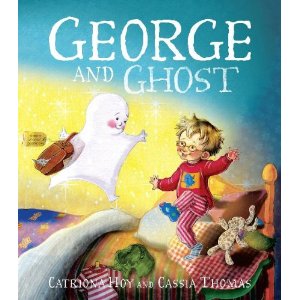
George and Ghost by Catriona Hoy and illustrated by Cassia Thomas. Published by Hodder Children’s Books, ISBN 9780340988862. 

(A review copy of this book was sent to us by the publisher.)

"George and Ghost"George and Ghost are friends but George isn’t sure he believes in Ghost anymore. When George suggests that Ghost isn’t real, Ghost asks him to prove it. Can something be real if it doesn’t weigh anything, you can’t take its photo, and it doesn’t take up space?

Just when you think George has proved that Ghost isn’t real, Ghost comes up with some interesting questions of his own. This is a picture book that will have you asking your own questions, scratching your head and thinking hard.

Cassia Thomas’s colourful illustrations match the story well and you’ll love George and his ghost friend … whether Ghost is real or make-believe.

This is a story about friendship—with a good helping of philosophy and science thrown in!

© “Review of George and Ghost by Catriona Hoy”, June 2011, Rebecca Newman (Alphabet Soup magazine)

WIN YOUR OWN COPY OF GEORGE AND GHOST!

We have one  copy of George and Ghost to give away. To enter, simply email your name and postal address to editor@alphabetsoup.net.au and put ‘George and Ghost’ in the subject line. We will draw the winner at 5.30pm (WST) on Friday 17 June 2011. We will email the winner and the book will be posted to the winner’s postal address as per the email entry. Good luck!

[This giveaway has now closed. The winning entry drawn was S Burton in Victoria. We have emailed the winner and copy will be posted to them on Monday. Thank you for your interest—you can find out more about George and Ghost on the author’s website.]

Posted in competitions, info, teachers' resources

Autumn 2011 writing comp: THE WINNERS (Part III)

"Boy writing © Greg Mitchell"Here is the winning Under 7s story from our autumn 2011 writing competition. You were asked to write a story about something to do with cooking.

A reminder: always check the rules of the competition. If you don’t stick to the rules, we have to disqualify your entry and that makes us sad!

Under 7s winner: O Small (WA)

THE BALLISTIC CHEF

Once there was a chef, a crazy chef. He was so crazy that if someone ordered pizza he would give them pasta instead. But one day he said “I’m going to make myself a coffee. I love coffee it’s my favourite thing.”

So he went to the cupboard and got out what he thought was coffee beans. The milk was real, but the coffee beans were really poisonous sultanas.

“ARGOOWY!!!!! I used the poisonous sultanas” and he flew up to heaven never to be crazy again, still wearing his chef’s hat.

Enter our winter writing competition. Entries close 29 July 2011.

Posted in competitions, info, teachers' resources

Autumn 2011 writing comp: THE WINNERS (Part II)

"Boy writing © Greg Mitchell"Here is the winning Under 9s story from our autumn 2011 writing competition. You were asked to write a story about something to do with cooking.

A reminder: always check the rules of the competition. If you don’t stick to the rules, we have to disqualify your entry and that makes us sad!

Under 9s winner: G Oakley (WA)

THE MAGIC STEW

Once upon a time there lived a girl named Misty. Misty lived with only her mother.

One day Misty’s mum was making a stew.

But then all of a sudden there was a cry from the kitchen. It was Misty’s mum. Misty ran to the kitchen as fast as she could. And there right in front of her mum was the stew, but the stew didn’t look like a stew it looked like a monster.

Misty asked her mum what she did to the stew but her mum just said ‘I just put this sauce in that a stranger gave me’ said her mum.

After Misty’s mum said this Misty was just about to ask her mum about the stranger but before she could say anything the stew monster tried to jump on her. All of a sudden Misty found herself being chased by the stew monster.

As Misty was running very fast she had an idea. Misty remembered that stew goes rotten in the sun so Misty made the stew monster chase her outside into the bright sun then Misty quickly ran inside and locked the doors. As soon as Misty locked the doors she sat down and asked her mum about the stranger her mum had met. Her mum said she had a big wart on her nose.

Misty started to laugh, ‘Oh mum’ she said, ‘you bought something off the witch who lives outside of town.’

Misty and her mum both looked outside to find the monster but all they found was a puddle of stew.

Enter our winter writing competition. Entries close 29 July 2011.

Posted in authors, teachers' resources

Meet the author: WENDY ORR

In every issue of Alphabet Soup magazine we interview an author or illustrator. The trouble is, we can only fit some of their answers in the magazine. So we print the full interviews on the blog—we wouldn’t want you to miss out!

Wendy Orr, photo by Roger GouldIn issue 11 we talked to Wendy Orr, author of many books, including Nim’s Island, The Princess and her Panther, and Raven’s Mountain.

1. Where do you live?
On a hill near the sea on the Mornington Peninsula, south of Melbourne.

2. What made you become a writer?
I love stories and books so much that I always knew I wanted to write them. My dad used to tell us crazy stories that he made up, and my mum read us wonderful books for bedtime stories, so wanting to write books never seemed like a strange thing to do.

3. What do you like to do when you are not writing?
Reading, going for walks (especially on the beach or in the bush, and especially with my dog), seeing my friends and family, doing tai chi, and travelling.

4. Was it easy to get your first book published?
I was quite lucky with my first book (Amanda’s Dinosaur) because it won a competition, and the prize was having it published. The next few were harder!

5. What was your favourite book as a child?
At different ages: Winnie the Pooh; My Son in Law the Hippopotamus; Anne of Green Gables; Swallows and Amazons; Little Women; The Eagle of the Ninth.

6. Where do you get your ideas?
I’m often not sure where an idea has come from until I’ve finished the first draft. Sometimes it’s from something that has happened in my life, and sometimes it’s a crazy sort of thought—which of course has still probably happened from something I’ve seen or heard or experienced in some way. Sometimes it might be by asking ‘What if?’ about something that’s happened. Of course you need a lot of ideas to make a whole book—one idea starts it, but then you need more for how a character looks or acts, or what happens in chapter 3, and what’s exciting in chapter 5, or how everything all comes together in the end … I sometimes think that there’s a little bit of magic in how all these different ideas come together.

7. Do you prefer to write with a pen in a notebook, or on the computer?
On the computer. I use a pen to make notes in a notebook with a pen; often one book will have its own notebook and I jot down my thoughts or try to work something out. But once I start writing the story, I always use the computer. (For one thing my handwriting is so messy that writing a whole story with a pen would be too tiring— and even worse, I often can’t read my writing!)

8. What do you love best about being a writer?
Living inside a story and playing with it till it comes out right.

9. Of your own books, do you have a favourite?
It’s very hard to choose a favourite, because they’re like friends or pets. I sometimes think Ark in the Park is my favourite, because when I read it there are still no words I want to change or lines I’d like to rewrite. But Nim has been my favourite character for a while—except that now Raven’s Mountain is out, in many ways that’s my favourite, because I always feel very protective about a new character about to face world. So that might be why Raven is my favourite character right now.

Nim's island (cover)

"Raven's Mountain (cover)"

10. Are you working on a book at the moment? Can you tell us anything about it?
I’m always working on several books at a time. I’ve just finished Raven’s Mountain, which was out in February. The short blurb would be, ‘Three people go up a mountain; one comes down.’ It’s an adventure story about a girl named Raven who goes mountain climbing with her older sister and stepdad—but when there’s a rockfall and the others are trapped, Raven has to face the wilderness alone to try to save them, and herself.

I’m also working on a series of books set in The Rainbow Street Animal Shelter. I’m doing these with an American publisher; in Australia the stories will most likely be collected into one or two books. I’ve just finished editing the second book, MISSING: A Cat Called Buster, and now am waiting for my editor to work on the third book while I rewrite the fourth (FREE: A Lion Called Kiki).

There are also several other books at various stages on my computer and in my head!

11. You write picture books, books for primary school aged kids, and young adult books. Do you have a favourite age group to write for?
If I had to choose one age group, it would be primary school or middle grade readers. But I’m very glad that I can skip around and play with a picture book or plan an adult novel in between.

"The Princess and her Panther (cover)"12. How do you know if an idea is best for a picture book, a middle grade book or a young adult book?

That’s part of the mystery of writing that I don’t understand. As an idea starts to grow into my mind, it shows me the shape the book will be, so that by the time I’m ready to write it, it’s obvious what sort of story it wants to be.

13. Do you have any advice for young writers?
Just keep on writing! Have fun with it; try writing different types of stories with different types of characters. Remember that the first person you’re writing for is yourself—you need to love what you’re doing. When you’ve finished, read it and see if there are any parts that are a bit boring, or don’t make sense—pretend you’re a teacher with a big red pen, be brave and mark everything that isn’t good. Ask yourself if that bit needs to be in the story. If it doesn’t—delete it. If it does—make it better. Does it make you laugh, or cry, or hold your breath? Keep on rereading and rewriting till you’re happy with everything in your story.

And don’t forget to read, and experiment with different types of books. Writers need to see how other writers work—but most of all, we need to love stories.

You can find out more about Wendy Orr and her books on her website. And visit the Nim’s Island blog!
“Meet the author: Wendy Orr” © Rebecca Newman 2011 https://soupblog.wordpress.com
Posted in info, teachers' resources

Send us your writing & artwork!

In every issue of Alphabet Soup, we include 6 pages of kids’ work—your stories, poems, letters-to-the-Editor, book reviews and artwork. Issue 11 is coming up. We still have a few spaces left for a poem or a story (or two) and some artwork.

If you’d like to see your work published, read our submission guidelines and send us something! (If it doesn’t arrive in time for issue 11, we can include it in a later issue. So if you can’t send something until next week, don’t panic.)

Remember, you don’t have to subscribe to the magazine to send us your work or to enter our writing competitions.

"Walker Books 2011 titles"

For those of you who DO subscribe, subscribers are automatically entered in a Subscribers’ Draw every issue. The winner of the issue 11 Subscribers’ Draw will receive a $200 book pack from Walker Books Australia. (See some of their books above. Books in the winner’s pack might differ though.)

Now I’m going to sit by our post office box to wait for your writing and artwork. (Give that postman something to do and send me some mail!)

Rebecca Newman, Editor