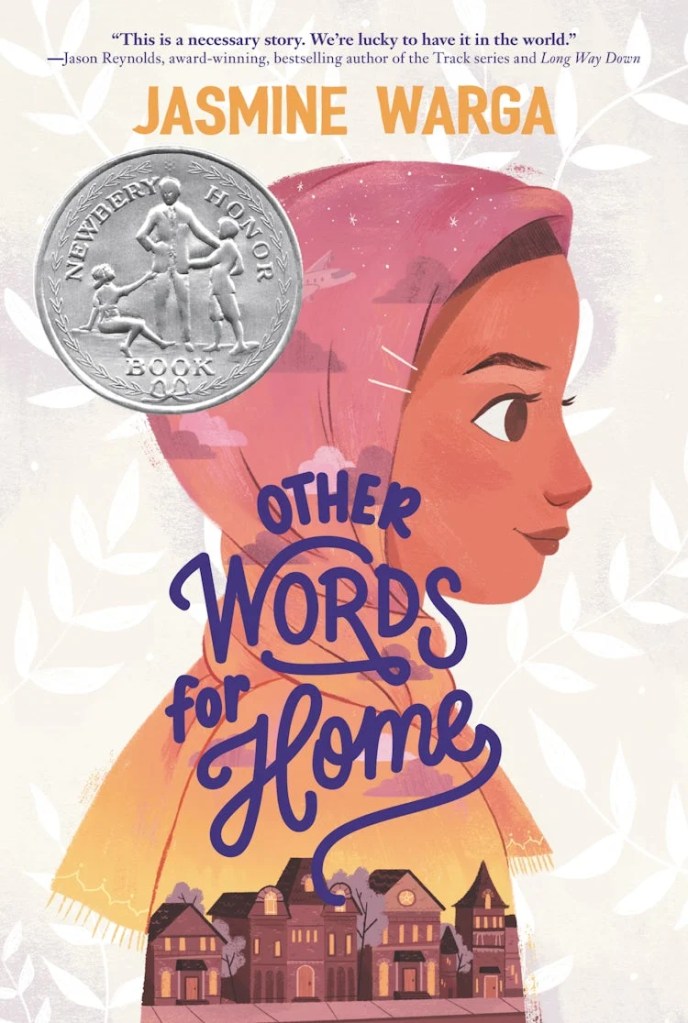
Other Words For Home is a heartbreaking, realistic fiction novel that will make you cry. It is told from the perspective of Jude, a Syrian girl who just recently moved to Cincinnati, Ohio. She struggles with being away from her brother and father, along with living in a new country. She has to learn the ropes of America, while worrying about her brother’s safety. This book teaches readers about how it feels to be new somewhere, and how it feels to not know anything about a place and then move there.
My favorite part in this book is when Jude first arrives at her class for ESL, or English as a Second Language, because it makes her feel like she belongs. It also helps her have a safe space, where she can be with people who understand her. My favorite quote is: “It’s bleeding!” This quote is when Jude tries steak for the first time, and she is convinced it’s bleeding. Her uncle Mazin tells her that it isn’t bleeding, that it’s perfect, which grosses her out even more. This book is a wonderful melancholy story that will leave you with hope, worry, fear, sadness, and pure joy.
This book is perfect for readers craving an emotional realistic fiction novel that will truly immerse them in the story. I recommend this book for ages 9 to 12, and I would rate it 5/5 stars. This book is not meant for younger readers, so it might not be the best choice for them. Overall, Other Words For Home is a superb bittersweet story.
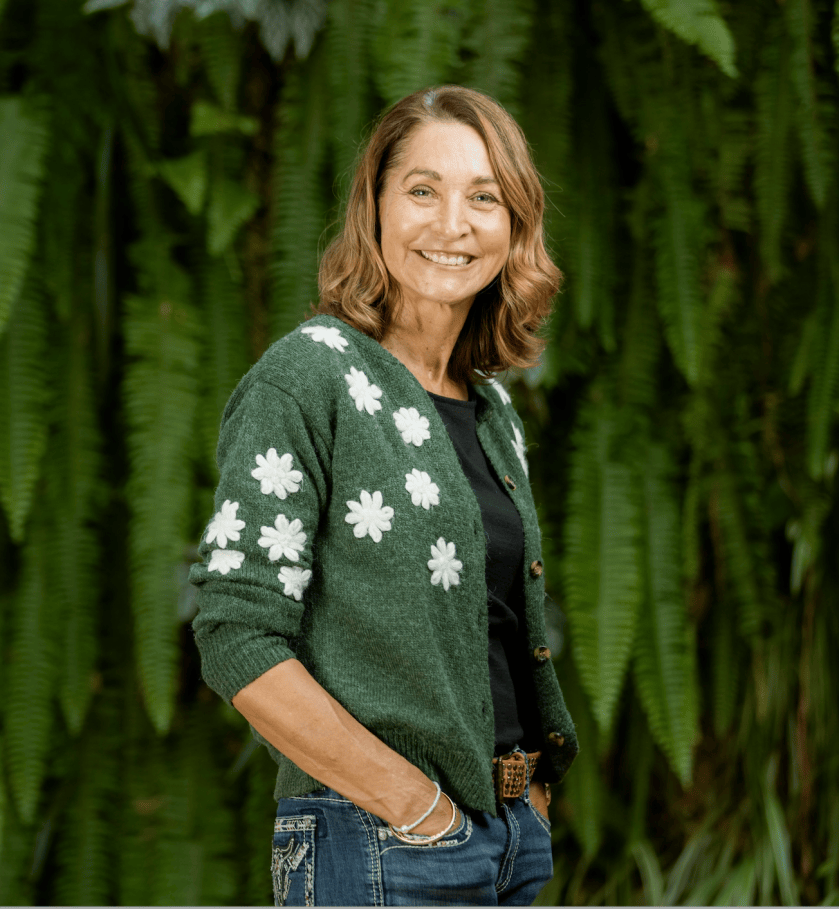
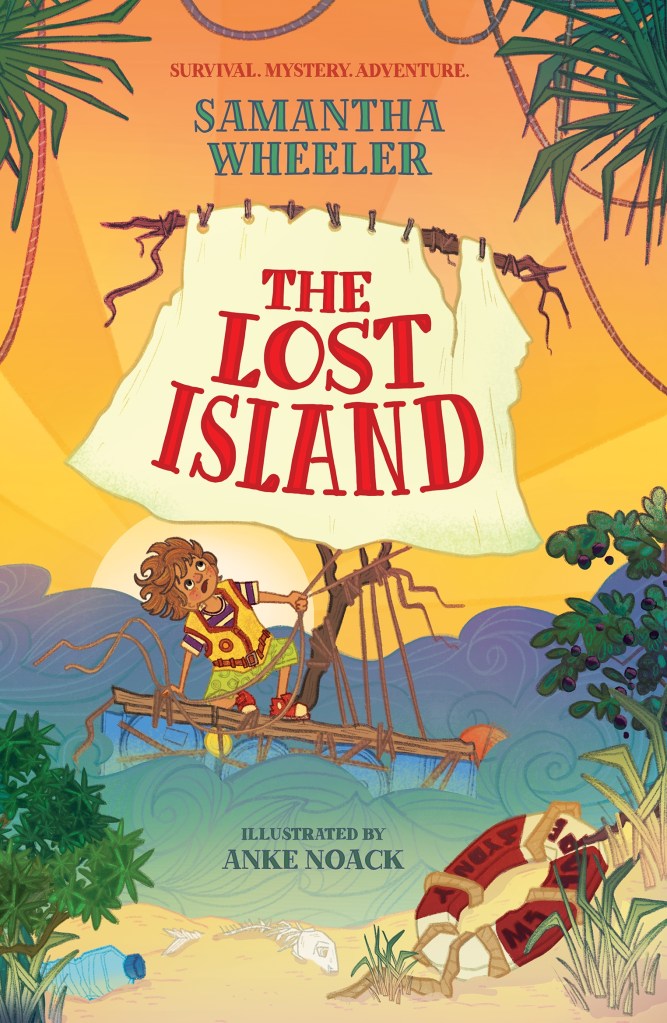
Samantha Wheeler‘s first children’s book was inspired by koalas. Her award-winning novels combine unforgettable adventures with real-world environmental themes. Through engaging characters and exciting journeys, young readers discover the wonder of Australia’s wildlife, wild places and the importance of connecting with nature. Today we’re chatting to Samantha about her latest novel: The Lost Island, illustrated by Anke Noack.
From the publisher:
Theo thinks there’s nothing worse than being stuck on a Pacific cruise with his dad, new stepmum and annoying stepsister. But when he’s thrown overboard during a storm and washes up on a desert island, he suddenly has much bigger problems: finding food, water and shelter. He discovers the island is full of mysteries: spooky noises, possible ghosts and the strangest birds he’s ever seen. With survival getting tougher by the day and no rescue in sight, Theo is desperate to get back to his family. But to escape the island, he must first unlock its secrets – and reckon with the power of nature.
Theo realises he’ll need to be resourceful to have any hope of surviving. How would you rate your own chances of survival if you found yourself stranded on a desert island?
Ha! This is such a good question because, as part of my research, I gave lots of survival skills a try! But I failed miserably! Fishing? Fail! Lighting a fire with a flint and rod? Fail! Building a waterproof shelter? Fail! I was also terrible at tying knots! The only things I did manage to do was crack open a coconut (on a rock) and find north and south. I also found water but since I couldn’t light a fire, I couldn’t drink it, and it was pretty stinky and murky, so again … fail. But, I really loved the experience, it made me appreciate nature even more, and oh my goodness, all the amazing things I noticed while I was out there in the bush! I’d really love to go and learn some proper survival skills now.
What would you miss most about everyday life if you did find yourself having to spend some time on a desert island?
Definitely drinking tea! I love a nice cup of tea in the mornings to help me wake up, so I’d really miss that! And hot showers! Then there’s my dogs (Louie and Nessa) and my husband. I’d miss them. And I’d miss reading, but I’m guessing to begin with I’d be too busy trying to survive to read. Unless I had some survival books. Apart from that, I’m thinking there would be lots of things I’d gain. Like all the birds I’d see and hear. And the sunsets!
This is fiction, but did you need to do any research while you were writing The Lost Island? How do you decide what to include in the landscape descriptions of an island you’ve never been to?
Yes, I did loads of research! I read up on survival skills of course, and found out all sorts of interesting things about currents and tides and how to find north and south. I also spent a week at Heron Island, where there are so many birds and not many people, which gave me lots of ideas for the setting plus ideas for the noises and behaviours of the birds. There are lots of mutton birds who hide their babies in tiny burrows on Heron Island, just like in The Lost Island, and their wailing … oh my goodness, it’s so spooky! I also got the idea for the turtles who hatch along the beach, when one day I was sitting watching the waves, the exact thing happened – shore birds and sharks snapping up the baby turtles as they tried to swim away. As for what to include: I am very much a plot person, so big lengthy landscape descriptions have never been my thing. I like to include just enough that you get the idea but I wouldn’t want to go overboard, otherwise you’d skip that section because it’d be too long and boring.
How do you like to write – do you plot your novel out before writing, or fly by the seat of your pants?
I usually just write as I go, flying by the seat of my pants! But with The Lost Island I really wanted to show how Theo learns to connect with nature, so I needed to plan a bit more. I planned some scenes before I started writing, like when Theo realises he’s alone but hears the wailing noises, when he keeps getting lost and when he fails at lighting a fire and so on, but the rest I just wrote as I went. Unfortunately, this means that my stories take longer to write, with a lot more deleting and editing to make sure the plot and characters work.
Can you tell us a bit about what you’re working on next?
I haven’t started a new project yet, but I have so many ideas!! I have a picture book idea about a crocodile with no teeth which is an early draft form, a possible sequel to Smooch & Rose, my first book (after seeing how many koala trees are still being cleared near where I live) or even maybe a sequel to The Lost Island. Maybe Theo could have another adventure somewhere!
The Lost Island is out now. Ask for it at your favourite bookshop or local library.
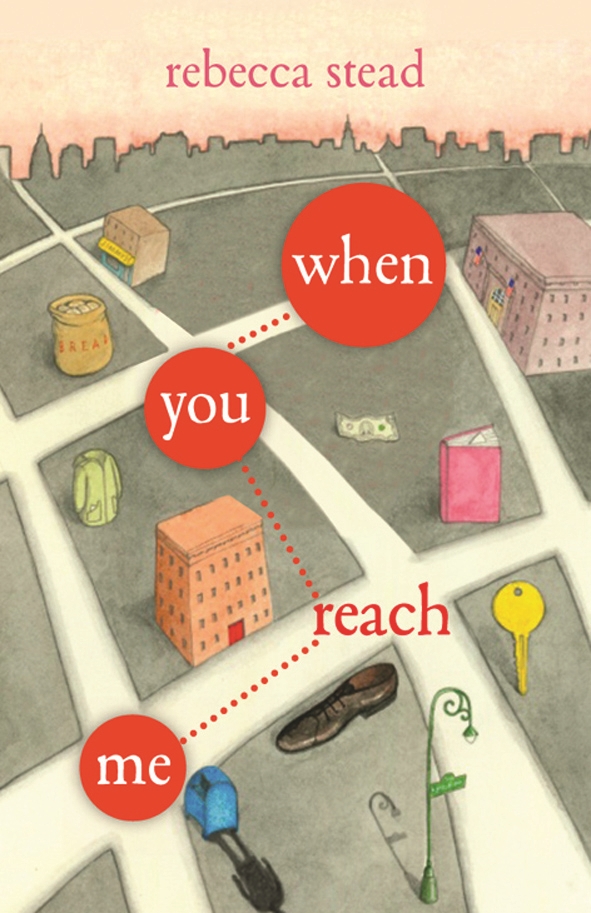
When You Reach Me by Rebecca Stead, Text Publishing, ISBN 9781921656064
REVIEWED BY JIYA KAUR, 10, USA
Jiya reviewed her own copy of this book.
When You Reach Me by Rebecca Stead is an exceptional realistic fiction story that will hold you on edge. When Miranda starts receiving inexplicable notes, she is perplexed. Who could be sending these notes and why? As 12-year-old Miranda navigates through sixth grade and friend drama, she uncovers secrets of the future through the messages.
My favourite part of this book is when Miranda reflects on her actions and realises that she has been mean to her classmate Julia. This moment marks a major transformation. I love that Miranda starts to change her actions to become a better person. My favourite quote from the book is “Sometimes, you never feel meaner than the day you stop being mean.”
If you are looking for a story that will make you feel the emotions that the characters feel, When You Reach Me might be the perfect book for you. It has very realistic characters who are easy to love.
This book is a blend of fiction, sci-fi, and mystery. I would rate this 4.5 out of 5 stars, and recommend it for readers ages 10 to 12.
This is Jiya Kaur’s first review for Alphabet Soup. To send us YOUR book review, read our submission guidelines. Happy reading!
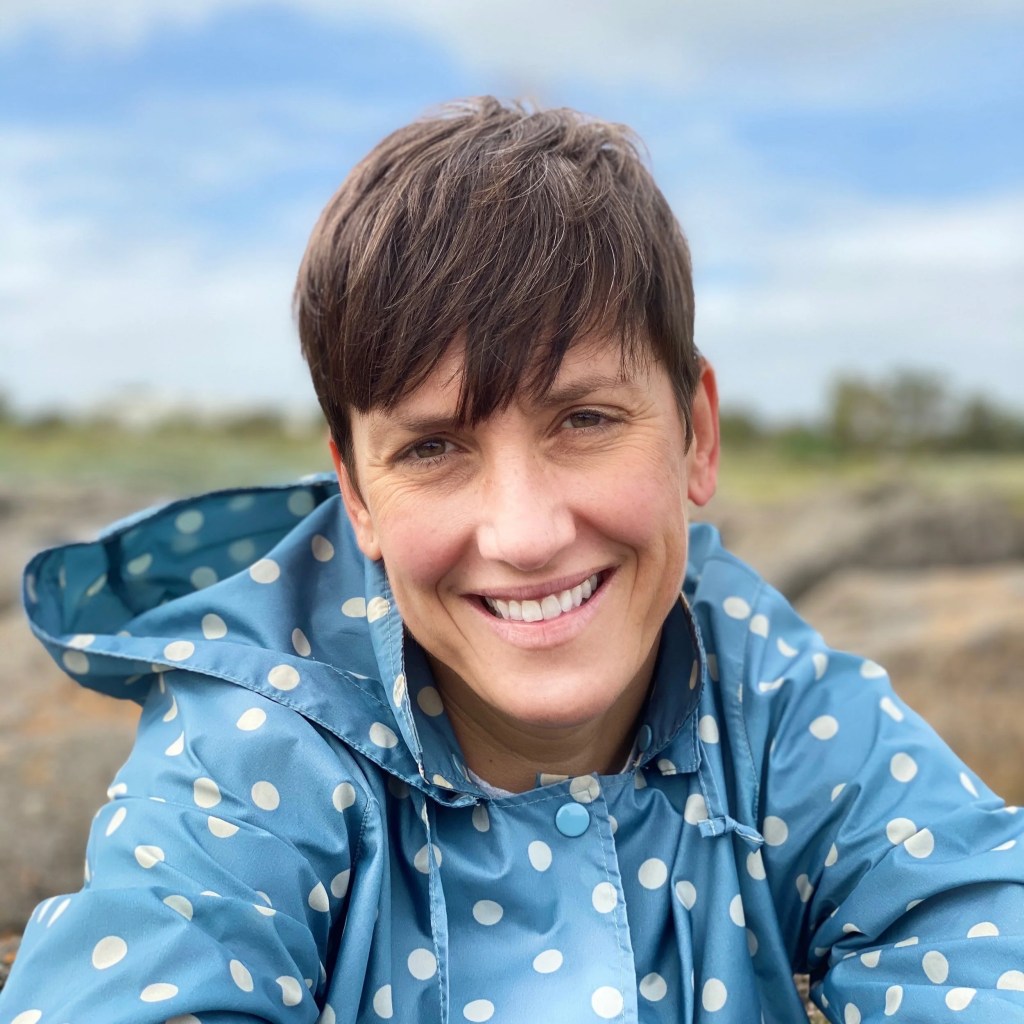
Jo Dabrowski lives in Melbourne, Australia and started her writing career in advertising. Jo loves reading adult books and kids books in all genres, but the books she gets most excited about are the ones where she can see a tiny bit of herself in one of the characters. Today we’re thrilled to be chatting to Jo about her novel: The Making of Martha Mayfield.
The publisher provided Alphabet Soup with a reading copy of this book.
From the publisher:
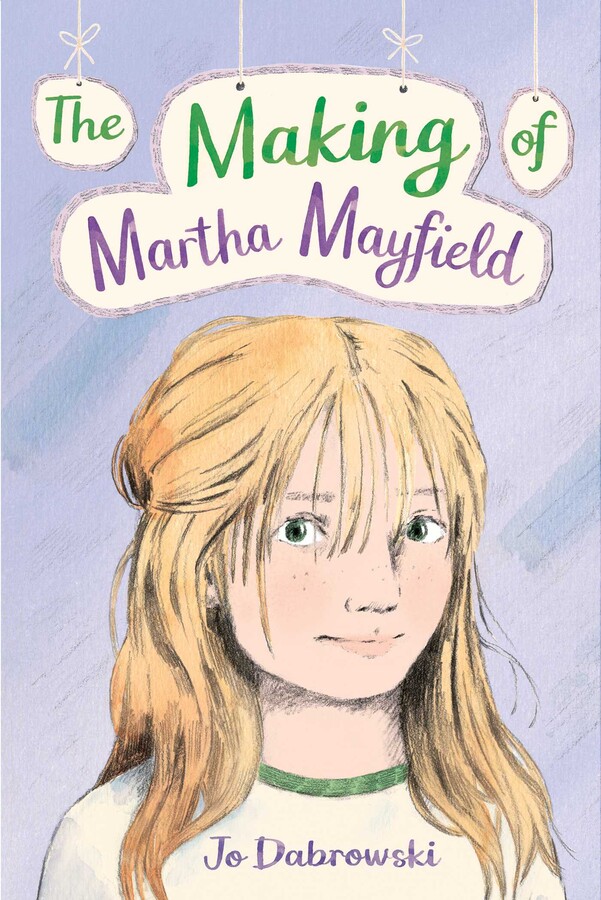
Martha Mayfield has always been the quiet kid. Martha is, after all, her mother’s daughter. The shy child of an even shyer mum. And she likes it this way.That is, until Martha’s mum loses her job. And Martha’s teacher overlooks her at school. And soon, Martha realises something has to give. Can she really go through life being so quiet that nobody takes her seriously? Should she really keep all her good ideas to herself forever?Putting yourself out there is every quiet kid’s worst nightmare, but Martha is determined to make the most of it. And perhaps to make something of herself along the way …
Martha is much quieter than most of her classmates. How did you come to write about Martha – someone who is usually in the background?
Loud, confident characters have had plenty of chances to shine, I thought it was time a shy person was in the limelight! The Making of Martha Mayfield is definitely the most personal book I’ve ever written. I borrowed lots of things from my own life and included them in the book. The biggest one was that I was shy when I was in primary school. Not quite as shy as Martha, but I could be very quiet and anxious. I always had lots of ideas and things that I wanted to say but, quite often, I was too worried about making mistakes or embarrassing myself. Writing about Martha came very naturally to me because I clearly remember all those anxious feelings as well as the frustration of staying quiet when I so badly wanted to speak up.
Group projects! Are you a fan yourself, or do you prefer to fly solo?
When I was at school, I definitely preferred to work on my own. I had very specific ideas about the way I wanted things done and that can be tricky when you’re working in a group. Now that I’m older I appreciate that I can’t do everything and I genuinely like teaming up with people who have different strengths and skills. When I write my books, I love sharing my work with my editor. She always has lots of ideas of how can I push myself and make the story more interesting. That’s the best part about working in a team –discovering different ways of doing things and making the work better.
Martha loves stationery and paper craft. What’s your favourite item of stationery on your desk right now?
Where do I begin?! I love stationery. It’s hard to pick one favourite. I have a Mr Fueki glue pot (just like Martha). I bought it in Japan.
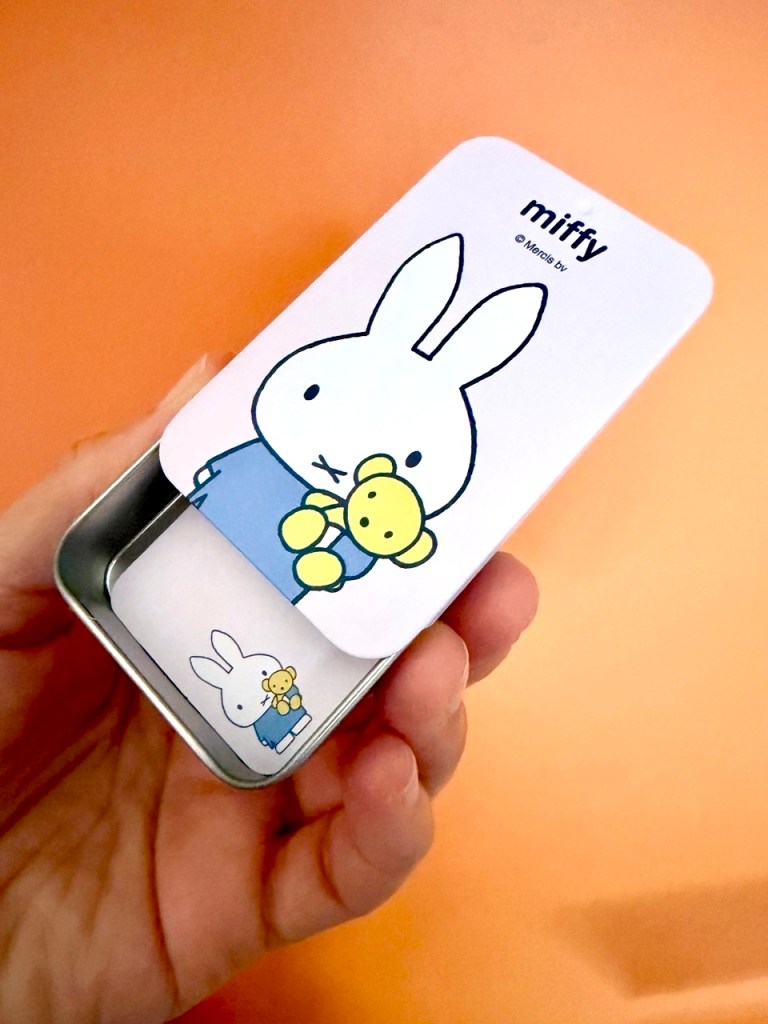
I have a tiny tin with a picture of Miffy on it that has little note cards inside. They’re so cute that I’ve never actually used one because I never want them to run out!
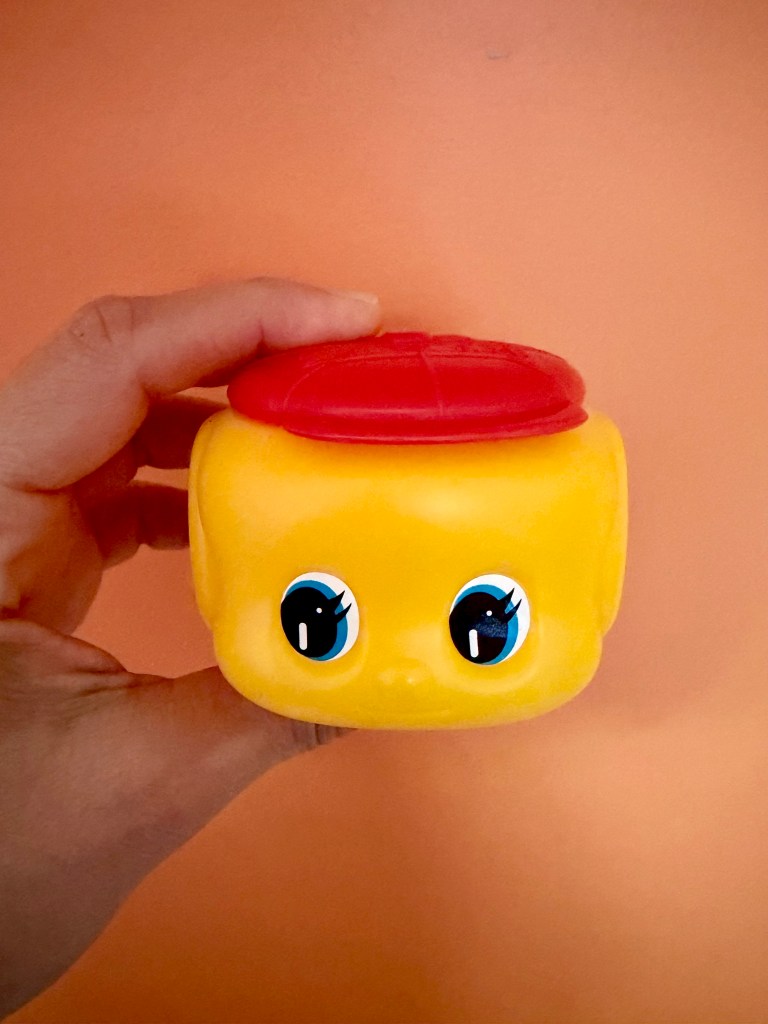
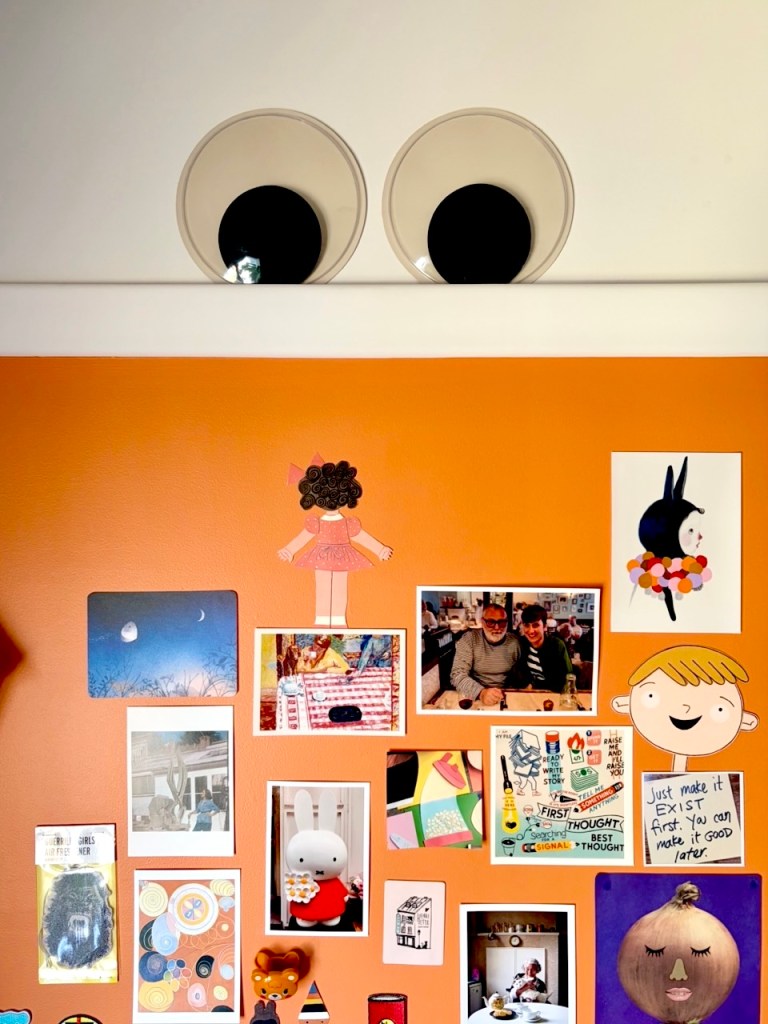
And, I know this isn’t stationery, but I also love googly eyes. I have a giant pair stuck to the wall above my desk:
Do you have any tips for kids who find themselves part of a group project?
Try to be flexible. This can be hard, I know. But no one has the exact same vision as you. Share your ideas and make sure you listen to everyone else’s too, then do your part to the best of your ability. Try not to worry if it doesn’t turn out exactly the way you imagined it. You never know, it might even turn out better!
Can you tell us a bit about what you’re working on next?
Right now, I’m mostly working on more picture books. I have a new one coming out in September about a boy who makes a lot of bad decisions. I’ve also started a rough outline of a new middle grade novel about a boy who really loves rules!
The Making of Martha Mayfield is out now! Ask for it at your favourite bookshop or local library.