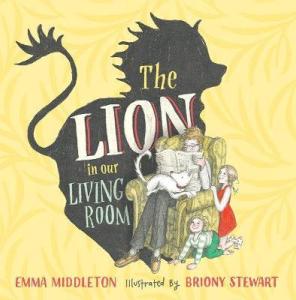
Tom and Tilly want to play lion games with their dad. The story is told poetically — it rhymes and it’s very rhythmical. The phrasing allows you to use lots of expression so it’s good to read out loud, like this:
Will he come? Won’t he come? Will he come and play?
Will the mighty lion come and play with us today?
The illustrations are by Briony Stewart who has written and illustrated other books like the Kumiko series and The Red Wheelbarrow. The illustrations are done in colour pencils and I like how you can see the pencil strokes because you can see that it’s not computer done. I was lucky to meet Briony Stewart at the Fremantle book launch, where there were also fun activities related to the book like making lion masks, lion face painting, and making paper lions.
This picture book will be great for kids aged 6 and under who love playing and being imaginative.
This picture book is an information book about germs — how small they are, and where you’ll find them. This is an interactive book and as part of the story you have to take Min (a microbe) on an adventure. Do not lick this book includes photographs taken with a microscope to show close-ups of paper, teeth, your shirt, and your belly button (your skin), as well as comic-style illustrations.
I like how it turns a serious topic into a fun story with cute germ characters. I found the teeth page very interesting with the close-up view of your teeth.
This book is bright, funny, and child-friendly. It’s great for ages 4+. I’m 11 and I still found it entertaining and interesting. So did my mum (and she’s 43).
The Snow Wombat by Susannah Chambers, ill. by Mark Jackson, Allen and Unwin, ISBN 9781760113810
Jeremiah borrowed a copy of this book from his school library.
The Snow Wombat is a heart-warming story of a curious little wild wombat who sees lots of nature covered in snow, including the high country and his nose!
This is a beautiful story with amazing illustrations and incredibly funny words in it. It encourages little kids to predict the rhyming words.
I rate this book as suitable for 3–4 year olds. My joy rating is 100%.
Gary by Leila Rudge, Walker Books Australia, ISBN 9781925081695
Zac borrowed a copy of this book from his school library.
Gary is like the other racing pigeons but when they depart in the travel basket, Gary stays at home.
Gary can’t go anywhere because he can’t fly!
When the others arrive back home, Gary collects notes about their experiences so that he can remember. But, is Gary still the same as the other pigeons? Will Gary eventually find a way to travel?
I recommend this book for kids aged 4–8 years old.
Leila Rudge’s words and illustrations are outstanding. They hook the reader into the ordinary, but then extraordinary, life of Gary.
Chip by Kylie Howarth, The Five Mile Press, ISBN 9781760400736
Nicholas borrowed this book from his school library.
Every seagull loves chips and Chip is a cute little seagull who loves fish and chips especially. However, when he gets banned from his favourite chip store near the Beach, he tries to form a plan with his friends to get access to his precious chips again.
How will they get their chips back so they don’t starve?
I think this book will be wonderful for children aged 3 and over. It has excellent pictures to show the little ones what is happening and describes the setting in detail. I personally think it is a magnificent book.
Matilda received a review copy of this book from the publisher.
This is about living the city with polluted air, and how Frankie wishes there were trees. And then Frankie starts to imagine …
I’ve seen some of Kyle Hughes-Odgers artwork before, in Ten Tiny Things (written by Meg McKinlay), and also on walls and murals around Perth.
One Thousand Trees is reflective and shows you what happens in Frankie’s head as Frankie imagines a forest of trees. The story is told mostly through the illustrations, with not many words, and the words that are there are mostly prepositions. I like the shapes used for the trees and leaves, and the range of greens in the forest pages. (At the beginning of the book you see mostly greys and dark colours). The endpapers are good to look at — they change from the front of the book to the ones at the back of the book because of the story.
This picture book would suit children who live in the city, and kids who would like more trees in their environment. This book suits ages 4 to 8.
It’s Friday! And that means it’s time for Pass the Book Baton. Every week Alphabet Soup features a book creator who will answer one question before throwing a new question to the next Friday visitor. (It’s kind of like a book relay in slow motion.)
Today the book baton is passed to Gabriel Evans. He has illustrated over twenty books and designed over a hundred greeting cards, painted large gallery artwork, and travelled across Australia presenting illustration workshops and seminars in schools and festivals.
Here are some of the books he’s illustrated:
Last week Sue Whiting asked:
What would you do differently in terms of the development of your career as an illustrator if you had your time over again?
Gabriel answers:
It has been an absolute pleasure working with Sue during her time at Walker Books.
If I was to have my time again I would definitely experiment more with my art. I was always trying to make perfect, beautiful pictures that limited my experimentation.
It’s only in recent years I take enormous pleasure and satisfaction from making risks and discovering new, creative systems. That means using BIG brushes, spray bottles, palette knives, goose feathers, cardboard, fingers, sticks and anything else I can think of.
It’s all about learning through creative, messy fun!
Find out more about Gabriel Evans and his books and art — visit his website!
And now Gabriel passes the book baton to the next Friday visitor — Alice Pung. Alice writes books for a range of ages. You might have read her Marly books from the Our Australian Girl series.
Gabriel asks: “You’re both a solicitor and author. How do you balance these two jobs? Is there a connection between the two?”
Check in every Friday for mini interviews with children’s authors and illustrators.
It’s Friday! And that means it’s time for Pass the Book Baton. Every week Alphabet Soup features a book creator who will answer one question before throwing a new question to the next Friday visitor. (It’s kind of like a book relay in slow motion.)
Today the book baton is passed to picture book author and illustrator, Kylie Howarth. Kylie’s books have been published in Australia, New Zealand, France and the USA. She grew up in the country with a dog, sheep, orphaned kangaroos and even an echidna.
Last week Geoff Havel asked:
How much of your love of stories and your ability to write them comes from your own childhood on a farm and how much comes from being surrounded by children now?
Kylie Howarth answers:
I do draw from my own childhood and now more than ever appreciate all the experiences my parents gave me. Not every kid had pet kangaroos or spent a year traveling around Australia. As a child I loved drawing and have always been fond of animals and the beach, which are both reoccurring themes in my books.
That being said I am now focused on creating stories that my children love. Their interests and personalities are definitely the biggest inspiration for my work. They contribute so much to my books too as I am constantly tweaking text and layouts based on their reactions and feedback. We also create paintings together in our backyard art sessions, which I then scan and use as textures in my illustrations.
For more info about Kylie Howarth and her books (and colouring sheets and craft activities), visit www.kyliehowarth.com
And now Kylie Howarth passes the baton to the next Friday visitor — Lorraine Marwood. Lorraine is an award-winning children’s author and poet. Her most recent poetry collection is Celebrating Australia: A Year in Poetry.
Kylie asks: “Which of your poems or books means the most to you?” .. Check in every Friday for questions and answers from children’s authors and illustrators. .. See you next week!
It’s Friday! And that means it’s time for Pass the Book Baton. Every week Alphabet Soup features a book creator who will answer one question before throwing a new question to the next Friday visitor. (It’s kind of like a book relay in slow motion.)
Today the book baton is passed to Sally Murphy. Sally has written over forty books for children including picture books, novels, non fiction, and verse novels. Her poetry has been published in magazines, anthologies and online. Sally’s latest book is Sage Cookson’s Fishy Surprise — book three in a series about a girl with parents who are celebrity tv chefs.
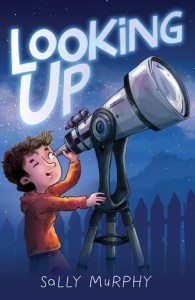
Sally’s next book — coming soon! — is called Looking Up. You might recognise some of these other books by Sally Murphy:
Last week Gabrielle Wang asked: I would love to know how you began. I’m interested in hearing about that transition between being unpublished to being published. Did it take you long? Did you ever want to give up? Did you have many rejections?
Sally answers:
Where did I begin? Gosh that’s a hard one — I was always a writer. I started writing ‘stories’ before I could actually write anything legible, and as I grew up I didn’t really stop. I made up poems and stories all the time. I always knew I wanted to be an author, though by the time I left school I was less sure about how I would achieve that and earn a living.
So, although I kept writing I also did other things: became an English teacher, got married, had children. And I wrote in my spare time, and I submitted manuscripts, not really knowing a lot about the industry. I was rejected repeatedly. But persistence paid off. First I had a few poems published in small publications. Then, by chance, I saw an advertisement for teachers to write educational resource books and the next thing I knew, I had my first book contract. I was published!
It was a few more years, still writing and bringing up children (I have six) before I realised my dream of having fiction published. The educational books gave me the confidence to keep going, and I spent a lot of time studying market guides, and researching publishers and publishing on the internet, as well as improving my writing by writing, rewriting, getting critiques from a critique group, attending conferences and workshops and so on.
Looking Up (coming soon!)
My first trade publication came about because I saw online a call for manuscripts for a new chapter book series. I read the guidelines carefully and also read the few titles which had already been published in the series, to get a feel for what the publisher (Banana Books) wanted. Then I wrote, revised and submitted two manuscripts. The day that one of those was accepted was amazing.
Now, twenty years from my first educational book being published, I’ve had over 40 books (trade and educational) published. I still get rejections — more rejections than acceptances. And every time I get one I feel sad. But I also know that no piece of writing is wasted. Published or unpublished, that manuscript has added to my skills, a bit like sportspeople learn from every game or every training session.
Do I ever want to give up? Yes. When I get lots of rejections. Or when I can’t get a story to work. Or when I get a negative review. But the feeling never lasts long. I’m a writer. Writing is what I do.
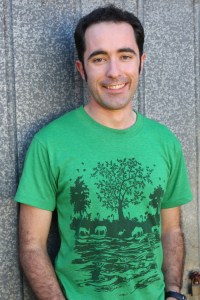
And now Sally Murphy passes the baton to the next Friday visitor — Geoff Havel. Geoff’s most recent book is Dropping In; an action-packed novel that explores friendship, bullying, and living with a disability.
Sally asks: “What is the thing (or things) you are most proud of in your writing career to date?” .. Check in every Friday for questions and answers from children’s authors and illustrators. .. See you next week!
It’s Friday! And that means it’s time for Pass the Book Baton. Alphabet Soup features a book creator every Friday who will answer one question before throwing a new question to the next Friday visitor. (It’s kind of like a book relay in slow motion.)
Today author-illustrator James Foley takes the baton. James Foley is a writer, illustrator and cartoonist. He likes working with pen and ink, pencil, charcoal, watercolour, and digital tools. He has illustrated books by other people, and written and illustrated his own books.
Last week AL Tait posed two questions for James. AL asks:
Q. You started out as an illustrator — what made you decide to write In The Lion and Brobot yourself?
A. I’ve always written and illustrated my own stories; it just worked out that my first book was only as the illustrator. It’s easier to break into the industry by working with someone more established, as Norman Jorgensen was. Then I got the opportunity to make In The Lion on my own, which was great. It’s a different experience writing AND illustrating a book yourself, as opposed to illustrating a text written by someone else (as I did with Sigi Cohen for My Dead Bunny) or collaborating with a writer quite closely through the initial process (as I did with Norman Jorgensen for The Last Viking and The Last Viking Returns). Also, when you do the book yourself you get the full royalty … 😉
Q. As an author-illustrator, do you start with the words for a story or start with the pictures?
I usually start with a bit of both — some loose images and a few phrases. I may have a few key scenes playing in my head, but they’re fragments of what the overall story will eventually become. Then I nut out the character designs and the overall storyline at the same time; these two processes feed off each other. A character design may give you a plot idea, and vice versa. Then when the characters and the storyline seem to have settled, I can get started on thumbnails and storyboards, and then final artwork.
And now James Foley passes the baton to the next Friday visitor — Deborah Abela. Deborah is the author of many books. Her most recent title is The Stupendously Spectacular Spelling Bee.
James asks: Do you find that your characters reflect different aspects of your personality? So the heroic characters might reflect your good side, the villains might reflect your naughty side, the protagonists might share your strengths and weaknesses, etc?
Check in every Friday for questions and answers from children’s authors and illustrators. See you next week!
Visit James Foley’s website for more information about him and his books. You can also read earlier Alphabet Soup interviews with James here and here.
 REVIEWED BY MATILDA, 11, WA
 REVIEWED BY MATILDA, 11, WA


 REVIEWED BY MATILDA, 11, WA
 It’s Friday! And that means it’s time for


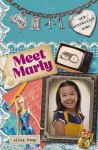 And now Gabriel passes the book baton to the next Friday visitor — Alice Pung. Alice writes books for a range of ages. You might have read her Marly books from the Our Australian Girl series.


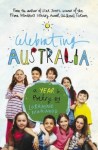 And now Kylie Howarth passes the baton to the next Friday visitor — Lorraine Marwood. Lorraine is an award-winning children’s author and poet. Her most recent poetry collection is Celebrating Australia: A Year in Poetry.


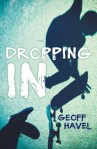 And now Sally Murphy passes the baton to the next Friday visitor — Geoff Havel. Geoff’s most recent book is Dropping In; an action-packed novel that explores friendship, bullying, and living with a disability.
 It’s Friday! And that means it’s time for Pass the Book Baton. Alphabet Soup features a book creator every Friday who will answer one question before throwing a new question to the next Friday visitor. (It’s kind of like a book relay in slow motion.)


 And now James Foley passes the baton to the next Friday visitor — Deborah Abela. Deborah is the author of many books. Her most recent title is The Stupendously Spectacular Spelling Bee.
 alphabetsoup.net.au