Two more book launches — if you live in Victoria or WA, mark these dates on your calendar!
VICTORIA
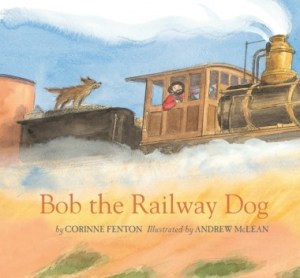
Come along to the launch of Bob the Railway Dog by Corinne Fenton and illustrated by Andrew McLean. This picture book tells a heart-warming true Australian story. This is a well-known legend in SA and a statue of Bob can be seen in the Adelaide Station.
When: 11am, Saturday 1 August 2015
Where: The Railfan Shop, 4 Churchill St, Mont Albert, VIC (opp. Mont Albert Railway Station)
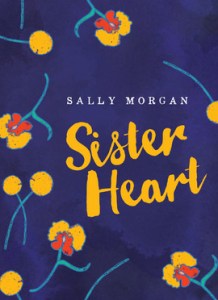
Come along to the launch of Sally Morgan’s new book Sister Heart, to be launched by Ambelin Kwaymullina. Sister Heart is a verse novel aimed at 10 to 15 year olds.
‘ [a] personal and approachable conversation-starter about the Stolen Generations for mature young readers.’ — Bookseller + Publisher.
When: 6pm, Wednesday 6 August 2015
Where: New Edition Bookshop, 41 High St, Fremantle WA (cnr Henry St)
RSVP: Entry is free but places are limited and must be reserved in advance by contacting admin[at]fremantlepress.com.au or 9430 6331. Only those who RSVP will be allowed entry on the night.
New Edition has pledged to donate a percentage of all books sold at the launch of Sister Heart to the Indigenous Literacy Foundation.
Matilda reviewed her own copy of this picture book.
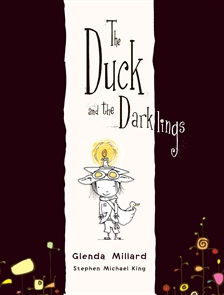
This is a story about how the world is changing. People live underground because they are ashamed about what humans have done to the earth. Most of the old people have disremembered the good things that happened on top of the earth.
When Peterboy looks for something that would make Grandpapa’s eyes light up and stay like that, he finds Idaduck. But ducks need to go on top of the earth and to have the wind in their wings, so she can’t stay with Peterboy and Grandpapa forever.
I know the names of the author and illustrator from the Kingdom of Silk series.
What’s interesting about this book is the way the author has fiddled with the words. It makes the book kind of like a poem and it feels like a different world.
Stephen Michael King does the illustrations and I like them because they show the dark and also show the light with shapes of hot colours. The last few pages are full of light and there is no dark. This leaves you feeling happy.
I think ages 7 to 10 would like this book. Little kids might not understand because of all the fiddled-around words, but older kids might like those.
–
Matilda is one of our regular book reviewers. Her most recent review (if you don’t count this one) was of The Cleo Stories.If YOU would like to send us a book review, check out our submission guidelines.Happy reading!
Harold and Grace by Sean E Avery, Fremantle Press, ISBN 9781925162295
REVIEWED BY CÉITÍ, 6, WA
A review copy of this book was provided by the publisher.
Harold and Grace is about a tadpole and a caterpillar. They hatch after the storm at the exact same time and on the exact same day.
Harold the tadpole goes exploring in the pond and meets two pretend friends. They’re mean to him at first, then they’re nice to him when he grows fins like them. Grace goes exploring on the tree and she makes two stick insects who make fun of her too.
Harold and Grace become friends but Harold spends more time with the fish than with Grace. When he grows legs, the fish are mean again. Harold goes back to the lonely leaf but Grace isn’t there. He sleeps on the sac and he’s sad. When he sticks his long tongue out, something says, “Harold! You big, green nincompoop!” The two friends find each other again.
I really enjoyed this book. I like how the story was about friends and how nice they were to each other. I’d give the story 8 out of 10. I’d give the pictures 7 out of 10. Anyone could read this book, even bigger kids. Anyone could enjoy it.
—
This is Céití’s very first review for Alphabet Soup.If YOU would like to send us a book review, check out our submission guidelines. Happy reading!
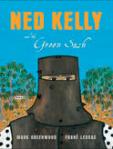
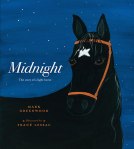
Today we welcome Frané Lessac to Alphabet Soup. Frané is an illustrator and author — she’s the illustrator behind Ned Kelly and the Green Sash, Midnight, and The Greatest Liar on Earth (and many, many more books!).
We asked Frané if we could talk to her about A is for Australia: A factastic tour — her latest book. Here it is in all its glory:
What is the Fremantle Doctor? Where is Qui Qui? And why are some islands named after days of the week? You’ll uncover these exciting facts when you explore the A to Z of Australia — from Bondi to Kakadu and all the way to Taronga Zoo. Discover why Australia is one of the most amazing countries in the world …
—
Frané Lessac
Can you tell us a bit about where you live?
I live in the port city of Fremantle in West Australia. From my front porch, I can see a sliver of the Indian Ocean and Rottnest Island. Our house is over 120 years old and we’ve built an art studio in the back garden where I paint.
When you were working on A is for Australia, what came first — the artwork or the text?
Location came first. We had to decide what locations would be depicted for each letter of the alphabet. There were incredible alternatives and that made it hard to choose, but what made it easier was the need to represent all states narrowing down the locations. Next came the text, then art.
How long did it take you to create the book?
I first approached Walker Books with the idea over seven years ago! They were familiar with my other alphabet books based on New York, Washington D.C., Texas and the Caribbean. They knew the format and the market. I wasn’t sure if I was going to write the book myself initially, but with a twist of the arm, I did it!
What do you like to do when you are not illustrating (or writing-after-your-arm-has-been-twisted)?
Over the years I’ve lived in New York, Los Angeles, Paris, London and the Caribbean before settling in Australia twenty-five years ago. My closest friends and my family are spread right across the globe and l love to visit them as much as I can. When I’m home in Fremantle, I like to walk along Dog Beach.
What sort of books did you like to read when you were growing up?
My mother was an avid reader and placed an importance on reading and books. She took me to the library at an early age to pick out my own books. I started with Beatrix Potter and moved onto The Hardy Boys and the Nancy Drew mysteries.
What led you to create A is for Australia? A is for Australia is a celebration of Australian people, places and culture. I wanted to create a book for children so they could discover why Australia is one of the most amazing countries in the world. I hope that visitors from overseas also grab a copy and share it back home.
Do you have a preferred medium?
I use gouache paint on watercolour paper. There’s an enormous range of colours and they are also easy to mix. The paint dries fast and I can paint in layers, which allow me to make any changes easily.
Do you have any advice for young artists?
Believe in your art and don’t compare what you create to anyone else’s. Everyone draws differently. Be confident. If I worried about what other people created, I never would have created one single book. I never went to art school and I was never the best artist in the class, but I always loved to draw and paint.
Are you working on any new projects at the moment?
I recently received a folktale from my UK publisher that’s set in India. It’s called Pattan’s Pumpkins and it’s right up my alley. Jungles and animals and bright pumpkins! Exciting to work with this publisher again — I met the editor over thirty years ago and we created three folktales together set in West Africa, Papua New Guinea and Polynesia.
—
For a peek inside the pages of A is for Australia, visit Frané’s blog. And you can hear Frané talking about making the book on the book trailer:
You can find out even more about Frané Lessac and her books by visiting her website: www.franelessac.com.
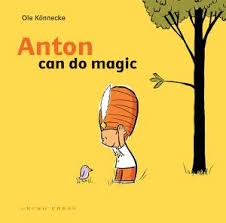
Anton Can Do Magic by Ole Könnecke, ISBN 9781877467639, Gecko Press
Reviewed by Matilda, 7, WA
Anton is a boy with a hat that he thinks helps him be magic. He tries to make things disappear. Whenever he does magic, he wiggles his hands and the hat falls over his eyes and he can’t see what’s happening, so he thinks he’s done something magic.
Something interesting about the illustrations is that they use mostly hot colours like red, orange and yellow and reddy-orange. Only the bird is not orangey-red.
Can Anton really do magic? You will have to read this picture book to find out.
I would recommend this book to 5 to 8 year olds because it’s funny and it made me laugh.
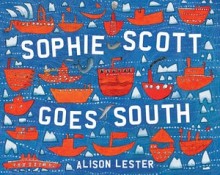
Sophie Scott is nine, and she’s going to Antarctica with her dad—the captain of the Aurora Australis. It will take two weeks to get there, and they will be staying at Mawson Station for a week before coming home.
This is Sophie’s diary of her trip. But it’s sort of a scrapbook about Antarctica—as well as her diary entries, Sophie includes a detailed map of the ship, and photos of it, too. She describes (and draws) the special cold-weather clothes she has to wear and talks about the strange sounds and sights she sees from the ship. I love the drawings of the people on the ship and at the crew at Mawson Station and also the drawings of the animals and the environment in Antarctica. Many of the pages also feature snippets of information about the history of Antarctic explorers, and facts about the continent and the creatures that live there. (Did you know that an iceberg that sits just under the surface of the water is called a growler? Or that Roald Amundsen from Norway was the first to the South Pole?)
You’ll find a glossary at the end of the book and the endpapers show a map of the world showing Sophie’s journey to Antarctica, and a map of Antarctica from above.
On every page there are interesting things to look at, amazing photos and Sophie’s observations. One of my favourite photos shows a Weddell Seal scratching his nose. I also love the gallery of photos showing the colours of Antarctica. It’s not just white!) Sophie’s journey is based on the author’s own trip to Antarctica and many of ‘Sophie’s’ drawings in the book were co-created with children who read Alison Lester’s online diary entries during her trip. (Children sent the author artwork inspired by the online diary entries.)
This book grabs your attention from the first page. Gallop as quickly as you can to a library or bookshop if you love strange adventures, explorers, sea creatures, ships or Antarctica. Or all of them together!
We put all the entrants’ names into a hat and the winner is … KEN WILLIAMS. Congratulations—we know you’ll love these four fabulous picture books by Peter Carnavas! (Please email editor@alphabetsoup.net.au with your postal address, Ken.)
Here’s what Ken said about his nominated picture book treasure:
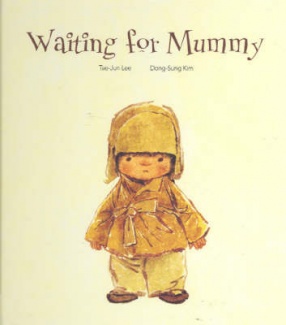
A favourite book is Waiting for Mummy by Tae-Jun Lee—a Korean classic retold and published by Australian publishers Wilkins Farago. Story is told largely through some amazing illustrations that take me back to my own childhood as an only child waiting for my mother to finish work to tell her about my day. It transforms me into a sobbing mess with each read.
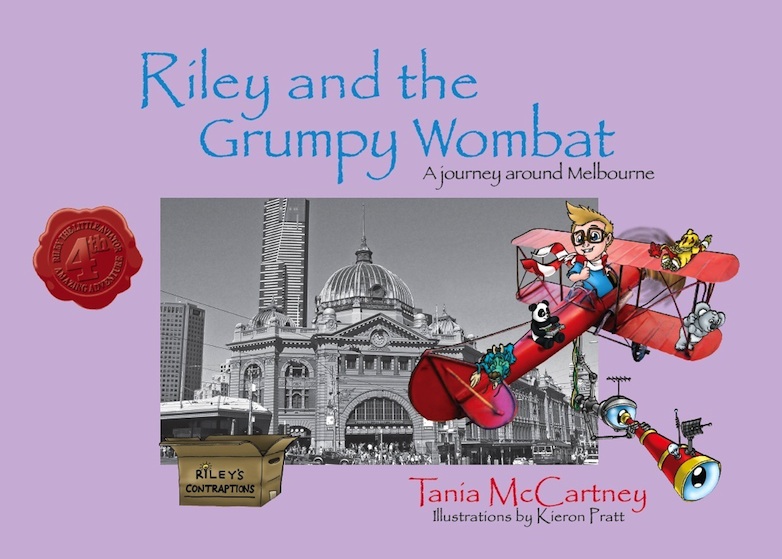
Today we welcome Tania McCartney to Soup Blog! Tania will share with us how she goes about writing a story. (This post is part of a Blog Tour to celebrate the launch of her newest book—Riley and the Grumpy Wombat: A Journey Around Melbourne.)
Riley and the Grumpy Wombat: A Journey around Melbourne by Tania McCartney, ill. Kieron Pratt. Ford Street Publishing, ISBN 9781921665486
Before we hear from Tania, here’s a bit about the book:
Riley has discovered a wombat in his nanny’s garden. But why is this furry creature so grumpy? Join Riley and his friends from books one, two and three, as they zoom around the stunning sights of Melbourne in search of a wombat that simply needs a place to call home.
Riley and the Grumpy Wombat has black and white photos along with illustrations, and takes the characters on a fun adventure around Melbourne, Victoria.
And now, over to Tania McCartney!
Tania McCartney, with characters from her books
It seems the writing processes of authors are as varied as there are books … and perhaps this is why it’s so fascinating to learn how authors go about penning their work. I’ve been writing since my teens, yet each style of book I write goes through an almost entirely different process—and this process has actually changed over the years as I’ve found better ways of working.
I remember writing my first adult novels in my late teens and early twenties—the process I used then was … well, there wasn’t really a process. It was just ramblings. There was no plot structure, no character development, no deliberately-placed threads that were then woven delicately through the text, no no. It was just open slather. I wrote from the heart, I wrote with passion—I just wrote.
That was some of the easiest writing I’ve ever done. I sent one of these novels—Breathing Under Water—in for The Australian/Vogel Award (this was around 20 years ago) and although it wasn’t shortlisted, the publisher liked it enough to send it to an outside reader. After a few months, I received the outsider’s critique, which basically said there was ‘obvious talent’ but did the publisher really want to spend time working with me to hone a messy storyline. The publisher didn’t.
I was so crushed, I didn’t submit anything to a publisher again for close to ten years. But it wasn’t only because I was crushed—it was because I had no idea how to hone and structure my work.
Since that time I had plenty of ideas but was simply too confounded about the process. I thought about reworking Breathing Under Water, and I played with it occasionally, but nothing eventuated. Then, in 2007, I began work on a fresh idea for a young adult novel that struck me so quickly, it poured with ferocity from my fingertips.
The plot of this new book—let’s call it The One—required a lot of research, intense character placement and development, and a mass of location and time links. I needed to plan.
So what I did was set up a spread sheet listing the characters, their location, their specific roles and their connection to each other. I also kept detailed notes on the information required to tie characters and events together, and placed ‘markers’ through the manuscript to indicate where extra pieces needed to be written.
I needed these markers because I found I was writing parts of the book that weren’t necessarily in chronological order. It didn’t help that the book also skips through time, so I had to be very careful about where I placed which occurrence.
Taking the time to chart what I was writing kept me on track. At first I was worried a spread sheet would endanger the freedom of the storyline. I worried it would become too formulaic—too predictable. But the opposite happened. Extraordinary coincidences began to occur with characters and events and the research I conducted. It was extraordinary.
Life circumstances forced a four-year break from The One, and I have only just looked at the manuscript again this past month or two. Without my notes and spread sheets, I would have been lost, so I’m thankful I learned how to structure my own writing process.
When it came to writing my Riley the Little Aviator picture books, things went a little differently. I’m a really visual person, so all four books (as well as number five, being written now) were actually done after I had chosen a series of photographs to dot throughout the storyline.
I would place these photos directly onto Adobe Illustrator book pages and begin to write the text around the photos, chopping and changing it as the story went along. For all four books, I had absolutely NO idea of the endings. I knew roughly where the story was going and I had faith that the ending would unfold, magically. And indeed—each time, it did.
For Riley and the Curious Koala, this writing style was particularly strong. As Kieron illustrated each page, I was spurred on to the next, and would often make changes to the text to reflect Kieron’s (often hilarious) interpretation. The storyline for Curious Koala wasn’t finished until around three weeks before printing. This was a wonderful process—collaboration between author and illustrator. I loved it.
For Grumpy Wombat, I had to get the text in shape well beforehand because Paul Collins from Ford Street needed to approve it for publication. The final version, however, was still played around with right up to the last minute, even as pages were being laid out by the graphic designer.
On the back cover of Riley and the Grumpy Wombat
I absolutely loved having such freedom and scope to perfect the text so close to printing.
For my non-fiction books, my process is more methodical. For my history book for the National Library (Australian Story: An Illustrated Timeline, out 2012), I did a stack of historical research. I kept a Word document and a spread sheet that covered the text, images, references, links and notes. When it came to actually finalising the text, I placed it onto landscape book pages, just like I did with my Riley books, so I could ascertain how much text would be needed and in which timeslots I would need to write more. This helped me with image selection, too. It helped me keep focus.
For my lifestyle book—Handmade Living—I kept computer and hard copy versions of the work so I could write, layout and edit with greater ease. This helped me cut down the editing process considerably.
Some authors may work their way through books from front cover to back cover, but I find that, no matter the genre, I tend to jump around and write what works at the time. If I’m struggling in one area, I leave it and move onto a part I feel compelled to write in. Whilst I do believe in ‘pushing through’ writer’s block (it works for me), I also believe that if a section of any work is sticking, you may need to work on another section for a while. Sometimes we just need a few hours or even a week to let a certain part of any book simmer. Then things will flow again.
The writing process is certainly a unique one and—like anything—the more you practise, the easier it becomes.
So long as I have good coffee, silence, a nearby plant or flowers, and lots of sunshine streaming into the room, my writing processes are always joyful.
—
Thanks for visiting and talking to us about the writing process, Tania!
If you want to follow the Riley and the Grumpy Wombat Blog Tour, here’s where to go:
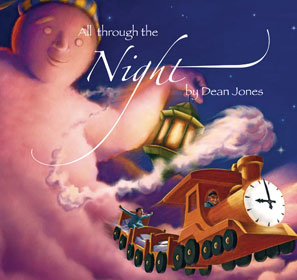
If you dream of being an illustrator when you grow up, here’s your chance to meet a real, live illustrator—Dean Jones, author-illustrator of All Through the Night.
Dean Jones will be signing books after an illustration demo.
Well, there are only 7 sleeps left until Christmas day!
At this time of year, when I’m reading books to my children at bedtime, we always have at least one Christmas-themed book and (as we’re running out of days to talk about them) I thought I’d list a few all in one post!
One book that we continue to pull out since my eldest daughter was little is The Nativity, illustrated by Julie Vivas. It uses text from the Authorised King James Version of the Bible to tell the Christmas story and the illustrations really glow and make this a wonderful book. (You might know her illustrations from other books, like Possum Magic, Wilfrid Gordon McDonald Partridge and Our Granny, or many others!)
We also love Twelve Days of Christmas by Rachel Griffin. It comes with a CD of the song ‘The Twelve Days of Christmas’ and each double-page spread in the book covers one day of the twelve days. Each page has photographs of brightly-coloured embroidery showing scenes from that particular day – our favourites: the Five Gold Rings worn by an elephant, and the Pipers Piping, who are snake charmers. We love this book and we never get tired of the fun CD, and of course, the twelve days of Christmas aren’t over until Epiphany, so we can keep listening until well after Christmas! (This was published in the UK and my children seem to think that the twelfth day should be ‘Drummers drumming’ and not ‘Lords-a-leaping’, but I don’t know if this is an Australian preference or a Newman-children preference. If we’re singing it along with a piano we go with my children’s preference, but we respect the CD version when we’ve got that on!)
I believe Twelve Days of Christmas is currently out of print, which is A TERRIBLE THING! But I’ve seen it at several public libraries, so you could add it to your ‘must borrow’ list.
The Twelve Dogs of Christmas by Kevin Whitlark arrived in our house just before December and (you guessed it) is a silly version of ‘The Twelve Days of Christmas’ and full of all kinds of dogs doing doggy things. We like to sing ‘Three French Poodles, Two chewed up slippers, and a fat cat in a fur treeeeeee’ very loudly. If you love dogs (and Christmas carols), you will love this picture book. It really is very silly but it’s good fun and has been read quite a few times since it first arrived.
What about your holiday reading? Do you have any Christmas books that you just love and you think we should know about?
~ Rebecca Newman (Editor, Alphabet Soup magazine)
The Nativity, illustrated by Julie Vivas, Omnibus Books, ISBN 1862910529. This book was selected for review from the Editor’s own collection.
Twelve Days of Christmas, by Rachel Griffin, Barefoot Books, ISBN 9781841489407. This book was selected for review from the Editor’s own collection.
The Twelve Dogs of Christmas, by Kevin Whitlark, Scholastic Australia, ISBN 9781741694451. A review copy of this book was sent to us by Scholastic Australia.






 One book that we continue to pull out since my eldest daughter was little is The Nativity, illustrated by Julie Vivas. It uses text from the Authorised King James Version of the Bible to tell the Christmas story and the illustrations really glow and make this a wonderful book. (You might know her illustrations from other books, like Possum Magic, Wilfrid Gordon McDonald Partridge and Our Granny, or many others!)
 We love this book and we never get tired of the fun CD, and of course, the twelve days of Christmas aren’t over until Epiphany, so we can keep listening until well after Christmas! (This was published in the UK and my children seem to think that the twelfth day should be ‘Drummers drumming’ and not ‘Lords-a-leaping’, but I don’t know if this is an Australian preference or a Newman-children preference. If we’re singing it along with a piano we go with my children’s preference, but we respect the CD version when we’ve got that on!)
 The Twelve Dogs of Christmas by Kevin Whitlark arrived in our house just before December and (you guessed it) is a silly version of ‘The Twelve Days of Christmas’ and full of all kinds of dogs doing doggy things. We like to sing ‘Three French Poodles, Two chewed up slippers, and a fat cat in a fur treeeeeee’ very loudly. If you love dogs (and Christmas carols), you will love this picture book. It really is very silly but it’s good fun and has been read quite a few times since it first arrived.
 alphabetsoup.net.au