This post was added by Rebecca Newman. Rebecca is a children's writer and poet, and the editor of the Australian children's literary blog, Alphabet Soup.
For more about Rebecca visit: rebeccanewman.net.au.
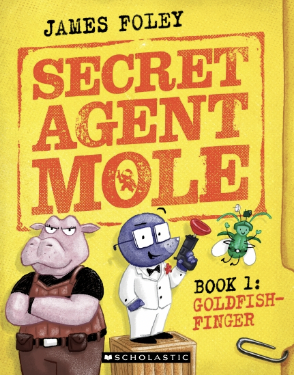
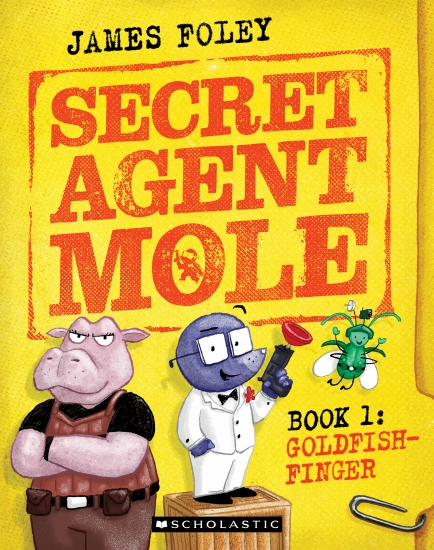
Secret Agent Mole, Book 1: Goldfish-Finger by James Foley, Scholastic Australia, ISBN 9781761200151
Reuben received a review copy of this book.
Before I read any book I always read the blurb, and in this book parts of the blurb are just black lines, like it was an agent’s file. When I got this book I thought it would be about a mole, in a tuxedo, with a grappling hook but the hook was a plunger. And I knew it was a graphic novel.
It was what I expected because the mole had a plunger in a grappling gun – and it’s very funny.
My fave character is Max because he is always telling dad jokes, and he’s the funniest character.
I am definitely looking forward to reading Book 2 in this series because I want to see if they manage to beat Dr Nude, the naked mole rat.
This is a great read for anyone who likes comics or animals or moles or insects/bugs and funny books.
Kelly Canby is an award-winning, internationally published, illustrator and author of over two dozen books for children. Kelly was born in London, England, but has lived in Australia since the age of three. She says this is probably around the same age she started playing with pencils and crayons, and it was probably only a few years after that that she decided playing with pencils and crayons was something she wanted to do for the rest of her life. Kelly applies her quirky style to the pages of everything from picture books, to chapter books, to early reader books, to colouring books and beyond!
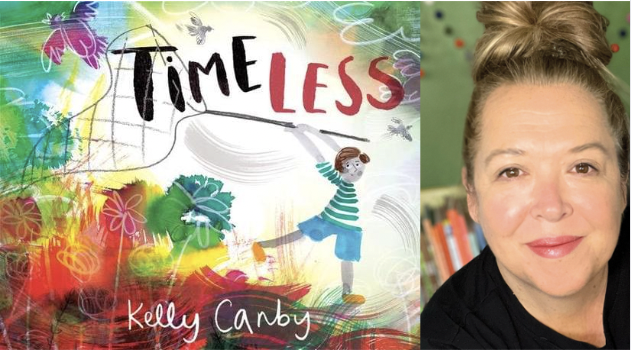
Today we’re talking to her about her new picture book, Timeless.
From the publisher:
Emit (whose parents turned back time to name him) is surrounded by busyness. Dad is too busy to read stories, Mum is too busy to play games and Emit’s brother and sister are simply too busy doing nothing to do anything, at all. Emit tries everything he can think of to get more time, he tries to catch it, wait for it, but it’s not until Emit tries to buy some time that he learns the secret …
Did you already have a stack of time-themed puns just begging to be turned into this book? Or did the idea for the book send you off in search of puns?
The idea for the book came first and that then sent me down into a deep, deep, pun dive. In the end I had so many puns and idioms I couldn’t use them all! A couple of favourites that didn’t make it to the final book were Emit’s street address: 5 Oak Lock Lane, and a part where Emit told his family he’d like to be a time traveller when he grew up only they ‘didn’t think there was much future in it …’ Also there was a part in the first draft where Emit sticky taped two toy ducks together to create … A time pair o’ ducks. Genius ideas, I think, but in the end they didn’t suit the story so I had to leave them out.
What is your relationship with time? (Are you usually running out of it or always ‘on time’?)
I am that person who is always horribly … early! For appointments especially. And often times 30 or 40 minutes early too because I’m so afraid of being late. But it’s not always a bad thing because it gives me some thinking time in the car, or a chance to get familiar with where I need to be, or have a cup of tea, or reply to emails or ALL of those things. It’s amazing what I can squeeze into that half hour!
Your bright illustrations in Timeless almost seem to glow. Can you tell us about how you create your illustrations?
The brightness all comes from the inks. I chose the most vibrant colours I could find and then got my fan brush (a brush shaped like a fan, of course) and splattered and flicked ink all over the page until it started to look like how I saw it in my head. I wanted the illustrations to have a lot of energy and movement, to echo how busy everyone was, and the fan brush was perfect for that. I didn’t mind at all if ink fell in odd places either because I thought it added to the chaos of being so busy. I also didn’t sketch any of the illustrations with pencil first, I just went straight in and created havoc! That’s right, this book is one great big happy accident!
Do you have a tip for kids who would like to write/illustrate their own picture book?
I definitely have a tip for illustrating and that is to not be afraid of the blank page. Ever! The important thing is to get down on that paper whatever is in your head and when you’re done, when its down, then you can edit or add to it or … throw it out if you wish! But just get something down. Usually I find not thinking about my work too much takes the pressure off and as a result my work looks alive and fresh and full of energy. Actually, that advice works for writing too.
Can you tell us a bit about what you’re working on next?
Right now I am trying to come up with a new idea for a picture book AND I’m working on illustrations for the fifth book in Jaclyn Moriarty’s Kingdoms & Empires series. One of those things is much harder than the other and I’ll leave you to guess which one it is (Hint: it’s the one where were I have to come up with a new idea) !!
Timeless is out now! Ask for it at your favourite bookshop or local library.
James Foley is the author-illustrator of a stack of picture books and graphic novels. His work has been published as books, in anthologies, and in magazines and newspapers. Today we’re excited to chat to James about the first book in his brand new graphic novel series, Secret Agent Mole: Goldfish-Finger.
Max is a mole on a mission. With Helen Hippo and June Bug by his side, Max must stop the evil Goldfish-Finger from stealing a priceless, solid gold fishfinger. This dangerous, top-secret mission will involve explosions, a naked mole rat, and being flushed down a giant toilet. Will Max and the team defeat the fiendish fish? Time to rock and mole!
This is book 1 of a new series. How did you decide on the main characters for this series?
The whole idea came about from a conversation with fellow author/illustrator Matt Cosgrove. His publisher Scholastic had asked me to pitch them an idea for a book series, so I called Matt for some advice. I told him, ‘you can be my mole in the organisation‘. And that’s when the idea of Max Mole popped into my head. From there it was a pretty simple task to find his friends; all teams should have a variety of skills and personalities, plus when you’re drawing them it’s good to have a variety of sizes and shapes. So I picked a bigger, tougher animal (a hippo called Helena) and a much smaller, more fragile creature (a bug called Bug) to round out Max’s team. The main villain is a naked mole rat called Dr Nude, because naked mole rats are extremely funny.
What’s your favourite graphic novel/comic book sound effect and why?
Good question. Probably any of the big, loud action ones (e.g. CRASH, SMASH, THUD, KABOOM). It usually means there’s something big and silly to draw.
Can you tell us about how you create your graphic novels?
First I write the events of the book as a series of bullet points. I put all my ideas down in order until I have enough ideas for a book. Then I write the book as a script – just like you would for a play or a film. It’s just the dialogue plus descriptions of the action. Then I lay out all the pages into a program called InDesign. This lets me see how much room the words need and how much space I have left to do the drawings. I figure out where all the panels are going to go and I start drawing the book as rough sketches straight into the program. Once all that is approved by my editor, I get started on the final artwork. I do all the black outlines in Procreate on my iPad, then I finish off all the shades of grey using Photoshop on my big Wacom Cintiq drawing tablet and my laptop. After about 6 months, I’ve got a 200 page graphic novel.
Do you have a tip for kids who want to write a graphic novel or their own comic book?
You don’t have to be a great at drawing to make a comic book; if you can draw stick figures then you can make a comic.
The most important thing when making comics is to keep the reader in mind. Comics are meant to be shared, so you need to make sure that your reader will be able to understand the story you’re trying to tell. Every piece of information the reader will need must be on the page; you won’t be able to stand over their shoulder and help them if they get lost or confused. So you have to make sure every picture is large enough and clear enough; you have to make sure all the words are neat and readable; and you need to include enough pictures in the correct order to show what’s happening. It’s as simple and as complicated as that: make sure you have clear pictures and clear words in a clear order. If you can make those three things happen, then your reader will be able to understand and enjoy your comic.
Can you tell us a bit about what you’re working on next?
I’ve just finished all the artwork for Secret Agent Mole book 2: The Boar Identity. That was a heap of fun! It will be out in August/September 2023.
Next up, I have to start writing the script for Secret Agent Mole book 3. Wish me luck!
Secret Agent Mole: Goldfish-Finger is out now! Ask for it at your favourite bookshop or local library.
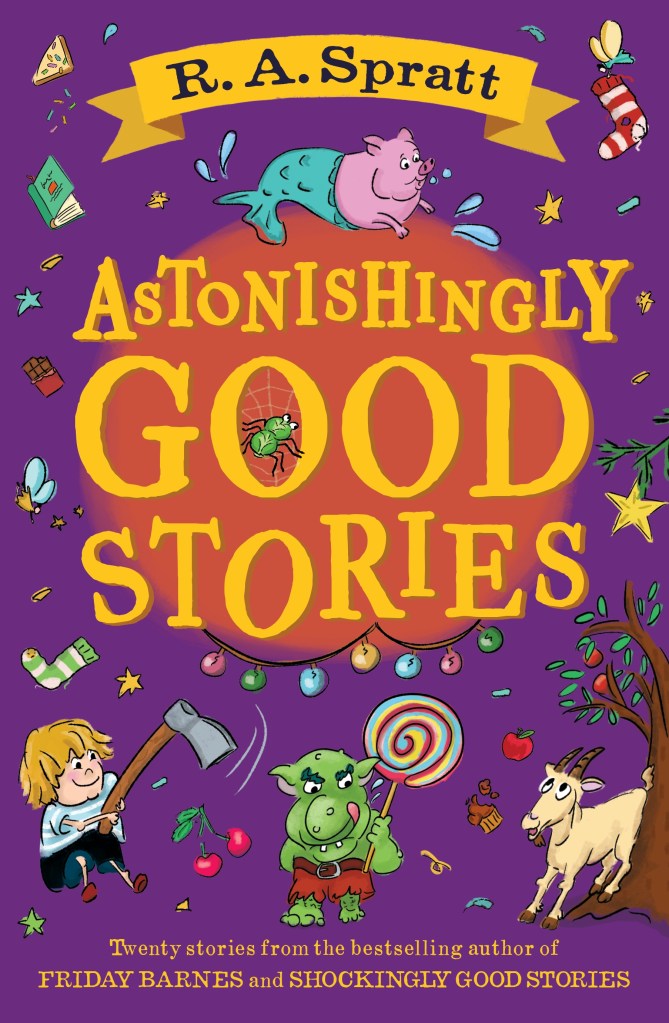
Astonishingly Good Stories by RA Spratt, Penguin Australia, ISBN 9780143779261
Hannah reviewed her own copy of this title.
Astonishingly Good Stories is a very funny, heart-warming collection of short stories including characters from RA Spratt’s other book series. The stories include Fractured Fairytales and stories of Nanny Piggins’ stunningly beautiful relatives (aunts and grandmothers). For Friday Barnes fans there is a short Friday Barnes story based on Christmas.
I like a lot of the stories but I actually liked the Friday Barnes one best. I am surprised by this because I thought Friday Barnes was too old for me and I didn’t understand the plot of other Friday Barnes stories, but I did understand the plot of this story and it was really good.
The prequel to Astonishingly Good Stories –Shockingly Good Stories – was equally good and I suggest you read both of them. I would not change this book at all.
I’d recommend this book to people who like books that make you laugh and ‘myths and legends as you’ve never read them before’. Ideal for ages 8 and up.
Julia Lawrinson has written more than a dozen books for children and teenagers, many of them award-winning. She grew up in the outer suburbs of Perth, Western Australia, not long after the first moon landing. She loves dogs, oceans, and sunsets, and still likes to gaze at the night sky, just in case. Today we’re chatting to Julia about her book City of Light, illustrated by Heather Potter and Mark Jackson.
From the publisher:
Our city is big. The universe is bigger. An astronaut from the other side of the world will fly over our home, at night. We will see a tiny light and we’ll know it’s him. But will he be able to see us? One girl, one boy? A true story.
City of Light is a story based on a real historical event. How did you go about gathering information before you began writing?
I knew absolutely nothing about this story before I began. The first place I looked was the WA Museum, which had this very comprehensive information. I went to the State Library and looked at the old microfiche with The West Australian from that time. TheWest Australian also had a helpful article online. And I talked to people like my stepmother, who was twelve at the time and remembers it vividly. Jenny Gregory’s book City of Light was also a helpful source of information. The event even made it into the Hollywood blockbuster film in 1983, called The Right Stuff.
I can’t believe it hasn’t been written about before, as it is such a great story of hope and optimism in the middle of the space race between the Soviet Union and the United States.
How did the book come to have two illustrators – Heather Potter and Mark Jackson?
The illustrators were chosen by the publisher. Heather and Mark are a husband and wife team, and I have not yet met them, though I hope to one day. Heather has also illustrated the work of Western Australian luminaries like Sally Murphy and Dianne Wolfer, so I would call her an honorary Western Australian!
You’re the author of many novels for children and teenagers and this is your first picture book! Can you tell us about your experience of sitting down to write a picture book after writing so many novels?
The first thing I said to the publisher at Wild Dog Books when she approached me was, ‘But I don’t write picture books.’ She replied, ‘I think you’ll be able to write this one.’ We agreed I would try, and I was happy to give it a go. After all, if she didn’t like it, neither of us would be worse off.
The first line came to me when I was walking, and I came home and scribbled it in a notebook, along with the words, ‘torches, car, astronaut, reaching out’.
For the rest, I approached this the way I (and many other writers!) approach most stories – what is the problem, and how are the characters going to fix it?
Do you have a tip for young writers who’d like to write a picture book?
The most important thing is to put a child or children (or a non-human character!) at the centre of the story. I would also say to read it aloud: it doesn’t need to rhyme, but it needs to have a pleasing rhythm.
Can you share a bit about what you’re working on next?
I am working on a historical novel based in the 1900s in the goldfields. It is very slow, and the research is sending me down lots of rabbit holes, but I am enjoying the process.
City of Light is out now! Ask for it at your favourite bookshop or local library.
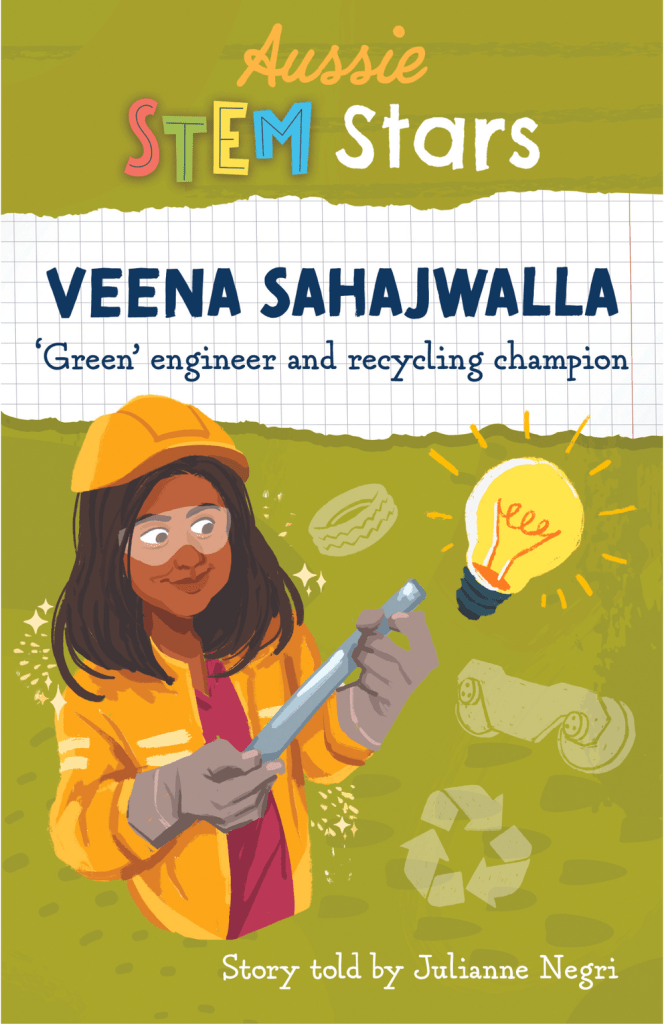
Veena is an inspiring person to the next generation because she changed the world by inventinggreen steel. When Veena was little she just liked to ride on her dad’s scooter around Mumbai all the time. But she did not think that she would become the recycling champion in the future.
From reading this book, I learnt that Veena is a very diligent, persistent and resilient person. When she was in school she did extra work because she loved doing homework. She was the only girl in the class in her university studies and she tried her best.
I rate this book 10/10 because this has even inspired me to be an engineer.
Veena Sahajwalla: ‘Green’ engineer and recycling champion is out now! Ask for it at your favourite bookshop or local library.
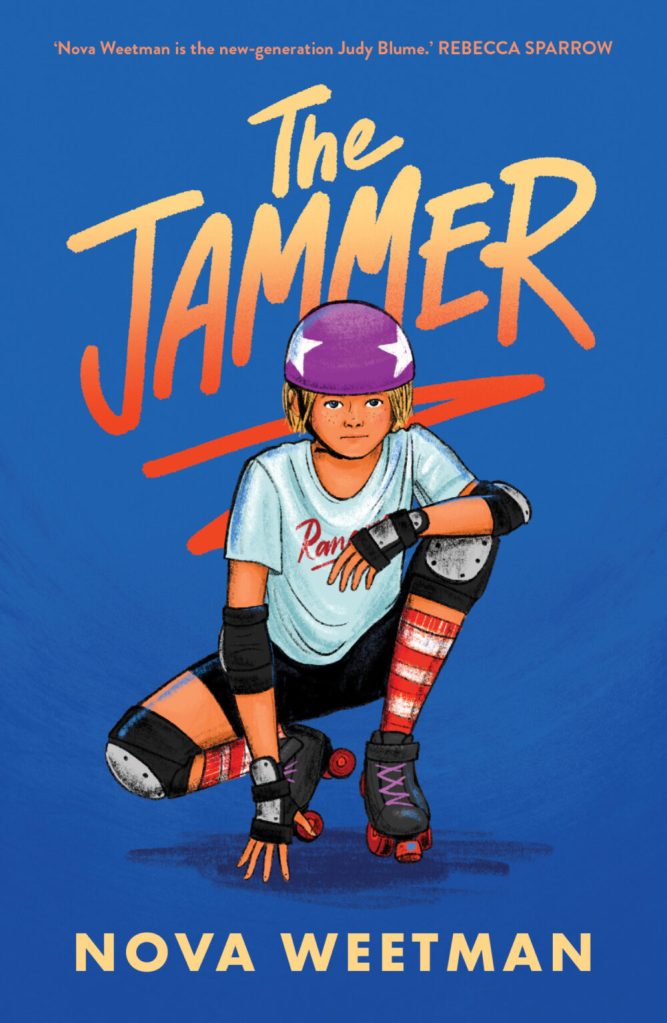
Being someone who others would consider nomadic is the norm for Fred, the main character. But in her life, there were always two constants – family and roller derby – until there weren’t anymore. This foundation crumbles to rubble in the first chapter.
After arriving in Melbourne, where her mum grew up, Fred soon discovers that everyone she meets knew a different side to her mum.
How does Fred get used to this unwanted new life? Does she go back to roller derby or are the memories too much? How does Fred sew up the gaping hole of loss that she feels?
I recommend this book for readers who like roller derby and also those aged eight to thirteen, especially if they have lost loved ones unexpectedly. I like this book due to the way Nova Weetman puts this fantastic idea into words.
The Jammer is out now! Ask for it at your favourite bookshop or local library.
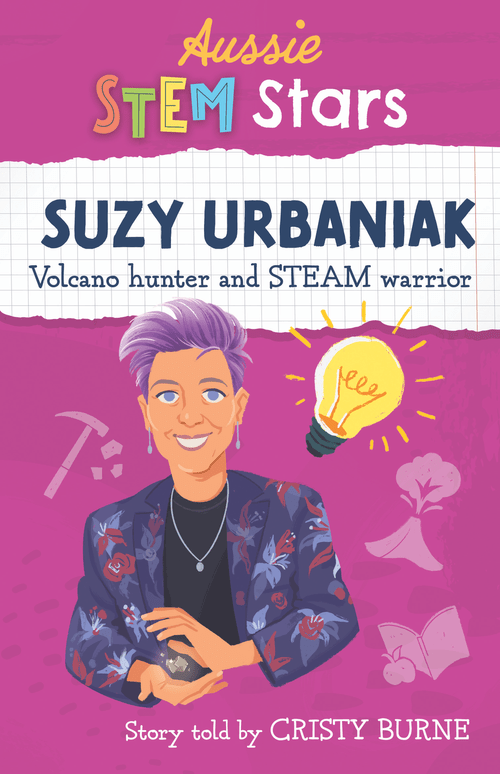
Cristy Burne writes fiction and nonfiction and her books are bursting with adventure, friendship, family, nature, science and technology. Cristy has worked as a science communicator for nearly 20 years across six countries. She has been a science circus performer, garbage analyst, museum writer, and atom-smashing reporter at CERN, but her all-time favourite job is working with kids to embrace the intersection between science, technology and creativity.
Today Cristy is chatting to us about her latest book in the Aussie STEM Stars series – Suzy Urbaniak: Volcano hunter and STEAM Warrior.
From the publisher:
Geologist Suzy Urbaniak is a limbo-dancer, a crepe-baker, a risk-taker and a question-asker. Winner of the 2016 Prime Minister’s Prize for her out-of-the-box teaching, Suzy is all about passion, innovation, and doing things your own way.
How did you come to write a biography of Suzy Urbaniak – is geology a subject you’ve studied?
I collected rocks as a kid, but never went any further with my geoscience interest. If I’d met someone like Suzy, I could very well be a geologist today! The geologists I’ve met – Suzy obviously included – are incredibly passionate about rocks and our planet. They can look at a landscape and see into our past. That’s a magical ability!
Did you meet Suzy Urbaniak in person or gather your information for her biography another way?
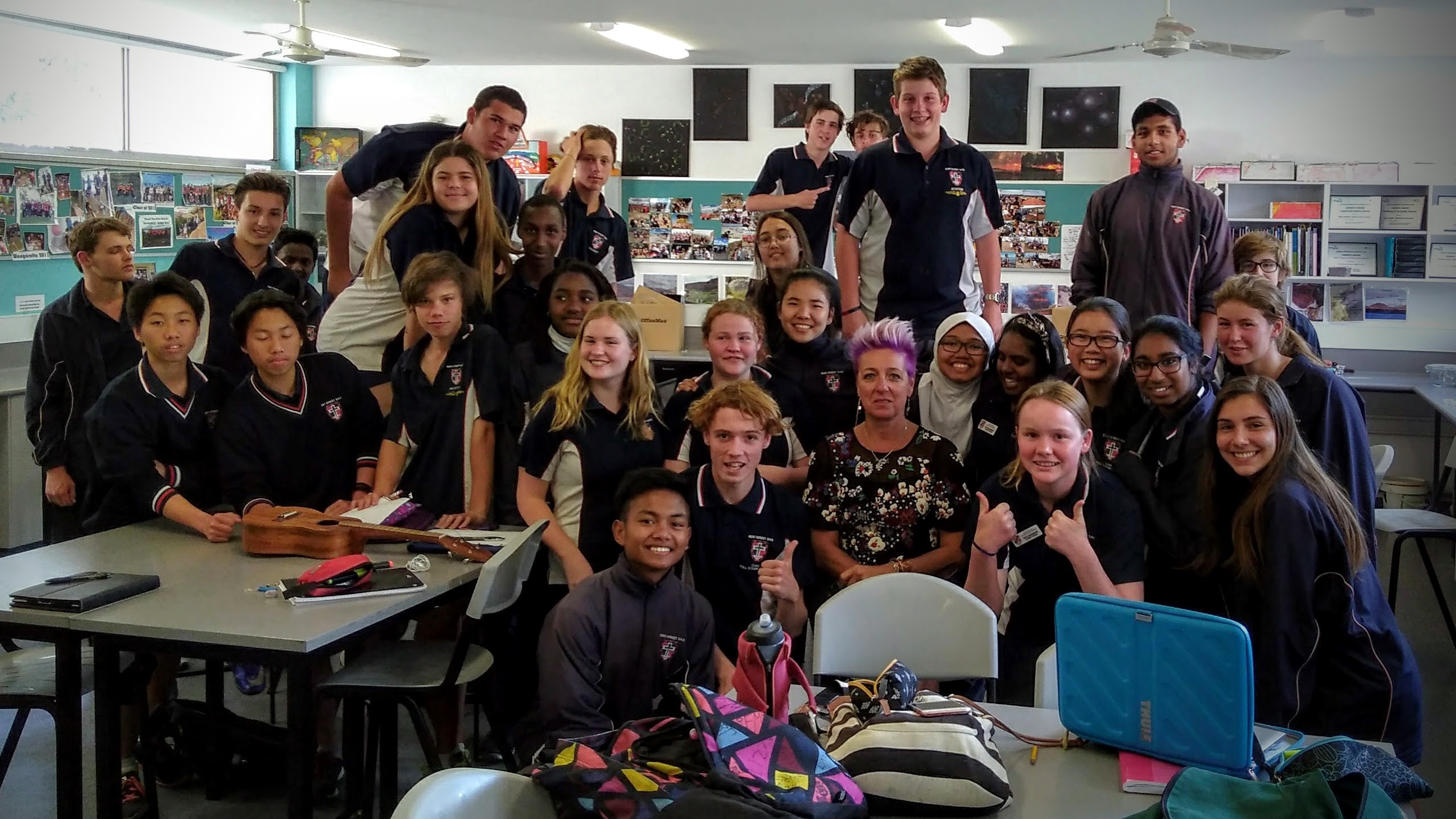
Ms Urbaniak & yr 10 students. Photo courtesy Cristy Burne.
I first met Suzy six years ago, in person, when I interviewed her for a newspaper. She was teaching at Kent Street Senior High School and had just won the Prime Minister’s Prize for Science Teaching – it was an incredible experience and I never forgot the buzzing energy of her students as they busily (and mostly autonomously) worked on their science learning.
Suzy and I stayed in touch (social media is good for something) and when she wanted help writing her life story, I immediately thought of Aussie STEM Stars. And the rest is history!
Just as for my Fiona Wood biography, Suzy and I did our interviews for the book over the phone. I think it’s easier to dive deep into memories when you’re not also thinking about eye contact, body language and social niceties. Over the phone, all you need to do is let your mind drift deep into childhood.
You’re passionate about science (and also adventures!) – have you ever stood on a volcano?
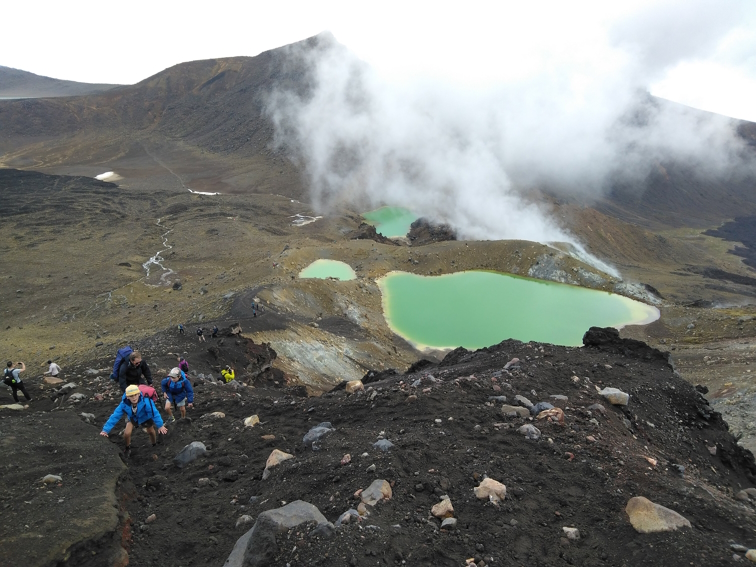
I grew up in New Zealand, so I’ve climbed in to the mouth of an extinct volcano (back when you could do that in Mt Tarawera) and hiked a whole bunch in Tongariro National Park, part of the Pacific Ring of Fire (where you can see steaming vents and boiling mud). I grew up close to Rotorua, where geothermal activity is literally just below the surface (and sometimes even on top!). I have a very healthy respect for volcanoes.
Volcano hunting! (Photo courtesy Cristy Burne)
Do you have any advice for young writers who would like to write biographies?
Biographies are non-fiction, but that doesn’t mean they’re just a long list of facts. To bring a biography to life we need to have stories, because stories bring emotion and connection. A good way to bring these stories out is to ask open questions that encourage longer answers, like: ‘Can you tell me about a time that …’
Can you tell us a bit about your next writing project?
I’m working on a graphic novel with publisher Larrikin House. It’s a wild comedy with aliens, explosions, disgusting adventures and desperate escapes, featuring a science-loving kid named Violet whose best friend is a conspiracy theorist and whose pet hermit crab can talk. It’s ridiculous, non-stop, unapologetic science-meets-comedy FUN!
WA (Fremantle) families: MEET Cristy Burne, Suzy Urbaniak and HM Waugh at 11.30am THIS Sunday 26 February 2023 at the Perth Festival, Fremantle Arts Centre! FREE. Includes a drop-in ‘make your own mini Mars-machine’ session.
Suzy Urbaniak: Volcano hunter and STEAM warrior is out now! Ask for it at your favourite bookshop or local library.
AWESOME EXTRAS:
Watch Suzy Urbaniak talking about winning the Prime Minister’s Prize for Excellence in Science Teaching in Secondary Schools [YouTube]
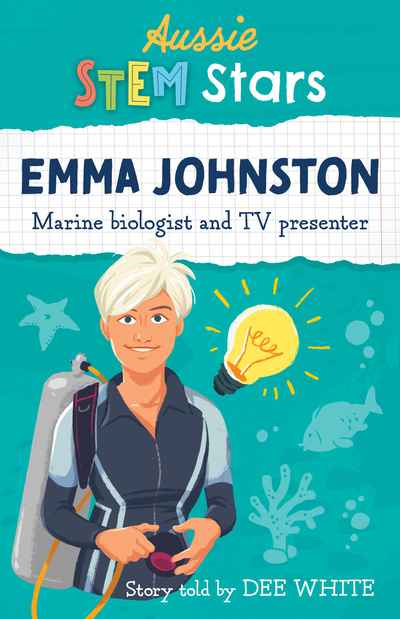
Professor Emma Johnston, the Deputy Vice-Chancellor at the University of Sydney, has a genuinely encouraging life story.
“Emma was a sponge …“
She loved the beach, science and asking her parents questions about the wonderful world around her. She always enjoyed looking at the fascinating marine life under the water’s surface. Her curiosity and the questions her parents answered only gave her the thirst for more knowledge. Moving to Japan, she found the curriculum way more advanced, so she enjoyed the challenge and found class engaging. After returning to Australia, she was shocked by the discrimination against the girls at her high school and she moved to Uni High, a different school, accepted in with a music scholarship. She knew she loved science, communicating with others and playing music on her flute.
What did she do with her curious mind and knowledge of science as she grew up in this big world?
Find out in Dee White’s extraordinary biography of Emma’s inspiring story. Reading her life story motivated me to look more into science again and rediscover my passion for science I lost a couple years ago. It helped me to relate to Emma as we both love science and I can feel her struggles, opinions and feelings throughout the book.
I loved this book and would rate this book a strong 4 out of 5 for ten to thirteen year olds.
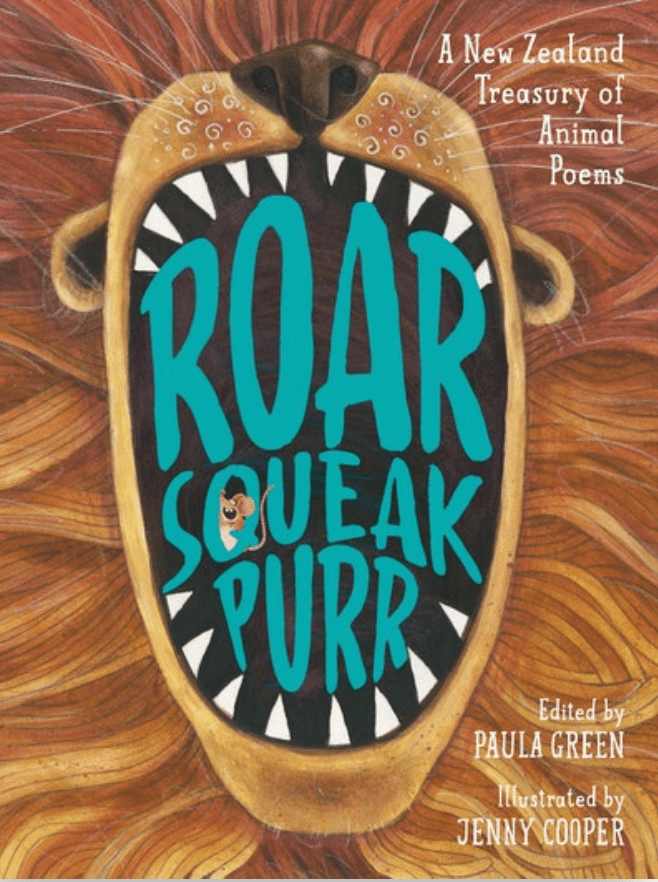
Amber Moffat is a writer and visual artist from New Zealand but currently based in Western Australia. She is a maker of work for both adults and children. Amber’s first picture book, I Would Dangle the Moon, was published in 2019. Her poetry has been published in The School Magazine, and in a 2022 poetry anthology Roar, Squeak, Purr. Today we’re chatting to Amber about writing poetry for this fabulous anthology.
From the publisher:
This exuberant treasury brings together over 200 animal poems by New Zealand’s best writers, and includes poems written by children. The poems were selected and edited by champion poet Paula Green, winner of the Prime Minister’s Award for Poetry [New Zealand] and creator of the popular Poetry Box blog, and teamed with Jenny Cooper’s cheeky, whimsical and adorable illustrations. Roar Squeak Purr is destined to be a family treasure – and to inspire a new generation of poets.
You have five poems in Roar, Squeak, Purr – how did you go about writing poems for this anthology? (Did you already have these poems sitting in a drawer?)
I had one poem already and wrote the other four poems specifically for this anthology. The editor of the collection (the amazing poet Paula Green), asked me if I’d like to submit some animal poems as she knew my writing from my picture book, I Would Dangle the Moon. The poem I had already written was a poem about being cuddled up to a cat. I don’t have a cat anymore as I have two big dogs that are not cat-friendly, but when I was a kid I had several beautiful cats. That cat poem was written about that feeling when you are lazing about with a cat on your lap.
I had a couple of months to write the poems, and I wasn’t sure how many I’d write. I ended up writing one about black swans, one about a sheep-dog, one about two lions that escaped from a circus, and a riddle poem about a creature I won’t reveal here in case people want to try to work that one out themselves.
The swan and sheep-dog poems were based on memories of growing up in New Zealand. I loved to watch how both swans and sheep-dogs moved and both those poems are about trying to capture the unique ways those animals move. The poem about the lions was based on a true story that has fascinated me since I was a child. The lions were unfortunately shot after they escaped, and they are now in the Otago Museum in my hometown of Dunedin. I used to visit the lions at the museum and always imagined what they would be like running free instead of stuffed and still within a glass case. So that poem is very much about movement too actually. I really enjoyed writing from the lions’ point of view in that one, and that’s something I’d like to try again.
For me, all writing springs from something I am interested in and can’t let go of. If an idea keeps coming back to my mind then I know I have to write about it.
Do you prefer to write rhyming poems or free verse?
I definitely prefer to write in free verse and it feels more natural to me. All my poems in Roar, Squeak, Purr are in free verse. Writing in rhyme limits your options for word choice and you have to express your idea within a tight structure. I feel kind of like the lions in the circus when I’m writing in that way, and I end up wanting to escape!
If you’re writing a poem (or editing it) how do you know when your poem is finished?
It can be very hard to know when a poem is finished. Sometimes I think something is finished but if I put it aside for a few weeks and come back to it, I realise it still needs work. I’m very lucky to have some great writing friends and sometimes I show them my poems to them and get their feedback. That is a very helpful process and has made me better at editing my work. My poems usually go through about three edits to get them right. A lot of that is “tightening up” the writing, making sure every word that remains is working hard to convey the meaning of the poem.
Do you have a tip for kids who would like to write poetry?
Be bold and risk-taking when you are writing your first draft! All ideas are good ideas in the first draft. I try to write without thinking when I first jot down words for a poem. This helps me to avoid getting into a critical mode and lets the ideas flow freely. Then you need to be brave and ruthless when you are editing. You will probably need to change lots of things and that’s normal.
If you don’t like the feeling of cutting out parts of your poems then it might help you to have a system for saving all your different drafts, then you know you can always come back to earlier versions of the poem.
Can you tell us a bit about what you’re working on next?
I’m writing a novel for teenagers at the moment. It will be about 70,000 words when it’s finished so it’s a very different writing process to writing poetry! I’m still using the technique of writing without judgement to get the ideas down though. I hope to finish the first draft in a couple of months and then I will start the first round of editing.
Roar, Squeak, Purr is out now! Ask for it at your favourite bookshop or your local library.





 alphabetsoup.net.au