Posted in authors

Return to Nim’s Island – interview with Wendy Orr

Wendy signing copies of The Nim Stories. Photo by Ryan Makepeace.
Wendy Orr signing copies of The Nim Stories. Photo by Ryan Makepeace.

Nim’s Island and Nim at Sea are definitely in our pile of favourite books. (Nim’s Island was featured in our first ever issue of Alphabet Soup!) You probably know that Nim’s Island was made into a movie starring Abigail Breslin, and now the second Nim book has also been made into a movie called Return to Nim’s Island — and it’s out in Australian cinemas this school holidays. We asked the author Wendy Orr if we could talk to her about what it’s like to have your book made into a film. And here she is!

When did you first hear that Nim at Sea would be made into a movie, too?

Paula Mazur, the producer of the first Nim’s Island, wanted to do it as soon as she read the book when it was published in July 2007. However there were complications with the Hollywood studio and so three years ago she took it to an Australian company. They worked very hard to organise everything and in May 2012 we knew that it was going to be filmed. (Though I think everyone still had fingers crossed!) The filming started in August 2012.

There is a different Nim (Bindi Irwin) cast in this second movie. Were you allowed to choose the actors? Did it feel strange to see a different Nim?

It’s a lot like illustrators for the books I write — I’m not allowed to choose but if I suggest something the editor or producer is happy to think about it before making up their minds. They know a lot more than I do about the right illustrator or actor. I’ve been very lucky, with both illustrators and actors, and they’ve all felt very right for the parts. Of course, even though Abigail Breslin is a wonderful actor, by the time filming started [for the second Nim movie] she was 17, which is much too old to be Nim. But Bindi Irwin is absolutely perfect for the role — she loves animals and is used to handling them, and she’s incredibly strong and physically fit, just like Nim. That’s important to me, so I was delighted with the choice. It was also nice to hear that she’s always identified with Nim quite strongly and tells me the books have always been favourites.

I thought it would feel strange to watch different actors, but in fact it all seemed completely natural. And because no actor could ever be completely identical to the character I imagined, it’s actually made it easier to go back to the characters in my head as I work on the third book.

Do you ‘see’ the characters in your head while you write?

For me, writing a book is a combination of watching a movie in my head, and feeling it in my body — not exactly as if I’m living it, but the way you feel the action in a dream.

Did the movie make any big changes to the book? (without giving too much away for movie-goers-to-be!)

This movie had to make very big changes to the plot! The problem is that when I write a book, it doesn’t cost any more to print if my characters stow away on cruise ships than if they spend the whole book sitting in their bedrooms. But movies are different, and so the producer and directors have to decide how they can make a good movie, follow the story — and not spend more money than they have. So in this movie, Nim is very much the same character, just a bit older, and the feeling matches the book. Then they took two very important things from the plot: Nim making a human friend, and animal poachers threatening Selkie and other animals. But the story after that is quite different.

(It’s okay, Nim certainly doesn’t spend the whole movie in her bedroom!)

As the book’s author, did you have a role to play in the making of the movie?

I was a consultant, which means I read it at different stages and sometimes suggested some small changes. It was a bit like being an editor, which was a nice change for me. I also watched some of the filming, but that was just fun. I don’t know anything about filming, so the most useful thing I can do is stay out of the way.

You attended the premiere of Return to Nim’s Island at Australia Zoo. What was it like to be watching the movie of your own book?

The premiere of a movie is always incredibly exciting. It’s like getting the first copy of your new book, except with a huge party instead of a parcel in the mail. This one was exciting for all those reasons, but since I spent the whole day at the zoo first, with Bindi and Toby Wallace (Edmund), it was also really fun. I think these pictures will show why.

Wendy Orr with Toby and Bindi. Photo by Ryan Makepeace.
Wendy Orr with Bindi at the premiere of Return to Nim's Island. Photo by Ryan Makepeace.
Wendy Orr with Bindi at the premiere of Return to Nim’s Island. Photo by Ryan Makepeace.
At Australia Zoo for the movie's premiere. Photo by Ryan Makepeace.
At Australia Zoo for the movie’s premiere. Photo by Ryan Makepeace.

Watching the movie of my own book is very strange, and quite emotional, especially the first time. It’s almost like looking at a family video, because it’s very familiar but different to actually see it on the screen. I thought it was good; I could see the audience enjoying it; sometimes I was afraid about what was happening next, even though I knew; sometimes I was amazed at the beautiful images — but mostly I just felt happy.

Will there be more Nim books?

Yes! My publisher would be very cross if I said no, because they have given me a contract for another Nim book, which I think will come out next year. It doesn’t have a proper title yet.

At the top of this post we can see a photo of you signing copies of The Nim Stories. Is it a bindup of Nim’s Island and Nim at Sea or a different book again?

Yes. It’s got the new cover but the two books are just the same, with the same illustrations.

OK. I have to ask … Can the movie EVER be as good as the book?

No.

Or maybe yes …

A movie can never be as good as the movie you make in your head when you love a book so much that you feel you’re inside the story — when you read about ice and feel cold even though it’s hot where you are, and when you see and hear the characters as if they’re alive.

But on the other hand, a movie could be a better movie than the book is a good book. [At Alphabet Soup we know that Nim at Sea is a good book and we’re sure that Return to Nim’s Island will be a good movie. So we’re glad they won’t have to compete!]

We’re looking forward to seeing Return to Nim’s Island these school holidays. In WA we haven’t started school holidays yet — so all you Nim fans on the east of Australia get to see the movie before us. Lucky you! (Will you write us a review?)

And for more about Wendy and her books (and Nim!) visit Wendy’s website and her blog. Happy holidays!
© April 2013 “Interview with Wendy Orr” – text copyright Rebecca Newman & Wendy Orr (https://soupblog.wordpress.com)
Posted in Book reviews by Rebecca

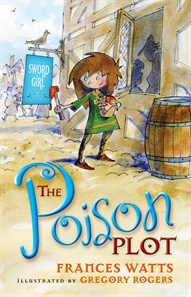
Book Review: The Poison Plot – Sword Girl Book 2

Sword Girl: The Poison Plot by Frances Watts, ill. Gregory Rogers, ISBN 9781742377926, Allen & Unwin

A review copy of this book was provided by Allen & Unwin.

The poison plot (cover)

Thomasina (Tommy) is the Keeper of the Swords at Flamant Castle. Preparations are underway for a banquet at the castle but when Tommy is sent to town on an errand, she discovers a plot to poison Sir Walter. If she can’t foil the plot, Flamant will be at war. And there’s not much time …

This is the second book in the Sword Girl series. (Read a review of the first Sword Girl bookThe Secret of the Swords.)

The Poison Plot is an action-packed medieval adventure. There are black and white illustrations every few pages and they add to the fun—you might recognise Gregory Rogers’ style from his books The Boy, The Bear, The Baron, The Bard and The Hero of Little Street. Tommy is a brave, clever character who outsmarts bullies and makes friends with the castle’s animals. We love the poor crocodiddle with the cold, and, of course, the castle cat from the first book in the series.

A funny, fast-paced early chapter book.

© March 2013 “Review of Sword Girl: The Poison Plot” by Rebecca Newman (https://soupblog.wordpress.com)
Posted in info

Alphabet Soup magazine closes

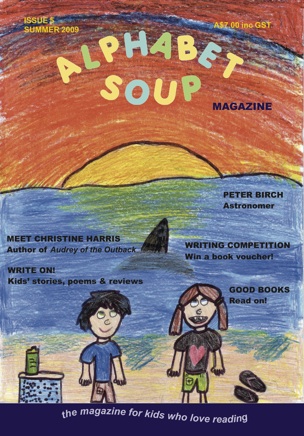
issue 1

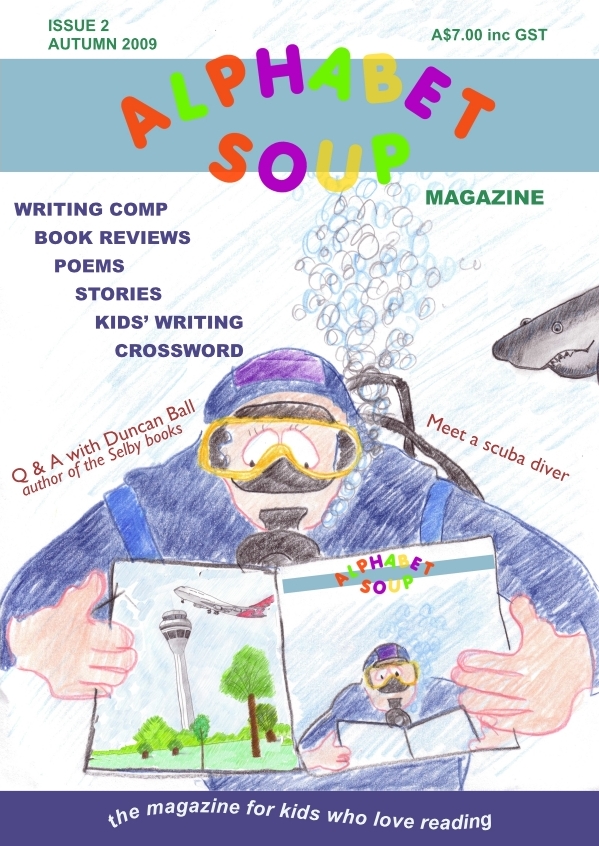
It is with great sadness that we announce the closure of Alphabet Soup magazine. The first issue of the magazine was published in 2008 and for over four years we were proud to bring you a magazine that showcased children’s own writing and artwork alongside that of adults, and promoted the fabulous work of Australia’s talented children’s authors and illustrators.issue 2

Subscribers who have remaining issues under their current subscriptions will soon receive a letter explaining the payment of refunds for those issues. We have added a FAQ tab at the top of the blog with further information about the magazine’s closure. If you have further questions, please contact us.

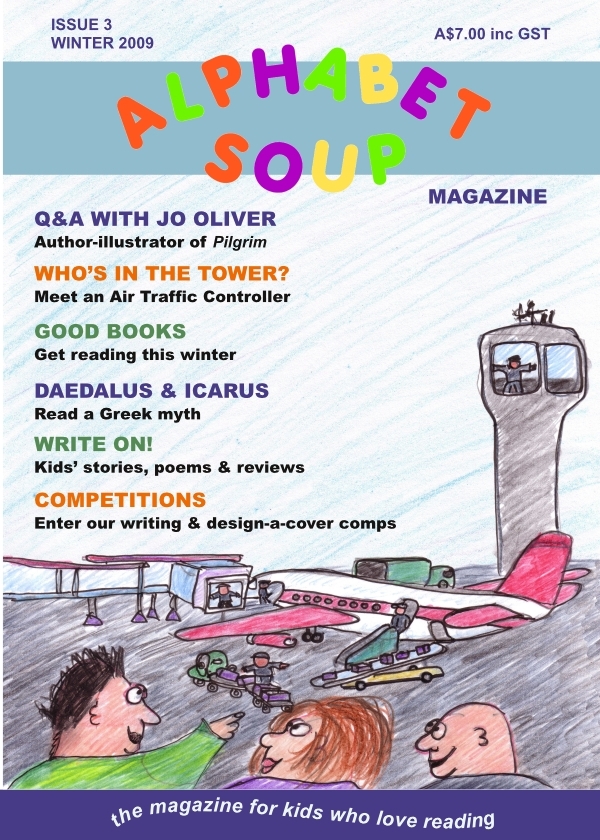
issue 3Our heartfelt thanks go to our subscribers, past contributors (authors, illustrators and columnists), our young writers and artists, and everyone who has supported us and celebrated with us over the past four years. We will continue with Soup Blog (and also Facebook and Twitter)—so do please continue to visit for news about upcoming book events, author and illustrator interviews, book reviews and children’s writing and artwork.

~ Rebecca Newman, Editor

"issue 4 cover"

issue 5

issue 6

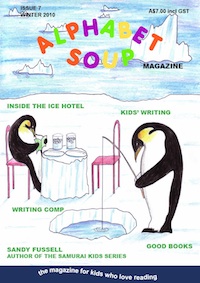
issue 7

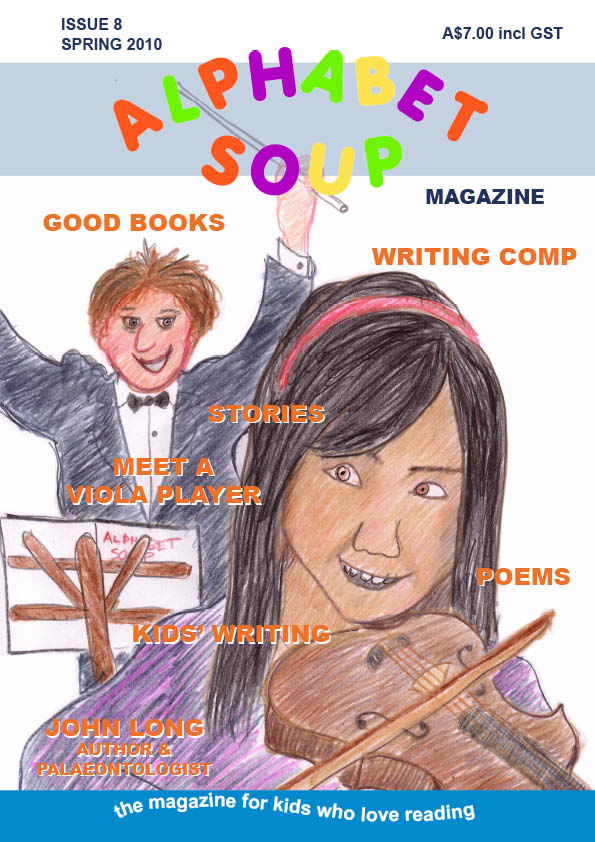
"Issue 8 cover (spring 2010)"

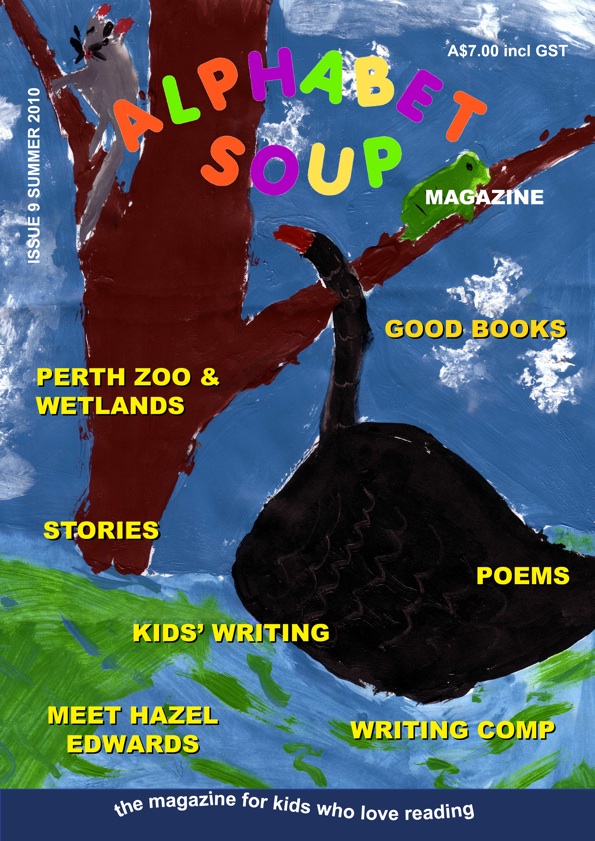
"Alphabet Soup magazine issue 9 cover"

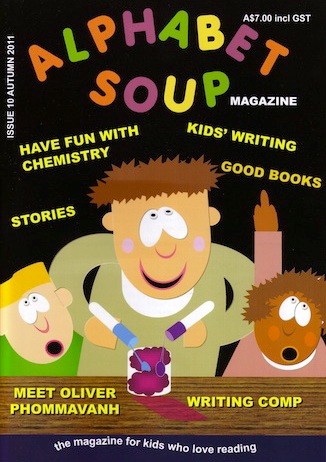
"Issue 10 cover Alphabet Soup"

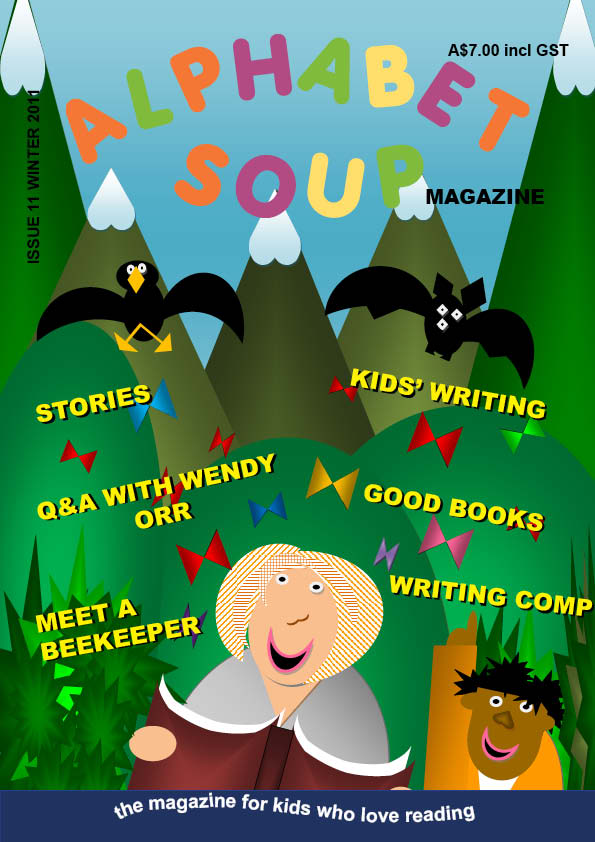
Issue 11 cover, Alphabet Soup magazine

issue 12

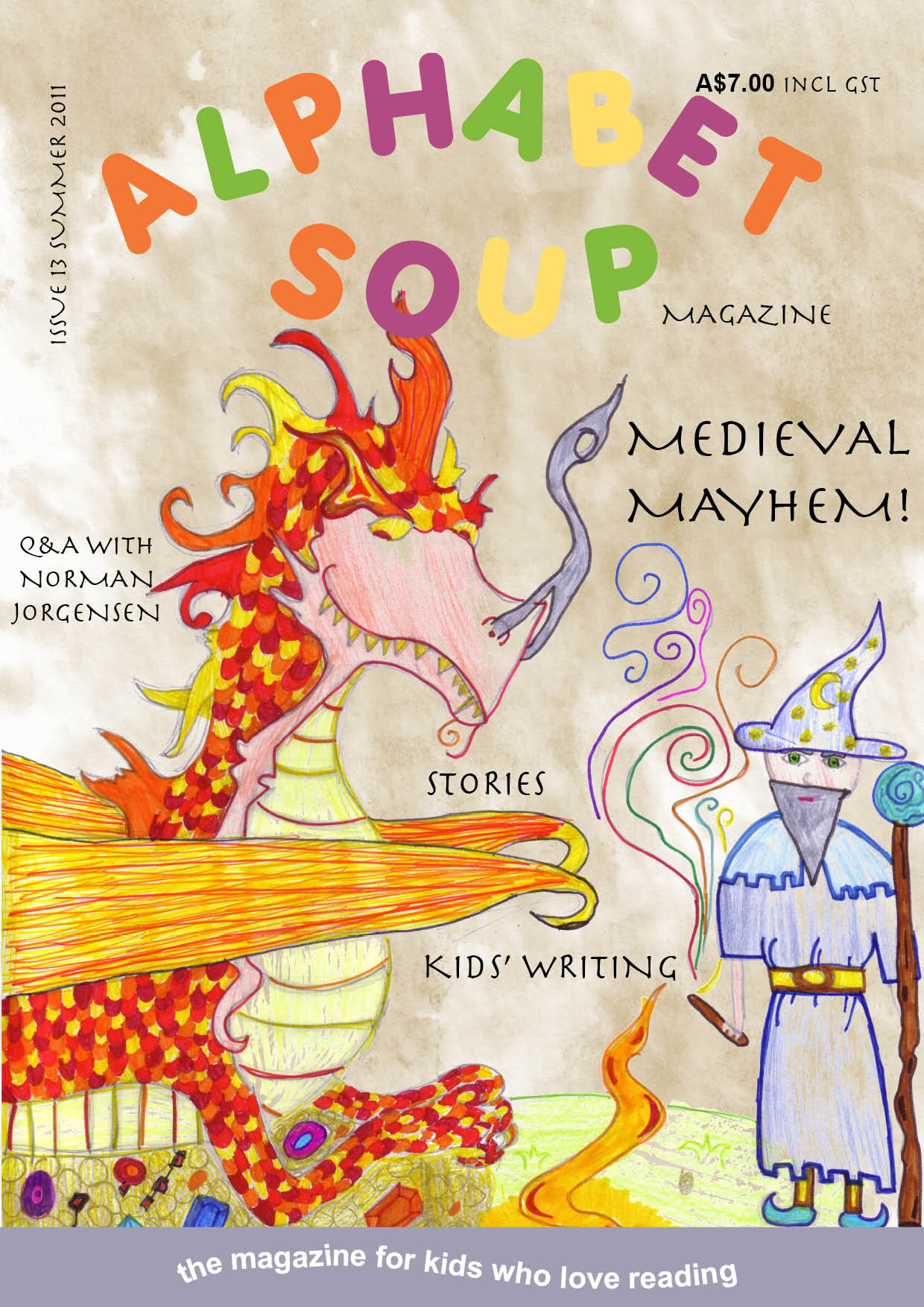
Alphabet Soup Issue 13 cover

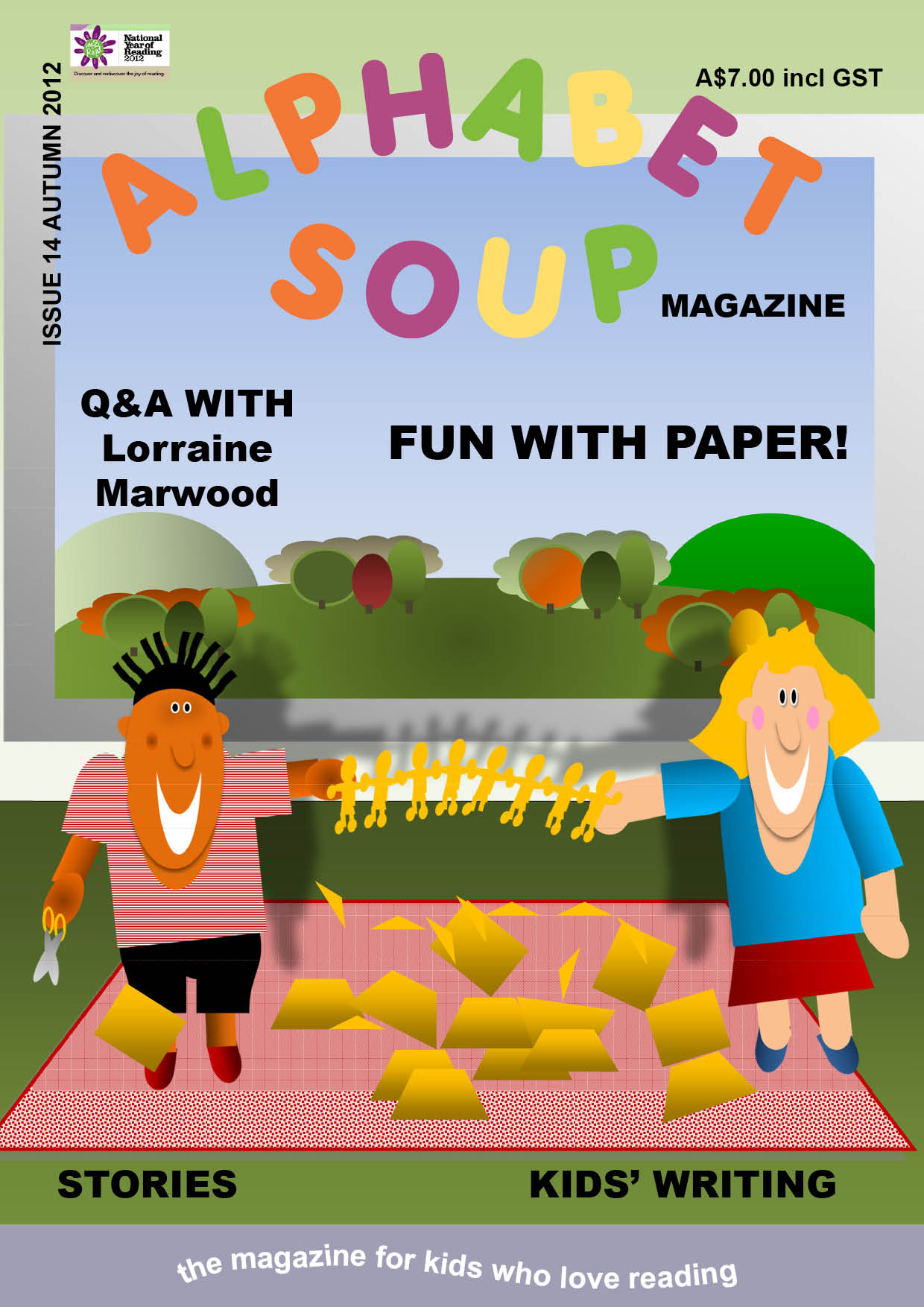
Alphabet Soup issue 14 cover

Alphabet Soup issue 15 cover

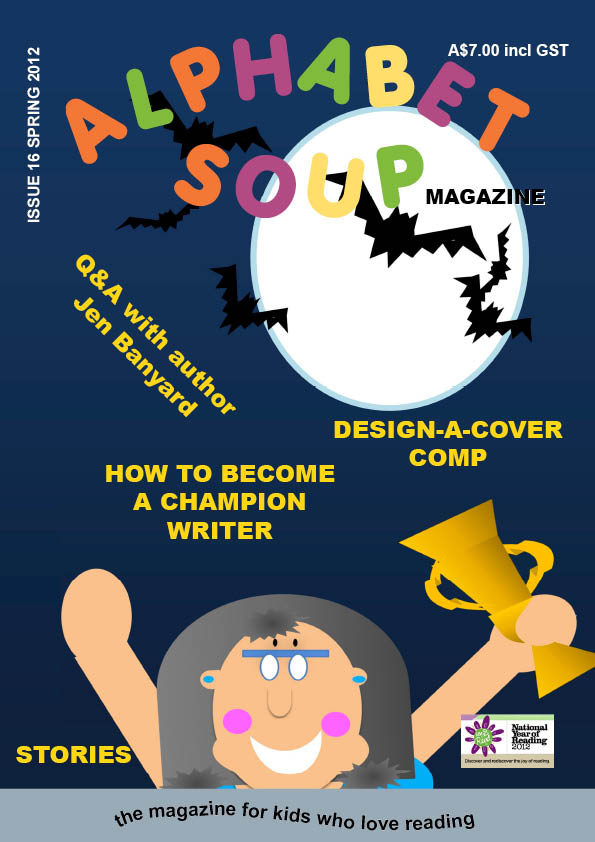
Alphabet Soup issue 16 (cover)

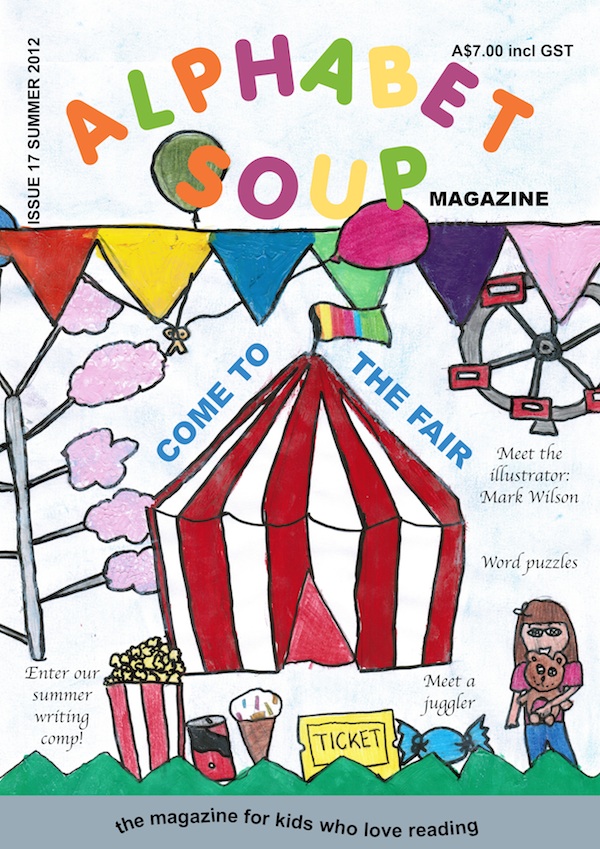
issue 17 (cover)

Autumn 2013 Alphabet Soup (cover)

Posted in Book reviews by Rebecca

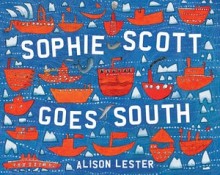
Book review: Sophie Scott Goes South

Sophie Scott Goes South by Alison Lester, ISBN 9780670880683, Penguin Group Australia

The reviewer borrowed this book from the library.  

Sophie Scott Goes South (cover)

Sophie Scott is nine, and she’s going to Antarctica with her dad—the captain of the Aurora Australis. It will take two weeks to get there, and they will be staying at Mawson Station for a week before coming home.

This is Sophie’s diary of her trip. But it’s sort of a scrapbook about Antarctica—as well as her diary entries, Sophie includes a detailed map of the ship, and photos of it, too. She describes (and draws) the special cold-weather clothes she has to wear and talks about the strange sounds and sights she sees from the ship. I love the drawings of the people on the ship and at the crew at Mawson Station and also the drawings of the animals and the environment in Antarctica. Many of the pages also feature snippets of information about the history of Antarctic explorers, and facts about the continent and the creatures that live there. (Did you know that an iceberg that sits just under the surface of the water is called a growler? Or that Roald Amundsen from Norway was the first to the South Pole?)

You’ll find a glossary at the end of the book and the endpapers show a map of the world showing Sophie’s journey to Antarctica, and a map of Antarctica from above.

On every page there are interesting things to look at, amazing photos and Sophie’s observations. One of my favourite photos shows a Weddell Seal scratching his nose. I also love the gallery of photos showing the colours of Antarctica. It’s not just white!) Sophie’s journey is based on the author’s own trip to Antarctica and many of ‘Sophie’s’ drawings in the book were co-created with children who read Alison Lester’s online diary entries during her trip. (Children sent the author artwork inspired by the online diary entries.)

This book grabs your attention from the first page. Gallop as quickly as you can to a library or bookshop if you love strange adventures, explorers, sea creatures, ships or Antarctica. Or all of them together!

© March 2013 “Review of Sophie Scott Goes South” by Rebecca Newman (Alphabet Soup magazine)

Autumn 2013 writing comp for kids

WIN A $20 BOOK VOUCHER!

Entries close 12 April 2013 1 May 2013 (deadline extended)

Write a story about your mum’s secret superpower. It might be an imaginary superpower, like flying. Perhaps her secret superpower is that she can grow the biggest tomatoes, can kick a football further than anyone in the world or always knows the time without looking at a clock. What’s YOUR mum’s secret superpower? Word limit: 500 words. (It’s OK if your story is shorter than this but don’t go over the word limit!)

Download an entry form from the magazine’s website (and you can read the terms and conditions there, too).

[update: Please note that this competition is still running, even though the print magazine has closed]

Posted in authors

Meet Tania McCartney

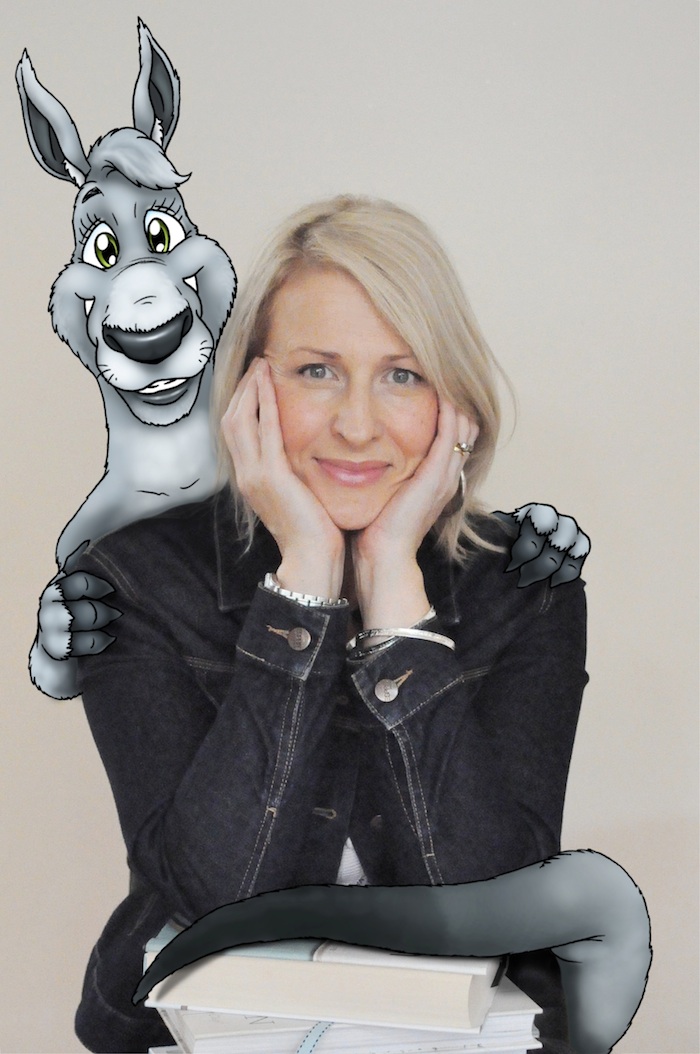
Tania McCartney
Tania McCartney

Tania McCartney writes children’s and adults’ books and was an ACT Ambassador for the National Year of Reading 2012. Her latest children’s book is Australian Story: An Illustrated Timeline.
Tania is our featured author in the autumn 2013 issue of Alphabet Soup magazine. We can only include part of the Q&A in the magazine, so we’re sharing the full version with you here.

Read on!

Can you tell us about where you live?
I live in Canberra with my husband and two kids (Ella, 12 and Riley, 9) in a paper house at the base of a book mountain. That’s what it feels like, anyway! There is so much paper and so many books, I could open a bookstore or run an origami festival. I’ve lived in lots of different places through my life, and my little family unit and I have so far lived in Melbourne, Adelaide, Beijing and Canberra—so we do feel like wanderers. Canberra is fun—we have so many cool things to see and do here, and of course, my favourite place of all is the National Library of Australia on Lake Burley Griffin.

How did you come to be a writer?
It chose me. My favourite possession is my grade three English book with the doggy sticker on the front—filled to brimming with creative stories. I’ve always loved to write and had my first poem published in a Tasmanian newspaper when I was 8. Since then, I’ve never stopped writing but it wasn’t until I was about 38 that I took it up full time. I feel very chuffed to finally say that my full time job is an author. It took a long time to get there (which is really why you absolutely must stick with your dreams—they do happen).

Is writing a nonfiction book very different from writing fiction?
Writing nonfiction is a little different because you may have to do lots of research (Australian Story involved around 8 months of research) but you still have lots of creative licence when you write the words. I actually find nonfiction easier to write because the bones of your work—the structure—is already there, and you can just pad it out with your research finds and all the fun bits. With fiction, you need to create everything—and that can be both thrilling and scary. The great thing about fiction though, is that you have full use of your imagination—and that basically means you can do and create whatever you want. I love that about writing.

Australian Story cover

Was it easy to get your first book published?
My publishing journey has been kind of odd and very untraditional. I sent an adult novel to a publisher when I was about 20 and they liked it so much, they sent it to an ‘outside reader’ which is basically a good sign. Because I was still so new to writing, they thought I needed more time to develop my work, so I wasn’t offered a contract. I remember being devastated and although I kept writing, I didn’t submit to any other publishers for a very long time. Then in my late 20s, I had the opportunity to take 8 months off to write my first nonfiction book—You Name It. I sent it off to about 8 publishers and had TWO acceptances (I chose the first publisher—Hodder and Stoughton), which was a real thrill. So, having my first book published was not too hard. Since then I’ve been published by four other publishers, but each acceptance was after building a relationship with the publisher. I send manuscripts to publishers all the time and still receive as many rejection letters as everyone else! but I’ll never, ever give up.

Where do you find your ideas/inspiration?
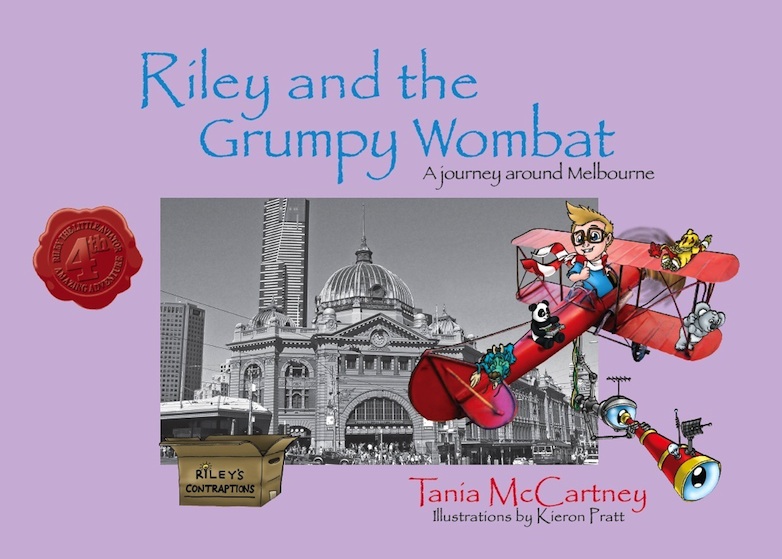
From everyday life—those little moments you experience on any given day. I also find lots of inspiration in children, particularly my own—the things they say, the things they do. My other big inspirations are travel and photography. I created my Riley the Little Aviator books from a love of travel and I also use photographs in the series. I’m a very visual person, so beautiful pictures and photos inspire me to create stories. I LOVE picture books—yes, even as a grown up—and have thousands of them in my house.

Riley and the Grumpy Wombat (cover)

"Riley and the Curious Koala (cover)"

How do you do your research for a nonfiction book?
It really depends what the book is about. For Australian Story, I researched Australian history, so I scoured websites (mainly government and educational sites, because they are much more accurate) and read books and watched documentaries and talked to people. I also used Trove, which is the National Library’s online search engine for a mass of historical information. As I gathered the information, I kept it in a Word document on my computer. I collected as much info as I could, then when I was done, I began editing the information down into bite-size pieces. That’s the way I work best.

When you are working on a book like Australian Story, do you have to find your own photographs and images?
Most children’s books published by the National Library require the use of pictures from their very impressive image collection. I was tasked with wading through almost 130 000 online images—photos, maps, paintings, drawings, diagrams—in search of the perfect pictures to go with my text. It was a lot of work but I loved it! I found some really cool images—some really funny ones, too. Some of the illustrations in the book were done by the book’s designer, Peter Shaw. Of course, there are no existing photos of dinosaurs! so he added illustrations whenever we needed them. [Check out this earlier post for a peek inside some of the pages!]

Would you like to have lived in another point in history?
I would have loved to live between the 1920s and 1960s. Excluding the World Wars, I think this was a fascinating and creative period of time, when mankind made so many leaps and bounds across all areas—from film and culture to human rights. Ancient civilisations also fascinate me. How cool would it be to spend a day in Ancient Rome or Machu Pichu with the Incas or outback Australia with the Aborigines or Ancient Egypt … although I would have liked to take rose-petal milk baths and not have to build those pyramids!

What do you like to do when you are not writing?
I like to read. No—I LOVE to read. Being an ACT Ambassador for the National Year of Reading 2012 was a huge thrill as I’m passionate about books—and will seriously read wherever I can, whenever I can. I even read on the treadmill. I also love to travel, take photos of anything and everything, and bake delicious things with my children.

What was your favourite book as a child?
I really loved the Amelia Jane books by Enid Blyton but my favourite series of all time is the Chronicles of Narnia by CS Lewis.

Do you have any advice for young writers?
Write what you know and love. Just like reading, you need to focus on something that makes you smile—something you enjoy. Reading really, really, really helps you become a better writer. It expands your vocabulary and your understanding of word placement. It also helps you create really cool sentences. Writing what you see in your head rather than what you ‘hear’ or think you should write, is also vital. Write as though you were talking to a friend—use your own voice, invent your own words, don’t be afraid to be a little kooky. And when you’ve finished writing, be sure to re-draft. No one writes the perfect story first time. Write your story, let it sit awhile, then go back and make it even better. I think three or four drafts should do it.

Are you working on a book at the moment?
I’ve just finished writing my first junior fiction historical novel for New Frontier. It’s on Caroline Chisholm and I loved writing it, so I’d like to do more in that style. I’m also finishing up two more books for the National Library. One of them features the really beautiful botanical paintings from their image collection and the style of this book is unique and fun. I photographed my son and some other kids, and I’ve cut and pasted them into the pages of the book so they are adventuring through the paintings. It looks amazing! The second one is also a picture book about the evolution of the Aussie child. It’s being illustrated by one of my fave Aussie artists—Andrew Joyner, so that’s super exciting. I’m about half way through the next Riley book—about a jumpy kangaroo in Canberra (you can see her in my photo!)—and I’m spending the rest of the year working on my first junior fiction series—in fact, two series … one is a really kooky style of book showing kids how to act their age, and the other is for my very patient daughter, Ella, about a girl who loves animals. My Riley series is about my son Riley, so now it’s Ella’s turn!

Find out more about Tania and her books on these websites:

www.tania.mccartney.com

www.rileyaviator.com

www.kids-bookreview.com

© February 2013 Text by Rebecca Newman (Alphabet Soup magazine) and Tania McCartney.
Posted in info

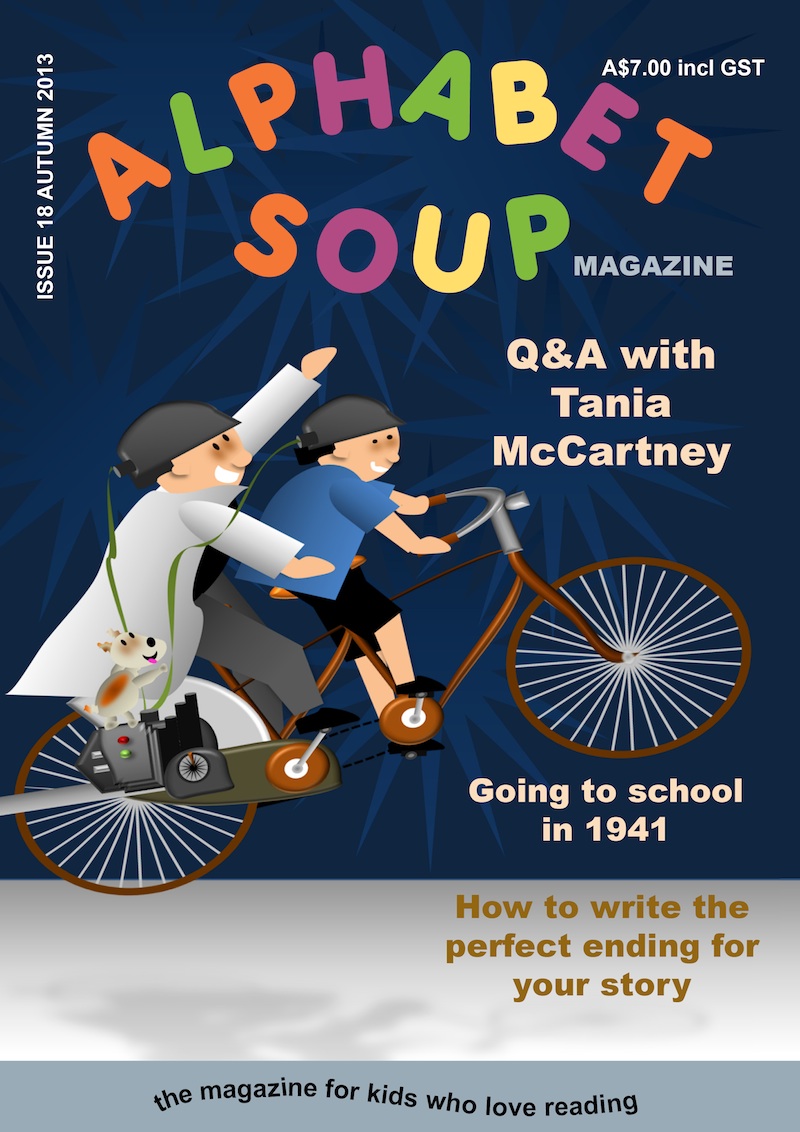
Autumn 2013 Issue – out now!

Autumn 2013 Alphabet Soup (cover)

The autumn 2013 issue will start arriving in mailboxes today. Inside:

  • Q&A with author Tania McCartney
  • Meet John, who talks about going to school in 1941
  • Stories and poems and book recommendations
  • The Book Chook with tips for writing fabulous story-endings
  • Word puzzles
  • Stories, poems, artwork and book reviews by kids
  • Autumn writing competition

… and more!

For details about how to subscribe (or to buy single copies), visit the magazine’s website.

Happy reading!

Posted in competitions

Summer 2012/2013 Writing Comp Winners

Thank you to all the writers who sent us an intriguing first line for a mystery story. Some of you sent a whole list of first lines! With such great openings, we really hope you go on to write the rest of the story …

Here are the winning first lines:

Under 12s—Ethan, WA

There was a blinding light followed by a bang, then silence.

Under 9s—Julia, QLD

Ni … Nor … Ni … Nor … Ni … Nor … screeched the police car as it sped around the corner, at top speed.

Under 7s—Jordyne, NSW

I was watering the flowers when I saw something glowing in the soil.

If you’d like to enter our autumn 2013 writing comp, keep an eye on the competitions page of the magazine’s website or check out the Kids Comps page on this blog. Good luck!