
Posted in authors, Pass the Book Baton

Pass the book baton: Michael Gerard Bauer


PASS THE BOOK BATON logo


This is our first Pass the Book Baton for 2017! What is Pass the Book Baton? Every Friday we feature a book creator who answers one question before throwing a new question to the next Friday visitor. (It’s kind of like a book relay in slow motion.) Make sure you check out all all the posts from the Pass the Book Baton series so far.

To start off this year’s series, the baton is passed to Michael Gerard Bauer.

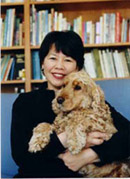
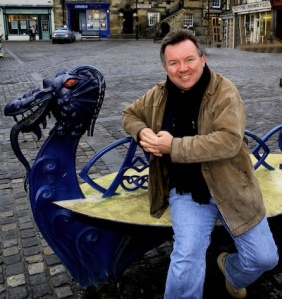
Michael Gerard Bauer


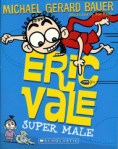
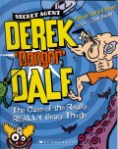
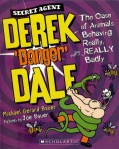
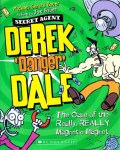
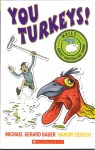
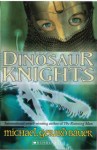
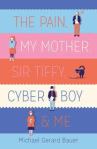
Michael Gerard Bauer is the author of many books for children and young adults. His latest book is a young adult title — The Pain, My Mother, Sir Tiffy, Cyber Boy and me and he has a picture book coming out soon (stay tuned!). You might recognise some of these books:

Last year Wendy Orr asked:
I’m curious whether, like me, you draw on different parts of yourself to create your characters (even if other people might not be able to see that ‘seed’ that started the process). Do you use any techniques to find these beginnings, or does the character appear to grow spontaneously, and you only recognise later the bit that sparked its creation?

Michael answers:

Bauer's latest young adult novel

I think I do draw on different parts of myself to create characters but I don’t think in most cases that I do it deliberately or consciously. I can certainly see myself, or aspects of myself, in main characters like Joseph in The Running Man, Corey from Just a Dog and Ishmael from the Ishmael series. Even the character of Maggie from The Pain, My Mother, Sir Tiffy, Cyber Boy and Me shares quite a bit in common with me — although I’d have to admit, there’s also a fair bit of me in The Pain! Having said that, I don’t ever see myself as being those characters, despite any similarities that might exist in our personalities and attitudes. I doubt that I could write about, or would want to write about, a central character to whom I couldn’t relate or empathise.

I really don’t apply any techniques to help find character beginnings. My characters seem to emerge and grow from the situations that I imagine them in and that’s more of a spontaneous thing. So with Joseph in The Running Man it started with me imagining a boy living next door to a mysterious and reclusive neighbour and wondering how he would deal with each situation as it arose. As a writer you find out more and more about your character as you develop your story. I think the part of you that is in the character is probably the strongest and most obvious at the start, and as you unearth the story and the character is placed in different situations, they take on different layers and dimensions and so they grow away from that seed of you to become unique identities in themselves.

Ultimately I believe the best thing you can do when developing characters is to stop thinking about them as characters but rather think about them as real people. Try to imagine their life outside the limits of your story for example and how they have become the people they are. When you stop looking at them as your ‘creation’ and give them room and freedom to grow, they tend to take on a life of their own and often reveal themselves to you in surprising ways.

Want to know more about Michael Gerard Bauer and his books? Visit his website: https://michaelgerardbauer.com/


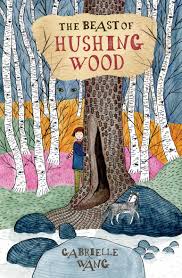
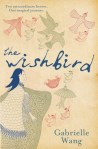
The WishbirdAnd now Michael passes the baton to the next Friday visitor — Gabrielle Wang. Gabrielle is the author of picture books and novels, including two series in the Our Australian Girl series. Her latest novel is The Wishbird.

Michael asks:
In general I’d love to know how being an illustrator impacts on your writing. For example, if you are writing a novel, do you find yourself creating illustrations for the characters or scenes even though they might not be included in the published work? Have characters or stories ever started from something you have drawn? Is visual imagery an important part of your writing style?
..
Check in every Friday for questions and answers from children’s authors and illustrators.
 ..
See you next week!

Save

Save

Save

Save

Save

Posted in authors, Pass the Book Baton

Pass the Book Baton: Wendy Orr

PASS THE BOOK BATON

It’s Friday! And that means it’s time for Pass the Book Baton. Every week we’ve featured a book creator who answered one question before throwing a new question to the next Friday visitor. (It’s kind of like a book relay in slow motion.) This is our last Pass the Book Baton post for 2016 but — after a summer break — we’ll be continuing with the series in 2017.


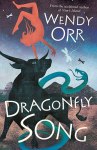
Today the book baton is passed to author Wendy Orr. Wendy’s books have been published in 25 countries and languages and have won awards in Australia and overseas. Her Nim’s Island books were made into movies. Wendy Orr’s latest book is Dragonfly Song. (You can read an excerpt if you go to the publisher’s site.)

Here are some of Wendy Orr’s book covers:

Last week Anna Ciddor asked:
I love to find out how other authors work. There are two parts to my question. Firstly, do you plan the whole book, including the end, before you begin (like I do), or are you one of those authors who start writing without knowing the ending? And secondly, once you begin writing, do you slow yourself down with research and re-writing (like I do), or are you one of those amazing authors who can work fast?

Wendy answers:
I agree with Anna Ciddor that it’s fascinating to find out how other authors work! It always seems to bear out the Somerset Maugham quote that there are three rules for writing a novel, but nobody knows what they are. I’m also intrigued — or depressed, depending on the day — that as soon as I figure out my own rules, I start a new book and the rules change. However, I always need to know several things before I start the book — the first scene and first line, a climactic scene, and the ending. Details about the ending sometimes change, but I have to know where it’s heading. And in general, I seem to be planning more now than I used to. For Dragonfly Song, when my editor asked if the first deadline was achievable, I made a list of all the scenes from where I was till the end. It was amazingly helpful (who knew!). Of course there were still surprises and aha! moments of insight, but I stuck to it fairly closely. Admittedly the book had been freewheeling in my head for the previous year.

As for speed — how I envy those fast writers! I’m very slow. It’s true I’ve got a huge list of books, but I’ve been writing for 30 years, and many of my early books were small. Dragonfly Song took 22 months, (ignoring several false starts over the previous 5 years) without working on anything else. I rewrite obsessively — and oh yes, the research! The two main problems are that I don’t always know what I need till I find it, and conversely, sometimes some little fact really has to be clarified before I can continue with the story. Then down the rabbit hole I go … And then have to rewrite again because there was too much research showing, and sometimes obscure facts have to be bent to suit the story! But what a feeling when I work something out to suit the story, thinking I’ve purely made it up — and then find the research that says my theory is right!

But all I really care about once a book finished is that the reader enjoys it and believes in it while they’re reading.

Happy reading!

Wendy

www.wendyorr.com


ERIC VALE OFF THE RAILSAnd now Wendy Orr passes the baton to the next visitor — Michael Gerard Bauer. Michael is an award-winning author who writes humorous books for children and young adults.

Wendy asks:
I’m curious whether, like me, you draw on different parts of yourself to create your characters (even if other people might not be able to see that ‘seed’   that started the process.) Do you use any techniques to find these beginnings, or does the character appear to grow spontaneously, and you only recognise later the bit that sparked its creation?

The series will be taking a break over the summer school holidays. We’ll leave Michael Gerard Bauer with some thinking music while he considers Wendy’s question …

And Pass the Book Baton will resume in 2017 with his answer.

See you next year! (While you’re waiting, you can check out all the book creators who have had the baton so far.)

Save

Save

Save

Save

Save

Save

Save

Posted in authors, illustrator, Pass the Book Baton

Pass the book baton: Anna Ciddor

PASS THE BOOK BATON

It’s Friday! And that means it’s time for Pass the Book Baton. Every week Alphabet Soup features a book creator who will answer one question before throwing a new question to the next Friday visitor. (It’s kind of like a book relay in slow motion.)

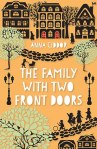
Today the book baton is passed to author and illustrator, Anna Ciddor. Anna has written and illustrated over fifty books on topics as diverse as Vikings, Australia, goldfish, and tournaments. Her most recent book is The Family with Two Front Doors — a true story about a family of nine children who lived in Poland in the 1920s.

You might recognise some of these books:

Last week Meg McKinlay asked:
You’re a writer and an illustrator — good grief! Do you feel equally comfortable doing both, or does one come more naturally to you?

Anna answers:
Well, to tell the truth, even though I have been a full-time author and illustrator for nearly thirty years, I don’t find either writing or illustrating quick and easy! For me, they both need lots and LOTS of drafts and research and planning. Here’s a behind-the-scenes look at how I wrote and illustrated The Family with Two Front Doors so you can see what I mean.

Step 1 Planning and research
The Family with Two Front Doors is based on stories my late Nana told me about her childhood. I planned each chapter of the book, including the ending, then sat down to bring the first scene to life in my head. I quickly discovered I had a problem. Nana never told me what clothes she wore as a child and, sadly, she was no longer around to help. If I can’t picture a scene, I can’t write it, so I had to stop and research the types of clothes worn by religious Jewish children in 1920s Poland. All through the book there were delays while I researched details before I could picture each scene.

Step 2 The Writing
When I write, I constantly ask myself, ‘Does this word give the best picture of what I am trying to say?’ For example, in one sentence I wrote ‘Yakov ran through the door,’ but then I realised I needed a more descriptive word than ran. Maybe burst would be better? Or scampered? Which word gave the best picture of what Yakov was doing? As you can imagine, this makes the writing process extremely slow. It took me four years to research and write The Family with Two Front Doors!

Step 3 The editing
When I deliver a book to the publishers, it is very exciting and scary, waiting to find out if they like it. Luckily, they loved The Family with Two Front Doors but it took me a few months to write the few changes they suggested because I am so slow!

Step 4 Illustrating
For me, this is the last step. Even though The Family with Two Front Doors was going to have tiny black and white illustrations, I wanted them to be perfect. I drew them over and over again. The faces of the characters had to be exactly the way I imagined them, and their clothes, and details, such as the sewing machine, had to be historically accurate. Those few tiny illustrations took me months!

Visit Anna Ciddor’s site for more about her and her books!


Dragonfly SongAnd now Anna Ciddor passes the baton to the next Friday visitor — Wendy Orr. Wendy’s books have been published in 25 countries and languages and have won awards in Australia and overseas. Her Nim’s Island books were made into movies. Wendy Orr’s latest book is Dragonfly Song.

Anna asks:
I love to find out how other authors work. There are two parts to my question. Firstly, do you plan the whole book, including the end, before you begin (like I do), or are you one of those authors who start writing without knowing the ending? And secondly, once you begin writing, do you slow yourself down with research and re-writing (like I do), or are you one of those amazing authors who can work fast?
..
Check in every Friday for questions and answers from children’s authors and illustrators.
 ..
See you next week!

Save

Save

Posted in authors, Pass the Book Baton

Pass the Book Baton: Meg McKinlay

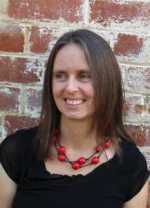
Meg McKinlay -- photo courtesy Fremantle PressPass the Book BatonIt’s Friday! And that means it’s time for Pass the Book Baton. Every week Alphabet Soup features a book creator who will answer one question before throwing a new question to the next Friday visitor. (It’s kind of like a book relay in slow motion.)

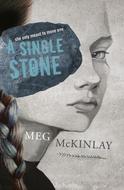
Today the book baton is passed to writer Meg McKinlay. She writes picture books, novels and poetry, and lives near the ocean in Western Australia.  Meg’s most recent books are Bella and the Wandering House and A Single Stone (which won the 2016 Prime Minister’s Literary Award in the young adult category).

You might recognise some of these books:


Last week Norman Jorgensen asked:
A single stoneHaving now won the Prime Minister’s Literary Award, as well as just about every other award in Australia for A Single Stone, do you have a new book in mind … or are you creating several projects at the same time?

Meg answers:
What is it that politicians love to say: I reject the premise of the question? 🙂 It’s true that I’ve been very fortunate with A Single Stone, but my dear friend Norman is stretching the truth just a little with his “just about every other award in Australia” line.

Now that we’ve cleared that up … the answer is i) yes and also ii) yes.

I most definitely have a new book in mind. The problem is that by now it should be well and truly out of my mind and onto the page. I’m working on a novel set in 1979 when the world’s first space station — Skylab — was falling to earth. It’s the story of a girl named Frankie who lives in the Southwest of WA, and her science-obsessed little brother Newt, who becomes fixated on Skylab for spoilferific reasons I must not divulge at this time. This book is fully formed in my brain and just needs to make it to my typing fingers. I’m hoping to have it done very soon.

And I am also creating several other projects. I have three picture books in various stages of the production line:

Once Upon a Small Rhinoceros, which I am gleeful about, will be out in August next year. It’s about a small rhinoceros who sets out to sail the world, and will be illustrated by Leila Rudge.

Drawn Onward, which is unlike anything I’ve ever done before — a book about perception and optimism which relies on an unusual structure and will be aimed at older readers — is being illustrated by Bunbury artist Andrew Frazer, and will be out in October-ish.

And finally … Duck! (because everyone knows the world can never have too many books about ducks) is in the early stages of illustration by Nathaniel Eckstrom. This is going to be a barrel of fun and I can’t wait to read it to kids.

Stop by Meg McKinlay’s website for more about her and her books.


The family with two front doorsAnd now Meg McKinlay passes the baton to the next Friday visitor — Anna Ciddor. Anna is the author of 56 books and is the illustrator for most of them, too. Her most recent book is The Family with Two Front Doors.

Meg asks:
You’re a writer and an illustrator — good grief! Do you feel equally comfortable doing both, or does one come more naturally to you?
..
Check in every Friday for questions and answers from children’s authors and illustrators.
 ..
See you next week!

Save

Posted in authors, Pass the Book Baton

Pass the book baton: Norman Jorgensen

PASS THE BOOK BATON


Norman Jorgensen in Northumberland. (Photo © Jan Nicholls.)It’s Friday! And that means it’s time for Pass the Book Baton. Alphabet Soup features a book creator every Friday who will answer one question before throwing a new question to the next Friday visitor. (It’s kind of like a book relay in slow motion.)

Norman Jorgensen takes the book baton today. Norman is the award-winning author of many adventure-filled books. His books are inspired by travelling, old movies and old books. His latest book is The Smuggler’s Curse.

You might recognise some of these page-turners:

If you love a good swashbuckling adventure you can read a sample chapter of The Smuggler’s Curse thanks to Fremantle Press.

Last week Catherine Carvell asked Norman a question:

Your latest book The Smugglers Curse was released in October and what an adventure! My question to you is, have you based any of The Smugglers Curse on real life? And if so, which bits are real?

 Norman answers:

That’s an interesting question. The Smuggler’s Curse is high adventure, and a lot of the action is total fantasy, however, it is grounded in real history, and the locations are very real. I visited all the places mentioned in the story and then had to imagine what they would have been like back in 1895 when the story is set. Sometimes it was easy. The headhunters’ long house in Sumatra did not look like it had changed at all in 120 years. To my surprise and concern, there were still skulls hanging from the rafters.

Looking at old photographs, Broome and Albany and Cossack, and even Fremantle, were much the same now as back then, except for paved roads and cars, of course. I expect, too, they now smell a lot better, no longer having open sewers and outside dunnies, and no open drains in the streets, or mountains of horse manure that would have littered the roadways. Modern Singapore, on the other hand, bears no comparison with Colonial Singapore. It is a rich, bustling city where once it was a sleepy mosquito-infested outpost.

I set the book in first-person, pretending I was Red, the hero, and he is a bit like me in that he is scared of all sorts of things. We both hate heights, sharks, soldiers with bayonets trying to skewer him, and falling from the masthead, but Red tries to be brave no matter what the circumstances.

The skipper of the Black Dragon schooner — Captain Black Bowen, the notorious smuggler — I based on movie star called Errol Flynn who was a swashbuckling hero back in the days of black and white movies. I loved his movies Captain Blood, The Adventures of Robin Hood, The Sea Hawk and many others. Real life? Probably not, though he was a famous adventurer in real life.

The sailing scenes are definitely real. When I was about 12 years old, my father and I made a dinghy, and we used to go sailing together on the Swan River, and sometimes the Indian Ocean. Like the Black Dragon in the Andaman Sea, we were once caught in a fierce storm, washed way out to sea and nearly killed. The excitement and terror I wrote about Red feeling on the deck of the Dragon were based on that experience.

I hope you enjoy reading about Red’s adventures and imagining all the places he gets taken while on board the Black Dragon.

Happy reading,

Norman

You can read earlier interviews with Norman Jorgensen here and here.


a single stoneAnd now Norman Jorgensen passes the baton to the next Friday visitor — Meg McKinlay. Meg is the author of many books including A Single Stone, Ten Tiny Things, and Duck for a Day.

Norman asks:
Having now won the Prime Minister’s Literary Award, as well as just about every other award in Australia for A Single Stone, do you have a new book in mind … or are you creating several projects at the same time?
.
Check in every Friday for questions and answers from children’s authors and illustrators.
 .
See you next week!

Save

Save

Save

Save

Posted in authors, Pass the Book Baton

Pass the book baton: Catherine Carvell

PASS THE BOOK BATON

Catherine CarvellIt’s Friday! And that means it’s time for Pass the Book Baton. Alphabet Soup features a book creator every Friday who will answer one question before throwing a new question to the next Friday visitor. (It’s kind of like a book relay in slow motion.)

Catherine Carvell takes the book baton today. Catherine is an Australian author living in Singapore (but soon heading back to WA!). Her first book is Darcy Moon and the Deep-Fried Frogs, a humorous adventure story about a girl with a mission to save the swamp.

If you like the sound of Darcy Moon you can read a sample chapter of the book.

Last week Catherine was asked:
What is one thing you’d like kids to walk away with after they’ve read your book?

Catherine answers:
I tried to make Darcy Moon and the Deep-fried Frogs as funny as possible, with lots of disgusting and embarrassing situations to make kids cringe and laugh. So the one thing I’d like kids to walk away with after reading this book is … a smile!

Darcy Moon and the deep fried frogs.


The Smugger's CurseAnd now Catherine Carvell passes the baton to the next Friday visitor — Norman Jorgensen. Norman is the author of many books including The Last Viking, and The Last Viking Returns. His latest book is The Smuggler’s Curse.

Catherine asks:
Your latest book was released in October and what an adventure!
My question to you is, have you based any of  The Smugglers Curse on real life? And if so, which bits are real?
Check in every Friday for questions and answers from children’s authors and illustrators.
See you next week!

Save

Save

Save

Save

Posted in authors, Pass the Book Baton

Pass the book baton: Deborah Abela

PASS THE BOOK BATON

Deborah AbelaIt’s Friday! And that means it’s time for Pass the Book Baton. Alphabet Soup features a book creator every Friday who will answer one question before throwing a new question to the next Friday visitor. (It’s kind of like a book relay in slow motion.)

Award-winning author Deborah Abela takes the baton today. Deborah Abela’s recent book, Teresa: A New Australian, was inspired by her dad who was born in a cave in Malta during one of the heaviest bombing raids of WW2. Her latest book is The Stupendously Spectacular Spelling Bee.

You might recognise some of these book covers:

Last week James Foley asked a question:
Do you find that your characters reflect different aspects of your personality? So the heroic characters might reflect your good side, the villains might reflect your naughty side, the protagonists might share your strengths and weaknesses, etc?
 xx
Deborah’s answer:
Dear James,
That’s a great question. My characters are often small versions of people I know or of me … or the me I’d like to be.
In my series, Max Remy Superspy, Max is a young feisty but very clumsy girl who loves adventure … that is pretty much how I was as a kid.
In Grimsdon — my novel about kids living in a flooded city — the hero is a girl called Isabella Charm. She is brave and courageous and very good with swords … she is someone I would very much like to be.
In The Stupendously Spectacular Spelling Bee, India Wimple is a brilliant speller but is terribly shy and lacking confidence … I was also a bit shy as a kid.
 xx

Check in every Friday for questions and answers from children’s authors and illustrators. See you next week!

Save

Save

Save

Posted in authors, illustrator, Pass the Book Baton

Pass the Book Baton: James Foley

PASS THE BOOK BATON

James Foley photoIt’s Friday! And that means it’s time for Pass the Book Baton. Alphabet Soup features a book creator every Friday who will answer one question before throwing a new question to the next Friday visitor. (It’s kind of like a book relay in slow motion.)

Today author-illustrator James Foley takes the baton. James Foley is a writer, illustrator and cartoonist. He likes working with pen and ink, pencil, charcoal, watercolour, and digital tools. He has illustrated books by other people, and written and illustrated his own books.

He has quite a stack of books behind him now.

Check them out:

His most recent book is the graphic novel Brobot.

Last week AL Tait posed two questions for James. AL asks:

Q. You started out as an illustrator — what made you decide to write In The Lion and Brobot yourself?

A. I’ve always written and illustrated my own stories; it just worked out that my first book was only as the illustrator. It’s easier to break into the industry by working with someone more established, as Norman Jorgensen was. Then I got the opportunity to make In The Lion on my own, which was great. It’s a different experience writing AND illustrating a book yourself, as opposed to illustrating a text written by someone else (as I did with Sigi Cohen for My Dead Bunny) or collaborating with a writer quite closely through the initial process (as I did with Norman Jorgensen for The Last Viking and The Last Viking Returns). Also, when you do the book yourself you get the full royalty … 😉

Q. As an author-illustrator, do you start with the words for a story or start with the pictures?
I usually start with a bit of both — some loose images and a few phrases. I may have a few key scenes playing in my head, but they’re fragments of what the overall story will eventually become. Then I nut out the character designs and the overall storyline at the same time; these two processes feed off each other. A character design may give you a plot idea, and vice versa. Then when the characters and the storyline seem to have settled, I can get started on thumbnails and storyboards, and then final artwork.


The Stupendously Spectacular Spelling BeeAnd now James Foley passes the baton to the next Friday visitor — Deborah Abela. Deborah is the author of many books. Her most recent title is The Stupendously Spectacular Spelling Bee.

James asks:
Do you find that your characters reflect different aspects of your personality? So the heroic characters might reflect your good side, the villains might reflect your naughty side, the protagonists might share your strengths and weaknesses, etc?

Check in every Friday for questions and answers from children’s authors and illustrators. See you next week!


Visit James Foley’s website for more information about him and his books. You can also read earlier Alphabet Soup interviews with James here and here.

Save

Save

Save

Posted in authors, Pass the Book Baton

Pass the Book Baton: AL Tait

PASS THE BOOK BATON

It’s Friday! And that means it’s time for Pass the Book Baton. Alphabet Soup features a book creator every Friday who will answer one question before throwing a new question to the next Friday visitor. (It’s kind of like a book relay in slow motion.)

Today bestselling author AL Tait takes the baton. AL Tait is the author of The Mapmaker Chronicles — a series full of danger and adventure.

The Mapmaker Chronicles

Last week Paula Hayes posed a question (actually two questions!) for AL Tait. She asks:

Q. Which book in your Mapmaker Chronicles series have you enjoyed writing the most?

A. It’s funny, but kids always ask me which of the three books are my favourite, and I always give the same answer: I love them all. But then, I qualify that answer. I love the first book a little bit more because that’s where I met all of my characters for the first time. As someone who doesn’t plot very much, I’m really watching the story unfold and the characters develop in much the same way as the readers are.

Q. Does creating a series get easier or harder to achieve?
I think the most difficult part of any series is the middle. But then I feel the same way about every book I write — the middle (act two) is the most difficult section to write. I’m in the process of writing a brand new series at the moment and I’ve whisked my way through book one, and am about to climb the mountain that is book two. Writing a series does teach you the value of at least having an outline to work from, even if you don’t plot every detail.


BrobotAnd now AL Tait passes the baton to the next Friday visitor — James Foley. James is an illustrator and an author-illustrator. His most recent book is a graphic novel, Brobot.

AL asks:
You started out as an illustrator — what made you decide to write In The Lion and Brobot yourself? As an author-illustrator, do you start with the words for a story or start with the pictures?

Check in every Friday for questions and answers from children’s authors and illustrators. See you next week!


Visit The Mapmaker Chronicles website for more about AL Tait and her books. You can read an earlier interview with AL Tait at Alphabet Soup, too.

Save

Save

Save

Save

Posted in authors, illustrator

Tania McCartney on creating a picture book

Tania McCartney is the author of fiction and nonfiction picture books. Now she is launching the first book she has written and illustrated. Today one of our regular book reviewers — Matilda, aged 10 — asks Tania some questions about her new book Australia, illustrated.


Matilda: Why did you think of illustrating this book yourself when your other books are illustrated by other people?

Tania: Just like you, I’m sure, I absolutely loved to draw when I was a kid. Writing and drawing was my thing. I did it right through school and into high school but then something terrible happened. I became an adult.

Well, actually — it’s not terrible to become an adult! But what IS terrible is that so many adults stop doing the things they love, and instead do the things they ‘should’. So I lost my ability to draw, and I really, honestly believed I could no longer do it.

I began writing children’s books around 10 years ago (around when you were born! spooky!), and I had a secret dream to illustrate my own books. I never, ever thought that would happen because I still believed I could no longer draw.

Then, in 2014, I started the 52-Week Illustration Challenge [a group of illustrators where the members each create their own illustration in response to a weekly prompt] and over two years I learned that I could still draw! I couldn’t believe it! At first, my drawings were pretty horrid, but over that time, they quickly improved — and that goes to show that practice does make ‘better’!

I was stunned and delighted when my publisher said they’d be happy for me to illustrate my new book idea — Australia Illustrated. I was also a bit scared. Could I do it??? Well, I did. And I still have to pinch myself!

Here is a picture of my first drawing for the 52-Week Illustration Challenge, and then after that you’ll see a page from Australia Illustrated. Do you think I’ve improved?

Eggs illustration
Tania’s first illustration in the 52-week illustration challenge.


A page from the first book Tania illustrated.
A page from Tania’s new book.

Matilda: How did you have the idea for a book like this about Australia?

Tania: There are so many books about Australia, but I wanted to do something really different. I don’t know of any other book like this one.

For a start, it’s a whopping 96 pages! (Picture books are generally 24 to 32 pages.) And it’s also unusual in that it’s mostly pictures, with only a handful of words.

It also covers parts of Australia that are really well known (like our animals and icons like the Sydney Opera House) but it covers things people don’t know much about, too — like quokka selfies or Tasmanian chocolate factories.

The other thing I’ve done with Australia Illustrated is that I’ve included lots and lots and lots of kids of all different cultures and races. I think it’s important to celebrate the multicultural country we live in!

Matilda: How many of the places in your book have you also been to?

Tania: What a great question. I’m going to look through the book and tell you exactly!

Okay, I’m back. So, out of all the places I cover in the book (towns, sites, states) I’ve been to around 70 out of around 100. This doesn’t include the maps I’ve done for each state which have hundreds of place names — though I have been to a lot of those places, too. I like to travel!

My big dream is to go to Uluru. I used to be a flight attendant and I used to fly over it all the time! If they’d given me a parachute, I could have jumped out and gone to see it! I’m hoping next year I can go.

Matilda: What was different about illustrating your own book instead of having someone else illustrate it?

Tania: Oh, it was SO different. It was the first time I’d ever illustrated an actual book so I wasn’t really sure how to do things. In fact, I did the cover first … and books are hardly ever done that way! But it worked out really well for me.

It was fantastic being able to have control over how the book looked visually. And it was also fantastic to get to draw whatever I wanted — it was such a creative process and I loved it so much. I could mix things up and change things and dream up kooky things. It was just SO much fun.

When you have an illustrator doing pictures for you, it’s a whole different experience because the illustrator reads your words and has their own thoughts about how the pictures should look. When my illustrators send me their pictures, it’s like Christmas! Opening the email to get a wonderful surprise — a beautiful picture. It’s really exciting — and you can never guess what they might have created.

You may have heard of that saying ‘two heads are better than one’ and when I work with an illustrator, I find they bring so many great ideas and thoughts to the text. They might read my words and see things completely differently from me — and they could add some wonderful things to the story with their illustrations … extra things that I may not have thought of.

I love both ways — illustrating my own books and having illustrators create the pictures, too. They are totally different but both are a lot of fun.

Oh, and also — when you illustrate your own book, it’s twice the work!

Matilda: Are you planning to illustrate more books?

Tania: I am. I’ve already started on three illustrated books and each one of them is going to be digitally illustrated. In December, I’m starting work on a big book for the National Library of Australia. I’m doing the illustrating but someone else is compiling the book — someone quite famous! I can’t say more yet but I’m really excited about that one.

I also have some ideas for more picture books I want to illustrate but I want to try a different style — perhaps just watercolour. And a few people have asked me to illustrate their books, too. I might be doing one for a friend, not sure yet — we’ll see! The thing about publishing is that we so often say ‘we’ll see!’

Thanks for the wonderful questions, Matilda. I just loved them.

Australia Illustrated launch poster


Visit Tania McCartney’s website www.taniamccartney.com for more information about her books and to join in the celebrations for the launch of Australia Illustrated. 

Save

Save

Save

Save

Save

Save

Save