Prudence Wants a Pet, by Cathleen Daly, ill. Stephen Michael King, ISBN 9781741699654, Scholastic
Reviewed by Whitfield State School, QLD
Students at Whitfield State School recently read Prudence Wants a Pet—a picture book about a little girl who desperately wants a pet but her parents say ‘no’. Could a branch make a good pet? Perhaps a twig … ?
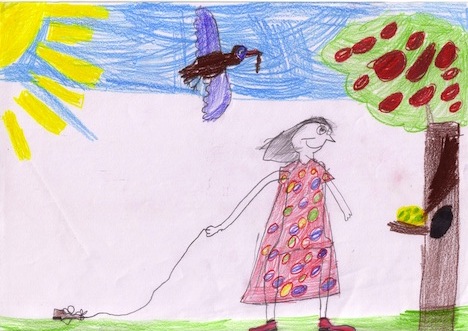
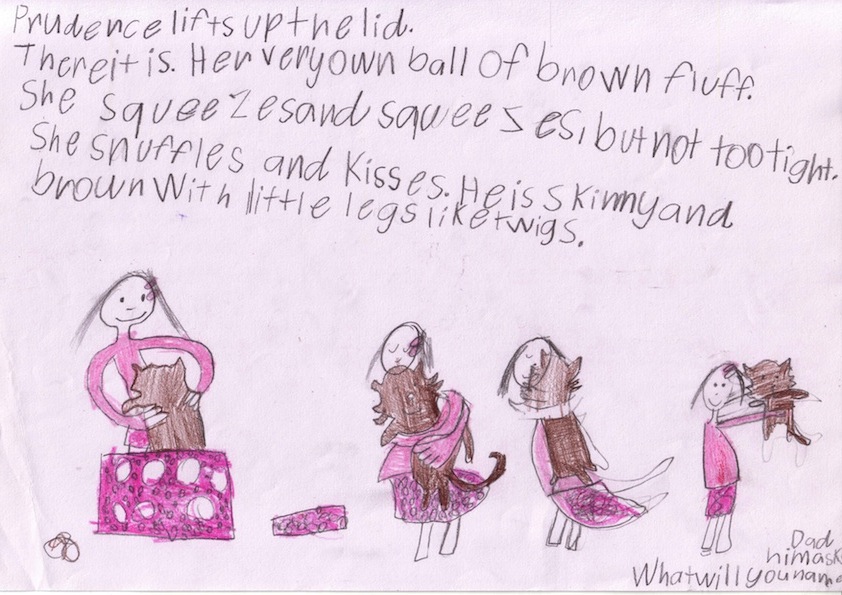
We love this fabulous artwork and writing sent in by some of the students, who are only 6 and 7 years old.
Favourite pages from the book (by Monorom)
The characters in the story (by Summer)
Prudence (by Samantha)
Prudence (by Tabitha)
A favourite page (by Taylah)
Thank you Monorom, Summer, Samantha, Tabitha and Taylah for sharing your artwork and writing with us. Keep up the good work!
–
* Whitfield State School is a member of our Undercover Readers Club. A review copy of Prudence Wants a Pet was provided by the publisher.
Look at the fantastic artwork these star students created after reading Mirror by Jeannie Baker! The students also sent in some excellent book reviews, which we’re pleased to share here.
First, some selected remarks from the students:
“Mirror is a book that reflects two different parts of the world.” — Jade
“Even though the two boys in the story look different and speak a different language, they are still the same on the inside.” — Ben
“The book has no words and it opens in two directions, with each boy’s life on each side. Jeannie Baker has collaged the pictures … with manmade and natural materials.” — Jared
“I think this book is suitable for 8 years plus. I really enjoyed this book.” — Sharves
And here is the complete set of the students’ reviews:
This book is one of a kind, it is set out with two stories in a mirror image. Once you see inside you just can’t take your eyes off the book. Jeannie Baker compares two different families in her story, one is from Australia and one is from Africa. The two boys in the story may not look alike, but they are deep inside. They both like to belong to a family.
This book is better than your average book, everyone should read this great collaged picture book. The story links the two families with a special carpet that is made by the mother in Morocco, it turns out that the Australian family buys the exact carpet for their home.
Review by: Jenny (9)
—
Mirror is about two boys from very different countries; Sydney Australia and Morocco in Africa. They live a totally different life, they eat different foods and their homes are very different.
One day the father of the Australian family buys a carpet from the “Magic Carpet” shop, the mother of the Morroccan boy had handmade this colourful carpet.
The book has no words and it opens in two directions, with each boy’s life on each side. Jeannie Baker has collaged the pictures in her book with manmade and natural materials.
The book is suitable for 7 years plus. I liked it because of its bright colours. The message in this story is even though people may look different and live different lives, you may still have the same needs and wants on the inside.
Review by: Jared (9)
—
This book is about two boy’s lives. It shows the two boys and how they are similar and different at the same time. One boy lives in Australia and one lives in Morocco in North Africa. The book is called Mirror because the boys do the same things, but in different ways.
There are two stories in this book. Jeannie Baker collaged fabric and other materials to make the pictures and then took a photograph of each collaged scene to make it look realistic. She used only pictures to tell her story.
A mat that is made by the boy’s mother in Morocco ends up being bought by the Australian boy’s family.
Jeannie was inspired to make this book after she travelled to Morooco on a holiday. The moral of her story is that people may look different on the outside but can still be very alike on the inside. I think this book is suitable for 8 years plus. I really enjoyed this book, it was great.
Reviewed by: Sharves (8)
—
Mirror is a book about two families in two different countries. There are two sides to the book telling what the families do at the same time. They both did different things. One family lives in Australia and one lives in Morocco. They dress differently and eat different things. I liked the book, because it has pictures and no words. Jeannie Baker was inspired by going to Morocco and meeting a very friendly stranger. One day the Moroccan family’s mother made a carpet and the Australian family bought it. Jeannie Baker collaged the pictures and then took photos of them to tell her story.
Review by: Rachel (8)
—
Mirror is a book about two boys and two families who live in Sydney and Morocco. These two families look very different and they do things very differently.
One day the family from Sydney buys a rug from a carpet shop that the other family’s mother had made. Jeannie Baker has collaged all the pictures in the book, she has made them look real by using real materials.
The moral of this story is that even though you may look different, you can still have the same values on the inside. I loved this book, because it was in pictures and you could feel that the book was very special. It is suitable for ages 8 plus.
Review by: Jerrica (9)
—
Mirror is about two boys in two different families and in two different countries. The first family lives in Sydney, Australia and the other family lives in Morocco in North Africa.
One day the dad of the Australian family went to a carpet place and bought a rug that the Moroccan family had made. Even though the two boys in the story look different and speak a different language, they are still the same on the inside.
This book is suitable for ages 5 to 13.
Review by: Ben (9)
—
Mirror is about two families from different countries and how they live very differently, but they have some things that connect them to each other. The two countries are Australia and Morocco. It was amazing how Jeannie Baker made the book. She used different materials to collage the pictures.
The story is about two boys in Morocco and Australia. There is a carpet in the story, the family in Morocco made this carpet and the carpet was then sent to Australia, the Australian family bought it. Jeannie Baker was inspired to make this book by visiting Morocco and meeting nice people there.
Review by: Ethan (8)
—
Mirror is a book that reflects two different parts of the world. An Australian and North African family both have a boy, they look very different to each other. The Moroccan mother makes a rug and sends it to Australia to sell, the Australian boy’s family buy it.
Even though the two boys look different, they are the same on the inside. The book has two sides, you can read both sides at the same time.
The moral of the story is that even though someone may look different they can still be the same on the inside and like to belong to a family. Jeannie Baker went to Morocco on a holiday, the trip gave her the ideas to write the book. I really enjoyed the book, it was excellent.
Review by: Jade (8)
–
* Winthrop Primary School is a member of our Undercover Readers Club. A review copy of Mirror was provided by the publisher.
Write a poem no longer than 12 lines. Your poem should contain the word ‘dragon.’
Include a competition entry form. This may be printed from the website (see competition rules), photocopied, or contact us to have one emailed or posted to you.
Your entry can be handwritten or typed. Make a copy of your entry as we cannot return entries.
A $20 book voucher is awarded to the winner in three age categories: Under 7s, Under 9s, and Under 12s.
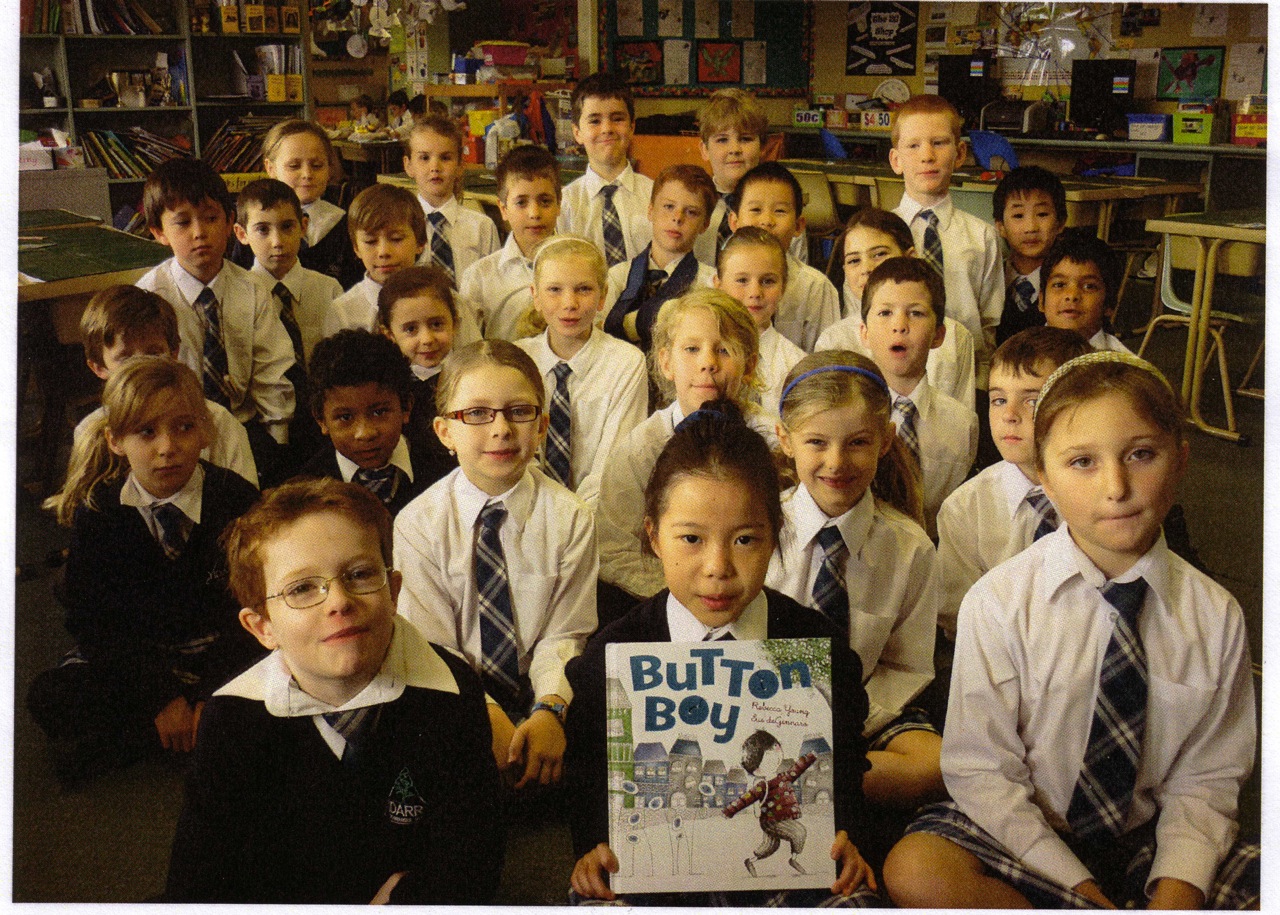
The book Button Boy was written and illustrated by Rebecca Young and Sue deGennaro. Button Boy is a fabulous book because it is about being helpful.
Button Boy is about a little boy called Banjo who loves to collect buttons. His grandma sews the buttons onto his jumper. Every day when he’s on his way to school he finds someone who has a missing button and he gives them one. Finally, he has only one button left. Banjo is a kind and giving boy.
We like the book because the pictures are very funny. The best thing about Button Boy is that the main character is a kind little boy. People who like collecting things would like this book. It would be good for boys or girls aged 5 to 8.
You should go and get this book now! It is great.
–
* Year 2 at Yidarra Catholic Primary School is a member of our Undercover Readers Club. A review copy of Button Boy was provided by the publisher.
In every issue of Alphabet Soup magazine we interview an author or illustrator. The trouble is, we can only fit some of their answers in the magazine. So we print the full interviews on the blog—we wouldn’t want you to miss out!
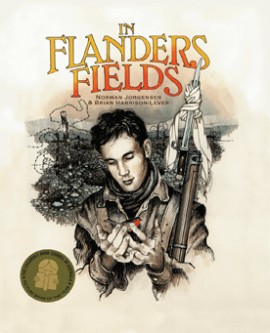
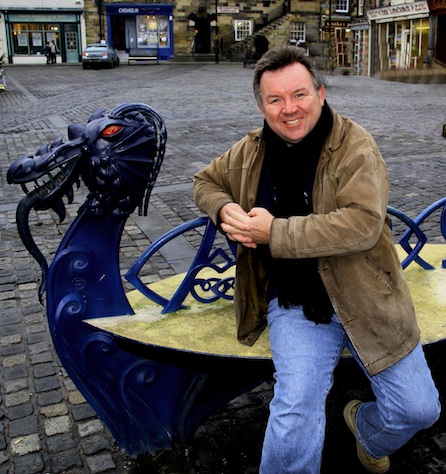
In issue 13 we talked to Norman Jorgensen, author of many books includingThe Last Viking, and In Flanders Fields.
Where do you live?
I live just out of Perth city in an old Federation house built in 1906. It is a bit too cosy; in fact, it is far too small for all the books I have collected over the years. If I buy any more books my wife and I will have to go and live out in the garden shed along with the rakes, spades, half empty paint cans and redback spiders.
What do you love about being a writer?
I love the way stories develop from just the flimsiest shred of a single thought or sentence into full-blown worlds full of exotic places and interesting out-of-control people.
I also love the ego stroking that comes with the job. People seem to think writers are special, especially children’s book creators, and treat us accordingly. I know for a fact, however, that most kids’ book writers are just adults with arrested development issues, and have never really grown up properly. That is certainly true in my case.
A real bonus being a writer is that I get to travel to all sorts of great places for literature festivals and writers’ talks, and get to meet kids who like reading.
What was your favourite book as a child?
There was a load. One I remember and was very keen on was as series by Anthony Buckeridge, called Jennings and Darbyshire, about boys in an English boarding school that was an awful lot like Hogwarts. Unlike Hogwarts, though, Linbury Court Preparatory School was a ripping and topping place with midnight feasts, easily fooled school masters, japes and pranks, and, fortunately, or perhaps unfortunately, no wizards. The books were also a great deal funnier than Harry and Co. They kept me in stitches of laughter for days at a time and I loved them.
My other great favourite was Biggles by Captain WE Johns, a series of nearly a hundred books about an ace World War I fighter pilot who never seems to get any older and also flies planes in WWII and into the jet age, and has hair-raising adventures together with his chums, Ginger, Smyth and Algy. They are probably horribly dated by now, but at the time they sure kept me wide awake at night.
Was it easy to get your first book published?
My first book came out years ago. It was a graphic novel illustrated by Allan Langoulant and was called Ashe of the Outback. At the timeI had no real idea of what I was doing and used to flood Allan with hundreds of ideas, often on coasters or scraps of paper. He was very patient with me and managed to pull them into a sequence that made sense and that he could illustrate. Luckily for me, he was such a clever artist and well-known that that a publisher soon contracted it.
My fourth book In Flanders Fields proved to be a much harder task. A picture book about the war in the trenches for small children? Are you joking? A number of publishers couldn’t see past the idea that picture books don’t always have to be about talking rabbits or cute teddy bears, or for little kids, and instantly rejected it. Luckily, the crew at Fremantle Press weren’t so traditionally bound.
Like all writers I read a great deal. I like comedies and funny writers, historical novels, spy thrillers and well constructed sentences but, above all, I like a good story that drags you along with it.
I also love travelling, especially with my gee-wiz top-of-the-range camera and taking photographs, especially to Europe. I love the old castles, cathedrals, villages, country pubs, museums, battle grounds and all the stuff that makes history so exciting.
Watching old movies give me a thrill, especially black and white dramas, westerns and silent comedians like Charlie Chaplin and Laurel and Hardy (go and look them up on You Tube. They are hilarious, even 80 years later. )
I like woodworking and have made several pieces of furniture using old recycled Jarrah. I love the smell of wood shavings and the sense of achievement when you do something as well as you can.
What made you become a writer?
Truthfully? I saw an old film when I about fifteen called Beloved Infidel, starring Gregory Peck, about the famous writer F Scott Fitzgerald. He was a romantic, tortured writer and as a teenager I could see myself being just like that. These days I’m not particularly tortured and, sadly, neither do I look like Gregory Peck or F Scott Fitzgerald.
Where do you get your ideas/inspiration?
Here you go, from the horse’s mouth, as they say:
Ashe of the Outback was inspired by Biggles (and The Jolly Postman).
In Flanders Fields isfrom a scene is a movie called All Quiet on the Western Front.
The Call of the Osprey came from all the times I spent with my grandfather in his marvellous old workshop in Northam.
A Fine Mess isfrom a poster I have on my office wall of old comedy duo Laurel and Hardy, and also the adventures my brothers and I had growing up in Kalamunda.
Another Fine Mess 002 has James Bond stamped all over it.
Jack’s Island is a collection of stories about my father’s life growing up on Rottnest Island during the 1940s.
The Last Viking I wrotebecause of my Danish name, and the thought that perhaps one day I should do a Viking story to honour the ancestors. You never know if they are watching. If they are, I hope they like it. It has only just been released.
Do you have any advice for young writers?
Yes, ignore all advice!!!Except, practice writing a lot. Just like violin or netball training, the more practice you put in the better you get at it. Oh, and always carry a notebook with you to jot down ideas when they occur. They are such fleeting things and are easily forgotten.
Also don’t take rejection too personally. Pick yourself up, dust yourself off, and start all over again.
Are you working on a book at the moment? Can you tell us anything about it?
Hmmmm … There are three on the go.
The Goldminer’s Son is a picture book, based on a true Western Australia story, about a miner trapped underground, his son’s steadfast belief he’ll be saved, and the heroic efforts to rescue his dad from a flooded pit.
Brave Art is about a girl who doesn’t fit in at a school, at home or with her friends. All she wants to do, with a single-minded passion, is paint pictures like the Great Masters and become a famous artist herself. Luckily, it has a happy ending as she does achieve her ambition.
Sons of the Desert is, hopefully, an authentic and action-packed, rip-roaring, page-tuning, old-fashioned adventure with horses, villains, stagecoach robberies, explosions and enough realism for you taste the dust and feel the heat as the battles rage.
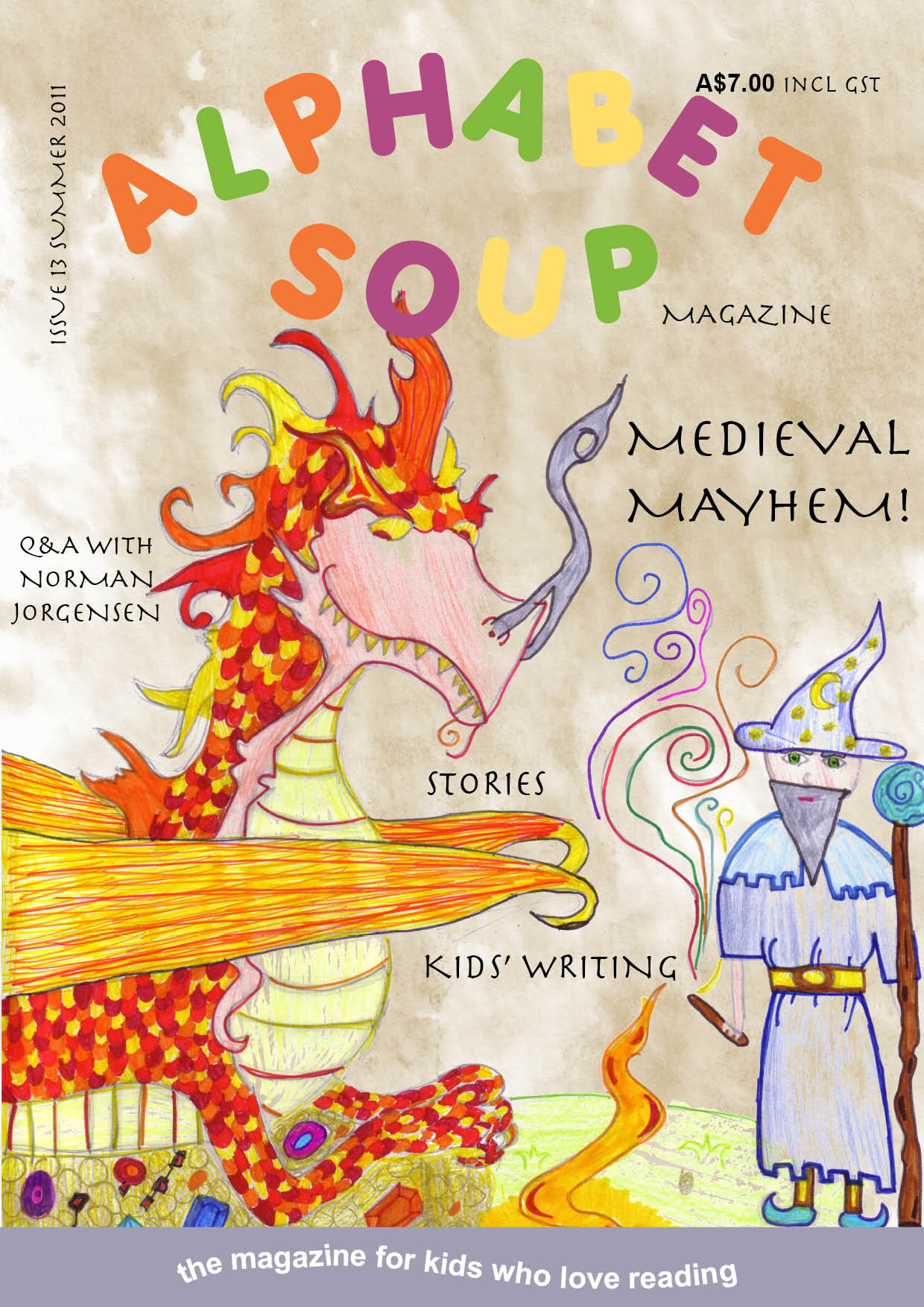
The summer issue of the magazine has been posted to subscribers, so keep an eye on your letter box. We love the artwork on the cover by Emma Nolan, the winner of this year’s design-a-cover competition. Doesn’t it look fantastic?
Subscribe via our website (you can order single copies from the subscribe page, too). Single copies can also be purchased from our WA stockists—Westbooks (Victoria Park) and Zero to Ten (South Fremantle).
In our spring writing competition, we asked you to write a story with the title ‘The Three Little ____’ (characters of your choice). Here is the winner in the final category—Under 12s.
A reminder: always check the rules of the competition. If you don’t stick to the rules, we have to disqualify your entry and that makes us sad!
Under 12s winner: B Kempson (WA)
THE THREE LITTLE JELLYBEANS
Once upon a time, there were three jellybeans. Their names were Orange, Red and Green, although their colours were different. Orange was red, Red was green and Green was orange! Red was curious, which usually landed him in trouble, Orange was smart, always solving equations, and Green was brave. They were orphans, who lived in a packet in a cupboard with other jellybeans. One day, they were quietly playing with other jellybeans, when Red said something that shocked them all.
‘I wonder what it’s like outside this packet?’ All the other jellybeans gasped.
‘What, in the HUMAN world?’ said Green. The other jellybeans gasped again, as if Green had said a swear word.
‘To my calculations, surviving the outer world is one in one million of a chance,’ said Orange. ‘Still, it’s possible … ‘ Orange trailed off when he saw the look in Red’s eye.
‘Oh no you don’t, ‘ said Green, who had realised the look as well. ‘If i have to save you once more, I’ll have to get a personal doctor. Look what happened the last time you did something crazy!’ Green lifted his arm to show a nasty scar.
Even so, the next day, Red cut a hole in the packet, small enough for one jellybean to slip through, and leaped out onto the floor. He grinned to himself muttering, ‘Who’s a clever jellybean? Me!’ Suddenly, he felt a giant glob of slobber, as big as one dozen jellybeans, fell on his head.
He looked up to see where it came from, and saw an ugly brown and white beast with yellow teeth, beady eyes and a small black snout. He had heard legends of a creature like this, but the pictures he had pictured in his mind were nowhere near as terrifying as this.
It was a dog.
You could hear Red’s scream from miles away. Luckily, Green and Orange were lying in the sun near the place that Red escaped. Green’s head jerked up from its position, wondering what Red had done now. He looked around for Red, but stopped when he saw the hole in the packet.
‘Oh no,’ he said, running to the hole. Thinking of Red, he leapt throught he hole and onto the floor. He looked around, and saw Red and the dog. The dog had cornered Red by a table, and was about to eat him, when Green dived through the hole. Red sat down, dazed.
‘You know what? I’m never going to do anything dangerous again,’ he said.
‘Good,’ said Green and Orange.
‘Now let’s go cliff diving!’ said Red, walking off with his friends.
Here is the winning Under 9s story from our spring 2011 writing competition.
A reminder: always check the rules of the competition. If you don’t stick to the rules, we have to disqualify your entry and that makes us sad!
Under 9s winner: C Ng (WA)
THE THREE LITTLE WISHES
So I was just messing around with my pencils and was just about to pack them into boxes when my own pencil dropped to the floor. I had not realised and stepped on it. I heard a cracking sound. ‘NOOOOO!’
The van arrived to pick up the box to take to my customers. I quickly packed my pencils into the box and watched the van drive away.
I decided to go into the bush near my house to locate a piece of wood to make myself a new pencil. After making my pencil, I polished the wood and sharpened the pencil. The wood sparkled. My cupboard rattled. A piece of paper flew onto my desk. I couldn’t help but started drawing. I was ravenous and drew a sandwich. I looked at my drawing and my mouth started to water.
Suddenly, there was a sandwich made out of Turkish bread with cheese, avocado and turkey on the table! I couldn’t believe my eyes. It looked exactly like my drawing! I munched the sandwich. It tasted yumtious!
The drawing of the sandwich was no longer on the paper. Instead, there was a message, it said, ‘YOU HAVE 2 WISHES LEFT’
I stared in astonishment. I had made a wishing pencil! I rushed back to the bush. Where was that tree? I would be rich making all these pencils. But the tree had vanished. I better use my wishes carefully.
Money! I could draw a stack of money and I’ll be rich! I could buy a new house and car. I quickly went to my desk and used my magic pencil to draw a stack of money on the paper. I waited in anticipation. A stack of monopoly money appeared on the table. I can’t use this! I stamped my feet in anger.
I took a walk down the street trying to calm down. While I was strolling, I saw a child crying and asked her why she was crying.
‘My mother is terribly sick in hospital and may not come home!’ she cried.
I went home feeling empty. I had an awful time deciding what to do with my final wish. I had been selfish. A little girl is worried about a dying mother while I am thinking of a new car!
I realised what I should do. I went back to my desk and grabbed my magic pencil. I drew the little girl’s mother coming home healthy. I then went back down the street to see that little girl. A beautiful woman got out of her car and ran towards the girl.
I couldn’t believe the happiness I felt in my heart. It was the most satisfying feeling I ever felt.
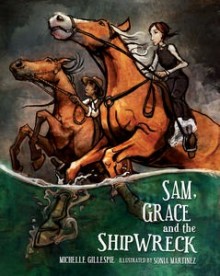
Sam, Grace and the Shipwreck by Michelle Gillespie and illustrated Sonia Martinez. Published by Fremantle Press, ISBN 9781921696008.
(A review copy of this book was sent to us by the publisher.)
A ship—the Georgette—runs aground in Calgardup Bay WA in December 1876. This is the true story of a shipwreck and the daring rescue of the survivors by stockman Sam Isaacs and sixteen-year-old Grace Bussell, both on horseback.
This picture book tells an exciting story and it’s great to read aloud. Here are the opening words:
There is something about this morning—a quiet in the hills, a shiver in the air—something that prickles the nose of the stockman’s horse.
The illustrations show the drama as it unfolds and have the feel of long-ago adventure—with sepia coloured backgrounds framing lots of the artwork. We also love books with interesting endpapers, and the endpapers in this book are paintings showing scenes before and after the events in the story.
At the end of the book you’ll find a summary of the events of that day and a brief biography of the author and illustrator (apparently the illustrator drew lots of horses when she was growing up, and it came in handy for illustrating this story!).
Sam, Grace and the Shipwreck has adventure, bravery, history … and horses. You’ll love it!


 * Whitfield State School is a member of our Undercover Readers Club. A review copy of Prudence Wants a Pet was provided by the publisher.

 at Yidarra Catholic Primary School is a member of our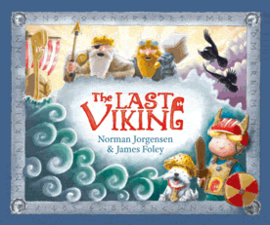
 alphabetsoup.net.au