
Posted in authors, Pass the Book Baton

Pass the Book Baton: Jackie French

PASS THE BOOK BATON logo

It’s Friday! And that means it’s time for Pass the Book Baton. Every week Alphabet Soup features a book creator who will answer one question before throwing a new question to the next Friday visitor. (It’s kind of like a book relay in slow motion.)
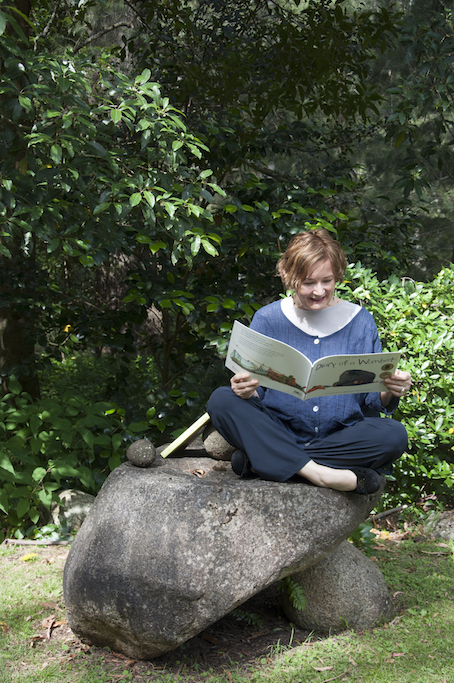
Jackie French, photo by Kelly Sturgiss
Jackie French (photo by Kelly Sturgiss)

Today the book baton is passed to Jackie French. Jackie French is an ecologist, the author of more than 200 books, and the 2014–2015 Australian Children’s Laureate (and 2015 Senior Australian of the Year!).

You might recognise some of these books:

Last week Sherryl Clark asked:

What are your best or favourite research tools for your historical novels?


Jackie answers:

Old letters, newspapers, advertisements, paintings of the time.

Old diaries are great. People don’t lie in diaries.

Archeology surveys on the ground or by satellite.

Inscriptions in pyramids.

Ancient Viking rubbish tips.

Depends on the book. Incredible fun, like the best detective investigation in the universe. You never know where the trails will lead. Plus you get to play in a dozen different times with no danger of dying of the bubonic plague or getting your head sliced off by Vikings.

You can check out Jackie French’s website for more about her and her books: www.jackiefrench.com. Or read a 2015 Alphabet Soup interview with Jackie here


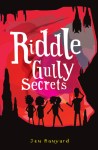
Riddle Gully Secrets by Jen BanyardAnd now Jackie passes the book baton to the next Friday visitor — Jen Banyard. Jen Banyard is the author of adventure stories, including the Riddle Gully series.

Jackie asks:

Why do you write?

Check in every Friday for mini interviews with children’s authors and illustrators. (While you’re waiting you can catch up on all the interviews in the Pass the Book Baton series so far!)

Posted in info

Young writers in action: The Day at the Zoo

THE DAY AT THE ZOO
by Gabriel, 7, NSW

On Tuesday October 17th 2017, our family went to the Beijing Zoo. We went to the Beijing Zoo because it was for a home school excursion.

We saw beautiful swans and amazing ducks in a lake. There was a waterfall. Two birds were standing on the side.

Later, we saw the big bird cages. The birds were very very colourful and amazing, such as the flamingos. Other birds were blue, red or yellow. Next we saw parrots. There were ten cages. The parrots were green, white, red, blue and yellow. My sister’s favourite parrot is the eclectus parrot.
Before we saw snakes, we had lunch. We had burgers for lunch. Then we saw reptiles, like crocodiles, turtles and snakes. The zookeepers threw rats in the cages for food.

After that, we stared at the penguins. The thing that I did not like about the penguins’ cage was that they had fake ice! There were five penguins. The zookeepers showed us penguin bones in another place.

We walked over to the monkeys. They were swinging like crazy! We saw four golden monkeys and two black monkeys. The black monkeys were not swinging around but at the end they started to swing.

Later, we saw two chimpanzees. They were huge. One was eating some fruit and went to the other side to poo. That is smart not to poo where it eats.

Then we looked at the American animals. We saw sloths, tapirs and ostriches. The funny thing about the tapirs was that one tapir was weeing and smiling at the same time.

We also stared at the Australian animals. The kangaroos were eating lunch. One cassowary was resting and the other one was walking around.

We went over where we saw bears. We saw the Asiatic bear, black bear, brown bear and two polar bears. One polar bear was hitting the wall with its tummy. The other polar bear was pushing the wall with its bottom.

Next we saw thirty nocturnal animals. I can’t tell you all the names because there were too many. All the nocturnal animals that I saw eat fruit.

We saw African and Indian elephants. The African elephants have bigger ears than Indian elephants.

It was fun after seeing most of the animals. I want to go back to Beijing Zoo.


Gabriel is a regular contributer to Alphabet Soup. You can read some of his earlier work here. If YOU would like to send us a story, drawing, poem, or book review, check out our submission guidelines. Happy writing!

Posted in authors, Pass the Book Baton

Pass the Book baton: Sherryl Clark

PASS THE BOOK BATON logo

Sherryl ClarkIt’s Friday! And that means it’s time for Pass the Book Baton. Every week Alphabet Soup features a book creator who will answer one question before throwing a new question to the next Friday visitor. (It’s kind of like a book relay in slow motion.)

Today the book baton is passed to Sherryl Clark. Sherryl is an author and poet — with over 40 books published in Australia. 

You might recognise some of these!

Last week Yasmin Hamid asked:

I know you have travelled to many different countries, but do you find it difficult to write books that are set in an Australian landscape when in your mind you have the embedded landscapes and terrains of the New Zealand you grew up in?


Sherryl answers:

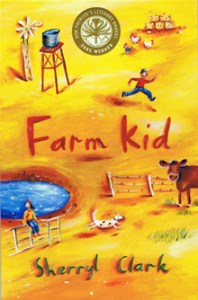
Farm kid by Sherryl Clark

I think it’s firstly the people from my childhood and teen years that are embedded! I often find myself using bits of them, or certain anecdotes (changed to fit my story, of course). But also I find I tend to write stories set in valleys, and in the country, probably more than writers who grew up in the city do.

It’s tricky because publishers often want city stories where most of their market of readers live. Whereas I think it’s good for city kids to read about living in the country. It’s one of the reasons I wrote Farm Kid, because the Australian drought in the 2000s was so devastating for farmers, but people in the city didn’t really understand what it meant.

I suspect the main effect, though, has been the urge to travel (common among Kiwis) which has led to me writing historical novels set in the USA, England and France. The lure of history and stories that can go back many centuries into the past.

Read more about Sherryl Clark, her picture books, novels and verse novels at her website: www.sherrylclark.com


Diary of a wombat by Jackie French and Bruce WhatleyAnd now Sherryl passes the book baton to the next Friday visitor — Jackie French. Jackie French was the 2014-2015 Australian Children’s Laureate, and has had more than 200 books published.

Sherryl asks:

What are your best or favourite research tools for your historical novels?

Check in every Friday for mini interviews with children’s authors and illustrators. (While you’re waiting you can catch up on all the interviews in the Pass the Book Baton series so far!)

Posted in poetry

Young writers in action: Beach pollution

BEACH POLLUTION
Anishka, 7, QLD

The beach I used to go,
Always showed me fantastic show.
The fishes splashed, the dolphins dashed,
Nature is always at its best.
The days passed,
Now, it has all gone and faded.
No more ice-cream,
Not even a cone,
No more fishes,
Not even a dolphin.
Not anything to be seen,
Not anything to be so keen.
I think, we changed sea’s face,
And made this beach a mess.
It is now full of sea weed,
I picked it all for a good deed.

A hand stretched out to the sea. image courtesy pexels.com


Anishka is a regular contributor to Alphabet Soup — you can read all her earlier work here.

Posted in info

Young writers in action: Ellie and the Secret Garden

ELLIE AND THE SECRET GARDEN
by Sophie, 6, VIC

One windy, cold night, Ellie was in her bed. She could not get to sleep. Just when she was getting to sleep, a big gust of wind came in through the window. She was so curious. She went to the door. She pushed the door open.

Just then, the wind carried Ellie away! The wind carried Ellie out of the door. It carried Ellie to the garden!

A green door hidden by ivy. Image courtesy pexels.comThen it stopped and put her down. Then it did the same again, but this time it didn’t carry Ellie away. Instead, it blew the ivy on the wall, and under the ivy, Ellie saw a door.

“Maybe it’s the secret garden.” Her mum had told her stories about it.

She tried to turn the handle. It was very stiff, but she could just turn it. The next second, she was in the secret garden.

When she got back into bed, it was morning.

Her mum and dad came in at 7:30am and said, “Time for breakfast.”

“Okay,” said Ellie, “but before that, I’m going to put on my school clothes.”

“Okay,” Ellie’s parents said.

Once Ellie got them on, she went down to the garden. She opened the door, then she shut the door behind her. Then she bobbed down and started clearing dead leaves and grass.

When she finished, she went inside and had her breakfast, then she went to school on the school bus. She told her friends about that garden, but they didn’t believe her. But her bestest friend knew that Ellie was telling the truth.

When it was home time, Sophie, which is Ellie’s best friend, asked her mum and Ellie’s mum if she could have a play at Ellie’s house. They said yes.

Sophie ran up to Ellie, but when Sophie saw Ellie, she was talking to some people and making new friends and asking them to be her best friends. It made Sophie feel sad.

When Ellie’s new friends had gone, Sophie went up to Ellie. She told Ellie how she felt. Then Ellie said to herself, ‘she is my best friend,’ then she stopped daydreaming, and said sorry to Sophie. Then Sophie told Ellie about the play. Ellie was so excited.

Sophie went in Ellie’s car. It was so fun. When they got to Ellie’s house, Ellie and Sophie went down to the garden.

She said, “Come with me, Sophie.” They tiptoed to the door. They opened the door, then they pushed the door shut. Sophie was amazed. There were roses everywhere. Sophie’s mouth dropped open when she saw them.

Ellie took Sophie away. She wanted to show Sophie lots more.

The End


This is Sophie’s first story for Alphabet Soup. To send us YOUR story, poem, artwork or book review, check out our submission guidelines. Happy reading!

Posted in authors, Pass the Book Baton

Pass the Book Baton: Yasmin Hamid

PASS THE BOOK BATON logo

It’s Friday! And that means it’s time for Pass the Book Baton. Every week Alphabet Soup features a book creator who will answer one question before throwing a new question to the next Friday visitor. (It’s kind of like a book relay in slow motion.)

Today the book baton is passed to Yasmin Hamid. 

Yasmin grew up in East Africa with her siblings, English mother and Sudanese father. She has been in the same book club group for almost twenty-five years.

Yasmin’s first children’s novel — Swimming on the Lawn — was published in 2017.

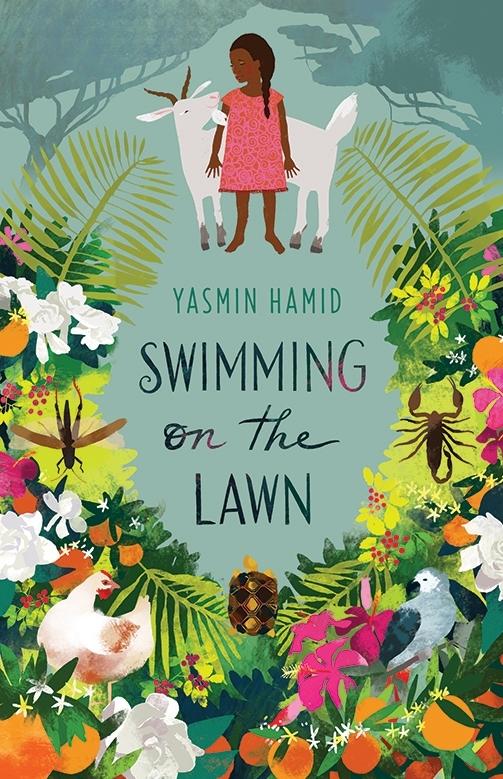
Swimming on the Lawn by Yasmin Hamid


Last week Aśka asked:

To someone like me — who grew up among grey blocks of flats in Eastern Europe — your childhood sounds absolutely fearless. Was there ever anything that you were afraid of? How did you overcome that fear?


Yasmin answers:

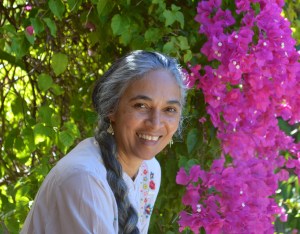
Yasmin Hamid in a garden. Photo courtesy Fremantle Press.
Yasmin Hamid, author

This is a very interesting question. I don’t remember ever being afraid when I was a child. I think it was to do with the place where I lived at that particular time (open spaces, lots of freedom to roam the neighbourhood, climb trees and and be away from home for hours on end without supervision). There wasn’t any hint of stranger danger and there was rarely any interference from adults.

I remember doing things that involved an element of risk like climbing up onto our house roof and weighing up the possibility that if I jumped off and flapped my arms, whether I could fly a bit before I fell onto the strategically placed mattress! Needless to say, I always knew I couldn’t and would climb down again after spending time looking over the garden from a different perspective.
 .
Read a sample chapter from Swimming on the Lawn and download teachers’ notes.

And now Yasmin passes the book baton to the next Friday visitor — Sherryl Clark. Sherryl writes picture books, junior fiction, novels, verse novels, and books for young adults.

Yasmin Hamid asks:
I know you have travelled to many different countries, but do you find it difficult to write books that are set in an Australian landscape when in your mind you have the embedded landscapes and terrains of the New Zealand you grew up in?

Check in every Friday for mini interviews with children’s authors and illustrators. (While you’re waiting you can catch up on all the interviews in the Pass the Book Baton series so far!)

Posted in illustrator, Pass the Book Baton

Pass the Book Baton: Aśka

PASS THE BOOK BATON logo

It’s Friday! And that means it’s time for Pass the Book Baton. Every week Alphabet Soup features a book creator who will answer one question before throwing a new question to the next Friday visitor. (It’s kind of like a book relay in slow motion.)

Today the book baton is passed to Aśka.

Aśka in a purple shirt pressing a big red NO button

Aśka is an illustrator and science communicator. She has a degree in Arts and Quantum Physics and works at Scitech in Perth — as well as working with kids’ product design, graphic novels, animation, graphic design and e-publishing. Phew!

Last week Sian Turner asked:

Wow! You have travelled to some amazingly diverse and interesting places, Aśka.

I understand that these experiences have been a rich source of inspiration for your art. Can you elaborate on some of your favourite travel destinations? How have you found that these places have influenced your creativity?


Aśka answers:

I’ve never really thought about how different places I’ve travelled to and lived in have influenced my work. It is an interesting thing to ponder.

I have had a go at studying different forms of art in different places. For example, when I was staying in Thailand I learned Chinese painting. It is an art form where no pencils are allowed, and there is no erasing or undoing what you have done. You make marks with a chunky paintbrush on the thin rice paper to create an image and if you make a mistake you need to start all over again! Even though I don’t paint so much anymore, I still find this practice very useful as it requires commitment and confidence when drawing, which I believe shows up in your work as an illustrator, no matter what technique you use.

But it’s not just learning local techniques which can change the way you draw. It’s also observation. Certainly every location looks different and this isn’t just in art, but in the most everyday situations. For example, the way a yoghurt aisle looks in the supermarket, or the image of the green and red person for pedestrians at traffic lights. It quickly becomes apparent that each place in the world uses images in a slightly different way. Like the cute and perfectly made mascots of uniformed woman and man in front of a Tokyo police station, to the playful and roughly hand painted shopfronts of Accra.

So through travel and seeing so many different ways in which people live, I started to think about how important these visual elements are when creating my own characters and settings.

After all, every new adventure we have, big or small, expands our way of seeing the details in our world a little more. And the details are where I believe the true magic of the world lies.

Check out Aśka’s website where you can find artwork, mini comics, download free ebooks, teachers’ notes and more! www.askaillustration.com/


Swimming on the lawn by Yasmin HamidAnd now Aśka passes the book baton to the next Friday visitor — Yasmin Hamid. Yasmin grew up in East Africa and now lives in Western Australia. Her book — Swimming on the Lawn — was published in 2017.

Aśka asks:

To someone like me, who grew up among grey blocks of flats in Eastern Europe, your childhood sounds absolutely fearless. Was there ever anything that you were afraid of? How did you overcome that fear?

Check in every Friday for mini interviews with children’s authors and illustrators. (While you’re waiting you can catch up on all the interviews in the Pass the Book Baton series so far!)

Save

Save

Save

Save

Save

Posted in info

Top Reads: October 2017

It’s that time again — the last day of the month means book recommendations from our Top Reads team*. Look for these titles in your library, bookshop, or on your best friend’s bookshelves. Or add them to your Christmas wishlist …

You’ll find a recommended list from our Top Reads Team on the last day of every month (February to November). If you’d like even more recommendations, browse all through all our Top Reads ever!

*All our Top Readers are kids aged 13 and under. No grownups allowed!

Posted in authors, Pass the Book Baton

Pass the Book Baton: Sian Turner

PASS THE BOOK BATON logo

It’s Friday! And that means it’s time for Pass the Book Baton. Every week Alphabet Soup features a book creator who will answer one question before throwing a new question to the next Friday visitor. (It’s kind of like a book relay in slow motion.)

Today the book baton is passed to Sian Turner. 

Sian lives in Albany, Western Australia and has two picture books published — Beyond Our Garden Gate (illustrated by Irene King) and a brand new book called Can I come too, Eliza-Lou? (illustrated by Rebecca Cool).

Last week Deb Fitzpatrick asked Sian:

“I love that nature is such a big part of Beyond Our Garden Gate. Is this important in all of your books? Can you talk about your own experience of nature as a child?
 
Do your children help you write your books, or give you ideas?”

Sian answers:

Thanks for these questions Deb! I love watching children use their imaginations in the world around them and I hope this joy comes across in Beyond Our Garden Gate.  Nature is a big part of my life and, unintentionally, this creeps into my stories.

I’ve been writing two junior fiction novels which are not yet published. In one story, my main protagonist wants to be an Olympic athlete. The descriptions of the environment are quite rich in their imagery as she jogs through town on her training runs.  In the other story, my main character befriends a wacky neighbour who is a gardener and a retired concert pianist. This neighbour’s garden features in the manuscript.

Sian Turner
Sian Turner

Growing up, I had heaps of freedom roaming the outdoors on my bike. Holidays were spent with my family in a sleepy country town called Augusta on the Blackwood River so the beaches and the beautiful Karri Forests and caves of the South West are special to me.

Right now, I live in Albany so it is easy to be inspired with such rugged beauty on my doorstep.

In answer to the question do my children help me write my books or give me ideas?

Of course! I have a four year old, an eight year old and an eleven year old. They definitely help me when I am writing for children because I’m grounded through their experiences. Their personalities, what excites them and what they are interested in and the conversations I have with them about school and friends, all help me to create realistic children characters in the stories I’m working on.

Check out Sian Turner’s website for more about Sian and her books: sianturnerbooks.com


The Cosmic Adventures of Alice & Bob, written by Cristy Burne and illustrated by Aska.And now Sian passes the book baton to the next Friday visitor — Aśka. Aśka is a children’s book illustrator and a science communicator, and has been involved in product design, graphic novels, animation, graphic design and e-publishing.

Sian asks:

“Wow! You have travelled to some amazingly diverse and interesting places, Aśka.

I understand that these experiences have been a rich source of inspiration for your art. Can you elaborate on some of your favourite travel destinations? How have you found that these places have influenced your creativity?”

Check in every Friday for mini interviews with children’s authors and illustrators. (While you’re waiting you can catch up on all the interviews in the Pass the Book Baton series so far!)

Posted in authors, Pass the Book Baton

Pass the Book Baton: Deb Fitzpatrick

PASS THE BOOK BATON logo

Deb Fitzpatrick

It’s Friday! And that means it’s time for Pass the Book Baton. Every week Alphabet Soup features a book creator who will answer one question before throwing a new question to the next Friday visitor. (It’s kind of like a book relay in slow motion.)

Today the book baton is passed to Deb Fitzpatrick. 

Deb Fitzpatrick lives and works in Fremantle, WA and she writes novels for adults, young adults and children. Deb’s sixth novel, The Spectacular Spencer Gray, was published in mid 2017.

Last week Jen Storer asked Deb:
“How long do you spend planning a book before you start writing it? Also, do you put people or animals you know into your stories? ”


Deb answers:

I’m a pantser, I’m afraid, (that is: I fly by the seat of my pants and make it up as I’m going along, unlike a planner, who, well, plans and is sensible and orderly and grown up). So, I do very little planning for a book before I start writing it. I just launch on in and I love seeing what unfolds.
 .
Teachers are often rather appalled when I admit this to kids, which I do at every opportunity. Kids seem to love that I’m barely more mature than they are. I make up my stories as I’m going along, and if, in the course of the writing, I need to stop and think things through, I just do it then. Of course, this does sometimes mean that I have to go back and rewrite bits of my story, but I’m okay with that. Can I tell you a secret? This must only be read in a barely-heard whisper … I get bored with writing a story that I have planned too closely. Writing to a plan, for me, takes away the magic of discovery that is creative writing. Shhhhh!!! Don’t tell your teachers!
 .
I put versions of my two wonderful children in some of my books, but I always ask their permission before going ahead. Sometimes they don’t want certain things shared, and I respect that. I also get my kids to read a manuscript before I submit it to my publisher — so they can give me feedback, which I use!
 .
Check out Deb Fitzpatrick’s website to find out more about her and her books!
 .

Beyond our Garden Gate by Sian Turner and Irene KingAnd now Deb passes the book baton to the next Friday visitor — Sian Turner. Sian is a WA writer and her second picture book will be published in November 2017. (More about that next week!)

Deb asks:

“I love that nature is such a big part of Beyond Our Garden Gate. Is this important in all of your books? Can you talk about your own experience of nature as a child?
 
Also: do your children help you write your books, or give you ideas?”

.

Check in every Friday for mini interviews with children’s authors and illustrators. (While you’re waiting you can catch up on all the interviews in the Pass the Book Baton series so far!)