We recently had an email from a family wanting to know about creative writing classes/workshops for kids in Perth. WritingWA have published a list of classes on offer for Young Writers in Perth — the list includes classes running in term-time and in the school holidays.
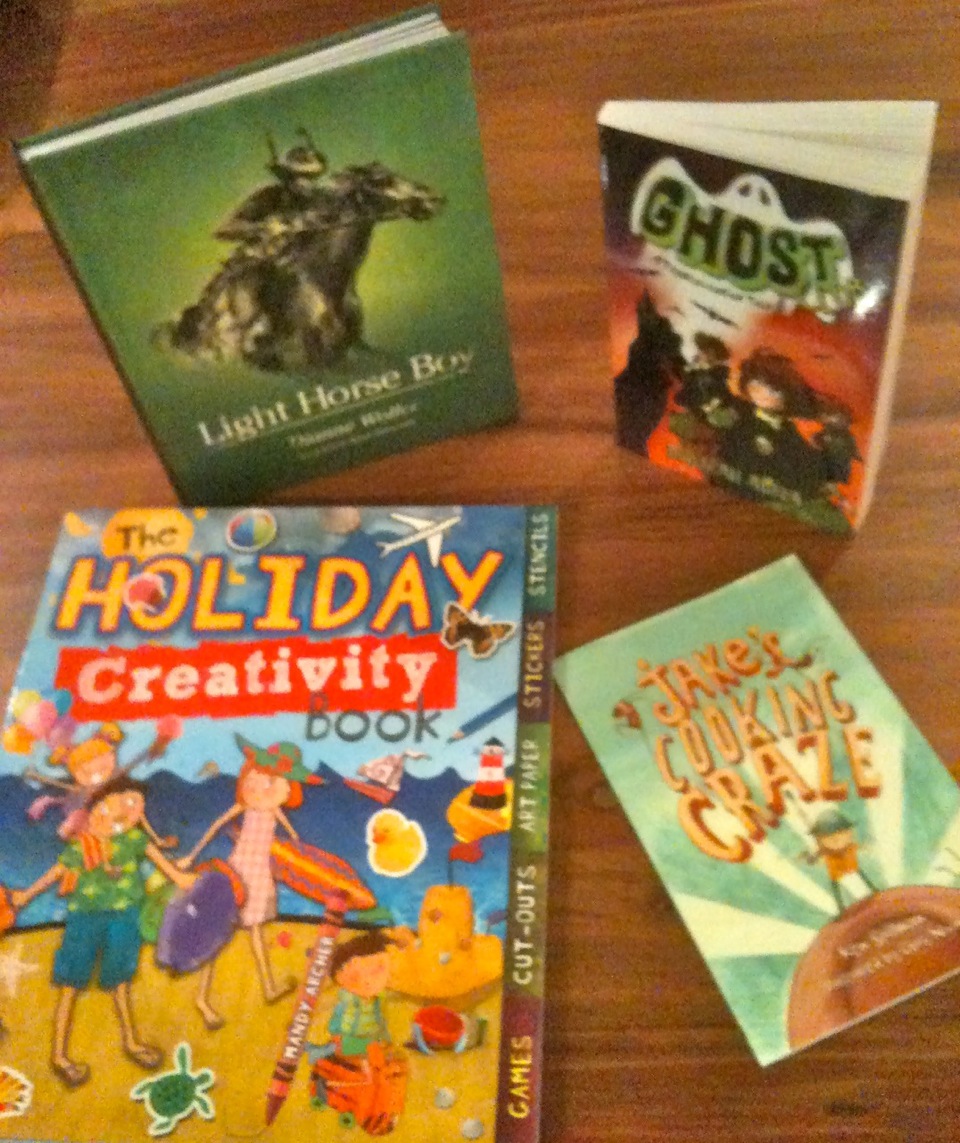
A review copy of this book was provided by Fremantle Press
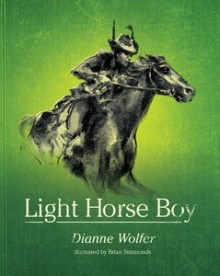
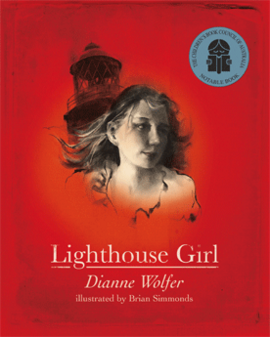
This new picture book was recently launched in time for Anzac Day — Light Horse Boy is a companion book to Lighthouse Girland both are worth buying (or borrowing — ask for them at your library).
When war is declared on Germany in 1914, Jim and his best mate, Charlie, decide to sign up for the war. Jim is not quite old enough to sign up but he lies about his age. When he resigns from his job to go to war, Jim’s boss gives him a horse called Breaker, instead of his wages. Jim and Charlie think joining the Light Horse Regiment is a bit of an adventure and that the war will be over in a few months. But they quickly discover how terrible life on the frontline really is.
Light Horse Boy is based on historical events, though the characters are fictional. (On the first page, the author explains that the characters were created “after researching the records and diaries of Australian and New Zealand soldiers who served in the ‘Great War'”.)
Jim’s story is told as a narrative with charcoal illustrations, and the book includes copies of his letters and telegrams to his sister Alice. Readers are taken back in time with old photographs, maps, and newspaper clippings.
Reading Jim’s letters is like reading letters from someone you know (your own brother, or a friend). Through Jim’s eyes we see how war affected young Australian soldiers and their horses serving in World War I, and how hard it was for friends and family left behind.
Wendy Orr signing copies of The Nim Stories. Photo by Ryan Makepeace.
Nim’s Island and Nim at Sea are definitely in our pile of favourite books. (Nim’s Island was featured in our first ever issue of Alphabet Soup!) You probably know that Nim’s Island was made into a movie starring Abigail Breslin, and now the second Nim book has also been made into a movie called Return to Nim’s Island — and it’s out in Australian cinemas this school holidays. We asked the author Wendy Orr if we could talk to her about what it’s like to have your book made into a film. And here she is!
—
When did you first hear that Nim at Sea would be made into a movie, too?
Paula Mazur, the producer of the first Nim’s Island, wanted to do it as soon as she read the book when it was published in July 2007. However there were complications with the Hollywood studio and so three years ago she took it to an Australian company. They worked very hard to organise everything and in May 2012 we knew that it was going to be filmed. (Though I think everyone still had fingers crossed!) The filming started in August 2012.
There is a different Nim (Bindi Irwin) cast in this second movie. Were you allowed to choose the actors? Did it feel strange to see a different Nim?
It’s a lot like illustrators for the books I write — I’m not allowed to choose but if I suggest something the editor or producer is happy to think about it before making up their minds. They know a lot more than I do about the right illustrator or actor. I’ve been very lucky, with both illustrators and actors, and they’ve all felt very right for the parts. Of course, even though Abigail Breslin is a wonderful actor, by the time filming started [for the second Nim movie] she was 17, which is much too old to be Nim. But Bindi Irwin is absolutely perfect for the role — she loves animals and is used to handling them, and she’s incredibly strong and physically fit, just like Nim. That’s important to me, so I was delighted with the choice. It was also nice to hear that she’s always identified with Nim quite strongly and tells me the books have always been favourites.
I thought it would feel strange to watch different actors, but in fact it all seemed completely natural. And because no actor could ever be completely identical to the character I imagined, it’s actually made it easier to go back to the characters in my head as I work on the third book.
Do you ‘see’ the characters in your head while you write?
For me, writing a book is a combination of watching a movie in my head, and feeling it in my body — not exactly as if I’m living it, but the way you feel the action in a dream.
Did the movie make any big changes to the book? (without giving too much away for movie-goers-to-be!)
This movie had to make very big changes to the plot! The problem is that when I write a book, it doesn’t cost any more to print if my characters stow away on cruise ships than if they spend the whole book sitting in their bedrooms. But movies are different, and so the producer and directors have to decide how they can make a good movie, follow the story — and not spend more money than they have. So in this movie, Nim is very much the same character, just a bit older, and the feeling matches the book. Then they took two very important things from the plot: Nim making a human friend, and animal poachers threatening Selkie and other animals. But the story after that is quite different.
(It’s okay, Nim certainly doesn’t spend the whole movie in her bedroom!)
As the book’s author, did you have a role to play in the making of the movie?
I was a consultant, which means I read it at different stages and sometimes suggested some small changes. It was a bit like being an editor, which was a nice change for me. I also watched some of the filming, but that was just fun. I don’t know anything about filming, so the most useful thing I can do is stay out of the way.
You attended the premiere of Return to Nim’s Island at Australia Zoo. What was it like to be watching the movie of your own book?
The premiere of a movie is always incredibly exciting. It’s like getting the first copy of your new book, except with a huge party instead of a parcel in the mail. This one was exciting for all those reasons, but since I spent the whole day at the zoo first, with Bindi and Toby Wallace (Edmund), it was also really fun. I think these pictures will show why.
Wendy Orr with Toby and Bindi. Photo by Ryan Makepeace.Wendy Orr with Bindi at the premiere of Return to Nim’s Island. Photo by Ryan Makepeace.At Australia Zoo for the movie’s premiere. Photo by Ryan Makepeace.
Watching the movie of my own book is very strange, and quite emotional, especially the first time. It’s almost like looking at a family video, because it’s very familiar but different to actually see it on the screen. I thought it was good; I could see the audience enjoying it; sometimes I was afraid about what was happening next, even though I knew; sometimes I was amazed at the beautiful images — but mostly I just felt happy.
Will there be more Nim books?
Yes! My publisher would be very cross if I said no, because they have given me a contract for another Nim book, which I think will come out next year. It doesn’t have a proper title yet.
At the top of this post we can see a photo of you signing copies of The Nim Stories. Is it a bindup of Nim’s Island and Nim at Sea or a different book again?
Yes. It’s got the new cover but the two books are just the same, with the same illustrations.
OK. I have to ask … Can the movie EVER be as good as the book?
No.
Or maybe yes …
A movie can never be as good as the movie you make in your head when you love a book so much that you feel you’re inside the story — when you read about ice and feel cold even though it’s hot where you are, and when you see and hear the characters as if they’re alive.
But on the other hand, a movie could be a better movie than the book is a good book. [At Alphabet Soup we know that Nim at Sea is a good book and we’re sure that Return to Nim’s Island will be a good movie. So we’re glad they won’t have to compete!]
—
We’re looking forward to seeing Return to Nim’s Island these school holidays. In WA we haven’t started school holidays yet — so all you Nim fans on the east of Australia get to see the movie before us. Lucky you! (Will you write us a review?)
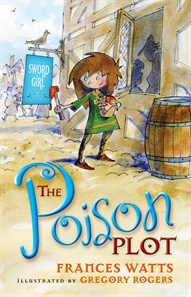
A review copy of this book was provided by Allen & Unwin.
Thomasina (Tommy) is the Keeper of the Swords at Flamant Castle. Preparations are underway for a banquet at the castle but when Tommy is sent to town on an errand, she discovers a plot to poison Sir Walter. If she can’t foil the plot, Flamant will be at war. And there’s not much time …
The Poison Plot is an action-packed medieval adventure. There are black and white illustrations every few pages and they add to the fun—you might recognise Gregory Rogers’ style from his books The Boy, The Bear, The Baron, The Bard and The Hero of Little Street. Tommy is a brave, clever character who outsmarts bullies and makes friends with the castle’s animals. We love the poor crocodiddle with the cold, and, of course, the castle cat from the first book in the series.
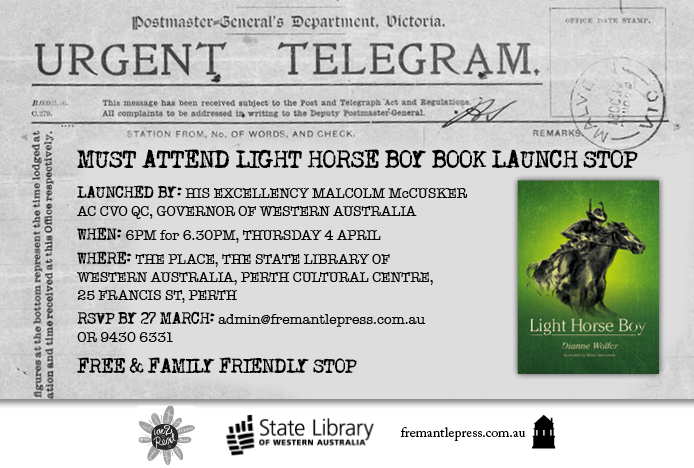
Don’t miss this family-friendly event at the State Library of WA on 4 April 2013 — the launch of Light Horse Boy by Dianne Wolfer. It’s a companion book to Lighthouse Girl and it’s a brilliant book for older readers. (We’ll be posting a review of Light Horse Boy here soon — but you can check out some sample pages on the publisher’s website in the meantime.)
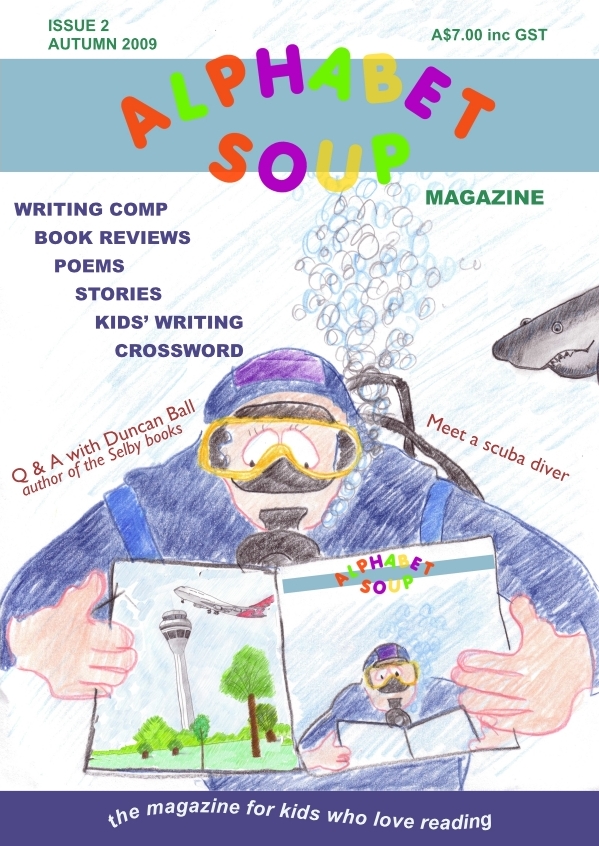
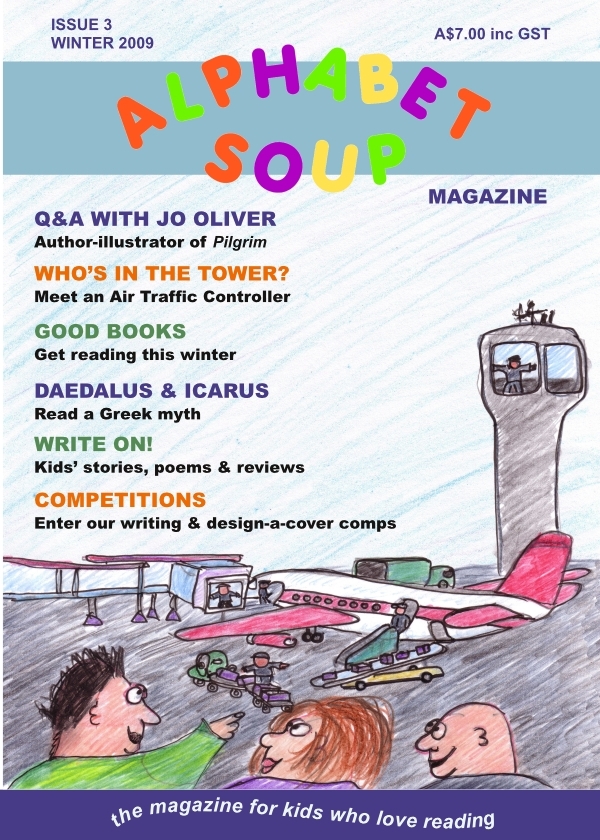
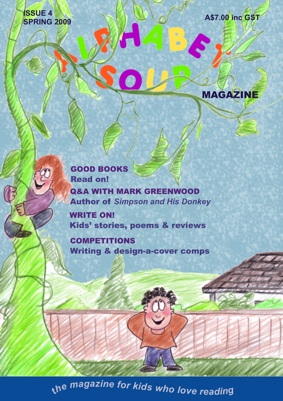
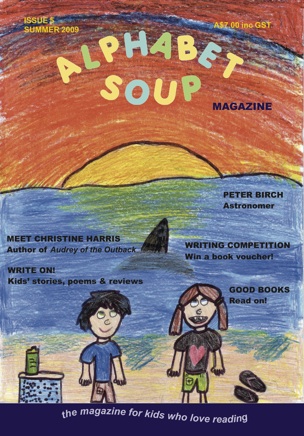
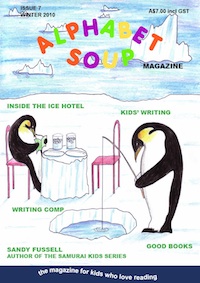
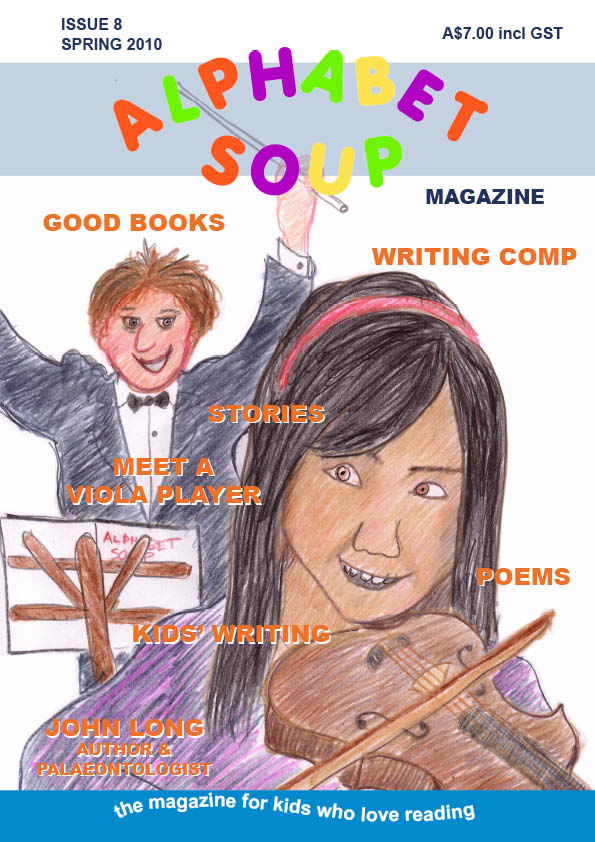
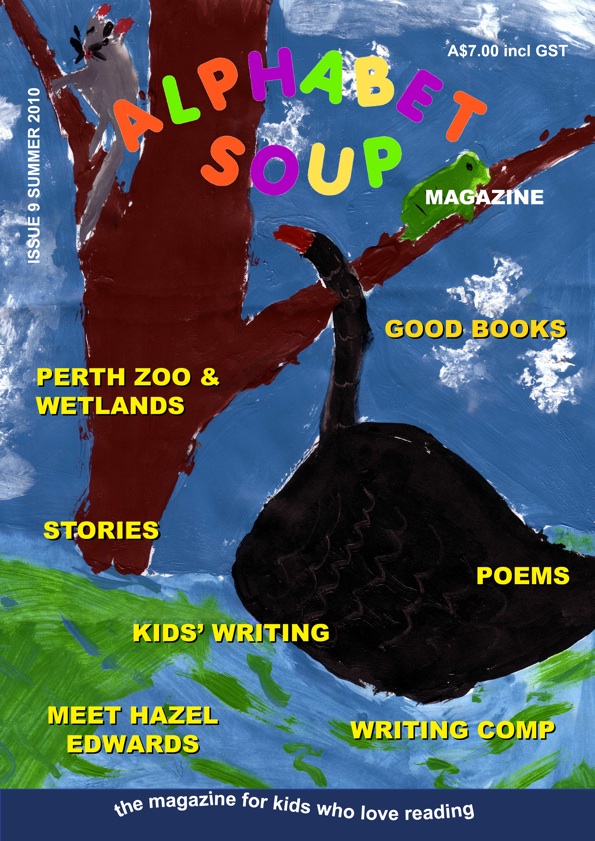
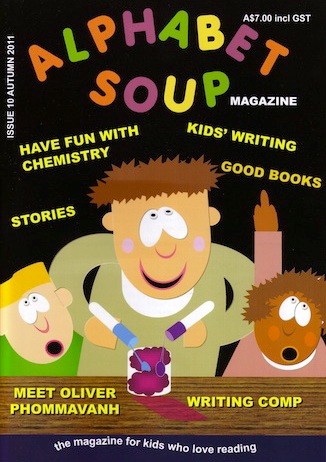
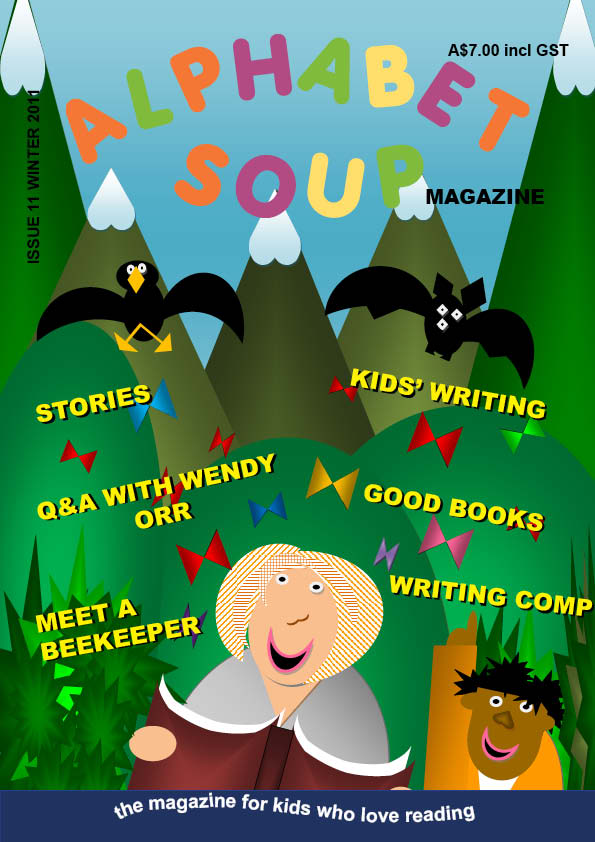
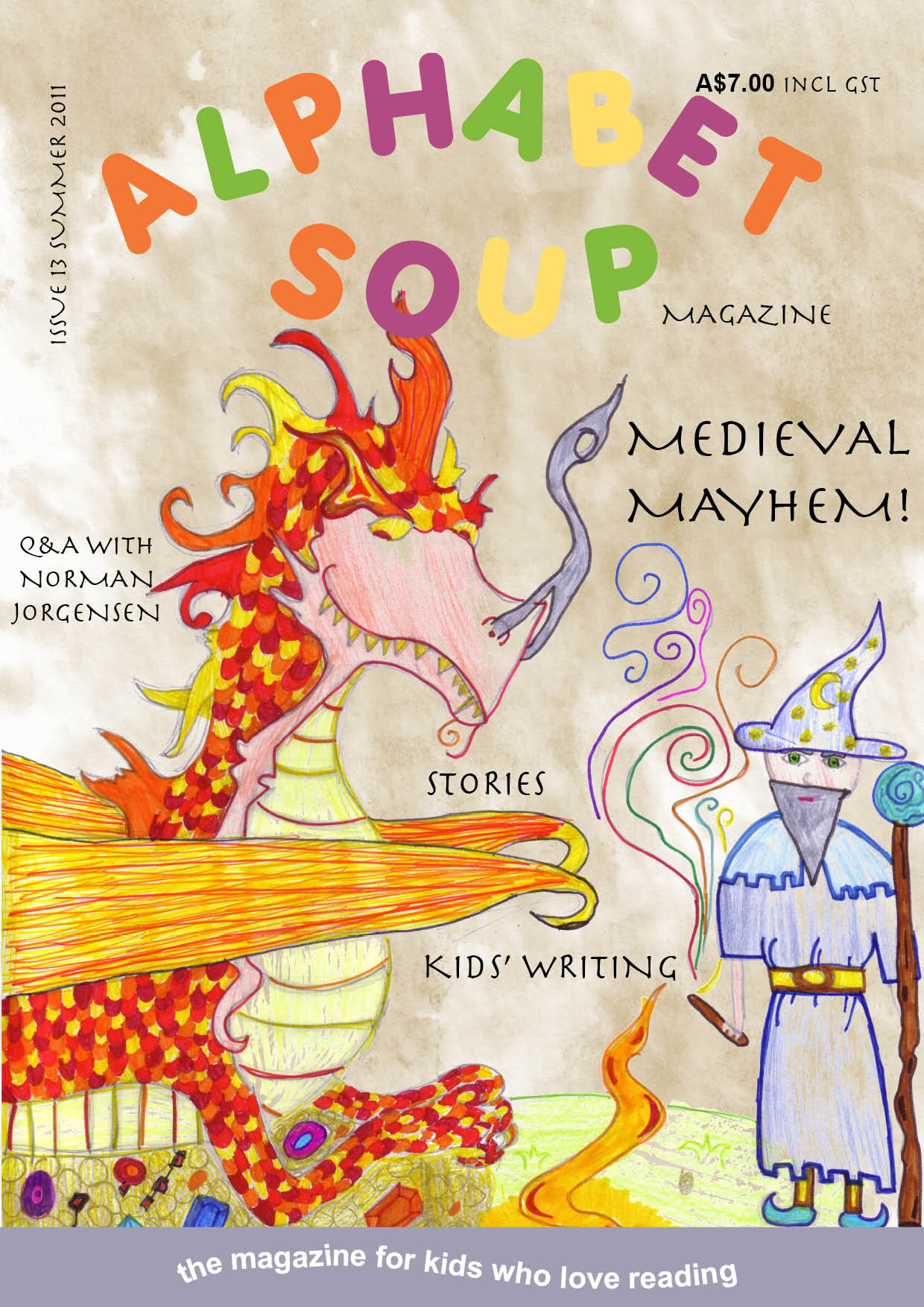
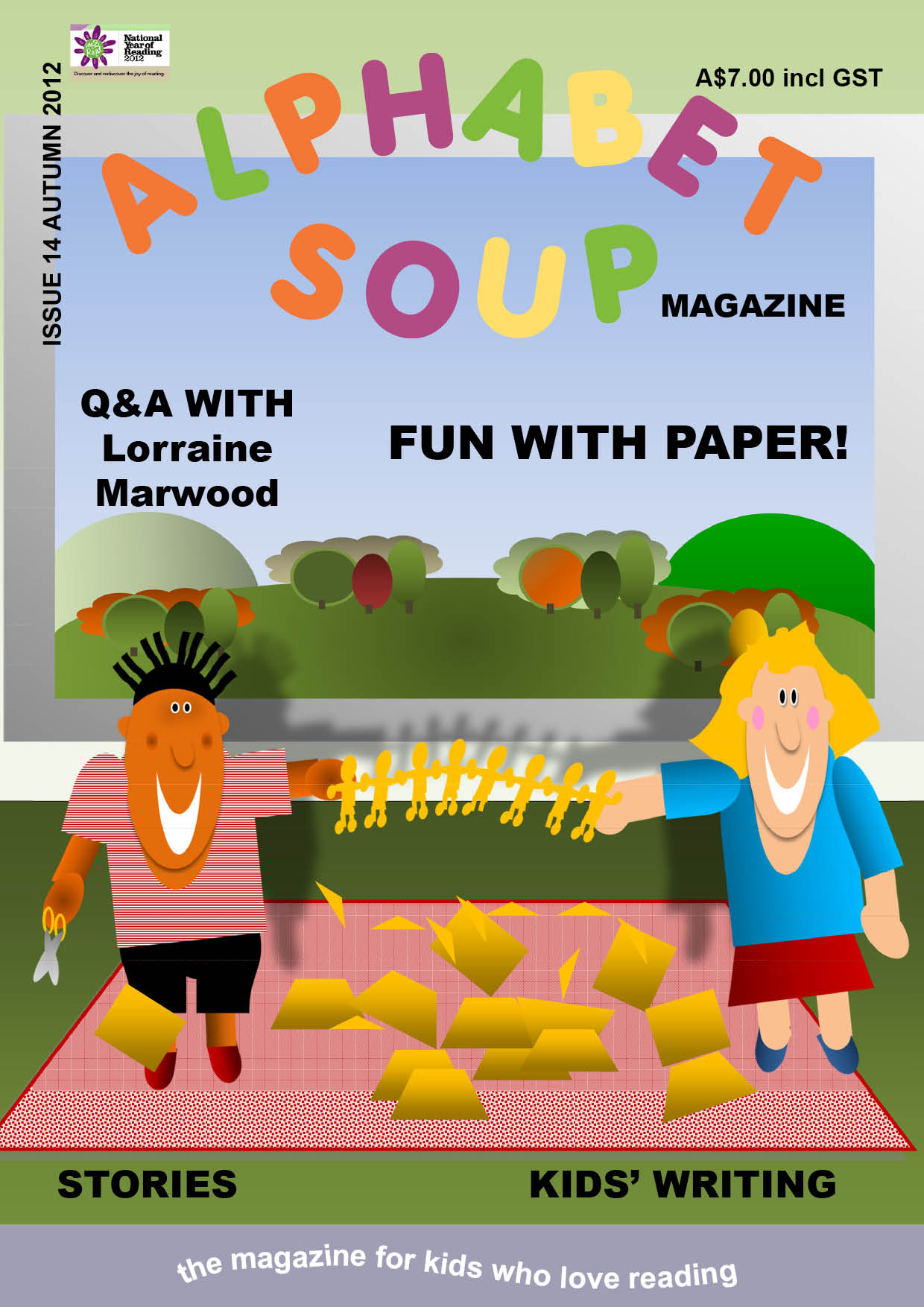
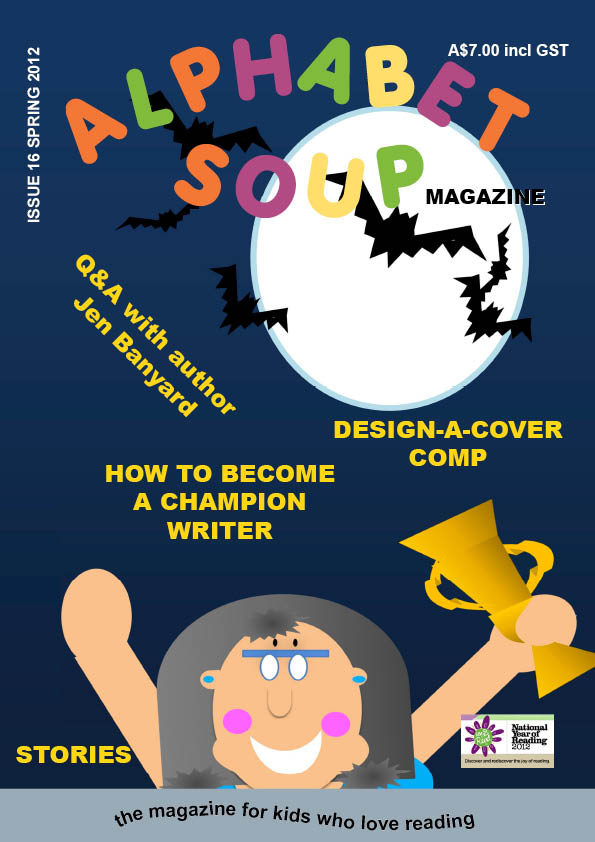
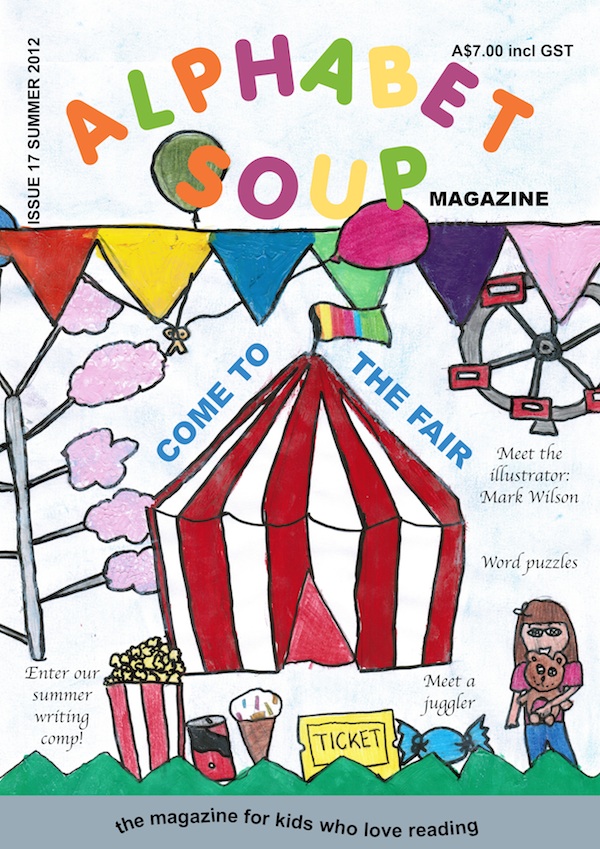
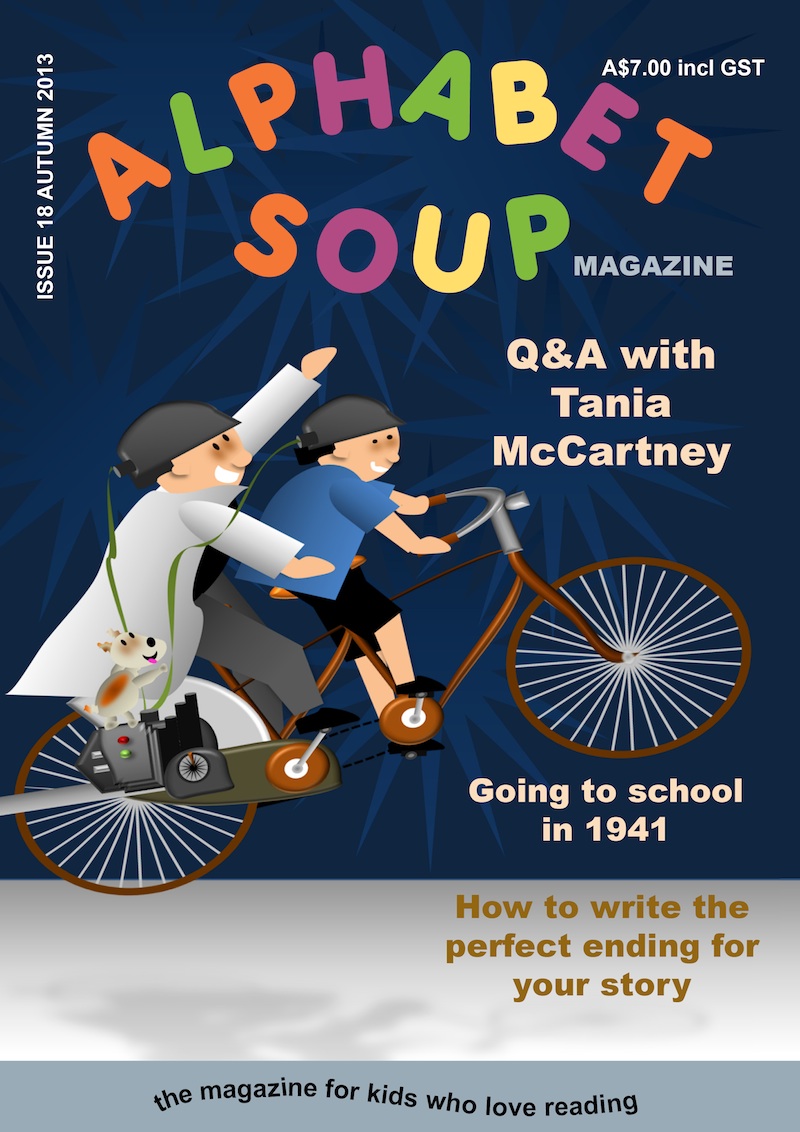
It is with great sadness that we announce the closure of Alphabet Soup magazine. The first issue of the magazine was published in 2008 and for over four years we were proud to bring you a magazine that showcased children’s own writing and artwork alongside that of adults, and promoted the fabulous work of Australia’s talented children’s authors and illustrators.
Subscribers who have remaining issues under their current subscriptions will soon receive a letter explaining the payment of refunds for those issues. We have added a FAQ tab at the top of the blog with further information about the magazine’s closure. If you have further questions, please contact us.
Our heartfelt thanks go to our subscribers, past contributors (authors, illustrators and columnists), our young writers and artists, and everyone who has supported us and celebrated with us over the past four years. We will continue with Soup Blog (and also Facebook and Twitter)—so do please continue to visit for news about upcoming book events, author and illustrator interviews, book reviews and children’s writing and artwork.
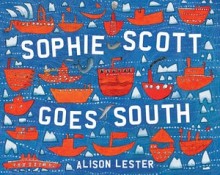
Sophie Scott is nine, and she’s going to Antarctica with her dad—the captain of the Aurora Australis. It will take two weeks to get there, and they will be staying at Mawson Station for a week before coming home.
This is Sophie’s diary of her trip. But it’s sort of a scrapbook about Antarctica—as well as her diary entries, Sophie includes a detailed map of the ship, and photos of it, too. She describes (and draws) the special cold-weather clothes she has to wear and talks about the strange sounds and sights she sees from the ship. I love the drawings of the people on the ship and at the crew at Mawson Station and also the drawings of the animals and the environment in Antarctica. Many of the pages also feature snippets of information about the history of Antarctic explorers, and facts about the continent and the creatures that live there. (Did you know that an iceberg that sits just under the surface of the water is called a growler? Or that Roald Amundsen from Norway was the first to the South Pole?)
You’ll find a glossary at the end of the book and the endpapers show a map of the world showing Sophie’s journey to Antarctica, and a map of Antarctica from above.
On every page there are interesting things to look at, amazing photos and Sophie’s observations. One of my favourite photos shows a Weddell Seal scratching his nose. I also love the gallery of photos showing the colours of Antarctica. It’s not just white!) Sophie’s journey is based on the author’s own trip to Antarctica and many of ‘Sophie’s’ drawings in the book were co-created with children who read Alison Lester’s online diary entries during her trip. (Children sent the author artwork inspired by the online diary entries.)
This book grabs your attention from the first page. Gallop as quickly as you can to a library or bookshop if you love strange adventures, explorers, sea creatures, ships or Antarctica. Or all of them together!
Entries close 12 April 2013 1 May 2013(deadline extended)
Write a story about your mum’s secret superpower. It might be an imaginary superpower, like flying. Perhaps her secret superpower is that she can grow the biggest tomatoes, can kick a football further than anyone in the world or always knows the time without looking at a clock. What’s YOURmum’s secret superpower? Word limit: 500 words. (It’s OK if your story is shorter than this but don’t go over the word limit!)
Download an entry formfrom the magazine’s website (and you can read the terms and conditions there, too).
[update: Please note that this competition is still running, even though the print magazine has closed]




 alphabetsoup.net.au